

Disability Devices Market Size and Forecast — 2026 - 2033
The Global Disability Devices Market size is estimated to be valued at USD 18.4 billion in 2026 and is expected to reach USD 34.7 billion by 2033, exhibiting a compound annual growth rate (CAGR) of 9.3% from 2026 to 2033.
Overview
Disability devices are assistive products designed to support individuals with physical, sensory, or cognitive impairments in performing daily activities and improving quality of life. These products include mobility aids such as wheelchairs, walkers, prosthetics, orthotic supports, hearing aids, visual aids, and communication devices. Disability devices are engineered to enhance independence, safety, and comfort while accommodating varying degrees of functional limitation. Advanced designs increasingly incorporate lightweight materials, ergonomic structures, and smart features to adapt to individual user needs across home, clinical, and rehabilitation settings.
Key Takeaways
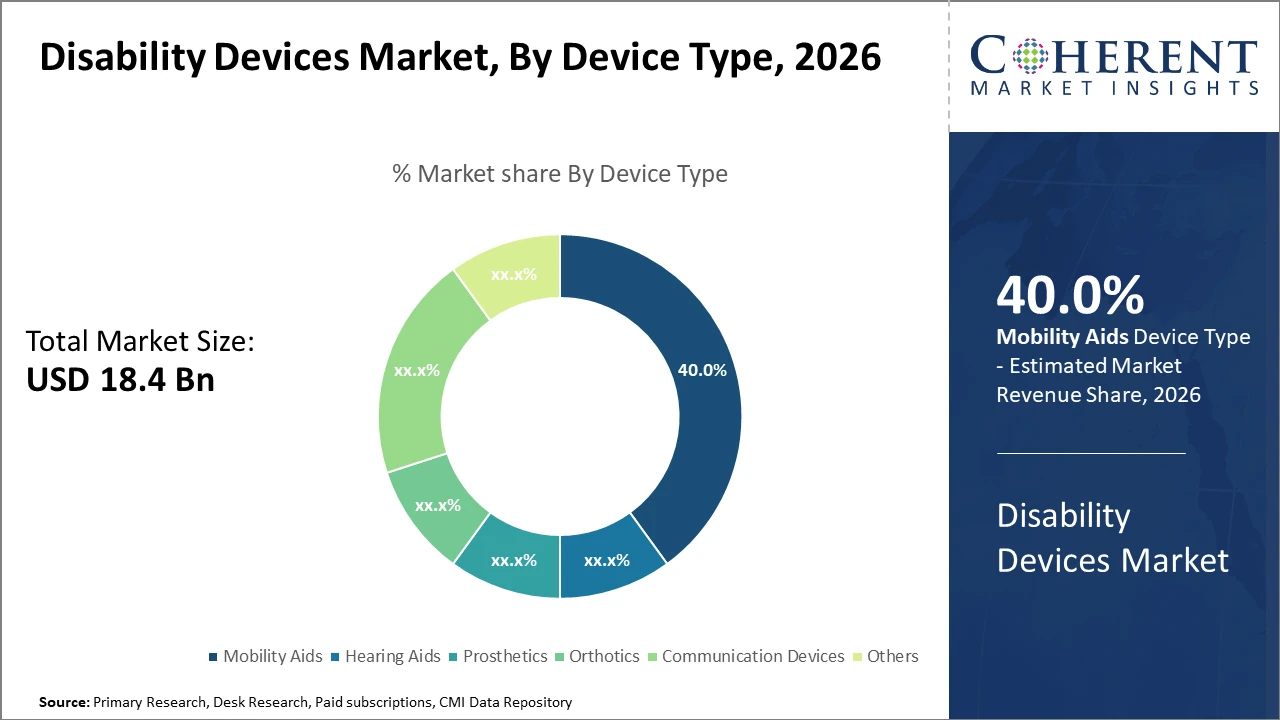
In the device type segment, Mobility Aids dominate with a 40% market share, driven primarily by increasing adoption of powered wheelchairs and advanced walkers in rehabilitation centers.
Hearing Aids represent the fastest-growing subsegment, witnessing over 15% CAGR due to miniaturization and the integration of AI features.
Prosthetics and Orthotics maintain steady growth, propelled by advancements in biomaterials and customized fittings.
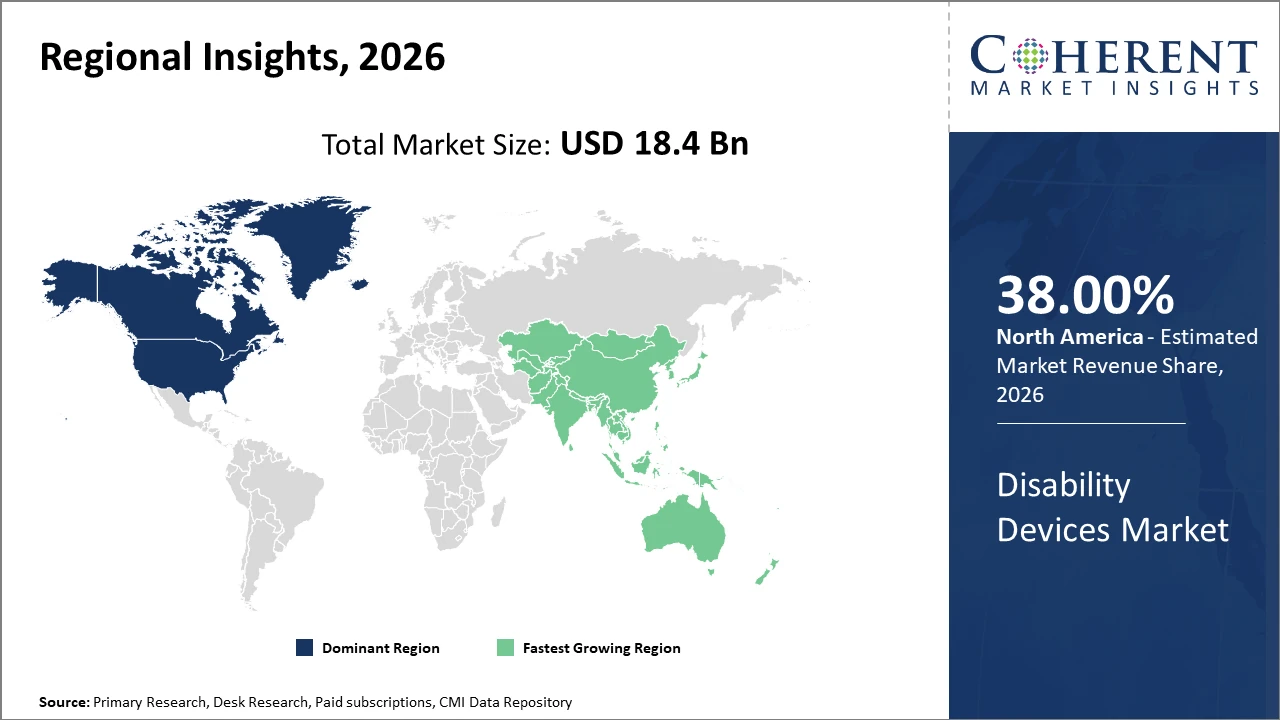
From a regional perspective, North America holds the largest Disability Devices market share, capturing approximately 38% of global revenue, boosted by robust healthcare infrastructure and significant R&D investments by market companies.
Asia Pacific emerges as the fastest-growing region, with a CAGR of 11.2%, supported by expanding government initiatives for disability support and rising disposable incomes in key countries like China and India.
Europe maintains substantial market revenue through innovation hubs and proactive regulatory frameworks that encourage the adoption of assistive technologies.
Disability Devices Market Segmentation Analysis
Disability Devices Market Insights, By Device Type
Mobility Aids dominate the market share with 40%. This dominance is fueled by increased adoption of powered wheelchairs, which provide enhanced mobility for elderly and disabled users, and walkers integrated with smart sensors for fall prevention, widely implemented across rehabilitation centers. Hearing Aids emerge as the fastest-growing subsegment, propelled by advancements in miniature electronics, AI noise cancellation, and connectivity with smartphones, allowing users seamless communication even in challenging environments. Prosthetics, with breakthroughs in biomaterials and 3D-printing for customized fit, continue to gain traction but at a comparatively moderate pace.
Disability Devices Market Insights, By Technology
Conventional Devices currently dominate with approximately 55% market share, given their affordability and broad acceptance, particularly in emerging markets. However, AI-Enabled Devices are the fastest-growing subsegment, demonstrating exponential adoption due to their capability for personalized adjustments and predictive analytics, improving user outcomes. Smart Devices, including IoT-enabled wheelchairs and hearing aids, bridge the gap between conventional and AI-enabled technologies by offering remote monitoring and enhanced connectivity, thus accelerating sales in developed regions.
Disability Devices Market Insights, By End-User
Hospitals dominate the market share at approximately 45% due to high demand for institutional-grade devices aiding acute and chronic care patients. Rehabilitation Centers represent the fastest-growing subsegment, bolstered by increasing focus on post-injury recovery and the integration of novel therapeutic equipment using AI-driven devices. Home Care is expanding steadily as elderly and disabled individuals seek independent living supported by assistive technologies. Personal-use devices maintain a niche but growing presence through consumer-driven adoption of hearing aids and communication aids, reflecting rising market awareness and accessibility.
Disability Devices Market Trends
The Disability Devices market trend exhibits rapid digitalization and increased adoption of AI-enabled smart devices that provide real-time feedback and remote monitoring, enhancing user independence.
The integration of cloud computing with prosthetics and hearing aids results in significant improvements in rehabilitation success rates, as demonstrated by clinical studies reported in 2024.
Sustainability and eco-conscious design in mobility aids have also become noteworthy, with companies investing heavily in biodegradable materials, addressing regulatory pressures as well as customer preferences.
Additionally, the rise of telehealth initiatives during 2026 has positively impacted distribution channels, expanding market revenue possibilities through online retail and digital health platforms.
Disability Devices Market Insights, By Geography
North America Disability Devices Market Analysis and Trends
In North America, the dominance in the Disability Devices market derives from a strong healthcare ecosystem, high R&D expenditure by market players, and supportive government policies promoting assistive technology adoption. The U.S. alone contributed to over 30% of global revenue in 2026, largely due to advanced rehabilitation infrastructure and rising geriatric populations demanding innovative mobility and hearing solutions. Key market companies focus on continuous product innovation, capturing significant industry share, and setting technological benchmarks.
Asia Pacific Disability Devices Market Analysis and Trends
Meanwhile, the Asia Pacific region exhibits the fastest growth in the Disability Devices market with a CAGR of 11.2%, driven by increasing government investments in health accessibility programs, expanding healthcare infrastructure, and growing awareness about disability inclusion. Countries like China and India are witnessing rapid urbanization and better funding for public health initiatives, which are boosting demand for cost-effective and technologically advanced devices. Local manufacturers increasingly collaborate with global players to enhance technological adoption and distribution reach, fueling business growth in this region.
Disability Devices Market Outlook for Key Countries
USA Disability Devices Market Analysis and Trends
The USA’s market is a significant contributor to the global disability devices industry owing to its well-established healthcare infrastructure and continuous advancements in medical technology. In 2024, U.S. government funding for assistive devices increased by 20%, which accelerated the adoption of smart mobility aids and AI-enabled prosthetics. Prominent companies such as Medtronic and Invacare have leveraged robust R&D capabilities and partnerships with rehabilitation centers, propelling the U.S. industry share. This ecosystem supports rapid innovation cycles and offers a competitive advantage in market revenue, driving the highest per capita spending on disability devices globally.
Germany Disability Devices Market Analysis and Trends
Germany's market is distinguished by its advanced manufacturing and healthcare technologies, supported by government incentives for disability accessibility. The country shows a strong preference for AI-powered hearing aids and precision orthotics, contributing to steady market growth. Key companies such as Ottobock and GN Store Nord have expanded production capacities in Germany, gaining market revenue through innovative product introductions in 2024. Robust reimbursement policies and a network of rehabilitation hospitals play critical roles in increasing device penetration, positioning Germany as a competitive hub within Europe.
Analyst Opinion
One key driver of market growth lies in the rising production capacity and affordability of technologically advanced devices, such as powered wheelchairs and hearing aids. In 2024, production rates increased by approximately 12% in the Asia Pacific due to favorable government subsidies, contributing notably to market share expansion in the region.
Demand-side indicators reveal growing imports of disability devices in regions with aging demographics, especially Europe and North America. For example, in 2026, hearing aid imports into the U.S. saw a 15% surge correlating with increased geriatric care services, underpinning the market revenue growth substantially.
Market dynamics also show a pivot towards multi-functionality in mobility aids, bridging rehabilitation and daily activity support. Recent adoption of smart prosthetics with advanced sensory feedback technology by military rehabilitation centers in 2024 has enhanced user adaptability, adding competitive differentiation to the disability devices market analysis.
Nano- and micro-sized hearing devices are gaining traction as discreet and effective solutions, especially in urban markets where aesthetic and portability considerations dominate. Approximately 20% of all hearing devices sold in 2026 were categorized under nano-sized subsegments, demonstrating the shift in consumer preferences and augmenting overall market revenue.
- Current Industry Events of 2026
- Market Size Estimation
- Regional Breakdown
- Competitive Landscape
- Customer Intelligence
- Segmental Analysis
- Pricing Analysis
- Key Market Drivers, Challenges & Future Trends
- Customized Insights Section
Market Scope
| Report Coverage | Details | ||
|---|---|---|---|
| Base Year: | 2025 | Market Size in 2026: | USD 18.4 billion |
| Historical Data for: | 2020 To 2024 | Forecast Period: | 2026 To 2033 |
| Forecast Period 2026 to 2033 CAGR: | 9.3% | 2033 Value Projection: | USD 34.7 billion |
| Geographies covered: |
| ||
| Segments covered: |
| ||
| Companies covered: | Invacare Corporation, Sonova Holding AG, Ottobock SE & Co. KGaA, Medtronic plc, GN Store Nord A/S, Sunrise Medical, William Demant Holding A/S, Cochlear Limited, Otto Bock Healthcare GmbH, ALPS Electric Co., Ltd. | ||
| Growth Drivers: |
| ||
Disability Devices Market Growth Factors
The increasing prevalence of disabilities and chronic conditions worldwide, with the WHO reporting over 1 billion people living with some form of disability in 2024, is stimulating device demand. Technological breakthroughs in AI and IoT integration are improving device usability and personalization, significantly enhancing market growth strategies as smart devices garner higher adoption rates. Supportive government initiatives and funding for disability access and assistive technology programs are fueling market players to innovate and expand offerings. For instance, U.S. government subsidies for powered wheelchair purchases increased by 18% in 2026, directly influencing market revenue. Rising consumer awareness and acceptance of advanced prosthetics and hearing aids, notably among younger demographics in developed economies, are expanding the overall market scope and accelerating business growth.
Disability Devices Market Development
In January 2024, Sunrise Medical launched Switch-It Vigo, a wireless head control system for power wheelchairs, developed in collaboration with Now Technologies Ltd. The device enables users with limited hand or arm mobility to control wheelchairs through precise head movements, offering customizable sensitivity, Bluetooth connectivity, and improved independence for individuals with complex mobility needs.
In mid-2024, Exobot Dynamics introduced the Exobot Hand, an advanced bionic prosthetic hand designed to deliver more intuitive and natural control. The prosthesis integrates smart sensors, adaptive grip patterns, and AI-enabled motion algorithms, allowing users to perform fine motor tasks with improved responsiveness, comfort, and real-time feedback, marking a significant step forward in next-generation prosthetic technology.
Key Players
Leading Companies of the Market
Invacare Corporation
Sonova Holding AG
Ottobock SE & Co. KGaA
Medtronic plc
GN Store Nord A/S
Sunrise Medical
William Demant Holding A/S
Cochlear Limited
Otto Bock Healthcare GmbH
ALPS Electric Co., Ltd.
Several market players have adopted aggressive growth strategies such as mergers and acquisitions, technology licensing, and strategic partnerships. For instance, in 2024, a leading hearing aid manufacturer expanded its smart device portfolio through the acquisition of an AI-driven technology startup, resulting in a 25% increase in market share in the smart hearing aid segment. Another company focused on extending its geographical footprint in the Asia Pacific by collaborating with regional distributors, contributing directly to a 15% rise in regional market revenue.
Disability Devices Market Future Outlook
The disability devices market is expected to grow steadily due to rising life expectancy and increasing prevalence of chronic conditions and disabilities. Technological innovation, including smart sensors, AI-enabled assistive devices, and robotic mobility solutions, will enhance functionality and personalization. Demand for home-based rehabilitation and remote monitoring solutions is also increasing. Emerging economies are anticipated to see higher adoption as healthcare access improves. Government initiatives supporting inclusivity and accessibility will further strengthen market growth. Overall, the market will move toward more intelligent, user-friendly, and integrated assistive solutions.
Disability Devices Market Historical Analysis
Historically, the disability devices market developed alongside advances in rehabilitation medicine and public healthcare systems. Early products mainly focused on basic mobility aids such as wheelchairs, crutches, and walkers, with limited customization or comfort. Over time, growing awareness of disability rights and inclusion led governments to introduce supportive policies, reimbursement frameworks, and accessibility standards. Technological progress in materials, electronics, and biomechanics enabled the development of advanced prosthetics, orthotics, and sensory assistive devices. The aging global population further expanded demand, especially for mobility and daily living aids. By the last decade, the market had evolved into a diverse ecosystem addressing physical, sensory, and cognitive impairments.
Sources
Primary Research Interviews:
Rehabilitation Physicians
Prosthetists, Occupational Therapists
Physiotherapists
Assistive Device Manufacturers
Databases:
WHO Disability Statistics
OECD Health Data
UN Disability Reports
Magazines:
Medical Design & Outsourcing
Rehab Management
Mobility Management
HealthTech Magazine
Medical Device Network
Journals:
Journal of Rehabilitation Research
Disability and Health Journal
Assistive Technology Journal
Prosthetics and Orthotics International
Archives of Physical Medicine
Newspapers:
The New York Times (Health)
The Guardian (Health)
Financial Times (Healthcare)
The Hindu (Health)
Reuters Health
Associations:
World Health Organization (WHO)
International Society for Prosthetics and Orthotics
Rehabilitation Engineering Society
American Academy of Orthotists
Disabled Living Foundation
Get access to 250+ pages report
Every segment, forecast, competitor profile and data table behind the analysis above — available for instant download.
- ESOMAR Member
- ISO 9001:2015 Certified
- D-U-N-S Registered
- GDPR & CCPA Compliant
Missing comfort of reading report in your local language? Find your preferred language:
Transform your Strategy with Exclusive Trending Reports
Frequently Asked Questions
The leading players include Invacare Corporation, Sonova Holding AG, Ottobock SE & Co. KGaA, Medtronic plc, and GN Store Nord A/S, among others, known for their diverse portfolios and technological innovations.
The market size is projected to reach USD 34.7 billion by 2033, growing at a CAGR of 9.3% from 2026 to 2033, reflecting increased device adoption and market expansion.
Hospitals and home care sectors show significant growth opportunities, as the demand for both institutional and personal use disability devices intensifies.
We expect greater integration of AI and IoT technologies with wearable devices, enhanced customization, and increased government funding to shape market trends.
The market is highly competitive with a focus on innovation, but challenges persist including high production costs, regulatory hurdles, and price sensitivity in emerging economies.
Companies frequently employ mergers and acquisitions, technology licensing, strategic partnerships, and geographic expansion to sustain business growth and market share.