

Rehabilitation Equipment Market Size and Share Analysis – Growth Trends and Forecast (2026–2033)
The global rehabilitation equipment market is projected to grow steadily over the forecast period, reaching approximately USD 16.88 Bn in 2026 and expanding to around USD 25.82 Bn by 2033, registering a CAGR of 6.1% (2026–2033). The growth is primarily driven by the increasing prevalence of physical disabilities, neurological disorders, stroke rehabilitation, and aging of the global population and rising adoption of home-based rehabilitation and advanced assistive technologies such as robotic rehabilitation systems and smart mobility devices. According to the World Health Organization (WHO), about 1.3 billion individuals around the world have disabilities, accounting for almost 16% of the global population, which further leads to the higher requirement of
Key Takeaways
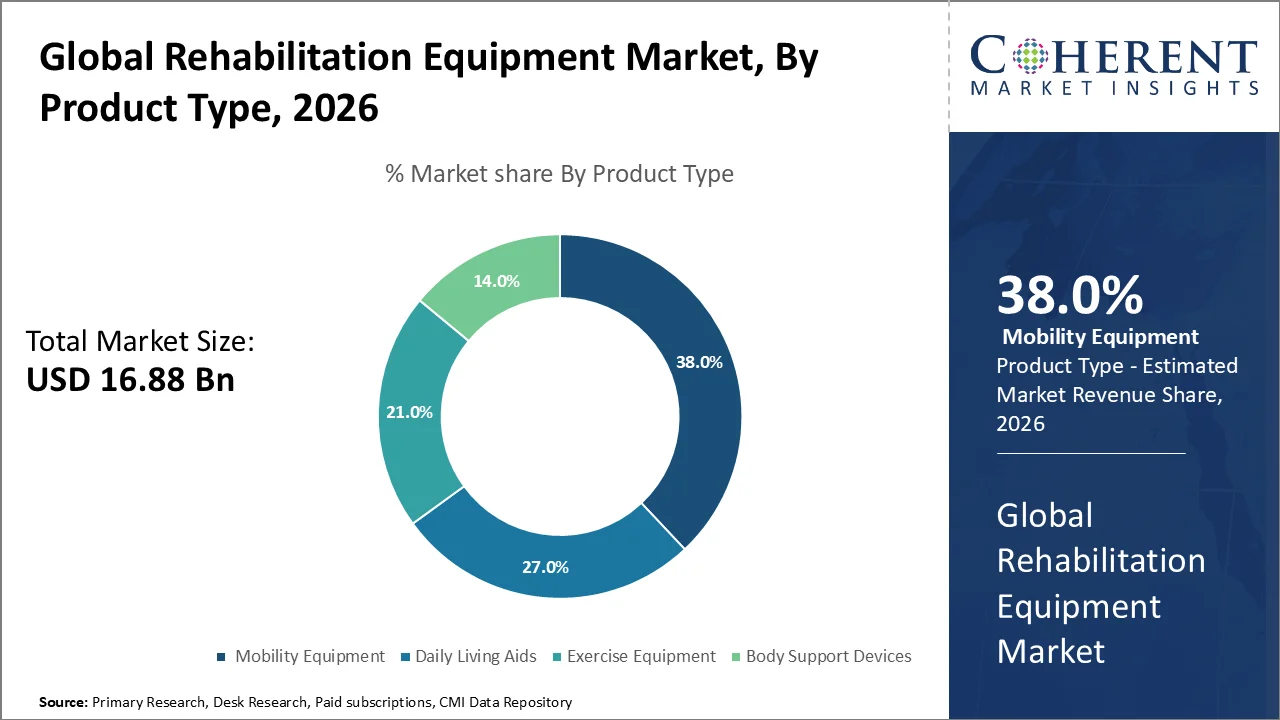
- Mobility Equipment segment is likely to dominate the market with 38.0% in 2026. The segment’s growth is driven by rising prevalence of stroke, osteoarthritis, spinal cord injuries, and age-related mobility impairments. According to WHO, 1 in 6 people worldwide will be aged 60 years or older by 2030, reflecting a rapidly ageing global population.
- Physiotherapy segment is set to lead with 52.0% in 2026. The segment’s growth is driven by rising cases of musculoskeletal disorders, sports injuries, neurological rehabilitation needs, and post-operative recovery demand. According to The Lancet Rheumatology, Musculoskeletal conditions are among the leading contributors to years lived with disability globally.
- Hospitals segment is expected to dominate with 50% in 2026. The segment’s dominance is due to high patient inflow for acute rehabilitation, post-surgical recovery programs, and availability of advanced rehabilitation infrastructure. According to the OECD Health Statistics, hospital-based rehabilitation accounts for post-acute care expenditure in developed healthcare systems, reflecting its central role in patient recovery pathways.
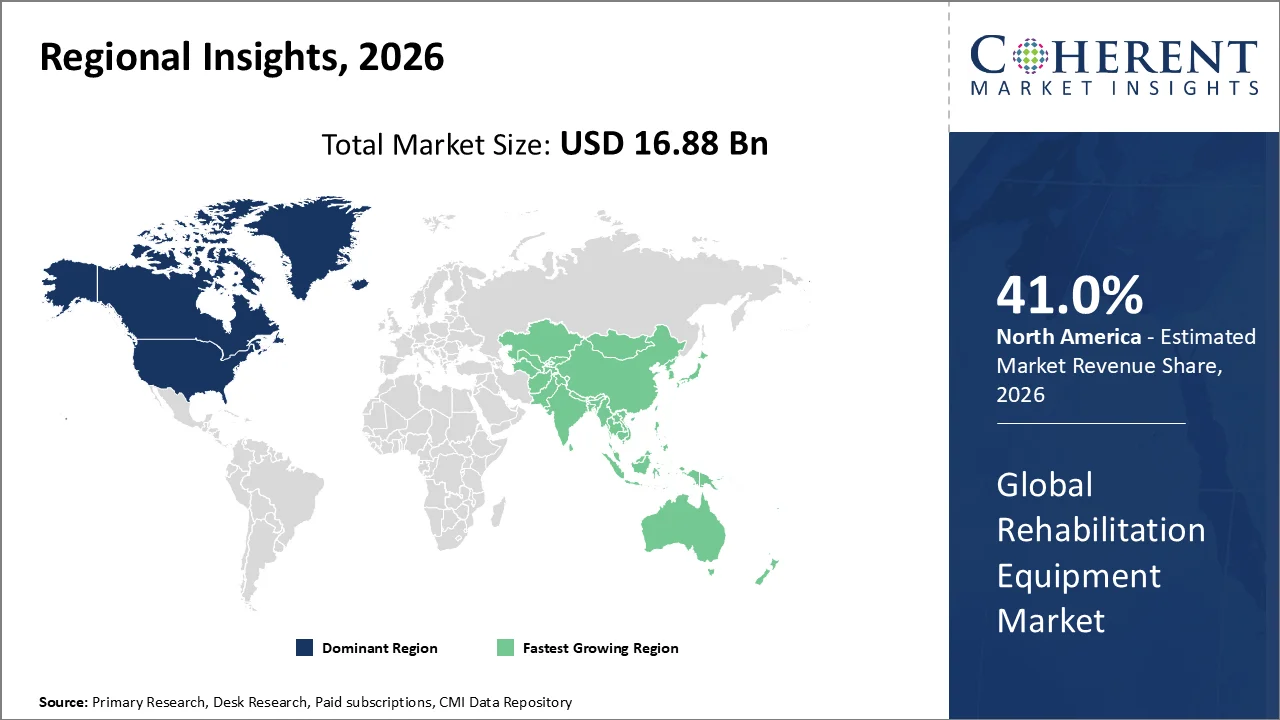
- North America is expected to acquire the prominent share of 41.0% in 2026. Robust expenditures on health care, the availability of state-of-the-art rehabilitation technologies, and well-established post-acute care systems are some of the key factors behind the growth of this market. According to statistics from the CDC, more than 60% of all U.S. adults have one chronic disease, leading to a higher demand for rehabilitation services.
Segmental Insights
Why is Mobility Equipment Segment Acquiring the Largest Share?
Based on product type, the Mobility Equipment category is expected to hold the largest market share of 38.0% in 2026. The segment’s expansion is attributed to the increasing prevalence of stroke, osteoarthritis, spinal cord injuries, and age-related mobility impairments, leading to a substantial rise in the long-term dependency on assistive mobility equipment such as wheelchairs, walkers, and mobility scooters.
According to the World Health Organization (WHO), an estimated 80 million people globally require a wheelchair to assist their mobility, and this number is expected to increase as populations age and the prevalence of chronic health conditions rises, reinforcing the growing demand for mobility equipment such as wheelchairs, walkers, and mobility scooters.
In January 2026, RoboCT introduced the GoGo Exoskeleton Series, a wearable mobility device that weighs about 2.3 kg per side.
- Current Industry Events of 2026
- Market Size Estimation
- Regional Breakdown
- Competitive Landscape
- Customer Intelligence
- Segmental Analysis
- Pricing Analysis
- Key Market Drivers, Challenges & Future Trends
- Customized Insights Section
Why is Physiotherapy Segment Leading the Market?
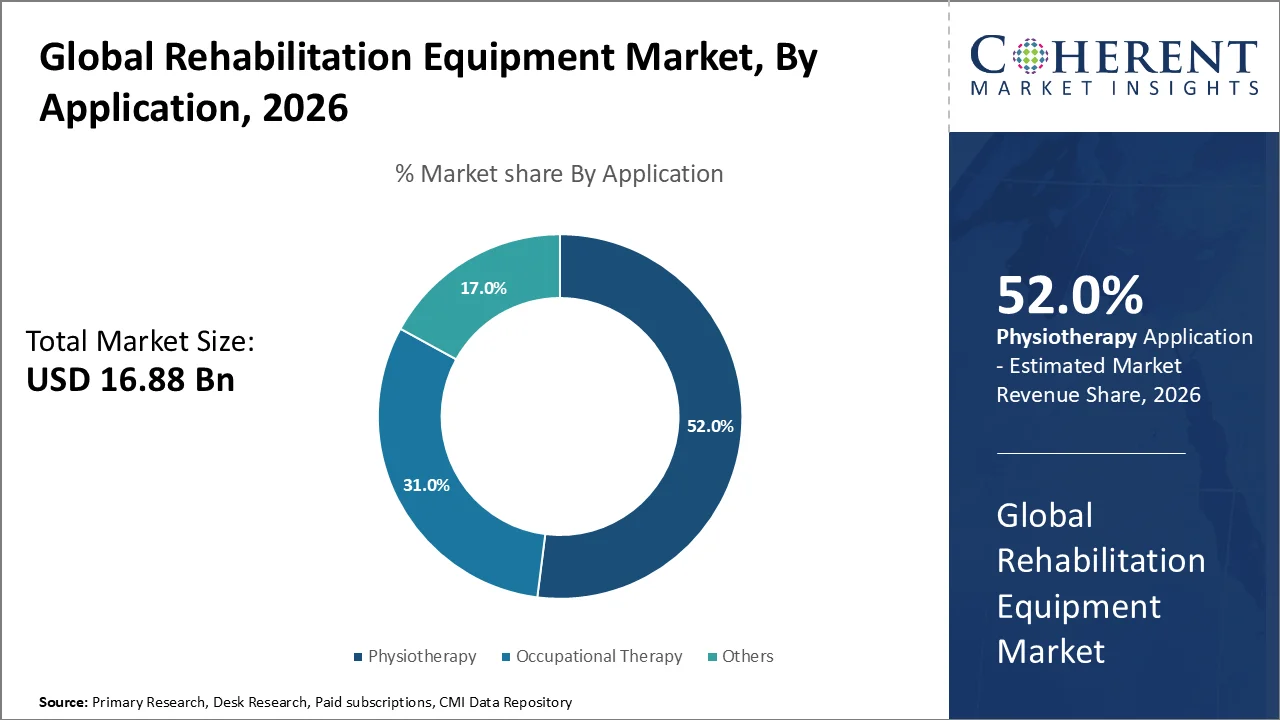
Based on application, Physiotherapy segment is anticipated to hold 52.0% share in 2026. The segment’s rise is attributed to the increasing incidence of musculoskeletal problems, sports injuries, neurological rehabilitation requirements, and demand for post-operative recovery, all of which require structured physical rehabilitation programs.
According to the World Health Organization (WHO), approximately 1.71 billion people worldwide are living with musculoskeletal conditions, making them the leading contributor to disability globally.
Based on the EU classification criteria, the AI physiotherapy platform from Flok Health was classified as a Class IIa medical device in October 2025. It is among the first automated digital physiotherapy platforms available in Europe.
Why do Hospitals Dominate the End-User Segment?
In terms of end user, Hospitals are anticipated to capture around 50% of the market share by 2026 owing to the significant amount of patients that must be admitted for rehab after acute injury or surgery, along with the use of specialized equipment such as neural and robotic rehabilitation devices.
Rehabilitation services in outpatient and home-based care often constitute the minority out of all rehabilitation services. For example, in Germany, rehabilitation in outpatient care represented 12% of all cases and 9.5% of all days provided, with the remainder being provided in an inpatient setting.
In December 2025, Sancheti Hospital (Pune, India) has increased its capacity for rehabilitation with the opening of a new Advanced OrthoCare Facility and AI Innovation Lab.
Rising Stroke, Neurological, and Musculoskeletal Disorders Accelerating Market Expansion
The growing trend of neurological conditions like Parkinson’s, stroke, and injuries to the spinal cord are among some of the factors that contributes to the growing demand for rehabilitation devices. These conditions often require long-term physical rehabilitation and assistive mobility support.
As per the World Stroke Organization reports that about 12 million new stroke cases occur worldwide each year, and many survivors need long-term rehabilitative care.
In July 2025, Wandercraft, in partnership with NVIDIA and AWS, unveiled a cutting-edge AI-powered self-balancing exoskeleton system intended to aid in the recovery of stroke and spinal injuries.
Robotics, AI, and Smart Rehabilitation Systems is a Major Breakthrough in the Market
The rehabilitation equipment market is rapidly evolving with the adoption of wearables, robotic-assisted therapy, and AI-enabled rehabilitation systems that improve patient involvement and recovery outcomes emerge.
According to a 2025 review published in the peer-reviewed journal Healthcare, evidence from clinical studies demonstrates that AI-driven robotic rehabilitation systems significantly improve motor skills, accelerate recovery rates, and enable highly personalized therapy through real-time adaptation to patient performance.
In May 2025, Ekso Bionics announced its acceptance into the NVIDIA Connect Program to support a strategic initiative aimed at building a proprietary foundation model for human motion and integrating AI capabilities across its Enterprise Health and Personal Health devices.
Current Events and Their Impact
Current Event | Description and its Impact |
FDA Quality Management System Regulation Takes Effect in the U.S. (February 2026) |
|
CMS 2026 DMEPOS Fee Schedule and Competitive Bidding Updates in the U.S. |
|
Rehabilitation Equipment Market Trends
- The increasing use of robotically assisted treatments and AI-supported therapy is influencing the way treatment outcomes are being defined. An example of this is the fact that in order to aid in recovery from stroke and spinal injuries in terms of mobility, the use of robotic exoskeletons and gait training aids has become common practice. According to a 2025 systematic review published in Frontiers in Human Neuroscience, robotic-assisted rehabilitation significantly improved motor recovery among stroke survivors, based on evidence from 13 randomized controlled trials involving 424 patients.
- Smart rehabilitation is increasingly enabled through IoT connectivity, wearable sensors, and AI-driven analytics. With an aim of improving compliance and treatment outcomes, today’s advanced rehabilitation technology includes mobility monitoring, artificial intelligence recovery analysis, and therapy customization.
- Hospitals are increasingly investing in advanced rehabilitation infrastructure and robotic therapy capabilities. The number of orthopedic as well as post-stroke diseases that are currently being treated in robotic rehabilitation centers is increasing in number.
- The new technologies include exoskeleton robots and BCIs. According to UC Irvine-led research on a bidirectional brain–computer interface, a paralyzed participant was able to control a robotic exoskeleton using brain signals while receiving artificial leg sensation through sensory cortex stimulation, achieving 93% accuracy in step-counting tasks and up to 96% accuracy in identifying different types of leg sensations during testing
Regional Insights
North America Dominates Rehabilitation Equipment Market Owing to Advanced Healthcare Infrastructure and High Technology Adoption
North America is predicted to hold the dominant share of 41.0% in 2026. Strong healthcare spending, high uptake of innovative rehabilitation technology and a developed post-acute care ecosystem, particularly in the U.S. and Canada, are driving the region’s growth. The region boasts a large concentration of specialist rehabilitation hospitals and early adoption of robotic physiotherapy, AI-assisted gait training systems and neuro-rehabilitation technologies.
The CDC reports that 6 in 10 adults in the U.S. live with at least one chronic disease, and 4 in 10 have two or more conditions, significantly increasing long-term rehabilitation requirements.
Asia Pacific Emerging as the Highest Growth Market
The Asia Pacific region is projected to witness the fastest growth in the Rehabilitation Equipment Market from 2026 to 2033. The region’s growth is driven by growing investments in healthcare, a growing older population, expanding rehabilitation facilities, and strong government measures to boost digital health and assistive technologies.
According to the Government of India, Ministry of Health and Family Welfare (MoHFW), public healthcare spending has been steadily increasing via national health programmes such as Ayushman Bharat, thereby boosting access to post-acute care and rehabilitation services in rural and urban hospitals.
In January 2025, Kerala-based Genrobotics launched India's first robotic-assisted paediatric gait trainer, the G-Gaiter Paediatric, marking a significant advancement in rehabilitation technology in the Asia Pacific region.
Modern Healthcare Infrastructure and High Prevalence of Diseases Drive Rehabilitation Equipment Market Growth in the U.S.
The rehabilitation equipment market in the United States is experiencing exponential growth due to a high prevalence of diseases such as arthritis, stroke, and other illnesses which lead to disabilities. The market is also expected to grow due to the high degree of support offered for research on rehabilitating equipment in the country.
According to CDC data, stroke is one of the main causes of long-term disability in the U.S as well as a key driver for the demand for rehabilitation equipment, with about 795,000 people in the U.S having a stroke each year.
In March 2025, Lifeward (ReWalk Robotics) launched the ReWalk 7 personal exoskeleton in the U.S. market following FDA clearance, enabling spinal cord injury patients to access upgraded robotic walking assistance systems featuring cloud connectivity, adaptive gait control, and improved mobility performance.
China Rehabilitation Equipment Market Trends
China’s rehabilitation equipment market is growing rapidly, driven by its huge aging population, increasing chronic disease burden and strong government support for rehabilitation medicine and assistive technologies. The country is also fast-tracking digital healthcare transformation through smart hospitals, AI-supported rehabilitation and tele-rehabilitation technologies.
According to China's National Bureau of Statistics, China's elderly population is projected to exceed 400 million by 2035, intensifying the need for rehabilitation services, assistive technologies, and long-term care solutions.
Who are the Major Companies in Rehabilitation Equipment Industry
Some of the major key players in Rehabilitation Equipment Market are Roma Medical Aids Ltd., Hill-Rom Services Inc., GF HEALTH PRODUCTS, Dynatronics Corporation, Medline Industries, Inc., Ekso Bionics, Invacare Corporation, Drive DeVilbiss Healthcare, Hospital Equipment Mfg. Co., and Caremax Rehabilitation Equipment Co. Ltd.
Key News
- In May 2025, Invacare Corporation officially launched its global initiative “Move for Mobility 2025”, a worldwide fundraising and awareness campaign aimed at improving access to mobility for people with disabilities through its long-standing partnership with Free Wheelchair Mission.
- In April 2024, GF Health Products, Inc. (Graham-Field) announced the acquisition of Transfer Master Products, Inc., a manufacturer of hi-low adjustable hospital and homecare beds, to expand its rehabilitation and homecare product portfolio.
Market Report Scope
Rehabilitation Equipment Market Report Coverage
| Report Coverage | Details | ||
|---|---|---|---|
| Base Year: | 2025 | Market Size in 2026: | USD 16.88 Bn |
| Historical Data for: | 2020 To 2024 | Forecast Period: | 2026 To 2033 |
| Forecast Period 2026 to 2033 CAGR: | 6.1% | 2033 Value Projection: | USD 25.82 Bn |
| Geographies covered: |
| ||
| Segments covered: |
| ||
| Companies covered: | Roma Medical Aids Ltd., Hill-Rom Services Inc., GF HEALTH PRODUCTS, Dynatronics Corporation, Medline Industries, Inc., Ekso Bionics, Invacare Corporation, Drive DeVilbiss Healthcare, Hospital Equipment Mfg. Co., and Caremax Rehabilitation Equipment Co. Ltd. | ||
| Growth Drivers: |
| ||
| Restraints & Challenges: |
| ||
Analyst Opinion
- The need for rehabilitation devices will be influenced by the structural demand caused by an increase in the burden of disease and disability. According to the WHO, more than 2.4 billion individuals require rehabilitation due to their medical condition. Hence, rehabilitation should be viewed as part of universal health coverage rather than an extra care service.
- The growth of aging populations is creating a non-cyclical demand for rehabilitation devices. In 2050, it will be estimated that there will be 1.6 billion people above the age of 65 years across the globe, states the United Nations (UN DESA). There will be a considerable increase in the demand for assistive devices, locomotion devices, and gait training programs.
- The modernization of the healthcare infrastructure and advancements made in post-acute care are some of the factors leading to market growth. The rapidly growing share of healthcare consumption in developed countries, attributed to rehab and long-term care, is as a result of decreasing lengths of stay in hospitals and the focus on outpatient rehabilitation, according to data from the OECD.
Speak to the analyst
Want personalized insights?
Take the findings above to one of our principal consultants, or have the report rebuilt around the segments, geographies and competitors you actually track.
Market Segmentation
- By Product Type (Revenue, USD Bn, 2021-2033)
- Daily Living Aids
- Exercise Equipment
- Body Support Devices
- Mobility Equipment
- By Application (Revenue, USD Bn, 2021-2033)
- Physiotherapy
- Occupational Therapy
- Others
- By End User (Revenue, USD Bn, 2021-2033)
- Hospitals
- Rehab Centers
- Others
- Global Rehabilitation Equipment Market , By Region (Revenue, USD Bn, 2021-2033)
- North America
- U.S.
- Canada
- Latin America
- Brazil
- Mexico
- Argentina
- Rest of Latin America
- Europe
- Germany
- U.K.
- France
- Italy
- Spain
- Russia
- Rest of Europe
- Asia Pacific
- China
- India
- Japan
- Australia
- South Korea
- ASEAN
- Rest of Asia Pacific
- Middle East
- GCC
- Israel
- Rest of Middle East
- Africa
- South Africa
- Central Africa
- North Africa
- North America
- Key Players
- Roma Medical Aids Ltd.
- Hill-Rom Services Inc.
- GF HEALTH PRODUCTS
- Dynatronics Corporation
- Medline Industries, Inc.
- Ekso Bionics
- Invacare Corporation
- Drive DeVilbiss Healthcare
- Hospital Equipment Mfg. Co.
- Caremax Rehabilitation Equipment Co. Ltd.
Sources
Primary Research Interviews
- Rehabilitation Equipment Manufacturers
- Mobility Equipment Manufacturers
- Physiotherapy & Exercise Equipment Providers
- Rehabilitation Robotics and Exoskeleton Developers
- Hospital Procurement Managers
- Rehabilitation Physicians and Physiotherapists
- Rehabilitation Center Administrators
- Home Healthcare Service Providers
- Distributors and Medical Device Supplier
- Others
Databases
- Bloomberg Terminal
- S&P Global Market Intelligence
- Thomson Reuters Eikon
- Factiva
- D&B Hoovers
- PitchBook
- Crunchbase
- Statist
- Others
Magazines
- Rehab Management Magazine
- Mobility Management Magazine
- HME Business
- Healthcare Business Today
- Medical Design & Outsourcing
- Medical Device Network
- Becker's Hospital Review
- Others
Journals
- Archives of Physical Medicine and Rehabilitation
- Journal of NeuroEngineering and Rehabilitation
- Disability and Rehabilitation Journal
- American Journal of Physical Medicine & Rehabilitation
- Journal of Rehabilitation Medicine
- Assistive Technology Journal
- IEEE Transactions on Neural Systems and Rehabilitation Engineering
- Others
Newspapers
- Reuters
- Bloomberg News
- The Wall Street Journal
- Financial Times
- The New York Times
- USA Today
- The Economic Times
- Others
Associations
- American Physical Therapy Association (APTA)
- World Federation for NeuroRehabilitation (WFNR)
- International Society of Physical and Rehabilitation Medicine (ISPRM)
- American Congress of Rehabilitation Medicine (ACRM)
- Rehabilitation Engineering and Assistive Technology Society of North America (RESNA)
- American Occupational Therapy Association (AOTA)
- International Society for Prosthetics and Orthotics (ISPO)
- Others
Public Domain Sources
- World Health Organization (WHO)
- U.S. Centers for Disease Control and Prevention (CDC)
- National Institutes of Health (NIH)
- U.S. Food and Drug Administration (FDA)
- Organisation for Economic Co-operation and Development (OECD)
- United Nations Department of Economic and Social Affairs (UN DESA)
- National Bureau of Statistics of China (NBS)
- Ministry of Health and Family Welfare (MoHFW), India
- National Health Commission of China (NHC)
- World Bank Open Data
- Others
Proprietary Elements
- CMI Data Analytics Tool
- Proprietary CMI Existing Repository of Information for the Last 8 Years
- Proprietary CMI Industry Expert Interview Repository
- CMI Market Estimation and Forecasting Model
- Proprietary CMI Healthcare Device Database
Get access to 250+ pages report
Every segment, forecast, competitor profile and data table behind the analysis above — available for instant download.
- ESOMAR Member
- ISO 9001:2015 Certified
- D-U-N-S Registered
- GDPR & CCPA Compliant
Missing comfort of reading report in your local language? Find your preferred language:
Transform your Strategy with Exclusive Trending Reports
Frequently Asked Questions
The Rehabilitation Equipment Market is expected to grow from USD 16.88 Billion in 2026 to approximately USD 25.82 Billion by 2033, at a CAGR of 6.1% during the forecast period.
The high cost of advanced rehabilitation technologies, limited reimbursement coverage in some regions, shortage of skilled rehabilitation professionals, unequal access to rehabilitation services, and high maintenance costs of robotic rehabilitation systems are the key factors hampering market growth.
The rising geriatric population, increasing prevalence of stroke and musculoskeletal disorders, growing demand for post-acute care, expansion of home healthcare services, and technological advancements in robotics, AI-assisted physiotherapy, and smart rehabilitation systems are driving market growth.
The Rehabilitation Equipment Market is anticipated to grow at a CAGR of approximately 6.1% between 2026 and 2033.
Demand for mobility equipment is increasing due to the rising incidence of stroke, arthritis, spinal cord injuries, Parkinson’s disease, and age-related mobility impairments. Growing awareness of independent living and home-based care is also supporting adoption.
The Rehabilitation Equipment Market comprises medical devices and assistive technologies used to restore, improve, or maintain physical function and mobility in patients recovering from injury, illness, surgery, neurological disorders, or age-related disabilities.
The market outlook remains positive due to expanding rehabilitation needs among aging populations, increasing healthcare investments, rapid adoption of robotic and AI-enabled rehabilitation solutions, and growing demand for home-based rehabilitation services.