

Elastomeric Coating Market Size and Forecast — 2026 - 2033
The Global Elastomeric Coating Market size is estimated to be valued at USD 2.5 billion in 2026 and is expected to reach USD 4.8 billion by 2033, exhibiting a compound annual growth rate (CAGR) of 9.5% from 2026 to 2033.
Overview
Elastomeric coating is a flexible, rubber-like protective paint used mainly on exterior surfaces such as roofs, walls, and masonry. Made from acrylic or polymer-based materials, it can stretch and return to its original shape without cracking, making it ideal for surfaces exposed to temperature changes and weather. Elastomeric coatings create a waterproof, seamless barrier that helps prevent leaks, moisture intrusion, and surface deterioration. They are commonly applied on concrete, stucco, metal, and roofing systems to improve durability and energy efficiency by reflecting sunlight and reducing heat absorption. Their flexibility and thickness allow them to bridge small cracks and extend surface lifespan.
Key Takeaways
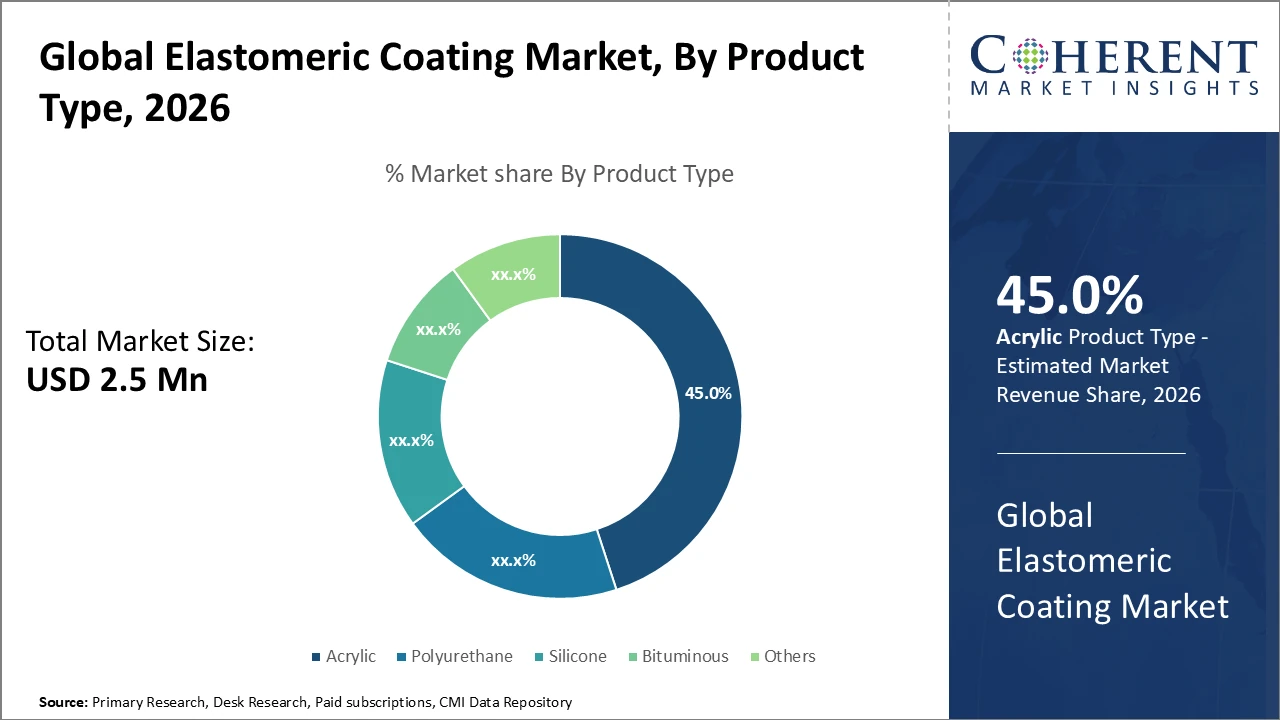
The acrylic product segment dominates with 45% market share, attributed to its cost-effectiveness and broad applicability in commercial buildings. Polyurethane is the fastest-growing subsegment, driven by superior performance features and rising demand from the automotive industry.
Building and construction remains the largest end-use application, accounting for 58% of market revenue due to continuous global infrastructure development. Marine and industrial sectors are showing promising growth with specialized elastomeric coatings.
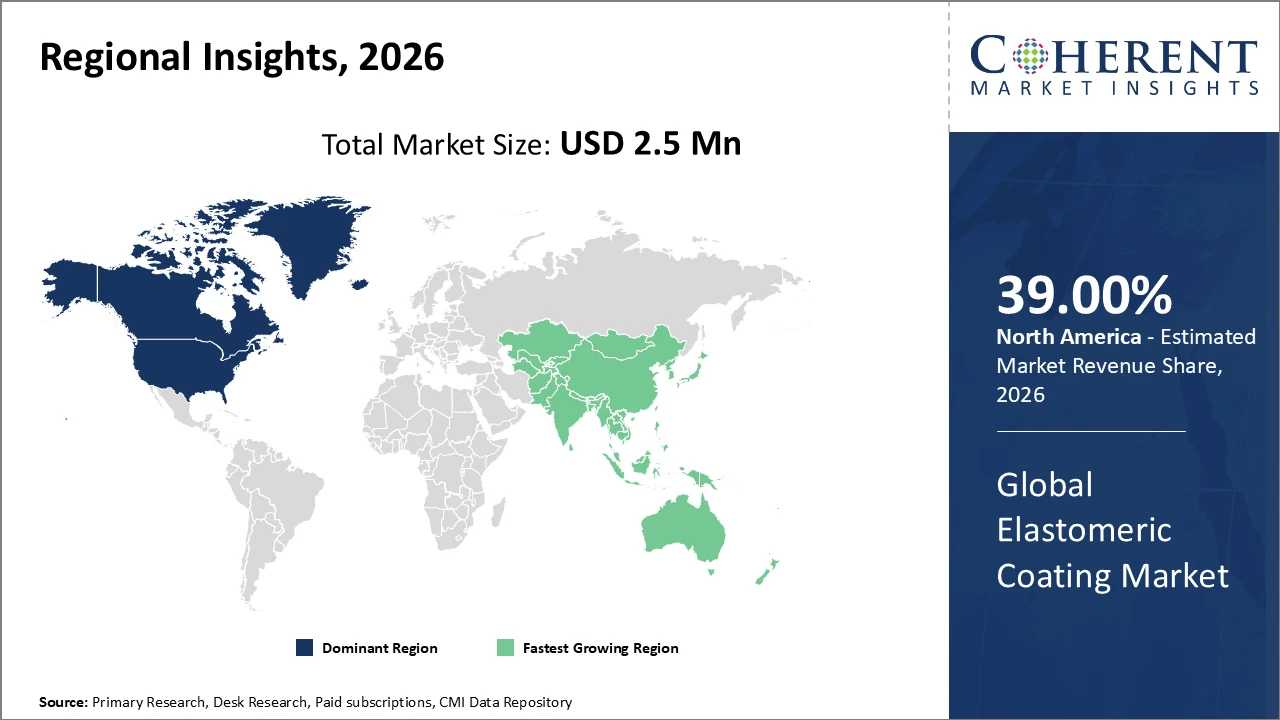
North America leads the market with a strong industrial ecosystem and regulatory support, holding an estimated 30% of the market share. Asia Pacific is the fastest-growing region, driven by robust infrastructure investments and a projected CAGR above 11%.
Europe’s market growth is moderate but stable, fueled by innovations in automotive coatings and stringent environmental regulations that encourage advanced elastomeric products.
Elastomeric Coating Market Segmentation Analysis
Elastomeric Coating Market Insights, By Product Type
Acrylic dominates the elastomeric coatings market with a 45% share, favored for its excellent weather resistance, cost-effectiveness, and permeability, making it ideal for large commercial building projects. Polyurethane is the fastest-growing subsegment, driven by superior chemical resistance and flexibility, particularly in automotive applications requiring high durability. Silicone coatings, valued for hydrophobicity and temperature resistance, are gaining popularity in marine and industrial sectors. Bituminous coatings are primarily applied in waterproofing for infrastructure projects. Other specialty blends serve niche markets, offering tailored solutions for energy efficiency, corrosion protection, and extreme environmental conditions, further expanding the product portfolio and market reach.
Elastomeric Coating Market Insights, By Application
Building and construction holds the largest elastomeric coatings market share at 58%, driven by ongoing global construction activities that emphasize durable, insulating, and weather-resistant coatings. The automotive segment shows the highest growth potential, fueled by innovations in lightweight vehicles requiring flexible protective coatings for undersides, chassis, and structural components. Industrial applications, including machinery protection and pipeline coatings, maintain steady demand but face pricing pressures. Marine coatings, though smaller in share, are expanding as shipbuilders increasingly adopt non-corrosive elastomeric paints to enhance vessel longevity. The ‘Others’ category, covering aerospace and electronics, grows gradually due to stringent performance and safety requirements.
Elastomeric Coating Market Insights, By End-Use Industry
Commercial use dominates the elastomeric coatings market due to strong demand in office buildings, warehouses, and retail spaces, where thermal insulation and weather protection are priorities. Infrastructure applications, including bridges, tunnels, and transportation facilities, follow closely, requiring elastic and durable coatings for long-term performance. The automotive segment is the fastest-growing, driven by trends in lightweight vehicles and regulatory emphasis on durability and emissions compliance. Residential applications maintain steady growth, mainly for weatherproofing roofs and walls amid increasing renovation projects. The Others category, covering specialized industrial uses and marine vessels, experiences moderate but consistent expansion.
Elastomeric Coating Market Trends
The elastomeric coatings market is shifting toward sustainable and technologically advanced materials, reflecting growing environmental and performance demands.
In 2025, waterborne acrylic elastomeric coatings accounted for over 25% of product sales, highlighting increased focus on eco-friendly and regulatory-compliant solutions.
Innovations such as nanotechnology-enhanced coatings improved abrasion resistance by approximately 18%, promoting adoption in demanding applications like automotive undercoats and industrial surfaces.
Smart coatings with self-healing capabilities, introduced by select manufacturers in 2026, aim to extend asset lifespans, reduce maintenance costs, and transform traditional product portfolios.
Elastomeric Coating Market Insights, By Geography
North America Elastomeric Coating Market Analysis and Trends
In North America, the elastomeric coatings market is dominated by high industrial activity, well-developed infrastructure, and stringent environmental regulations promoting eco-friendly products. Increased government spending on infrastructure, including the USD 1 trillion infrastructure bill passed in 2025, has significantly boosted demand for coatings in commercial buildings, bridges, and transportation facilities. Major companies such as Sherwin-Williams and PPG Industries have strengthened their regional presence through extensive R&D and manufacturing operations, contributing to approximately 30% of the regional market share and supporting technological innovation and market growth.
Asia Pacific Elastomeric Coating Market Analysis and Trends
Meanwhile, Asia Pacific is the fastest-growing elastomeric coatings market, with a CAGR exceeding 11%, driven by rapid urbanization, industrialization, and expanding housing development, especially in China and India. Supportive government policies promoting affordable housing, green building initiatives, and sustainable construction practices further accelerate market growth. The entry of Nippon Paint into India with innovative elastomeric product lines has enabled the company to capture significant market revenue, establishing a strong regional presence and contributing to the overall expansion and adoption of high-performance, eco-friendly elastomeric coatings.
Elastomeric Coating Market Outlook for Key Countries
USA Elastomeric Coating Market Analysis and Trends
The United States elastomeric coatings market benefits from advanced infrastructure and a strong automotive sector. Intensified renovation activities, coupled with strict EPA regulations on VOC emissions, have accelerated adoption of high-performance waterborne coatings. In 2025, market players reported a 12% increase in product demand, primarily driven by municipal, commercial, and public building projects. Companies such as RPM International have capitalized on expansive distribution networks and continuous portfolio innovation, supporting steady revenue growth. This combination of regulatory compliance, infrastructure development, and strategic market initiatives continues to underpin U.S. market expansion.
Germany Elastomeric Coating Market Analysis and Trends
The Germany elastomeric coatings market is driven by a mature construction sector, strong automotive industry, and stringent environmental regulations promoting sustainable and low-VOC products. Acrylic coatings dominate due to cost-effectiveness and weather resistance, while polyurethane and silicone variants gain traction in industrial and marine applications. Renovation and infrastructure projects, particularly in commercial buildings and transport facilities, support steady demand. Technological innovations such as nanotechnology-enhanced and self-healing coatings are increasingly adopted to improve durability and reduce maintenance. Key players, including BASF SE and Sika AG, invest in R&D and production, strengthening market competitiveness and growth.
Analyst Opinion
An increase in construction activities worldwide, particularly in Asia Pacific and North America, is a major market driver. Infrastructure investments in India and China rose by approximately 8.2% and 7.6% respectively in 2025, boosting demand for weather-resistant elastomeric coatings.
Environmental compliance is shaping product formulations and demand. Water-based elastomeric coatings saw a 12% increase in sales volume in 2024, driven by stricter global VOC emission regulations.
End-user diversification is influencing market growth, with the automotive sector in Europe and North America increasingly using elastomeric coatings for vehicle underbodies and protective layers. Automotive coating applications in the U.S. grew 14% year-on-year in 2025.
Pricing dynamics are under upward pressure due to rising raw material costs, particularly polymer precursors. Elastomeric resin prices increased by 6.7% in 2024, impacting market revenue while companies balance competitive pricing strategies.
- Current Industry Events of 2026
- Market Size Estimation
- Regional Breakdown
- Competitive Landscape
- Customer Intelligence
- Segmental Analysis
- Pricing Analysis
- Key Market Drivers, Challenges & Future Trends
- Customized Insights Section
Market Scope
| Report Coverage | Details | ||
|---|---|---|---|
| Base Year: | 2025 | Market Size in 2026: | USD 2.5 billion |
| Historical Data for: | 2020 To 2024 | Forecast Period: | 2026 To 2033 |
| Forecast Period 2026 to 2033 CAGR: | 9.5% | 2033 Value Projection: | USD 4.8 billion |
| Geographies covered: |
| ||
| Segments covered: |
| ||
| Companies covered: | Wacker Chemie AG, BASF SE, Jotun Group, Axalta Coating Systems, Hempel A/S, PPG Industries, Inc., RPM International Inc., Kansai Paint Co. Ltd., The Valspar Corporation, Akzo Nobel N.V. | ||
| Growth Drivers: |
| ||
Elastomeric Coating Market Growth Factors
The demand for sustainable and high-performance coatings in the construction and automotive sectors continues to drive growth in the elastomeric coatings market. Rapid urbanization and large-scale government infrastructure projects are generating substantial industrial demand. Advances in raw material technologies have enhanced product durability, flexibility, and ease of application, further supporting market expansion. Additionally, increasing awareness of energy-efficient building materials is boosting the adoption of elastomeric coatings, as they help reduce thermal conductivity. This trend is reflected in a 9% rise in commercial building retrofit projects globally in 2025, highlighting the growing importance of performance-oriented and eco-friendly coatings.
Elastomeric Coating Market Development
In 2025, Sherwin-Williams launched a new line of waterborne acrylic elastomeric coatings in North America, designed to meet stringent VOC regulations and provide superior weather resistance for commercial and residential buildings. This development strengthened the company’s sustainable product portfolio, expanded market share, and supported growing demand for eco-friendly, high-performance coatings.
Key Players
Leading Companies of the Market
Wacker Chemie AG
BASF SE
Hempel A/S
Jotun Group
Axalta Coating Systems
The Valspar Corporation
Kansai Paint Co. Ltd
PPG Industries Ltd.
RPM International Inc.
Akzo Nobel N.V.
Several key players in the elastomeric coatings market have pursued growth strategies including manufacturing expansion and strategic partnerships to strengthen market presence. In 2025, a leading company increased its production capacity by 20% in the Asia Pacific region, enhancing delivery efficiency and responsiveness to rising demand, which resulted in a 15% revenue increase. Another prominent player focused on R&D for silicone-based elastomeric coatings in 2024, developing a new product portfolio that captured 10% of the market share within its first year. These initiatives reflect the industry’s emphasis on innovation, regional expansion, and responsiveness to evolving market needs.
Elastomeric Coating Market Future Outlook
The future outlook for the elastomeric coatings market is highly promising, driven by increasing demand for sustainable, high-performance, and energy-efficient coatings across construction, automotive, and industrial sectors. Rapid urbanization, infrastructure development, and renovation activities in emerging and developed markets are expected to sustain strong growth. Technological advancements, including self-healing, nanotechnology-enhanced, and waterborne formulations, will improve durability, flexibility, and environmental compliance, further boosting adoption. Regions like Asia Pacific are projected to witness rapid expansion, while North America and Europe focus on innovation and regulatory adherence. Overall, the market is poised for long-term growth, supported by environmental awareness and evolving performance requirements.
Elastomeric Coating Market Historical Analysis
The historical analysis of the elastomeric coatings market highlights steady growth over the past decade, driven by rising global construction activities, infrastructure expansion, and increasing demand for durable and weather-resistant coatings. Acrylic coatings emerged as the dominant product segment due to cost-effectiveness and versatility, while polyurethane and silicone variants gained traction in industrial, automotive, and marine applications. North America and Europe historically led the market owing to advanced construction practices and strict environmental regulations, while Asia Pacific began emerging as a key growth region with rapid urbanization and industrialization. Early adoption of eco-friendly and high-performance coatings set the stage for current innovation trends.
Sources
Primary Research Interviews:
Construction project managers and civil engineers
Architects and building consultants
Coating manufacturers and R&D specialists
Contractors and infrastructure developers
Magazines:
Construction Today
Concrete International
World of Concrete
Chemical Engineering Magazine
Engineering News-Record (ENR)
Journals:
Journal of Construction and Building Materials
Materials and Structures
Cement and Concrete Composites
Journal of Sustainable Cement-Based Materials
Coatings Technology Journal
Newspapers:
Financial Times (Construction & Chemicals)
The Wall Street Journal (Industrial & Materials)
The Economic Times (Infrastructure & Coatings)
Construction Week Online
Engineering News
Associations:
American Chemistry Council (Construction Chemicals Division)
European Federation for Construction Chemicals (EFCC)
Construction Chemicals Manufacturers Association (CCMA)
International Concrete & Construction Chemicals Association
National Ready Mixed Concrete Association (NRMCA)
Get access to 250+ pages report
Every segment, forecast, competitor profile and data table behind the analysis above — available for instant download.
- ESOMAR Member
- ISO 9001:2015 Certified
- D-U-N-S Registered
- GDPR & CCPA Compliant
Missing comfort of reading report in your local language? Find your preferred language:
Transform your Strategy with Exclusive Trending Reports
Frequently Asked Questions
The dominant players include Wacker Chemie AG, Sherwin-Williams Company, PPG Industries, and RPM International Inc., which hold significant market shares through technological innovations and strategic expansions.
The Elastomeric Coating market size is anticipated to grow from USD 2.5 billion in 2026 to USD 4.8 billion by 2033, with a CAGR of 9.5%, driven by expanding applications across construction and automotive sectors.
Building and construction continues to offer the largest growth opportunity, especially in commercial infrastructure, due to increasing investments in sustainable and durable coating solutions.
Trends will evolve toward eco-friendly coatings such as waterborne and bio-based elastomerics, alongside innovations in nanotechnology and smart self-healing coatings that enhance product performance and value.
The landscape is competitive, with emphasis on R&D and regional expansion. Key challenges include raw material price volatility and stringent environmental regulations that necessitate product reformulation.
Companies rely on product innovation, strategic mergers and acquisitions, capacity expansions, and regional penetration with localized manufacturing to drive growth and strengthen market share.