Electrical Stimulation Devices Market Analysis & Forecast: 2026-2033
Electrical stimulation devices market is estimated to be valued at USD 5,980 Mn in 2026 and is expected to reach USD 8,240 Mn by 2033, exhibiting a compound annual growth rate (CAGR) of 4.7% from 2026 to 2033.
The increasing prevalence of cases associated with chronic pain, neurological disorders, and musculoskeletal disorders is propelling the use of electrical stimulation devices worldwide. The growing acceptance of non-pharmacologic therapies and the shift towards the use of minimally invasive procedures have contributed to the rise in the adoption of devices such as spinal cord stimulators, deep brain stimulators, and TENS devices. The advancements in technology, including rechargeable devices, wearable devices, portable devices, and MRI-compatible devices, have also propelled the market.
|
Current Events |
and its impact |
|
Regulatory and Healthcare Policy Reforms |
|
|
Technological Convergence and Innovation Breakthroughs |
|
Uncover macros and micros vetted on 75+ parameters: Get instant access to report
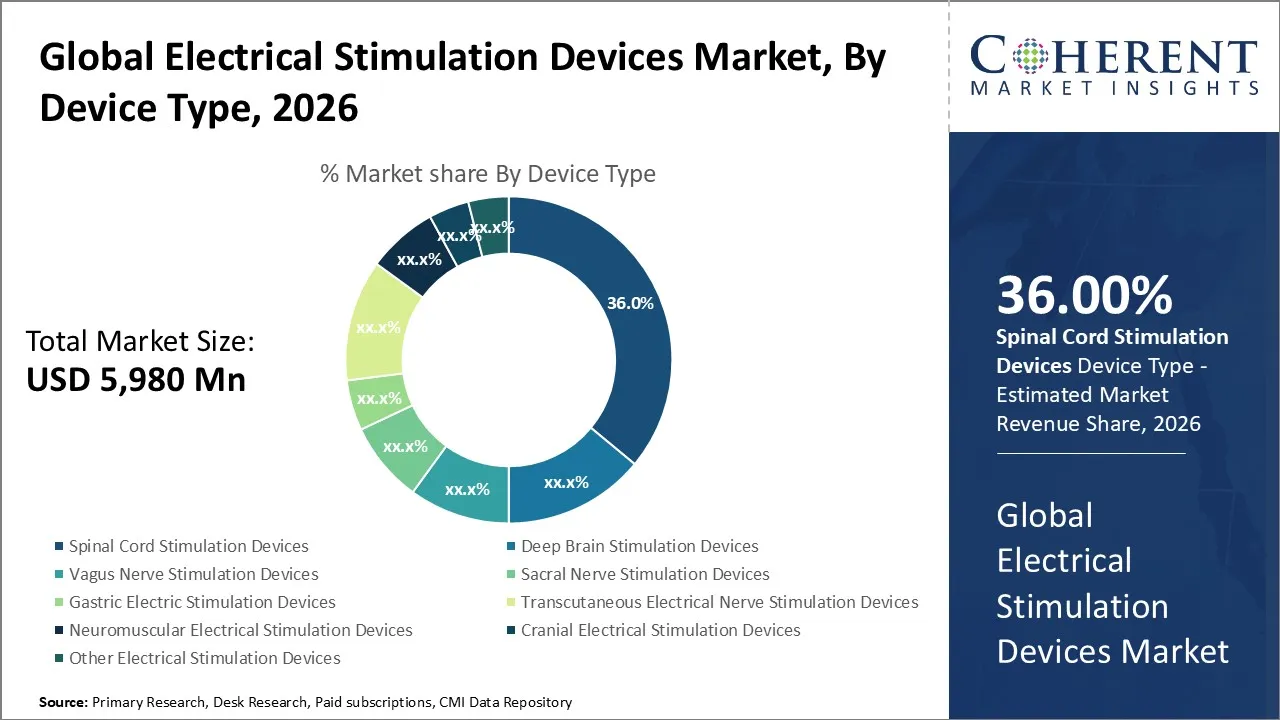
Based on device type, the Spinal Cord Stimulation Devices market is projected to have the largest market share of 36% in 2026. This can be attributed to the widespread usage of these devices in the treatment of pain, along with the continuous innovation that takes place in the area. These devices are used for providing focused pain relief using implantable devices that raise the efficacy of treatment while decreasing the need for the usage of opioids.
For instance, in July 2025, Boston Scientific announced U.S. FDA approval of two new Precision Plus™ SCS leads (Linear™ 3‑4 and Linear™ 3‑6 percutaneous leads), offering broader configuration options for pain management specialists and enhancing therapeutic choices within the spinal cord stimulation segment.
By application, the pain management segment is poised to account for the highest share of 47% in the market by 2026, owing to an increase in global prevalence of chronic pain disorders and rising awareness regarding the availability of non-pharmacological treatment options. There is a higher demand for electrical stimulation therapies, which are now being recommended by healthcare professionals due to their safety as minimally invasive alternatives to conventional pain medications.
For instance, in July 2025, Nalu Medical announced results from the COMFORT 2 trial showing its Peripheral Nerve Stimulation System provided significant and lasting pain relief in multiple anatomical targets and a high rate of patients receiving ≥50% pain relief, representing important developments in pain treatment using electrical neuromodulation.
Based on end user, the Hospitals segment is estimated to hold the largest market share of 58% in 2026.Implantable procedures including spinal cord and deep brain stimulation are preferred in hospitals owing to the availability of specialized healthcare professionals, advanced surgical infrastructure, and high procedural volumes. Moreover, the segment’s growth is also supported by the increasing number of chronic pain and neurological disorder cases requiring in-hospital interventions.
For instance, in July 2025, Neuros Medical announced the initial commercial procedure with its Altius Direct Electrical Nerve Stimulation System, a cutting-edge FDA-approved treatment for chronic post-amputation pain, marking a major achievement for hospitals providing innovative electrical stimulation therapy services at the Baylor Scott & White Heart & Vascular Hospital in Dallas, Texas.
To learn more about this report, Download Free Sample
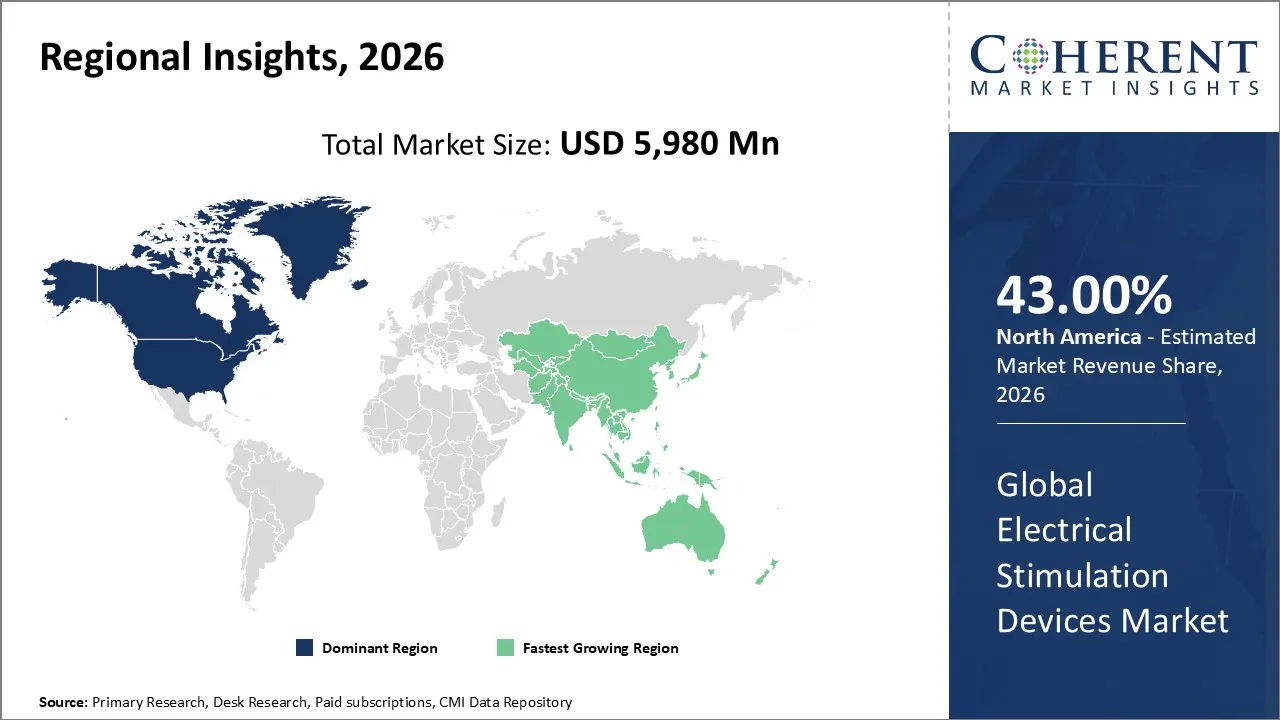
North America is projected to remain the leading market for electrical stimulation devices in 2026, with an estimated market share of 43%. The main drivers contributing to the growth of the market in North America include the prevalence of chronic pain cases, prevalence of neurological conditions, major players operating in the market, adoption of advanced healthcare infrastructure, and favorable reimbursement policies for minimally invasive procedures.
For instance, in July 2025, Medtronic launched its Inceptiv™ closed-loop spinal cord stimulator across major U.S. hospitals, offering real-time adaptive pain management and MRI-compatible features. This launch expanded hospital-based access to advanced pain management solutions and reinforced North America’s leadership in the market.
The Asia Pacific region is expected to be the fastest-growing market owing to factors such as increasing healthcare awareness, growing prevalence of chronic pain and neurological disorders, rise in the population above 65 years, and advancement in hospital and clinical infrastructure in developing nations like China, India, and Japan. The availability of cost-effective and innovative electrical stimulation therapies through emerging local manufacturers and their collaborations with global players is one of the key drivers for adoption in this region.
For instance, in October 2025, ONWARD Medical introduced its ARC-EX non-invasive spinal cord stimulation system in select hospitals in India and Japan, providing an alternative to implantable systems for chronic pain patients. The launch addressed rising demand for non-invasive, hospital-based therapies and contributed to the rapid adoption of electrical stimulation devices in the region.
The U.S. electrical stimulation devices market continues to grow, owing to high adoption of advanced therapies across hospitals and specialty clinics, continuous product innovations, and an ever-growing patient population suffering from various chronic pain, neurological, and musculoskeletal disorders.
For instance, in December 2025, The U.S. Food and Drug Administration (FDA) approved the first at‑home brain stimulation device for depression, Flow Neuroscience’s FL‑100, designed to deliver mild electrical currents to brain regions that regulate mood.
China’s focus on improving healthcare access, combined with rising awareness of chronic pain management and wellness, is accelerating the adoption of electrical stimulation devices. Government initiatives to modernize hospitals, growing insurance coverage, and increased consumer health consciousness are encouraging hospitals and clinics to adopt TENS, SCS, and other neuromodulation therapies.
For instance, in October 2025, China’s National Medical Products Administration (NMPA) approved the first and only Remote Electrical Neuromodulation (REN) based migraine treatment, the Nerivio® REN wearable device developed by Theranica and introduced by Pier 88 Health in Greater China.
| Report Coverage | Details | ||
|---|---|---|---|
| Base Year: | 2025 | Market Size in 2025: | USD 5,980 Mn |
| Historical Data for: | 2020 To 2024 | Forecast Period: | 2026 To 2033 |
| Forecast Period 2026 to 2033 CAGR: | 4.7% | 2033 Value Projection: | USD 8,240 Mn |
| Geographies covered: |
|
||
| Segments covered: |
|
||
| Companies covered: |
Boston Scientific Corporation, BTL Industries, Inc., Cyberonics, Inc., DJO Global, Inc., Medtronic plc., Nevro Corporation., NeuroMetrix, Inc., St. Jude Medical, Inc., Uroplasty, Inc. (Cogentix Medical), and Zynex, Inc. |
||
| Growth Drivers: |
|
||
| Restraints & Challenges: |
|
||
Uncover macros and micros vetted on 75+ parameters: Get instant access to report
Rising cases of chronic pain, musculoskeletal disorders, and neurological disorders like Parkinson’s disease and epilepsy are boosting the market demand for electrical stimulation devices. Rising awareness among patients regarding the availability of non-opioid, non-invasive, and minimally invasive treatment modalities is also contributing to the surge in demand. Modern technologies, including spinal cord stimulation devices, deep brain stimulation devices, and transcutaneous electrical nerve stimulation devices, are being preferred over conventional pharmacological modalities, which is definitely propelling the market.
Technological innovations, such as adaptive and closed-loop neuromodulation systems, home-use wearables, and pain management solutions powered by AI, will present significant growth opportunities. Additional opportunities lie in the expanding use of electrical stimulation therapies in emerging regions like Asia-Pacific and Latin America, along with increasing awareness and infrastructure. At the same time, more non-invasive and patient-friendly devices for conducting therapy at home may facilitate a much larger patient base, as well as better adherence to treatments, leading to overall market growth.
Share
Share
About Author
Manisha Vibhute is a consultant with over 5 years of experience in market research and consulting. With a strong understanding of market dynamics, Manisha assists clients in developing effective market access strategies. She helps medical device companies navigate pricing, reimbursement, and regulatory pathways to ensure successful product launches.
Missing comfort of reading report in your local language? Find your preferred language :
Transform your Strategy with Exclusive Trending Reports :
Frequently Asked Questions
Joining thousands of companies around the world committed to making the Excellent Business Solutions.
View All Our Clients
 Schedule a meeting with report Author