

Food Allergy And Intolerance Products Market Size and Forecast — 2026 - 2033
The Global Food Allergy and Intolerance Products Market size is estimated to be valued at USD 14.38 billion in 2026 and is expected to reach USD 25.85 billion by 2033, exhibiting a compound annual growth rate (CAGR) of 8.5% from 2026 to 2033.
Overview
The Food Allergy and Intolerance Products Market includes a wide range of specialized food and beverage products designed to avoid common allergens and trigger ingredients. Key product categories include gluten-free foods, dairy-free and lactose-free products, nut-free snacks, soy-free alternatives, and egg-free formulations. The market also features hypoallergenic baby food, allergen-free bakery products, plant-based substitutes, and fortified functional foods. Additionally, enzyme-based digestive aids and intolerance management supplements support consumers with food sensitivities. Rising awareness of food allergies, increasing diagnosis rates, and demand for clean-label and safe dietary options are driving product innovation and expanding availability across retail and online channels globally.
Key Takeaways
The allergen-free snacks segment dominates the market with a 38% share, driven by strong demand for convenient and safe snack options addressing multiple food intolerances.
The online retail distribution channel is growing rapidly due to increased digital adoption and shifting consumer purchasing behavior.
North America leads the market with a 42% share, supported by strong healthcare systems and strict food labeling regulations.
Asia Pacific records the highest CAGR, driven by rising middle-class populations and increasing awareness of food allergies, especially in China and India.
Food Allergy and Intolerance Products Market Segmentation Analysis
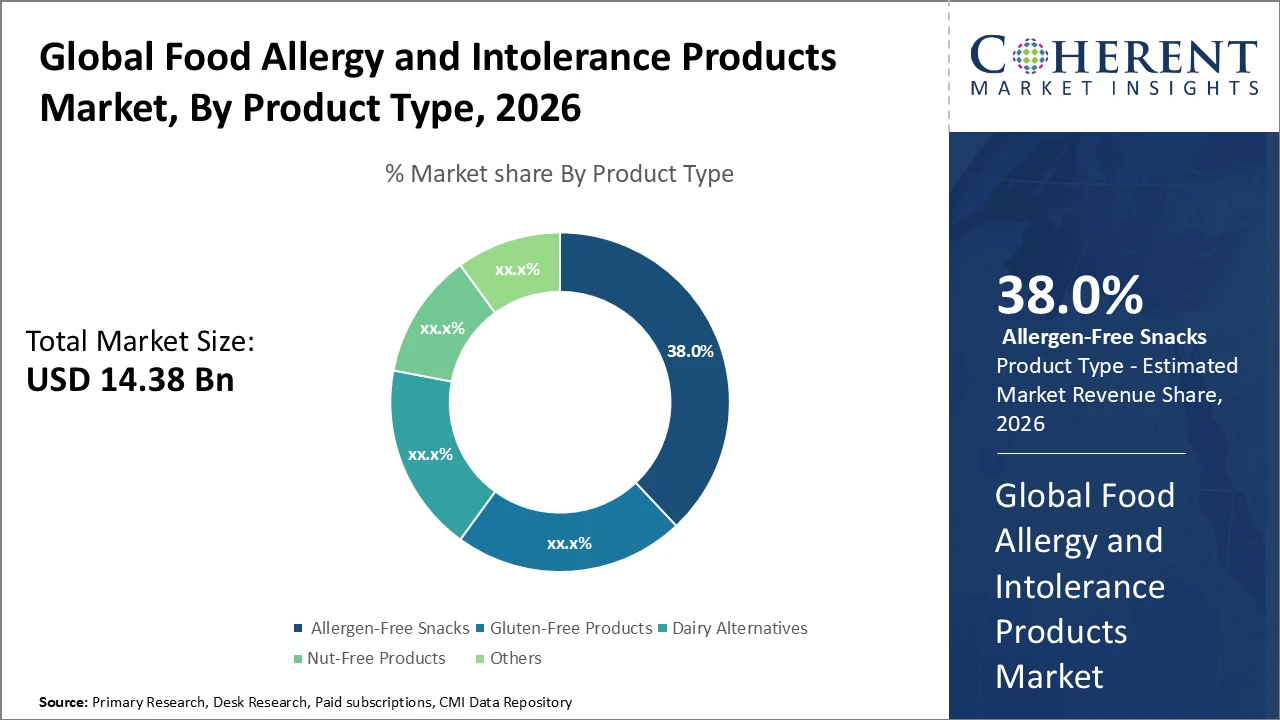
Food Allergy and Intolerance Products Market Insights, By Product Type
Allergen-free snacks dominate the market with a 38% share, driven by rising snacking habits and growing health awareness, supporting strong revenue generation and continuous product innovation. Dairy alternatives are the fastest-growing segment due to increasing lactose intolerance and the global shift toward plant-based nutrition. Gluten-free products show steady growth, supported by rising celiac disease awareness and higher diagnosis rates of gluten sensitivity. Nut-free products primarily serve consumers with specific allergies and are expanding in developing regions. Other segments, including allergen-free condiments and beverages, are witnessing gradual but consistent growth as demand for specialized dietary options continues to rise globally.
Food Allergy and Intolerance Products Market Insights, By Distribution Channel
Offline distribution holds the largest market share at around 60%, supported by established retail networks and easy product accessibility across supermarkets and specialty stores. However, online channels are the fastest-growing segment, expanding by over 25% year-over-year since 2024 due to e-commerce growth, digital adoption, and personalized shopping experiences. Direct sales remain a niche channel, primarily B2B-focused, with steady growth through partnerships in healthcare providers and specialty food companies. Other emerging channels, including subscription boxes and experiential pop-up stores, are gaining traction by enhancing consumer engagement, driving brand loyalty, and improving awareness of allergen-free and intolerance-friendly products.
Food Allergy and Intolerance Products Market Insights, By End User
Retail channels, mainly supermarkets and hypermarkets, dominate the market with nearly 45% revenue share due to wide product availability and strong consumer reach. Online retail is the fastest-growing channel, with sales increasing by over 25% in 2025, driven by rising digital penetration and convenience-driven shopping behavior. The foodservice segment shows moderate growth as restaurants and institutions increasingly adopt allergen-friendly menu options. Specialty stores serve niche consumers seeking certified allergen-free products but account for a smaller share. Other channels, including vending machines and convenience outlets, are gradually expanding as demand for accessible allergen-free and intolerance-friendly products continues to rise globally.
Food Allergy and Intolerance Products Market Trends
Growing preference for plant-based options is driving innovation in allergen-free and intolerance-friendly product portfolios, especially in bakery and packaged foods.
In 2025, plant protein usage in allergen-free bakery products increased by over 20%, reflecting a strong shift in consumer dietary choices.
Online retail expansion is accelerating market growth, with e-commerce sales rising by 25%, particularly across North America and Europe.
Wider digital access is improving product availability and supporting aggressive business expansion strategies.
AI-enabled allergen detection systems are enhancing quality control, reducing product recalls, and increasing consumer trust in food safety.
Food Allergy and Intolerance Products Market Insights, By Geography
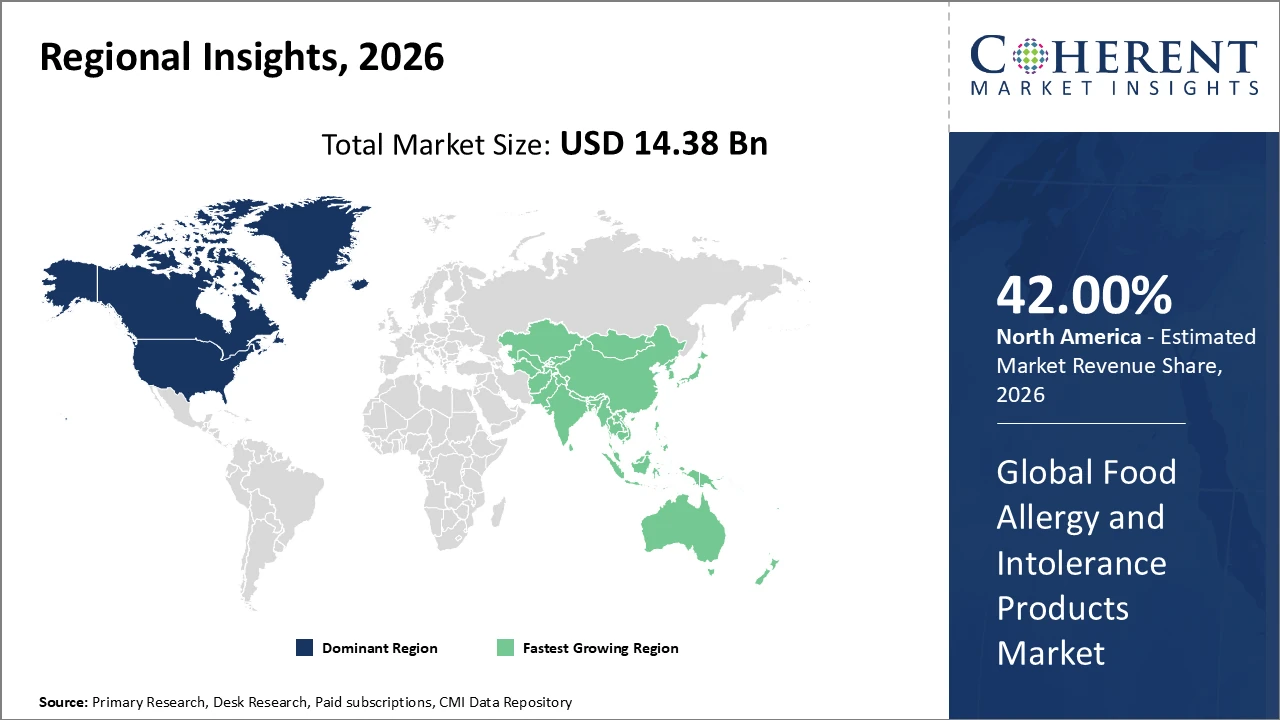
North America Food Allergy and Intolerance Products Market Analysis and Trends
North America holds a dominant position in the Food Allergy and Intolerance Products market, driven by strict regulatory frameworks such as FDA allergen labeling requirements and a well-established healthcare system. The region accounted for approximately 42% of the global market share in 2026. Rising consumer health awareness and strong investments by manufacturers in product innovation further support steady market expansion. The United States represents a significant portion of regional demand, supported by a high prevalence of food allergies, with nearly 32 million individuals affected according to recent CDC data. This reinforces consistent growth and product diversification across the market.
Asia Pacific Food Allergy and Intolerance Products Market Analysis and Trends
Asia Pacific is the fastest-growing region in the Food Allergy and Intolerance Products market, with a CAGR exceeding 10%. Growth is driven by rising urbanization, expanding middle-class populations, and increasing awareness of food allergies through public health campaigns in countries such as China and India. Supportive government regulations on food safety standards and improved labeling practices are further strengthening market penetration. Additionally, growing local manufacturing capabilities and rising imports are enhancing product availability. In 2025, China recorded a 22% increase in sales of allergen-free dairy substitutes, highlighting strong consumer demand and greater acceptance of specialty food products across the region.
Food Allergy and Intolerance Products Market Outlook for Key Countries
USA Food Allergy and Intolerance Products Market Analysis and Trends
The USA is a key market in the Food Allergy and Intolerance Products sector, supported by advanced healthcare infrastructure and rising food allergy prevalence. In 2025, allergen-free product consumption increased by 13%, reflecting strong consumer demand for safer dietary options. Leading companies such as Danone and Nestlé have expanded their portfolios through research initiatives and strategic acquisitions, strengthening market presence. Federal regulations improving allergen labeling standards have further enhanced transparency and consumer trust. Growing awareness, innovation in plant-based and allergen-free formulations, and strong retail penetration continue to drive sustained market growth across the United States.
Germany Food Allergy and Intolerance Products Market Analysis and Trends
Germany is one of the most mature markets in Europe for food allergy and intolerance products, driven by strong consumer awareness, strict EU allergen labeling regulations, and a well-developed retail ecosystem. Demand is primarily supported by rising cases of gluten, lactose, and nut intolerance, with gluten-free and lactose-free products forming key growth categories. The market is characterized by high penetration in supermarkets and pharmacies, alongside expanding clean-label and organic offerings. However, high product prices and intense competition remain challenges. Growing preference for plant-based, allergen-free innovations and premium functional foods is shaping steady, innovation-led market expansion across Germany.
Analyst Opinion
Rising demand for hypoallergenic food products is driving market growth, with a 12% increase in allergen-free product launches in 2025, especially in bakery and dairy alternatives. A 15% rise in diagnosed food allergy cases globally in 2024 further supports demand expansion.
Supply chain optimization and ingredient innovation are improving pricing efficiency, with a 7% reduction in costs for gluten-free flours and non-dairy substitutes in 2026, enabling wider consumer accessibility.
Clean-label and organic preferences are increasing, with 40% of North American consumers in 2025 favoring products with transparent ingredient sourcing, boosting compliant manufacturers.
Asia-Pacific trade dynamics are strengthening, with specialty allergy product exports rising 18% in 2024, improving regional supply-demand balance and market growth opportunities.
- Current Industry Events of 2026
- Market Size Estimation
- Regional Breakdown
- Competitive Landscape
- Customer Intelligence
- Segmental Analysis
- Pricing Analysis
- Key Market Drivers, Challenges & Future Trends
- Customized Insights Section
Market Scope
| Report Coverage | Details | ||
|---|---|---|---|
| Base Year: | 2025 | Market Size in 2026: | USD 14.38 billion |
| Historical Data for: | 2020 To 2024 | Forecast Period: | 2026 To 2033 |
| Forecast Period 2026 to 2033 CAGR: | 8.5% | 2033 Value Projection: | USD 25.85 billion |
| Geographies covered: |
| ||
| Segments covered: |
| ||
| Companies covered: | ADM, Nestle SA, Kerry Group, General Mills Inc., Bunge Limited, Ingredion Incorporated, Danone SA, Tate & Lyle PLC, Oatly Group AB, Blue Diamond Growers | ||
| Growth Drivers: |
| ||
Food Allergy and Intolerance Products Market Growth Factors
The rising prevalence of food allergies and intolerance is a key driver of market growth, with cases increasing by an estimated 10% annually between 2024 and 2026. Growing consumer preference for healthier lifestyles is boosting demand for clean-label, allergen-free, and organic food products, encouraging continuous product innovation across categories. Strict regulatory frameworks in major markets such as the U.S. and Europe on allergen labeling and food safety are enhancing transparency and consumer trust, further supporting demand. Additionally, advancements in food processing technologies are enabling the development of taste-improved allergen-free alternatives, increasing market revenue and scalability at competitive prices.
Food Allergy and Intolerance Products Market Development
In March 2026, Poplar Therapeutics pursued a major advancement in treating food allergies and other atopic conditions, having raised $95 million to date, including a $45 million Series A extension.
Key Players
Leading Companies of the Market
ADM
Nestle SA
Kerry Group
Danone SA
Ingredion Incorporated
Bunge Limited
Tate & Lyle PLC
Oatly Group AB
Blue Dimaond Growers
General Mills Inc.
Several leading companies have adopted aggressive acquisition and partnership strategies to strengthen their position in the Food Allergy and Intolerance Products market. Ingredion Incorporated expanded its portfolio in 2025 through the acquisition of specialty ingredient manufacturers, improving supply chain security and enhancing access to allergen-free raw materials. Danone invested heavily in R&D centers, supporting innovation in dairy alternatives and achieving around 10% annual revenue growth in this segment through new allergen-focused product launches. Meanwhile, Nestlé increased its presence in Asia-Pacific by introducing region-specific hypoallergenic product lines in 2024, aligning offerings with local dietary needs and consumer preferences.
Food Allergy and Intolerance Products Market Future Outlook
The Food Allergy and Intolerance Products market is expected to witness strong growth driven by rising global allergy prevalence and increasing consumer preference for safe, clean-label, and plant-based foods. Innovation in dairy alternatives, gluten-free, and hypoallergenic formulations will remain central to product development. Expanding e-commerce channels and personalized nutrition trends will further enhance accessibility and demand. Regulatory support for transparent allergen labeling will continue to strengthen consumer trust. Emerging economies in Asia Pacific will offer significant growth opportunities due to rising awareness and income levels. Overall, the market will evolve toward greater product diversification, sustainability, and advanced food processing technologies.
Food Allergy and Intolerance Products Market Historical Analysis
The Food Allergy and Intolerance Products market has evolved significantly over the past decade, driven by rising awareness of food-related health issues and increasing diagnosis of allergies and intolerances. Initially dominated by basic gluten-free and lactose-free products, the market expanded with growing demand for diverse allergen-free alternatives across bakery, dairy, and snacks. Strong regulatory developments in the U.S. and Europe improved labeling transparency, boosting consumer confidence. From the late 2010s onward, plant-based innovation and clean-label trends accelerated growth. The post-pandemic period further strengthened demand as consumers prioritized health, safety, and immunity-focused diets, reshaping product innovation and global market expansion.
Sources
Primary Research Interviews:
Nutritionists, dietitians, and allergists involved in evaluating food allergy and intolerance management solutions
Food safety managers, quality assurance teams, and procurement heads in food and beverage manufacturing companies producing allergen-free products
Executives, R&D scientists, and product development teams from food manufacturers working on gluten-free, dairy-free, nut-free, and hypoallergenic product innovations
Magazines:
Food Business News – Updates on allergen-free product launches and food innovation trends
FoodNavigator – Industry insights on clean-label, plant-based, and allergen-free food developments
Nutritional Outlook – Market trends in functional foods and dietary intolerance solutions
Food Dive – Food industry news covering product launches, acquisitions, and consumer trends
Journals:
Journal of Food Science – Research on allergen-free formulation and food processing technologies
Food Control – Studies on food safety, allergen management, and labeling compliance
Nutrients – Research on dietary intolerance, nutrition, and alternative food ingredients
Journal of Functional Foods – Innovation in plant-based and hypoallergenic food development
Newspapers:
The Wall Street Journal – Food industry investments and consumer health trends
Financial Times – Global food and beverage market developments and clean-label growth
Reuters Health – Food safety regulations, labeling standards, and product approvals
Bloomberg Food – Market analysis, company performance, and food innovation trends
Associations:
Food Allergy Research & Education (FARE) – Advocacy, awareness, and research on food allergies
European Academy of Allergy and Clinical Immunology (EAACI) – Clinical guidelines and allergy research standards
World Health Organization (WHO) – Global food safety and allergy prevention guidelines
Get access to 250+ pages report
Every segment, forecast, competitor profile and data table behind the analysis above — available for instant download.
- ESOMAR Member
- ISO 9001:2015 Certified
- D-U-N-S Registered
- GDPR & CCPA Compliant
Missing comfort of reading report in your local language? Find your preferred language:
Transform your Strategy with Exclusive Trending Reports
Frequently Asked Questions
ADM, Nestlé S.A., Danone, Kerry Group, and Ingredion lead the market through innovation and expansion strategies.
The market is expected to reach USD 25.85 billion by 2033, up from USD 14.38 billion in 2026 at a CAGR of 8.5%.
Retail, especially supermarkets and hypermarkets, offers the highest growth potential due to strong product availability and consumer demand.
Trends will focus on plant-based alternatives, expansion of online sales, and improved allergen detection technologies.
The market is highly competitive with strong innovation, but faces challenges in raw material sourcing and regulatory compliance.
Strategies include acquisitions, R&D investment, regional product customization, and strengthening e-commerce channels.