

BRIC Organic Baby Food Market Size and Share Analysis - Growth Trends and Forecast (2026 - 2033)
The BRIC organic baby food market size is estimated to total USD 9,300 Mn in 2026 and is expected to grow at a compound annual growth rate (CAGR) of 18% during the forecast period (2026 to 2033), reaching approximately USD 29,600 Mn by 2033. This is due to rising awareness among parents regarding infant health and nutrition, increasing preference for chemical-free and clean-label food products, and growing penetration of organic food options across emerging economies like Brazil, Russia, India, and China.
Key Takeaways from the BRIC Organic Baby Food Market Report
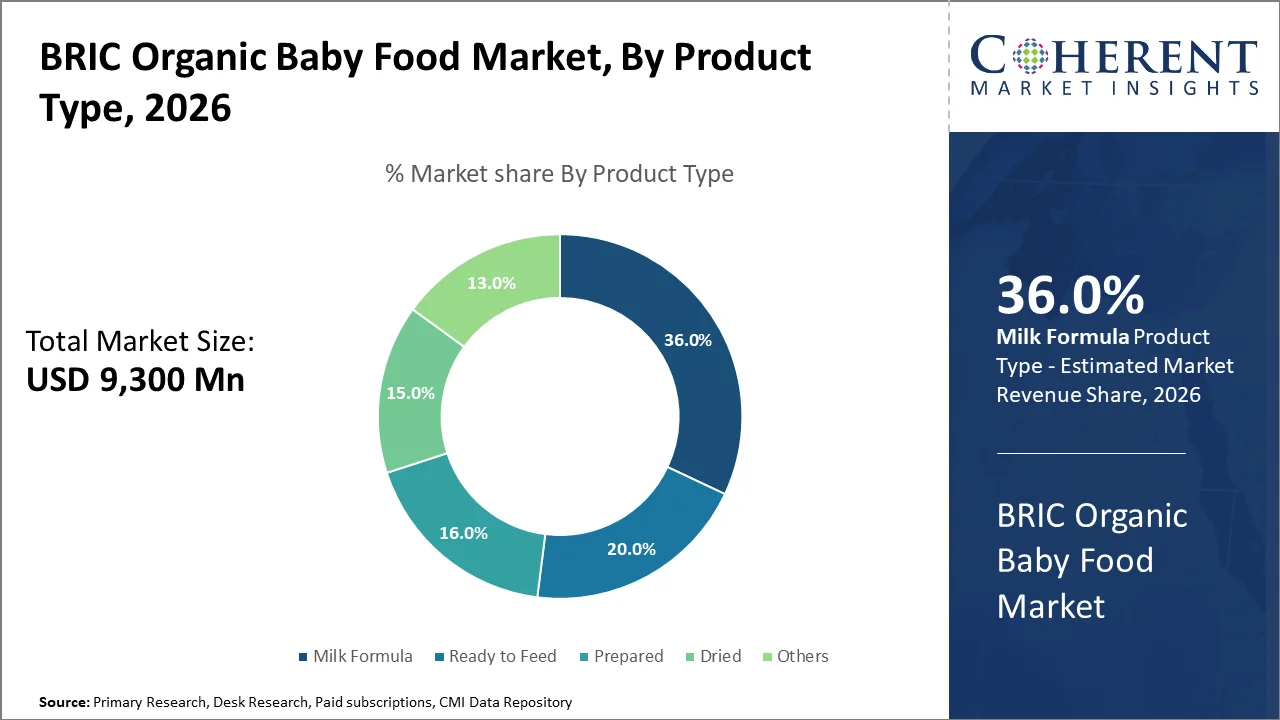
- Based on product type, milk formula segment is expected to lead the market with a share of 36% in 2026, as a result of its role as a primary and supplementary nutrition source for infants, especially when breastfeeding is not feasible, along with increasing parental preference for safe and organic feeding options.
- By distribution channel, supermarket segment is projected to account for 34% of the BRIC organic baby food market share in 2026 because of strong presence of supermarkets in the region and established consumer trust.
- China is slated to dominate the BRIC organic baby food industry with a share of 38% in 2026, mostly due to its large infant population, increasing premiumization trends, and rising demand for safe, high-quality infant nutrition The U.S. birth rate is declining, with 3.62 million births recorded in 2024.
- India, holding a market share of 25% in 2026, is anticipated to present lucrative growth opportunities for organic baby food manufacturers during the forecast period, thanks to high birth rate and an expanding middle-class population.
Segmental Insights
Which Product Type Leads the BRIC Organic Baby Food Market?
Milk Formula Segment to Capture 36% Market Share by 2026
As per Coherent Market Insights’ latest BRIC organic baby food market analysis, milk formula segment is slated to lead the market with a share of 36% in 2026. This dominance is primarily attributed to rising parental preference for nutritionally balanced and convenient feeding options, especially among working mothers across BRIC economies.
Organic milk formula is increasingly perceived as a safer alternative to conventional infant formula due to the absence of synthetic additives, pesticides, and hormones. Growing awareness regarding infant health and nutrition in nations like Brazil, Russia, India, and China is expected to fuel the adoption of certified organic milk formula during the forecast period.
In addition, strong marketing strategies by key players and increasing consumer awareness are improving trust in organic milk formula, thereby supporting its leading position in the BRIC organic baby food market. On the other hand, ready-to-feed organic baby foods are expected to witness higher growth due to urbanization and on-the-go-consumption trends. The ready-to-feed baby food segment is likely to account for a market share of over 20% in 2026.
- Current Industry Events of 2026
- Market Size Estimation
- Regional Breakdown
- Competitive Landscape
- Customer Intelligence
- Segmental Analysis
- Pricing Analysis
- Key Market Drivers, Challenges & Future Trends
- Customized Insights Section
Which Distribution Channel Dominates the BRIC Organic Baby Food Industry?
Supermarkets Lead the BRIC Organic Baby Foods Market
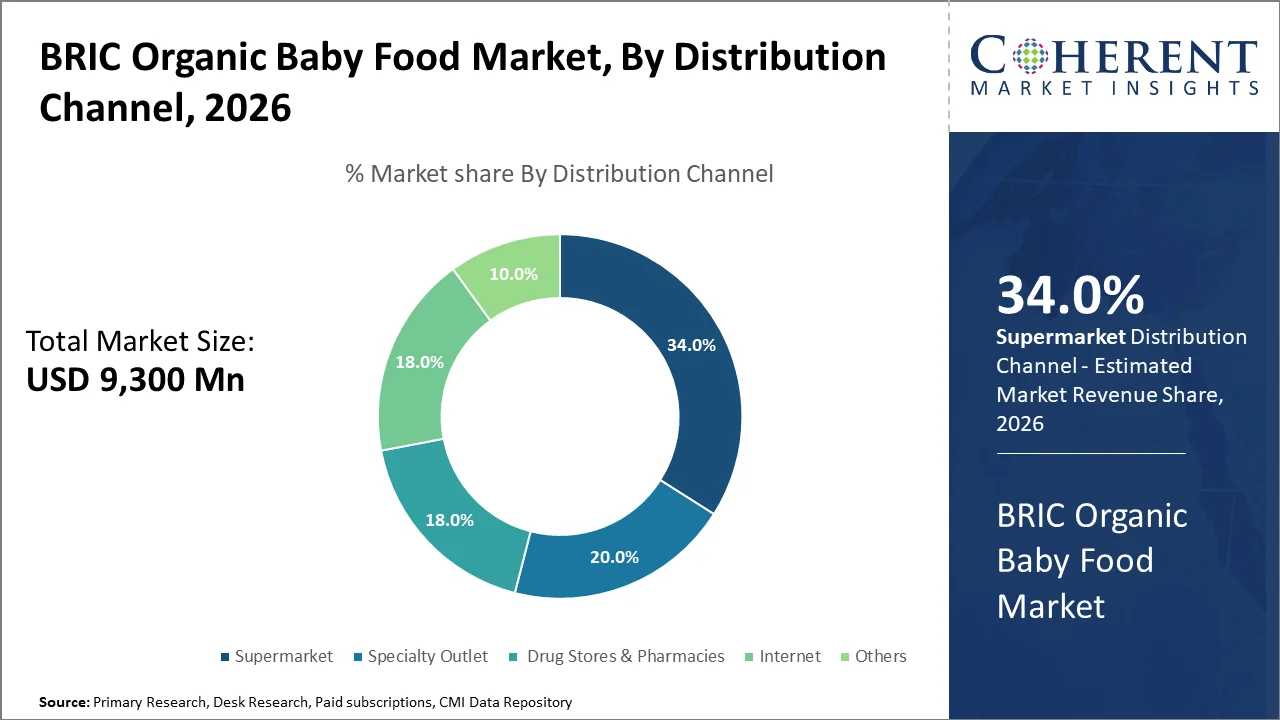
Based on distribution channel, supermarket segment is expected to account for a prominent market share of 34% in 2026. This is mostly due to their wide product assortment, strong consumer trust, and the convenience of one-stop shopping. Supermarkets enable parents to physically examine product labels, certifications, and ingredient lists, an important factor when purchasing organic baby food.
In addition, the growing presence of premium and imported organic brands, attractive in-store promotions, and dedicated baby care sections are strengthening supermarket preference across BRIC countries. On the other hand, internet segment is poised to exhibit fastest growth rate during the forecast period due to increasing digital penetration and convenience offered by e-commerce platforms.
BRIC Organic Baby Food Market Overview
The BRIC organic baby food market is poised to register strong growth during the forecast period. This is due to rising awareness of infant health and nutrition and increasing concerns over the harmful effects of synthetic additives, pesticides, and preservatives in conventional baby food products. Rapid urbanization, improving disposable incomes, and a growing middle-class population across Brazil, Russia, India, and China are also driving demand for premium and organic food options for infants.
Organic baby food is made from certified organic ingredients produced without the use of synthetic fertilizers, pesticides, or genetically modified organisms. It is designed to minimize infants’ exposure to chemical residues during a critical stage of development. Organic baby food is valued for its production methods as well as its reduced exposure to harmful substances.
A 2023 study by the Environmental Working Group (EWG) found that about 34–40% of regular baby food samples had pesticide residues. A No pesticide residues were found in organic baby food. This rising awareness of pesticide exposure is expected to play a key role in boosting organic baby food sales during the forthcoming period.
Shifting consumer preferences toward clean-label, non-GMO, and chemical-free products are encouraging manufacturers to expand their organic baby food portfolios. Likewise, government initiatives supporting organic farming and food safety regulations are fueling market expansion.
Increasing participation of working women and rising demand for convenient, ready-to-eat yet healthy baby food options are expected to boost market growth during the forthcoming period. Sustainability is taking centre stage in the BRIC organic baby food market. Leading brands are increasingly shifting towards recyclable and low-plastic packaging due to rising environmental concerns among millennial parents. This transition is expected to support expansion of the organic baby food market across BRIC region during the assessment period.
For example, in 2024, Danone India strengthened its sustainability strategy under its “One Planet. One Health” initiative. The company is aiming to increase the use of recyclable packaging across its nutrition and baby food-related product portfolio in India as part of its broader environmental goals.
Market Dynamics
BRIC Organic Baby Food Market Growth Drivers
Rising Health Awareness Among Parents
Increasing awareness about infant nutrition and safety is providing a strong impetus for the growth of organic baby food market in the BRIC countries. Parents in the contemporary world are actively avoiding pesticides, preservatives, artificial flavors, and genetically modified ingredients. This, in turn, is pushing demand for clean-label and certified organic baby food.
Increasing Birth Rates and Expanding Infant Population
The number of infants in BRIC countries is expanding significantly. For instance, India records around 23–23.2 million births annually, according to estimates from the United Nations World Population Prospects. This large and stable birth base supports sustained demand for infant and baby nutrition products.
BRIC Organic Baby Food Market Opportunities
Growing Concerns Over Food Safety and Chemicals
Rising concerns over food safety and nutritional quality in conventional baby food are encouraging parents to shift toward organic alternatives. A study using WHO nutrition standards found that around 60% of packaged baby and toddler foods do not meet recommended nutritional guidelines. This increasing awareness of infant nutrition as well as of ingredient quality is expected to create lucrative growth opportunities for the BRIC organic baby food market during the forecast period.
Expansion of E-Commerce and Digital Retail
Increasing penetration of e-commerce platforms such as online grocery apps, brand websites, and digital marketplaces is improving the availability as well as visibility of organic baby food products, particularly in urban areas. Subscription-based models and convenient doorstep delivery services are also supporting consumer adoption. This shift toward digital retail channels is expected to create strong growth opportunities for the BRIC organic baby food market during the forecast period.
BRIC Organic Baby Food Market Innovations
Rise of Premiumization in Organic Baby Food
The BRIC organic baby food market is witnessing a strong shift toward premiumization, thanks to rising disposable incomes, rapid urbanization, and growing parental concern over food safety and chemical-free nutrition. Urban consumers in India, China, Brazil, and Russia are increasingly opting for certified organic and clean-label baby food products, especially in higher-income segments.
In India, premium organic brands such as Happa Foods and imported products like Holle (Germany) are gaining visibility among urban millennial parents. Similarly, in China, demand for imported premium infant formulas continues to grow due to heightened safety awareness and preference for trusted international brands. This trend is evident in China, where companies like Danone have reported robust growth in infant nutrition sales in 2025, driven by sustained demand for premium imported formula products among safety-conscious parents.
Product Innovation and Clean-label Trends
Manufacturers are actively innovating with clean-label, functional, and nutrient-dense formulations to differentiate their offerings in the competitive BRIC market. Key trends include probiotic-enriched baby foods for gut health, allergen-free formulations for sensitive infants, and superfood-based blends incorporating ingredients like quinoa, chia, and fruits.
Companies such as Nestlé (Gerber line) and Danone (Aptamil range) are expanding organic and fortified infant nutrition portfolios globally, including BRIC markets. Similarly, brands like Plum Organics are pushing clean-label innovation, while China-based local players are rapidly introducing organic rice cereal and fortified milk formulas tailored to local dietary needs and regulatory standards.
Current Events and Their Impact
Current Event | Description and its Impact |
Strengthening organic certification and food safety regulations (BRIC governments) |
|
Government initiatives promoting organic agriculture and sustainable food production |
|
BRIC Organic Baby Food Market Outlook – Country-wise
China Organic Baby Food Market Trends
China is expected to lead the BRIC organic baby food market, capturing a share of 38% in 2026. This is attributable to rising demand for premium and organic infant nutrition. Rising income levels and increasing awareness about infant health are pushing parents to choose organic, chemical-free, and nutrient-rich baby food products.
Food safety concerns still affect buying choices, especially after the 2008 Chinese milk scandal, which increased demand for certified and imported baby products. In addition, with fewer births in China, parents are spending more on each child, focusing on better nutrition and care.
The market is also growing due to ongoing improvements in infant formula regulations and continuous product innovation by leading brands. Companies like Nestlé and Danone are expanding in China with premium and organic products, focusing more on safe and traceable ingredients.
India BRIC Organic Baby Food Market Forecast
The organic baby food market in India is expected to grow rapidly during the forecast period, capturing a market share of 25% in 2026. This is mostly due to increasing infant population, rising health awareness, and growing concerns about food safety among parents. Urban parents are becoming more conscious about preservatives, pesticides, and artificial ingredients. This, in turn, is leading to higher demand for organic and clean-label baby food.
Expansion of e-commerce and direct-to-consumer channels is boosting market growth. Platforms like Amazon and Flipkart are helping organic baby food brands reach a wider audience, especially in tier-2 cities. Online availability allows parents to compare ingredients and certifications easily.
Who are the Major Companies in the BRIC Organic Baby Food Market?
Some of the major players in BRIC Organic Baby Food Market are Nestlé S.A., H.J. Heinz Company, Groupe Danone, Pristine Organics Pvt Ltd., British Biologicals, Abbott Laboratories, Otsuka Holdings Co., Ltd., Campbell Soup Company, Hero Group, and Bellamy’s Australia Limited.
Key Strategies Adopted by Industry Players
Leading manufacturers of organic baby foods are adopting various organic and inorganic strategies to boost their sales as well as strengthen their market position. They are focusing on launching new and improved organic product ranges with clean labels and better nutrition to attract health-conscious parents. For example,
- In January 2024, Danone India launched AptaGrow, a new toddler nutrition product line. It is designed to support the nutrition and healthy growth of young children.
- In April 2024, Else Nutrition launched its plant-based, soy-free infant and toddler nutrition products in the Asia Pacific region. The products include a Stage 2 formula for babies aged 6–12 months and are made using ingredients such as almond, buckwheat, and tapioca.
Market Report Scope
BRIC Organic Baby Food Market Report Coverage
| Report Coverage | Details | ||
|---|---|---|---|
| Base Year: | 2025 | Market Size in 2026: | USD 9,300 Mn |
| Historical Data for: | 2020 To 2024 | Forecast Period: | 2026 To 2033 |
| Forecast Period 2026 to 2033 CAGR: | 18% | 2033 Value Projection: | USD 29,600 Mn |
| Geographies covered: |
| ||
| Segments covered: |
| ||
| Companies covered: | Nestlé S.A., H.J. Heinz Company, Groupe Danone, Pristine Organics Pvt Ltd., British Biologicals, Abbott Laboratories, Otsuka Holdings Co., Ltd., Campbell Soup Company, Hero Group, and Bellamy’s Australia Limited | ||
| Growth Drivers: |
| ||
| Restraints & Challenges: |
| ||
Analyst Opinion (Expert Opinion)
- China continues to tighten infant food safety standards, with stricter formula registration rules implemented in 2023 following the 2008 Chinese milk scandal. This is reducing the number of low-quality brands and directly increasing demand for trusted, premium, and organic baby food products.
- United Nations estimates that India records around 23 million births annually. This large birth cohort is directly sustaining high and consistent demand for baby food, supporting long-term market growth.
- In Brazil, dietary patterns are shifting toward fresh and minimally processed foods, as highlighted by IBGE. This is directly increasing consumer preference for organic and clean-label baby food products.
- Internet penetration is rising rapidly across BRIC countries; India alone had over 800 million users in 2023, supported by initiatives like Digital India. This is directly boosting online sales channels, improving product accessibility, and accelerating the growth of the organic baby food market.
Speak to the analyst
Want personalized insights?
Take the findings above to one of our principal consultants, or have the report rebuilt around the segments, geographies and competitors you actually track.
Market Segmentation
- By Product Type Insights ( Revenue, US$ Mn, 2021 - 2033)
- Ready to Feed
- Prepared
- Milk Formula
- Dried
- Others
- By Distribution Channel Insights ( Revenue, US$ Mn, 2021 - 2033)
- Supermarket
- Specialty Outlet
- Drug Stores & Pharmacies
- Internet
- Others
- By Region Insights ( Revenue, US$ Mn, 2021 - 2033)
- Brazil
- Russia
- India
- China
- Key Players in the BRIC Organic Baby Food Market
- J. Heinz Company
- Nestlé S.A.
- Groupe Danone
- British Biologicals
- Pristine Organics Pvt Ltd.
- Abbott Laboratories
- Campbell Soup Company
- Otsuka Holdings Co., Ltd.
- Hero Group
- Bellamy’s Australia Limited
Sources
Primary Research Interviews
- Organic baby food manufacturers and brand managers across BRIC countries
- Pediatricians and child nutrition experts
- Retailers and e-commerce platform category managers
- Supply chain and distribution professionals in the food industry
- Parents and caregivers (consumer insights)
Databases
- World Bank
- UNICEF
- FAOSTAT
- WHO
- National Bureau of Statistics of China
- Ministry of Statistics and Programme Implementation
Magazines
- Food Business News
- Nutrition Insight
- FoodNavigator
Journals
- Journal of Pediatric Gastroenterology and Nutrition
- Public Health Nutrition
- The American Journal of Clinical Nutrition
Newspapers
- The New York Times
- The Guardian
- The Times of India
- China Daily
Associations
- Organic Trade Association
- International Federation of Organic Agriculture Movements
- Indian Academy of Pediatrics
- China Nutrition Society
Public Domain Sources
- Government health ministry publications (India, Brazil, China, Russia)
- Regulatory authorities such as Food Safety and Standards Authority of India and State Administration for Market Regulation
- Policy papers and infant nutrition guidelines from WHO and UNICEF
- Company annual reports and official press releases
Proprietary Elements
- CMI Data Analytics Tool
- Proprietary CMI Existing Repository of information for last 8 years
Get access to 250+ pages report
Every segment, forecast, competitor profile and data table behind the analysis above — available for instant download.
- ESOMAR Member
- ISO 9001:2015 Certified
- D-U-N-S Registered
- GDPR & CCPA Compliant
Missing comfort of reading report in your local language? Find your preferred language:
Transform your Strategy with Exclusive Trending Reports
Frequently Asked Questions
The organic baby food market in BRIC is estimated to be valued at US$ 9,300 Mn in 2026
The BRIC Organic Baby Food Market value is expected to reach US$ 29,600 Mn by 2033.
The target market is poised to exhibit a CAGR of 18% from 2026 to 2033.
Major growth factors include rising health awareness among parents and increasing infant population.
Milk formula, holding 36% share in 2026, is set to dominate the market.
Some major companies in the BRIC Organic Baby Food Market include Nestlé S.A., H.J. Heinz Company, Groupe Danone, Pristine Organics Pvt Ltd., British Biologicals, Abbott Laboratories, Otsuka Holdings Co., Ltd., Campbell Soup Company, Hero Group, and Bellamy’s Australia Limited.
China, with 38% share in 2026, is set to lead the market during the forecast period.