

Ready To Use Therapeutic Food Market Analysis & Forecast: 2026-2033
The ready to use therapeutic food market size is estimated to be valued at USD 521.8 Mn in 2026 and is expected to reach USD 784.7 Mn by 2033, exhibiting a compound annual growth rate (CAGR) of 6.0% from 2026 to 2033.
Key Takeaways
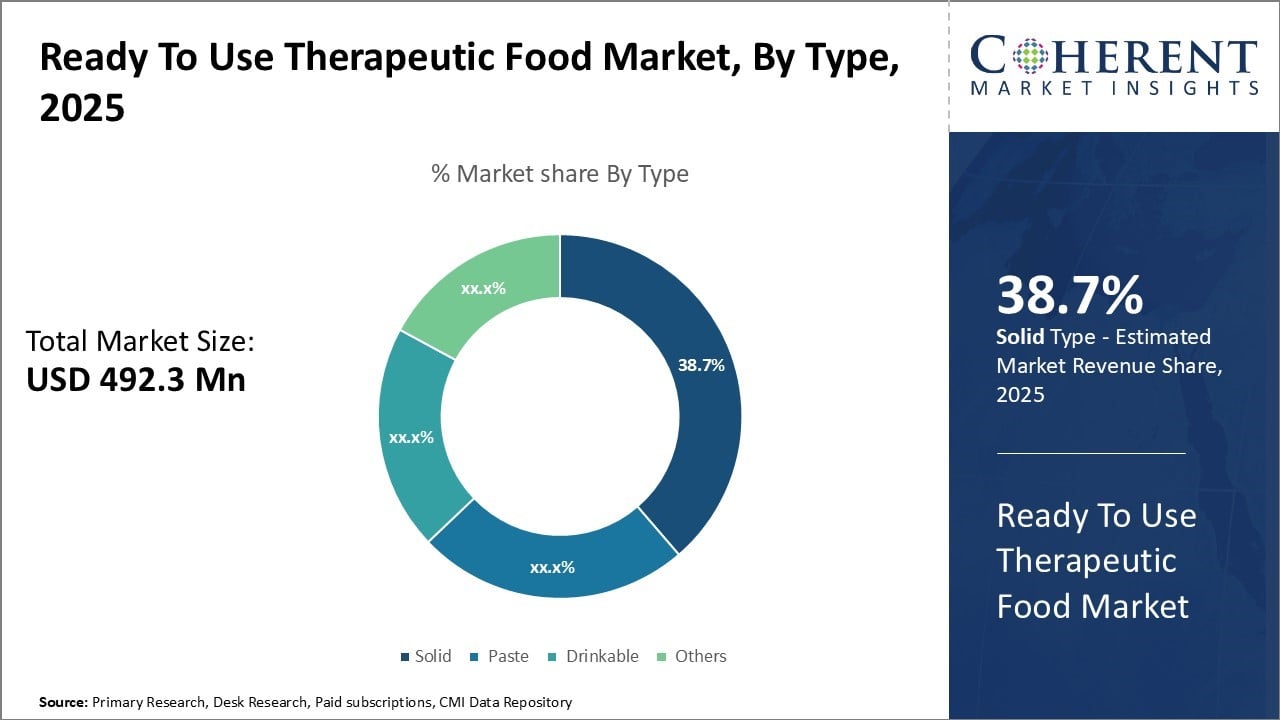
- By Product Type, the Solid segment is expected to hold 39.7% share in 2026, driven by its stability, ease of distribution and acceptance among aid organizations.
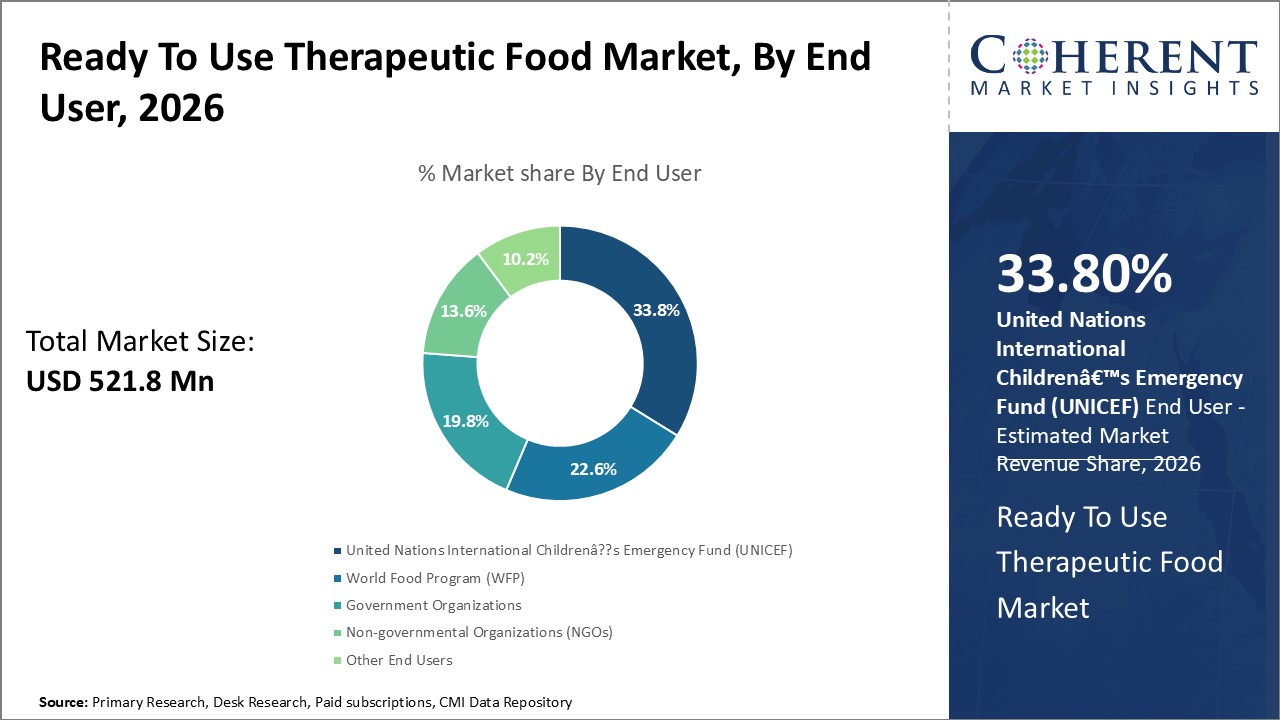
- By End User, UNICEF segment is expected to hold dominant position with 33.8% shares in 2026, fueling demand through large-scale procurement contracts and ongoing nutritional programs.
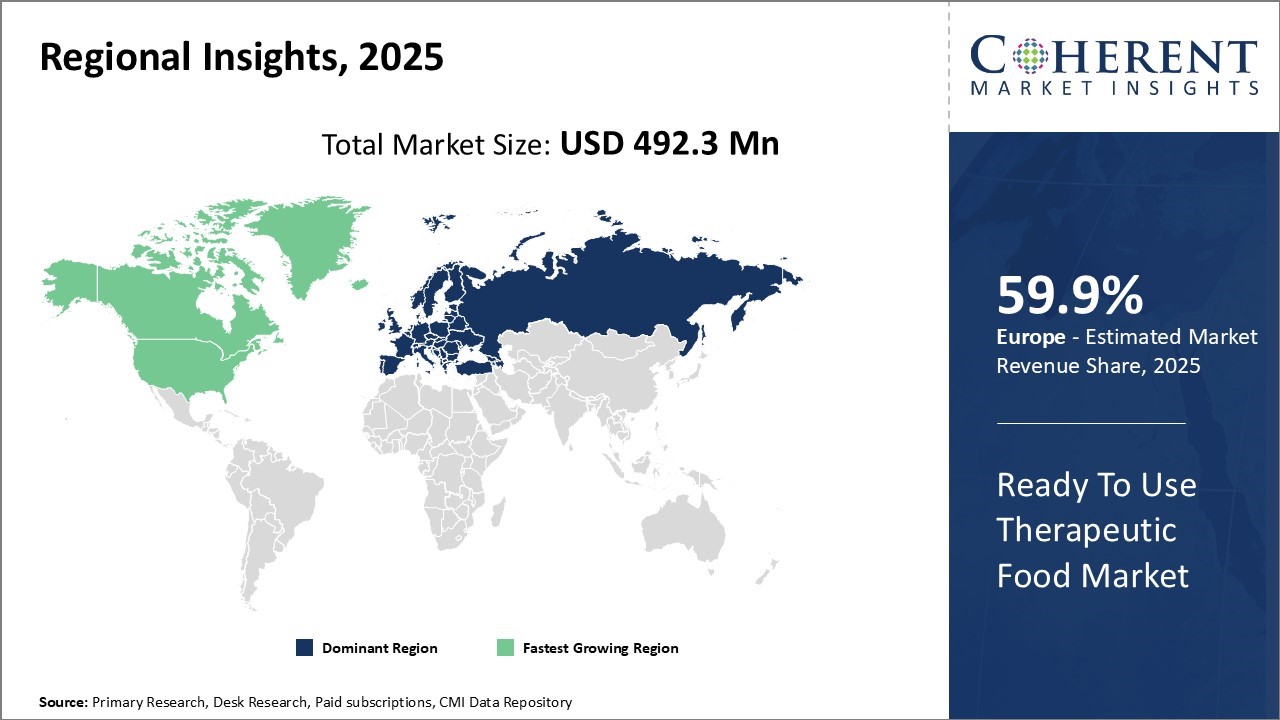
- By Region, Europe leads the market in 2026 with a share of 59.9%, backed by strong regulatory frameworks and production facilities.
Market Overview
The demand for ready to use therapeutic food (RUTF) is expected to increase significantly during the forecast period driven by rising awareness about therapeutic foods for the treatment of acute malnutrition among consumers and healthcare professionals. Various government and non-government organizations have been undertaking awareness programs about RUTF which is boosting its adoption.
Current Events and Its Impact on the Ready To Use Therapeutic Food Market
Event | Description and Impact |
Sudan Conflict and Regional Instability (Macro-Level Geopolitical) |
|
Climate Change-Induced Food Insecurity (Macro-Level Environmental) |
|
Global Supply Chain Inflation and Commodity Price Volatility (Macro-Level Economic) |
|
Pricing Analysis
The RUTF market operates within a multi-tiered pricing framework, shaped by formulation type, procurement volume, and raw material inputs. In 2025, average global prices ranged between US $3.8–6.2/kg, with variation by region and contract type. For instance, in Q1 2025, large-scale humanitarian tenders in Africa averaged ~US $4.2/kg, while prices in Latin America reached ~US $5.7/kg due to higher transport and packaging costs.
By Q2 2025, costs rose modestly to US $4.6–6.2/kg following a spike in dairy and peanut inputs. Manufacturers in Europe, particularly those aligned with UNICEF or WFP frameworks, maintained bulk contract rates near US $4.0/kg, while smaller local producers in Asia sold mid-sized volumes at ~US $5.2/kg.
Premium fortified formulations (e.g., lactose-free or micronutrient-enhanced RUTF) commanded up to US $6.5–8.0/kg, especially in regions targeting early-stage intervention programs or hospital-grade delivery.
Price variability remains heavily influenced by input volatility, especially in peanuts, milk powder, and vegetable oils, alongside packaging costs. For example, sachet-grade aluminum foil costs increased ~12% year-over-year, pressuring retail-oriented margins. Despite that, bulk procurement contracts and donor subsidies helped maintain price stability in priority intervention zones.
- Current Industry Events of 2026
- Market Size Estimation
- Regional Breakdown
- Competitive Landscape
- Customer Intelligence
- Segmental Analysis
- Pricing Analysis
- Key Market Drivers, Challenges & Future Trends
- Customized Insights Section
Role of Artificial Intelligence (AI) and Automation in the Ready-to-Use Therapeutic Food Market
AI and automation are increasingly optimizing RUTF production by enhancing consistency, traceability, and cost efficiency. Smart mixing systems equipped with IoT sensors now regulate ingredient blending and moisture levels in real time—reducing formulation errors and energy usage.
AI-driven predictive maintenance minimizes downtime in extrusion and sachet-filling lines, while machine learning algorithms track batch viscosity and nutrient density to ensure regulatory compliance. In humanitarian logistics, AI tools also forecast regional malnutrition surges, enabling producers to proactively scale inventory and align with relief agency demands.
Segmental Insights
Global Ready-to-Use Therapeutic Food Market Insights, By Type
In terms of type, solid segment is estimated to contribute the highest market share of 39.7% in 2026, owing to its easy storage, transportation, and consumption advantages. Solid RUTF products are commonly packaged in sachets or wrappers, enhancing portability and ease of use—making ready to use therapeutic food with sachets an increasingly preferred choice for rapid nutritional intervention without the need for preparation. This makes them very suitable for effective distribution and usage in remote locations.
Global Ready-to-Use Therapeutic Food Market Insights, By End User
In terms of end user, the United Nations International Children’s Emergency Fund (UNICEF) segment is estimated to contribute the highest market share of 33.8% in 2026, owing to its extensive involvement and leadership in global nutritional intervention programs. As the primary procurement agency for United Nations System and several NGOs, UNICEF is responsible for providing ready to use therapeutic food.
Global Ready-to-Use Therapeutic Food Market - Regional Insights
Dominating Region: Europe
Europe is expected to dominate the market in 2026 with an estimated share of 59.9%. Major players in the region benefit from proximity to advanced manufacturing infrastructure and a favorable regulatory environment. Market growth can be attributed to strong government support for nutrition programs and well-established production facilities.
Fastest-Growing Region: North America
North America exhibits the fastest growth, driven by a growing population, increased awareness of malnutrition issues, and extensive relief programs. Several national initiatives aim to expand access to therapeutic food, supported by trade agreements that facilitate imports. Local manufacturers are also emerging to meet rising domestic demand.
Ready to Use Therapeutic Food Market Outlook for Key Countries
- Rising Demand for Ready to Use Therapeutic Foods in the U.S. Amid Health Consciousness and Lifestyle Diseases
The U.S. is a leading market for ready to use therapeutic food, driven by a large population with diverse nutritional needs and increasing rates of lifestyle-related health issues. RUTF is increasingly being integrated into healthcare systems, particularly for managing chronic diseases. Rising health consciousness is pushing consumers toward fortified and therapeutic food options.
- Growing Demand for Ready to Use Therapeutic Foods in Germany: Rising Awareness and Consumer Preferences for Quality and Natural Ingredients
Germany is experiencing a growing demand for ready-to-use therapeutic foods (RUTF) due to increasing awareness about nutritional deficiencies and malnutrition in various demographics. Strict regulations ensure product safety and efficacy, promoting high-quality standards in the market. There is an increasing preference for organic and natural ingredients among consumers. The increasing recognition of the need for specialized nutrition in managing chronic health conditions and malnutrition is contributing to the demand for these foods.
- Rising Demand for Specialized Nutritional Products in the U.K.: Government Support and Innovation in Ready to Use Therapeutic Foods
The rising demand for specialized nutritional products in the U.K.—especially among the elderly and individuals with chronic health conditions—is driving growth in the ready to use therapeutic food market share, as healthcare providers increasingly adopt RUTF solutions for targeted dietary support. Government health programs are promoting the use of therapeutic foods to combat nutritional deficits. Companies are focusing on product innovation, incorporating functional ingredients to enhance health benefits.
- Gourmet Quality, Strict Regulations, and Growing Pediatric Focus in France
The French ready to use therapeutic food market demand is characterized by a strong emphasis on gourmet and high-quality therapeutic foods, reflecting the nation's culinary culture. France follows stringent regulations regarding health claims and product labeling, ensuring consumer trust. There is significant growth potential in the pediatric segment, with a focus on addressing childhood malnutrition.
- Canada's Ready to Use Therapeutic Food Market: Health Focus, Multicultural Demand, and Sustainable Ingredients
Canada’s ready-to-use therapeutic food market is experiencing steady growth driven by a growing focus on health and wellness, with more consumers seeking specialized nutritional products—trends that align with a positive ready to use therapeutic food market forecast over the coming years. Canada’s multicultural population drives the demand for a variety of therapeutic foods catering to different dietary preferences. There is a growing trend towards sustainable and ethically sourced ingredients in therapeutic food products.
Market Concentration and Competitive Landscape
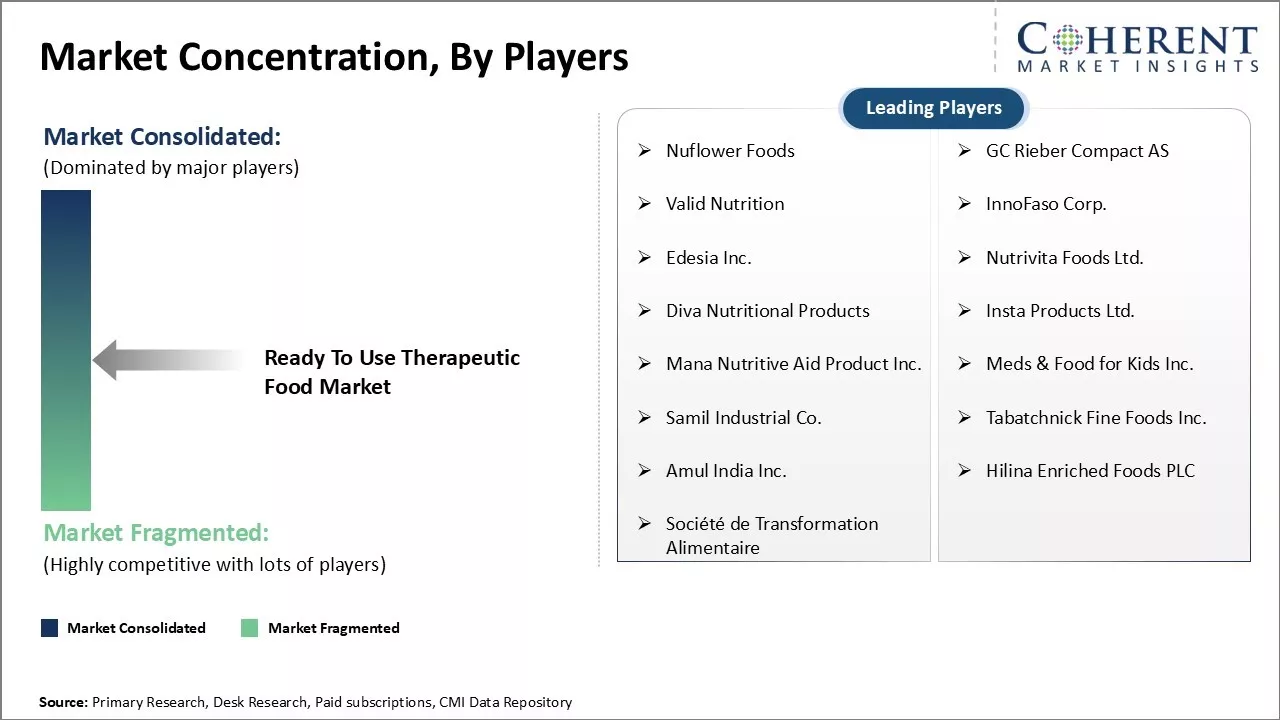
Top Strategies Followed by Ready to Use Therapeutic Food Market Players
- Established players focus extensively on research and development to deliver innovative products. Major companies like Nutriset and Valid Nutrition invest over 10% of annual revenue in R&D. Their state-of-the-art facilities help develop customized nutritional solutions. Strategic partnerships are also significant.
- Mid-level players strive to provide cost-effective options for price-sensitive users. Firms like Achaic and KitoNutrients price products 10-15% lower than market leaders through optimized production and lean operations. They form collaborations for technological assistance. Achaic partners with local factories for bulk production while KitoNutrients receives formulation support from Nutriset enabling competitive pricing.
- Small-scale players usually target niche segments. Companies like Roots and Shoots specialize in pediatric and elderly feed supplements. Their customized solutions address specific dietary needs not covered by generic products. New firms employ advanced technologies to remain competitive.
Emerging Startups in the Ready to Use Therapeutic Food Market
Several startups are developing innovative technologies to influence the market. BioPal uses AI and smartphone sensors to detect malnutrition early and provide personalized interventions. NutriSense employs smart packaging with sensors tracking product usage and screening for contagious disease remotely in areas with limited healthcare. Their technologies could enhance access to care.
Sustainability is another focus area. Renewlogy extracts nutrients from food waste to develop thermal-stabilized supplements without artificial preservatives.
Some startups address niche needs. NutriLearn produces edible tablets integrated with educational content targeting school-going children. CareGrow focuses on supplementary senior dog foods to promote pet and owner wellness together. Through specializations, startups satisfy varied demands not met by generic versions.
Ready To Use Therapeutic Food Industry News
- May 2023: UNICEF released its “Ready-to-Use Therapeutic Food Market and Supply Update”, highlighting a dramatic increase in procurement volumes to address severe wasting, while urging industry to scale up production capacity to meet rising demand.
- October 2023: The Codex Alimentarius formalized new international guidelines for RUTF as a food for special medical purposes, establishing food safety and nutritional composition standards—opening doors for innovative formulations.
- July 2024: UNICEF Nigeria handed over 12,400 cartons of RUTF to Jigawa State, funded via the Child Nutrition Fund, enough to treat approximately 14,000 children and showcasing public–private partnership models.
- March 2025: WHO and UNICEF convened a technical consultation to refine RUTF quality standards, including nutrient profiles and alternative recipe requirements—supporting regulatory harmonization and product diversification.
Key Takeaways from Analyst
- The Ready-To-Use Therapeutic Food (RUTF) market demonstrates robust fundamentals driven by escalating global malnutrition rates and expanding humanitarian aid programs. Rising awareness of severe acute malnutrition treatment, particularly in pediatric populations, continues propelling market expansion alongside increased government and NGO funding allocations. The WHO's standardized treatment protocols have significantly enhanced RUTF adoption across healthcare systems worldwide.
- Key market drivers include growing prevalence of malnutrition in developing nations, enhanced distribution networks through international organizations, and improved product formulations offering better nutritional profiles. Climate change-induced food insecurity and persistent conflict zones further amplify demand for therapeutic nutrition solutions.
- However, market growth faces considerable restraints including high product costs limiting accessibility in low-income regions, complex regulatory frameworks across different countries, and supply chain challenges in remote areas. Limited local manufacturing capabilities in target markets create dependency on imports, increasing overall costs.
- Significant opportunities emerge through technological advancements in product development, potential for local manufacturing partnerships, and expanding applications beyond acute malnutrition treatment. Digital distribution tracking systems and innovative packaging solutions present additional growth avenues.
Market Report Scope
Ready to Use Therapeutic Food Market Report Coverage
| Report Coverage | Details | ||
|---|---|---|---|
| Base Year: | 2025 | Market Size in 2026: | USD 521.8 Mn |
| Historical Data for: | 2020 To 2024 | Forecast Period: | 2026 To 2033 |
| Forecast Period 2026 to 2033 CAGR: | 6.0% | 2033 Value Projection: | USD 784.7 Mn |
| Geographies covered: |
| ||
| Segments covered: |
| ||
| Companies covered: | Nuflower Foods, GC Rieber Compact AS, Valid Nutrition, InnoFaso Corp., Edesia Inc., Nutrivita Foods Ltd., Diva Nutritional Products, Insta Products Ltd., Mana Nutritive Aid Product Inc., Meds & Food for Kids Inc., Samil Industrial Co., Tabatchnick Fine Foods Inc., Amul India Inc., Hilina Enriched Foods PLC, and Société de Transformation Alimentaire | ||
| Growth Drivers: |
| ||
| Restraints & Challenges: |
| ||
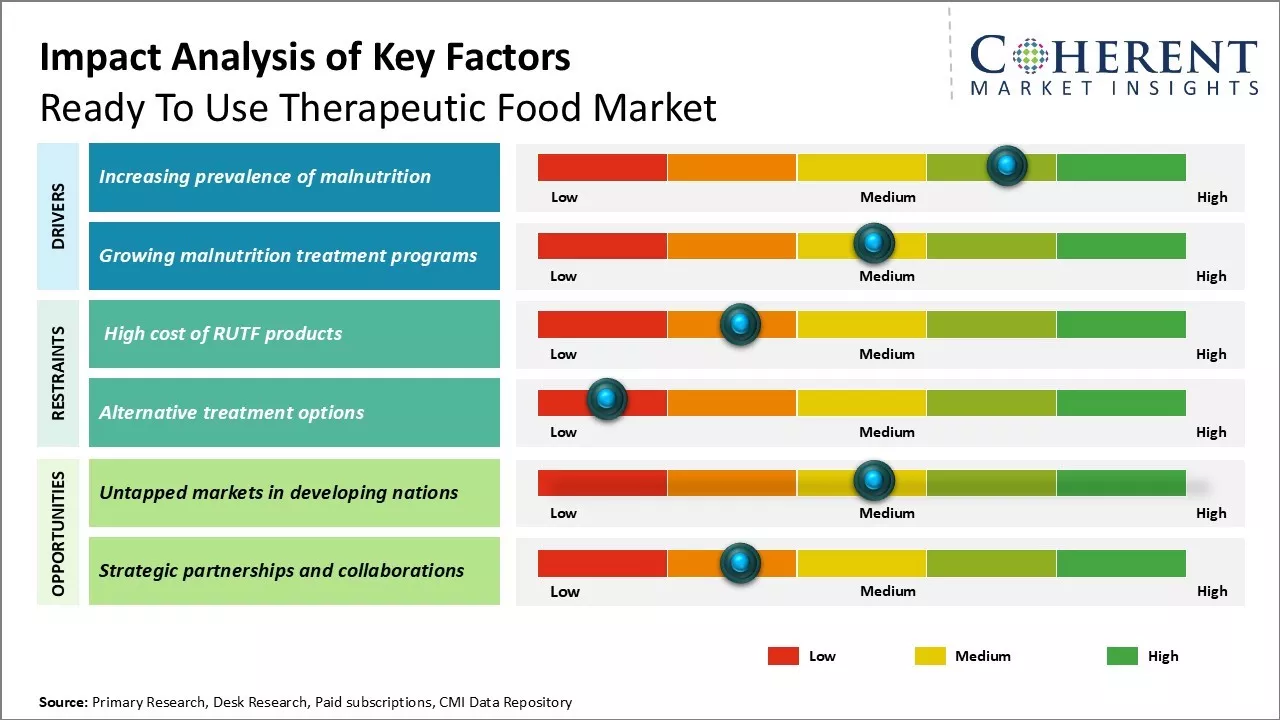
Market Driver - Increasing prevalence of malnutrition
Malnutrition has been a persistent global challenge for many developing nations across the world. The problem has been further exacerbated in recent years due to rising conflicts, erratic climate changes, economic downturns, and other complex issues impacting food security. According to UNICEF’s update in April 2023, children suffered from acute malnutrition worldwide. Malnutrition remains a critical issue, contributing to around 45% of deaths among children under 5—underscoring the vital role of ready to use therapeutic food for children under 5 in addressing severe acute malnutrition and improving survival rates.
Market Opportunity - Untapped markets in developing nations
The ready to use therapeutic food sector has significant untapped growth opportunities in several developing nations where malnutrition continues to be a major public health concern. International organizations like UNICEF have played a key role in advocating for and aiding local production and distribution of RUTF in several developing nations across Africa and Asia Pacific.
Market Segmentation
- Type Insights (Revenue, USD Mn, 2021 - 2033)
- Solid
- Paste
- Drinkable
- Others
- End User Insights (Revenue, USD Mn, 2021 - 2033)
- United Nations International Children’s Emergency Fund (UNICEF)
- World Food Program (WFP)
- Government Organizations
- Non-governmental Organizations (NGOs)
- Other End Users
- Regional Insights (Revenue, USD Mn, 2021 - 2033)
- North America
- U.S.
- Canada
- Latin America
- Brazil
- Argentina
- Mexico
- Rest of Latin America
- Europe
- Germany
- U.K.
- Spain
- France
- Italy
- Russia
- Rest of Europe
- Asia Pacific
- China
- India
- Japan
- Australia
- South Korea
- ASEAN
- Rest of Asia Pacific
- Middle East
- GCC Countries
- Israel
- Rest of Middle East
- Africa
- South Africa
- North Africa
- Central Africa
- Key Players Insights
- Nuflower Foods
- GC Rieber Compact AS
- Valid Nutrition
- InnoFaso Corp.
- Edesia Inc.
- Nutrivita Foods Ltd.
- Diva Nutritional Products
- Insta Products Ltd.
- Mana Nutritive Aid Product Inc.
- Meds & Food for Kids Inc.
- Samil Industrial Co.
- Tabatchnick Fine Foods Inc.
- Amul India Inc.
- Hilina Enriched Foods PLC
- Société de Transformation Alimentaire
Source
Primary Research Interviews
- RUTF Manufacturers and Suppliers
- Healthcare Professionals and Nutritionists
- NGOs and Humanitarian Organizations
- Government Health Officials and Policy Makers
- Others
Databases
- WHO Global Health Observatory Data Repository
- UNICEF Supply Division Database
- World Food Programme (WFP) Market Analysis Database
- FAO Food Security Information Network
- Others
Magazines
- Food and Nutrition Magazine
- Global Health Magazine
- Humanitarian Practice Network (HPN) Magazine
- Public Health Nutrition Magazine
- Others
Journals
- Journal of Nutrition
- Food and Nutrition Bulletin
- Maternal & Child Nutrition Journal
- Others
Newspapers
- Reuters Health News
- The Guardian Global Development
- Thomson Reuters Foundation News
- Financial Times Healthcare
- Others
Associations
- World Health Organization (WHO)
- United Nations Children's Fund (UNICEF)
- World Food Programme (WFP)
- Médecins Sans Frontières (MSF)
- Others
Public Domain Sources
- WHO Technical Reports and Guidelines
- UNICEF State of the World's Children Reports
- World Bank Open Data Portal
- Government Health Ministry Publications
- Others
Proprietary Elements
- CMI Data Analytics Tool
- Proprietary CMI Existing Repository of information for last 8 years
Get access to 250+ pages report
Every segment, forecast, competitor profile and data table behind the analysis above — available for instant download.
- ESOMAR Member
- ISO 9001:2015 Certified
- D-U-N-S Registered
- GDPR & CCPA Compliant
Missing comfort of reading report in your local language? Find your preferred language:
Transform your Strategy with Exclusive Trending Reports
Frequently Asked Questions
The Ready To Use Therapeutic Food Market value is estimated to be valued at USD 521.8 Mn in 2026, and is expected to reach USD 784.7 Mn by 2033.
The CAGR of the global Market is projected to be 6.0% from 2026 to 2033.
Increasing prevalence of malnutrition and growing malnutrition treatment programs are the major factors driving the growth of the ready to use therapeutic food industry.
High cost of RUTF products and alternative treatment options are the major factors hampering the growth of the global industry.
In terms of type, solid segment is estimated to dominate the market revenue share in 2026. Which are the major players operating in the global market?
Nuflower Foods, GC Rieber Compact AS, Valid Nutrition, InnoFaso Corp., Edesia Inc., Nutrivita Foods Ltd., Diva Nutritional Products, Insta Products Ltd., Mana Nutritive Aid Product Inc., Meds & Food for Kids Inc., Samil Industrial Co., Tabatchnick Fine Foods Inc., Amul India Inc., Hilina Enriched Foods PLC, and Société de Transformation Alimentaire are the major players.