

Global Food Sweetener Market Size and Share Analysis – (2026-2033)
The food sweetener market is estimated to be valued at USD 98.15 Bn in 2026 and is expected to reach USD 117.47 Bn by 2033, exhibiting a compound annual growth rate (CAGR) of 2.6% from 2026 to 2033.
Key Takeaways
- Based on Type, Sucrose Segment is expected to contribute 80% share in the global food sweetener market in 2026, owing to its wide applications across various food and beverage products.
- Based on Application, Bakery and Confectionary Segment are expected to account for 43.7% of the market share globally in 2026. This is due to widespread popularity of baked goods in all diets and cultures.
- North America has been the dominant region with 40. 8% of the market share in 2026. This is because of strong industry presence of major players like Archer Daniels Midland, Cargill, Tate & Lyle, and Roquette.
Market Overview
The food sweetener market is witnessing positive trends that are expected to drive the market growth during the forecast period. The rising health consciousness among consumers and growing demand for low-calorie sugar-free food products is supporting the growth of natural and low-calorie sugar substitutes like stevia and monk fruit extracts. Moreover, changing lifestyle and eating habits are also prompting consumers to prefer food items with natural or zero calorie sweeteners. The increasing use of sugar substitutes by food brands in product innovation and development of sugar-free foods is another key factor boosting the market expansion. However, the availability of alternative sweetening options like plant-based sugars and lack of consumer acceptance of certain artificial sweeteners in a few countries might hamper the market progression.
Current Events and Its Impact on Food Sweetener Market
Current Events | Description and its impact |
Clean Label Reformulation and Retail Drive to Natural Sweeteners |
|
Fermentation-Based Production of Natural and Exotic Sweeteners |
|
Demand For Organic and Natural Products
Demand for natural and organic sweeteners is surging as more health-aware consumers are rejecting artificial ingredients and refined sweeteners in larger numbers. The trend is propelled by growing concern over obesity, diabetes, and the long-term health impacts of artificial sweeteners.
Natural sweeteners such as stevia, monk fruit, agave nectar, coconut sugar, honey, and date syrup are gaining traction due to their plant-based nature, low glycemic index, and perceived health benefits. Consumers are also calling for clean label products, i.e., a smaller number of ingredients and no additives, which has driven manufacturers to reformulate with natural sweetener alternatives.
The market for natural sweeteners is also increasing robustly, driven by the broader shift towards organic and sustainable food systems. Organic sweeteners, grown without pesticides or chemical fertilizers, appeal to environmentally aware consumers who associate organic farming with better health and environmental outcomes. Foodservice companies and retailers are also responding with increased amounts of organic and naturally sweetened items, especially in beverages, dairy substitutes, and snacks.
This growing demand is observed in both developed and developing economies, though pricing remains a barrier in cost-conscious markets. North America and Europe lead the way in natural sweetener adoption through strong regulatory support and heightened consumer awareness, whereas the Asia-Pacific holds enormous growth opportunities with urbanization and growing middle-income levels. Despite such setbacks as production costs and dissimilarities in taste, the trend towards natural and organic sweeteners is set to continue reshaping the food sweetener market in years to come.
- Current Industry Events of 2026
- Market Size Estimation
- Regional Breakdown
- Competitive Landscape
- Customer Intelligence
- Segmental Analysis
- Pricing Analysis
- Key Market Drivers, Challenges & Future Trends
- Customized Insights Section
Food Sweetener Market Driver
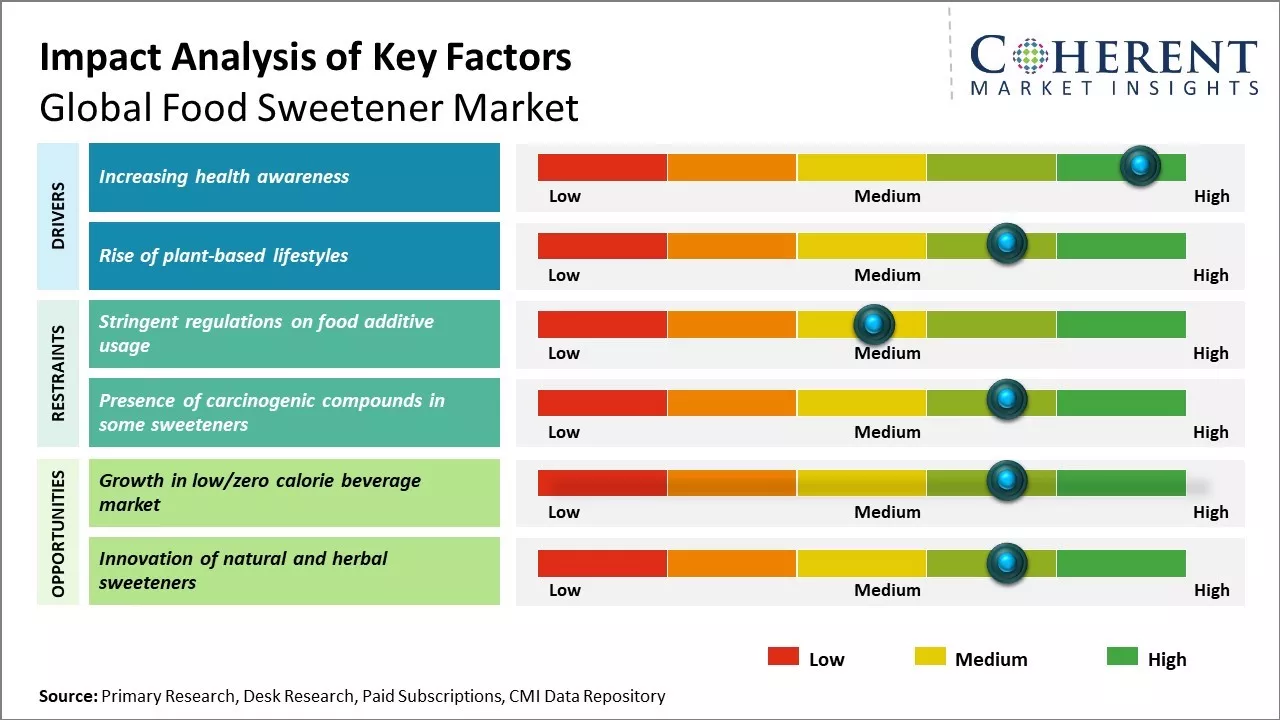
- Increasing health awareness
The food and beverage industry has witnessed immense pressure to reduce sugar content for offering healthier options to consumers. With increasing cases of obesity and diabetes globally, major health organizations and governments are advocating for limiting sugar intake. There is growing consensus that excessive sugar consumption can increase the risk of numerous chronic diseases.
As consumers also become more health conscious about what goes in their diet, they prefer natural and low-calorie sweeteners. This change in attitude has made food sweetener manufacturers explore new plant-based alternatives. Stevia and monk fruit-based sweeteners are finding more traction from food companies for their negligible impact on blood sugar levels.
Customers care about ingredients label and are scrutinizing products for artificial ingredients or additives. Not just consumers but also regulatory authorities are putting pressure on food businesses. Several countries have imposed sugar tax or introduced guidelines to curb sugar levels in food items. All these factors are compelling the industry players to diligently look at sugar reduction strategies and emphasize on more natural solutions.
In July 2025, Ingredion (owner of PureCircle) reported that around 70% of global consumers actively seek reduced‑sugar products, and many are even willing to pay more for options with health benefits. This high consumer demand is prompting food companies to prioritize clean-label ingredients such as stevia and monk fruit, especially in regions with strong sugar-reduction policies like North America and Europe.
- Rise of plant-based lifestyles
Along with health regulations, another major trend influencing the food sweetener sector is the rising popularity of vegan and organic products. With growing environmental and ethical concerns, many customers want to lead a sustainable plant-based lifestyle. They seek out food items that are not just healthy but also have less environmental footprint. Certain demographics, especially millennials are switching to a vegan diet due to strong beliefs in reducing animal cruelty and working towards sustainability.
To cater to this emerging consumer base, companies are innovative new types of sweeteners without any animal-derived components. Stevia being a natural plant-based sugar substitute presents an exciting opportunity. Manufacturers are coming up with stevia-based zero-calorie sweetener blends to satisfy the preferences of health-conscious vegan customers. Even dairy alternative beverages and baked goods are using plant-based sweeteners. The future demand would be vastly influenced by how well food companies align themselves with the ethics and values of this socially responsible consumer segment.
Market Opportunities: Growth in low/zero calorie beverage market
The global demand for low and zero calorie beverages has been growing steadily in recent years. As more consumers become health conscious and aim to reduce their sugar intake, they are shifting towards low and no calorie drink options. Many national health bodies now recommend limiting sugar consumption to less than 10% of total daily caloric intake.
This growing health awareness has made low-calorie drinks a preferred choice. Beverage companies are capitalizing on this opportunity by expanding their product portfolio to include lower and zero calorie beverages made with alternative sweeteners.
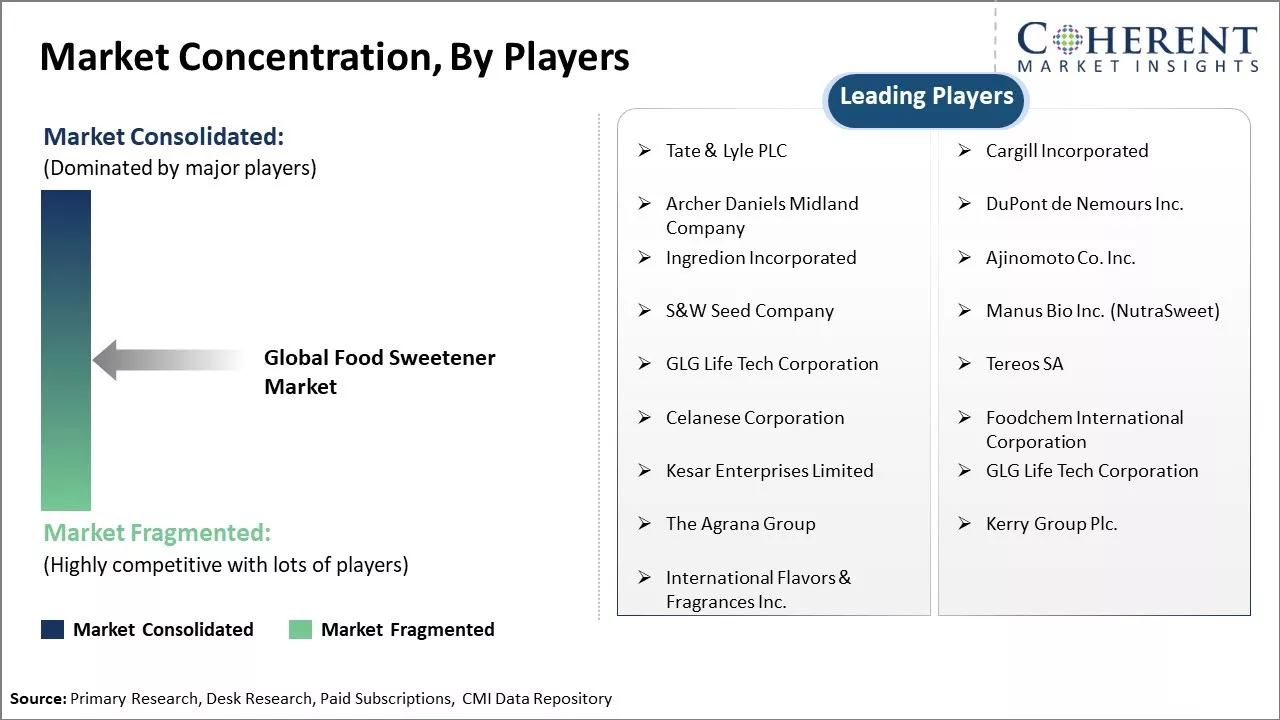
Market Concentration and Competitive Landscape
Segmental Insights
Food Sweetener Market Insights, By Type
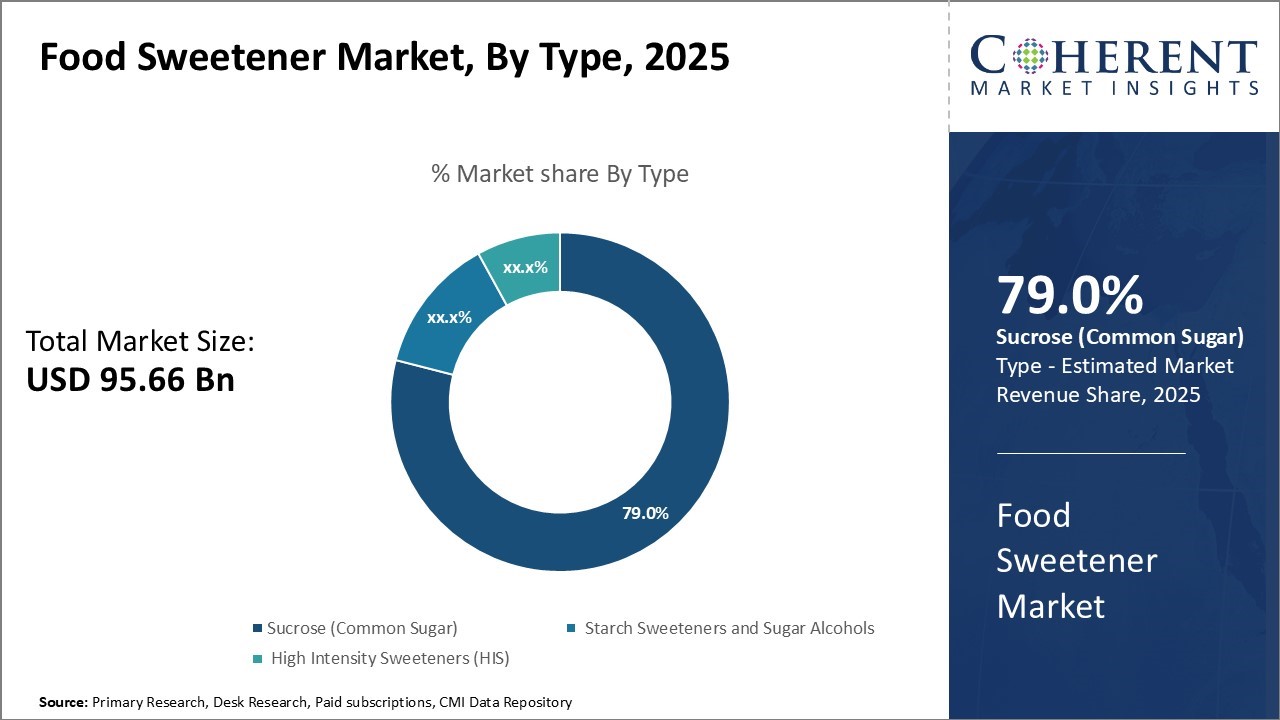
Sucrose, also known as table sugar, is expected to contribute 80% share in the global food sweetener market in 2026, owing to its wide applications across various food and beverage products. Sucrose is naturally sourced from sugarcane and sugar beets, making it the most commonly and easily available sweetening agent globally. Its natural sweet taste and white crystalline structure allows it to be blended seamlessly into both hot and cold food items.
Sucrose finds applications in almost every food category due to its high solubility, stability at high temperatures, and neutral flavor. It is heavily used in bakery items such as cakes, pastries, and breads to add sweetness as well as enhance texture. The artificial and intensified sweetness of alternative sweeteners cannot replicate sucrose's balanced sweet flavor in baked goods.
In beverages, its clean taste and solubility make it suitable for carbonated soft drinks, sweetened tea, and coffee drinks consumed worldwide. Sucrose also enhances flavors in preserves, jams, jellies and other fruit-based desserts due to its ability to extract and blend juice flavors.
Food Sweetener Market Insights, By Application
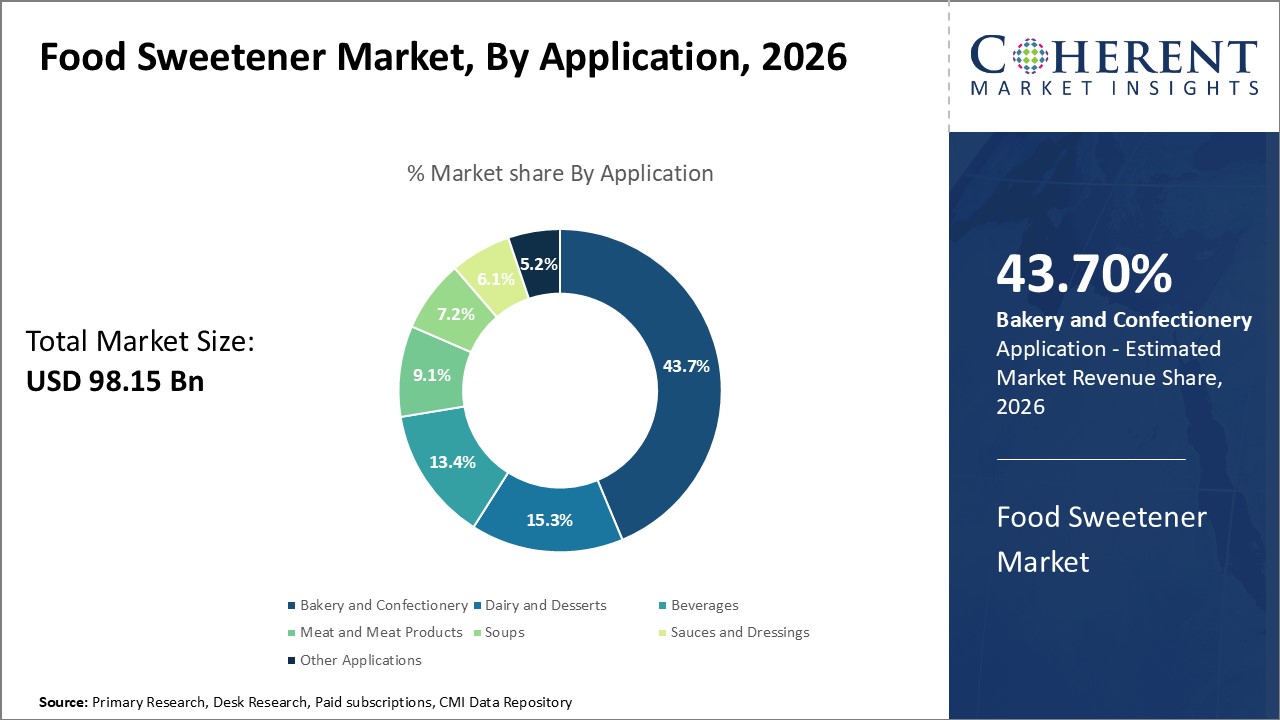
Based on application, the bakery and confectionary segment are expected to account for 43.7% of the market share globally in 2026. This segment receives a major boost from the widespread popularity of baked goods in all diets and cultures. Sweets occupy an important role in social occasions, holidays, and celebrations – driving consistent bakery product consumption worldwide.
Biscuits, cookies, cakes, pastries, and bread are some top-selling bakery items globally. These items require sweetness to enhance flavors and textures. Food sweeteners help extend freshness, add moisture, and aid rising and browning in baked goods. Their natural or artificial sweetness is a key attribute expected in bakery products by consumers. Developing nations are seeing rises in disposable incomes and living standards – increasing bakery product intake as part of aspirational lifestyles.
Industrial and artisanal bakers rely majorly on sucrose or high intensity sweeteners to prepare consistent, sweet-tasting bakery mixes and doughs. Sucrose's affordable pricing and popularity makes it the top choice for mass-produced cookies and biscuits.
In cakes, pastries, and premium baked items, high intensity sweeteners allow lowering calorie contents without compromising sweetness. Their drying properties also facilitate moist texture retention. Food manufacturers utilize this segment's high repeat usage and price inelasticity to drive new product development and gain market shares.
Regional Insights
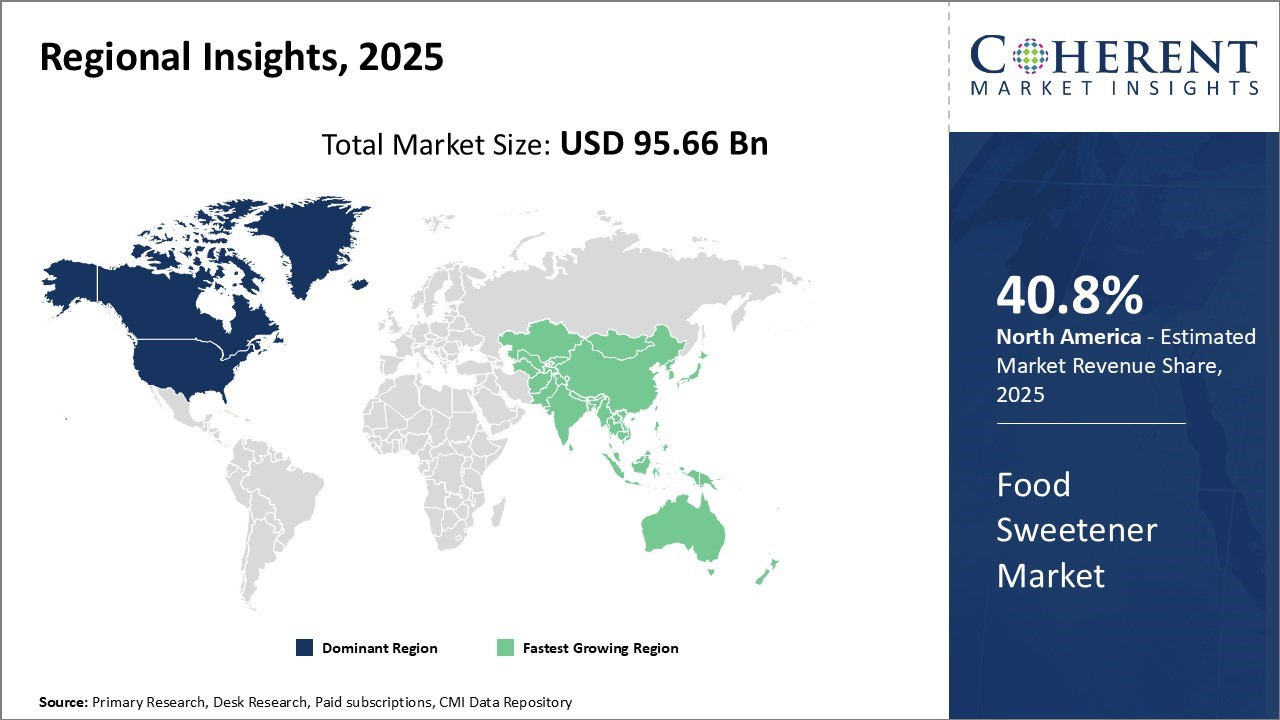
North America Food Sweeteners Market Analysis and Trends
North America has been the dominant region in the global food sweetener market for the past few decades. The region is expected to account for 40.8% of the market share in 2026. Led by the U.S., the food sweetener market enjoys strong industry presence of major players like Archer Daniels Midland, Cargill, Tate & Lyle, and Roquette. These players have established extensive production and distribution networks across the region to cater to the sizable domestic demand.
The North American culinary culture is heavily inclined towards using various sweeteners in both savory and sweet food preparations. This ingrained consumer preference for sweetened food items and beverages has ensured steady demand. Additionally, North America is also a key exporter of certain types of sweeteners like high fructose corn syrup (HFCS) and crystalline fructose. The pricing in the region is generally stable due to absence of major fluctuations in raw material costs and availability of domestic agri-commodities used in production.
Asia Pacific Food Sweeteners Market Analysis and Trends
The Asia Pacific region has emerged as the fastest growing market for food sweeteners globally in recent years. China and India are at the forefront of this growth and increasingly contributing significantly to the market size in Asia Pacific. Rapid urbanization, rising disposable incomes, and growing health consciousness among consumers have been driving the demand for low calorie sweeteners in the region.
The food sweetener market has also attracted major investments from international players looking to tap into the vast opportunities in this densely populated region. Moreover, the presence of suitable agro-climatic conditions allows for the domestic production of key feedstocks in many South East Asian nations.
This has augmented regional self-sufficiency and trade within Asia Pacific while also making the region an important exporter of certain sweeteners to global markets. With economic growth projected to continue in the coming years, the Asia Pacific market will likely sustain its momentum as the fastest growing and increasingly important market for the global food sweetener industry.
United States Food Sweetener Market Analysis and Trend
The U.S. is one of the leading markets for the food sweetener market driven by extraordinary demand for processed foods and drinks. It has a well-established base of manufacturers producing artificial as well as natural sweeteners, with rising momentum for low-calorie and clean-label sweeteners like stevia and monk fruit.
China Food Sweetener Market Analysis and Trend
China dominates the world market of high-intensity sweeteners, primarily in the instance of sucralose and saccharin. As a leading exporter, its scale of economy in production and capacity-large lead to it dominating the market. Domestically, demand is also rising due to increasing health consciousness and urbanization.
India Food Sweetener Market Analysis and Trend
India is developing at a rapid pace in the food sweetener sector on the back of rising awareness for health, the incidence of diabetes, and the requirement of sugar substitutes. The country's food and beverage sector are embracing natural sweeteners, while conventional sugar remains dominant in rural areas.
Brazil Food Sweetener Market Analysis and Trend
Brazil is a top producer of sugar and a major world market exporter. It has rich sugarcane supplies and supports conventional and bio-based sweetener production. Access to regulatory latitude and research and development investment makes Brazil a key player.
Market Report Scope
Food Sweetener Market Report Coverage
| Report Coverage | Details | ||
|---|---|---|---|
| Base Year: | 2025 | Market Size in 2026: | USD 98.15 Bn |
| Historical Data for: | 2020 To 2024 | Forecast Period: | 2026 To 2033 |
| Forecast Period 2026 to 2033 CAGR: | 2.6% | 2033 Value Projection: | USD 117.47 Bn |
| Geographies covered: |
| ||
| Segments covered: |
| ||
| Companies covered: | Tate & Lyle PLC, Cargill Incorporated, Archer Daniels Midland Company, DuPont de Nemours Inc., Ingredion Incorporated, Ajinomoto Co. Inc., S&W Seed Company, Manus Bio Inc. (NutraSweet), GLG Life Tech Corporation, Tereos SA, Celanese Corporation, Foodchem International Corporation, Kesar Enterprises Limited, GLG Life Tech Corporation, The Agrana Group, Kerry Group Plc., and International Flavors & Fragrances Inc. | ||
| Growth Drivers: |
| ||
| Restraints & Challenges: |
| ||
Food Sweetener Industry News
- In May 2024, ingredients giant, Ingredion, launched its PureCircle brand’s Clean Taste Solubility Solution, a drop-in stevia sweetener. By enhancing production capabilities, Ingredion seeks to meet the growing demand for sugar reduction solutions in the food and beverage industry.
- In January 2024, Cargill's joint venture Avansya announced that its EverSweet® stevia sweetener received favorable safety opinions from the European Food Safety Authority (EFSA) and UK Food Standards Agency (FSA). The approval clears the way for EverSweet® to be commercially launched in the European Union and UK during 2024.
Key Takeaways from Analyst
- The global food sweetener market remains an attractive space driven by increasing health consciousness. However, regulatory uncertainties around sugar and artificial sweeteners continue to impact businesses.
- The North America region is expected to dominate the market owing to rising incomes and shift towards western diet in countries. Asia Pacific will grow at fastest pace due to strong demand for low calorie sweeteners.
- Sucralose- and stevia-based sweeteners will witness higher growth compared to traditional sugars. Stevia, with its natural allure, has the potential to garner sizable market share. Innovation and product development around low glycemic sweeteners present opportunities for manufacturers. On the other hand, factors like fiscal conservative governments and recessionary pressures in Europe pose challenges.
- Concerns around obesity and diabetes have boosted the demand for reduced sugar products. However, changing consumer sentiment around artificial sweeteners needs to be closely tracked. Companies face competitive pressures due to regional tastes and low entry barriers. Compliance with varying international food regulations also impacts supply chains.
Market Segmentation
- Type Insights (Revenue, USD Bn, 2021 - 2033)
- Sucrose (Common Sugar)
- Starch Sweeteners and Sugar Alcohols
- High Intensity Sweeteners (HIS)
- Application Insights (Revenue, USD Bn, 2021 - 2033)
- Bakery and Confectionery
- Dairy and Desserts
- Beverages
- Meat and Meat Products
- Soups, Sauces, and Dressings
- Other Applications
- Regional Insights (Revenue, USD Bn, 2021 - 2033)
- North America
- U.S.
- Canada
- Latin America
- Brazil
- Argentina
- Mexico
- Rest of Latin America
- Europe
- Germany
- U.K.
- Spain
- France
- Italy
- Russia
- Rest of Europe
- Asia Pacific
- China
- India
- Japan
- Australia
- South Korea
- ASEAN
- Rest of Asia Pacific
- Middle East & Africa
- GCC Countries
- Israel
- Rest of Middle East & Africa
- Key Players Insights
- Tate & Lyle PLC
- Cargill Incorporated
- Archer Daniels Midland Company
- DuPont de Nemours Inc.
- Ingredion Incorporated
- Ajinomoto Co. Inc.
- S&W Seed Company
- Manus Bio Inc. (NutraSweet)
- GLG Life Tech Corporation
- Tereos SA
- Celanese Corporation
- Foodchem International Corporation
- Kesar Enterprises Limited
- GLG Life Tech Corporation
- The Agrana Group
- Kerry Group Plc.
- International Flavors & Fragrances Inc.
Sources
Primary Research Interviews
- Food Sweetener Manufacturers and Suppliers
- E-commerce Platform Managers and Digital Marketing Directors
- Health Food Retailers and Online Store Owners
- Food Technology R&D Specialists
- Others
Databases
- Euromonitor International Food & Nutrition Database
- IBISWorld Industry Reports Database
- Others
Magazines
- Food Business Magazine
- Natural Products Insider
- Prepared Foods Magazine
- Food Processing Magazine
- Nutraceuticals World
- Others
Journals
- Journal of Food Science and Technology
- Food Chemistry International Journal
- International Journal of Food Sciences and Nutrition
- Others
Newspapers
- Food Business Daily
- The Food Institute Report
- Nutrition Business Journal
- Natural Products INSIDER News
- Food Navigator
- Others
Associations
- International Food Additives Council (IFAC)
- Calorie Control Council
- International Sweeteners Association (ISA)
- Natural Products Association (NPA)
- Others
Public Domain Sources
- FDA Food Additive Status List
- USDA Food Composition Databases
- WHO/FAO Food Standards Programme
- European Food Safety Authority (EFSA) Reports
- Others
Proprietary Elements
- CMI Data Analytics Tool
- Proprietary CMI Existing Repository of information for last 8 years
Get access to 250+ pages report
Every segment, forecast, competitor profile and data table behind the analysis above — available for instant download.
- ESOMAR Member
- ISO 9001:2015 Certified
- D-U-N-S Registered
- GDPR & CCPA Compliant
Missing comfort of reading report in your local language? Find your preferred language:
Transform your Strategy with Exclusive Trending Reports
Frequently Asked Questions
The Food Sweetener Market size is estimated to be valued at USD 98.15 Bn in 2026, and is expected to reach USD 117.47 Bn by 2033.
The CAGR of the global Market is projected to be 2.6% from 2026 to 2033.
Increasing health awareness and rise of plant-based lifestyles are the major factors driving the growth of the global food sweetener industry.
Stringent regulations on food additive usage and presence of carcinogenic compounds in some sweeteners are the major factors hampering the growth of the global market.
In terms of type, sucrose (common sugar) is estimated to dominate the market revenue share in 2026.
Certifications like ISO, HACCP, FDA approval, and non-GMO Project verification are crucial to ensure quality, safety, and market access in sweetener exports.
Price volatility creates uncertainty for both producers and buyers, impacting profit margins and supply chain stability in the sweetener market.