

Glass Packaging Market Analysis & Forecast: 2026-2033
The Glass Packaging Market is estimated to be valued at USD 78.45 Bn in 2026 and is expected to reach USD 106.76 Bn by 2033, exhibiting a compound annual growth rate (CAGR) of 4.5% from 2026 to 2033.
Key Takeaways
- By Type, Bottle Segment is projected to dominate the global glass packaging market with a 46.7% share in 2026.
- By End-Use Industry, The Food and Beverages Segment are anticipated to contribute the highest share to the global glass packaging market, accounting for 45.4% in 2026.
- By Region, North America is expected to retain a commanding position in the global glass packaging market, holding a 41.7% share in 2026.
Market Overview
The global Glass Packaging Market is experiencing steady growth, driven by increasing demand for sustainable and recyclable packaging across industries such as food & beverages, cosmetics, and pharmaceuticals. Glass bottles dominate the market due to their durability and product-preserving properties. Changing consumer preferences toward eco-friendly solutions are further boosting adoption.
Current Events and its Impact on the Glass Packaging Market
Current Event | Description and its impact |
Increased Regulatory Focus on Sustainable Packaging |
|
Shifts in Consumer Preferences Toward Premium and Eco-Friendly Products |
|
Rising Raw Material and Energy Costs |
|
Pricing Analysis: Glass Packaging Market
The pricing dynamics of the global Glass Packaging market are shaped by multiple factors, including raw material costs, energy consumption, manufacturing processes, and demand from key end-use industries. In 2025, glass packaging prices are projected to witness moderate increases, primarily due to rising energy prices and the cost of silica sand, soda ash, and limestone, which are essential raw materials. The energy-intensive nature of glass manufacturing, especially in regions with volatile fuel and electricity costs, significantly contributes to production expenses.
Growing demand from the food and beverage, pharmaceutical, and personal care sectors is further driving pricing pressure, particularly for premium and specialty glass containers. Additionally, the market is witnessing a shift toward eco-friendly and recyclable packaging solutions, which often involve higher processing and quality control costs, leading to a willingness among consumers and brands to pay premium prices for sustainable glass options.
Geopolitical tensions, particularly in key raw material exporting countries, and supply chain disruptions, including shipping delays and container shortages, are also adding to cost fluctuations. Despite these challenges, technological advancements in lightweight glass production and increased automation in glass molding processes are helping to improve manufacturing efficiency and stabilize long-term pricing trends. Overall, the glass packaging market is expected to experience moderate but steady price growth, in line with expanding sustainability standards and evolving industry requirements.
- Current Industry Events of 2026
- Market Size Estimation
- Regional Breakdown
- Competitive Landscape
- Customer Intelligence
- Segmental Analysis
- Pricing Analysis
- Key Market Drivers, Challenges & Future Trends
- Customized Insights Section
Role of AI in the Glass Packaging Market
Artificial Intelligence (AI) is playing an increasingly transformative role in the glass packaging market by enhancing manufacturing efficiency, quality control, and sustainability. AI-powered systems enable real-time monitoring and predictive maintenance of production equipment, minimizing downtime and reducing operational costs. In quality assurance, AI-driven visual inspection technologies detect defects with higher precision than manual methods, ensuring consistency in product quality and reducing waste. AI algorithms also optimize furnace operations and energy consumption, which is crucial in the energy-intensive glass production process.
Additionally, AI supports demand forecasting and supply chain optimization by analyzing market trends, customer preferences, and inventory levels, helping manufacturers adjust production schedules more accurately. In product innovation, AI assists in designing lightweight, durable, and eco-friendly packaging solutions tailored to consumer needs. Overall, the integration of AI across various stages of the value chain is improving competitiveness, supporting sustainability goals, and driving smarter decision-making in the glass packaging industry.
Sustainability Initiatives and Government Regulations in the Glass Packaging Market
In 2025, the glass packaging industry is increasingly influenced by sustainability initiatives and evolving government regulations aimed at reducing environmental impact and promoting circular economy practices. Governments worldwide are implementing policies to encourage the use of recyclable materials and reduce packaging waste. For instance, several U.S. states have enacted Extended Producer Responsibility (EPR) laws, making producers partially responsible for funding recycling programs, thereby incentivizing the use of sustainable packaging materials like glass.
In Europe, the European Union's Packaging and Packaging Waste Directive mandates member states to meet specific targets for the recovery and recycling of packaging waste, promoting the use of recycled materials in packaging production. Additionally, France's Anti-Waste and Circular Economy Law focuses on reducing single-use plastics and encourages the use of recyclable alternatives, benefiting the glass packaging sector.
These regulatory frameworks are driving manufacturers to invest in recyclable and lightweight glass packaging solutions to meet strict environmental standards and cater to the growing consumer demand for eco-friendly packaging options. As a result, the glass packaging market is experiencing a shift towards more sustainable practices, aligning with global efforts to reduce waste and promote environmental responsibility
Market Concentration and Competitive Landscape
Glass Packaging Market Trends
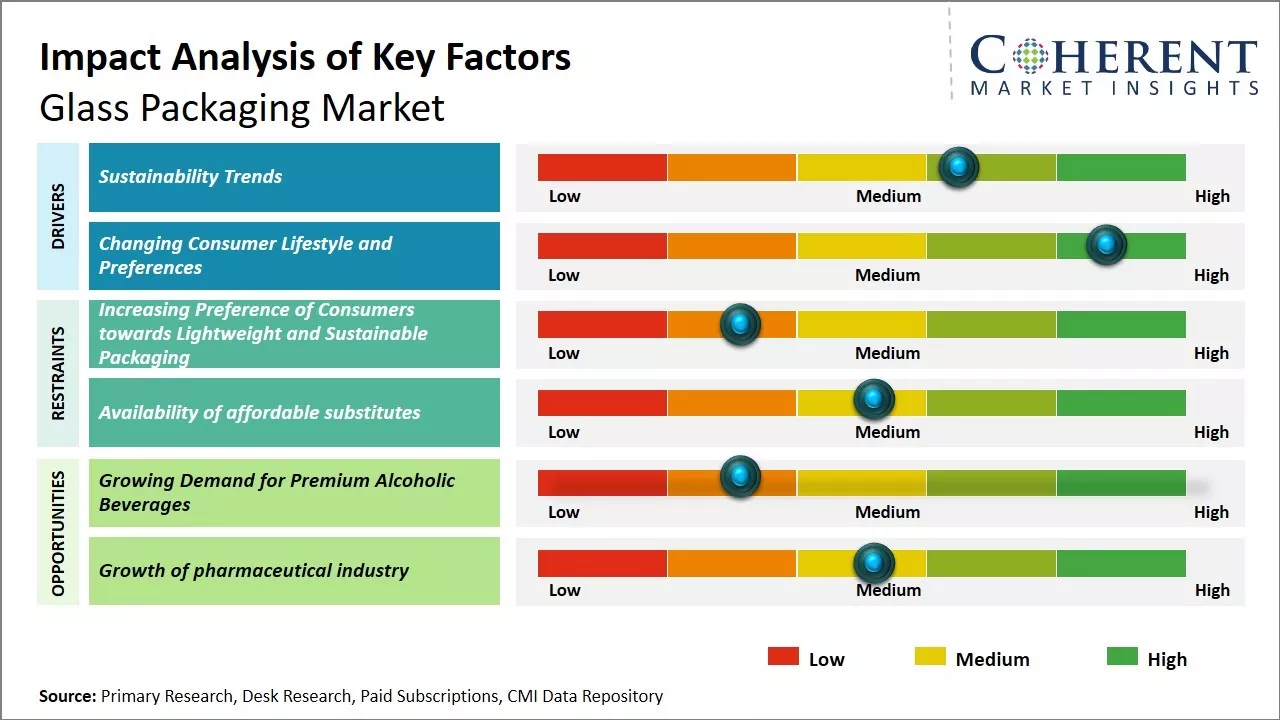
- Sustainability Trends
The rising awareness about environmental protection and sustainability has significantly impacted consumer preferences and buying behaviours across the globe. There is a growing segment of conscious consumers who consider the environmental and social impact of the products and packaging solutions used. Glass is emerging as one of the most sustainable packaging formats owing to its high recyclability rate and infinite recyclability property.
Glass can be recycled endlessly without any loss in quality or purity. This prevents glass containers from ending up in the landfills or incinerators. The recycled glass content can be utilized again and again to manufacture new glass packaging products. With sustainability becoming a key agenda of packaging producers, they are increasingly preferring glass as the material of choice.
In May 2025, Stirling Square Capital Partners announced the sale of Verescence, a French glass packaging manufacturer specializing in perfume bottles, to a consortium of investors. This move is part of a broader trend of consolidation and strategic realignment within the glass packaging industry.
- Changing Consumer Lifestyle and Preferences
The busy lifestyles and growing disposable incomes of urban consumers have spurred the demand for convenient and on-the-go food and beverage consumption. For instance, Gross national disposable income is expected to expand 8.9% in FY24 and 14.5% in FY23.
Ready-to-eat meals, snacks, and smaller glass packaging sizes are gaining immense traction. At the same time, health and wellness trends have also accelerated the sales of bottled water, juices, and other packaged beverages instead of soft drinks. Glass is an ideal format for showcasing the purity and protection of contents in these segments. The transparent glass material allows full product visibility to attract consumers.
Manufacturers are innovating attractive designs, shapes and decors along with easy opening closures to make glass jars & bottles more portable and user-friendly.
In February 2025, Warburg Pincus and KPS Capital Partners were reported to be in talks to team up on a bid for Gerresheimer AG, with a potential offer in the €70s per share. This indicates significant interest from private equity firms in the glass packaging sector.
Market Report Scope
Glass Packaging Market Report Coverage
| Report Coverage | Details | ||
|---|---|---|---|
| Base Year: | 2025 | Market Size in 2026: | USD 78.45 Bn |
| Historical Data for: | 2020 To 2024 | Forecast Period: | 2026 To 2033 |
| Forecast Period 2026 to 2033 CAGR: | 4.5% | 2033 Value Projection: | USD 106.76 Bn |
| Geographies covered: |
| ||
| Segments covered: |
| ||
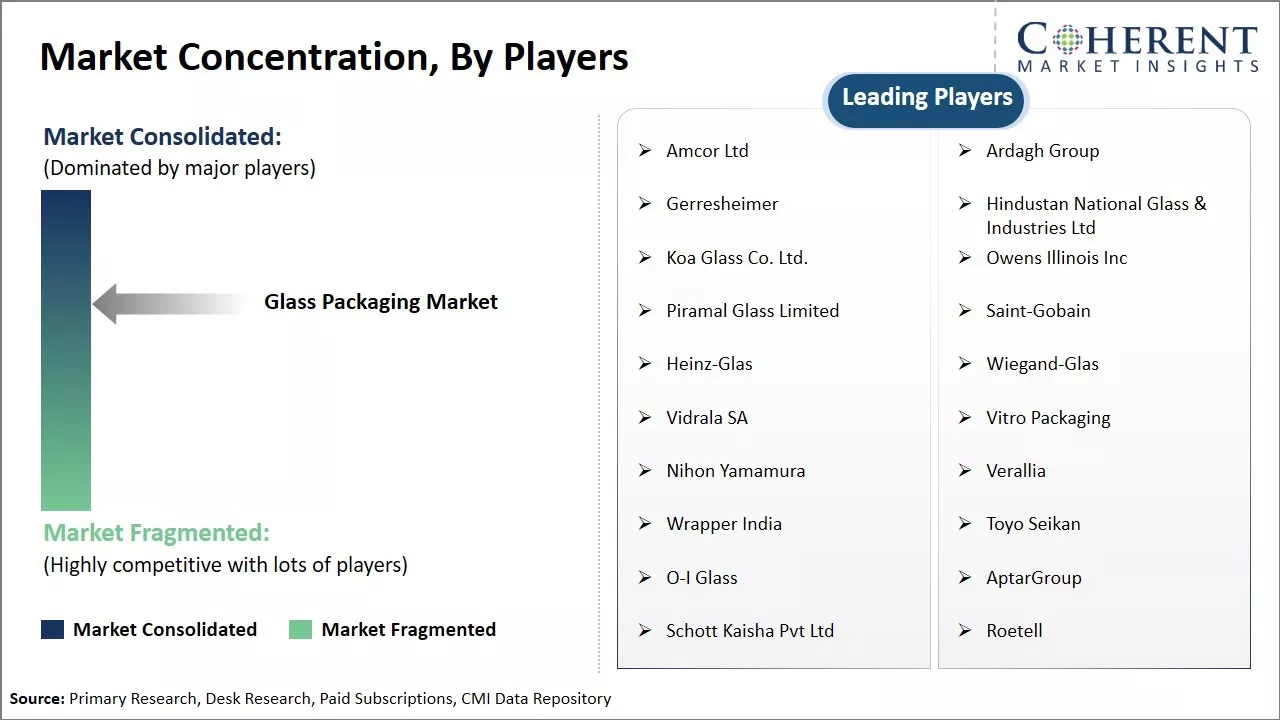
| Companies covered: | Amcor Ltd, Ardagh Group, Gerresheimer, Hindustan National Glass & Industries Ltd, Koa Glass Co. Ltd., Owens Illinois Inc, Piramal Glass Limited, Saint-Gobain, Heinz-Glas, Wiegand-Glas, Vidrala SA, Vitro Packaging, Nihon Yamamura, Verallia, Wrapper India, Toyo Seikan, O-I Glass, AptarGroup, Schott Kaisha Pvt Ltd, Roetell | ||
| Growth Drivers: |
| ||
| Restraints & Challenges: |
| ||
Opportunities in the Glass Packaging Market
- Growing Demand for Premium Alcoholic Beverages
The glass packaging market sees opportunities in segments like premium alcoholic beverages and beauty products which require the barrier protection, transparency, and weightiness attributes of glass. Rising health-consciousness fuel the demand for glass as a natural and chemical-free packaging material.
Segmental Insights
Glass Packaging Market Insights, By Type
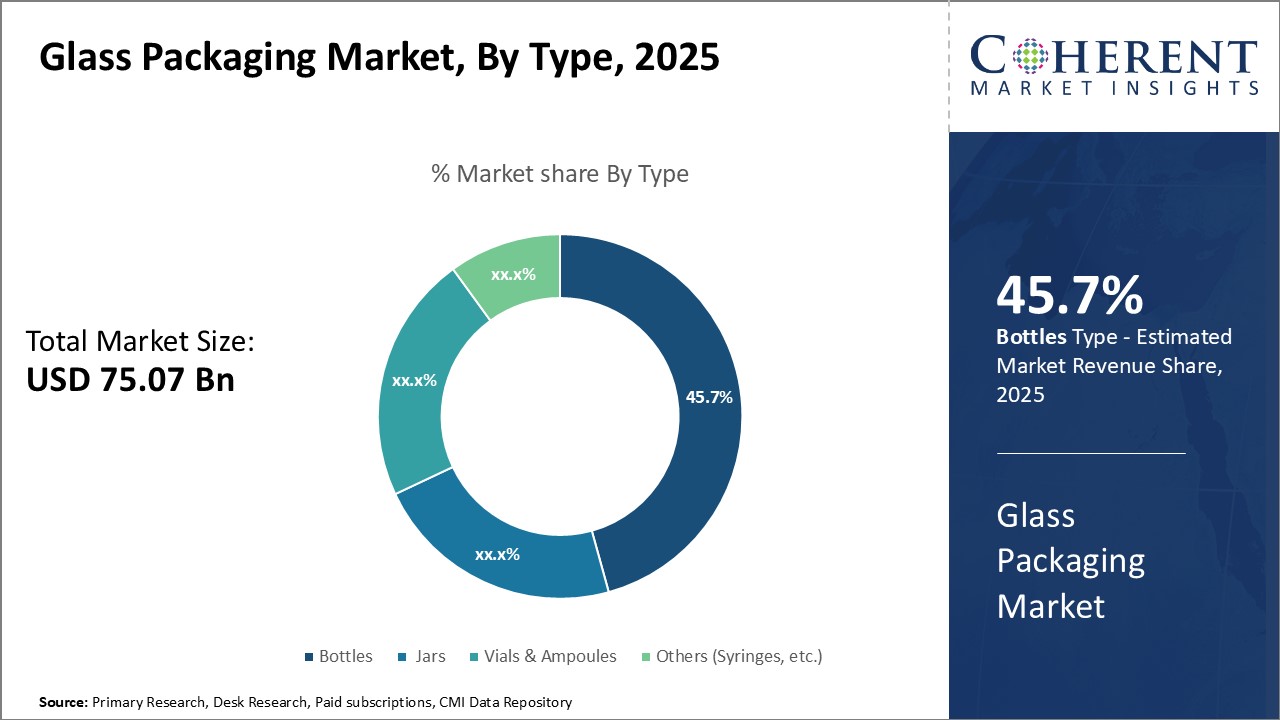
The bottle segment is projected to dominate the global glass packaging market with a 46.7% share in 2026. This leading position can be attributed to bottles’ extensive applicability and functionality across diverse industries. As the most prevalent form of glass containers used for both commercial and household purposes, bottles meet essential packaging demands in beverages, food products, personal care, and pharmaceuticals.
Their advantages in terms of durability, recyclability, and product preservation make them a preferred choice, particularly amid growing environmental awareness and the shift toward sustainable packaging solutions.
Glass Packaging Market Insights, By End-use Industry
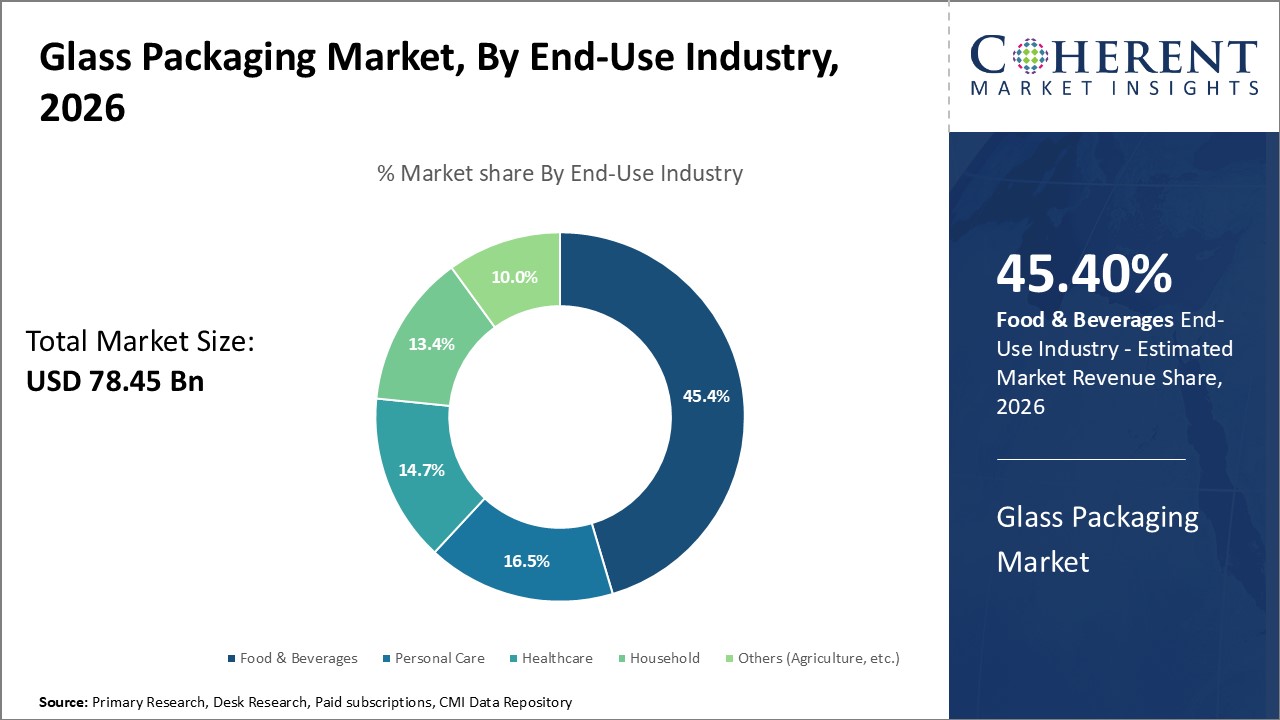
The food and beverages segment is anticipated to contribute the highest share to the global glass packaging market, accounting for 45.4% in 2026. This dominance stems from evolving consumer preferences, including a rising inclination toward healthier consumption and eco-friendly packaging.
Glass containers are widely adopted in this segment for their ability to preserve flavor, extend shelf life, and maintain product integrity. Additionally, premium and artisanal brands increasingly choose glass packaging to enhance product appeal and reinforce brand identity, further strengthening this segment’s position.
Regional Insights
North America Glass Packaging Market Trends and Analysis
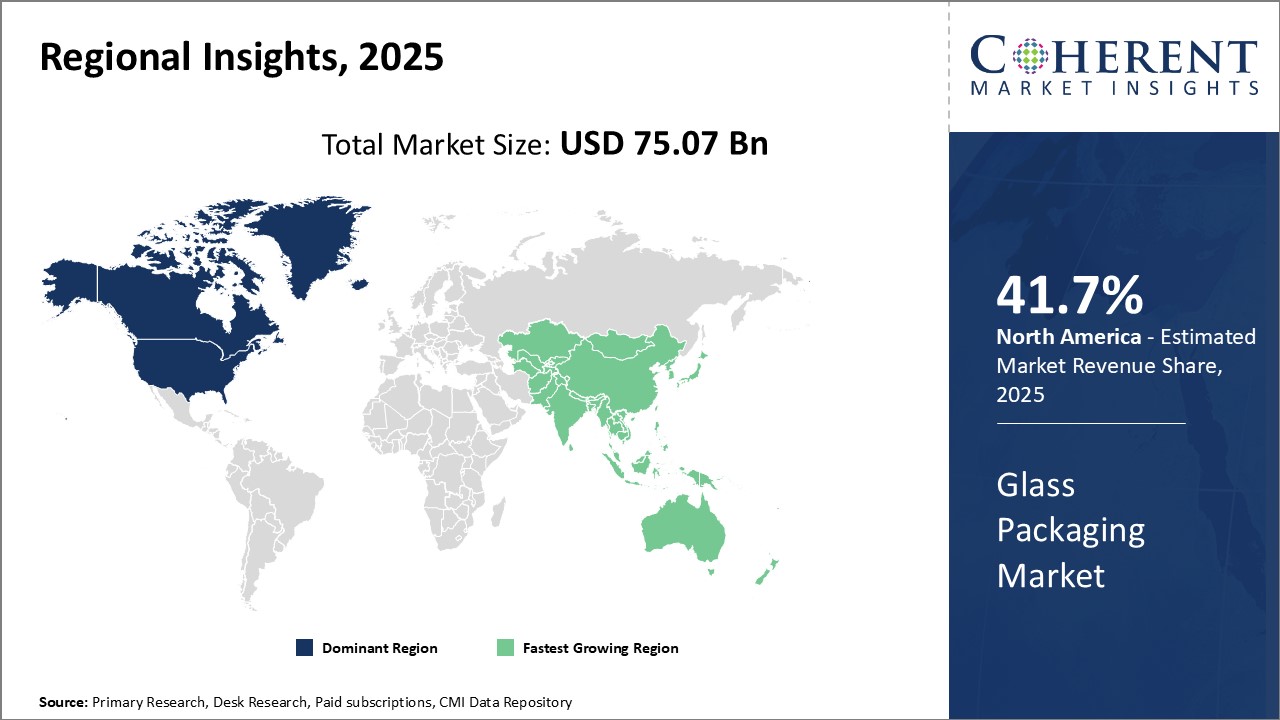
North America is expected to retain a commanding position in the global glass packaging market, holding a 41.7% share in 2026. This regional leadership is primarily driven by the well-established food and beverage industry in the United States, which heavily relies on glass packaging for its safety, reusability, and aesthetic value.
The region’s advanced recycling infrastructure and rising consumer preference for sustainable packaging solutions further support market expansion. Additionally, strategic investments by leading packaging companies and robust regulatory support for environmentally responsible practices continue to reinforce North America's dominance.
Europe Glass Packaging Market Trends and Analysis
Europe is projected to remain a prominent region in the glass packaging market, supported by strict environmental regulations, a strong emphasis on circular economy principles, and consumer inclination toward eco-friendly products.
Countries such as Germany, France, and Italy are witnessing increasing demand for premium food, beverage, and cosmetic products that utilize glass containers for sustainability and brand image. The region’s long-standing bottle returns and recycling programs, coupled with innovations in lightweight glass technology, contribute to its steady growth trajectory.
Glass Packaging Market Dominating Countries
United States and Canada
The United States and Canada dominate the glass packaging market in North America, which is projected to lead globally with a 41.7% market share in 2026. The U.S. has a robust food and beverage industry that heavily relies on glass containers for their durability, safety, and sustainability.
Strong consumer preference for eco-friendly packaging and a well-developed recycling infrastructure support continued market growth. Canada complements this dominance with its emphasis on green packaging policies, high environmental awareness, and demand for premium food and beverage products using recyclable materials.
Analyst Viewpoint – Glass Packaging Market
- The global glass packaging market is experiencing steady growth, propelled by rising consumer demand for sustainable, recyclable, and aesthetically appealing packaging solutions across food & beverages, pharmaceuticals, and personal care sectors. Analysts emphasize that glass bottles dominate the market due to their versatility, durability, and eco-friendly attributes, meeting evolving consumer preferences and stringent environmental regulations.
- Innovations in lightweight glass production, improved recycling processes, and enhanced barrier properties are enabling manufacturers to reduce costs and environmental footprints while maintaining product quality. Experts highlight the growing importance of sustainability initiatives and government policies aimed at waste reduction and circular economy adoption as critical factors driving market transformation.
- Regionally, North America leads the glass packaging market, backed by a mature food and beverage industry, advanced recycling infrastructure, and strong regulatory support for green packaging. Meanwhile, emerging markets in Asia Pacific present significant growth opportunities due to rapid urbanization, increasing disposable incomes, and shifting consumer trends. Analysts foresee continued innovation, regulatory reinforcement, and consumer awareness shaping the market’s future landscape.
Glass Packaging Market: Key Development
- In April 2025, Owens-Illinois, a leading glass container manufacturer, announced the launch of a new lightweight glass bottle technology aimed at reducing material usage by 15% while maintaining durability. This innovation supports sustainability goals and responds to increasing demand for eco-friendly packaging in the beverage industry.
- In March 2025, Verallia unveiled its strategic partnership with a major European food and beverage company to develop custom glass packaging solutions with improved barrier properties and aesthetic appeal. This collaboration is expected to enhance product differentiation and market reach.
- In April 2025, Ardagh Group invested in advanced glass recycling facilities in North America, aiming to increase recycled content in its glass packaging by 30%. This move aligns with tightening regulatory requirements and growing consumer preference for circular economy products.
- In January 2025, Stolzle Glass Group introduced a premium range of glass containers featuring enhanced design and functionality targeted at the luxury cosmetics and spirits markets, reflecting rising demand for high-quality, sustainable packaging.
- In December 2024, Vetropack expanded its manufacturing capacity in Asia Pacific to meet surging demand from the rapidly growing food and beverage sector, underscoring the region’s importance as a key growth market for glass packaging.
Market Segmentation
- By Type (Revenue, USD Bn, 2021 - 2033)
- Bottles
- Jars
- Vials & Ampoules
- Others (Syringes, etc.)
- By End-Use Industry (Revenue, USD Bn, 2021 - 2033)
- Food & Beverages
- Personal Care
- Healthcare
- Household
- Others (Agriculture, etc.)
- By Regional (Revenue, USD Bn, 2021 - 2033)
- North America
- U.S.
- Canada
- Latin America
- Brazil
- Argentina
- Mexico
- Rest of Latin America
- Europe
- Germany
- U.K.
- Spain
- France
- Italy
- Russia
- Rest of Europe
- Asia Pacific
- China
- India
- Japan
- Australia
- South Korea
- ASEAN
- Rest of Asia Pacific
- Middle East
- GCC Countries
- Israel
- Rest of Middle East
- Africa
- South Africa
- North Africa
- Central Africa
- Company Profiles
- Amcor Ltd
- Ardagh Group
- Gerresheimer
- Hindustan National Glass & Industries Ltd
- Koa Glass Co. Ltd.
- Owens Illinois Inc
- Piramal Glass Limited
- Saint-Gobain
- Heinz-Glas
- Wiegand-Glas
- Vidrala SA
- Vitro Packaging
- Nihon Yamamura
- Verallia
- Wrapper India
- Toyo Seikan
- O-I Glass
- AptarGroup
- Schott Kaisha Pvt Ltd
- Roetell
Sources
The Stakeholders Consulted
- Glass packaging manufacturers and suppliers
- Raw material providers (silica sand, soda ash, limestone)
- Packaging design and innovation consultants
- Regulatory authorities on packaging and environmental standards
- Recycling and waste management organizations
- Research institutions focused on material science and sustainable packaging
- End-users across industries such as food & beverages, pharmaceuticals, cosmetics, and chemicals
Databases Opened
- U.S. Geological Survey (USGS) – Mineral commodity summaries
- Ministry of Environment, Forest and Climate Change (India) – Packaging waste data
- World Bank Open Data – Environmental and industrial data
- UN Environment Programme (UNEP) – Sustainable packaging reports
Magazines & Trade Publications
- Packaging World Magazine
- Glass International
- Beverage Industry Magazine
- Packaging Strategies
- Environmental Leader – Sustainable Packaging Section
Scientific and Industry Journals
- Journal of Glass Science and Technology
- Packaging Technology and Science
- Journal of Cleaner Production
- Materials Today: Proceedings
- Waste Management
Newspapers & Media Outlets
- The Wall Street Journal – Consumer Goods & Packaging
- Bloomberg – Environmental and Packaging News
- Reuters – Global Packaging Market Updates
- The Economic Times – Manufacturing & Sustainability
- Business Standard – Industrial Packaging and Regulation
Associations and Regulatory Bodies
- Glass Packaging Institute (GPI)
- European Container Glass Federation (FEVE)
- U.S. Environmental Protection Agency (EPA) – Packaging Regulations
- Bureau of Indian Standards (BIS) – Packaging Standards
- International Organization for Standardization (ISO) – Packaging Standards
- Packaging Council of India
Public Domain Sources
- U.S. Environmental Protection Agency (EPA) – Packaging and Waste Reports
- European Commission – Packaging and Packaging Waste Directive
- World Bank – Circular Economy and Waste Management Reports
- International Solid Waste Association (ISWA) – Packaging Waste Data
Proprietary Research Elements
- Custom data analysis from primary stakeholder interviews
- In-house repository of historical market trends and forecasts
- Expert opinion transcripts from packaging industry specialists and sustainability consultants
Get access to 250+ pages report
Every segment, forecast, competitor profile and data table behind the analysis above — available for instant download.
- ESOMAR Member
- ISO 9001:2015 Certified
- D-U-N-S Registered
- GDPR & CCPA Compliant
Missing comfort of reading report in your local language? Find your preferred language:
Transform your Strategy with Exclusive Trending Reports
Frequently Asked Questions
The Glass Packaging Market size is estimated to be valued at USD 78.45 Bn in 2026, and is expected to reach USD 106.76 Bn by 2033.
The CAGR of the global Market is projected to be 4.5% from 2026 to 2033.
Sustainability Trends and Changing Consumer Lifestyle and Preferences are the major factor driving the growth of Market.
Increasing Preference of Consumers towards Lightweight and Sustainable Packaging and Availability of affordable substitutes are the major factor hampering the growth of Glass Packaging Industry.
In terms of End-Use Industry, Food & Beverages, estimated to dominate the market revenue share 2026.
Amcor Ltd, Ardagh Group, Gerresheimer, Hindustan National Glass & Industries Ltd, Koa Glass Co. Ltd., Owens Illinois Inc, Piramal Glass Limited, Saint-Gobain, Heinz-Glas, Wiegand-Glas, Vidrala SA, Vitro Packaging, Nihon Yamamura, Verallia, Wrapper India, Toyo Seikan, O-I Glass, AptarGroup, Schott Kaisha Pvt Ltd, Roetell are the major players.
North America is expected to lead the Market.