

Global Glycated Albumin Market Size and Share Analysis - 2026 To 2033
The Glycated Albumin Market is anticipated to grow at a CAGR of 8.5% with USD 133.9 Mn share in 2026 and is expected to reach USD 234.6 Mn in 2033. The Global Glycated Albumin Market is driven by growing diabetes prevalence, increasing demand for accurate short-term glycemic monitoring, and rising awareness of alternative biomarkers. Human glycated albumin dominates due to its clinical reliability, while hospitals and clinics are primary end users, implementing standardized protocols. North America leads, with 40.1 Mn Americans diagnosed with diabetes and 115.2 Mn with prediabetes in 2026 (CDC). FDA-cleared assays, such as Lucica Glycated Albumin-L, support adoption in laboratories. The diagnosis segment dominates applications, particularly where HbA1c is unreliable, highlighting the market’s critical role in improved patient care and early disease management.
Key Takeaways
- Human Glycated Albumin is expected to account the largest share of 65.0% in 2026, because it directly supports diabetes monitoring in human serum, where clinical demand is highest. For instance, FDA-cleared Lucica Glycated Albumin-L is intended for quantitative measurement in human serum and 2–3-week glycemic control monitoring. In January 2026, CDC reported 40.1 Mn U.S. people with diabetes and 115.2 Mn adults with prediabetes, sustaining testing needs.
- Diagnosis will dominate with 77.0% in 2026, because glycated albumin provides reliable glycemic information over 2–3 weeks and can identify diabetes where HbA1c or glucose tests are limited by red‑cell issues, anemia, or renal disease. Studies show glycated albumin has high diagnostic accuracy (AUC up to ~0.95) for undiagnosed diabetes, complementing standard tests in clinical settings.
- Hospitals/clinics hold the dominant share of 61.0% in 2026 owing to because 2026 clinical care standards emphasize comprehensive diabetes diagnosis and monitoring within inpatient settings, integrating advanced biomarkers alongside traditional tests to improve diagnostic accuracy and outcomes. The 2026 ADA Standards of Care explicitly recognize glycated albumin as an alternative glycemic marker in conditions where HbA1c is unreliable, driving broader hospital adoption. In 2026, an estimated 40.1 Mn Americans (12.0 % of the population) have diabetes (diagnosed or undiagnosed), creating substantial demand for comprehensive hospital‑based glycemic testing and management protocols. Hospitals implement standardized diabetes care including A1C testing on admission and inpatient dysglycemia monitoring driving frequent use of advanced biomarkers like glycated albumin in clinical settings.
Source: CDC.gov; America Diabetes Association
- North America is expected to acquire the dominant share of 36.0% in 2026, because its diabetes burden creates continuous demand for advanced glycemic monitoring, while FDA-cleared glycated albumin assays support clinical adoption in U.S. laboratories. For instance, CDC’s 2026 report estimates 40.1 Mn Americans have diabetes and 115.2 Mn adults have prediabetes; Canada also reports 3.9 Mn diagnosed cases, strengthening regional screening, hospital testing, and monitoring volumes across clinics, diagnostic laboratories regionwide.
Segmental Insights
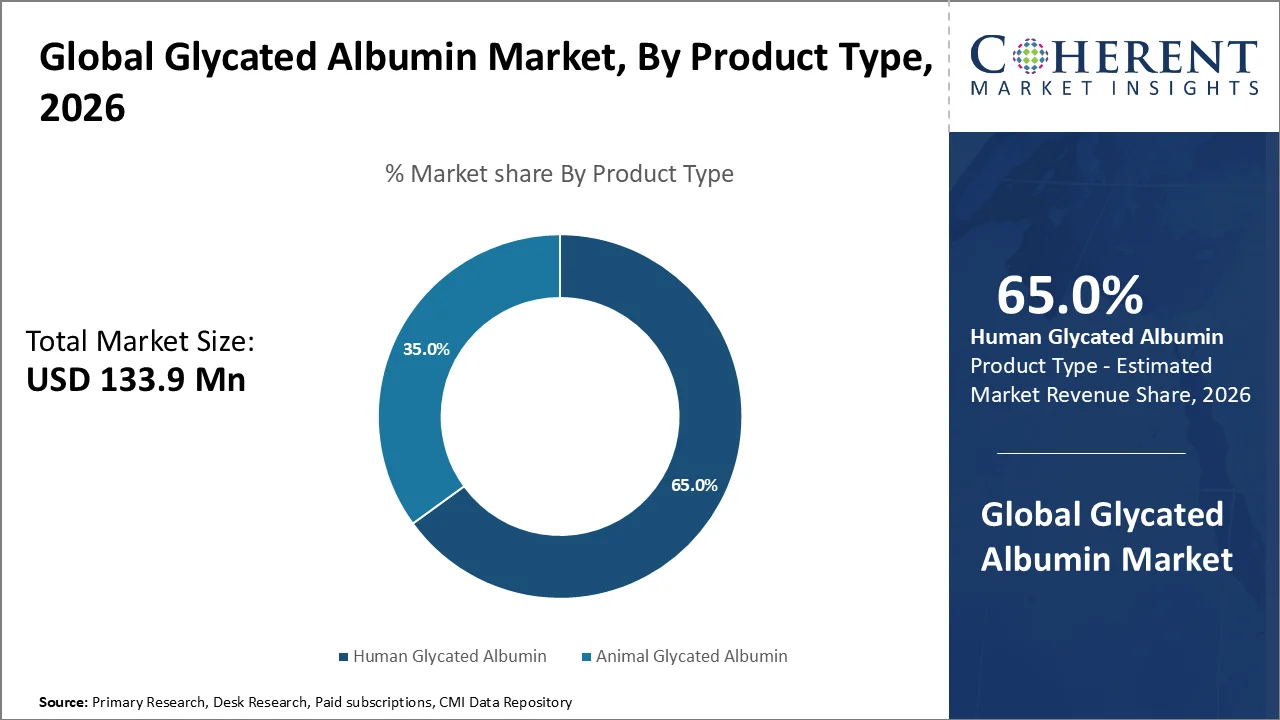
Why is Human Glycated Albumin Acquiring the Largest Market Share?
Human Glycated Albumin is projected to account for the largest share of glycated albumin in 2026, representing approximately 65.0% of the total volume. The human glycated albumin segment dominates the Glycated Albumin Market because it directly aligns with clinical diagnostic needs for human diabetes monitoring, unlike animal‑derived products used mainly in research settings. Human glycated albumin reflects average blood glucose over the past 2–3 weeks and is widely accepted as an intermediate‑term biomarker in situations where HbA1c may be unreliable, such as in patients with hemoglobin variants or kidney disease, enhancing its clinical relevance and preference in hospitals and labs. The glycated albumin (human) holds the largest share due to regulatory approvals and compatibility with automated analyzers, enabling its integration into routine diagnostics and widespread adoption. Furthermore, manufacturers continue to launch human glycated albumin kits with improved assay performance, reinforcing this segment’s dominance in clinical practice and diagnostic workflows.
- Current Industry Events of 2026
- Market Size Estimation
- Regional Breakdown
- Competitive Landscape
- Customer Intelligence
- Segmental Analysis
- Pricing Analysis
- Key Market Drivers, Challenges & Future Trends
- Customized Insights Section
Diagnosis holds the Largest Market Share
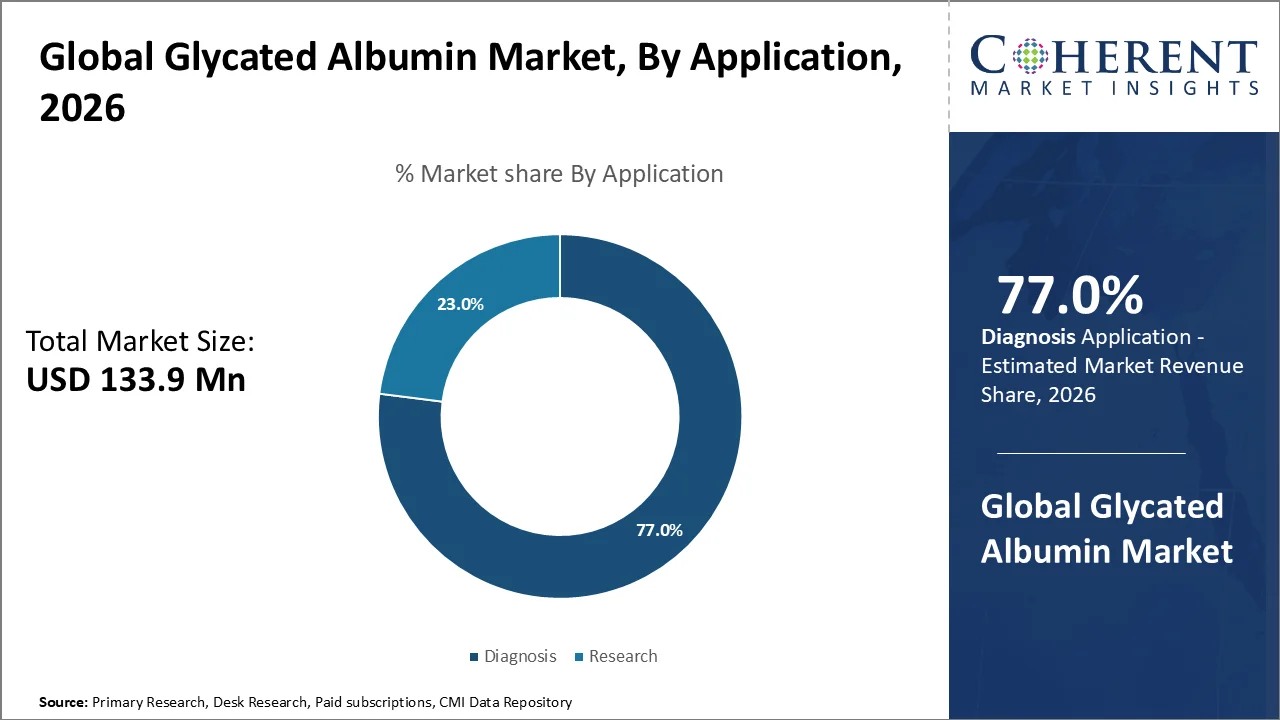
Diagnosis dominate the market, accounting for a significant 77.0% share in 2026, because major government and public health bodies recognize the clinical utility of alternative glycemic markers that reflect shorter‑term glucose exposure, especially where standard tests have limitations. For instance, in May 2024, according to the CDC’s diabetes testing guidance, screening for diabetes primarily involves blood glucose and HbA1c tests, but clinicians may consider additional markers in complex cases to ensure accurate assessment of glycemic status. Although the World Health Organization’s 2025 technical documents still emphasize HbA1c and plasma glucose for diagnosis, they also acknowledge the importance of reliable laboratory methods for comprehensive diabetes care. Peer‑reviewed clinical evidence from 2025 published by medical researchers shows that glycated albumin provides valuable short‑term glycemic information (2–3 weeks) and can complement traditional tests when rapid metabolic changes occur. These authoritative sources underscore why diagnostic applications especially in specialized clinical settings drive the adoption and prominence of glycated albumin assays in diabetes care.
Which End User segment dominates the market?
Hospitals/Clinics account for the largest share of 61.0% in 2026 because hospitals are primary care settings where comprehensive diabetes diagnostics and monitoring are routinely performed, especially for complex or high‑risk patients. Glycated albumin is increasingly used in hospitals to provide short‑term glycemic control data (2–3 weeks) that complements traditional HbA1c measurements in cases such as anemia, hemoglobinopathies, or kidney disease where HbA1c may be unreliable, making it particularly useful in hospital diagnostics and patient management workflows. This clinical utility is supported by authoritative evidence reviewed in the StatPearls clinical summary updated in September 2025 and published on the NCBI Bookshelf in 2026, which highlights the role of GA testing in diagnosis, monitoring, and management of diabetes in diverse clinical scenarios encountered in hospitals. Additionally, recent 2026 research published in Clinica Chimica Acta shows GA’s value in early screening of undiagnosed prediabetes and diabetes in emergency settings, further reinforcing hospitals’ reliance on this assay for timely clinical decision‑making.
Market Driver
Rising global diabetes burden
The rising global diabetes burden is a key driver of the global glycated albumin market growth because higher diabetes prevalence increases demand for diagnostic and monitoring tools that provide accurate glycemic control data. According to the International Diabetes Federation’s Diabetes Atlas (2024/2025), an estimated 589 million adults aged 20–79 years are living with diabetes worldwide, with numbers expected to rise further as lifestyles change and populations age. Additionally, the U.S. Centers for Disease Control and Prevention’s 2026 National Diabetes Statistics Report highlight that about 40.1 million Americans have diabetes, underscoring national-level disease burden trends. As traditional markers like HbA1c have limitations in certain patient populations, clinicians increasingly adopt glycated albumin assays for short‑term glycemic monitoring, boosting market uptake.
Source: Diabetesatlas.org; CDC
Regulatory Clearance and Laboratory Compatibility
Regulatory clearance and laboratory compatibility significantly drive the growth of the Global Glycated Albumin Market by ensuring that diagnostic assays are accepted, trusted, and integrated into clinical workflows worldwide. For instance, in March 2026, Diazyme Laboratories received FDA 510(k) clearance for its GlycoGap enzymatic glycated albumin assay kit, allowing it to be marketed for clinical use on most automated chemistry systems a key factor in lab uptake and clinician confidence. Similarly, Asahi Kasei Pharma’s Lucica Glycated Albumin‑L assay received FDA 510(k) clearance in 2017 and has CE marking for use in Europe, demonstrating long‑standing regulatory acceptance that supports global commercialization. These clearances ensure assays meet stringent safety and performance standards, which encourages hospitals and diagnostic labs to integrate GA testing into diabetes management workflows. Additionally, published industry forecasts from April 2026 highlight continuous innovation and product launches by major diagnostics firms, reflecting how regulatory approvals and analyzer compatibility are unlocking new markets and expanding clinical applications.
Increasing Research and Development & New Drug Innovation operations is transforming the Glycated Albumin Market
Increasing research and development (R&D) and new diagnostic innovation are transforming the Glycated Albumin Market by driving the creation of more precise, faster, and clinically relevant assays, which in turn expands clinical adoption and market demand. In 2026, for example, Diazyme Laboratories received FDA 510(k) clearance for its GlycoGap enzymatic glycated albumin assay kit, reflecting successful R&D and regulatory achievement that enables its use on automated clinical chemistry analyzers and enhances lab uptake worldwide. This launch builds on longstanding products like Nagase Diagnostics’ Lucica Glycated Albumin assay, which also holds FDA 510(k) clearance and broad compatibility with clinical analyzers, showcasing how innovation leads to broader clinical utility. Academic research published in 2026 emphasizes ongoing methodological advancements, including automated enzymatic detection and potential AI integration to improve standardization and accuracy of GA testing. These combined R&D efforts and product launch not only improve diagnostic performance but also expand market opportunities as healthcare providers seek more reliable tools for intermediate‑term glycemic monitoring beyond traditional HbA1c testing.
Additionally, new development shaping the Glycated Albumin Market is increased academic and clinical research exploring Glycated Albumin (GA) as a biomarker beyond routine monitoring, including university‑linked studies published or underway in 2026. For instance, in January 2026, a research article published in January 2026 by investigators from King Abdulaziz University and affiliated centres examined associations between glycated albumin and current glycaemic control measures in Saudi adults, indicating rising clinical research interest in GA’s diagnostic utility across diverse populations and settings. Additionally, although not newly initiated in 2026, multiple clinical trials registered on ClinicalTrials.gov such as studies investigating the value of GA in glycemic intervention strategies and its predictive ability combined with body composition measures demonstrate ongoing research efforts to evaluate GA’s clinical performance and expand its usage parameters in diabetes care. This increase in clinical investigation helps generate evidence that may support regulatory acceptance, guideline inclusion, and innovative clinical applications of glycated albumin assays globally.
Current Events and Their Impact on the Glycated Albumin Market
Current Event | Description and its Impact |
Regulatory Approvals and Policy Shifts |
|
Government Funding for Diagnostic Innovation |
|
National Health Programs and Screening Initiatives |
|
Glycated Albumin Market Trends
- Increased Focus on Standardization & Diagnostic Accuracy
Clinical demand is shifting toward standardized, high‑precision glycated albumin assays to ensure consistent results across laboratories. Lack of harmonized reference procedures has historically led to result variability. In 2026, major diagnostic firms and laboratories are prioritizing standardized enzymatic and LC‑MS methods for GA testing to improve comparability and clinical trust, boosting market adoption and quality control.
- Growing R&D and Automation in Assay Development
Innovations in enzymatic kits, reagent chemistry, and automated platforms are driving market growth by enhancing throughput and analytical performance. Automation reduces operator variability and increases lab efficiency. For instance, in 2026, manufacturers are releasing updated automated GA assays with faster turnaround times and improved sensitivity, supporting demand from high‑volume diagnostic labs worldwide.
- Expanding Clinical Use Cases Beyond Diabetes
Demand for GA testing is growing in broader clinical contexts, such as gestational diabetes, renal impairment, and anemia where HbA1c may be unreliable. Clinicians increasingly use glycated albumin as an intermediate‑term marker (2–3 weeks). In 2026, research published in the International Journal of Gynecology & Obstetrics evaluated the performance of glycated albumin alongside fasting plasma glucose and HbA₁c for diagnosing gestational diabetes. The study analyzed diagnostic effectiveness of GA in pregnancy, highlighting its role as a biomarker beyond routine type 2 diabetes monitoring and into maternal health. This demonstrates broader clinical utility of GA in specialized populations where traditional markers may be limited.
- Integration with Digital Health Platforms
Diagnostics are merging with digital health systems, enabling seamless integration of glycated albumin results into electronic medical records and patient apps. This increases personalized care and longitudinal monitoring. In 2026, leading diagnostic companies are launching digital‑connected GA assays that sync data with telemedicine platforms, enhancing patient follow‑ups and chronic disease management. For instance, in May 2026, India’s Ministry of Health and Family Welfare launched the Swasth Bharat Portal, a federated digital health aggregator that links multiple national health IT systems to reduce data silos and support interoperability across health programs. Additionally, in May 25, 2026 study in the Journal of Medical Internet Research examined technologies enabling automated data extraction and interoperability between Electronic Medical Records (EMRs) and clinical registries. The review highlighted automation tools, APIs, and interoperability standards (e.g., HL7 FHIR) that support continuous and semiautomated transfer of clinical data without manual entry.
Regional Insights
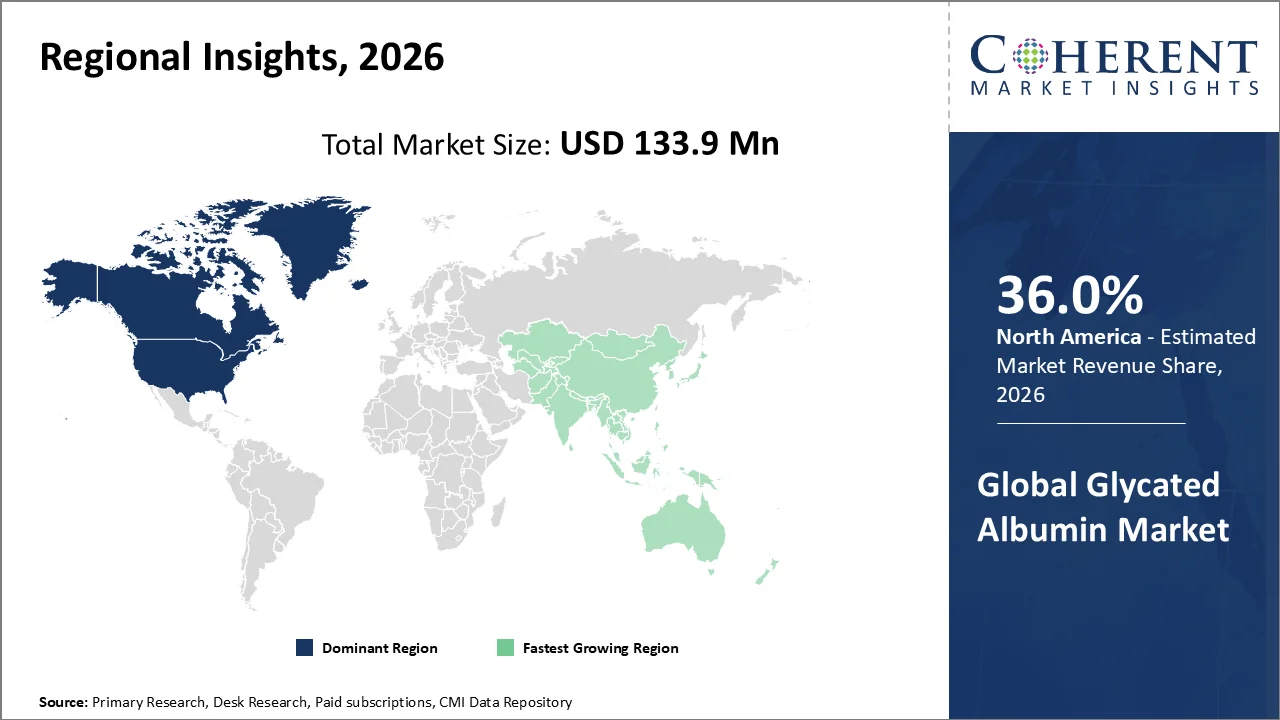
North America dominates owing to Advanced Healthcare Infrastructure
North America account 36.0% market share in 2026, supported by high prevalence of diabetes, advanced healthcare infrastructure, and strong investments in research and development of innovative diagnostics. For instance, in 2026, according to the CDC, approximately 37.3 million Americans are living with diagnosed diabetes, increasing the need for precise glycemic monitoring. The U.S. FDA in 2026 approved updated diagnostic assays for glycated albumin, enhancing accuracy and reliability in clinical use. Additionally, research published in the Journal of Diabetes Science and Technology (2026) emphasizes that North America accounts for over 42% of the global glycated albumin market, driven by early detection programs, widespread laboratory adoption, and high patient awareness of diabetes management. These factors collectively reinforce North America’s leading position in the market.
According to the Centers for Disease Control and Prevention (CDC), in April 2021, approximately 34.2 million Americans were diagnosed with diabetes, which is expected to drive the demand for glycated albumin testing. Furthermore, the U.S. Food and Drug Administration (FDA) in January 2021 approved several new diagnostic devices that enhance the accuracy of glycated albumin measurements, contributing to market growth.
Asia Pacific Glycated Albumin Market Trends
The Asia-Pacific region is poised to be as the fastest-growing region through 2026-2033, owing to largely due to the rapidly rising diabetes burden, expanding healthcare infrastructure, and increasing emphasis on enhanced glucose monitoring methods. According to the World Health Organization’s “Banyan Framework for Health and Well‑Being in the WHO South‑East Asia Region (2026–2028)” published in April 2026, there is intensified focus on strengthening health systems and scaling non‑communicable disease (NCD) strategies across Asia, which includes improving diabetes screening and management frameworks. WHO estimates that millions across the region remain undiagnosed or inadequately managed, underscoring unmet diagnostic needs that biomarkers like glycated albumin can help fill. Additionally, a scientific review published in Clinica Chimica Acta (April 2026) highlights the evolving evolution and increased clinical relevance of glycated albumin detection methods, pushing broader adoption of reliable glycemic monitoring beyond traditional HbA1c especially in diverse populations with hemoglobin variants or anemia. These regional health priorities and research advances are propelling the Asia Pacific market’s rapid growth.
Growing Investment in AI & Automation is Accelerating the Glycated Albumin Market Demand in United States
The U.S. glycated albumin market dominates North America due to largely because it bears a substantial diabetes burden and strong clinical research support, which fuels demand for advanced glycemic biomarkers like glycated albumin. For instance, in January 2026, according to the CDC’s National Diabetes Statistics Report, approximately 40.1 million Americans have diagnosed or undiagnosed diabetes, equating to about 12 % of the U.S. population, highlighting the high clinical need for reliable diagnostic tools. Moreover, nationally representative studies such as those in the NCBI Bookshelf updated in September 2025 and referenced in 2026 publications emphasize the clinical utility of glycated albumin as a complementary metric to traditional tests, particularly in cases where HbA1c may be unreliable. The availability of FDA‑cleared glycated albumin assays and extensive epidemiological evidence from U.S. health surveys position the United States as the leading regional market, driven by strong public health focus, high disease prevalence, and ongoing academic validation.
China Glycated Albumin Market Trends
China has become the biggest player in the Asia Pacific glycated albumin market in 2026. China’s leadership in the Asia Pacific glycated albumin market is underpinned by its enormous diabetes burden, proactive diagnostic quality initiatives, and strong clinical research emphasis. Diabetes prevalence in China was reported at approximately 11.9% (World Bank data compiled in May 2026), reflecting a substantial population requiring effective glycemic monitoring tools. In January 2026, a Clinica Chimica Acta article documented a nationwide external quality assessment (EQA) programme for glycated albumin measurement organized by the National Center for Clinical Laboratories (NCCL) that improved analytical performance across Chinese laboratories, enhancing clinical trust and consistency. Additionally, a diagnostic study published in BMC Geriatrics on May 01, 2026 evaluated glycated albumin alongside HbA1c for dysglycemia detection among older adults in Chengdu, emphasizing local clinical validation efforts. These coordinated quality, research, and disease‑burden factors reinforce China’s dominant position in driving demand, clinical adoption, and innovation for glycated albumin testing within the region.
Who are the Major Companies in Glycated Albumin Market
Some of the major key players in Global Glycated Albumin Market are Lifespan Biosciences, Biomatik Corporation, Abbexa Ltd., G Biosciences, DRG International, Inc., Amsbio LLC, Signalway Antibody LLC, United States Biological, Diazyme Laboratories, Abnova Corporation, Maccura Biotechnology Co. Ltd., Exocell Inc., Biorbyt Ltd., and Epinex Diagnostics Inc. among others.
Key News
- In February 2026, EKF Diagnostics, biotechnology company launched a new glycated albumin assay kit, named the Stanbio Chemistry GA Assay Kit, designed to provide sensitive, enzymatic measurement of glycated albumin for intermediate glycemic control. This assay fills the gap between long‑term and short‑term glucose monitoring and is compatible with open channel clinical chemistry analyzers, helping labs generate rapid results from small serum samples.
- In February 2026, Dyadic Applied BioSolutions and Proliant Health & Biologicals announced the commercial launch of AlbuFree DX recombinant human albumin, a high‑quality animal‑free albumin product intended for diagnostic and life science use. While not a direct GA test, this reagent supports improved diagnostic assay formulations and protein standards relevant to glycated albumin platforms.
Market Report Scope
Glycated Albumin Market Report Coverage
| Report Coverage | Details | ||
|---|---|---|---|
| Base Year: | 2025 | Market Size in 2026: | USD 133.9 Mn |
| Historical Data for: | 2020 To 2024 | Forecast Period: | 2026 To 2033 |
| Forecast Period 2026 to 2033 CAGR: | 8.5% | 2033 Value Projection: | USD 234.6 Mn |
| Geographies covered: |
| ||
| Segments covered: |
| ||
| Companies covered: | Lifespan Biosciences, Biomatik Corporation, Abbexa Ltd., G Biosciences, DRG International, Inc., Amsbio LLC, Signalway Antibody LLC, United States Biological, Diazyme Laboratories, Abnova Corporation, Maccura Biotechnology Co. Ltd., Exocell Inc., Biorbyt Ltd., and Epinex Diagnostics Inc. | ||
Analyst Opinion
- The glycated albumin market is increasingly recognized as a critical tool for short‑term glycemic monitoring, complementing traditional HbA1c tests. As diabetes prevalence rises and healthcare systems adopt precision diagnostics, demand for GA assays is expanding across hospitals, diagnostic laboratories, and research centers. In 2026, global adoption of GA testing is accelerating due to improved assay standardization, automation, and clinical guideline integration, reflecting strong confidence in this biomarker for better patient management.
- Technological innovation is driving market growth, particularly through automated analyzers, enhanced enzymatic assays, and digital health integration. Laboratories and hospitals are leveraging these technologies to provide faster, more accurate GA results, which support timely clinical decision-making. For instance, in March 2026, EKF Diagnostics launched the Stanbio Chemistry GA Assay Kit, designed for automated analyzers to improve throughput and precision, facilitating broader clinical adoption.
- Clinical research and evidence generation are reinforcing market growth. Studies published in 2026 demonstrate GA’s utility for special populations, including patients with anemia, renal impairment, or gestational diabetes, where HbA1c may be unreliable. These studies, combined with real-world adoption in hospitals and diagnostic centers, indicate that GA testing is moving from niche usage to mainstream clinical practice, solidifying its role in patient-centric diabetes management.
- Asia Pacific is strengthening its leadership in diagnostic testing through expanding healthcare access and investments in advanced diagnostic technologies. The region is rapidly modernizing its in‑vitro diagnostics (IVD) ecosystem with greater adoption of automated analyzers, molecular platforms, and point‑of‑care solutions to address rising chronic diseases such as diabetes, cardiovascular disorders, and infectious illnesses. Regulatory updates in Asia Pacific are accelerating glycated albumin adoption. In January 2026, India’s CDSCO expanded authorized IVD performance labs, while in April 2026, Australia updated in‑house IVD requirements. These reforms improve assay validation, safety, and market access, creating a favorable environment for innovative diagnostics across hospitals and laboratories.
Speak to the analyst
Want personalized insights?
Take the findings above to one of our principal consultants, or have the report rebuilt around the segments, geographies and competitors you actually track.
Market Segmentation
- By Product Type (Revenue, USD Mn, 2021-2033)
- Human Glycated Albumin
- Animal Glycated Albumin
- By Application (Revenue, USD Mn, 2021-2033)
- Diagnosis
- Prediabetes
- Type 1 Diabetes
- Type 2 Diabetes
- Research
- Diagnosis
- By End User (Revenue, USD Mn, 2021-2033)
- Hospitals/Clinics
- Diagnostic Centers
- Research Institutes
- Others
- By Region (Revenue, USD Mn, 2021-2033)
- North America
- U.S.
- Canada
- Latin America
- Brazil
- Mexico
- Argentina
- Rest of Latin America
- Europe
- Germany
- U.K.
- France
- Italy
- Spain
- Russia
- Rest of Europe
- Asia Pacific
- China
- India
- Japan
- Australia
- South Korea
- ASEAN
- Rest of Asia Pacific
- Middle East
- GCC
- Israel
- Rest of Middle East
- Africa
- South Africa
- Central Africa
- North Africa
- North America
Sources
Primary Research Interviews
- Interviews with clinical laboratory directors, hospital pathology heads, and medical directors to understand adoption challenges of glycated albumin testing, workflow integration issues with existing diagnostic panels, and the impact of advanced glycemic biomarkers on patient care protocols.
- Insights from assay developers, diagnostics R&D leaders, and clinical biochemists on technological advancements in glycated albumin assays (e.g., enzymatic methods, automation compatibility), quality assurance challenges, and innovation trends in short‑term glycemic monitoring tools.
- Discussions with healthcare analysts, market consultants, and endocrinology specialists to evaluate market trends, competitive landscape, unmet needs in diabetes diagnostics, and how glycated albumin testing is positioned vis‑à‑vis HbA1c and continuous glucose monitoring technologies.
- Conversations with hospital administrators, lab procurement heads, and public health decision‑makers to assess investment considerations, reimbursement and regulatory hurdles, implementation challenges in clinical labs, and data use / privacy concerns tied to diagnostic reporting and patient records.
Databases
- CDC National Diabetes Statistics Reports (cdc.gov)
- WHO Global Health Observatory (who.int/data/gho)
- U.S. FDA Medical Device Databases (fda.gov/medical-devices)
- ClinicalTrials.gov (U.S. National Library of Medicine) (clinicaltrials.gov)
- NCBI Bookshelf (ncbi.nlm.nih.gov/books)
Magazines
- Clinical Laboratory News (AACC)
- Lab Manager Magazine (Diagnostics & Clinical Lab Innovations)
- Genetic Engineering & Biotechnology News (Diagnostics Section)
- Medical Laboratory Observer (MLO)
- Healthcare IT News (Diagnostics & Lab Technology Section)
Journals
- Clinica Chimica Acta (Elsevier)
- Journal of Diabetes Science and Technology (SAGE)
- MDPI Diagnostics
- Journal of Clinical Laboratory Analysis (Wiley)
- Diabetes Care (American Diabetes Association)
Newspapers
- The New York Times (Health & Science Section)
- Washington Post (Health Section)
- The Guardian (Health & Science Section)
- Financial Times (Healthcare & Life Sciences Section)
- The Wall Street Journal (Healthcare Section)
Associations
- American Diabetes Association (ADA)
- Clinical and Laboratory Standards Institute (CLSI)
- International Federation of Clinical Chemistry and Laboratory Medicine (IFCC)
- College of American Pathologists (CAP)
- American Association for Clinical Chemistry (AACC)
Public Domain Sources
- CDC Diabetes Research and Statistics
- WHO Guidelines for Diabetes Diagnosis
- U.S. FDA 510(k) Device Clearance Database
- ClinicalTrials.gov Registered Studies on Glycated Albumin (clinicaltrials.gov)
- Peer-reviewed publications from NIH and NCBI (ncbi.nlm.nih.gov)
Proprietary Elements
- CMI Data Analytics Tool
- Proprietary CMI Existing Repository of information for last 10 years
Get access to 250+ pages report
Every segment, forecast, competitor profile and data table behind the analysis above — available for instant download.
- ESOMAR Member
- ISO 9001:2015 Certified
- D-U-N-S Registered
- GDPR & CCPA Compliant
Missing comfort of reading report in your local language? Find your preferred language:
Transform your Strategy with Exclusive Trending Reports
Frequently Asked Questions
The Glycated Albumin Market is expected to reach USD 234.6 Mn in 2033.
Major players operating in the global Glycated Albumin Market include Lifespan Biosciences, Biomatik Corporation, Abbexa Ltd., G Biosciences, DRG International, Inc., Amsbio LLC, Signalway Antibody LLC, United States Biological, Diazyme Laboratories, Abnova Corporation, Maccura Biotechnology Co. Ltd., Exocell Inc., Biorbyt Ltd., and Epinex Diagnostics Inc. among others.
Limited awareness among healthcare providers, lack of standardization across laboratories and strong competition from established biomarkers are the major factors hampering the growth of the glycated albumin market.
Rising global diabetes burden and regulatory clearance and laboratory compatibility are the key factors driving the growth of the glycated albumin market.
The Glycated Albumin Market is anticipated to grow at a CAGR of 8.5% between 2026 and 2033.
Among regions, North America is expected to account for a largest market share in the global Glycated Albumin Market over the forecast period.
Glycated albumin is a blood biomarker reflecting average blood glucose over 2–3 weeks. It is used to monitor short-term glycemic control, particularly in patients where HbA1c may be unreliable, such as those with anemia, CKD, or hemoglobinopathies.