

Herbal Tea Market Size and Share Analysis- Growth Trends and Forecasts (2026-2033)
The Herbal Tea Market size is anticipated to grow at a CAGR of 5% with USD 4.2 Bn in 2026 and is expected to reach USD 5.9 Bn in 2033. The primary drivers are defined by rising health awareness, growing preference for natural beverages, increasing demand for caffeine-free alternatives, and stronger consumer interest in preventive wellness. This is rapidly strengthening demand for herbal blends containing chamomile, peppermint, ginger, hibiscus, turmeric, tulsi, and other functional botanicals. Herbal teas are increasingly adopted for relaxation, digestion, immunity support, weight management, detoxification, sleep improvement, and everyday hydration. The consumption is expanding among health-conscious consumers across supermarkets, specialty stores, cafés, pharmacies, online platforms, and other retail channels in diverse developed and emerging consumer markets worldwide.
Key Takeaways
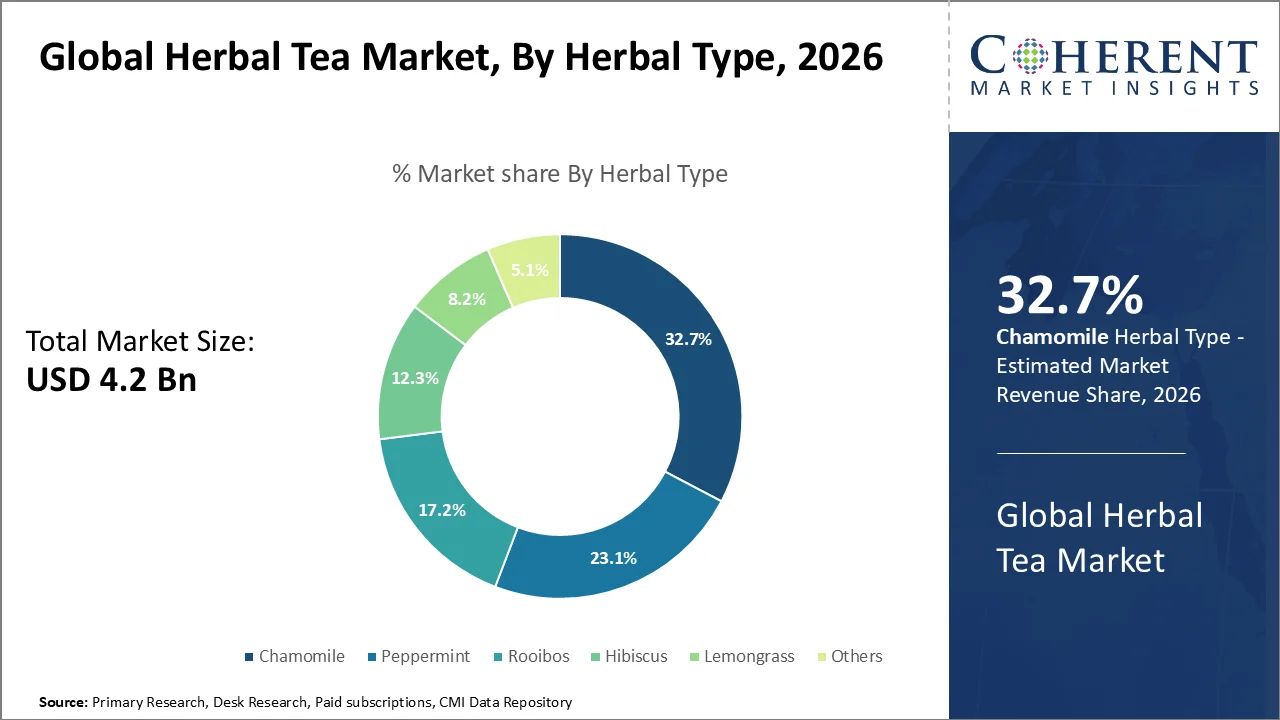
- The chamomile segment is likely to dominate the market with 32.7% in 2026. The segment’s growth is owing to the widespread use in relaxation and wellness beverages. The U.S. National Center for Complementary and Integrative Health cites an NCCIH-supported clinical trial involving 179 adults evaluating chamomile for generalized anxiety disorder.
- Carton packs segment is set to lead with 39.6% in 2026. The segment’s growth is owing to the cost-effectiveness, lightweight structure, ease of storage and transportation, and ample branding space.
- The supermarkets/hypermarkets segment are expected to dominate the market with a share of 40.2% in 2026. The segment’s growth is owing to the extensive product availability and consumer preference for physical grocery outlets.
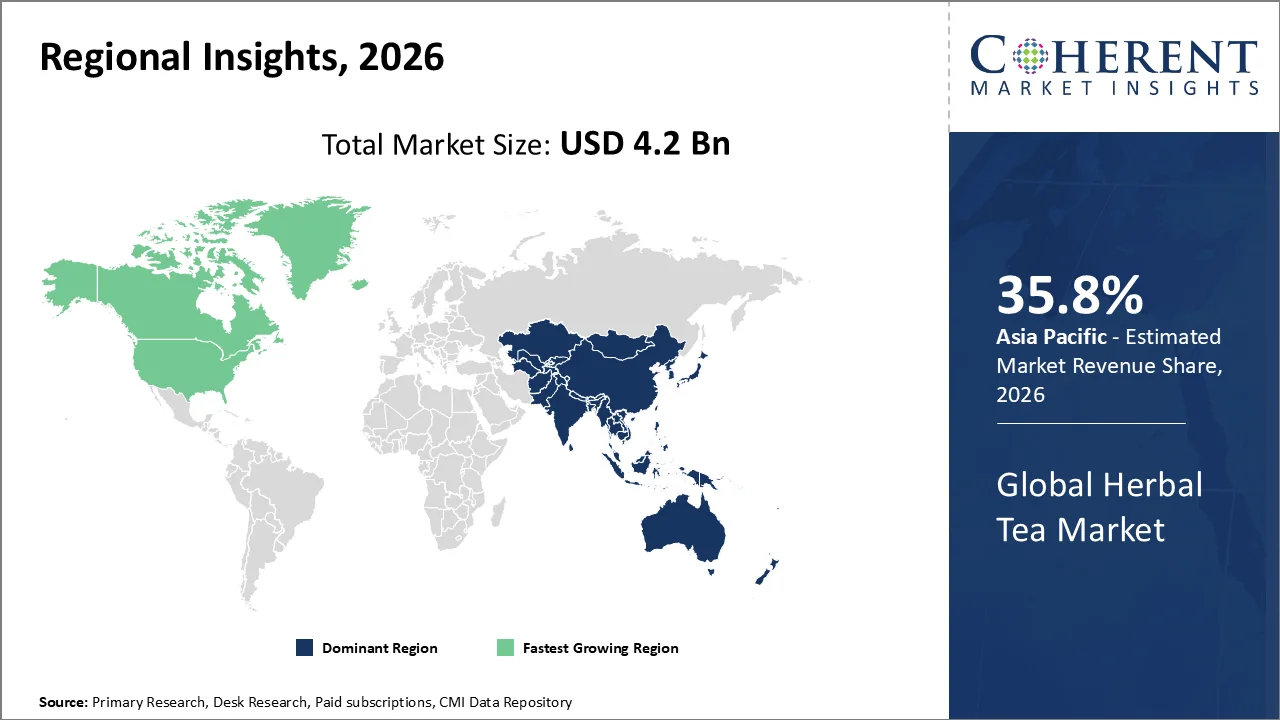
- Asia Pacific is expected to acquire the prominent share of 35.8% in 2026. The region’s growth is owing to the established herbal-drinking traditions, large consumer populations, and strong regional tea production. According to the FAO, China accounts for nearly 50% of global tea production, while India represents approximately 20.5%.
Segmental Insights
Why is Chamomile Segment Acquiring the Largest Share?
On the basis of herbal type, the chamomile segment is projected to account for the largest Herbal Tea Market share of 32.7% in 2026. The segment’s growth is owing to the mild floral profile, caffeine-free positioning, and strong association with relaxation and digestive wellness.
The U.S. National Center for Complementary and Integrative Health states that chamomile is commonly promoted for anxiety, insomnia, indigestion, colds, and respiratory complaints, while remaining generally safe in amounts typically consumed in tea. The NIH-referenced population study reported a 29% lower all-cause mortality risk amongst the chamomile users.
In January 2025, Organic India introduced the Purely Chamomile Tea using single-origin blossoms sourced from its Regenerative Organic Certified farm. This is strengthening premium, traceable, and sustainability-led product positioning among global wellness-focused herbal tea consumers and broader consumer awareness.
- Current Industry Events of 2026
- Market Size Estimation
- Regional Breakdown
- Competitive Landscape
- Customer Intelligence
- Segmental Analysis
- Pricing Analysis
- Key Market Drivers, Challenges & Future Trends
- Customized Insights Section
Carton Packs hold the Largest Market Share
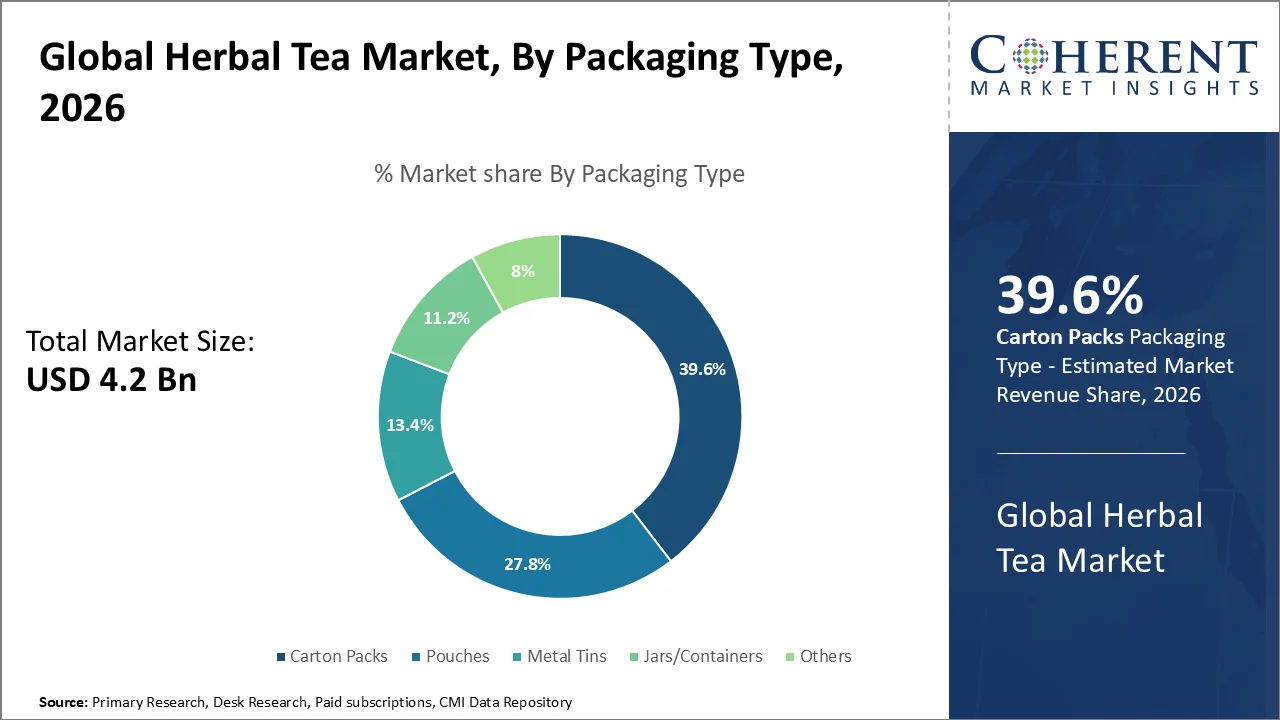
On the basis of packaging type, the carton packs segment lead with a major 39.6% share in 2026. The growth is owing to the strong suitability of cartons for protecting herbal tea bags from moisture, light, and external contamination. They also provide adequate space for ingredient details, brewing instructions, certifications, and health-related labeling. The packaging type also strengthens convenient stacking, transportation, retail display, and multipack formats, thus making them widely preferred for chamomile, peppermint, ginger, hibiscus, and blended herbal infusions.
In September 2025, Bigelow Tea launched Simply Cinnamon Apple Herbal Tea in cartons containing 18 individually wrapped tea bags. The company also introduced updated carton graphics, improved readability, and product storytelling, demonstrating how packaging innovation supports differentiation, freshness communication, and seasonal merchandising.
Market Drivers
Regenerative and Ayurveda-Inspired Products are Transforming the Herbal Tea Market in India
India’s herbal tea market is moving beyond conventional infusions toward Ayurveda-inspired, sustainably positioned blends featuring tulsi, ginger, turmeric, cinnamon, and other botanicals. The demand is also supported by the acceptance of traditional wellness. The National Sample Survey Office found that nearly 40.5% of rural residents and 45.5% of urban residents used Ayurveda for preventing or treating ailments during 2022–23. The same official survey reported the awareness of medicinal plants, home remedies, local health traditions, or folk medicine in around 85% of rural households and 86% of urban households, thus indicating a consumer base for botanical beverages.
In July 2026, the Ministry of Ayush launched Prakriti Café at Ayush Bhawan which serves tulsi-ginger tea and green tea. This demonstrates the promotion of Ayurveda-inspired beverages and also encourages innovation, credibility, as well as everyday consumption.
A Major Breakthrough: Transition of Traditional Herbal Remedies into Mainstream Functional Beverages
Traditional herbal remedies are moving into mainstream beverage formats as consumers seek products combining botanicals with hydration and energy occasions. In May 2026, the National Center for Health Statistics reported that nearly 60.2% of adults used at least one dietary supplement during August 2021–August 2023, while 38.7% used two or more. This indicates familiarity with plant-based wellness ingredients that can support the herbal tea adoption. The NIH’s MedlinePlus also identifies tea as a form of herbal medicine, thereby confirming the connection between traditional remedies and packaged beverages.
In April 2026, Evolution Fresh expanded its Organic Tea range to select Whole Foods Market stores nationwide. The ready-to-drink line includes Hydrate Triple Citrus Hibiscus Tea and Relax Berry Lavender Chamomile Tea, combining brewed tea with cold-pressed juice.
Current Events and Their Impact on the Herbal Tea Market
Current Event | Description and its Impact |
EU Pesticide-Residue Limits for Herbal Infusions |
|
Proposed U.S. Front-of-Package Nutrition Labeling Requirements |
|
Herbal Tea Market Trends
- The rising demand for natural, caffeine-free beverages is encouraging the consumption of chamomile, peppermint, hibiscus, ginger, tulsi, and rooibos blends.
- Functional formulations targeting digestion, relaxation, immunity, sleep, stress management, and everyday wellness is strengthening the product innovation as well as premium positioning worldwide.
- Ready-to-drink herbal infusions, cold-brew formats, pyramid tea bags, wellness shots, and convenient single-serve products is expanding the consumption among younger and time-conscious consumers. Brands are combining herbs with fruits, spices, adaptogens, and natural flavors to create differentiated multifunctional beverages.
- The growing acceptance of traditional and plant-based wellness is supporting the herbal tea adoption across both developed as well as emerging markets. In November 2025, the World Health Organization reported that 170 of its 194 Member States had documented the use of herbal medicines, indigenous therapies, and other traditional medicine systems, thereby demonstrating the widespread global relevance.
- Clean-label, organic, ethically sourced, and sustainably packaged herbal teas gain importance as consumers examine ingredient origins and environmental impact. In 2025, certified organic beverage sales in the United States increased by 7.2% to reach USD 10.2 billion, thus reflecting strong demand for clean ingredients and functional nutrition. This trend strengthens the herbal tea availability across supermarkets, specialty stores, cafés, pharmacies, and e-commerce channels worldwide.
Regional Insights
Asia Pacific Dominates Owing to the Traditional Usage and Botanical Availability
The Asia Pacific region accounts for 35.8% of the market share in 2026. The region’s growth is owing to the traditional herbal knowledge, extensive botanical biodiversity, tea-processing infrastructure, lower-cost ingredient sourcing, and large consumer markets. China and India are major cultivation, processing, consumption, and export centers for tea and botanical ingredients.
In May 2026, Tea Culture of the World launched Blue Pea Herbal Infusion with chamomile and lavender. The naturally caffeine-free blend supports relaxation, helps ease stress and anxiety, promotes restful sleep, and delivers a visually distinctive tea experience for consumers.
North America Herbal Tea Market Trends
North America is expected to witness strong growth in market over the forecast period. The region’s growth is owing to the demand for organic products, caffeine-free beverages, natural ingredients, functional formulations, and convenient ready-to-drink products. The U.S. market is particularly receptive to herbal products associated with relaxation, stress management, digestive wellness, and evening consumption.
In January 2026, Caraway Tea Company launched Breathe, a herbal tea formulated to support respiratory comfort. The caffeine-free blend combines mullein leaf, ginger root, licorice root, peppermint, and natural peppermint oil and is available through the company’s wholesale distribution channels.
Strong Ayurvedic Heritage and Rising Wellness Consumption is Accelerating the Herbal Tea Market in India
India is an important herbal tea cultivation, formulation, processing, and consumption market. This is owing to the familiarity with tulsi, ginger, turmeric, cardamom, mulethi, Brahmi, fennel, lemongrass, and other botanicals. In March 2026, Tea1888 launched “The 7 AM Ritual,” a morning wellness campaign promoting herbal tea routines. The initiative highlights Ayurvedic blends featuring tulsi, turmeric, ashwagandha, ginger, mint, and lemongrass to naturally support immunity, digestion, calm energy, and stress relief.
United States Herbal Tea Market Trends
United States is emerging as an important Asia Pacific market owing to the specialty retail, natural-product stores, supermarkets, pharmacies, cafés, online marketplaces, and direct-to-consumer brands. In August 2025, Twinings launched Refreshers, its first instant herbal tea line designed to dissolve in cold water. The caffeine-free drinks contain honeybush extract and fruit pieces, offering consumers convenient café-inspired refreshment.
Who are the Major Companies in Herbal Tea Industry
Some of the major key players in Herbal Tea Market are Nestle S.A., Unilever PLC, Yogi Tea Inc., Lipton, Twinings, The Tea Spot, Tea Forte, Pukka Herbs Ltd., The Republic of Tea Inc., Traditional Medicinals.
Key News
- In May 2026, teapigs launched four caffeine-free herbal tea blends: Ginger & Manuka Honey, Strawberry & Juniper, Chamomile Lullaby, and Pumpkin Spice Chai. The lineup marked its first innovation in five years and included its first Reishi mushroom-formulated tea product.
- In January 2026, Traditional Medicinals launched Organic Stress Soother Tension Relief Tea in Canada. The organic herbal blend uses skullcap, spearmint, lemon myrtle, and lemon verbena to ease tension and stress and is available online and through major retailers nationwide.
Market Report Scope
Herbal Tea Market Report Coverage
| Report Coverage | Details | ||
|---|---|---|---|
| Base Year: | 2025 | Market Size in 2026: | USD 4.2 Bn |
| Historical Data for: | 2020 To 2024 | Forecast Period: | 2026 To 2033 |
| Forecast Period 2026 to 2033 CAGR: | 5% | 2033 Value Projection: | USD 5.9 Bn |
| Geographies covered: |
| ||
| Segments covered: |
| ||
| Companies covered: | Nestle S.A., Unilever PLC, Yogi Tea Inc., Lipton, Twinings, The Tea Spot, Tea Forte, Pukka Herbs Ltd., The Republic of Tea Inc., Traditional Medicinals | ||
| Growth Drivers: |
| ||
| Restraints & Challenges: |
| ||
Analyst Opinion
- Herbal tea demand is being strengthened by the growing acceptance of traditional and plant-based wellness practices. The World Health Organization estimates that around 80% of the global population uses traditional medicine, supporting sustained consumer interest in herbal ingredients, botanical infusions, and naturally positioned beverages.
- Tea remains one of the world’s most extensively produced and traded beverages. According to the FAO, the global tea production was estimated at approximately 7.3 million tonnes in 2025, while total tea imports reached nearly 2.0 million tonnes, thereby indicating a large established consumer and distribution base.
- Organic, clean-label, caffeine-free, and functional herbal tea products are gaining traction as consumers increasingly seek naturally sourced beverages. The USDA reported that U.S. consumer demand for organic products exceeded USD 69 billion in 2023, representing around 4% of total food sales and supporting opportunities for premium organic herbal tea brands.
Speak to the analyst
Want personalized insights?
Take the findings above to one of our principal consultants, or have the report rebuilt around the segments, geographies and competitors you actually track.
Market Segmentation
- By Herbal Type (Revenue, USD Bn, 2021-2033)
- Chamomile
- Peppermint
- Rooibos
- Hibiscus
- Lemongrass
- Others
- By Packaging Type (Revenue, USD Bn, 2021-2033)
- Pouches
- Carton Packs
- Metal Tins
- Jars/Containers
- Others
- By Distribution Channel (Revenue, USD Bn, 2021-2033)
- Online Retail
- Specialty Stores
- Supermarkets/Hypermarkets
- Convenience Stores
- Others
- By Region (Revenue, USD Bn, 2021-2033)
- North America
- U.S.
- Canada
- Latin America
- Brazil
- Mexico
- Argentina
- Rest of Latin America
- Europe
- Germany
- U.K.
- France
- Italy
- Spain
- Russia
- Rest of Europe
- Asia Pacific
- China
- India
- Japan
- Australia
- South Korea
- ASEAN
- Rest of Asia Pacific
- Middle East
- GCC
- Israel
- Rest of Middle East
- Africa
- South Africa
- Central Africa
- North Africa
- North America
Sources
Primary Research Interviews
- Herbal tea manufacturers and blenders
- Medicinal and aromatic herb growers
- Tea plantation owners and managers
- Herbal ingredient suppliers
- Importers and exporters
- Distributors and wholesalers
- Supermarket and specialty-store buyers
- Online tea retailers
- Foodservice and hospitality procurement managers
- Nutritionists and herbalists
- Key opinion leaders (KOLs) in tea and functional beverages
Databases
- Food and Agriculture Organization Corporate Statistical Database (FAOSTAT)
- United Nations Comtrade Database
- International Trade Centre Trade Map
- United States Department of Agriculture Foreign Agricultural Service (USDA FAS)
- World Bank Open Data
- Eurostat
- Organisation for Economic Co-operation and Development (OECD)
- World Health Organization (WHO)
Magazines
- World Tea News
- Tea & Coffee Trade Journal
- Beverage Industry
- Food Business News
- Food & Beverage Magazine
- Nutraceuticals World
Journals
- Food Chemistry
- Journal of Food Science
- Journal of Ethnopharmacology
- Industrial Crops and Products
- Journal of Herbal Medicine
- Plant Foods for Human Nutrition
- Beverages
- Foods
Newspapers
- The New York Times
- The Guardian
- The Wall Street Journal
- Financial Times
- The Economic Times
- South China Morning Post
Associations
- Tea Association of the USA
- UK Tea & Infusions Association
- European Tea & Herbal Infusions Association
- Tea Board India
- China Tea Marketing Association
- Japan Tea Association
- Ethical Tea Partnership
- Food and Agriculture Organization Intergovernmental Group on Tea
Public Domain Sources
- Company annual reports and investor presentations
- Government agriculture ministry publications
- National tea board statistics and industry reports
- Customs, import, and export databases
- Food safety authority publications
- Product-labeling and regulatory databases
- Company websites, product catalogues, and press releases
- Patent databases and scientific research repositories
- Retail websites and e-commerce product listings
Proprietary Elements
- CMI Data Analytics Tool
- Proprietary CMI Existing Repository of Information for Last 10 Years
Get access to 250+ pages report
Every segment, forecast, competitor profile and data table behind the analysis above — available for instant download.
- ESOMAR Member
- ISO 9001:2015 Certified
- D-U-N-S Registered
- GDPR & CCPA Compliant
Missing comfort of reading report in your local language? Find your preferred language:
Transform your Strategy with Exclusive Trending Reports
Frequently Asked Questions
The Herbal Tea Market is expected to reach USD 5.9 Bn in 2033.
Major players operating in the global Herbal Tea Market include Nestle S.A., Unilever PLC, Yogi Tea Inc., Lipton, Twinings, The Tea Spot, Tea Forte, Pukka Herbs Ltd., The Republic of Tea Inc., Traditional Medicinals.
The strong consumer loyalty to traditional teas, strict global food safety and labeling rules, and variable seasonal raw material supplies the key factors hampering growth of the market.
The rising health consciousness, increasing demand for caffeine-free alternatives, and product and flavor innovations is boosting the demand for Herbal Tea.
The Herbal Tea Market is anticipated to grow at a CAGR of 5% between 2026 and 2033.
Among regions, Asia Pacific is expected to account for a largest market share in the global Herbal Tea Market over the forecast period.
The global Herbal Tea Market is on a steady upward trajectory owing to the rising health awareness, demand for caffeine-free drinks, and wellness trends.