

Flour Market Size and Forecast — 2026 - 2033
The Global Flour Market size is projected to be valued at USD 135.4 billion in 2026 and is anticipated to reach USD 198.7 billion by 2033, growing at a compound annual growth rate (CAGR) of 5.3% between 2026 and 2033.
Overview
The flour market is expanding steadily due to rising global consumption of bakery products, processed foods, and convenience meals. Increasing demand for wheat, rice, corn, and specialty flours in household cooking and commercial food production is driving market growth. Health-conscious consumers are also boosting demand for organic, gluten-free, and fortified flour products with enhanced nutritional value. Rapid urbanization, changing dietary habits, and growth in the food service industry further support market expansion. Technological advancements in milling and processing are improving flour quality and production efficiency. Additionally, rising population levels and increasing demand for ready-to-eat food products continue to strengthen the global flour market.
Key Takeaways
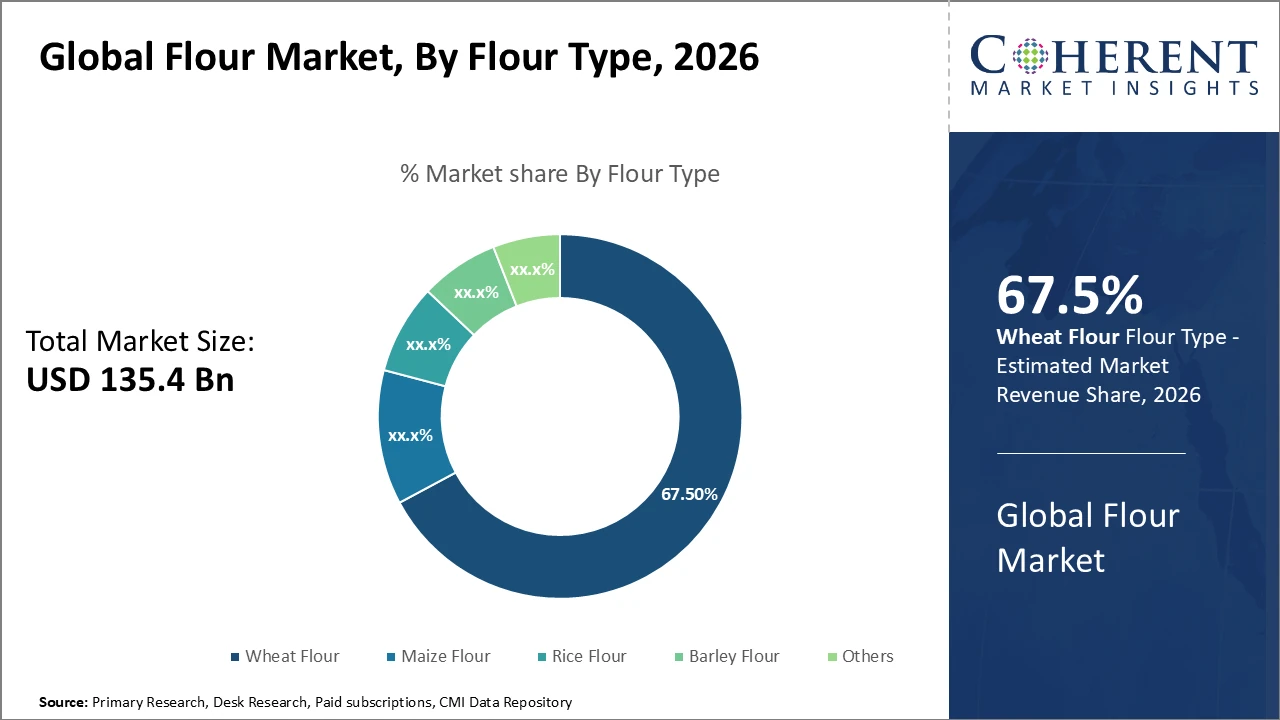
Wheat flour holds a commanding industry share of approximately 67.5%, driven by its extensive use in bakery products and widespread availability. Maize and rice flours are gaining traction in emerging regions, reflecting growing market segments.
Bakery products remain the dominant application segment, contributing a significant portion of market revenue, supported by innovations in convenience and fortified baked goods. Foodservice channels are growing faster due to increased dining-out trends and the rise of digital ordering platforms.
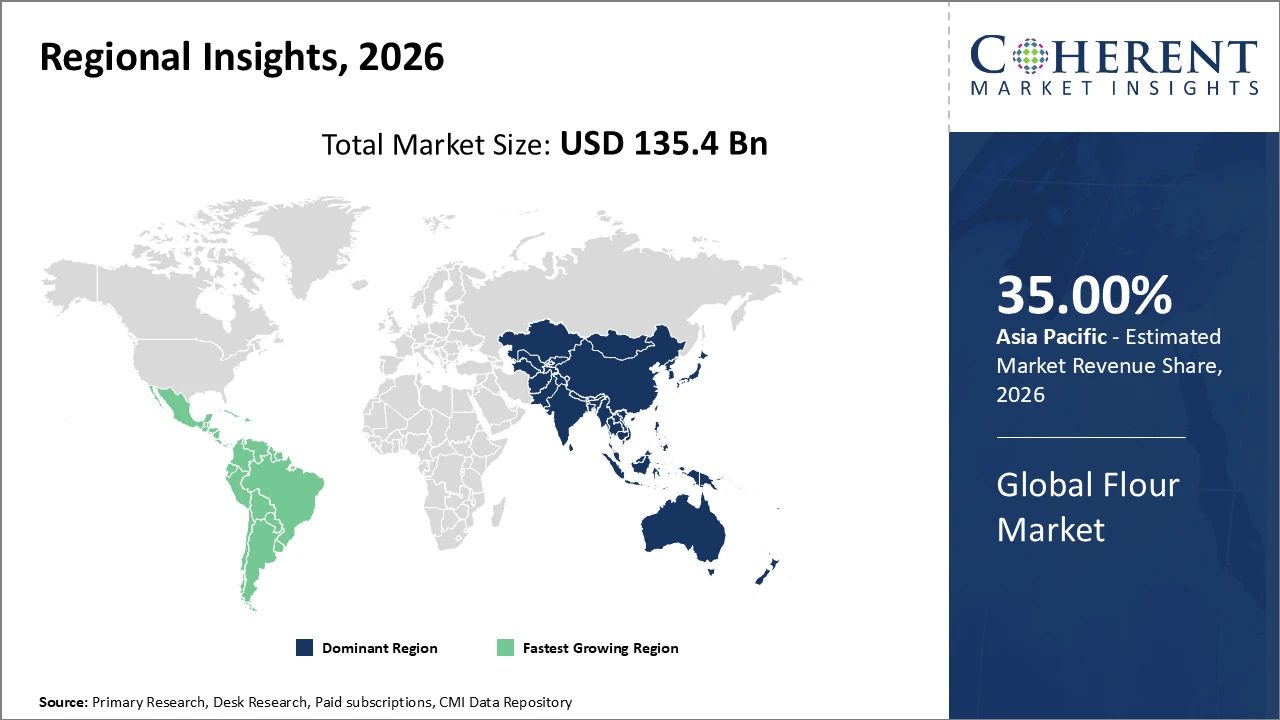
Asia Pacific leads regional market revenue share due to expanding urban populations and higher consumption, particularly in India and China. North America is a mature market with steady growth, fueled by technological advances in milling and specialty flours. Europe shows resilience, supported by health-focused consumer behavior and policy-driven fortification programs.
Flour Market Segmentation Analysis
Flour Market Insights, By Flour Type
Wheat flour dominates the market with a 67.5% share, serving as the primary choice for bakery and confectionery products due to its gluten content and broad consumer acceptance. Maize flour is the fastest-growing subsegment, especially in developing regions, valued for its affordability and staple diet usage. Rice flour is gaining popularity among gluten-intolerant consumers and in regions with rice-based cuisines. Barley flour is emerging as a health-focused option because of its high fiber content. The ‘Others’ category, including chickpea and almond flour, reflects the rising demand for plant-based and specialty dietary products, driven by evolving consumer preferences toward nutrition and wellness.
Flour Market Insights, By Application
Bakery products lead the flour market, driven by innovations in fortified and convenient baked goods. This segment benefits from growing demand for packaged and artisan breads, with product differentiation through high-protein, multigrain, and specialty formulations. The foodservice segment is the fastest-growing, fueled by rising dining-out trends and the global expansion of quick-service restaurants that require consistent flour quality and supply. Confectionery and snack applications form niche but expanding markets, using specialty flours in cookies, pastries, and desserts. The ‘Others’ category, covering industrial and institutional uses, offers growth opportunities from large-scale food production, catering, and bulk supply requirements.
Flour Market Insights, By Distribution Channel
Retail holds the largest share of the flour market, supported by established supermarket chains and grocery outlets that dominate sales. This channel benefits from broad consumer reach and strong brand visibility, making shelf presence crucial for market players. The online segment is the fastest-growing, with e-commerce flour sales projected to increase by 22% in 2026, driven by convenience and improved last-mile delivery systems. Foodservice channels show steady growth due to rising dining-out trends and institutional demand. Institutional distribution, serving schools, hotels, and hospitals, is gradually adopting specialty flours as part of nutrition-focused programs, creating new market opportunities.
Flour Market Trends
The flour market trend is driven by rising global consumption of fortified and organic flours.
Fortified wheat flour programs in countries like the U.S. and Canada in 2025 have enhanced nutritional standards and increased market revenue.
Demand for alternative flours, including chickpea and almond flour, is growing due to the popularity of gluten-free and plant-based diets, contributing to a $2.5 billion market segment growth in 2026.
Technological integration in production and distribution is improving supply chain efficiency.
Digital marketplaces are expanding consumer access and enabling data-driven inventory management for flour products.
Flour Market Insights, By Geography
Asia Pacific Flour Market Analysis and Trends
In Asia Pacific, the flour market is dominated by rapidly growing urban populations and rising disposable incomes, particularly in India and China. Government initiatives and subsidies for fortified flour programs have strengthened nutrition awareness and expanded market penetration. The growing foodservice industry, including restaurants, bakeries, and quick-service chains, has further increased demand for consistent and high-quality flour products. Additionally, multinational companies entering the region with localized manufacturing facilities have enhanced supply chain efficiency and product availability, contributing to robust revenue growth. These factors combined have helped the Asia Pacific region capture nearly 35% of the global flour market share.
Latin America Flour Market Analysis and Trends
Latin America is experiencing the fastest growth in the flour market, with a projected CAGR of around 6.1% from 2026 to 2033. This growth is driven by increasing consumption of processed foods and bakery products, reflecting changing dietary patterns in the region. Improvements in supply chain infrastructure in countries like Brazil and Mexico have enhanced the availability and distribution of flour products. Both local companies and international players are investing heavily to capitalize on these evolving consumer preferences. Expanding urban populations, rising disposable incomes, and a growing foodservice sector further support market expansion and revenue growth in Latin America.
Flour Market Outlook for Key Countries
USA Flour Market Analysis and Trends
The U.S. flour market benefits from technological advancements in milling equipment and innovation in specialty flour products. A well-established foodservice and bakery sector drives consistent demand for high-quality and specialty flours, supporting an annual market growth of approximately 4.8% between 2024 and 2026. Leading companies, including Archer Daniels Midland and General Mills, have launched fortified and gluten-free flour options, catering to health-conscious consumers and expanding product diversity. These players also focus on sustainable sourcing and production practices, strengthening their market positions. Innovation, quality, and sustainability continue to underpin growth and competitiveness in the U.S. flour industry.
Germany Flour Market Analysis and Trends
The German flour market demonstrates steady growth, driven by health-conscious consumer behavior and a strong preference for whole grain, organic, and fortified flours. Bakery and confectionery applications dominate, supported by a well-established artisanal and industrial baking sector. Technological advancements in milling and packaging enhance product quality and shelf life, while sustainability initiatives, including eco-friendly packaging and responsible sourcing, resonate with German consumers. Specialty flours, such as spelt, rye, and gluten-free alternatives, are gaining popularity, reflecting evolving dietary trends. The foodservice sector and retail expansion, including e-commerce channels, further support market growth, making Germany a resilient and innovation-driven flour market.
Analyst Opinion
Increasing production capacity in major flour processing units is a key supply-side factor. For example, India’s flour mills expanded capacity by about 8% in 2025, supporting an 11% growth in wheat flour exports and meeting rising domestic and international demand.
On the demand side, changing consumption patterns, especially growth in baking and convenience food segments, drive market expansion. The U.S. imported 15% more specialty flours for gluten-free applications in 2024, reflecting increased usage and supporting overall market revenue growth.
Micro-indicators, such as wheat price fluctuations due to climate, impact the market. After adverse weather in Russia in 2024, wheat flour prices rose 12%, temporarily limiting growth and encouraging diversification of flour types.
Nano-indicators, including regional consumption shifts, show Southeast Asia’s urban demand rising, contributing to a 7% annual market share increase by 2026, highlighting dynamic market segmentation and regional revenue growth.
- Current Industry Events of 2026
- Market Size Estimation
- Regional Breakdown
- Competitive Landscape
- Customer Intelligence
- Segmental Analysis
- Pricing Analysis
- Key Market Drivers, Challenges & Future Trends
- Customized Insights Section
Market Scope
| Report Coverage | Details | ||
|---|---|---|---|
| Base Year: | 2025 | Market Size in 2026: | USD 135.4 billion |
| Historical Data for: | 2020 To 2024 | Forecast Period: | 2026 To 2033 |
| Forecast Period 2026 to 2033 CAGR: | 5.3% | 2033 Value Projection: | USD 198.7 billion |
| Geographies covered: |
| ||
| Segments covered: |
| ||
| Companies covered: | Bunge Limited, General Mills, Inc., Haldiram’s, Grupo Minsa, Lupin Limited, Associated Food Stores, Conagra Brands Inc., Cargill Incorporated, Associated British Foods plc, J.M. Smucker Company | ||
| Growth Drivers: |
| ||
Flour Market Growth Factors
Key factors driving flour market growth include increasing consumer preference for healthier and fortified flour options, reflected by a 14% rise in fortified flour product launches globally in 2025. Rapid urbanization in Asia-Pacific has boosted demand for packaged flour, evidenced by a 20% increase in retail flour sales in India in 2024. Technological advancements in milling have enhanced production efficiency, reducing costs by an average of 6% in 2025, supporting competitive pricing and higher revenue. Additionally, rising exports from North America and Europe to emerging markets, where flour is a dietary staple, have opened new opportunities, with export volumes increasing 10% in 2026.
Flour Market Development
In April 2026, Farinart launched a new range of 100% Québec-grown whole-grain flours produced through regenerative agriculture, helping artisanal bakeries create carbon-neutral breads.
Key Players
Leading Companies of the Market
Bunge Limited
General Mills Inc.
Haldiram’s
Grupo Minsa
Lupin Limited
Associated Food Stores
Conagra Brands Inc.
Cargill Incorporated
Associated British Foods plc
J.M. Smucker Company
Notable competitive strategies in the flour market include Archer Daniels Midland’s focus on specialty flours targeting gluten-free and organic segments, which drove a 9% increase in its market share in 2025. Similarly, Bunge Limited strengthened its presence in Asia-Pacific by expanding supply chains and establishing localized production facilities, resulting in a 12% growth in regional revenue by 2026. These strategies highlight the importance of product diversification, regional adaptation, and innovation in responding to evolving consumer preferences. Companies leveraging these approaches are better positioned to enhance market penetration, strengthen brand loyalty, and sustain long-term growth in a competitive global flour industry.
Flour Market Future Outlook
The future of the flour market looks promising, driven by changing consumer preferences, urbanization, and increasing health awareness. Demand for whole grain, gluten-free, and fortified flours is expected to grow as people prioritize nutrition and functional foods. Technological advancements in milling and production will improve efficiency, product quality, and sustainability, while e-commerce and direct-to-consumer models will enhance accessibility and convenience. Expansion into emerging markets and diversification of product lines, including ready-to-cook and specialty flours, will create new opportunities. Companies focusing on innovation, sustainability, and consumer engagement are likely to strengthen their market position and achieve long-term growth.
Flour Market Historical Analysis
The flour market has evolved significantly over the years, shaped by agricultural developments, industrialization, and changing dietary patterns. Traditionally dominated by wheat flour, the market expanded with the introduction of mechanized milling, improving production efficiency and consistency. In the late 20th century, consumer demand shifted toward whole grain, multigrain, and specialty flours, driven by growing health awareness. Technological advancements and globalization allowed wider distribution and access to diverse flour types, including rice, almond, and gluten-free options. Over time, the market has become more competitive, with brands focusing on quality, nutrition, and innovation to meet the evolving needs of households and commercial bakers.
Sources
Primary Research Interviews:
Production managers, quality control officers, and supply chain heads from flour mills and processing units.
Retail managers, supermarket procurement officers, and e-commerce platform managers responsible for flour sales and distribution.
Industry experts from companies providing grain processing, baking solutions, and specialty flour consulting services.
Magazines:
Baking Business – Updates on flour production trends, bakery industry insights, and new flour product launches.
Food Business News – Market trends, consumer preferences, and innovations in food ingredients, including flour.
Grain & Milling – Case studies, analyses on flour milling techniques, and global grain market insights.
Journals:
Journal of Cereal Science – Research on wheat quality, alternative grains, and flour functionality.
Food Chemistry – Studies on nutritional content, fortification, and flour processing methods.
International Journal of Food Science & Technology – Insights on flour processing, baking performance, and ingredient innovations.
Newspapers:
The Wall Street Journal – Company strategies, mergers, and investments in flour and grain companies.
Financial Times – Global agriculture trends, food commodity prices, and supply chain developments.
Reuters – News on flour product launches, market expansion, and consumer trends.
Bloomberg – Corporate performance, market insights, and investment trends in the flour industry.
Associations:
International Association for Cereal Science and Technology (ICC) – Standards, research, and best practices in flour production.
American Association of Cereal Chemists (AACCI) – Guidelines on flour quality, testing, and innovation.
Grain and Feed Trade Association (GAFTA) – Trade standards, regulatory guidance, and global grain market trends.
Get access to 250+ pages report
Every segment, forecast, competitor profile and data table behind the analysis above — available for instant download.
- ESOMAR Member
- ISO 9001:2015 Certified
- D-U-N-S Registered
- GDPR & CCPA Compliant
Missing comfort of reading report in your local language? Find your preferred language:
Transform your Strategy with Exclusive Trending Reports
Frequently Asked Questions
The dominant players include General Mills Inc., Cargill Inc., and Bunge Limited, who have leveraged product innovation and strategic partnerships to secure substantial market share.
The Flour market size is projected to reach USD 210.7 billion by 2033, growing at a CAGR of 5.1% from 2026 to 2033.
The bakery products segment leads in growth opportunity, driven by increasing consumption of convenience baked goods and health-oriented bakery items.
Trends will focus on organic and specialty flour growth, digital distribution via e-commerce, and sustainability initiatives altering production and supply chain dynamics.
The market landscape is competitive with players focusing on product innovation, acquisitions, and expanding geographic reach, facing challenges such as raw material price volatility and fluctuating consumer preferences.
Product diversification, strategic acquisitions, and expansion into specialty product lines combined with digital marketing and supply chain optimization are prevalent strategies.