

Alternative Protein Market Size and Trends - 2026 to 2033
Alternative protein market is estimated to be valued at USD 19.00 Bn in 2026 and is expected to reach USD 31.73 Bn by 2033, exhibiting a compound annual growth rate (CAGR) of 7.6% from 2026 to 2033.
Key Takeaways
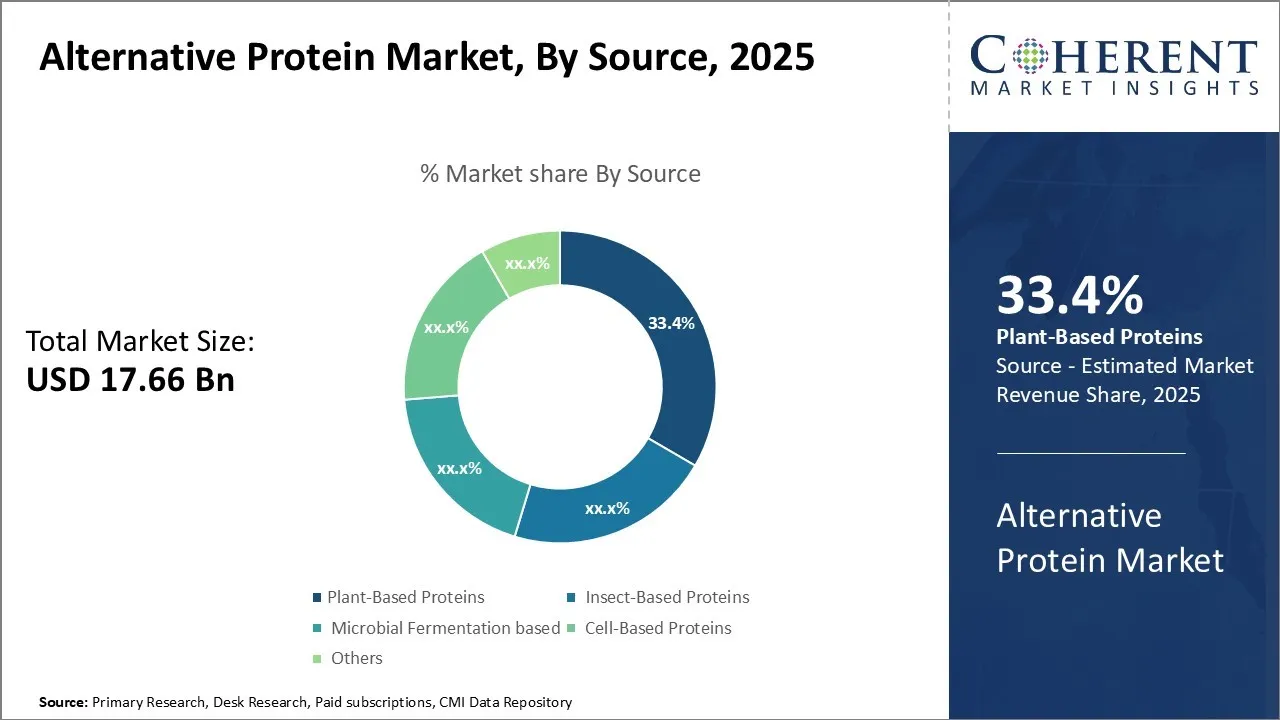
- Based on Source, the Plant-Based Proteins segment is expected to lead the market with 34.4% share in 2026, driven by health, environmental, and animal welfare awareness.
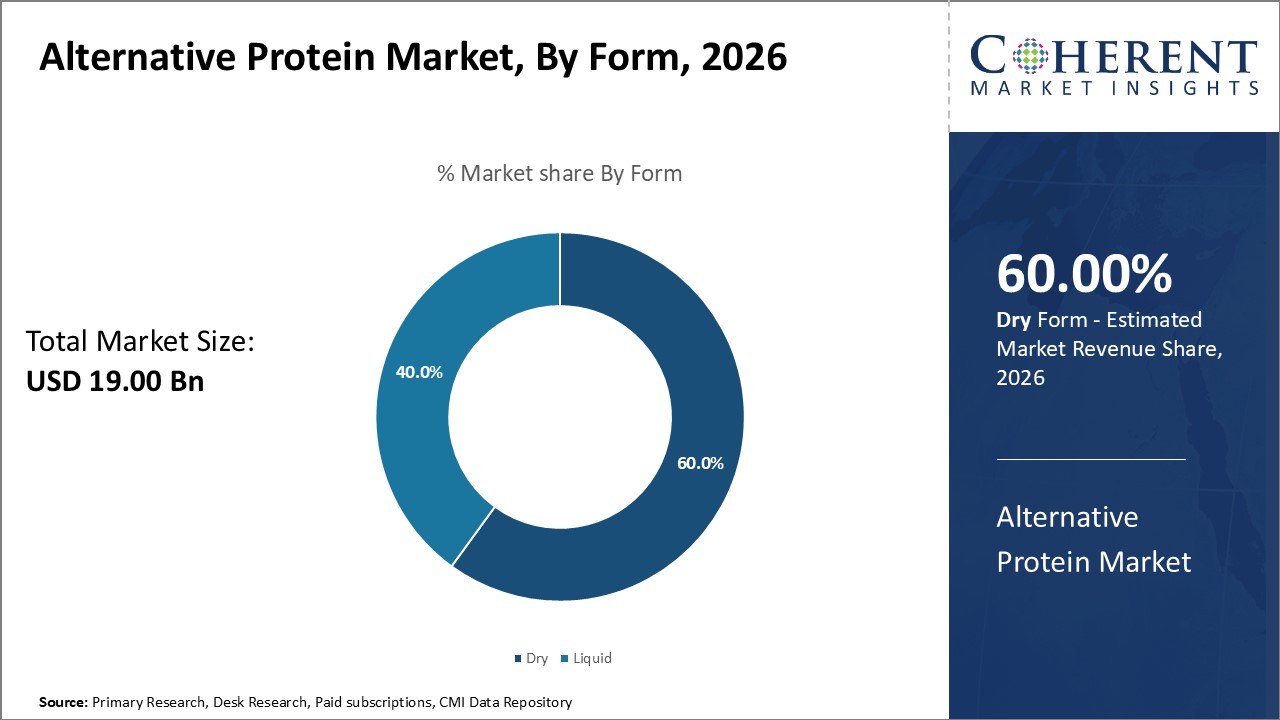
- Based on Form, the Dry Protein segment is expected to hold with 60% share of the market in 2026, driven by shelf life, convenience, and versatile applications.
- Based on Application, the Food and Beverages segment is projected to account for 30.8% share of the market in 2026, driven by innovative plant-based and cultivated protein offerings.
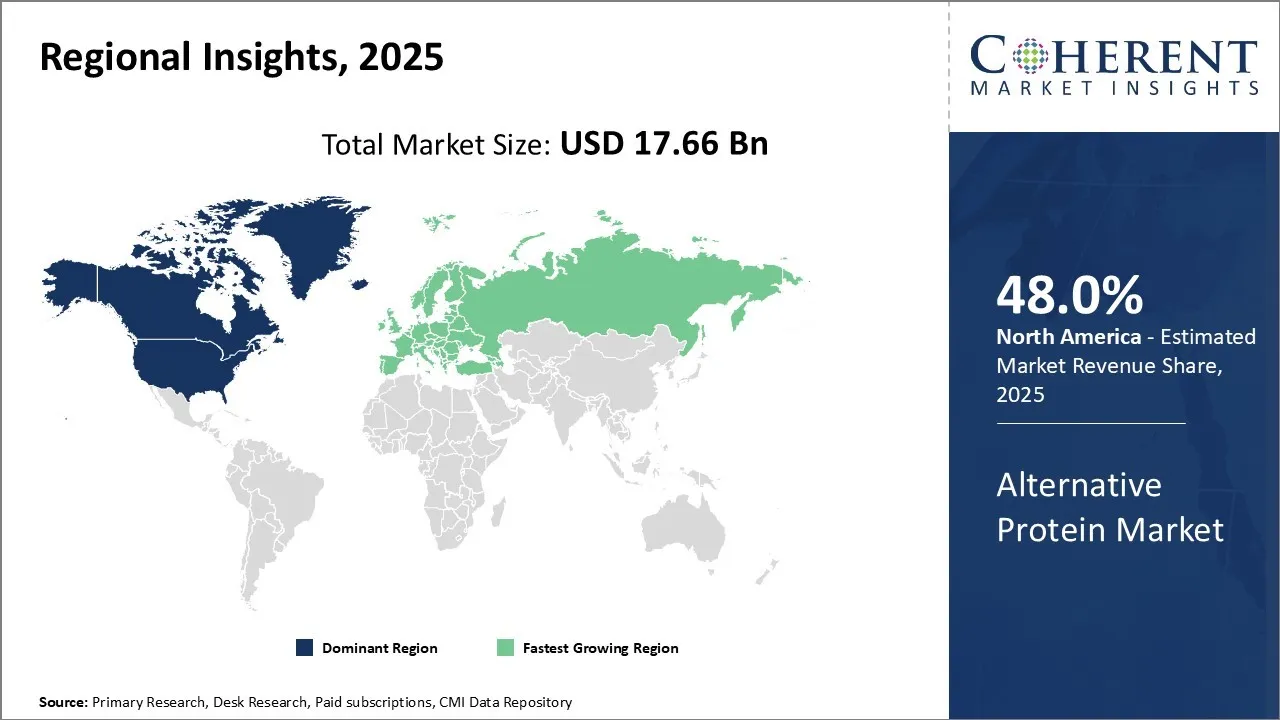
- Based on Region, North America is set to lead the alternative protein market with 48% share in 2026. While, Europe is anticipated is be the fastest growing region.
Market Overview
The factors driving the market growth include rising meat consumption worldwide, growing demand for plant-based and healthier food options, and animal welfare concerns. The trend seen in this market indicates a steady rise in demand for plant-based meat, dairy, and egg alternatives. Most of the plant-based proteins such as soy, wheat and pea are being used to develop alternative meat products like burgers, sausages, and nuggets that resemble animal-based meat in terms of taste, texture and mouthfeel.
Current Events and Its Impacts on the Alternative Protein Market
Current Event | Description and its Impact |
Regulatory Framework Evolution and Policy Changes |
|
Technological Breakthroughs and Manufacturing Scale-Up |
|
Key Consumer Insights in the Alternative Protein Market
- Protein demand rising: Consumers want more protein in daily diets, with emphasis on wholesome ingredients and diverse formats.
- Taste & nutrition balance: 63% of consumers say taste and nutrition are equally important when choosing protein-rich foods.
- Generational trends: Gen Z and millennials are most open to protein variety, including plant-based, cultivated, and fermentation-derived options.
- Health priorities: 1 in 3 consumers globally consider health and wellbeing a top spending priority beyond essentials.
- Proactive lifestyles: 59% of consumers report actively taking steps to live healthier in the past year.
- Current Industry Events of 2026
- Market Size Estimation
- Regional Breakdown
- Competitive Landscape
- Customer Intelligence
- Segmental Analysis
- Pricing Analysis
- Key Market Drivers, Challenges & Future Trends
- Customized Insights Section
Segmental Insights
Alternative Protein Market Insights, By Source - Rising Concern for Health and Environment Boosts Demand for Plant-Based Proteins
In terms of source, plant-based proteins segment is estimated to contribute the highest market share of 34.4% in 2026, owing to growing awareness about issues related to health, environment and animal welfare. Rising rates of obesity, cardiovascular diseases and other lifestyle-related health problems have prompted many consumers to shift towards plant-based sources of proteins that are low in fat and cholesterol.
For instance, in November 2026, Tetra Pak added sunflower protein to drinks made from plants. It has a neutral taste and is easy to add to production. It has up to 50% protein, fiber, vitamins, and antioxidants. Iced coffee, yogurt, and protein drinks are some of the things that can be made with it. The plant-based market is growing quickly and is expected to reach USD 35.9 Bn by 2033.
Alternative Protein Market Insights, By Form - Convenience Drives Preference for Dry Alternative Proteins
In terms of form, dry segment is estimated to contribute the highest market share of 60% in 2026. Dry plant and insect proteins have an elongated shelf life as these do not require refrigeration during storage. These are also more convenient to store, handle and transport without the mess caused by liquids. Dry plant protein powders and flakes are versatile ingredients that can be easily mixed into various food preparations ranging from beverages, yogurt, baked goods to meat substitutes.
For instance, in July 2025, to speed up the growth of alternative protein, GEA has opened a Food Technology Center in Wisconsin. The facility helps move new ideas from the lab to the real world by supporting precision fermentation, cultivated meat, and plant-based processing. It strengthens GEA's global network, promotes sustainable protein production, and grows its presence in the U.S. by using renewable energy.
Alternative Protein Market Insights, By Application - Rising Culinary Applications Propel Food & Beverages Segment
In terms of application, food and beverages segment is estimated to contribute the highest market share of 30.8% in 2026, owing to exponential growth in culinary applications of alternative proteins. Restaurant chains and food brands are responding to rising flexitarian consumer base with innovative plant-based and cultivated meat offerings. Rise of plant-based meat, dairy alternatives, and other vegan food products can boost the growth of mainstream food sector.
For instance, in November 2026, Danone's Silk brand adds new milk and yogurt alternatives to its line of plant-based dairy products. These items are meant to meet the rising need for non-dairy, protein-rich, and environmentally friendly options. The launch strengthens Silk's position in the alternative protein market, which shows that people are interested in plant-based foods and drinks that are healthier and better for the environment.
Regional Insights
North America Alternative Protein Market Analysis & Trends
North America dominates the alternative protein market with an estimated market share of 48.0% in 2026, due to the region's well-established market ecosystem and supportive government policies that promote research and development of plant-based and cell-cultured meat products. Major companies like Beyond Meat and Impossible Foods have gained widespread popularity and availability in this region, contributing to its leading position.
For instance, in August 2026, Merck and mantro GmbH teamed up to create EdiMembre, Inc., which will sell edible membrane technology for alternative proteins. The company is based in Massachusetts and wants to make it possible to make structured cultured meat and plant-based protein products on a large scale. This is intended to assist with texture, functionality, and large-scale production in the alternative protein sector.
Europe Alternative Protein Market Analysis & Trends
Europe exhibits the fastest growth due to rising health consciousness, environmental awareness, and increasing affordability of alternative proteins in major markets like U.K., Germany, and France. Rapid urbanization and growing middle class have boosted demand for sustainable food options.
For instance, in September 2026, NIZO turned its Ede, Netherlands, location into a European center for protein innovation. The facility can help scale up sustainable alternative proteins, such as those made from plants, algae, and fermentation. It wants to speed up Europe's shift to alternative proteins and make the world a better place for developing alternative proteins by building pilot plants and working with researchers.
Alternative Protein Market Outlook for Key Countries
The U.S. Alternative Protein Market Trends
The U.S. alternative protein market is led by pioneers in the plant-based and cell-cultured meat industries. Growing demand for plant-based proteins, cultured meat, and fermentation-based alternatives is fueled by rising number of health-conscious and environmentally aware consumers.
For instance, in December 2026, Bühler and Pow.Bio have teamed up to improve precision fermentation, which makes it possible to make animal-free proteins and functional ingredients on a large scale. The partnership between Bühler and Pow.Bio aims to lower costs, increase efficiency, and speed up commercialization by combining Bühler's engineering knowledge with Pow.Bio's AI-driven continuous fermentation. This is intended to promote the global growth of sustainable alternative proteins and next-generation food solutions.
Germany Alternative Protein Market Trends
Germany is one of the Europe’s largest markets for alternative protein, with significant growth expected as consumer preferences shift towards sustainable options. The government supports this sector as part of its sustainability goals. Plant-based proteins are well-established in Germany, and there has been an emerging interest in insect protein and lab-grown meat.
For instance, in July 2026, GFI Europe focuses on the research environment for alternative proteins in Germany, Austria, and Switzerland. Universities, research centers, and innovation hubs are all working to improve proteins that come from plants, are grown, or are made through fermentation. This partnership in the DACH region speeds up the development of sustainable protein, makes Europe a leader in food innovation, and helps the world move toward healthier, more environmentally friendly protein sources.
Canada Alternative Protein Market Trends
Canada's alternative protein sector is expanding, supported by its strong agricultural foundation, particularly in crops like peas and lentils, crucial for plant-based protein production. Growing health awareness and environmental concerns are driving market demand. Government incentives and funding in Agri-tech and food-tech further support this growth.
For instance, in September 2026, Protein Industries Canada announced it would work on five new projects to make the country's agri-food supply chain stronger. The initiative focuses on Canadian-grown protein crops like pulses and canola. It supports plant-based innovation, lowers the need for imports, and increases local food production. It wants to make Canada a world leader, make protein sources more resilient, and make them last.
France Alternative Protein Market Trends
France’s alternative protein market is growing, but at a slower rate than in some other European nations. Traditional culinary preferences create unique challenges and opportunities. There has been strong preference in France for organic, non-GMO ingredients. Nearly 70.5% of French consumers prefer organic products, which has spurred alternative protein companies to focus on clean, organic, and non-GMO labels. French companies are increasingly creating premium plant-based products to meet this demand.
For instance, in June 2026, Roquette added new textured wheat and pea proteins to its NUTRALYS® line. These eco-friendly ingredients are meant to give plant-based and hybrid foods a meat-like texture and an adequate amount of protein. The launch strengthens Roquette's position in alternative proteins, giving them the ability to provide flexible solutions for new, healthy, and environmentally friendly food innovation around the world.
U.K. Alternative Protein Market Trends
The U.K. has a robust market for alternative protein, with growth supported by both consumer demand and favorable regulatory environment for plant-based products. Health, sustainability, and ethical concerns are primary drivers, with rising population of flexitarians and vegans. For instance, according to U.K. Research and Innovation in 2023, an estimated 7.5% of U.K. consumers identify as vegan or vegetarian, with 39.5% identifying as flexitarian. This flexible approach to diet is a major driver of this market as more consumers look to reduce, but not eliminate, meat consumption.
For instance, in August 2024, the UK started the National Alternative Protein Innovation Centre with £15 million in government funding and contributions from businesses. It will speed up the development of plant-based, cultivated, and fermentation-derived proteins, with help from top universities and research institutes. The project strengthens sustainable food systems, helps businesses grow, and makes the UK a world leader.
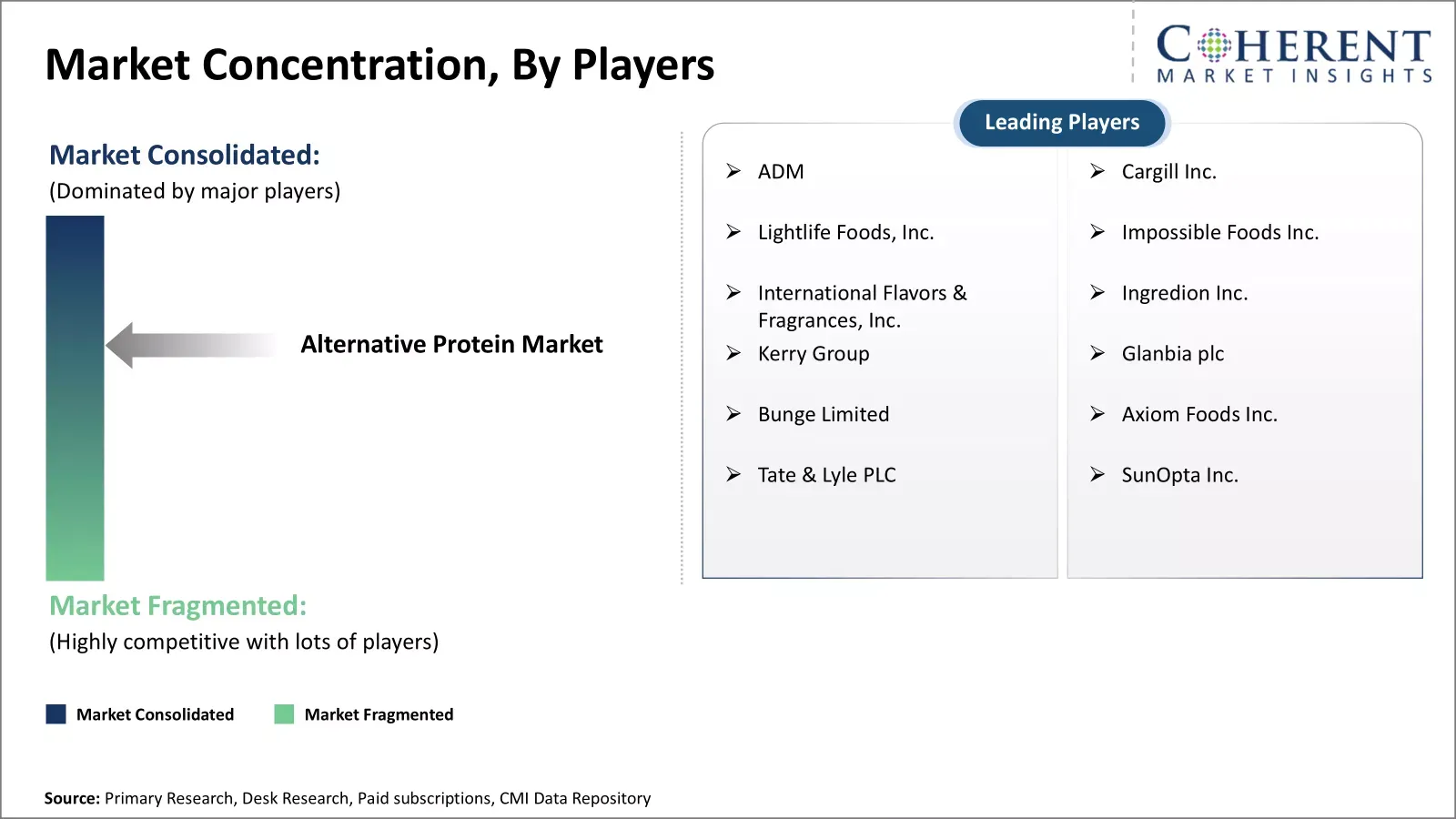
Market Concentration and Competitive Landscape
Market Report Scope
Alternative Protein Market Report Coverage
| Report Coverage | Details | ||
|---|---|---|---|
| Base Year: | 2025 | Market Size in 2026: | USD 19.00 Bn |
| Historical Data for: | 2020 To 2024 | Forecast Period: | 2026 To 2033 |
| Forecast Period 2026 to 2033 CAGR: | 7.6% | 2033 Value Projection: | USD 31.73 Bn |
| Geographies covered: |
| ||
| Segments covered: |
| ||
| Companies covered: | ADM, Cargill Inc., Lightlife Foods, Inc., Impossible Foods Inc., International Flavors & Fragrances, Inc., Ingredion Inc., Kerry Group, Glanbia plc, Bunge Limited, Axiom Foods Inc., Tate & Lyle PLC, SunOpta Inc. | ||
| Growth Drivers: |
| ||
| Restraints & Challenges: |
| ||
Alternative Protein Market Driver
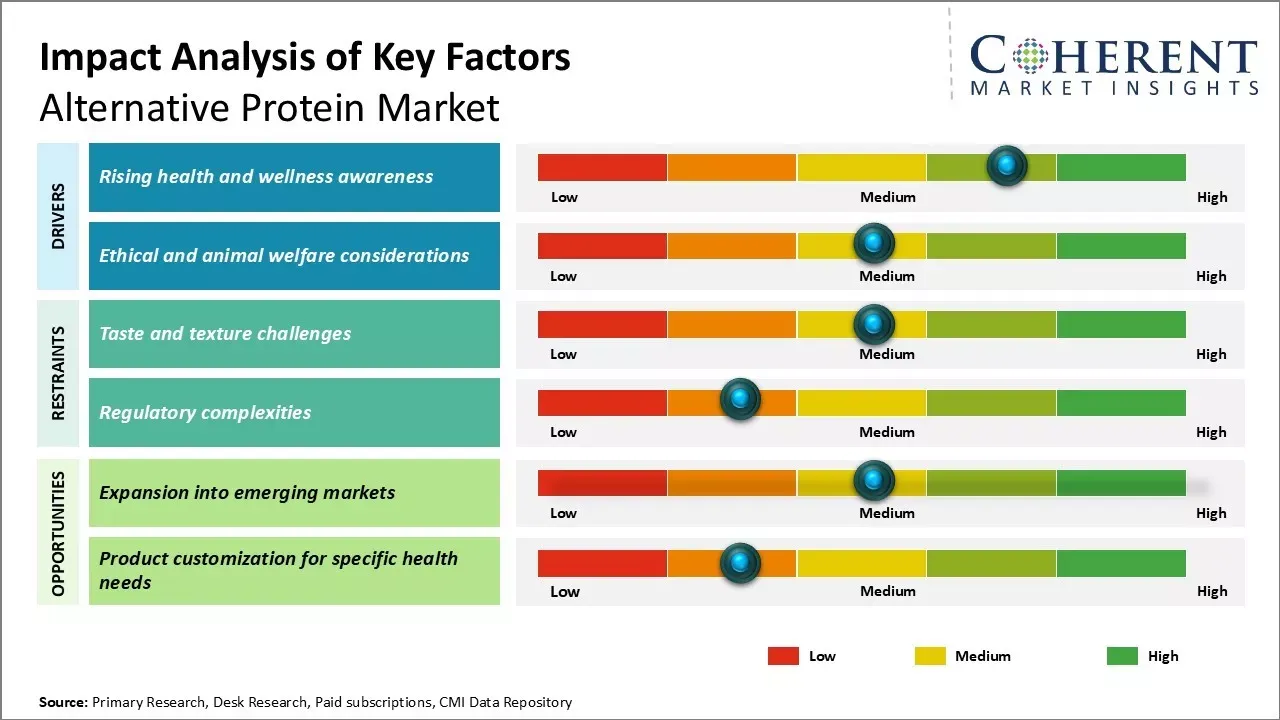
Rising health and wellness awareness
As awareness of health and wellness grows, people are increasingly mindful of how diet and lifestyle impact both physical and mental well-being. Enhanced access to information through the internet and social media empowers individuals to make informed decisions, understanding the long-term effects of their food choices.
Ethical and animal welfare considerations
People want sustainable food choices because they care about animals and ethics. This means less reliance on factory farming and less suffering for animals. People are more and more interested in proteins made from plants, cultivated, and fermented sources. These values have a major impact on the alternative protein market size, which is growing as businesses around the world adopt humane practices and environmentally friendly new ideas.
Alternative Protein Market Opportunity
Expansion into emerging markets
Major opportunity for alternative protein market lies in expanding to emerging markets across the globe. While developed markets in North America and Europe have led the early adoption of plant-based and cultured meat, there has been huge untapped potential in developing countries with rapidly growing middle-class populations and appetite for meat. Regions like Latin America, Asia Pacific and Africa are increasingly urbanizing with changing diets.
Analyst Opinion (Expert Opinion)
The alternative protein market is a part of a food and ingredient ecosystem that is changing over time due to changes in the way individuals behave, where funding is spent, and the way readiness technology. Retail data shows that plant-based proteins are still the best-selling type of protein, due to their wide availability in grocery stores and food service. But recent sales trends in mature markets show that the category is stabilizing rather than growing quickly. This shows that taste, texture, nutrition density, and pricing architecture all need to be improved to keep demand high.
Investment data shows that funding is still happening, but it's becoming more picky. Capital is slowly moving away from models that focus on brands and consumers and toward platforms that focus on ingredients and business-to-business transactions that make it easier to cut costs. Fermentation-based proteins, especially precision fermentation, are becoming more popular because they can be used to make high-value ingredients like functional proteins, dairy analog components, and specialty nutrition inputs. People see these technologies as scalable enablers, not final products. They improve margins in many downstream applications.
Cultivated meat remains in the early stages of commercialization, and its market penetration is currently low. Current data shows that investors are becoming more interested in companies that are making progress in process efficiency, regulatory readiness, and pilot-scale manufacturing.
North America is the leader in retail adoption, while Europe and parts of Asia-Pacific are making great strides in public funding, research programs, and regulatory frameworks. In general, the alternative protein market is expected to grow less because of new categories and more considering the better operations, new ideas from upstream, and selective consolidation.
Speak to the analyst
Want personalized insights?
Take the findings above to one of our principal consultants, or have the report rebuilt around the segments, geographies and competitors you actually track.
Recent Developments
- In December 2025, Perfect Day is building a precision fermentation plant in Gujarat, India, to make recombinant whey protein. Operations are anticipated to begin in 2026, and everything is supposed to be up and running by 2027. The project makes global supply chains stronger by providing animal-free dairy alternatives that are good for the environment and helping the alternative protein industry grow around the world.
- In December 2024, Griffith Foods released its first Alternative Proteins Portfolio, which includes seasonings, sauces, coatings, and mixes made for plant-based innovation. The company wants to have 10% of the alternative protein market by 2030. To do this, they use decades of experience to meet the growing demand for protein solutions that are good for the environment, healthy, and easy to get.
Market Segmentation
- By Source Insights (Revenue, USD Bn, 2026 - 2033)
- Plant-Based Proteins
- Insect-Based Proteins
- Microbial Fermentation based
- Cell-Based (Cultivated) Proteins
- Others
- By Form Insights (Revenue, USD Bn, 2026 - 2033)
- Dry
- Liquid
- By Application Insights (Revenue, USD Bn, 2026 - 2033)
- Food & Beverages
- Infant Formulations
- Clinical Nutrition
- Animal Feed
- Others
- Regional Insights (Revenue, USD Bn, 2026 - 2033)
- North America
- U.S.
- Canada
- Latin America
- Brazil
- Argentina
- Mexico
- Rest of Latin America
- Europe
- Germany
- U.K.
- Spain
- France
- Italy
- Russia
- Rest of Europe
- Asia Pacific
- China
- India
- Japan
- Australia
- South Korea
- ASEAN
- Rest of Asia Pacific
- Middle East
- GCC Countries
- Israel
- Rest of Middle East
- Africa
- South Africa
- North Africa
- Central Africa
- Key Players Insights (Revenue, USD Bn, 2021 - 2033)
- ADM
- Cargill Inc.
- Lightlife Foods, Inc.
- Impossible Foods Inc.
- International Flavors & Fragrances, Inc.
- Ingredion Inc.
- Kerry Group
- Glanbia plc
- Bunge Limited
- Axiom Foods Inc.
- Tate & Lyle PLC
- SunOpta Inc.
Sources
Primary Research Interviews
- Alternative Protein Manufacturers (Plant-based, Cultivated, Fermentation-derived)
- FoodTech & Cellular Agriculture Startups
- Ingredient Suppliers (Plant Proteins, Mycoprotein, Precision Fermentation Inputs)
- Food & Beverage Product Developers
- Regulatory & Food Safety Experts
- Others
Databases
- Bloomberg Terminal
- Thomson Reuters Eikon
- Euromonitor International
- Mintel Global New Products Database (GNPD)
- S&P Global Market Intelligence
- Others
Magazines
- Food Business News
- Plant Based Foods Association Media
- Alternative Proteins Magazine
- Food Technology Magazine
- Others
Journals
- Trends in Food Science & Technology
- Journal of Food Science
- Nature Food
- Comprehensive Reviews in Food Science and Food Safety
- Others
Newspapers
- Financial Times
- The Wall Street Journal
- Reuters
- Bloomberg News
- Others
Associations
- Good Food Institute (GFI)
- Plant Based Foods Association (PBFA)
- Alternative Protein Association (APA)
- European Plant-based Foods Association
- Others
Public Domain Sources
- U.S. Department of Agriculture (USDA)
- Food and Agriculture Organization of the United Nations (FAO)
- European Food Safety Authority (EFSA)
- World Health Organization (WHO)
- National Institutes of Food and Agriculture (NIFA)
- Others
Proprietary Elements
- CMI Data Analytics Tool
- Proprietary CMI Existing Repository of Information for the Last 8 Years
Get access to 250+ pages report
Every segment, forecast, competitor profile and data table behind the analysis above — available for instant download.
- ESOMAR Member
- ISO 9001:2015 Certified
- D-U-N-S Registered
- GDPR & CCPA Compliant
Missing comfort of reading report in your local language? Find your preferred language:
Transform your Strategy with Exclusive Trending Reports
Frequently Asked Questions
The Alternative Protein Market is estimated to be valued at USD 19.00 Bn in 2026, and is expected to reach USD 31.73 Bn by 2033.
The CAGR of the Alternative Protein Market is projected to be 7.6% from 2026 to 2033.
Rising health and wellness awareness and ethical and animal welfare considerations are the major factors driving the growth of alternative protein market.
Taste and texture challenges and regulatory complexities are the major factors hampering the growth of alternative protein market.
In terms of source, plant-based proteins segment is estimated to dominate the market in 2026.
ADM, Cargill Inc., Lightlife Foods, Inc., Impossible Foods Inc., International Flavors & Fragrances, Inc., Ingredion Inc., Kerry Group, Glanbia plc, Bunge Limited, Axiom Foods Inc., Tate & Lyle PLC, SunOpta Inc. are the major players.
North America is expected to lead the alternative protein market in 2026.