

Plant Based Meat Market Size and Forecast – 2026 to 2033
The Global Plant Based Meat Market is estimated to be valued at USD 10.58 Bn in 2026 and is expected to reach USD 23.68 Bn by 2033, exhibiting a compound annual growth rate (CAGR) of 12.2% from 2026 to 2033.
Key Takeaways:
- By Source, Soy holds the largest market share of 47.1% in 2026 owing to its nutritional superiority.
- By Products, Burgers expected to hold largest market share of 37% in 2026 owing to the health and wellness consciousness.
- By End User, Retail acquired the prominent market share of 39% in 2026 owing to its expanding retail distribution channels.
- By Region, North America dominates the overall market with an estimated share of 40.1% in 2026 owing to the rising health consciousness.
Market Overview
The plant-based meat market is rapidly growing as consumers increasingly seek healthier and more sustainable food options. Food technology innovations have enabled companies to create products that closely replicate the taste and texture of traditional meats, boosting consumer acceptance. Companies offer a wide variety of products, including burgers, sausages, and nuggets, to meet diverse dietary preferences. Retailers and foodservice providers are expanding distribution channels, making plant-based meats more accessible, while heightened awareness of environmental and ethical concerns drives further market adoption.
Current Events and Its Impact
Current Events | Description and its impact |
Geopolitical and Regulatory Developments |
|
Economic and Supply Chain Dynamics |
|
Consumer Behavior and Social Trends |
|
End-user Feedback and Unmet Needs in the Plant Based Meat Market
- Taste and Texture Expectations: Consumers often compare plant-based meats to conventional meat, seeking comparable taste and texture. While many products satisfy initial trials, some report inconsistent mouthfeel or aftertaste. End-users desire innovations that better replicate the sensory experience of traditional meat without compromising plant-based benefits.
- Nutritional Transparency: Users are increasingly focused on protein content, fiber, and micronutrients. Some plant-based products lack clear labeling, leaving consumers uncertain about health benefits. There is a growing demand for nutritionally balanced options that match or surpass conventional meat in dietary value while remaining clean-label.
- Affordability and Accessibility: While interest in plant-based meats rises, high prices limit repeat purchases, especially in emerging markets. Consumers want competitively priced alternatives available in mainstream retail, restaurants, and online channels. Expanding distribution and cost-effective production can bridge the gap between demand and accessibility.
- Current Industry Events of 2026
- Market Size Estimation
- Regional Breakdown
- Competitive Landscape
- Customer Intelligence
- Segmental Analysis
- Pricing Analysis
- Key Market Drivers, Challenges & Future Trends
- Customized Insights Section
Segmental Insights
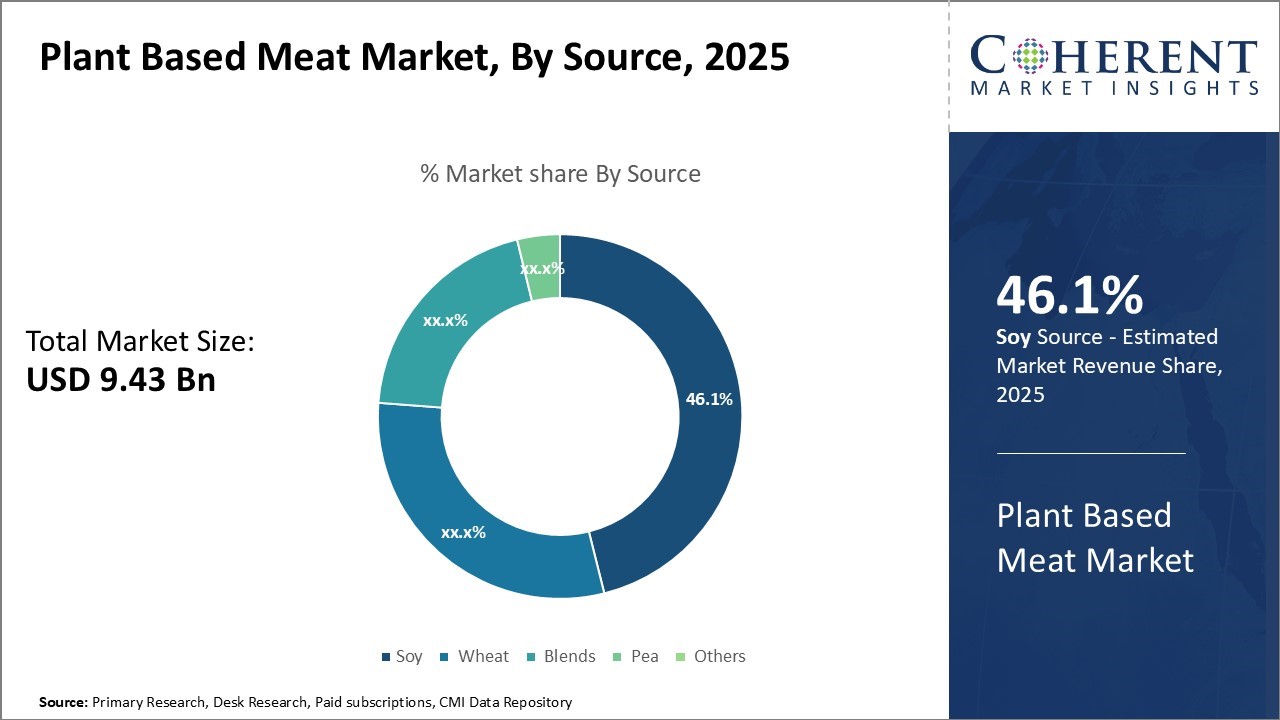
Plant Based Meat Market Insights, By Source - Soy contributes the highest share of the market owing to its innovation & product development
Soy holds the largest plant based meat market share of 47.1% in 2026. Soy drives the plant-based meat market due to its nutritious profile and versatile functionality. It provides all essential amino acids, making it a complete protein that attracts health-conscious consumers and athletes. Food producers use soy’s ability to replicate the texture and mouthfeel of traditional meats through extrusion techniques to create products like burgers and sausages. Manufacturers also leverage soy’s cost-effectiveness and well-established supply chains to scale production, satisfying the rising demand for affordable and sustainable protein alternatives. For instance, in August 2025, Grill’d partnered with Beyond Meat to introduce the fourth-generation Beyond Burger, called the Beyond Burger IV, which is made without soy, gluten, or GMOs and cooked with avocado oil.
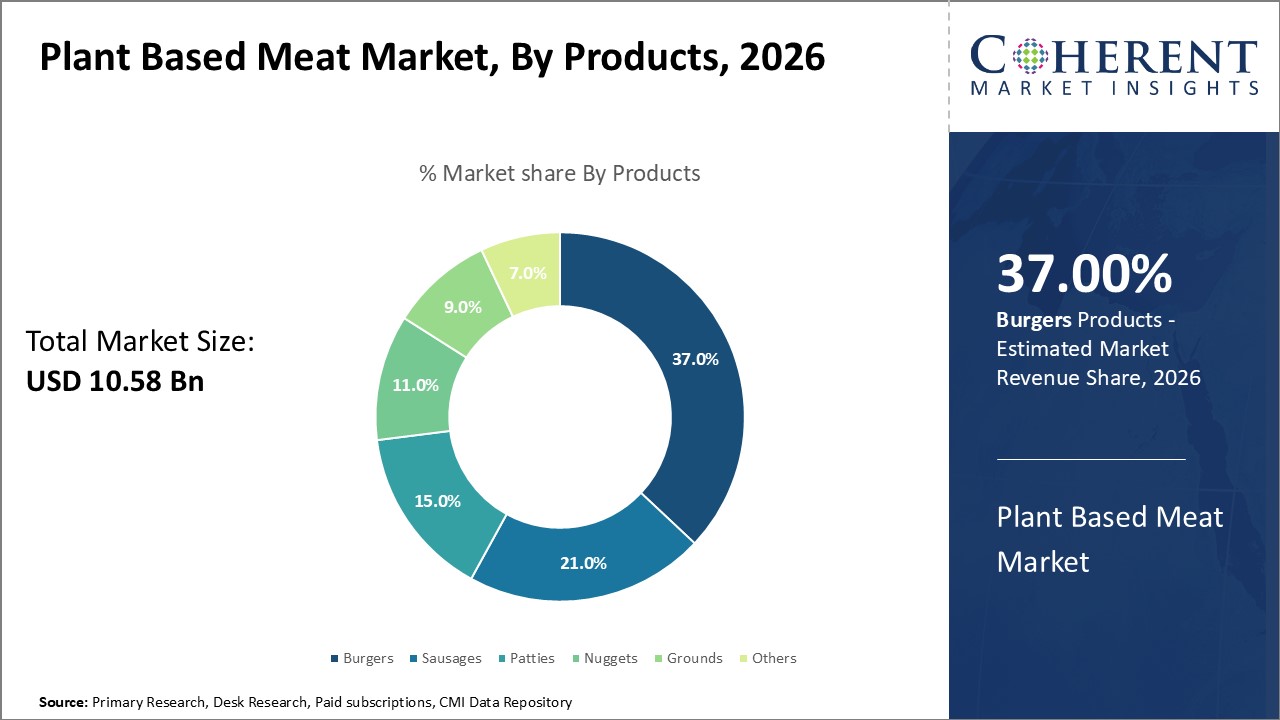
Plant Based Meat Market Insights, By Products - Burgers contribute the highest share of the market owing to its ethical and animal welfare concerns
Burgers expected to hold largest market share of 37% in 2026. Consumers are increasingly choosing plant-based burgers as they align with health-conscious and ethical values. These burgers contain less saturated fat and cholesterol than traditional beef, attracting individuals seeking heart-healthy alternatives. The growth of flexitarian and vegan diets has broadened the consumer base, boosting demand for meat-free options. Food producers have enhanced their appeal through innovations in flavor, texture, and nutritional content, making plant-based burgers an attractive and satisfying choice for a wide variety of consumers. For instance, in October 2025, Beyond Meat, Inc. introduced its new Beyond Burger and Beyond Beef at Erewhon stores, highlighting clean, sustainable ingredients with 21g of protein, 2g of saturated fat, and no GMOs, cholesterol, or antibiotics. Such instances are accelerating the plant based meat market share.
Plant Based Meat Market Insights, By End User - Retail contributes the highest share of the market owing to its product innovation and convenience
Retail acquired the prominent market share of 39% in 2026. Retailers are driving the growth of the plant-based meat market by responding to rising consumer demand, improving product availability, and implementing strategic marketing initiatives. Supermarkets and hypermarkets are broadening their plant-based selections, offering a wider variety of frozen, fresh, and refrigerated products. They actively promote these offerings through in-store promotions, sampling, and discounts, encouraging consumers to try new products and make repeat purchases. These efforts position retail as a key force shaping market expansion. For instance, in August 2025, Plant-based protein brand Like unveiled in major UK retailers next month, starting with Tesco, introducing Like Hot Dogs, Like Chicken Burgers, and Like Popcorn Chicken for consumers reducing meat intake.
Regional Insights
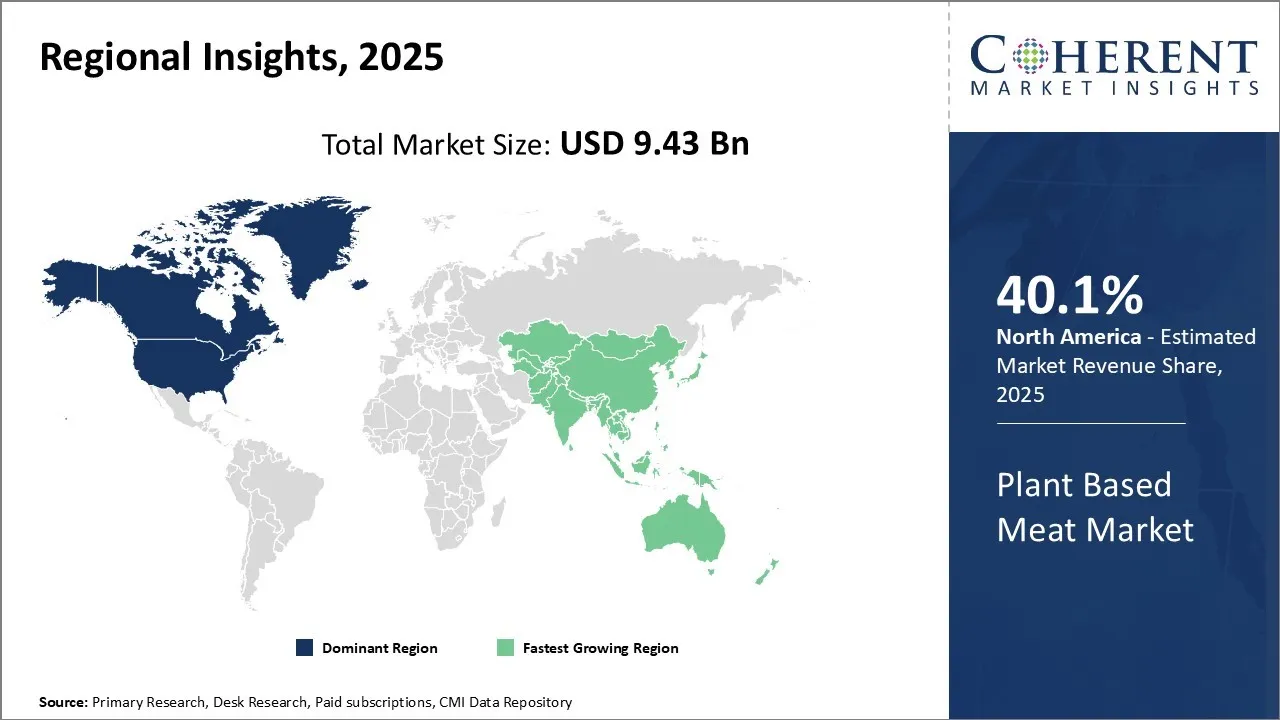
North America Plant Based Meat Market Trends
North America dominates the overall market with an estimated share of 40.1% in 2026. North America leads the plant-based meat market as consumers, retailers, and innovators actively drive its growth. Health-conscious buyers and environmentally minded individuals increasingly select plant-based products, prompting supermarkets and quick-service restaurants to expand their offerings. Brands respond by launching a variety of items, including soy-based burgers and pea protein nuggets, to meet diverse dietary needs. Retailers improve accessibility through promotions and by enlarging plant-based sections, while digital platforms extend the market’s reach and connect products directly with consumers. For instance, in February 2026, Slovenian plant-based meat company Juicy Marbles launched Meaty Meat, its first lamb-style plant-based product, now available in the US and Canada as a more affordable option in its lineup. Such instances are proliferating the plant based meat market demand.
Asia Pacific Plant Based Meat Market Trends
The Asia Pacific plant-based meat market is rapidly expanding as consumers and innovators actively shape its growth. In Australia, regulators have approved lab-grown meat, and high-end restaurants are preparing to introduce products like cultured quail pâté, reflecting a move toward premium, sustainable dining. Traditional Indonesian soy-based tempeh is also gaining renewed popularity, particularly in Western markets, thanks to its nutritional value and minimal processing. These trends showcase the region’s dynamic strategy, combining innovation with cultural food heritage. For instance, Tyson Foods, the world’s second-largest processor of chicken, beef, and pork, introduced its plant-based products in select Asia-Pacific markets.
United States Plant Based Meat Market Trends
The U.S. plant-based meat market is actively evolving amid innovation, regulatory hurdles, and changing consumer preferences. Companies such as Beyond Meat and Impossible Foods continue to drive product development, though recent financial setbacks and waning consumer interest push them to adapt. Producers are expanding beyond traditional beef alternatives, launching plant-based chicken, pork, and seafood to attract a wider audience. Meanwhile, states like Texas and Mississippi enforce bans on lab-grown meat, creating significant challenges for market growth and expansion. For instance, in December 2024, Texan plant-based brand All Y’all has launched Big Crunchy Cheezy Bits, a cheese-flavored snack made from organic soybeans with 33g of protein per bag, flavored with nutritional yeast and garlic.
India Plant Based Meat Market Trends
India’s plant-based meat market is rapidly transforming as consumers, driven by health awareness, environmental concerns, and cultural acceptance of vegetarian diets, increasingly embrace meat alternatives. Urban populations are actively demanding products made from soy and pea protein, including burgers, nuggets, and sausages. Global fast-food chains like McDonald’s and KFC are responding by adding plant-based options to their menus, directly catering to these evolving consumer preferences and fueling further growth and visibility for plant-based meats across the country. For instance, Tokyo-based Next Meats has partnered with India’s Vegan Meat India Pvt. Ltd. to launch meat-free alternatives aimed at promoting sustainable food production and reducing environmental impact through crossover technology.
Market Dynamics
Plant Based Meat Market Trend
Rising Consumer Health Consciousness
Consumers increasingly prioritize health and wellness, driving the demand for plant-based meat as a lower-fat, cholesterol-free alternative to traditional meat. Shoppers actively seek products high in protein and nutrients but free from artificial additives. This trend encourages brands to innovate with fortified options, functional ingredients, and clean-label formulations, appealing to health-focused individuals, fitness enthusiasts, and flexitarians who want to integrate sustainable yet nutritious protein sources into daily diets without compromising taste or convenience.
Technological Innovation and Product Development
Advances in food technology, such as extrusion, fermentation, and cell-based methods, are transforming plant-based meat offerings. Companies are creating products that closely replicate the texture, juiciness, and flavor of traditional meat. Continuous innovation enables diversification into plant-based seafood, poultry, and ethnic cuisine options. These technological breakthroughs enhance consumer acceptance, expand the product portfolio, and provide opportunities for premium positioning, driving the market toward more sophisticated, appealing, and realistic meat alternatives.
Plant Based Meat Market Opportunity
Innovation in Functional and Nutrient-Enriched Products
There is growing demand for plant-based meats with added functional benefits, such as higher protein, fiber, vitamins, or probiotics. Creating products that serve specific health needs—like heart health, weight management, or fitness nutrition—can differentiate brands in a competitive market. Functional enrichment appeals to health-conscious consumers, athletes, and families seeking nutrient-dense alternatives, offering a pathway to premium positioning and long-term loyalty.
Market Report Scope
Plant Based Meat Market Report Coverage
| Report Coverage | Details | ||
|---|---|---|---|
| Base Year: | 2025 | Market Size in 2026: | USD 10.58 Bn |
| Historical Data for: | 2020 To 2024 | Forecast Period: | 2026 To 2033 |
| Forecast Period 2026 to 2033 CAGR: | 12.2% | 2033 Value Projection: | USD 23.68 Bn |
| Geographies covered: |
| ||
| Segments covered: |
| ||
| Companies covered: | Beyond Meat, Inc., Impossible Foods Inc., MorningStar Farms (Kraft Heinz), Quorn Foods Ltd., Tofurky Company, Inc., Amy's Kitchen, Inc., Field Roast Grain Meat Co., Lightlife Foods (Greenleaf Foods), Garden Protein International, Beyond Better Foods, Bute Island Foods Ltd., The Vegetarian Butcher, Alpha Foods, MGP Ingredients, Inc., Marlow Foods Ltd. (Cauldron), OmniFoods, and No Evil Foods | ||
| Growth Drivers: |
| ||
| Restraints & Challenges: |
| ||
Plant Based Meat Market News
- In February 2025, Dutch supermarket chain Jumbo introduced a new line of plant-based yogurts made from locally grown soy, becoming the first retailer in the Netherlands to offer such products.
- In May 2025, Middle Eastern fast-casual brand Malak Al Tawouk teamed up with UAE-based Switch Foods to introduce a new range of plant-based chicken dishes.
- In August 2025, Eat Just, known for its plant-based JUST Egg, launched a new line of chicken alternatives under the brand JUST Meat, available in Original, Buffalo, and Sesame Ginger flavors.
Analyst Opinion (Expert Opinion)
- The plant-based meat sector is at a pivotal juncture—caught between the momentum of ethical consumerism and the harsh realities of market dynamics. While the narrative often centers on growth potential, a deeper examination reveals systemic challenges that could impede the industry's trajectory.
- Companies like Beyond Meat, once heralded as pioneers, are now grappling with financial instability. Beyond Meat's recent stock plunge to an all-time low, following a convertible debt exchange offer to alleviate over $800 million in debt, underscores the fragility of the sector. Despite attempts to reverse declining sales through price hikes, the company's struggles with consumer demand and shifting preferences highlight the volatility inherent in the plant-based meat market.
- Furthermore, the industry's reliance on novel ingredients such as pea and soy proteins introduces complexities in supply chains and production scalability. While these ingredients are central to plant-based products, their sourcing and processing can be resource-intensive, raising questions about the environmental benefits of plant-based meats compared to traditional options.
- Consumer behavior also presents a paradox. While there's a growing demand for sustainable and ethical food choices, actual consumption patterns often fall short. Studies indicate that initiatives like Meat-Free Days lead to temporary reductions in meat consumption but fail to instill lasting dietary changes, suggesting that ethical considerations alone may not be sufficient to drive sustained shifts in consumer habits.
Speak to the analyst
Want personalized insights?
Take the findings above to one of our principal consultants, or have the report rebuilt around the segments, geographies and competitors you actually track.
Market Segmentation
- Source Insights (Revenue, USD Bn, 2021 - 2033)
- Soy
- Wheat
- Blends
- Pea
- Others
- Product Insights (Revenue, USD Bn, 2021 - 2033)
- Burgers
- Sausages
- Patties
- Nuggets
- Grounds
- Others
- End User Insights (Revenue, USD Bn, 2021 - 2033)
- Retail
- HORECA (Hotel/Restaurant/Café)
- Others
- Regional Insights (Revenue, USD Bn, 2021 - 2033)
- North America
- U.S.
- Canada
- Latin America
- Brazil
- Argentina
- Mexico
- Rest of Latin America
- Europe
- Germany
- U.K.
- Spain
- France
- Italy
- Russia
- Rest of Europe
- Asia Pacific
- China
- India
- Japan
- Australia
- South Korea
- ASEAN
- Rest of Asia Pacific
- Middle East
- GCC Countries
- Israel
- Rest of Middle East
- Africa
- South Africa
- North Africa
- Central Africa
- North America
- Key Players Insights
- Beyond Meat, Inc.
- Impossible Foods Inc.
- MorningStar Farms (Kraft Heinz)
- Quorn Foods Ltd., Tofurky Company, Inc.
- Amy's Kitchen, Inc.
- Field Roast Grain Meat Co.
- Lightlife Foods (Greenleaf Foods)
- Garden Protein International
- Beyond Better Foods
- Bute Island Foods Ltd.
- The Vegetarian Butcher
- Alpha Foods
- MGP Ingredients, Inc.
- Marlow Foods Ltd. (Cauldron)
- OmniFoods
- No Evil Foods
Sources
Primary Research Interviews
- Interviews with executives from leading plant-based meat companies, including Beyond Meat and Impossible Foods, to gain insights into product innovation and market strategies.
- Discussions with supply chain partners and distributors to understand logistical challenges and opportunities in the plant-based meat sector.
- Conversations with culinary experts and chefs to explore consumer acceptance and culinary applications of plant-based meats.
- Surveys conducted with consumers to assess preferences, purchasing behaviors, and perceptions regarding plant-based meat products.
Databases
- Proprietary CMI Data Analytics Tool
- Proprietary CMI Existing Repository of information for the last 8 years
- PubMed for accessing peer-reviewed articles on plant-based nutrition and consumer health impacts.
- ScienceDirect for research papers on food technology and plant-based meat production processes.
- Scopus for comprehensive academic research articles and citations related to plant-based meats.
Magazines
- VegNews – Covers trends in plant-based diets, product reviews, and industry news.
- Vegetarian Times – Focuses on vegetarian and vegan lifestyles, including plant-based food innovations.
- Food Technology Magazine – Offers insights into food science and technology advancements, including plant-based meat developments.
- The Grocer – Provides news on grocery retailing, including plant-based product launches and market trends.
Journals
- Food Science and Technology – Publishes research on food product development, including plant-based meat alternatives.
- Journal of Food Science – Features studies on food chemistry and technology, relevant to plant-based meat innovations.
- Trends in Food Science & Technology – Reviews emerging technologies in food production, including plant-based meats.
- Journal of Agricultural and Food Chemistry – Offers research on food chemistry, including plant-based protein sources.
Newspapers
- The Guardian – Provides investigative reports and features on plant-based meat companies and industry trends.
- Reuters – Offers news articles on financial aspects of plant-based meat companies, such as stock performances and market analyses.
- The New York Times – Publishes articles on consumer behavior and societal impacts of plant-based diets.
- Financial Times – Covers business and economic aspects of the plant-based meat industry.
Associations
- Plant Based Foods Industry Association (PBFIA) – Represents plant-based food companies and advocates for industry growth in India.
- The Good Food Institute (GFI) – Supports plant-based and cultivated meat innovation through research and advocacy.
- Vegan Society – Promotes veganism and provides resources on plant-based living.
- International Plant-Based Foods Global Alliance – A network of associations supporting plant-based food industries worldwide.
Public Domain Sources
- Government publications on food safety and labeling regulations for plant-based products.
- Public health studies on the nutritional impacts of plant-based diets.
- Environmental reports on the sustainability of plant-based food production.
- Open-access research articles on plant-based meat technologies and market trends.
Proprietary Elements
- CMI Data Analytics Tool, and Proprietary CMI Existing Repository of information for last 8 years
Get access to 250+ pages report
Every segment, forecast, competitor profile and data table behind the analysis above — available for instant download.
- ESOMAR Member
- ISO 9001:2015 Certified
- D-U-N-S Registered
- GDPR & CCPA Compliant
Missing comfort of reading report in your local language? Find your preferred language:
Transform your Strategy with Exclusive Trending Reports
Frequently Asked Questions
The Plant Based Meat Market is estimated to be valued at USD 10.58 Bn in 2026, and is expected to reach USD 23.68 Bn by 2033.
The CAGR of the Plant Based Meat Market is projected to be 12.2% from 2026 to 2033.
Increasing consumer demand for sustainable and environmentally friendly protein sources and growing awareness of health benefits associated with plant-based diets are the major factors driving the market growth of the global plant based meat.
Higher price point compared to traditional meat products and limited availability in certain regions and markets are the major factors hampering the growth of the global plant based meat market.
In terms of Source, Soy segment is estimated to dominate the market revenue share in 2026.
Beyond Meat, Inc., Impossible Foods Inc., MorningStar Farms (Kraft Heinz), Quorn Foods Ltd., Tofurky Company, Inc., Amy's Kitchen, Inc., Field Roast Grain Meat Co., Lightlife Foods (Greenleaf Foods), Garden Protein International, Beyond Better Foods, Bute Island Foods Ltd., The Vegetarian Butcher, Alpha Foods, MGP Ingredients, Inc., Marlow Foods Ltd. (Cauldron), OmniFoods, and No Evil Foods are the major players.
North America is expected to lead the global plant based meat market in 2026.