

Histology And Cytology Market Size and Trends – 2026 to 2033
Global histology and cytology market is estimated to be valued at USD 25.24 Bn in 2026 and is expected to reach USD 62.39 Bn by 2033, exhibiting a compound annual growth rate (CAGR) of 13.8% from 2026 to 2033.
Key Takeaways
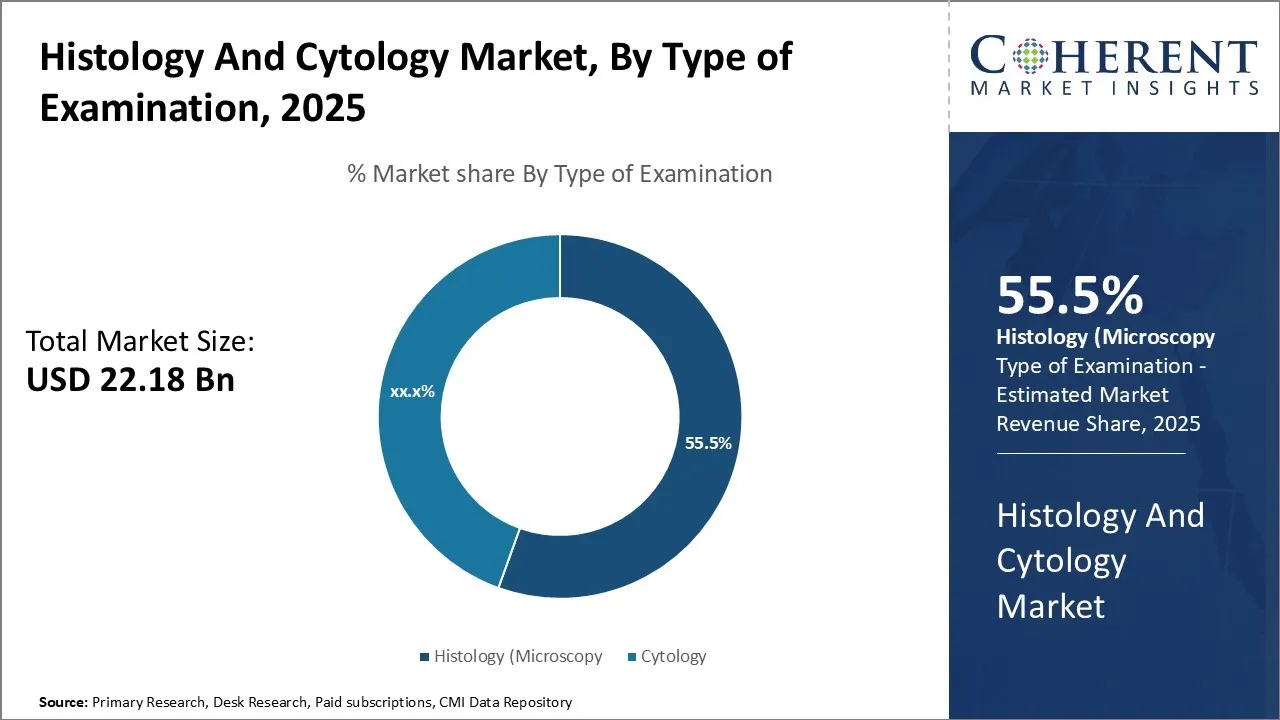
- On the basis of Type of Examination, Histology segment is contributing approximately 56.5% of the global market share in 2026. This is driven by its extensive use in tissue-level diagnostics supported by advancements in immunohistochemistry, molecular pathology, and cryostat & microtomy techniques.
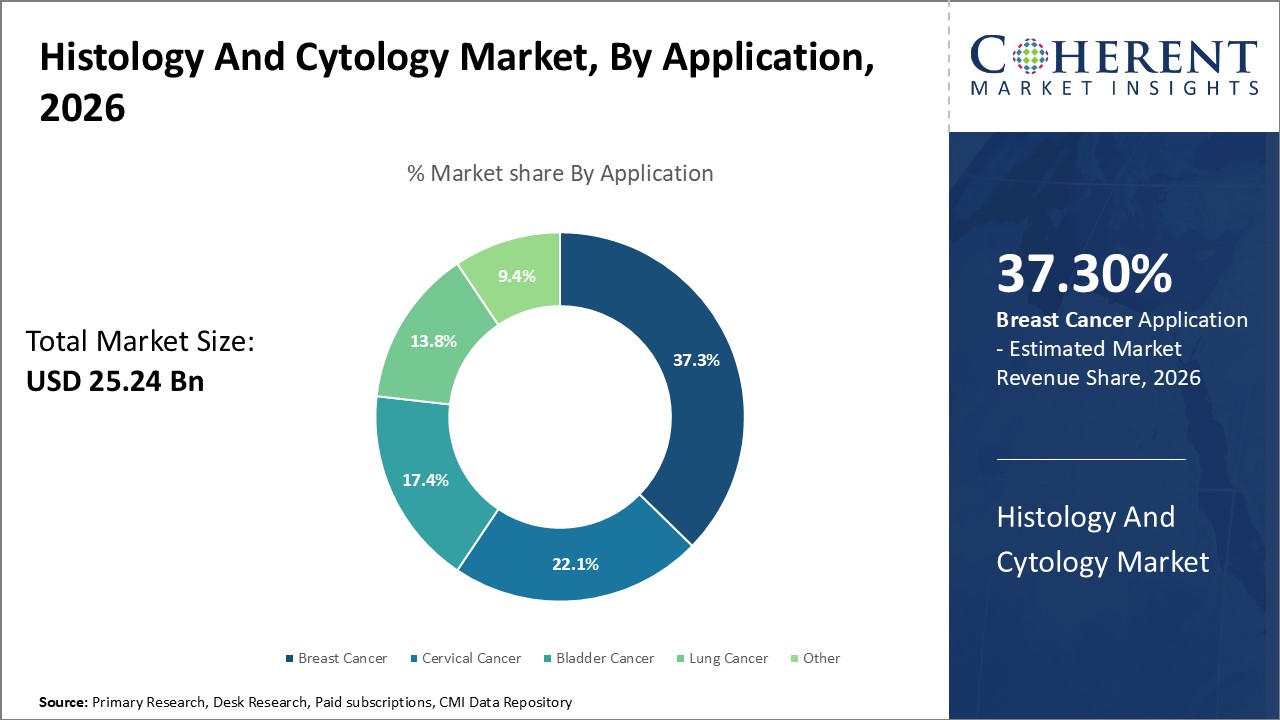
- On the basis of Application, Breast and Cervical cancer applications are witnessing increased adoption due to growing cancer screening initiatives and early detection programs globally.
- On the basis of Product, the Instruments and Analysis Software System segment leads the market with around 54.7% share in 2026, owing to the growing deployment of digital pathology systems and automation tools to enhance diagnostic throughput and accuracy.
- On the basis of Test Type, Microscopy Tests account for contributing 43.5% to the global market in 2026, as they remain a foundational tool in both histological and cytological diagnostics.
- On the basis of End User, Hospitals and Clinics are the leading end users due to the increasing volume of in-patient diagnostic procedures and adoption of advanced diagnostic technologies in clinical settings.
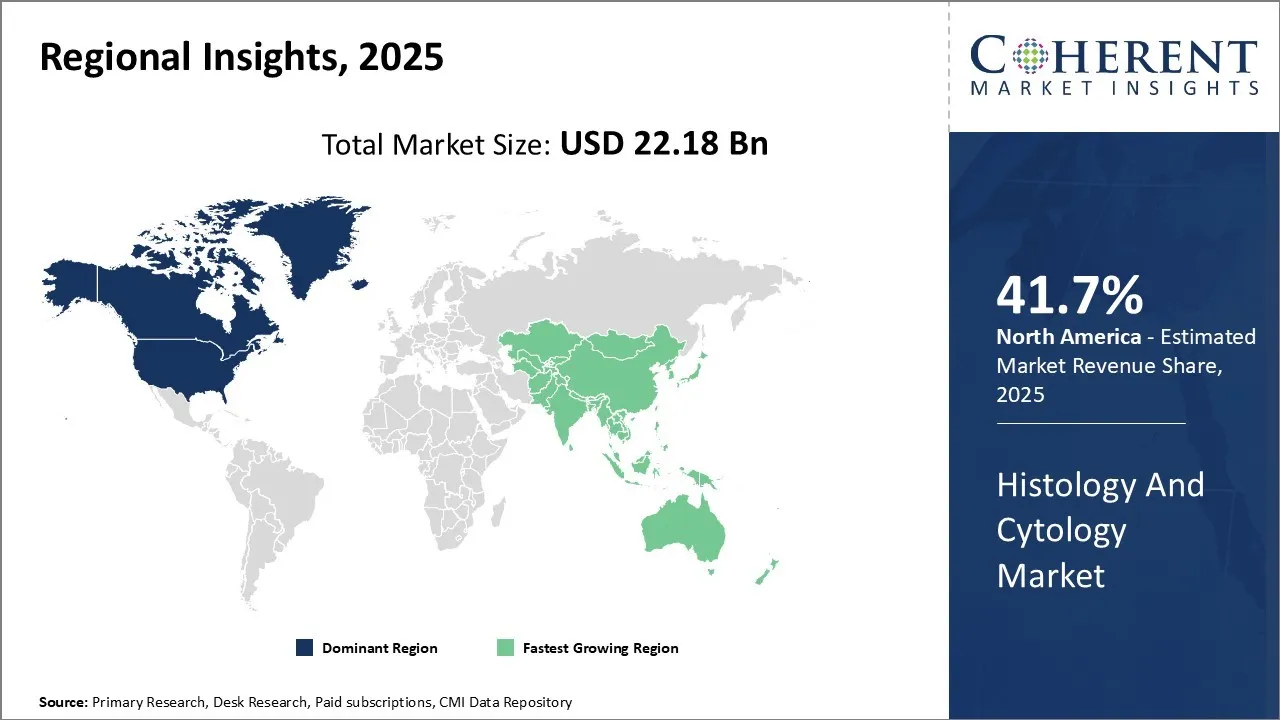
- On the basis of Region, North America dominates the global histology and cytology market, accounting for 41.7% of the market share in 2025. This growth is attributed to the presence of a well-established healthcare infrastructure, strong R&D investments, and widespread adoption of digital diagnostic systems across the U.S. and Canada.
Market Overview
Global histology and cytology market encompasses products and services used to examine tissues and fluid samples from the human body. This includes instruments, consumables and reagents used for specimen processing, slide preparation, microtome sectioning, staining, slide scanning and imaging. The global market also involves digital pathology solutions, workflow management platforms and other software programs that help pathologists analyse samples, diagnose diseases and keep records of patient health conditions. Global diagnoses of diseases are on the rise, mainly because of the increasing number of cancer and other chronic diseases worldwide. With a growing number of patients and difficult health problems to attend to, healthcare is increasingly emphasizing timely and correct diagnosis. This situation has resulted in greater use of cytology and histology tools which allow for accurate diagnosis of disease at the cellular stage.
Current Events and Its Impact
Current Events | Description and its impact |
Geopolitical Instability and Supply Chain Disruptions |
|
Demographic and Epidemiological Trends Affecting Diagnostic Demand |
|
Economic Factors and Healthcare Investment Trends |
|
Role of AI (Artificial Intelligence) in Histology and Cytology
AI algorithms excel at identifying subtle morphological patterns that can be easily missed by the human eye, reducing diagnostic errors. For example, in cytology, AI-driven platforms have demonstrated a significant reduction in false negatives in cervical cancer screening, improving early detection rates. In February 2024, Hologic, Inc. announced that its Genius™ Digital Diagnostics System, featuring the Genius™ Cervical AI algorithm, received clearance from the U.S. Food and Drug Administration (FDA). This marks it as the first and only FDA-approved digital cytology system that integrates deep-learning AI with advanced volumetric imaging technology to assist in detecting precancerous lesions and cervical cancer cells.
- Current Industry Events of 2026
- Market Size Estimation
- Regional Breakdown
- Competitive Landscape
- Customer Intelligence
- Segmental Analysis
- Pricing Analysis
- Key Market Drivers, Challenges & Future Trends
- Customized Insights Section
Reimbursement Scenario for Histology and Cytology in Cervical Cancer Screening
In December 2024, the Belgian National Institute for Health and Disability Insurance (INAMI-RIZIV) has updated the cervical cancer screening program with the following reimbursement guidelines:
- Ages 30 to 64:
The primary screening method will shift from cytological examination to HPV (Human Papillomavirus) testing.
- HPV tests, including mandatory detection of high-risk types 16 and 18, will be reimbursed every five calendar years.
- If the HPV test is positive, additional cytological examination will be performed as part of the triage process, which may include colposcopy depending on the results.
- Ages 25 to 29:
Cytological examination remains the recommended primary screening test and is reimbursed every three calendar years.
- HPV testing is not the primary method in this group due to the high prevalence of transient HPV infections, which could result in false positives, unnecessary follow-ups, and overtreatment.
This revised screening and reimbursement approach aims to optimize early detection while minimizing unnecessary interventions and costs.
Segmental Insights
Histology and Cytology Market Insights , By Type of Examination - Diagnostic Precision Drives Histology Segment Growth
In terms of type of examination, histology segment is estimated to contribute the highest market share of 56.5% in 2026, owing to its precise diagnostic ability. Histology allows pathologists to examine cell and tissue samples under a microscope to identify abnormalities, assess progression of diseases like cancer, and determine the accurate type and stage of many illnesses. This precise diagnostic information is invaluable to physicians for determining appropriate treatment plans and monitoring disease response over time. Histology enables visualization of cellular-level details that other testing methods cannot match. By staining and imaging tissue sections, pathologists can see the exact arrangement of cells and cellular structures. This permits diagnosis of diseases that may show similar clinical symptoms but require different treatments based on their histological presentation. Histology also supports the most accurate cancer subtyping needed for personalized treatment selection. For diseases with multiple potential types or stages, histology offers definitive diagnosis not available through other means.
Innovations such as label-free histology using Photon Absorption Remote Sensing Microscopy have enhanced diagnostic efficiency by providing high-resolution images without the need for traditional staining methods, preserving valuable tissue samples for further analysis. Additionally, the integration of AI-powered platforms like DCS PathIMS has streamlined breast cancer diagnostics by automating histological grading, thereby reducing human bias and workload. This is further propelling the histology and cytology market growth.
Histology and Cytology Market Insights, By Application - Breast and Cervical Cancer Applications Witness Increased Adoption Due to Screening Initiatives
In the application segment, the market is categorized into Breast Cancer, Cervical Cancer, Bladder Cancer, Lung Cancer, and Others. Breast and Cervical cancer diagnostics are witnessing increased adoption globally. This trend is attributed to growing cancer screening initiatives and early detection programs, which have heightened the demand for histology and cytology services in these areas. The implementation of organized screening programs and the development of advanced cervical cancer diagnostic tests have played a crucial role in facilitating early treatment planning.
For instance, Noul Co., Ltd. introduced its new AI-based cervical cell screening system, miLab™ CER, at the International Congress of Cytology (ICC) 2025 in Florence. This system improved cervical cancer diagnostic and was able to detect more than 90% of ASCUS or greater lesions while correctly reporting in only 4% of other scenarios. From staining the blood through imaging and computerized results, the entire process with the miLab™ CER is fully automatic and fast. This technology is being introduced into clinics to help find and treat cervical cancer early, mainly where medical resources are scarce.
Histology and Cytology Market Insights , By Product - Expanding Diagnostic Needs Boosts Instrument and Software Adoption
In terms of product, instruments and analysis software system segment is estimated to contribute the highest market share of 54.7% in 2026, owing to rapidly growing and diversifying diagnostic needs. Advanced digital microscopy systems, automated slide scanning, and sophisticated image analysis software are transforming pathology workflows. Whole slide imaging systems powered by machine learning are improving detection of incidental findings. Multispectral and fluorescence capabilities expand diagnostic applications to new areas. Growing demand for specialized stains, immunohistochemistry, in situ hybridization, and molecular tests drives needs for flexible, high-throughput instrumentation.
Software solutions help integrate diverse data types for correlative analysis and reporting. As pathologists take on more complex diagnostic and research duties, there is huge demand for sophisticated tools that enhance efficiency, accuracy, and data sharing capabilities. Advancing technologies also support new applications like liquid biopsy and companion diagnostics. Instrument vendors must continually release innovative products to address the rapidly changing diagnostic landscape. The integration of sophisticated imaging software is revolutionizing histology and cytology diagnostics. Thermo Fisher Scientific's Celleste™ 6 Image Analysis Software exemplifies this advancement by offering a comprehensive suite of tools for analysing complex biological images, which is further contributing to the histology and cytology market revenue.
Histology and Cytology Market Insights , By Test Type - Microscopy Test is Dominating the Overall Market
In terms of test type, microscopy tests segment is estimated to contribute the highest histology and cytology market share of 43.5% in 2026, owing to its widespread foundation applications and ability to support evolving diagnostic needs. Microscopy has long been the core technology enabling cytopathology and anatomic pathology. Pap smears, bronchial wash cytology, fine needle aspiration interpretation, and surgical pathology review all rely primarily on traditional and digital microscopy. Though newer molecular tests for mutations and gene expressions are increasingly important, microscopy remains essential for proper tissue selection, interpretation of molecular results, and correlation with clinical information. Microscopy also guides screening and triage decisions for when robust molecular testing may be applied. Advancing digital microscopy platforms compatible with artificial intelligence and image analysis can expand potential microscopy-based applications into new areas including liquid biopsies, intraoperative assessments, and automated screening, further accelerating the histology and cytology market demand.
In April 2025, Honeywell introduced Digital Holographic Microscopy, an AI-powered technology that quickly counts and classifies microscopic particles. This innovation can significantly reduce diagnosis time for infections in at-home peritoneal dialysis patients, who currently face 1–2 day delays waiting for lab results, potentially preventing condition worsening.
Histology and Cytology Market Insights, By End User - Hospitals and Clinics Lead Due to High Volume of In-Patient Diagnostic Procedures
The market comprises Hospitals and Clinics, Academic and Research Institutes, Clinical Diagnostics Centres, and Others where Hospitals and clinics are projected to be the leading end users in the histology and cytology market, driven by the increasing volume of in-patient diagnostic procedures. The adoption of advanced diagnostic technologies in clinical settings has further bolstered this segment's growth. The integration of digital pathology systems and AI-driven diagnostic tools in hospitals and clinics has improved diagnostic accuracy and efficiency, making them pivotal end users in the market. The establishment of advanced diagnostic laboratories is significantly bolstering histology and cytology services within hospitals and clinics.
A notable example is the inauguration of Metropolis Star Lab Kenya Limited's Regional Reference Laboratory in Nairobi. Spanning over 6,000 square feet, this state-of-the-art facility is equipped to process approximately 35,000 to 40,000 samples per month, encompassing specialties such as haematology, microbiology, molecular biology, special chemistry, immunology, histology, and cytology. This development underscores the growing emphasis on enhancing diagnostic capabilities in clinical settings, thereby improving patient outcomes through timely and accurate disease detection.
Regional Insights
North America Histology and Cytology Market Trends
North America continues to lead the global histology and cytology market, accounting for approximately 41.7% of the market share in 2026. This dominance is attributed to the region's advanced healthcare infrastructure, high healthcare expenditure, and the presence of leading medical device and pharmaceutical companies. The integration of artificial intelligence (AI) and digital pathology solutions is enhancing diagnostic accuracy and efficiency. A well-established healthcare infrastructure and research landscape has supported advanced diagnostics practices. Pathology laboratories in the region are equipped with state-of-the-art technologies for tissue sample analysis. Demand for digital and AI-enabled platforms is growing from hospitals and diagnostic chains to improve workflow and turnaround times. This has encouraged domestic manufacturers to focus on developing solutions catering to this need. North America also has a favorable regulatory environment that approves new technologies faster, allowing the region access to latest diagnostic tools in histology and cytology. Additionally, the adoption of automated and AI-driven diagnostic systems is accelerating, as evidenced by Wondfo Biotech’s new product launches, including the fully automatic chemiluminescence immunoassay analyzer FC-2100, showcased at the 76th Annual American Congress of Clinical Chemistry and Exposition of Clinical Laboratory Medicine in 2024. This is further adding to the histology and cytology market revenue.
Asia Pacific Histology and Cytology Market Trends
Asia Pacific region has emerged as the fastest growing histology and cytology market globally. Rapid improvements in healthcare access across developing nations like India and China have boosted demand for pathology testing. Favorable government initiatives to modernize diagnostic capabilities and expand insurance coverage drives the market growth. Increasing investments by international players to establish local manufacturing presence can make advanced solutions more affordable in the region. Sysmex Corporation released its Clinical Flow Cytometry System in Japan in May 2023 to enhance the efficiency of testing and diagnostic performance in clinical laboratory settings.
United States Histology and Cytology Market Trends
The United States histology and cytology market is witnessing significant advancements, particularly in digital pathology solutions. A notable development is OptraSCAN's launch of its OnDemand Digital Pathology subscription service, which offers whole slide digital scanners (Brightfield/Fluorescence) with capacities ranging from 15 to 480 slides. This service aims to make digital pathology more accessible and cost-effective for laboratories of varying sizes, enhancing diagnostic efficiency and accuracy. Such innovations reflect the broader trend in the U.S. towards integrating advanced technologies in histology and cytology practices. The adoption of digital and AI-driven diagnostic tools is transforming traditional workflows, enabling faster and more precise analyses. This shift is supported by a robust healthcare infrastructure and a regulatory environment that facilitates the approval and implementation of cutting-edge diagnostic solutions. As a result, the U.S. continues to lead in the global histology and cytology market, setting benchmarks for technological integration and diagnostic excellence.
India Histology and Cytology Market Trends
India's histology and cytology market is undergoing a transformative phase, propelled by technological advancements and a growing emphasis on early disease detection. This move underscores India's capability in providing advanced diagnostic services on a global scale, reflecting the country's growing expertise in histology and cytology diagnostics. Domestically, the integration of artificial intelligence (AI) in medical diagnostics is gaining momentum.
The AI in Medical Diagnostics Market in India is witnessing rapid growth, driven by an increasing demand for early and accurate disease detection, a rising burden of chronic illnesses, and a shortage of skilled healthcare professionals. With a growing reliance on AI-powered radiology, pathology, and predictive analytics, hospitals and diagnostic centers are integrating AI solutions to enhance efficiency and reduce turnaround times. In January 2026, Ampath, in collaboration with Parashar Pathology Clinic, inaugurated a state-of-the-art pathology laboratory in Meerut, India. Equipped with advanced technologies, the facility offers over 2,500 diagnostic tests, including cytology, histopathology, and molecular diagnostics, enhancing diagnostic capabilities in the region.
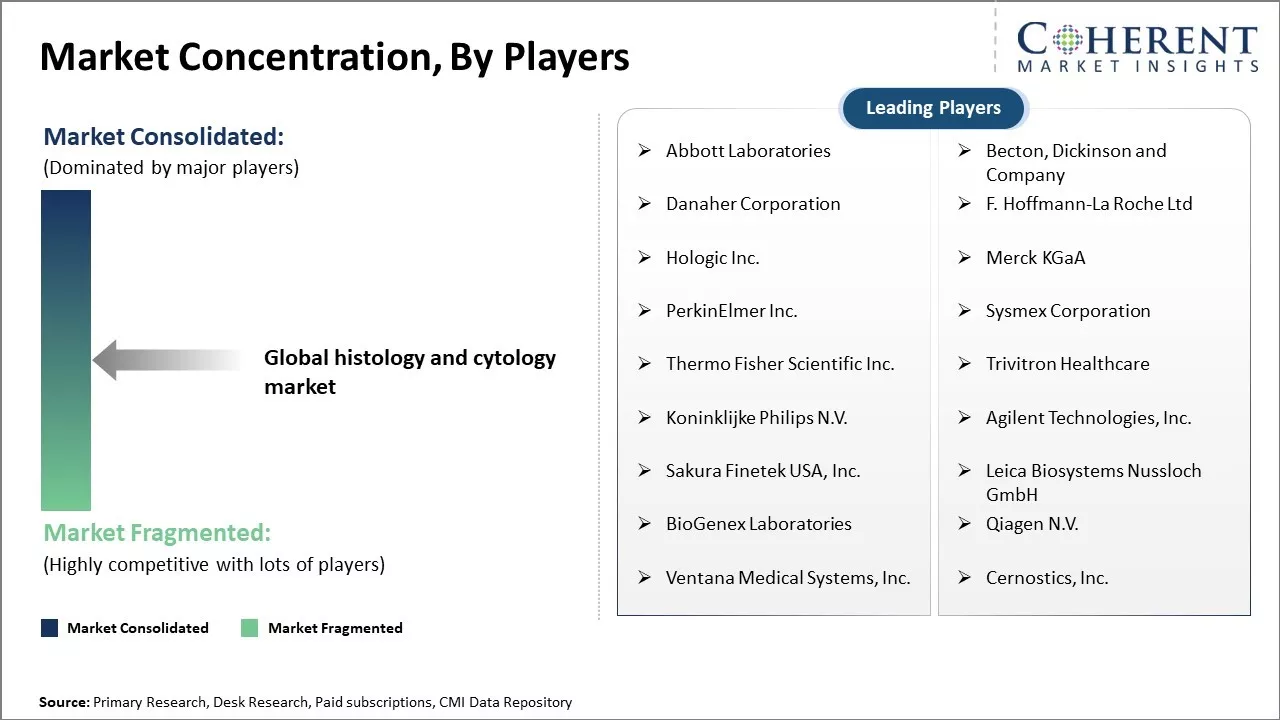
Market Concentration and Competitive Landscape
Histology And Cytology Industry News
- In May 2025, StatLab Medical Products enhanced its U.S. manufacturing capabilities to bolster the supply chain for domestic pathology laboratories. By bringing the production of injection-molded prefill containers in-house at its Arlington, Texas facility, StatLab aims to produce nearly 100 million units annually, including its StatClick™ formalin prefills.
- In April 2025, Vieworks, a South Korean medical imaging company, secured CE IVDR certification for its digital pathology slide scanner, the VISQUE DPS LH510, enabling its commercial distribution across the European Union. This scanner is designed to digitize both histology and cytology samples, converting physical glass slides into high-resolution digital images suitable for diagnostic interpretation and AI-based analysis.
- In January 2025, Dublin's Deciphex raised €31 million in series C funding to develop its AI-enabled diagnostics platforms, mitigating the shortage of pathologists worldwide and enhancing diagnostic efficiency.
- In May 2024, a leader in digital pathology services, HistoWiz, introduced GLP-compliant lab services, including routine histology and immunohistochemistry. This expansion builds on their expertise in pre-clinical research pathology, from tissue handling to slide digitization, and includes GLP pathology consultation.
- In February 2024, Hologic, Inc. announced that its Genius Digital Diagnostics System, featuring the Genius Cervical AI algorithm, received USFDA clearance. It is now the first and only FDA-cleared digital cytology system to integrate deep-learning AI with advanced volumetric imaging for detecting pre-cancerous lesions and cervical cancer cells.
- In January 2024, BD (Becton, Dickinson and Company) and Techcyte have announced a strategic partnership to introduce an AI-based algorithm that helps cytologists and pathologists efficiently identify cervical cancer and precancer using whole-slide imaging.
Market Report Scope
Histology And Cytology Market Report Coverage
| Report Coverage | Details | ||
|---|---|---|---|
| Base Year: | 2025 | Market Size in 2026: | USD 25.24 Bn |
| Historical Data for: | 2020 To 2024 | Forecast Period: | 2026 To 2033 |
| Forecast Period 2026 to 2033 CAGR: | 13.8% | 2033 Value Projection: | USD 62.39 Bn |
| Geographies covered: |
| ||
| Segments covered: |
| ||
| Companies covered: | Abbott Laboratories, Becton, Dickinson and Company, Danaher Corporation, F. Hoffmann-La Roche Ltd, Hologic Inc., Merck KGaA, PerkinElmer Inc., Sysmex Corporation, Thermo Fisher Scientific Inc., Trivitron Healthcare, Koninklijke Philips N.V., Agilent Technologies, Inc., Sakura Finetek USA, Inc., Leica Biosystems Nussloch GmbH, BioGenex Laboratories, Qiagen N.V., Ventana Medical Systems, Inc., Cernostics, Inc. | ||
| Growth Drivers: |
| ||
| Restraints & Challenges: |
| ||
Histology and Cytology Market Drivers
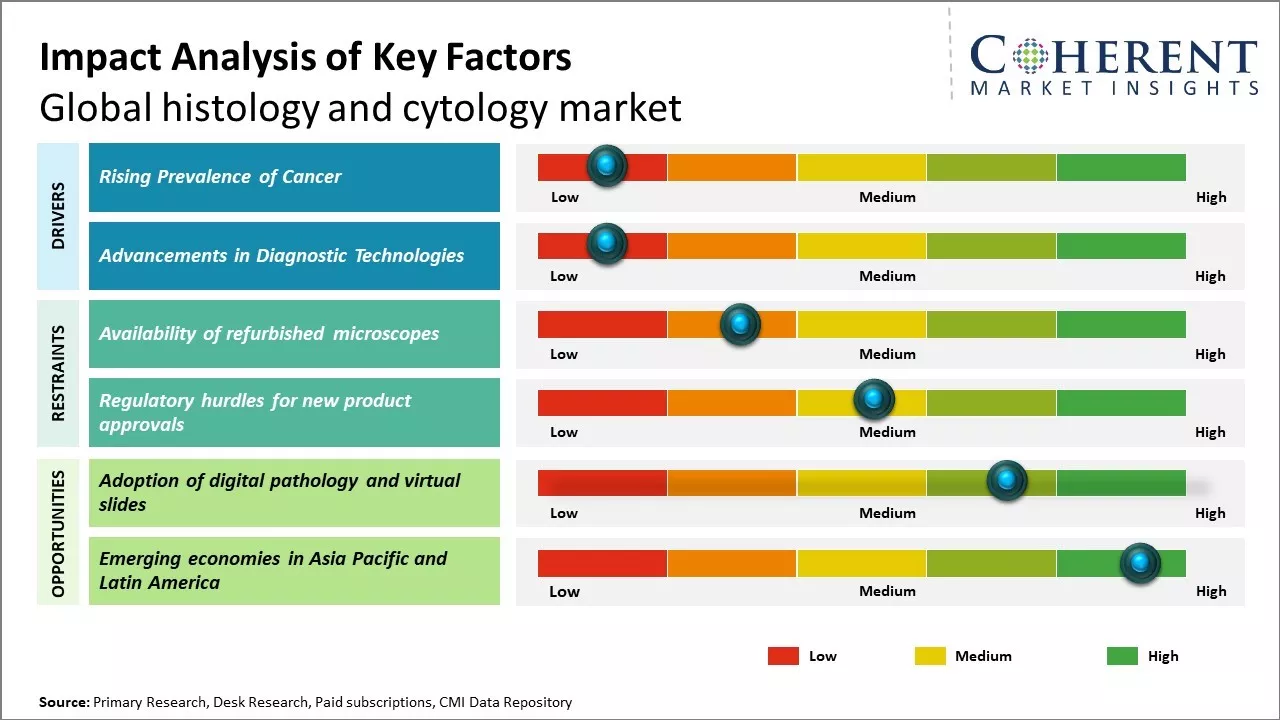
Rising Prevalence of Cancer
Global histology and cytology market growth is driven by rising prevalence of various types of cancers worldwide. Cancer has become one of the leading causes of mortality with an estimated 9.6 million deaths in 2018. The occurrence of cancer is increasing at an alarming rate due to factors such as growing geriatric population, increasing adoption of unhealthy lifestyle habits such as smoking, drinking, lack of physical activity, changing dietary patterns, rising environmental pollution levels and growing exposure to carcinogenic substances. As per the National Cancer Institute, over 1.6 million new cancer cases were diagnosed in the U.S. in 2020. Histopathological examination and cytological analysis play a vital role in cancer diagnosis and determining the appropriate line of treatment. These help in detecting the presence, type, stage and grade of cancer, which has a significant impact on selecting the right therapeutic approaches and monitoring treatment response over time. With rising cancer burden, there has been huge demand for histology and cytology procedures from hospitals, diagnostic laboratories and research institutes.
Advancements in Diagnostic Technologies
Global histology and cytology market growth is driven by ongoing technological advancements in the field of in-vitro diagnostic tools and techniques. Continuous efforts are being made to develop innovative and automated devices as well as analysis platforms that can help improve the accuracy, speed, productivity and reproducibility of histopathology and cytology tests. For example, development of digital pathology solutions that utilize advanced whole slide imaging systems, artificial intelligence integrated machine learning algorithms and integrated laboratory information systems. Adoption of such advanced digital and automated solutions enables pathologists to perform rapid microscopic analysis of biopsy and surgical samples from remote locations. Other new technologies being used include microfluidic devices, lab-on-a-chip systems, nano-sensors and molecular diagnostic assays which provide enhanced visualization of cellular components at microscopic level. Automated staining instruments ensure consistent and standardized staining of tissue slides. Such ongoing innovations can address challenges such as long turnaround times, lack of reproducibility, technician dependency and scope for human error associated with conventional microscopic analysis methods. These are also supporting higher throughput of tests and enabling primary diagnosis to be performed from limited or tiny cell and tissue samples. The technological transformations boosts application of histopathological and cytological procedures in clinical settings.
Analyst Opinion (Expert Opinion)
- The histology and cytology market is undergoing a transformative shift, driven less by incremental demand and more by the urgent need for precision diagnostics and workflow efficiency in pathology labs globally. The adoption of digital pathology is no longer optional—it’s imperative. Data from the College of American Pathologists reveals that over 60% of pathologists now prioritize digital tools to enhance diagnostic accuracy, underscoring a tectonic shift toward digital histology. This transition is catalyzing the demand for advanced imaging systems and AI-driven diagnostic algorithms, which can interpret cellular morphology with unprecedented speed and consistency.
- Furthermore, the integration of AI in cytology, especially for cervical cancer screening, is demonstrating measurable improvements. For instance, a landmark study published in JAMA Oncology showed that AI-assisted cytology platforms reduced false negatives by 25% compared to traditional manual screening. This not only elevates patient outcomes but also streamlines resource allocation in overstretched clinical settings.
- What is equally compelling—and often overlooked—is how emerging economies are rapidly adopting advanced histology and cytology solutions to tackle their high burden of cancer and infectious diseases. China, for example, is aggressively deploying automated slide scanners and molecular cytology assays in urban hospitals, driven by government-led precision medicine initiatives. This reflects a broader trend where innovation is no longer confined to Western markets but is proliferating globally, creating a diverse and competitive landscape.
Speak to the analyst
Want personalized insights?
Take the findings above to one of our principal consultants, or have the report rebuilt around the segments, geographies and competitors you actually track.
Market Segmentation
- Type of Examination Insights (Revenue, USD Bn, 2021 - 2033)
- Histology
- Microscopy
- Immunohistochemistry
- Molecular Pathology
- Cryostat & Microtomy
- Cytology
- Microscopy
- Immunohistochemistry
- Molecular Pathology
- Cryostat & Microtomy
- By Application Insights (Revenue, USD Bn, 2021 - 2033)
- Breast Cancer
- Cervical Cancer
- Bladder Cancer
- Lung Cancer
- Other Cancers
- Product Insights (Revenue, USD Bn, 2021 - 2033)
- Instruments and Analysis Software System
- Consumable and Reagents
- Test Type Insights (Revenue, USD Bn, 2021 - 2033)
- Microscopy Tests
- Cytogenic Tests
- Polymerase Chain Reaction
- Molecular Genetics Tests
- Flow Cytomtery
- End User Insights (Revenue, USD Bn, 2021 - 2033)
- Hospitals and Clinics
- Academic and Research Institutes
- Clinical Diagnostics Centre
- Others
- Regional Insights (Revenue, USD Bn, 2021 - 2033)
- North America
- U.S.
- Canada
- Latin America
- Brazil
- Argentina
- Mexico
- Rest of Latin America
- Europe
- Germany
- U.K.
- Spain
- France
- Italy
- Russia
- Rest of Europe
- Asia Pacific
- China
- India
- Japan
- Australia
- South Korea
- ASEAN
- Rest of Asia Pacific
- Middle East
- GCC Countries
- Israel
- Rest of Middle East
- Africa
- South Africa
- North Africa
- Central Africa
- Key Players Insights
- Abbott Laboratories
- Becton, Dickinson and Company
- Danaher Corporation
- F. Hoffmann-La Roche Ltd
- Hologic Inc.
- Merck KGaA
- PerkinElmer Inc.
- Sysmex Corporation
- Thermo Fisher Scientific Inc.
- Trivitron Healthcare
- Koninklijke Philips N.V.
- Agilent Technologies, Inc.
- Sakura Finetek USA, Inc.
- Leica Biosystems Nussloch GmbH
- BioGenex Laboratories
- Qiagen N.V.
- Ventana Medical Systems, Inc.
- Cernostics, Inc.
Sources
Primary Research Interviews
- Pathologists and cytotechnologists in academic medical centers and private labs
- Oncologists and diagnostic researchers involved in tissue and cell-based screening
- Lab automation engineers and procurement heads at diagnostic equipment firms
- Hospital-based lab directors and cytogeneticists
Databases
- PubMed Central – Cytology and Histopathology Studies
- Scopus – Medical Diagnostics and Lab Techniques
- ClinicalTrials.gov – Cancer Cytology and Biopsy Trials
- JSTOR – Biomedical Imaging and Histotechnology
Magazines & News Articles
- LabPulse News
- MedTech Dive – Diagnostics Section
- HealthCare Asia Daily
- Genetic Engineering & Biotechnology News – Pathology Innovations
- Korea Biomedical Review – Digital Pathology & Cytology Updates
Journals
- Journal of Histochemistry & Cytochemistry
- Diagnostic Cytopathology
- Journal of Clinical Pathology
- International Journal of Surgical Pathology
- Archives of Pathology & Laboratory Medicine
Newspapers & Reports
- The Economic Times Healthworld (India)
- The Wall Street Journal – Health Tech
- The Korea Herald – Healthcare Developments
- The Times of India – Health & Diagnostics Section
- PR Newswire – MedTech Announcements
Associations
- American Society for Clinical Pathology (ASCP)
- International Academy of Cytology (IAC)
- College of American Pathologists (CAP)
- Indian Association of Pathologists and Microbiologists (IAPM)
Public Domain Sources
- U.S. Food and Drug Administration (FDA) – Digital Cytology Approvals
Ministry of Health & Family Welfare, Government of India
World Health Organization (WHO) – Cancer Screening Guidelines
Centers for Disease Control and Prevention (CDC) – Laboratory Best Practices
Proprietary Elements
- CMI Data Analytics Tool, Proprietary CMI Repository of Histology and Cytology Data for last 8 years
Get access to 250+ pages report
Every segment, forecast, competitor profile and data table behind the analysis above — available for instant download.
- ESOMAR Member
- ISO 9001:2015 Certified
- D-U-N-S Registered
- GDPR & CCPA Compliant
Missing comfort of reading report in your local language? Find your preferred language:
Transform your Strategy with Exclusive Trending Reports
Frequently Asked Questions
The Histology And Cytology Market is estimated to be valued at USD 25.24 Bn in 2026, and is expected to reach USD 62.39 Bn by 2033.
The CAGR of the Histology And Cytology Market is projected to be 13.8% from 2026 to 2033.
Rising prevalence of cancer and advancements in diagnostic technologies are the major factors driving the growth of global histology and cytology market.
Availability of refurbished microscopes and regulatory hurdles for new product approvals are the major factors hampering the growth of global histology and cytology market.
In terms of type of examination, histology segment is estimated to dominate the market in 2026.
Abbott Laboratories, Becton, Dickinson and Company, Danaher Corporation, F. Hoffmann-La Roche Ltd, Hologic Inc., Merck KGaA, PerkinElmer Inc., Sysmex Corporation, Thermo Fisher Scientific Inc., Trivitron Healthcare, Koninklijke Philips N.V., Agilent Technologies, Inc., Sakura Finetek USA, Inc., Leica Biosystems Nussloch GmbH, BioGenex Laboratories, Qiagen N.V., Ventana Medical Systems, Inc., Cernostics, Inc. are the major players.
North America is expected to lead the global histology and cytology market share.