

Glycobiology Market Size and Trends - 2026 to 2033
The Glycobiology Market is estimated to be valued at USD 2.2 Bn in 2026 and is expected to reach USD 7.48 Bn by 2033, growing at a compound annual growth The rate (CAGR) of 19.1% from 2026 to 2033.
Key Takeaways
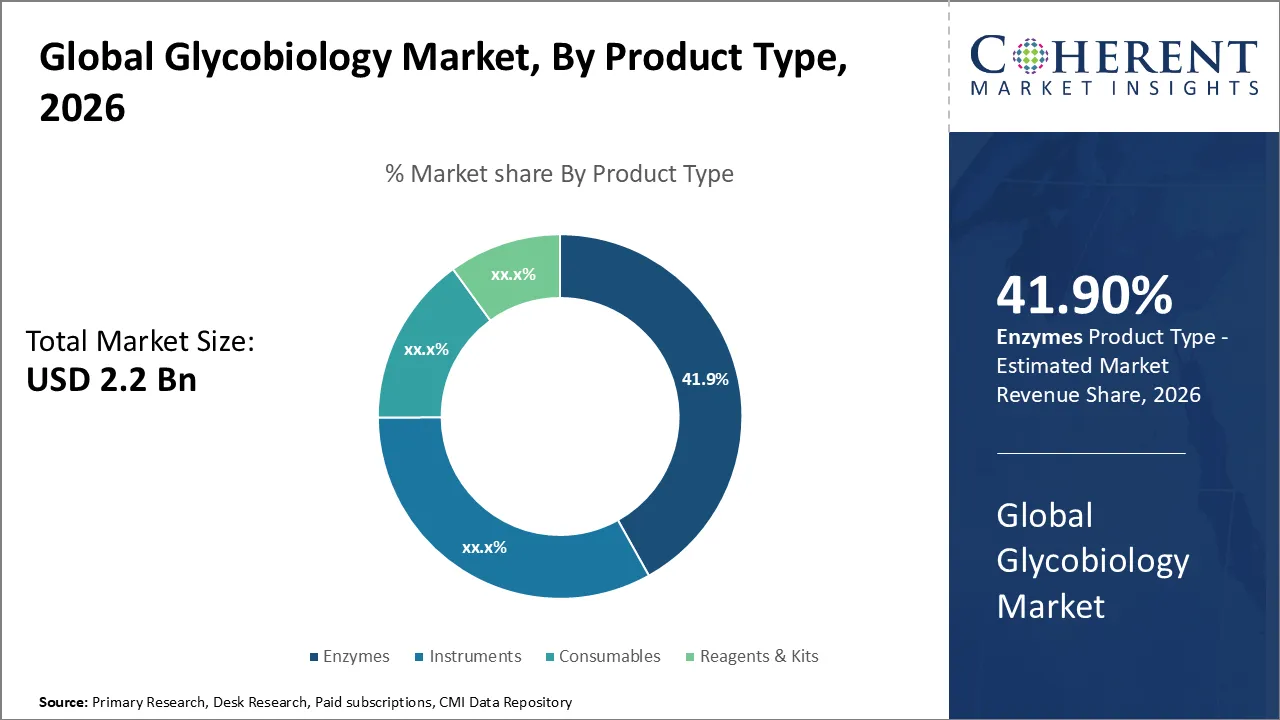
- Based on Product Type, the Enzymes segment is expected to lead the market with 41.90% share in 2026, due to their core role in glycan research and analysis.
- Based on Application, the Drug Discovery and Development segment is expected to hold 52.10% share of the market in 2026 reflecting significant R&D investment and therapeutic importance.
- Based on End User, the Biopharmaceutical Companies segment is expected to hold 49.50% share of the market in 2026 driven by investments in biologics and glycan‑targeted therapeutics.
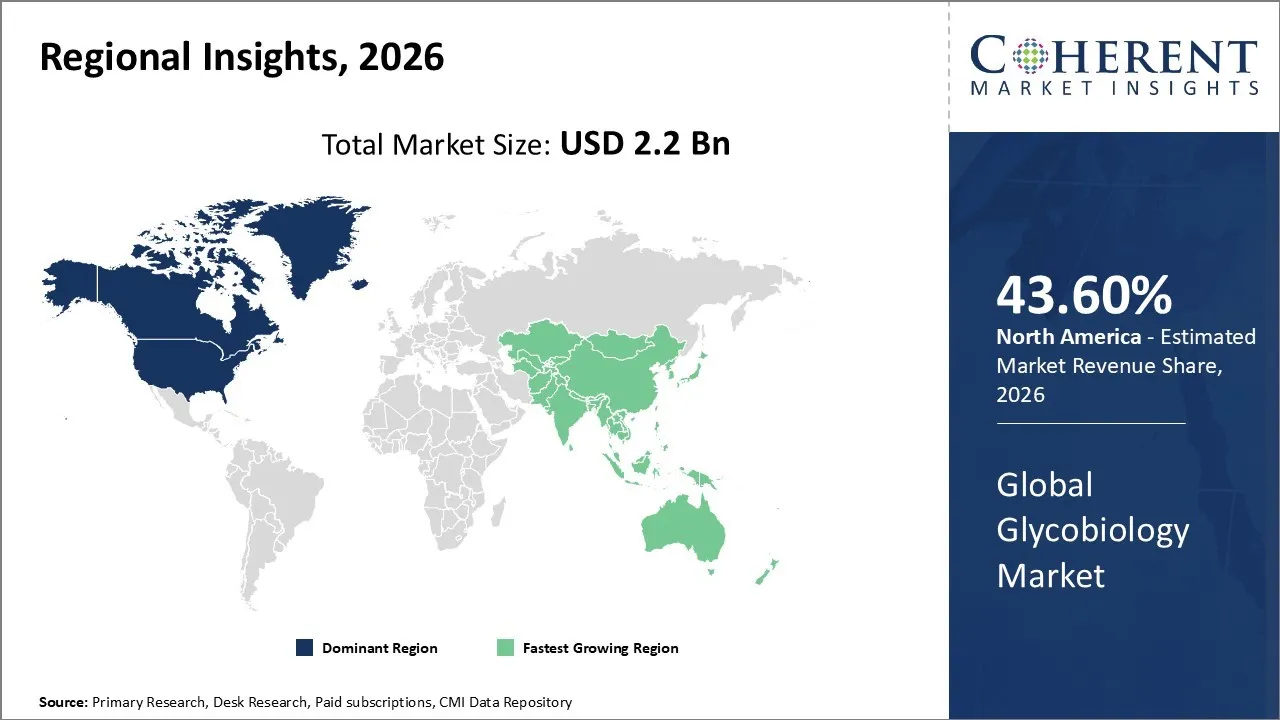
- Based on Region, North America is set to lead the market with 43.60% share in 2026. While, Asia Pacific is anticipated to be the fastest growing region.
Market Overview
The glycobiology market is advancing significantly with the rising applications in drug discovery, biopharmaceutical research, and chronic disease diagnostics. Moreover, expanding demand for personalized medicine and the tightening technical standards for glycan characterization, designed to ensure the efficacy of therapeutic antibodies and vaccines, are expected to drive market growth over the forecast period.
The specialized enzymes, reagents, and kits are essential analytical tools. They include recombinant glycosidases, glycosyltransferases, and other specialized techniques and utilize methods like high-resolution mass spectrometry and automated glycan synthesis to serve the pharmaceutical biotechnology and academic research institutes. These products are used for their high specificity and structural mapping capabilities. This helps in the effective replacement of traditional, less precise methods with advanced, high-throughput genomic solutions in clinical and industrial environments.
The glycobiology industry is entering a new era driven by advancing production factors, the adoption of AI driven informatics and integrated multi-omic systems, along with high demand for targeted solutions in sectors such as oncology, immunology, and infectious disease research. These developments have improved the capabilities of glycan profiling and enhanced their structural accuracy, reproducibility, and discovery efficiency. This marks a transformative era in the market as it transitions from a niche academic discipline to a cornerstone of modern bioprocessing and molecular diagnostics.
Current Events and their Impacts on the Glycobiology Market
Current Event | Description and the Impact |
Advances in Glycobiology Research and Therapeutics |
|
Regional Regulatory Developments in Key Markets |
|
Technological Integration and Platform Innovations
|
|
Segmental Insights
- Current Industry Events of 2026
- Market Size Estimation
- Regional Breakdown
- Competitive Landscape
- Customer Intelligence
- Segmental Analysis
- Pricing Analysis
- Key Market Drivers, Challenges & Future Trends
- Customized Insights Section
Glycobiology Market Insights, By Product Type – Enzymes Leads Due to their Core Role in Glycan Research and Analysis
In terms of product type, the enzymes segment contributes the highest share of 41.90% in 2026 of the glycobiology market. The growth is due to its fundamental role in the structural and functional analysis of complex carbohydrates. These biological catalysts, like glycosidases and glycosyltransferases, are essential for the accurate cutting and building of glycan chains during research and diagnostic activities. The growth is also attributable to the greater availability of high-quality recombinant enzymes, which offer better specificity and scalability for industrial use. As researchers focus more on identifying glycan-based biomarkers for long-term diseases, the repeated purchase of these key consumables ensures a steady revenue stream. As a result, the enzyme segment remains a primary focus for manufacturers who are aiming to improve efficiency in glycomic workflows.
Glycobiology Market Insights, By Application – Drug Discovery and Development Leads Due to Significant R&D
In terms of application, the drug discovery and development segment contributes the highest share of 52.10% in the glycobiology market in 2026 as the pharmaceutical industry places more emphasis on the development of complex biologics and biosimilars. Glycobiology plays a major role in this process. The glycosylation patterns of therapeutic proteins directly influence their safety, stability, and biological activity in the human body. The progressions in glycol engineering allow firms to optimize these sugar structures to improve the pharmacokinetics of new drugs, particularly in the oncology and immunology sectors. The rising investment in personalized medicine is also propelling the demand for glycan profiling in order to identify novel therapeutic targets. This extensive integration into the research pipeline solidifies drug discovery as the most significant revenue-generating application for glycomic technologies.
Glycobiology Market Insights, By End User – Biopharmaceutical Companies Leads Due by Investments in Biologics and Glycan ‑ Targeted Therapeutics
In terms of end user, the biopharmaceutical companies contributes the highest share of 49.50% in the glycobiology market in 2026. The biopharmaceutical companies scale up their efforts to develop targeted therapies and next-generation vaccines. These organizations are dependent on glycobiology tools to cater to rigorous regulatory requirements regarding the characterization of glycoprotein-based medicines. The segment’s growth is driven by the increased adoption of automated high-throughput analytical platforms that streamline the monitoring of glycan quality during large-scale manufacturing.
Furthermore, strategic collaboration between biopharma giants and academic institutions is accelerating the transition of glycomic research from the laboratory to clinical production. The biopharmaceutical companies will remain the primary drivers of market demand throughout the forecast period as they continue to invest in specialized technologies for drug delivery testing.
Regional Insights
North America Glycobiology Market Analysis & Trends
North America has remained the dominant region with 43.60% in 2026 of the global glycobiology market over the past decade. This growth is due to a strong research capabilities and large public funding from agencies like the National Institutes of Health (NIH) and the National Science Foundation (NSF). They actively support glycoscience through specialized centers like the National Center for Functional Glycomics. The US serves as the region's primary engine. This is due to a high concentration of pharmaceutical giants, academic-industry collaborations, and high research output in biomarkers and diagnostics. The advanced healthcare infrastructure and early adoption of cutting-edge technologies like high-resolution mass spectrometry and automated chromatography systems also fuel this leadership.
The market's growth is driven by the increasing prevalence of chronic diseases, including over 237,000 annual breast cancer diagnoses in the U.S. alone, which necessitates sophisticated glycan-based diagnostic tools. The industry is driven by leading companies including Thermo Fisher Scientific, Agilent Technologies, Waters Corporation, and Merck KGaA. These firms often work together through engage strategic partnerships to support innovation.
Asia Pacific Glycobiology Market Analysis & Trends
The Asia-Pacific glycobiology market is currently the fastest growing regional segment in the world. This explosive growth is primarily fueled by massive government investments in biotechnology, particularly in China, Japan, and South Korea, as these nations race to lead the global biopharmaceutical sector. The region’s expansion is driven by a unique combination of rising healthcare expenditures, a burgeoning aging population, and a strategic shift toward precision medicine and glycan-based drug development. China stands as the regional leader, using its 14th Five-Year Plan to focus on advances in oncology and immunology.
Japan remains a pioneer in glycobiology research due to its long history of academic work to the field. The region has become a global hub for biopharmaceutical outsourcing as well as clinical trials. The companies like WuXi Biologics and Samsung Biologics are incorporating cutting edge glycoanalytics into their manufacturing processes. In addition, the presence of major analytical instrument businesses like Shimadzu Corporation and Agilent Technologies ensures that researchers have local access to high-resolution mass spectrometry and chromatography tools essential for structural glycan mapping.
Glycobiology Market Outlook Country-Wise
The US Glycobiology Market Trends
The United States serves as the primary engine for the global glycobiology market. The growth is owing to a sophisticated R&D ecosystem where pharmaceutical firms and elite academic institutions collaborate to decode the glycome. The U.S. healthcare sector is dependent on glycan analysis to advance precision medicine. This is particularly evident in the treatment of chronic conditions like cancer and diabetes, where glycan-based biomarkers are essential for early detection and the development of targeted treatments. The industry is also witnessing fast growth due to the biopharmaceutical industry, particularly in the production of monoclonal antibodies and vaccines. The recent major research in the glycosylation of the SARS-CoV-2 spike protein highlighted the key role glycobiology plays in national biosecurity and immunology. The firms like Thermo Fisher Scientific and Agilent Technologies are introducing the essential mass spectrometry and chromatography instruments required for precise structural mapping.
China Glycobiology Market Trends
China is rapidly emerging as a global leader in the glycobiology market. The growth is owing to the government's 14th Five-Year Plan, which lists biotechnology and the bioeconomy as key priorities for national development. The country is transitioning from a manufacturing hub to an innovation focused player in glycan-based drug discovery and personalized medicine. The market is also experiencing growth due to a large aging population and a growing rate of chronic diseases. This creates a strong demand for advanced diagnostics and targeted therapies that use glycomics to improve clinical outcomes.
Market Report Scope
Glycobiology Market Report Coverage
| Report Coverage | Details | ||
|---|---|---|---|
| Base Year: | 2025 | Market Size in 2026: | USD 2.2 Bn |
| Historical Data for: | 2020 To 2024 | Forecast Period: | 2026 To 2033 |
| Forecast Period 2026 to 2033 CAGR: | 19.1% | 2033 Value Projection: | USD 7.48 Bn |
| Geographies covered: |
| ||
| Segments covered: |
| ||
| Companies covered: | Tracxn Technologies Limited, Agilent Tecnologies, Inc., Blirt.eu, Takara Bio Inc., Bio-Techne, Bruker Corporation, Thermo Fisher Scientific Inc., Shimadzu Corporation, New England Biolabs., Waters.co., Merck KGaA, Palleon Pharmaceuticals, Asparia Glycomics, RayBiotech Life,Inc., Z Biotech,LLC., Chemily Glycoscience, Lectenz Bio, 2BScientific , and Glycodiag. | ||
| Growth Drivers: |
| ||
| Restraints & Challenges: |
| ||
Glycobiology Market Drivers
Increasing prevalence of cancer
Glycobiology systems and tools, including enzymes, instruments, reagents, and kits, can be utilized to discover drug targets, identify biomarkers, and design immunotherapies for cancer. Consequently, the rising prevalence of cancer is anticipated to drive market growth during the forecast period. For example, data from the National Cancer Institute projects that by 2030, the number of cancer survivors is expected to reach 22.2 million. It is also predicted that by 2040, there will be 16.4 million cancer-related deaths and 29.5 million new cancer cases diagnosed each year.
Increasing launches by biopharmaceutical companies
The significance of glycan changes in healthy and pathological states is being investigated by scientists, who are also looking at tumor growth, viral capture, and medication discovery. Thus the increasing use of glycan instruments, reagents, and kits such as immunofluorescence kit for detection of glycan expression in tissue is expected to drive the market growth over the forecast period.
For instance, in July 2022, Vector Laboratories, a company providing life science products, announced the launch of the product Glysite Scout Glycan Screening Kit. These immunofluorescence (IF) kits are fully integrated for detection of glycan expression in tissue sections and support profiling and characterization of complex glycans in biological systems. Glysite Scout Glycan Screening Kit enables researchers to understand the importance of glycomics in samples for post-translational protein modifications and association with disease biomarkers.
Analyst Opinion (Expert Opinion)
The Glycobiology Market is expanding steadily, supported by measurable growth in life sciences research, biologics development, and precision diagnostics. Increasing adoption of glycan analysis in monoclonal antibody characterization and cell-based therapies is strengthening commercial demand. Enzymes account for approximately 40–55% of product utilization, reflecting their essential role in glycan modification and structural analysis, while instruments and analytical kits are witnessing rising procurement across academic and biopharmaceutical laboratories.
Application-wise, drug discovery and diagnostics represent major revenue-contributing segments, with glycan biomarkers gaining importance in oncology and immunology research. North America contributes the largest share of global activity, supported by strong R&D expenditure and advanced biotechnology infrastructure, while Europe maintains stable institutional funding. Asia-Pacific is recording accelerated laboratory expansion and increasing installation of high-throughput glycomics platforms.
Technological integration is a key differentiator. High-resolution mass spectrometry and advanced chromatography platforms have improved analytical throughput by over 40% in several research settings. Additionally, AI-enabled glycan interpretation tools have enhanced data precision by nearly 30–40%. However, nearly 40% of laboratories report reproducibility challenges due to glycan structural complexity and limited methodological standardization.
Overall, sustained research intensity, therapeutic pipeline expansion, and analytical innovation are positioning the Glycobiology Market for structurally stable, data-driven growth.
Speak to the analyst
Want personalized insights?
Take the findings above to one of our principal consultants, or have the report rebuilt around the segments, geographies and competitors you actually track.
Glycobiology Industry News
- In November 2025, Nagase Viita Co., Ltd., a company with over 140 years of expertise in glycoscience from Japan, partnered with Okayama University to unveil the Laboratory of Glycobiology and Phytochemistry, a new research program.
- In January 2025, Baptist Health and FIU launched a new initiative. A 100,000-square-foot medical center will embody the vision and objectives of this transformative partnership. The center will focus on research in drug discovery, nanotherapeutics, immunology, neurological disorders, and glycobiology.
- In August 2024, UGA has been awarded USD 18 million over six years from the National Science Foundation’s BioFoundries program to establish the BioFoundry: Glycoscience Resources, Education, And Training.
- In September 2021, Vector Laboratories has announced that it has completed a USD 124 million cash buyout with the help of private equity firm Thompson Street Capital Partners. This will help the company grow its protein detection business. With this new funding, Vector Laboratories can go ahead with an acquisition plan and speed up the release of new labeling and detection technologies for glycobiology.
- In June 2020, Biotechnology firm Lycia Therapeutics, Inc. has emerged from stealth mode following a USD 50 million commitment from its founding investor, Versant Ventures. This development is backed by foundational expertise in glycobiology and protein degradation from Carolyn Bertozzi.
Market Segmentation
- Product Type Insights (Revenue, USD Bn, 2026 - 2033)
- Instruments
- Enzymes
- Glycosidase
- Heparinase
- Chitinase
- Acetylgalactosaminidase
- PNGase
- Chitobiase
- Others (Hyaluronidase , Hexosaminidase)
- GlcNAc Transferases
- Acetylglucosaminyltransferase
- Exostosin
- Others (GD2 Synthase,B3GANLT)
- GalNAc Transferases
- Polypeptide GalNAc Transferase
- GANLTL
- Others
- Fucosyl Transferases
- Galactosyl Transferases
- Carbohydrate Kinases
- Others
- Glycosidase
- Consumables
- Reagents & Kits
- Application Insights (Revenue, USD Bn, 2026 - 2033)
- Diagnostic Application
- Industrial Application
- Therapeutic Application
- Drug Discovery and Development
- Others
- End User Insights (Revenue, USD Bn, 2026 - 2033)
- Research Laboratories
- Hospitals
- Diagnostic Centres
- Biopharmaceutical Companies
- Others
- Food
- Regional Insights (Revenue, USD Bn, 2026 - 2033)
- North America
- U.S.
- Canada
- Latin America
- Brazil
- Argentina
- Mexico
- Rest of Latin America
- Europe
- Germany
- U.K.
- France
- Italy
- Russia
- Rest of Europe
- Asia Pacific
- China
- India
- Japan
- Australia
- South Korea
- ASEAN
- Rest of Asia Pacific
- Middle East
- GCC
- Israel
- Rest of Middle East
- Africa
- North Africa
- Central Africa
- South Africa
- North America
- Key Players Insights
- Tracxn Technologies Limited
- Agilent Tecnologies, Inc
- Blirt.eu
- Takara Bio Inc.
- Bio-Techne
- Bruker Corporation
- Thermo Fisher Scientific Inc
- Shimadzu Corporation
- New England Biolabs.
- Waters.co.
- Merck KGaA
- Palleon Pharmaceuticals
- Asparia Glycomics
- RayBiotech Life, Inc
- Z Biotech, LLC
- Chemily Glycoscience
- Lectenz Bio,
- 2BScientific
- Glycodiag
Sources
Primary Research Interviews
- Glycobiology Researchers & Academicians
- Glycomics & Glycoproteomics Technology Providers
- Biopharmaceutical & Biologics Manufacturers
- Contract Research Organizations (CROs) in Glycan Analysis
- Diagnostic Kit & Reagent Manufacturers
- Biotechnology Company Executives & R&D Heads
- Clinical Research Scientists & Immunology Experts
- Others
Databases
- Bloomberg Terminal
- Thomson Reuters Eikon
- ClinicalTrials.gov
- PubMed / MEDLINE
- Others
Magazines
- Genetic Engineering & Biotechnology News (GEN)
- BioPharma Dive
- Pharmaceutical Technology Magazine
- Drug Discovery & Development Magazine
- The Scientist Magazine
- Others
Journals
- Glycobiology
- Journal of Biological Chemistry
- Nature Reviews Molecular Cell Biology
- Trends in Glycoscience and Glycotechnology
- Journal of Proteome Research
- mAbs (Monoclonal Antibodies Journal)
- Others
Newspapers
- Financial Times
- The Wall Street Journal
- Reuters
- Bloomberg
- Business Standard
- Others
Associations
- Society for Glycobiology
- Consortium for Functional Glycomics (CFG)
- American Society for Biochemistry and Molecular Biology (ASBMB)
- Federation of European Biochemical Societies (FEBS)
- Biotechnology Innovation Organization (BIO)
- Others
Public Domain Sources
- U.S. Food and Drug Administration (FDA)
- National Institutes of Health (NIH)
- World Health Organization (WHO)
- European Medicines Agency (EMA)
- National Center for Biotechnology Information (NCBI)
- OECD Biotechnology Statistics
- Others
Proprietary Elements
- CMI Data Analytics Tool
- Proprietary CMI Existing Repository of Information for the Last 8 Years
- CMI Primary Interview Database
- CMI Forecasting & Modeling Framework
Definition: The glycobiology market includes global biotechnology and life science sectors that study glycans. These are sugar chains found on proteins and lipids, which play important roles. This market involves the production and distribution of cutting-edge testing tools like mass spectrometers, chromatography systems, and specialized kits used to analyze these sugar chains. The key products include enzymes like glycosidases and various reagents, which allow researchers to modify and have a look at glycan interactions in biological systems. The market growth is driven by the rising importance of glycomics in drug discovery, particularly in the development of biosimilars and therapeutic antibodies, where glycosylation affects medicine efficacy. The sector plays a critical role in clinical diagnostics by helping scientists identify specific glycan biomarkers associated with cancer and autoimmune disorders. The glycobiology market provides the foundational technology necessary for advancements in personalized medicine and modern vaccine engineering.
Get access to 250+ pages report
Every segment, forecast, competitor profile and data table behind the analysis above — available for instant download.
- ESOMAR Member
- ISO 9001:2015 Certified
- D-U-N-S Registered
- GDPR & CCPA Compliant
Missing comfort of reading report in your local language? Find your preferred language:
Transform your Strategy with Exclusive Trending Reports
Frequently Asked Questions
The Glycobiology Market is estimated to be valued at USD 2.2 Bn in 2026, and is expected to reach USD 7.48 Bn by 2033.
The CAGR of the Glycobiology Market is projected to be 19.1% from 2026 to 2033.
Factors such as increasing prevalence of cancer and increasing use of glycans and tools for detection and treatment of disease are some of the major factors driving the growth of the Glycobiology Market.
Inaccuracy in measuring structures of glycans is one of the major factors hampering the growth of the Glycobiology Market.
In terms of product type, the enzymes segment is estimated to dominate the market revenue share in 2026.
Tracxn Technologies Limited, Agilent Tecnologies,Inc., Blirt.eu, Takara Bio Inc., Bio-Techne, Bruker Corporation, Thermo Fisher Scientific Inc.,Shimadzu Corporation, New England Biolabs., Waters., Merck KGaA, Palleon Pharmaceuticals, Asparia Glycomics, RayBiotech Life, Inc., Z Biotech, LLC., Chemily Glycoscience, Lectenz Bio, 2BScientific, and Glycodiag are the major players.
North America is expected to lead the Glycobiology Market in 2026.