

Protein Expression Systems Market Size and Share Analysis: (2026 - 2033)
The global protein expression systems market size is estimated to be valued at USD 2.9 Bn in 2026 is expected to reach approximately USD 6.0 Bn by 2033, growing at a CAGR of 11% during the forecast period (2026-2033). This growth can be attributed to increasing demand for recombinant proteins and biologics, rising investments in biotechnology and pharmaceutical research, and growing adoption of advanced expression systems for the production of therapeutic proteins, vaccines, enzymes, and monoclonal antibodies.
Key Takeaways from the Protein Expression Systems Market Report
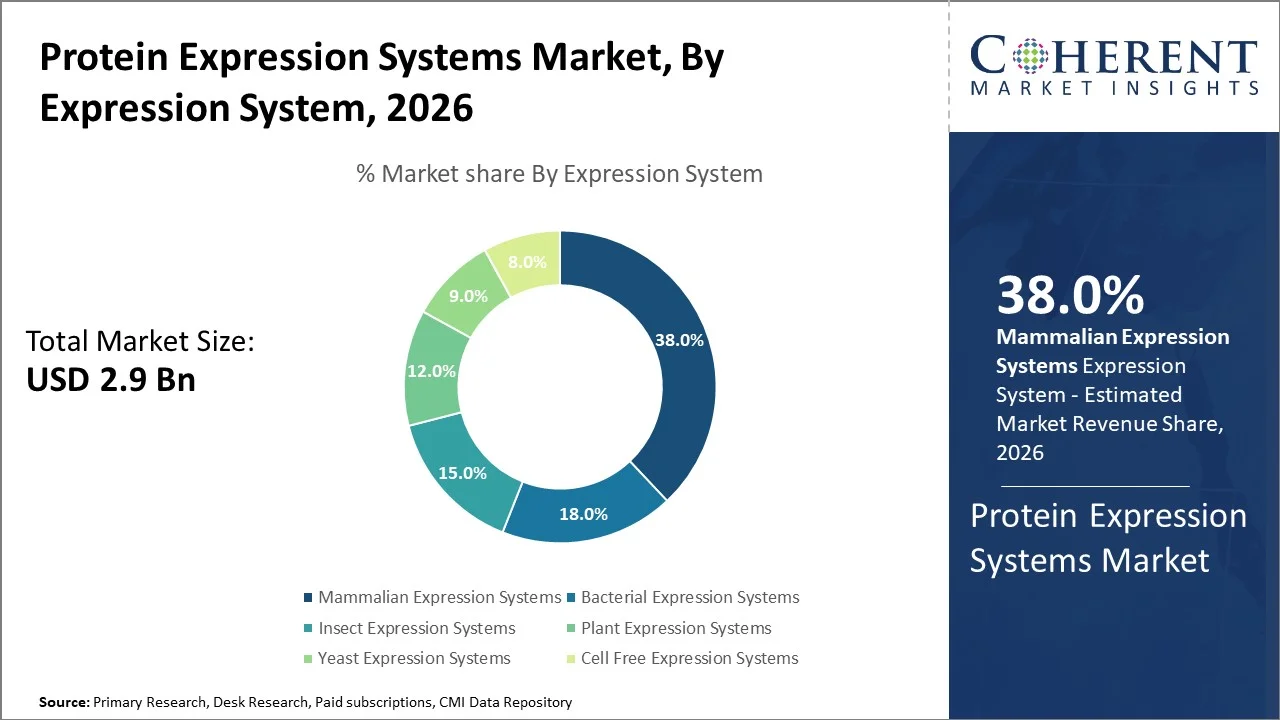
- Mammalian expression systems are expected to lead the market with a share of 38% in 2026 due to the increasing production of monoclonal antibodies, recombinant proteins, vaccines, and other biologics. For instance, a 2024 study published in the journal Antibodies reported that 76% of approved antibody therapeutics are manufactured using Chinese Hamster Ovary (CHO) cells, showing the dominant role of mammalian expression systems in commercial biologics production.
- Reagents are set to account for the largest market share of 45% in 2026 due to recurring demand from research laboratories and biopharmaceutical manufacturing facilities. For example, the U.S. FDA reported 50 novel drug approvals in 2024, including several biologics that require extensive reagent use across research, development, and manufacturing processes.
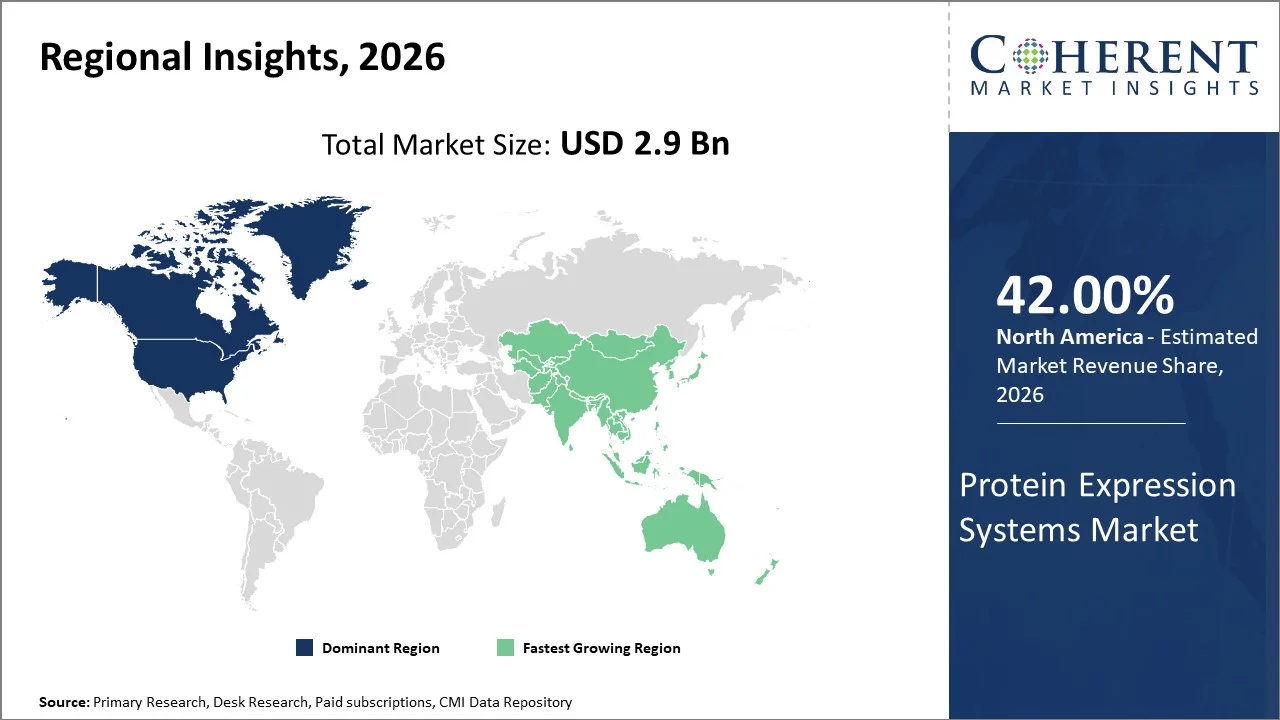
- North America is projected to dominate the global protein expression systems industry with a share of 42% in 2026, owing to strong biopharmaceutical R&D spending, a large biotechnology industry base, and significant NIH and private-sector investments. For example, the U.S. National Institutes of Health (NIH) operated with a budget of approximately USD 47.7 billion in FY 2024, supporting extensive biomedical and biotechnology research that drives demand for protein expression technologies in drug discovery and biologics development.
- Asia Pacific, with a share of 24% in 2026, is anticipated to emerge as the fastest growing market for protein expression systems during the forecast period, thanks to increasing biotechnology and pharmaceutical research activities, expanding biomanufacturing capabilities, rising healthcare investments, and growing government support for life sciences research.
Protein Expression Systems Market Overview
The global protein expression systems market is expected to exhibit robust growth during the forecast period. This is due to increasing demand for recombinant proteins in biopharmaceutical production, rising investments in biotechnology and life sciences research, and growing adoption of protein-based therapeutics for the treatment of chronic and infectious diseases.
Protein expression systems play a crucial role in the production of enzymes, antibodies, vaccines, and other therapeutic proteins. They have become indispensable tools in drug discovery, development, and manufacturing processes. Thus, rising demand for novel drugs is expected to play a key role in boosting growth of protein expression systems market during the assessment period.
Increasing demand for protein therapeutics is expected to drive revenue growth in the protein expression systems market. The rising prevalence of chronic and life-threatening diseases such as cancer, cardiovascular disorders, and genetic conditions is a key factor fueling demand for biologics and recombinant protein-based therapies. These include monoclonal antibodies, insulin, and therapeutic enzymes, which are widely used due to their high specificity and effectiveness.
Growing investment by biopharmaceutical companies in biologics development, along with expanding pipelines of recombinant protein drugs, is further supporting the adoption of advanced protein expression systems. In addition, recombinant proteins are increasingly used in biopharmaceutical research, diagnostics, and industrial applications such as enzyme production and food processing.
Cell-free protein synthesis platforms are gaining traction due to their speed, flexibility, and ability to produce toxic or difficult-to-express proteins more efficiently. For example, LenioBio GmbH, a developer of the ALiCE® cell-free protein expression system, partnered with Avantor in April 2025 to expand access to the platform for researchers across Europe.
Similarly, expansion of biosimilars and next-generation vaccines is fueling demand for scalable protein manufacturing systems. Many companies are also adopting automation, machine learning, and AI-based optimization tools to enhance protein yield, reduce error rates, and shorten development timelines.
Segmental Insights
Which Expression System Leads the Global Market?
Mammalian Expression Systems Hold the Largest Market Share in 2026
Based on expression systems, the mammalian expression systems segment is set to account for a dominant market share of 38% in 2026. This dominance can be attributed to their ability to produce complex, biologically active proteins with proper post-translational modifications such as glycosylation, making them highly suitable for monoclonal antibodies and other therapeutic biologics. In addition, their strong regulatory acceptance, high reliability in large-scale biopharmaceutical production, and increasing use of well-established systems such as CHO (Chinese Hamster Ovary) cell lines are also expected to boost growth of the target segment during the forecast period.
- Current Industry Events of 2026
- Market Size Estimation
- Regional Breakdown
- Competitive Landscape
- Customer Intelligence
- Segmental Analysis
- Pricing Analysis
- Key Market Drivers, Challenges & Future Trends
- Customized Insights Section
Which Product Type Generates the Most Revenue?
Reagents Set to Account for Highest Revenue Share
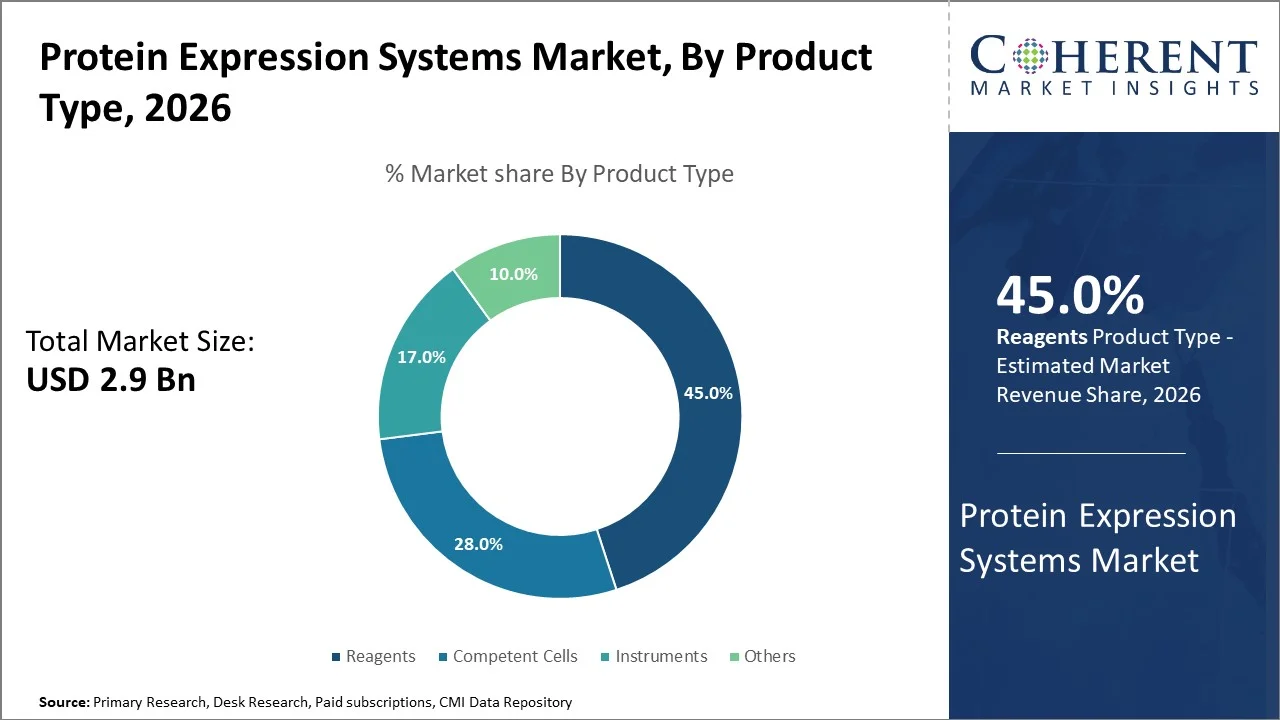
According to Coherent Market Insights’ latest protein expression systems market analysis, reagents segment is projected to account for the largest market share of 45% in 2026. This is mostly due to continuous and recurring demand for high-quality reagents used across upstream and downstream processes in protein expression workflows, including cell culture, transfection, purification, and assay development.
Increasing consumption of reagents in both research and commercial-scale production is also fueling their demand globally. Similarly, rising adoption of recombinant protein technologies in biopharmaceutical manufacturing is expected to fuel demand for reagents during the assessment period.
Protein Expression Systems Market Growth Drivers
Rising Demand for Biologics and Recombinant Proteins: Expanding pipelines of biologic drugs is providing a strong impetus for the growth of protein expression systems market. There has been a significant increase in the development and approval of biologics such as monoclonal antibodies, vaccines, enzymes, and therapeutic proteins. For example, in 2024 alone, the FDA approved 50 novel drugs, of which approximately 32% were biologics, including 13 monoclonal antibodies. These therapies rely heavily on efficient protein expression platforms for their development and large-scale production.
Protein Expression Systems Market Opportunities
Increasing Prevalence of Chronic Diseases: The global rise in chronic conditions like cancer, diabetes, and autoimmune disorders is creating lucrative growth opportunities for protein expression systems market. According to the International Agency for Research on Cancer (IARC), the annual number of new cancer cases is projected to rise to over 35 million by 2050. This escalating incidence of chronic diseases is expected to propel the demand for protein-based therapeutics, which in turn increases the need for advanced expression systems.
Protein Expression Systems Market Trends
Shift Towards Advanced Protein Expression Systems: Rising adoption of advanced expression systems is a key growth-shaping market trend. Companies in the contemporary world are progressively shifting toward mammalian, insect, yeast, algal, plant-based, and cell-free systems for the production of complex proteins with higher biological fidelity and functional accuracy. This transition is expected to foster overall growth of the protein expression systems market over the forecast period.
Current Events and Their Impact on the Protein Expression Systems Market
Current Event | Description and its Impact |
Regeneron–Fujifilm Biotechnologies $3 Billion Manufacturing Agreement |
|
AI-Powered Protein Design Platforms Accelerate Drug Discovery (2026) |
|
Regional Insights
Rising Biopharmaceutical Innovation Making North America the Dominant Market
North America is expected to retain its dominance over the global protein expression systems market during the forecast period, capturing a share of 42% share in 2026. This can be attributed to increasing biopharmaceutical R&D, advanced healthcare infrastructure, and high adoption of recombinant protein technologies. The region also benefits from a large number of biotech companies and strong regulatory support for biologics development, which increases the use of protein expression systems in drug discovery and manufacturing.
A steady rise in biologics approvals by the U.S. FDA, which reflects growing demand for recombinant proteins, is boosting North America protein expression systems market. According to FDA-regulated product approval data, biologics accounted for about 32% of all drug approvals in 2024, showing the strong role of protein-based therapies in the U.S. drug pipeline. This rising approval rate directly increases the demand for protein expression platforms used in antibody and recombinant protein production for therapies targeting cancer and chronic diseases.
Asia Pacific Becoming a Hotbed for Industry Players
Asia Pacific is anticipated to emerge as the most lucrative market for manufacturers of protein expression products during the forecast period, holding a global market share of 24% in 2026. This is mostly due to increasing biotechnology research, expanding healthcare infrastructure, and rising investment in life sciences across China, India, and Japan. The region is also seeing stronger collaboration between academic institutes and biotech firms, which is boosting adoption of protein expression technologies.
Rising burden of age-related diseases is playing a key role in boosting growth of Asia Pacific protein expression systems market. According to the World Health Organization (WHO), the number of people aged 60 years and older is expected to double to 2.1 billion by 2050 globally, with Asia accounting for the largest share of this aging population. This demographic shift is increasing demand for biologics and protein-based therapies for conditions like cancer, neurodegenerative diseases, and metabolic disorders, thereby driving the need for protein expression systems in drug development.
Protein Expression Systems Market Outlook – Country-wise
U.S. Protein Expression Systems Market Trends
The United States remains one of the leading markets for protein expression systems. This is due to expanding biopharmaceutical industry, presence of advanced R&D ecosystem, and high number of biologics approvals. The country’s well-established FDA regulatory framework also supports rapid development of recombinant protein-based therapies, increasing the use of protein expression technologies in drug discovery and manufacturing. In addition, rising demand for monoclonal antibodies and personalized medicine is supporting market expansion in the nation.
China Protein Expression Systems Market Forecast
The Protein Expression Systems market is poised to exhibit strong growth during the forecast period. This is attributable to rapid expansion of its biotechnology sector, increasing government investment in life sciences, and growing focus on biologics development. The country is also experiencing rising demand for advanced therapeutics due to a large patient pool affected by chronic and age-related diseases. This, in turn, is expected to create a conducive environment for the growth of protein expression systems industry in China during the forecast period.
Who are the Major Companies in the Protein Expression Systems Market?
Some of the major players in Protein Expression Systems Market are Agilent Technologies, Inc., Becton, Dickinson & Company, Lonza Group Ltd., GenScript Biotech Corporation, Bio-Rad Laboratories, Inc., Merck KGaA, QIAGEN N.V., Thermo Fisher Scientific Inc., Takara Bio Inc., Synthetic Genomics Inc., Lucigen Corporation, Promega Corporation, ARTES Biotechnology GmbH, ProteoGenix, Addgene Inc., Geneva Biotech, Profacgen, and Peak Proteins Ltd.
Key Strategies Adopted by Industry Players
Leading companies in the protein expression systems market are adopting various organic and inorganic strategies to boost their revenue as well as gain a competitive edge over the industry. These include new product launches and approvals, mergers, partnerships, acquisitions, and distribution agreements. For instance,
- In May 2026, GenScript launched the TurboCHO Protein Expression Kit. It is a next-generation system designed for faster and more efficient antibody and protein expression with improved output and ease of use.
- In April 2025, Nuclera expanded its eProtein Discovery system with a new membrane protein workflow. The update enables expression, purification, and stabilization of challenging membrane proteins in a faster workflow.
- In April 2025, LenioBio GmbH, a leader in cell-free protein expression technologies, partnered with Avantor to expand access to its technology. The collaboration helps make LenioBio’s ALiCE cell-free protein synthesis platform more available to researchers in Europe.
Market Report Scope
Protein Expression Systems Market Report Coverage
| Report Coverage | Details | ||
|---|---|---|---|
| Base Year: | 2025 | Market Size in 2026: | USD 2.9 Bn |
| Historical Data for: | 2020 To 2024 | Forecast Period: | 2026 To 2033 |
| Forecast Period 2026 to 2033 CAGR: | 11% | 2033 Value Projection: | USD 6.0 Bn |
| Geographies covered: |
| ||
| Segments covered: |
| ||
| Companies covered: | Agilent Technologies, Inc., Becton, Dickinson & Company, Lonza Group Ltd., GenScript Biotech Corporation, Bio-Rad Laboratories, Inc., Merck KGaA, QIAGEN N.V., Thermo Fisher Scientific Inc., Takara Bio Inc., Synthetic Genomics Inc., Lucigen Corporation, Promega Corporation, ARTES Biotechnology GmbH, ProteoGenix, Addgene Inc., Geneva Biotech, Profacgen, and Peak Proteins Ltd. | ||
| Growth Drivers: |
| ||
| Restraints & Challenges: |
| ||
Analyst Opinion (Expert Opinion)
- Recombinant protein production is foundational to biologics manufacturing, as most therapeutic proteins require engineered expression hosts. Expression systems (bacterial, yeast, insect, mammalian) are essential because native biological systems have limited capacity to efficiently produce many complex therapeutic proteins at scale. This structural dependence supports stable, pipeline-linked demand growth, especially as biologics continue to dominate modern drug development.
- Mammalian systems (CHO, HEK293) are increasingly essential because they provide human-like post-translational modifications. These systems are critical for biologics requiring correct folding and glycosylation, especially monoclonal antibodies and complex recombinant proteins. This is shifting market value toward high-margin, GMP-grade expression platforms, increasing demand for CHO-based production infrastructure.
- Yeast and insect systems are expanding due to their intermediate capability between bacterial simplicity and mammalian complexity. Yeast offers eukaryotic processing with scalability, while insect cells provide better folding and modification than bacteria. This creates a mid-tier production segment, supporting cost-sensitive biologics, vaccine development, and research-scale protein production.
Speak to the analyst
Want personalized insights?
Take the findings above to one of our principal consultants, or have the report rebuilt around the segments, geographies and competitors you actually track.
Market Segmentation
- By Expression System Insights ( Revenue, USD Bn, 2021 - 2033)
- Mammalian Expression Systems
- Insect Expression Systems
- Bacterial Expression Systems
- Plant Expression Systems
- Yeast Expression Systems
- Cell Free Expression Systems
- By Product Type Insights ( Revenue, USD Bn, 2021 - 2033)
- Competent Cells
- Instruments
- Reagents
- Others
- By Application Insights ( Revenue, USD Bn, 2021 - 2033)
- Protein Therapeutics
- Research Studies
- By Region Insights ( Revenue, USD Bn, 2021 - 2033)
- North America
- U.S.
- Canada
- Latin America
- Brazil
- Argentina
- Mexico
- Rest of Latin America
- Europe
- Germany
- U.K.
- Spain
- France
- Italy
- Russia
- Rest of Europe
- Asia Pacific
- China
- India
- Japan
- Australia
- South Korea
- ASEAN
- Rest of Asia Pacific
- Middle East
- GCC Countries
- Israel
- Rest of Middle East
- Africa
- South Africa
- North Africa
- Central Africa
- North America
- Key Players
- Agilent Technologies, Inc.
- Becton, Dickinson & Company
- Lonza Group Ltd.
- GenScript Biotech Corporation
- Bio-Rad Laboratories, Inc.
- Merck KGaA
- QIAGEN N.V.
- Thermo Fisher Scientific Inc.
- Takara Bio Inc.
- Synthetic Genomics Inc.
- Lucigen Corporation
- Promega Corporation
- ARTES Biotechnology GmbH
- ProteoGenix
- Addgene Inc.
- Geneva Biotech
- Profacgen
- Peak Proteins Ltd.
Sources
Primary Research interviews
- Interviews with industry experts, bioprocess engineers, laboratory scientists, biotechnology manufacturers, pharmaceutical R&D professionals, and academic researchers working in recombinant protein production and expression technologies
Databases
- PubMed (NCBI)
- Europe PMC
- Scopus
- Web of Science
- ClinicalTrials.gov
- UniProt
- Protein Data Bank (PDB)
- FDA databases
- EMA databases
- NIH RePORTER
Magazines
- Nature Biotechnology
- BioProcess International
- Genetic Engineering & Biotechnology News (GEN)
- The Scientist
- Pharmaceutical Technology
Journals
- Biotechnology and Bioengineering
- Journal of Biotechnology
- Protein Expression and Purification
- Nature Communications
- Applied Microbiology and Biotechnology
- Trends in Biotechnology
Newspapers
- Reuters, Bloomberg (biotech & pharma coverage)
- Financial Times (healthcare section)
- The Wall Street Journal (life sciences coverage)
- The Economic Times (healthcare/biotech section)
Associations
- Biotechnology Innovation Organization (BIO)
- International Society for Pharmaceutical Engineering (ISPE)
- European Federation of Biotechnology (EFB)
- International Union of Biochemistry and Molecular Biology (IUBMB)
- World Health Organization (WHO) technical programs
Public Domain sources
- World Health Organization (WHO) publications
- U.S. Food and Drug Administration (FDA) guidance documents
- European Medicines Agency (EMA) public reports
- National Institutes of Health (NIH)
- World Bank health data
- Government health ministry publications
- OECD biotechnology reports
Proprietary Elements
- CMI Data Analytics Tool
- Proprietary CMI Existing Repository of information for last 10 years
Get access to 250+ pages report
Every segment, forecast, competitor profile and data table behind the analysis above — available for instant download.
- ESOMAR Member
- ISO 9001:2015 Certified
- D-U-N-S Registered
- GDPR & CCPA Compliant
Missing comfort of reading report in your local language? Find your preferred language:
Transform your Strategy with Exclusive Trending Reports
Frequently Asked Questions
The global market is estimated to be valued at USD 2.9 Bn in 2026.
The global Protein Expression Systems Market value is expected to reach USD 6.0 Bn by 2033.
The global market is poised to exhibit a CAGR of 11 % from 2026 to 2033.
Major growth factors include rising prevalence of chronic diseases, rising demand for recombinant proteins and biologics, and rising investments in biotechnology and pharmaceutical research.
Some major companies in the Protein Expression Systems Market include Agilent Technologies, Inc., Becton, Dickinson & Company, Lonza Group Ltd., GenScript Biotech Corporation, Bio-Rad Laboratories, Inc., Merck KGaA, QIAGEN N.V., Thermo Fisher Scientific Inc., Takara Bio Inc., Synthetic Genomics Inc., Lucigen Corporation, Promega Corporation, ARTES Biotechnology GmbH, ProteoGenix, Addgene Inc., Geneva Biotech, Profacgen, and Peak Proteins Ltd.
North America, with 42% share in 2026, is set to lead the market during the forecast period.