

Immune Anti-Inhibitor Market Size and Share Analysis - 2026 To 2033
The Immune Anti-Inhibitor market is anticipated to grow at a CAGR of 8.2% with USD 5.6 Bn in 2026 and is expected to reach USD 9.8 Bn in 2033. The Immune Anti-Inhibitor market is primarily driven by the high prevalence of hemophilia patients (2.75 to 3.75 per 100,000 between 2014 and 2023) who develop inhibitors against standard clotting factor replacement therapies, creating a greater need for effective immune tolerance induction (ITI) and anti-inhibitor treatments. Rising awareness of early diagnosis, advancements in recombinant coagulation factors and monoclonal antibody therapies, and the growing adoption of personalized treatment approaches are further supporting market growth.
Key Takeaways
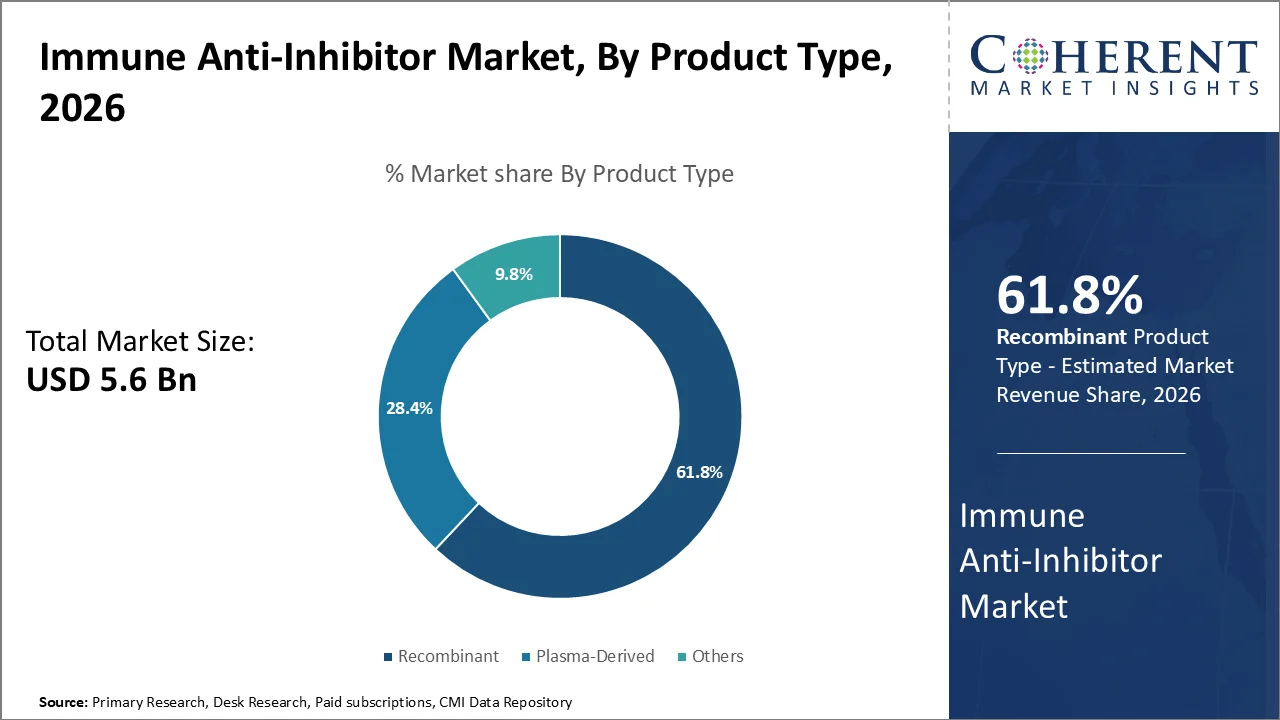
- Recombinant segment is expected to account the largest share of 61.8% in 2026, due to their superior safety profile, lower risk of blood-borne pathogen transmission, consistent quality, and strong clinical preference for treating hemophilia patients with inhibitors. The CDC says there are about 18 million people working in the healthcare industry. Many of these workers may be at risk of coming into contact with bloodborne pathogens, which are harmful germs that can spread through blood.
- Hospital pharmacies will dominate with 68.5% in 2026, hospital pharmacies account for the largest share because immune anti-inhibitor therapies are specialized biologics that require physician supervision, controlled administration, and close patient monitoring. In Japan, in 2022, about 59% of pharmacists worked in community pharmacies. Around 19% worked in hospitals or clinics, and the remaining 22% worked in other places such as research, industry, or other healthcare settings.
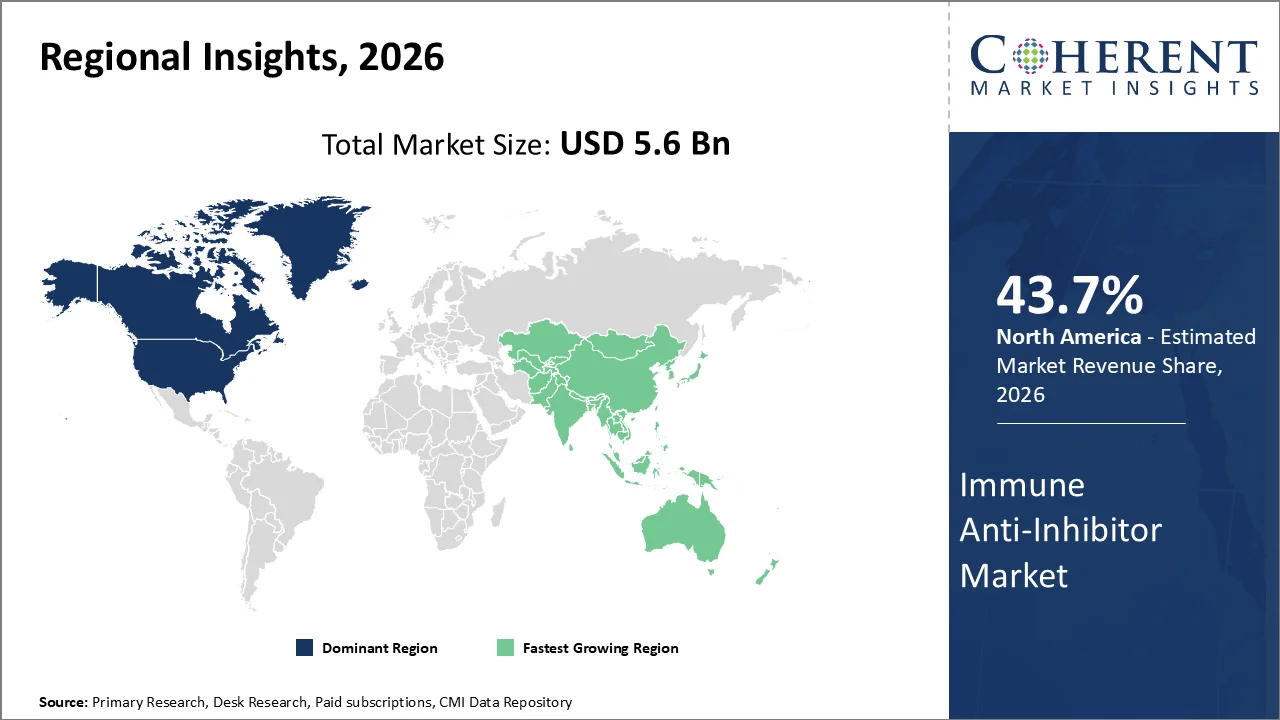
- North America is expected to acquire the dominant share of 43.7% in 2026, North America leads the market due to a high prevalence of diagnosed hemophilia patients, advanced healthcare infrastructure, strong reimbursement systems, widespread availability of recombinant therapies, and the presence of leading biotechnology and pharmaceutical companies investing in innovative treatments. In the U.S., about 1 in 5,617 boys born has Hemophilia A, and about 400 new cases are seen in boys each year.
Segmental Insights
Why is Recombinant Segment Acquiring the Largest Market Share?
Recombinant is projected to account for the largest share of solutions in 2026, representing approximately 61.8% of the total volume. Owing to its superior safety profile, consistent product quality, as well as the increasing preference among healthcare providers and patients for therapies that eliminate the risk of bloodborne pathogen transmission.
Healthcare workers can be exposed to bloodborne germs. The danger of getting Hepatitis B infection after contact with infected blood can be from 6% to 30%. New treatments are being developed, including targeted therapies, to provide safer and more effective care.
Recombinant factor products are manufactured using DNA technology in cell culture systems, which entirely bypasses the need for human plasma as a raw material. This fundamental manufacturing distinction gives recombinant products a critical safety advantage. In populations of patients with hemophilia A or B who have developed inhibitors antibodies that neutralize clotting factor therapy and require immune tolerance induction (ITI) or bypassing agent therapy.
The clinical adoption of recombinant bypassing agents such as recombinant factor VIIa (rFVIIa) has been extensively supported by global hemophilia treatment guidelines. The FASTEST trial found that recombinant factor VIIa helped reduce brain bleeding growth when given quickly after a brain hemorrhage. However, it did not improve patients’ overall recovery and increased the risk of serious blood clots. Some patients treated very early showed better results.
- Current Industry Events of 2026
- Market Size Estimation
- Regional Breakdown
- Competitive Landscape
- Customer Intelligence
- Segmental Analysis
- Pricing Analysis
- Key Market Drivers, Challenges & Future Trends
- Customized Insights Section
Hospital Pharmacies Segment holds the Largest Market Share
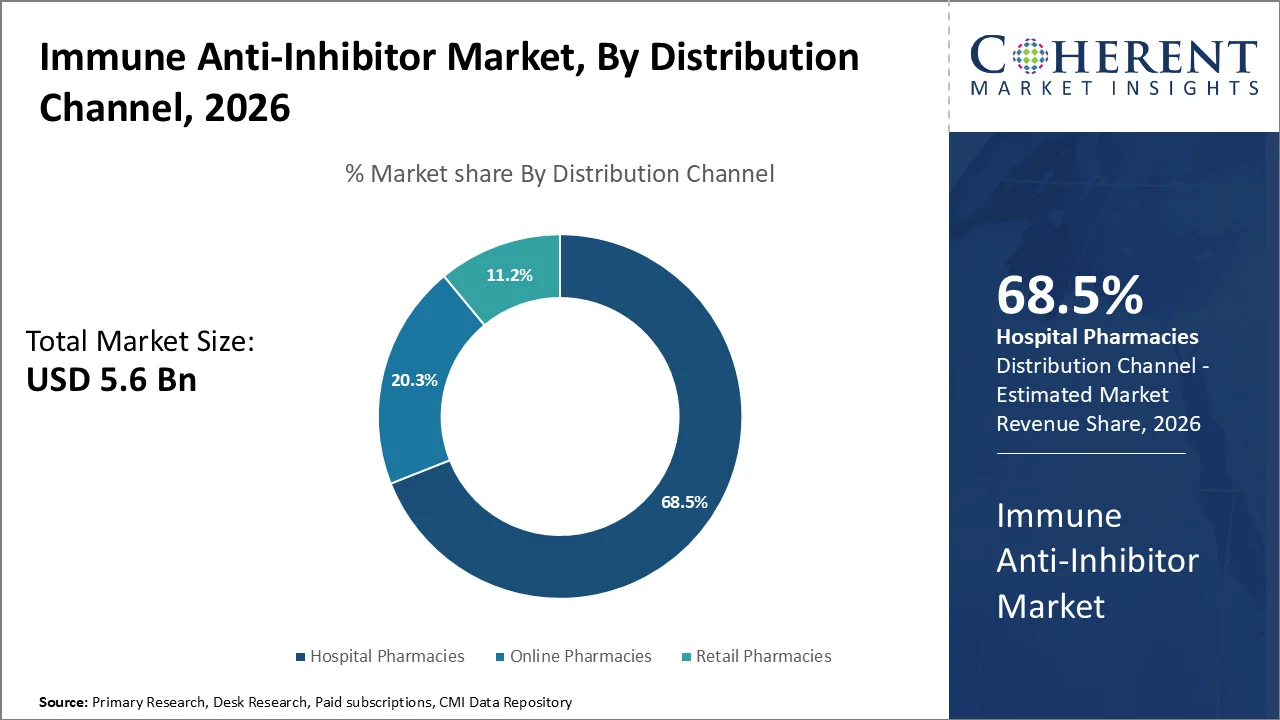
Based on distribution channel, hospital pharmacies dominates the market, accounting for a significant 68.5% share in 2026. The clinical complexity surrounding the management of inhibitor-positive hemophilia and related bleeding disorders that necessitate immune tolerance induction (ITI) therapies.
Immune anti-inhibitor products such as Anti-Inhibitor Coagulant Complex (AICC), commercially recognized under formulations like FEIBA (Factor Eight Inhibitor Bypassing Activity), require stringent cold-chain logistics, precise dosing protocols, and continuous patient monitoring conditions that are exclusively met within hospital pharmacy settings.
The World Federation of Hemophilia (WFH) has consistently underscored in its treatment guidelines that patients with high-titer inhibitors must receive their bypassing therapy agents under direct medical supervision, preferably within a Hemophilia Treatment Center (HTC) environment.
Recombinant Activated Factor VII (rFVIIa): A major breakthrough in Immune Anti-Inhibitor
Recombinant Activated Factor VII (rFVIIa) is a treatment for hemophilia patients who develop inhibitors. It aid in stoping bleeding by directly activating Factor X, allowing blood to clot without needing Factor VIII or Factor IX. This makes it an effective bypassing therapy for patients who do not respond to standard clotting factor treatments.
NovoSeven RT by Novo Nordisk was the first recombinant bypassing agent and is broadly used as a first-line treatment in many clinical guidelines. It generates more than USD 1 billion in annual revenue, showing its strong market adoption. Biosimilar products such as Eptacog alfa from LFB Biotechnologies have also entered the market, helping lower treatment costs by 30–40% compared with the original product and improving patient access.
Current Events and Their Impact on the Immune Anti-Inhibitor Market
Current Event | Description and its Impact |
Expansion of national rare disease policies and funding programs (2025–2026) |
|
Stronger regulatory support for orphan drugs and accelerated approvals (2025–2030) |
|
Immune Anti-Inhibitor Market Trends
- One of the most transformative for Immune Anti-Inhibitor market is the shift from traditional clotting factor concentrates to non-factor replacement therapies. In people with severe Hemophilia A, around 20–30% develop inhibitors, which can make standard factor replacement treatments less effective. Because of this, new non-factor replacement therapies are being developed to aid control bleeding as well as provide better treatment options.
- The maturation of gene therapy pipelines targeting hemophilia as well as related inhibitor conditions is highly influencing growth of market. With several late-stage clinical assets targeting AAV-mediated delivery of clotting factors (e.g., valoctocogene roxaparvovec, fitusiran), the prospect of long-term or curative interventions is gradually reshaping patient treatment journeys, physician prescribing behaviors, and payer reimbursement architectures.
- Increasing utilization of personalized medicine approaches leveraging pharmacogenomics and inhibitor titer profiling is enabling clinicians to tailor immune tolerance induction (ITI) and bypassing agent regimens with greater precision. Immune tolerance induction (ITI) is a difficult treatment used for people with Hemophilia A who develop inhibitors against Factor VIII treatment. Around 70% of patients achieve successful ITI. In one study, 148 out of 206 patients (71.8%) successfully responded to ITI treatment.
Regional Insights
North America dominates owing to well-established healthcare infrastructure
North America account 43.7% market share in 2026, owing to its exceptionally well-established healthcare infrastructure. Moreover, robust regulatory frameworks, along with significantly higher prevalence rates of hemophilia-related inhibitor complications that necessitate immune anti-inhibitor therapies is propelling the growth. Around 30% of severe Hemophilia A patients, 5–8% of mild or moderate Hemophilia A patients, and 2–3% of Hemophilia B patients may develop inhibitors.
The United States, in particular, serves as the dominant contributor within this regional segment, highly driven by the high adoption of immune tolerance induction (ITI) therapy protocols led by prominent hemophilia treatment centers (HTCs) working under federal guidance from the Health Resources and Services Administration (HRSA).
According to the Centers for Disease Control and Prevention (CDC), approximately 400,000 individuals are living with hemophilia globally, with the United States accounting for a high patient population receiving specialized inhibitor management care.
In July 2026, ImmunoBrain developed new immune-based treatments for brain diseases. The company announced that its Phase 1b study of IBC-Ab002, an experimental anti-PD-L1 antibody, was published in Nature Medicine. The study tested the treatment in people with early Alzheimer’s disease.
Asia Pacific Immune Anti-Inhibitor Market Trends
The Asia Pacific region is poised to be the fastest-growing region through 2026-2033, expanding at a CAGR of approximately 6.8%. Driven by a combination of rapidly evolving healthcare infrastructure, expanding national hemophilia registries, and increasing government-led initiatives to improve rare disease management across densely populated nations such as China, India, Japan, and South Korea. Rare diseases, such as Neurofibromatosis type 1 and spinal muscular atrophy, affect more than 300 million people worldwide. Around 45 million people in Southeast Asia are living with rare diseases.
The World Federation of Hemophilia (WFH) Annual Global Survey has consistently showed that Asia Pacific nations represent a substantially underdiagnosed population of people with bleeding disorders. As diagnostic capabilities improve through national health programs, the pool of identified inhibitor patients is expanding significantly, directly fueling demand for immune anti-inhibitor therapies.
The National Health Mission of India as well as Healthy China 2030 initiative by China have both placed increasing emphasis on rare disease treatment accessibility, which has begun to translate into greater procurement of specialized coagulation therapies at public hospital levels.
Highly Advanced Biopharmaceutical Manufacturing Ecosystem is Accelerating the Immune Anti-Inhibitor Market Demand in U.S.
The U.S. contributes the highest share in the immune anti-inhibitor market in North America, owing to its highly advanced biopharmaceutical manufacturing ecosystem, and the presence of a significant patient population diagnosed with inhibitory complications arising from hemophilia A and B treatments.
The United States has one of the most structured hemophilia treatment networks globally, with the Centers for Disease Control and Prevention (CDC) operating the Community Counts program, which actively monitors hemophilia-related data across federally funded Hemophilia Treatment Centers (HTCs).
According to the CDC, approximately 400 HTCs are operational across the United States, ensuring systematic patient access to factor replacement therapies and related anti-inhibitor treatments.
China Immune Anti-Inhibitor Market Trends
China contributes the highest share in the Immune Anti-Inhibitor market in APAC owing to its exceptionally large hemophilia patient population, well-established healthcare infrastructure, and robust government-backed treatment programs.
According to the World Federation of Hemophilia (WFH) Global Survey, China consistently reports one of the highest numbers of identified hemophilia patients across the Asia Pacific region, with tens of thousands of individuals diagnosed with hemophilia A and B, a significant proportion of whom develop inhibitors against clotting factor concentrates.
The Chinese government's integration of hemophilia treatment into its national rare disease framework, particularly following the release of the National Rare Disease List in 2018 which included hemophilia, has dramatically accelerated access to immune anti-inhibitor coagulant complex therapies.
Who are the Major Companies in Immune Anti-Inhibitor Industry
Some of the major key players in immune anti-inhibitor market include, Shire Plc, Baxter International, Inc, F. Hoffmann La Roche Ltd., Novo Nordisk A/S, and CSL Behring.
Key News
- In July 2026, Spero Therapeutics is changing its focus from antibiotic treatments to immune and inflammation-related treatments. The company has licensed a new CD40L antibody called SP001 from Innovent Biologics. The deal can be worth up to $1.1 billion.
- In January 2026, AbbVie and RemeGen have made an agreement to develop, manufacture, as well as sell a new cancer treatment called RC148. RC148 is a new antibody drug that operate by helping the immune system fight cancer. It targets two proteins, PD-1 and VEGF, which are involved in how cancer grows and avoids immune attacks. The drug is being tested both alone and with other cancer treatments to treat different types of advanced solid tumors.
Market Report Scope
Immune Anti-Inhibitor Market Report Coverage
| Report Coverage | Details | ||
|---|---|---|---|
| Base Year: | 2025 | Market Size in 2026: | USD 5.6 Bn |
| Historical Data for: | 2020 To 2024 | Forecast Period: | 2026 To 2033 |
| Forecast Period 2026 to 2033 CAGR: | 8.2% | 2033 Value Projection: | USD 9.8 Bn |
| Geographies covered: |
| ||
| Segments covered: |
| ||
| Companies covered: | Shire Plc, Baxter International, Inc, F. Hoffmann La Roche Ltd., Novo Nordisk A/S, and CSL Behring | ||
| Growth Drivers: |
| ||
| Restraints & Challenges: |
| ||
Analyst Opinion
- The immune anti-inhibitor market is positioned at a critical juncture, driven by increasing prevalence of hemophilia and other bleeding disorders requiring advanced therapeutic interventions. It is estimated that around 70% of people with haemophilia have not yet been diagnosed.
- Rising awareness among healthcare professionals regarding inhibitor development in hemophilia patients has significantly accelerated demand for specialized anti-inhibitor treatment regimens.
- The high adoption of immune tolerance induction therapy is one of a major driver, enabling clinicians to eradicate inhibitors and restore standard factor replacement efficacy.
- However, the market faces notable restraints, including prohibitive treatment costs that limit accessibility across developing economies and create substantial affordability challenges for healthcare systems globally.
- Strategic opportunities exist in developing next-generation anti-inhibitor therapies with enhanced efficacy profiles and improved patient compliance characteristics.
Speak to the analyst
Want personalized insights?
Take the findings above to one of our principal consultants, or have the report rebuilt around the segments, geographies and competitors you actually track.
Market Segmentation
- By Product Type (Revenue, USD Bn, 2021-2033)
- Recombinant
- Plasma-Derived
- Others
- By Distribution Channel (Revenue, USD Bn, 2021-2033)
- Hospital Pharmacies
- Online Pharmacies
- Retail Pharmacies
- By Region (Revenue, USD Bn, 2021-2033)
- North America
- U.S.
- Canada
- Latin America
- Brazil
- Mexico
- Argentina
- Rest of Latin America
- Europe
- Germany
- U.K.
- France
- Italy
- Spain
- Russia
- Rest of Europe
- Asia Pacific
- China
- India
- Japan
- Australia
- South Korea
- ASEAN
- Rest of Asia Pacific
- Middle East
- GCC
- Israel
- Rest of Middle East
- Africa
- South Africa
- Central Africa
- North Africa
- North America
Sources
Primary Research Interviews
- Hematologists & Oncologists
- Pharmaceutical Manufacturers & Biotechnology Companies
- Hospital Procurement & Supply Chain Managers
- Blood Disorder Treatment Center Specialists
- Others
Databases
- IQVIA Healthcare Database
- Clarivate Analytics
- PharmaLex Database
- GlobalData Pharmaceutical Intelligence
- Others
Magazines
- Hematology Times
- Pharmaceutical Executive Magazine
- BioPharm International
- Oncology Business Review
- Others
Journals
- Journal of Thrombosis and Haemostasis
- Blood (American Society of Hematology Journal)
- Haemophilia Journal
- Others
Newspapers
- The Wall Street Journal (Healthcare Section)
- Financial Times (Pharma & Biotech)
- Reuters Health News
- BioPharma Dive
- Others
Associations
- World Federation of Hemophilia (WFH)
- National Hemophilia Foundation (NHF)
- American Society of Hematology (ASH)
- European Association for Haemophilia and Allied Disorders (EAHAD)
- Others
Public Domain Sources
- U.S. Food and Drug Administration (FDA) Drug Approvals Database
- European Medicines Agency (EMA) Public Reports
- World Health Organization (WHO) Blood Disorder Reports
- ClinicalTrials.gov
- Others
Proprietary Elements
- CMI Data Analytics Tool
- Proprietary CMI Existing Repository of information for last 10 years
Get access to 250+ pages report
Every segment, forecast, competitor profile and data table behind the analysis above — available for instant download.
- ESOMAR Member
- ISO 9001:2015 Certified
- D-U-N-S Registered
- GDPR & CCPA Compliant
Missing comfort of reading report in your local language? Find your preferred language:
Transform your Strategy with Exclusive Trending Reports
Frequently Asked Questions
The Immune Anti-Inhibitor market is expected to reach USD 9.8 Bn in 2033.
Major players operating in the global Immune Anti-Inhibitor market include Shire Plc, Baxter International, Inc, F. Hoffmann La Roche Ltd., Novo Nordisk A/S, and CSL Behring.
Complex treatment protocols and limited availability of trained hematology specialists in emerging markets are the major factors that is expected to hamper growth of the market over the forecast period.
The growing adoption of immune tolerance induction therapy is driving growth of the global Immune Anti-Inhibitor market.
The Immune Anti-Inhibitor market is anticipated to grow at a CAGR of 8.2% between 2026 and 2033.
Among regions, North America is expected to account for a largest market share in the global Immune Anti-Inhibitor market over the forecast period.
Firewalls are network security barriers that monitor and filter traffic based on predefined rules. The three primary types of firewalls, categorized by their structural delivery, are hardware firewalls, software firewalls, and cloud firewalls.