

Legionella Testing Market Analysis & Forecast: 2026-2033
Legionella Testing Market is estimated to be valued at USD 400.6 Mn in 2026 and is expected to reach USD 718.2 Mn in 2033, exhibiting a compound annual growth rate (CAGR) of 8.7% from 2026 to 2033.
Key Takeaways
- By application, the environmental testing segment is projected to dominate the global Legionella testing market in 2026, capturing around 68% of total market share. Rising regulatory pressure on water safety in hospitals, hotels, industrial plants, and public facilities is driving demand for routine monitoring.
- By test type, the culture method remains the gold standard due to its high specificity and ability to isolate live Legionella bacteria, though it requires longer turnaround times.
- By sample type, water samples represent the largest segment, as they remain the primary source for Legionella monitoring across healthcare facilities, cooling towers, and industrial water systems.
- By Region, North America is estimated to hold a dominant position with a 44.3% market share in 2026, supported by stringent regulatory frameworks, advanced testing infrastructure, and proactive public health measures
Market Overview
The Global Legionella Testing Market has witnessed significant growth in recent years, driven by growing concerns about waterborne diseases and the need for stringent water safety regulations. The market has responded with a range of testing solutions, including both traditional culture-based methods and advanced molecular techniques that offer quicker and more accurate results. Additionally, the evolving landscape of environmental regulations has further bolstered the demand for Legionella testing services as businesses seek to comply with standards aimed at preventing outbreaks and safeguarding public health.
Current Events and Its Impact
Event | Description and Impact |
Aging Building Infrastructure Crisis in Developed Nations (Regional) |
|
Regulatory Harmonization and Tightening (Macro-Level) |
|
Technological Advancement in Rapid Testing Methods (Nano-Level) |
|
Pricing Analysis: Global Legionella Testing
Legionella testing prices vary widely by method, turnaround time, and region. Rapid tests such as lateral flow immunoassays cost $25–45, while culture-based methods range from $45–120 per sample depending on speed and detail. PCR-based molecular diagnostics are more expensive, typically $85–250, with multiplex panels at the higher end. ATP-based screening remains the most economical at $15–35. Regional differences are notable: North America commands premium pricing ($75–150 per sample), Europe ranges $65–125 depending on country, and emerging markets show lower costs but rising demand as safety standards align with global regulations.
- Current Industry Events of 2026
- Market Size Estimation
- Regional Breakdown
- Competitive Landscape
- Customer Intelligence
- Segmental Analysis
- Pricing Analysis
- Key Market Drivers, Challenges & Future Trends
- Customized Insights Section
Segmental Insights
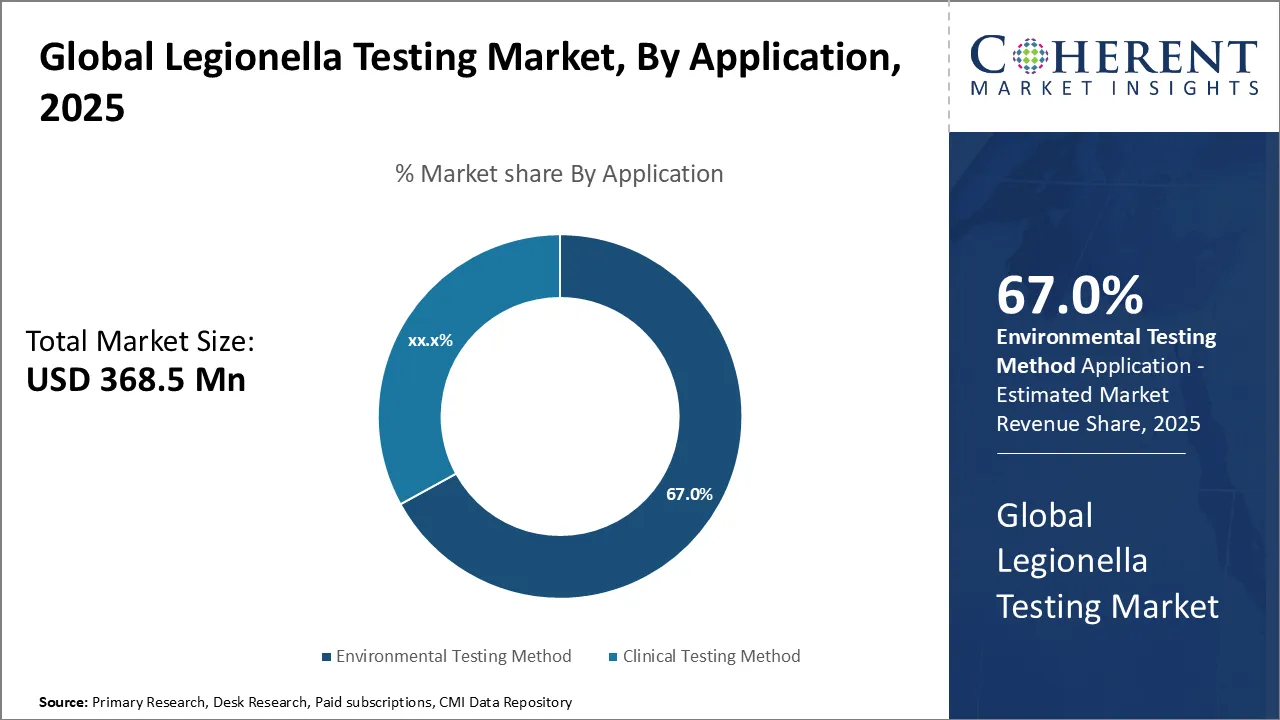
Global Legionella Testing Market Insights, By Application - Environmental Testing Segment Dominates with 68% Market Share
By application, the environmental testing segment is projected to dominate the global Legionella testing market in 2026, capturing around 68% of total market share. Rising regulatory pressure on water safety in hospitals, hotels, industrial plants, and public facilities is driving demand for routine monitoring. Companies are increasingly partnering with environmental agencies and deploying advanced water diagnostics to strengthen compliance and outbreak prevention.
For instance, in August 2026, the New York City Department of Health proposed new rules requiring building owners to test cooling tower water for Legionella every 30 days during operational periods tightening the existing 90-day rule to reduce outbreak risks.
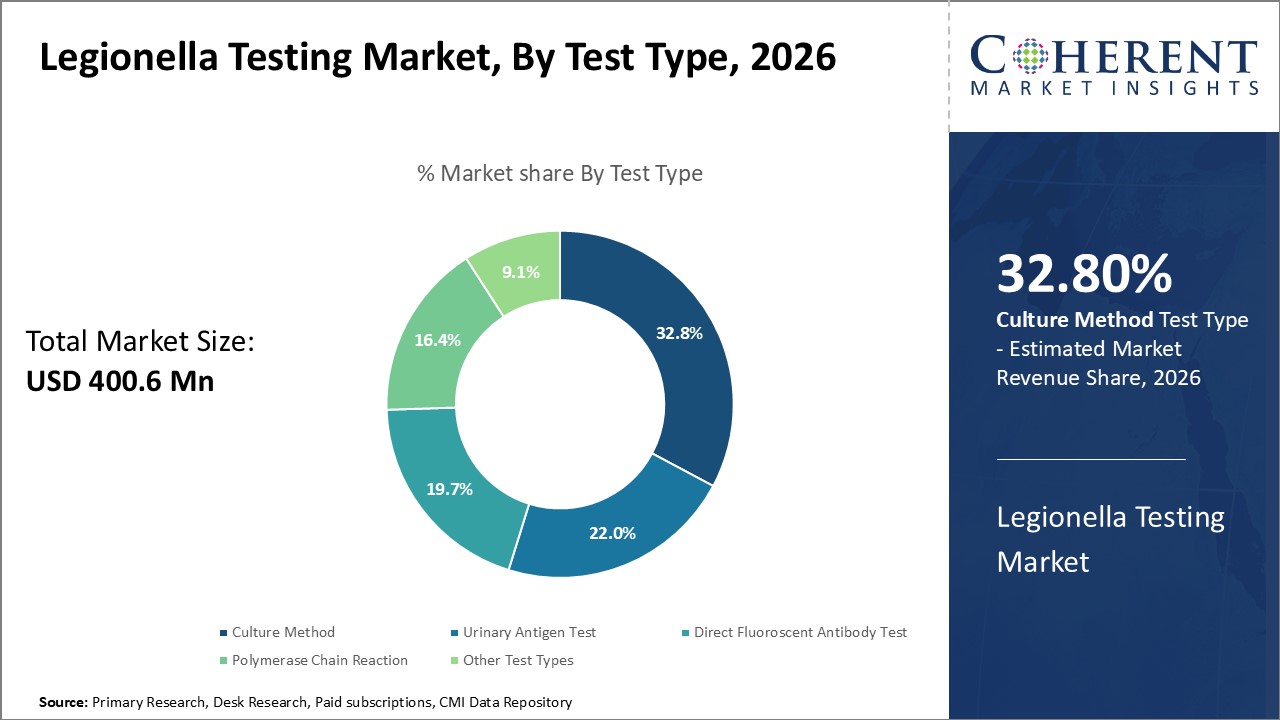
Global Legionella Testing Market Insights, By Test Type - Culture Method Acquires the dominant share
By test type, the culture method holds the largest share due to its high specificity and ability to isolate live Legionella bacteria, though it requires longer turnaround times. Polymerase chain reaction (PCR) is emerging as a preferred method thanks to its speed, sensitivity, and ability to detect Legionella DNA even in complex environmental samples. Other tests, including the Urinary Antigen Test (UAT), are widely adopted in clinical settings for rapid patient diagnosis, while Direct Fluorescent Antibody (DFA) tests and other methods continue to support specialized applications.
For instance, in June 2025, MyMichigan Medical Center announced it had detected low levels of Legionella in its hospital water supply. In response, the facility intensified testing protocols, installed additional filters, and worked with health authorities to safeguard patients and staff.
Global Legionella Testing Market Insights, By Sample Type - Water Samples Drive Market Growth
By sample type, water samples represent the largest segment, as they remain the primary source for Legionella monitoring across healthcare facilities, cooling towers, and industrial water systems. Biofilm samples are gaining prominence due to their role as bacterial reservoirs in plumbing systems, while swab samples are increasingly used for localized contamination assessments. Together, these sample types provide a comprehensive framework for Legionella risk management.
For instance, in June 2026, the Department of Veterans Affairs issued a formal solicitation for quarterly Legionella water testing services across multiple locations of the Orlando VA Healthcare System. The effort includes both scheduled and unscheduled retests, reflecting a strong, structured commitment to water safety.
Global Legionella Testing Market Regional Insights
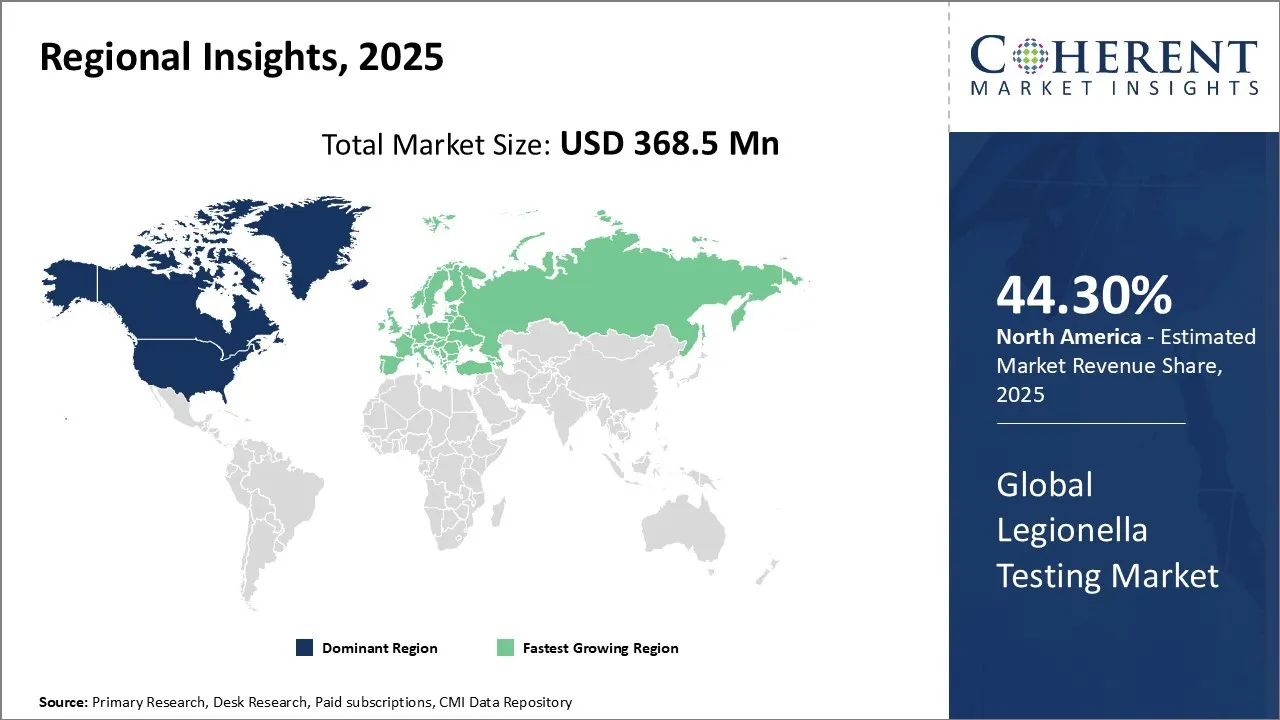
North America Legionella Testing Market Trends
North America is estimated to hold a dominant position with a 44.3% market share in 2026, supported by stringent regulatory frameworks, advanced testing infrastructure, and proactive public health measures. The U.S. leads the market, benefiting from strong guidance issued by the CDC and ASHRAE for Legionella risk management in building water systems.
Canadian Water Compliance is urging Toronto property owners and managers to prioritize Legionella and lead testing this summer, as higher temperatures and increased water use create ideal conditions for Legionella growth and lead contamination in aging pipes.
Europe Legionella Testing Market Trends
Europe is the second-largest market, projected to account for a 29.1% share in 2026. The region benefits from EU directives on water quality and safety, along with country-specific testing mandates. Nations such as Germany, France, and Italy are actively strengthening water monitoring programs in healthcare facilities, hospitality, and public buildings.
For instance, in February 2026, Italy’s Ministry of Health issued updated national guidelines for Legionella prevention and control, mandating routine water testing in healthcare and community facilities, aligning with EU risk management frameworks.
Asia-Pacific Legionella Testing Market Trends
Asia-Pacific is the fastest-growing market, expected to capture a 20.2% share in 2026. Growth is driven by rapid urbanization, industrial expansion, and rising government emphasis on waterborne disease prevention. China, Japan, and Australia are leading adopters of advanced water testing strategies, particularly in cooling towers and healthcare facilities.
For instance, in July 2026, Australia’s National Health and Medical Research Council (NHMRC) updated its Guidelines for Managing Legionella in Health and Aged Care Facilities, mandating preventive water and biofilm testing programs to protect at-risk populations.
Legionella Testing Market Country-Wise Outlook
United States Legionella Testing Market Outlook
The U.S. is the primary driver of the North American market, supported by strict compliance requirements under CDC guidelines and ASHRAE Standard 188 for building water systems. Hospitals, hotels, and industrial facilities have widely adopted routine testing to mitigate Legionella risks.
For instance, in June 2026, the Orlando VA Healthcare System contracted quarterly Legionella water testing services, including both scheduled and unscheduled monitoring, reinforcing national infection-prevention standards
Germany Legionella Testing Market Outlook
Germany has one of the most stringent water safety frameworks in Europe, with regulations under the German Drinking Water Ordinance (TrinkwV) requiring routine Legionella testing in multi-dwelling buildings, hospitals, and nursing homes.
For instance, in April 2026, Hamburg’s city government expanded its municipal Legionella monitoring initiative, offering subsidized water testing services for public housing facilities to support compliance with federal standards.
France Legionella Testing Market Outlook
France is actively reinforcing Legionella surveillance programs in hospitals and long-term care facilities, supported by national health agencies. Public health authorities emphasize proactive testing as part of infection control.
For instance, in March 2026, Santé Publique France launched a nationwide awareness and testing campaign, urging healthcare facilities to implement proactive Legionella monitoring under updated EU water safety guidance.
China Legionella Testing Market Outlook
China is a leading growth market in Asia-Pacific, driven by large-scale urbanization and the prevalence of industrial cooling towers. Municipalities and hospitals are adopting advanced testing technologies to align with global water safety practices.
For instance, in May 2026, Shanghai’s Municipal Health Commission announced expanded water safety inspections, including mandatory Legionella testing in high-risk facilities such as hospitals, schools, and industrial complexes.
Market Report Scope
Legionella Testing Market Report Coverage
| Report Coverage | Details | ||
|---|---|---|---|
| Base Year: | 2025 | Market Size in 2026: | USD 400.6 Mn |
| Historical Data for: | 2020 To 2024 | Forecast Period: | 2026 To 2033 |
| Forecast Period 2026 to 2033 CAGR: | 8.7% | 2033 Value Projection: | USD 718.2 Mn |
| Geographies covered: |
| ||
| Segments covered: |
| ||
| Companies covered: | Eurofins Scientific, ALS Limited, Bio-Rad Laboratories, IDEXX Laboratories, Aqua Legion UK, Palintest, LuminUltra, Special Pathogens Laboratory, Romer Labs, Real Time Lab Services, Abbott, Beckman Coulter, Inc., BD, Pro Lab Diagnostics Inc. | ||
| Growth Drivers: |
| ||
| Restraints & Challenges: |
| ||
Global Legionella Testing Market Drivers
- Public Health Concerns: The primary driver for the legionella testing market is public health awareness. Legionella bacteria can cause severe respiratory illnesses like Legionnaires' disease, which can be fatal. As cases of Legionnaires' disease are reported and publicized, there's an increased focus on preventing outbreaks and ensuring the safety of water systems in various settings, including hospitals, hotels, residential buildings, and industrial facilities.
- Regulatory Compliance: Many countries and regions have established regulations and guidelines for water quality and safety, which often include measures to prevent and manage Legionella contamination. Compliance with these regulations drives the demand for routine Legionella testing in water systems. Organizations in industries such as healthcare, hospitality, and manufacturing need to adhere to these regulations to avoid fines and legal consequences.
- Increased Awareness: Outbreaks of Legionnaires' disease in the past have raised public and industry awareness about the risks associated with Legionella bacteria. As a result, more organizations are taking proactive measures to prevent contamination by implementing regular testing and maintenance of water systems. For instance, on August 14, 2023, the Michigan Department of Health and Human Services (MDHHS) reminded residents to be aware of legionellosis, a respiratory infection caused by Legionella bacteria. Legionellosis can present as Legionnaires’ disease with symptoms of fever, cough, shortness of breath, and pneumonia; or as Pontiac fever with similar symptoms but no pneumonia.
- Increasing Incidences: The incidence of legionella infections around the world has been steadily rising over the past decade. For instance, in February 2022, a study titled "Global Perspective of Legionella Infection in Community-Acquired Pneumonia: A Systematic Review and Meta-Analysis of Observational Studies" was published in the International Journal of Environmental Research and Public Health. The study found that the average incidence of community-acquired pneumonia (CAP) was 46.7 per 100,000 people. It was discovered that in 4.6% of instances, Legionella was the cause of CAP. Consequently, 2020 saw an average Legionella incidence rate of 2.8 cases per 100,000 people. Thus, the growing incidence of pneumonia and legionnaires-associated diseases is expected to boost growth of the market.
Global Legionella Testing Market Trends
- Digital Transformation: Like many industries, the Legionella testing market was undergoing digital transformation. This included the adoption of automated testing systems, digital data management, and real-time monitoring solutions to enhance efficiency and accuracy in testing processes.
- Remote Monitoring: The use of remote monitoring technologies are becoming more prevalent. These systems allowed for continuous monitoring of water systems, providing real-time data on water quality and potential Legionella contamination. This trend aims to enable proactive responses to emerging risks.
- Molecular Testing Advances: Molecular testing techniques, such as polymerase chain reaction (PCR) and other DNA-based methods, were gaining popularity due to their speed and accuracy. These methods allowed for the rapid detection and identification of Legionella bacteria in water samples. For instance, in June 2022, EMSL Analytical, Inc., a leading environmental testing firm, announced that its Houston laboratory is offering PCR testing for Bacteroides and Legionella. Polymerase chain reaction (PCR) is a technique used to “amplify” small segments of DNA.
- Healthcare Emphasis: With an increasing focus on patient safety, healthcare facilities were placing a strong emphasis on Legionella testing. Hospitals and healthcare institutions are investing in comprehensive testing and water management programs to safeguard patients and staff. For instance, in May 2023, Auburn Community Hospital, a not-for-profit acute care facility, implemented an action plan and notified the New York State Department of Health after testing found elevated levels of Legionella, a bacteria that causes Legionnaires' disease, in its water system.
Analyst Viewpoint
- The global Legionella testing market is gaining strong traction, fueled by rising awareness of Legionnaires’ disease outbreaks and reinforced regulatory frameworks in developed economies. Healthcare-associated infections remain a central driver, prompting hospitals and healthcare facilities to implement robust water safety and risk management programs. Beyond healthcare, industries such as hospitality and manufacturing are increasingly adopting testing protocols, especially in response to high-profile contamination cases that have led to legal and reputational setbacks.
- Government mandates requiring routine Legionella monitoring in cooling towers, water distribution systems, and building infrastructure are key market accelerators. However, growth is tempered by high testing costs, complex sampling methods, and limited availability of skilled laboratory personnel. Variations in regulatory standards across regions further complicate compliance for global organizations.
- Advances in diagnostic technology are opening new opportunities. Rapid testing solutions, automation, and IoT-enabled monitoring systems are reducing turnaround times while improving accuracy and efficiency. Coupled with the growing emphasis on preventive healthcare and proactive risk management, these innovations are expected to expand adoption across sectors.
- Regionally, North America leads the market, supported by stringent regulatory systems and heightened awareness from past outbreak events. Europe is positioned for steady growth as EU directives on water safety evolve. Meanwhile, Asia-Pacific is the fastest-growing region, driven by rapid industrialization, expanding healthcare capacity, and increasing alignment with international safety standards in emerging economies.
Speak to the analyst
Want personalized insights?
Take the findings above to one of our principal consultants, or have the report rebuilt around the segments, geographies and competitors you actually track.
Recent Developments in the Global Legionella Testing Market
- In September 2024, Pace Analytical Services established a National Center of Excellence for Legionella Testing and Consulting in Pittsburgh, U.S. The facility enhances national water-safety capabilities by offering specialized testing, outbreak response, and consulting services bolstering preventive Legionella management in healthcare and industrial sectors.
- In September 2024, LuminUltra Technologies acquired the Legionella testing assets of Genomadix Inc. The acquisition included the Genomadix Cube™, a portable qPCR platform capable of detecting Legionella in under an hour expanding LuminUltra’s rapid microbial testing solutions.
- In July 2025, Hydrosense showcased its PRO rapid Legionella test kits at Aquatech Amsterdam. The kits detect Legionella in both water and biofilms with 100% accuracy in under 25 minutes—no lab processing or training needed.
Market Segmentation
- By Test Type (Revenue, USD Mn, 2021 - 2033)
- Culture Method
- Urinary Antigen Test (UAT)
- Direct Fluoroscent Antibody (DFA) Test
- Polymerase Chain Reaction (PCR)
- Other Test Types
- By Sample Type (Revenue, USD Mn, 2021 - 2033)
- Water
- Biofilm
- Swab Samples
- By Application (Revenue, USD Mn, 2021 - 2033)
- Clinical Testing Method
- Environmental Testing Method
- By End User (Revenue, USD Mn, 2021 - 2033)
- Hospital
- Clinics
- Diagnostics Laboratory
- Water Treatment Industries
- By Region (Revenue, USD Mn, 2021 - 2033)
- North America
- U.S.
- Canada
- Latin America
- Brazil
- Argentina
- Mexico
- Rest of Latin America
- Europe
- Germany
- U.K.
- Spain
- France
- Italy
- Russia
- Rest of Europe
- Asia Pacific
- China
- India
- Japan
- Australia
- South Korea
- ASEAN
- Rest of Asia Pacific
- Middle East
- GCC Countries
- Israel
- Rest of Middle East
- Africa
- South Africa
- North Africa
- Central Africa
- North America
- Top companies in Global Legionella Testing Market
- Eurofins Scientific
- ALS Limited
- Bio-Rad Laboratories
- IDEXX Laboratories
- Aqua Legion UK
- Palintest
- LuminUltra
- Special Pathogens Laboratory
- Romer Labs
- Real Time Lab Services
- Abbott
- Beckman Coulter, Inc.
- BD
- Pro Lab Diagnostics Inc.
Sources
Primary Research Interviews
- Laboratory Service Providers and Testing Facilities
- Water Treatment System Manufacturers
- Healthcare Facility Managers and Infection Control Specialists
- Regulatory Compliance Officers
- Others
Databases
- CDC National Notifiable Diseases Surveillance System (NNDSS)
- EPA Safe Drinking Water Information System (SDWIS)
- WHO Global Health Observatory Database
- OSHA Inspection Database
- Others
Magazines
- Water & Wastewater Treatment Magazine
- Laboratory Equipment Magazine
- Infection Control Today
- Facility Management Magazine
- Others
Journals
- Applied and Environmental Microbiology
- Water Research Journal
- International Journal of Hygiene and Environmental Health
- Others
Newspapers
- Environmental Health News
- Water Online News
- Laboratory News
- Healthcare Finance News
- Others
Associations
- Association of Water Technologies (AWT)
- American Industrial Hygiene Association (AIHA)
- National Association of Water Companies (NAWC)
- International Water Association (IWA)
- Others
Public Domain Sources
- Centers for Disease Control and Prevention (CDC) Reports
- Environmental Protection Agency (EPA) Guidelines
- Occupational Safety and Health Administration (OSHA) Standards
- World Health Organization (WHO) Technical Reports
- Others
Proprietary Elements
- CMI Data Analytics Tool
- Proprietary CMI Existing Repository of information for last 8 years
*Definition: Legionella testing involves the analysis of water samples from various sources, such as cooling towers, potable water systems, and industrial facilities, to detect the presence of Legionella bacteria. Legionella bacteria can cause Legionnaires' disease, a severe form of pneumonia. Testing aims to identify and quantify the bacteria's presence, helping to ensure water safety, prevent outbreaks, and comply with regulations.
Get access to 250+ pages report
Every segment, forecast, competitor profile and data table behind the analysis above — available for instant download.
- ESOMAR Member
- ISO 9001:2015 Certified
- D-U-N-S Registered
- GDPR & CCPA Compliant
Missing comfort of reading report in your local language? Find your preferred language:
Transform your Strategy with Exclusive Trending Reports
Frequently Asked Questions
The Legionella Testing Market is estimated to be valued at USD 400.6 Mn in 2026, and is expected to reach USD 718.2 Mn by 2033.
The CAGR of the Legionella Testing Market is projected to be 8.7% from 2026 to 2033.
Growing public health concerns, stringent water safety regulations, and increased awareness are driving market growth.
The environmental testing method is the leading application segment in the market.
Major players Eurofins Scientific, ALS Limited, Bio-Rad Laboratories, IDEXX Laboratories, Aqua Legion UK, Palintest, LuminUltra, Special Pathogens Laboratory, Romer Labs, Real Time Lab Services, Abbott, Beckman Coulter, Inc., BD, and Pro Lab Diagnostics Inc.
North America is expected to lead the market.