

Maleic Acid Market Size and Forecast — 2026-2033
The Global Maleic Acid Market size is estimated to be valued at USD 448.1 million in 2026 and is expected to reach USD 680 million by 2033, exhibiting a compound annual growth rate (CAGR) of 6.7% from 2026 to 2033.
Overview
Maleic acid is a dicarboxylic acid that appears as a white crystalline powder, highly soluble in water and polar solvents. It functions as a precursor for the production of unsaturated polyester resins, coatings, lubricants, and copolymers. In chemical manufacturing, maleic acid is used for producing fumaric acid, malic acid, and various surface-active agents. Its strong acid functionality enables its use as a catalyst and pH regulator in industrial processes. Maleic acid is valued for its reactivity, versatility in polymer synthesis, and its ability to improve thermal stability and adhesion properties in final products.
Key Takeaways
The Resins and Coatings segment holds the largest market share, propelled by stringent environmental norms mandating superior coating formulations.
Crystalline Maleic Acid dominates the product-type segment, favored for its high purity and multiple industrial applications.
North America commands significant revenue due to advanced chemical infrastructure and high demand from pharmaceutical and automotive sectors.
Asia Pacific emerges as the fastest-growing region, benefiting from favorable government policies, robust chemical industry presence, and surging end-user consumption, with a CAGR outpacing global averages.
Maleic Acid Market Segmentation Analysis
Maleic Acid Market Insights, By Product Type
Crystalline Maleic Acid dominates the market with a commanding 60% market share, prized for its purity and structural stability, making it ideal for resin production and polymer synthesis. The fastest-growing product type is Anhydride Grade Maleic Acid, with increased relevance in advanced polymer manufacturing and copolymer additives. Purified Maleic Acid finds specialized applications within pharmaceuticals due to its high-grade specifications. Industrial Grade Maleic Acid maintains steady demand in large-scale chemical processing.
Maleic Acid Market Insights, By Application
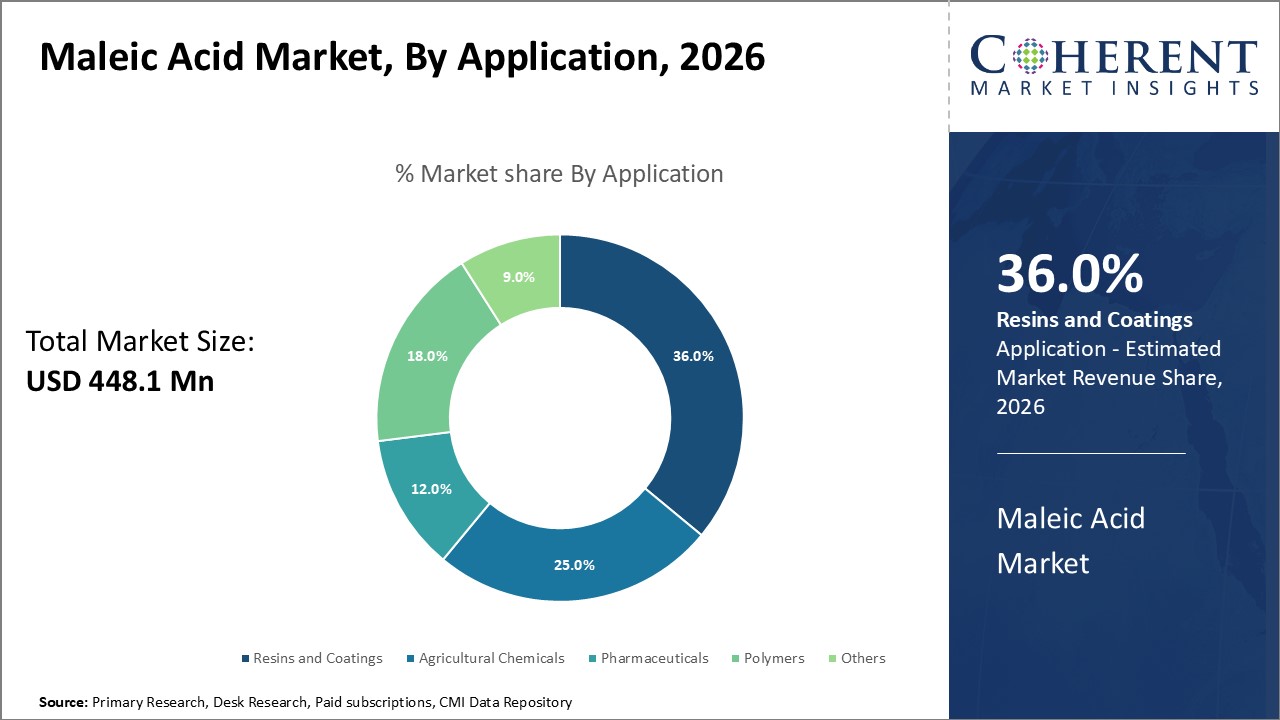
Resins and Coatings dominate the market share with approximately 36%, driven by the rising need for eco-friendly and high-performance coatings in the automotive and construction sectors. This segment benefits from stringent environmental regulations promoting durable, low-VOC (volatile organic compounds) products. Agricultural Chemicals, witnessing the fastest growth, leverage maleic acid as a key ingredient in pesticide formulations due to its high efficacy and environmental compatibility. Pharmaceutical applications contribute significant revenue by enabling specialized synthetic processes in drug manufacturing.
Maleic Acid Market Insights, By End-User Industry
Automotive is the leading segment, owing to the demand for lightweight polymer composites and specialty coatings for vehicle manufacturing, which has sustained a growth rate of over 7% annually. Agriculture exhibits the fastest growth, buoyed by rising bio-pesticide developments and sustainable farming practices. The Pharmaceutical segment leverages maleic acid for intermediate synthesis in various drug formulations, providing steady market revenue. Construction uses maleic acid derivatives in adhesives and sealants reinforcing durability and environmental performance.
Maleic Acid Market Trends
Recent market trends indicate a growing emphasis on sustainability and innovation within the Maleic Acid market.
For instance, the integration of bio-based feedstocks has increased by 21% from 2023 to 2025, aligning with global initiatives for greener chemical processes.
Additionally, the development of advanced polymer blends incorporating maleic acid as a key component reflects ongoing shifts towards multifunctional materials in automotive and packaging industries.
Technological advancements in catalyst development have enhanced production efficiency, reducing environmental impact and production costs, which directly influences market growth strategies.
Maleic Acid Market Insights, By Geography
North America Maleic Acid Market Analysis and Trends
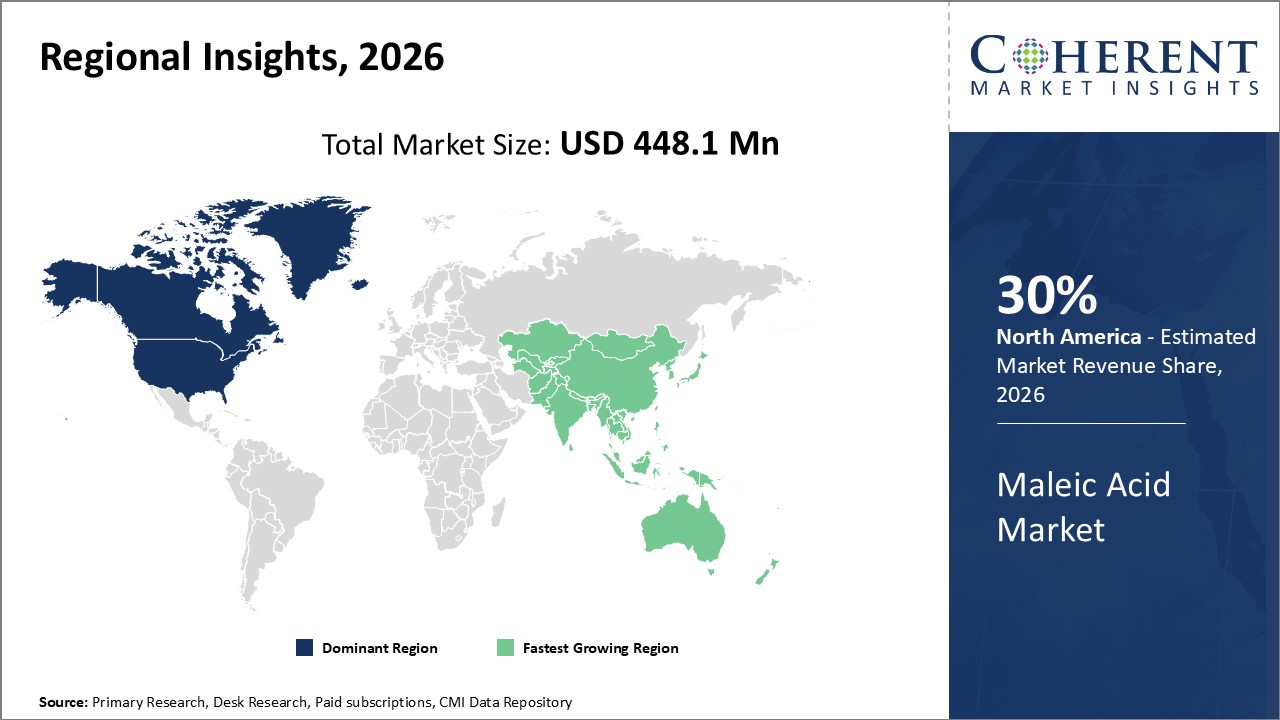
North America as the dominating region in the Maleic Acid Market share, accounting for approximately 30% of the global market revenue in 2025 due to its mature chemical manufacturing infrastructure and high-tech end-user industries.
Asia Pacific Maleic Acid Market Analysis and Trends
The Asia Pacific exhibits the fastest growth, with a CAGR exceeding 8%, propelled by industrial growth in China and India, favorable government policies, and expanding downstream demand for maleic acid-based products.
Maleic Acid Market Outlook for Key Countries
USA Maleic Acid Market Analysis and Trends
The U.S. Maleic Acid market is driven by robust industrial usage in automotive and pharmaceutical sectors alongside regulatory support for environmentally friendly materials. In 2025, U.S. manufacturers expanded maleic acid capacity by 10%, facilitating a 5% year-on-year increase in regional market revenue. Government incentives for bio-based chemical research have further propelled innovation among leading companies. Additionally, strategic collaborations between chemical firms and end-user industries have optimized supply chains, enhancing market competitiveness.
China Maleic Acid Market Analysis and Trends
China's market remains the largest regional consumer, bolstered by expanding manufacturing bases for coatings and agrochemical intermediates. Significant capacity additions, such as the commissioning of new plants by Anhui Beverly Chemicals in 2025, have reinforced China’s position. Domestic demand growth exceeding 9% annually is supported by government policies advocating industry modernization and environmental compliance. Additionally, the growing export of maleic acid derivatives to neighboring Asia Pacific countries has reinforced China's regional dominance.
Analyst Opinion
Expansion of Production Capacity: The enhancement of global production capacities, particularly in Asia Pacific, has been a key factor influencing market size. In 2025, China expanded its maleic acid manufacturing output by 12%, contributing to 40% of the global production volume. Increased investments in capacity upgrades across chemical clusters have supported robust supply dynamics.
Shifts in Pricing and Revenue Dynamics: Fluctuating feedstock costs, especially maleic anhydride and raw materials derived from petroleum, have affected market revenue streams. For instance, in early 2026, the maleic acid pricing experienced a 8% uptick in the U.S. driven by crude oil cost surges, encouraging manufacturers to optimize downstream applications for cost-efficiency.
Diverse Application Demand: The expanding utilization of maleic acid in high-growth sectors such as automotive polymers and agricultural additives has created varied demand scenarios. The resin and coating industry accounted for approximately 36% of market share in 2025, spurred by stringent environmental regulations demanding higher quality and biodegradable solutions.
Import and Export Variations: International trade flows have shaped regional market growth, with North America importing 15% more maleic acid derivatives in 2025 compared to 2023. Trade policy adjustments, including tariffs and environmental standards, have led to shifts in sourcing and distribution networks globally.
- Current Industry Events of 2026
- Market Size Estimation
- Regional Breakdown
- Competitive Landscape
- Customer Intelligence
- Segmental Analysis
- Pricing Analysis
- Key Market Drivers, Challenges & Future Trends
- Customized Insights Section
Market Scope
| Report Coverage | Details | ||
|---|---|---|---|
| Base Year: | 2025 | Market Size in 2026: | USD 448.1 million |
| Historical Data for: | 2020 To 2024 | Forecast Period: | 2026 To 2033 |
| Forecast Period 2026 to 2033 CAGR: | 6.7% | 2033 Value Projection: | USD 680 million |
| Geographies covered: |
| ||
| Segments covered: |
| ||
| Companies covered: | Lanxess AG, Ineos Group Holdings S.A., Anhui Beverly Chemicals, N.R. Chemicals, Fushun Xinye Chemical Company, Guangxi Guochem Co., Ltd., Jinan Chemical and Pharmaceutical Industry Co., Dalian East New Materials Co., Ltd., Xi’an DongHai Chemical Group Co., Ltd., Shandong Huajin Group Co., Ltd. | ||
| Growth Drivers: |
| ||
Maleic Acid Market Growth Factors
Rising demand for eco-friendly resins and coatings in the construction and automotive industries has pushed maleic acid consumption, with the resin sector driving nearly 40% of market growth in 2025. The growing global emphasis on sustainable agriculture has expanded maleic acid use in agrochemical formulations, increasing application diversification and market revenue. Additionally, advancements in pharmaceutical intermediates using maleic acid have stimulated niche growth, especially in developed regions adhering to stringent regulatory requirements. Emerging polymer technologies utilizing maleic acid as a copolymer have opened new avenues in packaging and specialty plastics, contributing to expanding market scope and business growth.
Maleic Acid Market Development
In April 2022, Bartek Ingredients commenced construction on what is positioned to become the world’s largest malic and fumaric acid production facility, a strategic expansion aimed at doubling the company’s overall output capacity. This investment supports rapidly growing global demand across food & beverage, industrial applications, and specialty chemical markets. The project also incorporates modern energy-efficient processing technologies intended to reduce operational emissions while ensuring stable long-term supply for multinational formulators and ingredient buyers.
In January 2023, Huaheng Biotech secured significant financing to accelerate the scale-up of its bio-based malic acid production projects, reinforcing its shift toward renewable feedstock–driven manufacturing. The funding round is dedicated to expanding fermentation capacity, improving downstream purification efficiency, and supporting commercialization of sustainable malic acid grades for food, personal care, and biodegradable materials sectors. The initiative positions the company to meet rising demand for low-carbon organic acids amid tightening global environmental regulations and customer sustainability commitments.
Key Players
Leading Companies of the Market
Lanxess AG
Ineos Group Holdings S.A.
Anhui Beverly Chemicals
N.R. Chemicals
Fushun Xinye Chemical Company
Guangxi Guochem Co., Ltd.
Jinan Chemical and Pharmaceutical Industry Co.
Dalian East New Materials Co., Ltd.
Xi’an DongHai Chemical Group Co., Ltd.
Shandong Huajin Group Co., Ltd.
Competitive strategies include strategic capacity expansions by BASF SE in Asia to capture rising demand, increasing their regional market share by 9% in 2025. Ashland Global Holdings Inc. focused on product innovation, launching bio-based maleic acid derivatives with improved sustainability profiles, leading to diversified application portfolios and 13% revenue increase in the automotive segment.
Maleic Acid Market Future Outlook
The market is anticipated to expand due to increasing polyester resin production, demand for corrosion-resistant coatings, and adoption of environmentally friendly polymers. Growth in the automotive, construction, and electronics sectors will contribute to sustained demand. Technological developments in catalytic oxidation of benzene or butane to maleic acid may improve production efficiency, while regulatory focus on green chemistry and low-emission processes will influence product formulation and usage.
Maleic Acid Market Historical Analysis
Maleic acid has been widely used as a chemical intermediate in unsaturated polyester resins, coatings, lubricants, and copolymers. Historical growth was tied to industrial applications such as automotive, construction, and plastics manufacturing, where its reactivity improved adhesion, thermal stability, and corrosion resistance of polymers. Production initially relied on maleic anhydride, with industrial scale-up supported by chemical synthesis advancements and a growing global polymer sector.
Sources
Primary Research Interviews:
Chemical Production Engineers
Resin Manufacturers
Industrial Coatings Experts
Databases:
ICIS Chemical Pricing Database
GlobalData Chemicals & Materials
Magazines:
Chemical Week
Coatings World
Paint & Coatings Industry Magazine
Journals:
Industrial & Engineering Chemistry Research
Journal of Applied Polymer Science
Progress in Organic Coatings
Newspapers:
Financial Times (Chemicals)
The Wall Street Journal (Industry)
The Hindu BusinessLine (Chemical Industry)
Associations:
American Chemical Society (ACS)
European Chemical Industry Council (CEFIC)
ASTM International
Get access to 250+ pages report
Every segment, forecast, competitor profile and data table behind the analysis above — available for instant download.
- ESOMAR Member
- ISO 9001:2015 Certified
- D-U-N-S Registered
- GDPR & CCPA Compliant
Missing comfort of reading report in your local language? Find your preferred language:
Transform your Strategy with Exclusive Trending Reports
Frequently Asked Questions
Dominant players include BASF SE, Ashland Global Holdings Inc., Lanxess AG, Ineos Group Holdings S.A., and Anhui Beverly Chemicals, who collectively lead through capacity expansions, innovative product launches, and strategic collaborations.
The Maleic Acid market size is anticipated to grow from USD 448.1 million in 2026 to USD 680 million by 2033, with a CAGR of 6.7%, driven by rising demand from coatings, agrochemicals, and pharmaceuticals.
The Resins and Coatings industry offers the largest growth opportunity due to increasing sustainability requirements and expanding applications in automotive and construction sectors.
Market trends indicate a shift towards bio-based maleic acid production, increased polymer applications, and regional manufacturing realignments in Asia Pacific, supported by evolving environmental policies and innovation.
The competitive landscape is marked by capacity expansions and product innovations, with challenges including volatile feedstock prices and regulatory compliance complexities across regions.
Common strategies include strategic partnerships for technology development, capacity scaling in emerging markets, and diversification into sustainable product lines to capture evolving demand.