

Global Medical Membranes Market Size and Forecast – 2026 To 2033
The global medical membranes market is expected to grow from USD 4.8 Bn in 2026 to USD 7.9 Bn by 2033, registering a compound annual growth rate (CAGR) of 7.4% from 2026 to 2033. The market for medical membranes is poised for significant expansion, fueled by the soaring burden of chronic kidney diseases (CKD) such as diabetic nephropathy, glomerulonephritis, polycystic kidney disease, and hypertensive nephropathy.
According to the International Society for Nephrology, more than 850 million people are affected by some form of kidney disease, which is roughly double the number of people who live with diabetes (422 million) and approximately 20 times higher than the global prevalence of cancer (42 million) or people living with AIDS/HIV (36.7 million).
Additionally, the global prevalence of chronic kidney disease (CKD) is estimated at 10.4% among men and 11.8% among women. While acute kidney injury (AKI), affecting approximately 13.3 million people each year, may progress to chronic kidney disease or kidney failure in the long term.
(Source: International Society for Nephrology)
Key Takeaways of the Global Medical Membranes Market
- Polymeric membranes are projected to hold 48.6 % of the global medical membranes market share in 2026, making it the dominant material type segment, across North America facilitated by increasing use in blood purification and hemodialysis equipment, supported by improvements in healthcare infrastructure and the growing adoption of high-performance synthetic membrane material. For instance, high-flux Optiflux dialyzers by Fresenius Medical Care was approved by the U.S. FDA, based on poly-sulfone derivatives as membrane materials because of excellent biocompatibility and filtration performance, supporting the widespread adoption of polymeric membrane technologies in renal care applications. (Source: Fresenius Medical Care)
- Hemodialysis is projected to hold 33.8 % of the global medical membranes market share in 2026, making it the dominant application segment, throughout Asia Pacific due to rising prevalence of chronic kidney diseases and enlarging renal care infrastructure. For instance, The Pradhan Mantri National Dialysis Programme (PMNDP) in India has expanded access to dialysis services through district hospitals, leading to increased demand for membrane-based hemodialysis systems. (Source: Ministry of Health & Family Welfare)
- Hospitals and clinics are projected to hold 46.4 % of the global medical membranes market share in 2026, making it the dominant end user segment, especially in Europe due to the sophisticated healthcare facilities and increasing implementation of technology advanced treatment processes. For instance, the enforcement of the European Union Medical Device Regulation (EU MDR 2017/745) has reinforced the quality and safety parameters concerning medical devices such as membrane-based therapeutic systems, thereby encouraging healthcare facilities to adopt advanced compliant technologies. (Source: European Commission)
- North America maintains its dominance with an expected share of 38.2 % in 2026, bolstered by significant investments in biomedical research, presence of established medical device manufacturers, and growing penetration of separation techniques in medical applications. For instance, The U.S. government spends more than USD 47 billion per year through the National Institutes of Health (NIH) to fund biomedical and healthcare research activities, thus driving forward the development of new medical technologies and other innovative healthcare solutions. (Source: Department of Health and Human Services)
- Asia Pacific is expected to exhibit the fastest growth with an estimated contribution of 23.9 % share in 2026, strengthened by soaring levels of healthcare spending, swift growth in capabilities, and increasing government initiatives aimed at strengthening domestic medical device manufacturing capabilities. For instance, “Make in India” program launched by the government of India has identified medical devices as one of the priority sectors and intends to promote domestic manufacturing through increased investment and infrastructure so as to enable opportunities for advanced medical devices and related accessories. (Source: Make in India)
- Growing Adoption of Membrane-Based Drug Delivery Technologies: Innovative controlled and targeted drug delivery systems are offering new opportunities of growth for medical membranes outside the traditional filtration markets. The use of membrane technologies for transdermal delivery, implants and controlled release products is expanding as the pharmaceutical industry seeks to enhance efficacy and reduce side-effects. Growing interest in customized and targeted therapies will continue to fuel demand for advanced membrane materials from pharmaceutical businesses.
- Expansion of Regenerative Medicine and Bioartificial Organ Development: An improving focus on regenerative medicine and tissue engineering is expanding the opportunities for sophisticated membrane technologies in bioartificial organ systems and cell culture applications. Because of their biocompatibility and controllable permeability, membranes are being employed more and more often as selective barriers in bioartificial kidney devices, tissue scaffolds, and cell separation operations. Growing research investments in organ replacement technologies and stem-cell based therapies should help ensure sustained market growth.
Segmental Insights
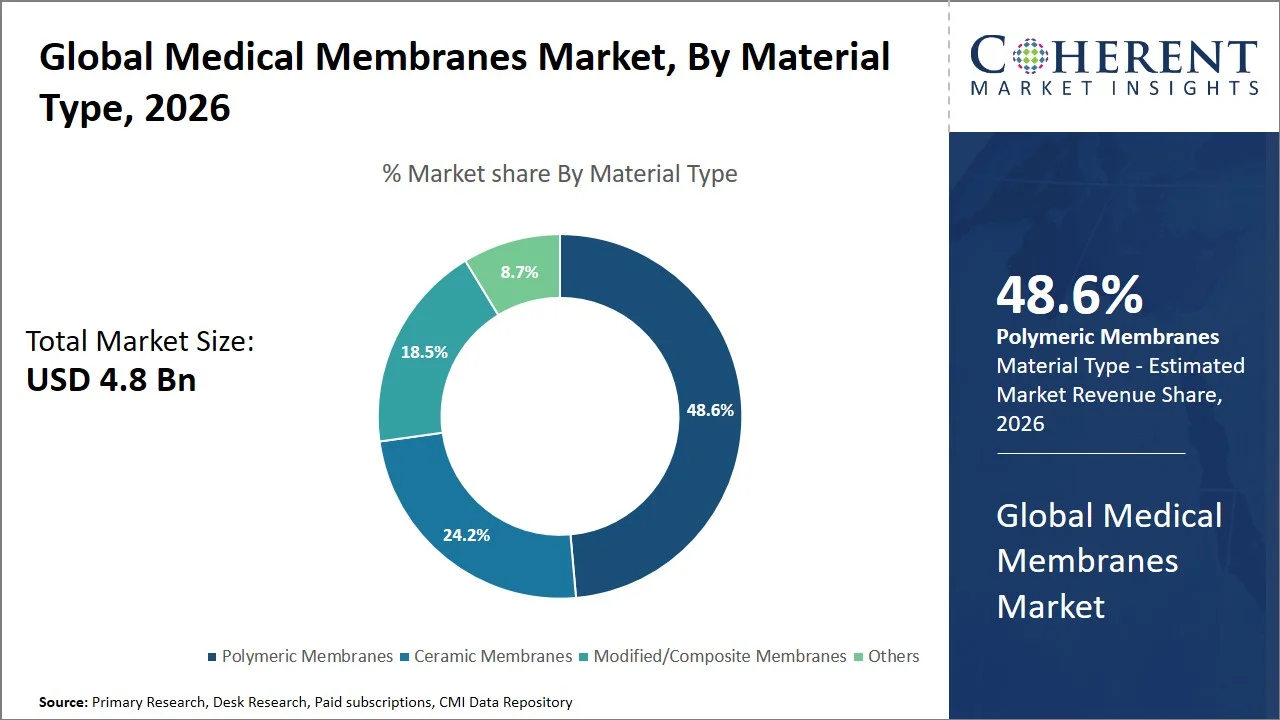
Why Do Polymeric Membranes Dominate the Global Medical Membranes Market?
Polymeric membranes are projected to hold a market share of 48.6% in 2026, due to their superior versatility, biocompatibility and affordability for myriad health care applications. These membranes are used along with various other hydro and hydrophobic polymers such as polysulfone (PSU), polyethersulfone (PES), and polyvinylidene fluoride (PVDF) in applications like hemodialysis, blood filtration, and dialysis cartridges owing to their highly chemical stability, mechanical properties and customizable permeability characteristics. Besides, they are easy to manufacture on the high-end scale and can leverage surface modification techniques for improved anti-fouling properties. For instance, Asahi Kasei's Planova virus removal filters make use of hollow-fiber polymeric membrane technology for the purification of biopharmaceuticals, illustrating the numerous applications for polymeric membranes in advanced medical and healthcare procedures. (Source: Asahi Kasei)
- Current Industry Events of 2026
- Market Size Estimation
- Regional Breakdown
- Competitive Landscape
- Customer Intelligence
- Segmental Analysis
- Pricing Analysis
- Key Market Drivers, Challenges & Future Trends
- Customized Insights Section
Why Does Hemodialysis Represent the Largest Application Segment in the Medical Membranes Market?
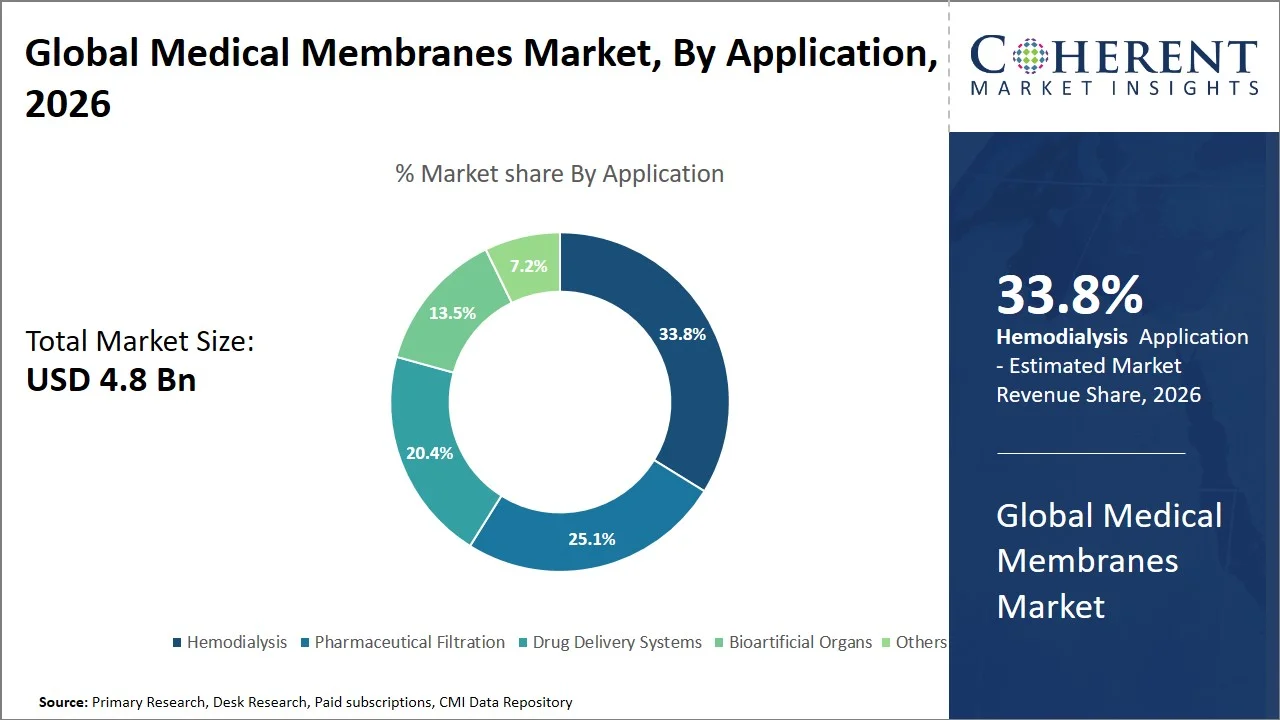
Hemodialysis is projected to hold a market share of 33.8% in 2026, owing to the growing use of membrane-based blood purification systems for the treatment of chronic kidney disease (CKD) and end-stage renal disease (ESRD). Medical membranes are vital for removal of toxins, excess fluids and metabolic waste while preserving vital constituents of blood in dialysis procedures. Growing innovations in high flux and high-performance membranes had increased efficiency of filtration and improved quality of life of the patients. For instance, the Revaclear dialyzer of Baxter International utilizes polyarylethersulfone (PAES) membranes for high-flux hemodialysis as well as broad spectrum removal of toxins, exemplifying the importance of specialized membrane technology in dialysis-based therapeutic interventions. (Source: Baxter International)
Hospitals and Clinics Segment Dominates the Global Medical Membranes Market
The hospitals and clinics segment is projected to hold a market share of 46.4% in 2026, due to the prevalent use of membrane-based treatments in dialysis, therapeutic filtration, extracorporeal blood treatments, and in intensive care practices. Continuous needs for more experienced treatment procedures and higher usage of specialized filtration apparatus will sustain the market dominance of the segment. Furthermore, healthcare institutions also need highly biocompatible and efficient membranes for blood detoxification to support blood purification and improve patient outcomes. For instance, Baxter International’s PrisMax System is utilized in hospital intensive care environments to initiate blood purification for combination therapies, through the use of membrane-based filtration and in the provision of several continuous renal replacement therapies (CRRT) to doctors in dire critically ill cases. This adoption of membrane technologies underscores the trend towards their use in clinical situations. (Source: Baxter International)
Currents Events and their Impact
Current Events | Description and its Impact |
European Union Proposes Simplification of Medical Device Regulations (December 2025) |
|
U.S. FDA Expands Medical Device Regulatory Guidance Priorities (November 2025) |
|
(Source: European Commission, Food and Drug Administration)
Medical Membranes Market Dynamics
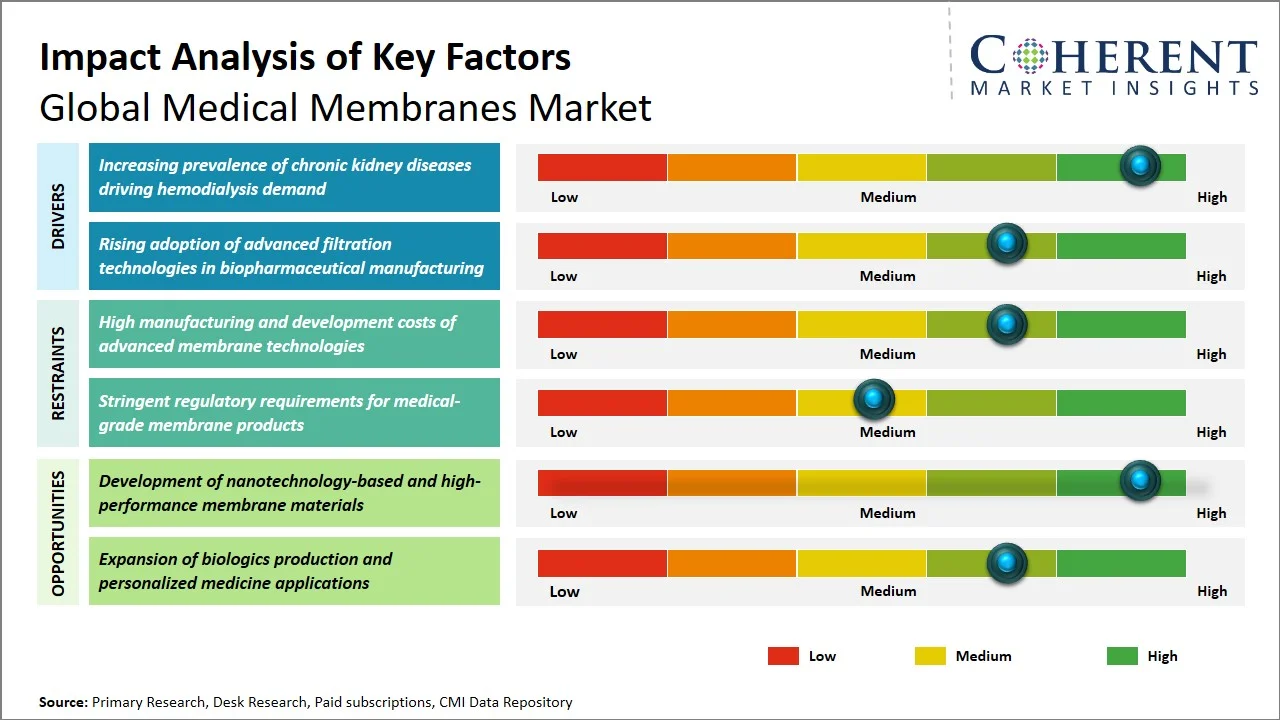
Market Drivers
- Increasing prevalence of chronic kidney diseases driving hemodialysis demand: The rising incidence of chronic kidney disease (CKD), notably in developing nations is expected to boost the demand for hemodialysis, thereby supporting the growth of the medical membranes market. With the progression of chronic kidney disease (CKD) to end stage renal failure (ESRF), there is an increased dependence on dialysis therapies, which use high performance medical membranes for blood decontamination and toxin removal. For instance, according to Centers for Disease Control and Prevention, an estimated 37 million (> 14%) U.S. adults live with chronic kidney disease, and roughly 38% of diabetics have chronic kidney disease. (Source: Centers for Disease Control and Prevention) The increasing prevalence of diabetes and renal complications are contributing to the expanding need for more sophisticated membrane technologies with improved filtration efficiency and biocompatibility.
- Rising adoption of advanced filtration technologies in biopharmaceutical manufacturing: Medical membranes are often used in biopharmaceutical manufacturing processes for sterile filters, protein concentration, cell harvesting and downstream purification to meet process efficiency and product quality demand. The rising production of biologics, monoclonal antibodies, biosimilars and cell therapy drugs is increasing the need for high performance separation methods that would provide exceptional purity and maximum end yield. Moreover, producers are becoming more interested in enhancing the separation accuracy and reducing processing difficulties throughout entire manufacturing workflow. For instance, in December 2025, Intech-Hanbon launched its next generation Deep Filtration System with the aim of providing improved purity for biopharmaceutical applications. (Source: Intech-Hanbon) This is reflection of the growing industry attention centered towards utilizing more sophisticated membrane or separation technologies in the manufacture of biologic molecules.
Emerging Trends
- Increasing Development of Nanostructured and High-Selectivity Membranes: To meet high-demand applications, medical membranes manufacturers are designing next-generation high-selectivity nanostructured membrane materials that supply higher permeability, biocompatible, and anti-fouling properties. The performance of those subsequent-generation medical membranes is improving in applications like hemodialysis, blood purification, and drug targeted delivery systems and in finer discrimination of molecules removal.
- Growing Integration of Medical Membranes in Regenerative Medicine and Bioartificial Organ Systems: Medical membranes are increasingly being introduced in regenerative medicine areas to allow controlled movement of key nutrients, biomolecules and drugs. Growing use of these membranes as part of bioartificial organ and tissue engineering systems, as well as within cell-based therapies is opening up new potential application areas for regenerative, rather than conventional filtration purposes.
Regional Insights
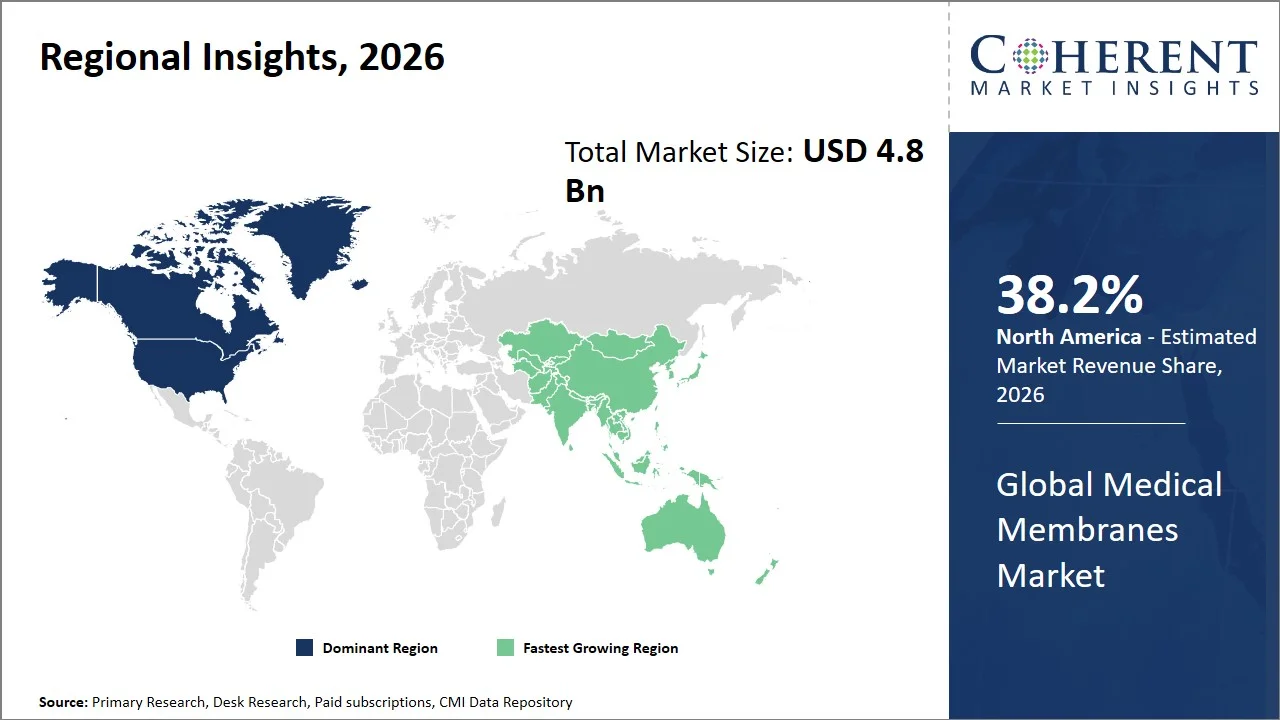
Why is North America a Strong Market for Medical Membranes?
North America leads the global medical membranes market, accounting for an estimated 38.2% share in 2026, owing to its formidable healthcare system, world class research facilities and a rich infrastructure of a well-established, comprehensive medical device manufacturing framework. Various favorable government policies and incentives that propel technological innovation, facilitate rapid clearance processes, and streamline regulatory documentation also stand in the region's favor. For instance, U.S. FDA-Breakthrough Devices Program facilitates the development and review of breakthrough devices aimed to treat or diagnose life threatening or irreversibly debilitating diseases, to enable commercialization of breakthrough medical technology, such as membrane therapeutic systems. (Source: Food and Drug Administration)
Additionally, the presence of significant healthcare companies, such as Pall Corporation, 3M and Merck Millipore, along with high healthcare spending levels and mature market tolerant healthcare consumer base assures immense market opportunities and demands. Moreover, mature trade infrastructure along with the strong intellectual property rights ensures investments in the region, further strengthening its influential market position.
Why Does the Asia Pacific Medical Membranes Market Exhibit High Growth?
The Asia Pacific medical membranes market is expected to exhibit the fastest growth with an estimated contribution of 23.9% share to the global market in 2026, due to soaring healthcare demand & growing medical infrastructure, complemented with the reinforcement of growing investments from government in the healthcare sector. Countries like China, India, and Japan are focused on the construction of more efficient medical infrastructure. For instance, India rolled out the Production Linked Incentive (PLI) Scheme for Medical Devices for reinvigorating the domestic manufacturing sector and luring investments into advanced medical technology. This would enable the development and commercialization of medical components and devices related to membrane-based healthcare applications, among others. (Source: Ministry of Chemicals and Fertilizers) Furthermore, rapid advancements in medical professionalism are creating demand for hi-tech medical membranes with expanding middle class populations and augmenting incidences of chronic diseases.
Global Medical Membranes Market Outlook for Key Countries
Why is the U.S. Leading Innovation and Adoption in the Medical Membranes Market?
The U.S. is at the forefront of innovation and adoption in the medical membranes market driven by its superior integration of membrane application in lucrative applications such as high-flux hemodialysis systems, blood purification equipment, and emerging drug delivery processes. Moreover, commercialization of next-generation membranes such as highly selective polymeric membranes and nanoporous membranes aimed at higher filtration rate and good biocompatibility is happening in this country. The country also has a particularly strong co-operation between medical technology developers and hospitals / clinical research institutions furthering strengthening its market dominance.
Is Japan a Favorable Market for Medical Membranes?
Japan is one of the most promising markets for medical membranes owing to the mature renal care environment and the use of membrane-based technologies involved in hemodialysis and therapeutic filtration procedures. Japan has a rising need for high-performance membrane substances aided by the early adoption of technologically advanced medical devices and precision medicine. The technology proliferation in diagnosing and delivering enhanced treatment efficiency and patient care further accelerated their implementation.
Is China Emerging as a Key Growth Hub for the Medical Membranes Market?
China is positioned as a key growth hub in the global medical membranes on account of expanding domestic production capacity of medical instruments and broader science and technology adoption in healthcare applications leading to wider use of advanced membrane techniques. Adoption of membrane systems in applications such as blood purification, therapeutic separation, and other medical fluid filtration applications continues to grow in the country. Additionally, the continuous growth of domestic ecosystem of membrane manufacturers and the growing focus on science and technology indigeneity are further expected to bolster the market growth in the country.
Why Does Germany Top the Europe Medical Membranes Market?
Germany is the leader in the European market for medical membranes reflecting its mature levels of manufacturing expertise and the breadth of therapeutic applications for membranes in place, ranging from filtration in dialysis to renal applications. Germany hosts a well-developed market for healthcare institutions and medical device manufacturing companies, allowing fast-tracked supply and demand for new membrane materials and high-performance filtration technologies. Ongoing focus on innovative, high-end healthcare solutions will further aid the development and commercialization of new medical membranes.
Is the Medical Membranes Market Developing in India?
India is emerging as a lucrative market for medical membranes with rise in the domestic capabilities for medical technology and growing utilization of membrane-based systems in therapeutic as well as diagnostic applications. Increasing adoption of development of advanced filtration technology system in renal care, blood purification, and healthcare is on the rise. Furthermore, the presence of mature local manufacturing ecosystem along with increased access to the advanced end technologically devices is supporting market growth in the country.
Regulatory Landscape Governing the Global Medical Membranes Market
Region | Authority & Classification | Approval Pathway | Key Regulatory Insight |
North America | U.S. Food and Drug Administration – Class I, II, III medical device classification | 510(k), De Novo, Premarket Approval (PMA) | Medical membranes used in dialysis, filtration, and blood purification systems are regulated based on intended use, safety profile, and clinical risk. Biocompatibility and performance validation are critical requirements. |
Europe | European Commission / EU Medical Device Regulation (MDR 2017/745) – Class I, IIa, IIb, III | CE marking through notified bodies under MDR | The EU MDR framework imposes stricter requirements on clinical evidence, post-market surveillance, and traceability for membrane-based medical devices. |
Asia Pacific | National Medical Products Administration (China), Central Drugs Standard Control Organization (India), Pharmaceuticals and Medical Devices Agency (Japan) | Product registration, technical review, and local regulatory approvals | Growing harmonization of medical device regulations and strengthening domestic manufacturing policies are accelerating market access across the region. |
Latin America | National Health Surveillance Agency (ANVISA), Federal Commission for the Protection against Sanitary Risk (COFEPRIS) | Medical device registration and country-specific approvals | Regulatory modernization and increasing adoption of international medical device standards are improving access for advanced membrane technologies. |
Middle East & Africa | Saudi Food and Drug Authority, South African Health Products Regulatory Authority | Device registration, import licensing, and local compliance review | Expansion of healthcare infrastructure and evolving regulatory frameworks are supporting adoption of membrane-based medical technologies across the region. |
How is the development of nanotechnology-based and high-performance membrane materials creating new growth opportunities in the medical membranes market?
The emergence of nanotechnology enabled and high-performance membrane materials is generating substantial growth prospects in the medical membranes market through ultimate membrane selectivity, permeability, hemocompatibility, and anti-fouling properties. The emergence of advanced membrane derivatives is resulting into more precise applications in bioartificial organ systems, regenerative treatments, dialysis and targeted drug delivery with less associated complications, and enhanced therapeutic efficacy. Further advancements in next generation of nanostructured membranes are expected to offer highly controlled molecular transport making medical membranes an integral part of precision medicine and cutting-edge therapy systems. For instance, The Kidney Project has created silicon nanopore membrane technology for artificial kidneys, with nanoscale filtering elements that aim to replicate the filtration in human kidneys while reducing reliance on existing dialysis systems, showing the increasing penetration of nanotechnology in future medical membrane applications. (Source: The Regents of the University of California)
Market Players, Key Development, and Competitive Intelligence
Key Developments
- In January 2026, Toray Industries introduced an ultra-high-efficiency separation membrane module for optimized facility utilization rate and altitude output of biopharmaceutical manufacture. This product contributes to cost-effective manufacturing through optimized separation and filtration efficiency in biologics production. New biomedical membrane technologies at product level may make rapid penetration in the pharmaceutical industry, the health care industry, etc.
- In September 2024, Medtronic announced the launch of the new VitalFlow as part of the company’s program, expanding its technologies within the range of cardiac surgery and respiratory care. The system is responsible in enabling advanced applications of extracorporeal life support through enhanced membrane-based oxygenation performance. The introduction of the product is likely to boost the use of state-of-the-art medical membranes to enhance device functioning across various critical care fields.
Competitive Landscape
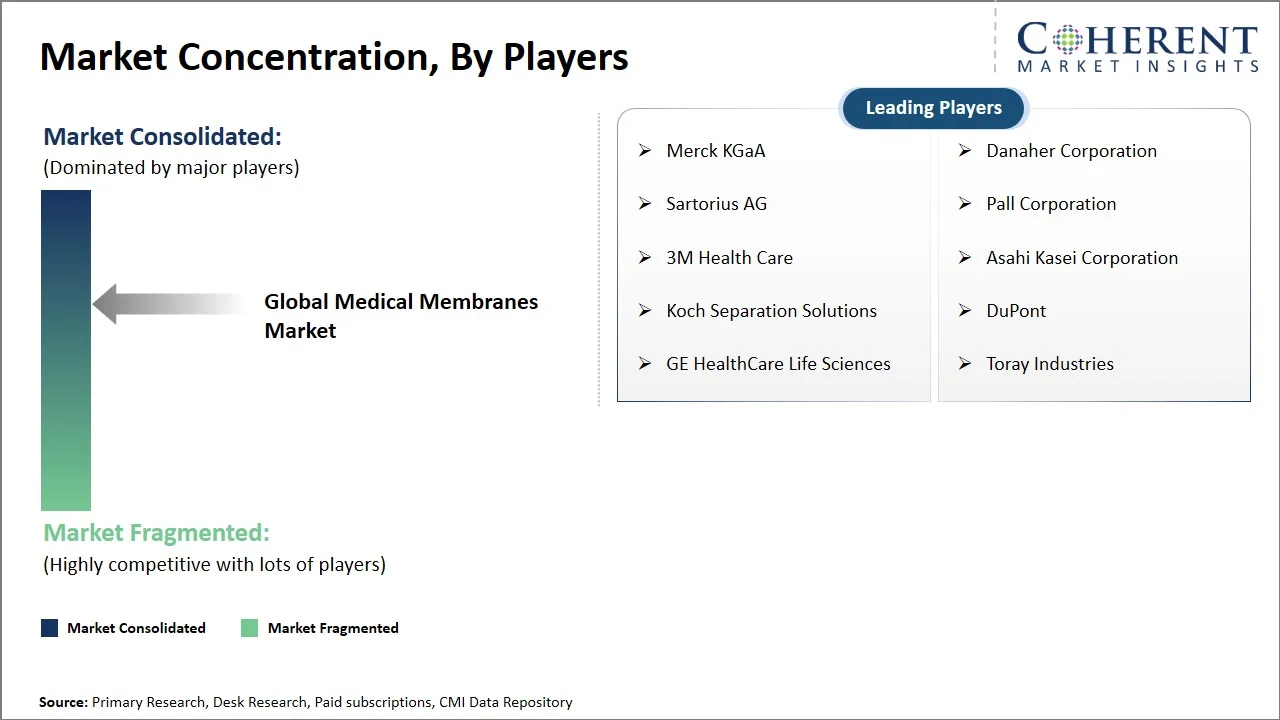
The global medical membranes market is moderately competitive, with leading firms predominantly emphasizing on the development of innovative materials, the focus on growing membrane performance and the widening of application areas in terms of advanced disease treatments. Players operating in this industry are targeting to manufacture superior biocompatible and highly selective membranes that confer greater filtration proficiency and efficacy. Key strategies for growth of this industry include partnerships with healthcare providers, research centers, and other medical device manufacturing companies along with penetration into emerging healthcare sectors. Key focus areas include:
- Development of advanced biocompatible and high-flux membrane technologies
- Expansion of membrane applications in drug delivery and therapeutic filtration systems
- Integration of nanotechnology and next-generation membrane engineering solutions
- Strengthening strategic partnerships and regional manufacturing expansion initiatives
Market Report Scope
Medical Membranes Market Report Coverage
| Report Coverage | Details | ||
|---|---|---|---|
| Base Year: | 2025 | Market Size in 2026: | USD 4.8 Bn |
| Historical Data for: | 2020 To 2024 | Forecast Period: | 2026 To 2033 |
| Forecast Period 2026 to 2033 CAGR: | 7.4% | 2033 Value Projection: | USD 7.9 Bn |
| Geographies covered: |
| ||
| Segments covered: |
| ||
| Companies covered: | Merck KGaA, Danaher Corporation, Sartorius AG, Pall Corporation, 3M Health Care, Asahi Kasei Corporation, Koch Separation Solutions, DuPont, GE HealthCare Life Sciences, and Toray Industries | ||
| Growth Drivers: |
| ||
| Restraints & Challenges: |
| ||
Analyst Opinion (Expert Opinion)
- The future outlook of the medical membranes market is expected to be driven by the emergence of innovative and highly selective membrane technologies offering enhanced biocompatibility, improved permeability, and greater therapeutic efficiency. The growing application of medical membranes in fields other than traditional dialysis applications such as drug delivery, tissue engineering, bioartificial organs and regenerative medicine is expected to open up new growth opportunities. Integration of nanotechnology and next-generation material engineering promises to revolutionize membrane performance and enable new applications.
- The maximum opportunities will probably exist within hemodialysis applications in Asia Pacific (especially India and China) where aging population is expected to adopt more hemodialysis treatments due to increasing burden of chronic kidney disease, rising income levels, and increased access to healthcare coupled with increased capital investments in health infrastructure and advanced medical devices. Moreover, increased spending on healthcare and government support on investment opportunities in strengthening medical device manufacturing ecosystems will also favor the market growth.
- In order to obtain a competitive advantage, market participants should focus on producing high-end polymeric membranes exhibiting enhanced biocompatibility and filtration function and commensurately invest in advanced membrane engineering techniques. Simultaneously, establishing strategic alliances with healthcare entities, research bodies and makers of medical devices and bolstering regional manufacturing units could prove highly beneficial for market expansion.
Speak to the analyst
Want personalized insights?
Take the findings above to one of our principal consultants, or have the report rebuilt around the segments, geographies and competitors you actually track.
Market Segmentation
- Material Type Insights (Revenue, USD Bn, 2021 - 2033)
- Polymeric Membranes
- Ceramic Membranes
- Modified/Composite Membranes
- Others
- Application Insights (Revenue, USD Bn, 2021 - 2033)
- Drug Delivery Systems
- Hemodialysis
- Bioartificial Organs
- Pharmaceutical Filtration
- Others
- End User Insights (Revenue, USD Bn, 2021 - 2033)
- Hospitals and Clinics
- Pharmaceutical and Biotechnology Companies
- Research Laboratories
- Ambulatory Surgical Centers
- Others
- Regional Insights (Revenue, USD Bn, 2021 - 2033)
- North America
- U.S.
- Canada
- Latin America
- Brazil
- Argentina
- Mexico
- Rest of Latin America
- Europe
- Germany
- U.K.
- Spain
- France
- Italy
- Russia
- Rest of Europe
- Asia Pacific
- China
- India
- Japan
- Australia
- South Korea
- ASEAN
- Rest of Asia Pacific
- Middle East
- GCC Countries
- Israel
- Rest of Middle East
- Africa
- South Africa
- North Africa
- Central Africa
- North America
- Key Players Insights
- Merck KGaA
- Danaher Corporation
- Sartorius AG
- Pall Corporation
- 3M Health Care
- Asahi Kasei Corporation
- Koch Separation Solutions
- DuPont
- GE HealthCare Life Sciences
- Toray Industries
Sources
Primary Research Interviews
- Medical membrane manufacturers, filtration technology specialists, and biomedical material engineers involved in membrane design and development
- Hospital administrators and dialysis center managers overseeing renal care and therapeutic filtration procedures
- Nephrologists, clinicians, and laboratory specialists utilizing membrane-based technologies in healthcare applications
- Medical device companies and healthcare solution providers supporting membrane-based therapeutic systems
- Researchers and scientists engaged in membrane material development, separation technologies, and bioengineering studies
Stakeholders
- Medical membrane manufacturers and medical technology companies
- End-use Sectors
- Hospitals and clinics
- Dialysis centers and renal care facilities
- Pharmaceutical and biotechnology companies
- Diagnostic laboratories
- Academic and research institutions
- Healthcare service providers
- Regulatory & Health Bodies: World Health Organization – healthcare and chronic disease statistics,, U.S. Food and Drug Administration – medical device and dialysis device regulations,, Centers for Disease Control and Prevention – kidney disease and healthcare burden data, National Institutes of Health – membrane and biomedical research initiatives, European Medicines Agency – medical device and therapeutic regulations
Databases
- WHO Global Health Observatory – chronic disease and healthcare burden statistics
- World Bank Health Database – healthcare expenditure and medical technology indicators
- OECD Health Statistics – healthcare infrastructure and expenditure trends
- Global Burden of Disease (GBD) Database – chronic kidney disease and disease prevalence data
- United Nations Health Database – healthcare access and demographic trends
- CDC National Center for Health Statistics – healthcare utilization and patient statistics
Magazines
- Medical Device Network – medical technology and device innovations
- Healthcare Business Today – healthcare industry developments
- Medical Design & Outsourcing – medical device engineering and product trends
- MedTech Dive – healthcare technology and medical device advancements
- Healthcare IT News – healthcare technology adoption trends
Journals
- Journal of Membrane Science
- Biomaterials
- Artificial Organs
- Journal of Biomedical Materials Research
- Nature Biomedical Engineering
- The Lancet Digital Health
Newspapers
- Financial Times – healthcare and life sciences industry developments
- The Wall Street Journal – medical technology and healthcare updates
- The New York Times (Health Section) – healthcare innovation trends
- The Guardian (Health & Science) – global healthcare developments
Associations
- American Society of Nephrology
- International Society for Hemodialysis
- Medical Device Manufacturers Association
- Association for the Advancement of Medical Instrumentation
Public Domain Sources
- World Health Organization – chronic kidney disease and healthcare statistics
- Centers for Disease Control and Prevention – kidney disease prevalence and healthcare data
- National Institutes of Health – biomedical and membrane research publications
- World Bank – healthcare expenditure and infrastructure data
- International Society for Nephrology – kidney disease and renal care publications
Proprietary Elements
- CMI Data Analytics Tool, Proprietary CMI Existing Repository of information for last 10 years.
Get access to 250+ pages report
Every segment, forecast, competitor profile and data table behind the analysis above — available for instant download.
- ESOMAR Member
- ISO 9001:2015 Certified
- D-U-N-S Registered
- GDPR & CCPA Compliant
Missing comfort of reading report in your local language? Find your preferred language:
Transform your Strategy with Exclusive Trending Reports
Frequently Asked Questions
The global medical membranes market is estimated to be valued at USD 4.8 Bn in 2026 and is expected to reach USD 7.9 Bn by 2033.
Polymeric membranes dominate due to their superior biocompatibility, cost-effectiveness, high filtration efficiency, chemical stability, and extensive use in hemodialysis, drug delivery, and blood purification applications.
Medical membranes are selective barrier materials used in healthcare applications to separate, filter, or regulate the transport of substances in therapeutic and diagnostic procedures.
The CAGR of the global medical membranes market is projected to be 7.4%from 2026 to 2033.
Increasing prevalence of chronic kidney diseases driving hemodialysis demand and rising adoption of advanced filtration technologies in biopharmaceutical manufacturing are the major factors driving the growth of the global medical membranes market.
Polysulfone (PSU), polyethersulfone (PES), polypropylene (PP), and polyvinylidene fluoride (PVDF) are commonly used owing to their high permeability and biocompatibility.
High-flux membranes enable efficient removal of larger molecular-weight toxins while maintaining essential blood component retention.