

Medical Polymers Market Analysis & Forecast: 2026-2033
Medical Polymers Market is estimated to be valued at USD 28,285.1 Mn in 2026 and is expected to reach USD 55,119.6 Mn in 2033, exhibiting a compound annual growth rate (CAGR) of 10.0% from 2026 to 2033.
Key Takeaways
- By Polymer Material, the Commodity Polymers segment accounts for the largest share of 66.6% in 2026, supported by their extensive use in medical packaging, disposable devices, and cost-effective healthcare applications.
- By Application, the Medical Devices segment dominated the market with largest share in 2026, driven by rising demand for surgical instruments, prosthetics, diagnostic tools, and disposable healthcare products, making it the largest contributor to global consumption.
- By Processing Method, Blow Fill Seal segment held the leading share of the market in 2026, driven by its ability to ensure sterility, precision, and efficiency in pharmaceutical packaging.
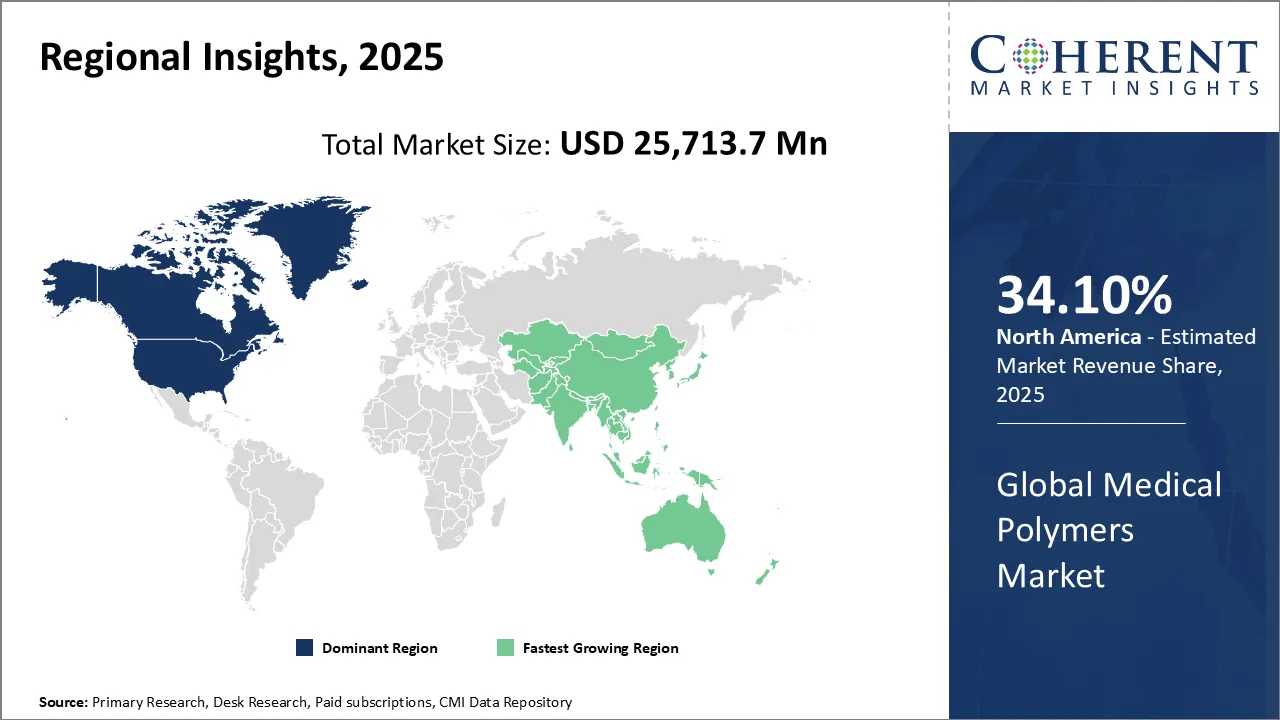
- By Region, North America accounted for a 34.1% consumption share of fibers and resins in 2026, led by the U.S. with its advanced healthcare infrastructure, rising homecare demand, and continuous polymer innovations, while Canada benefitted from government-backed public healthcare initiatives.
- By Region, Asia Pacific witnessed robust growth in 2026, supported by higher healthcare spending, strict safety standards, and surging demand for advanced medical devices, packaging, and wound care products. A large patient pool and favourable government policies further propelled regional expansion.
Market Overview
The medical polymers market is witnessing robust growth, driven by rising demand for advanced medical devices, pharmaceutical packaging, and disposable healthcare products. Increasing healthcare spending, aging populations, and technological innovations in polymer materials are fuelling adoption. Biodegradable and biocompatible polymers are gaining momentum, particularly in minimally invasive and patient-friendly applications. Strong demand in North America and rapid expansion in Asia Pacific support sustained medical polymers market growth and innovation.
Current Events and Its Impact on Medical Polymers Market
Current Events | Description and its impact |
Technological Advancements and Product Launches |
|
Collaborations and Market Expansion |
|
Sustainability Efforts and Regulatory Updates |
|
Segmental Insights
- Current Industry Events of 2026
- Market Size Estimation
- Regional Breakdown
- Competitive Landscape
- Customer Intelligence
- Segmental Analysis
- Pricing Analysis
- Key Market Drivers, Challenges & Future Trends
- Customized Insights Section
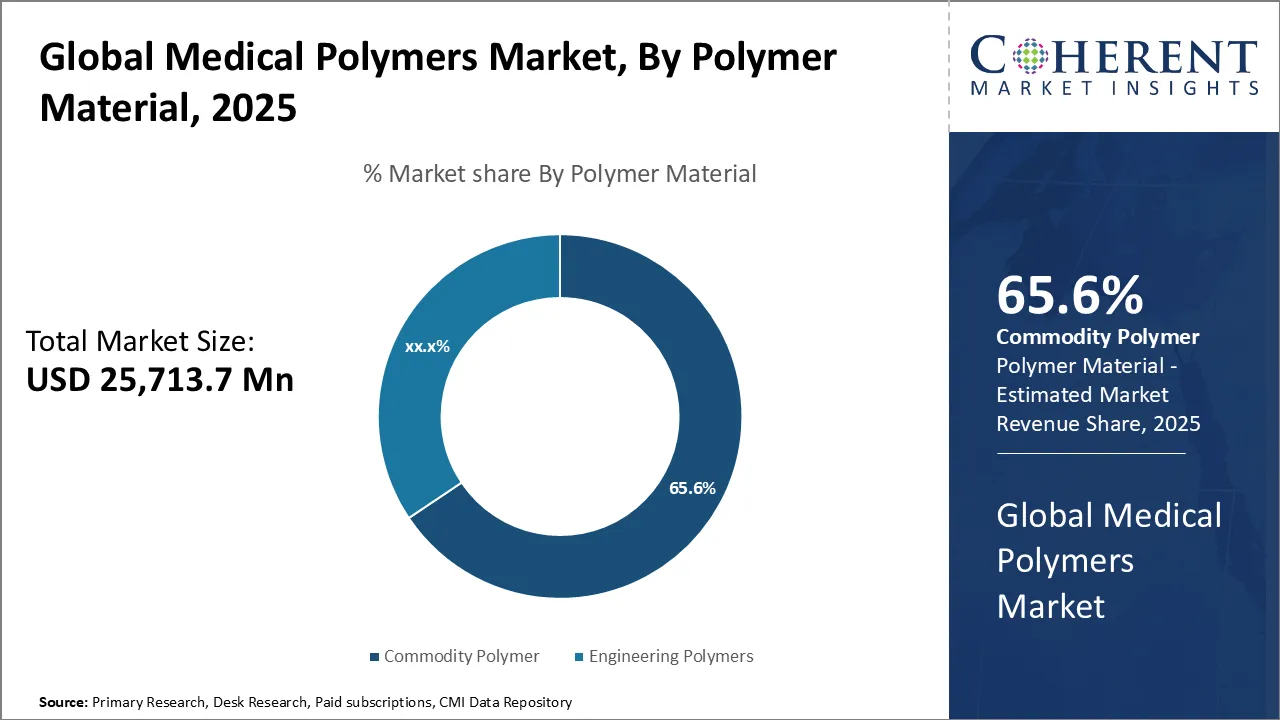
Medical Polymers Market Insights, By Polymer Material: Commodity Polymers Lead the market Owing to Cost Efficiency and Extensive Use in Medical Packaging
In terms of polymer material, the commodity polymers segment accounted for the largest share of 66.6% in 2026, supported by their extensive use in medical packaging, disposable devices, and cost-effective healthcare applications. Their affordability, easy availability, and compatibility with sterilization processes make them a preferred choice for large-scale healthcare production.
The increasing use of commodity polymers in pharmaceutical packaging, syringes, IV components, and single-use medical solutions continues to strengthen their market dominance. Rising healthcare expenditure and the global trend toward disposable medical solutions further drive adoption. While innovations in biodegradable and specialty polymers are emerging, commodity polymers are expected to remain the backbone of the medical polymers market.
For instance, in June 2025, INEOS Olefins & Polymers has begun producing virgin-quality recycled plastics at its Lavera facility in southern France. The site received its first deliveries of pyrolysis oil, derived from hard-to-recycle plastic waste, to produce recycled polyethylene (PE), also known as a commodity polymer, and polypropylene (PP). This supports compliance with the EU’s Packaging and Packaging Waste Regulation requiring a minimum of 10% recycled content in sensitive applications by 2030.
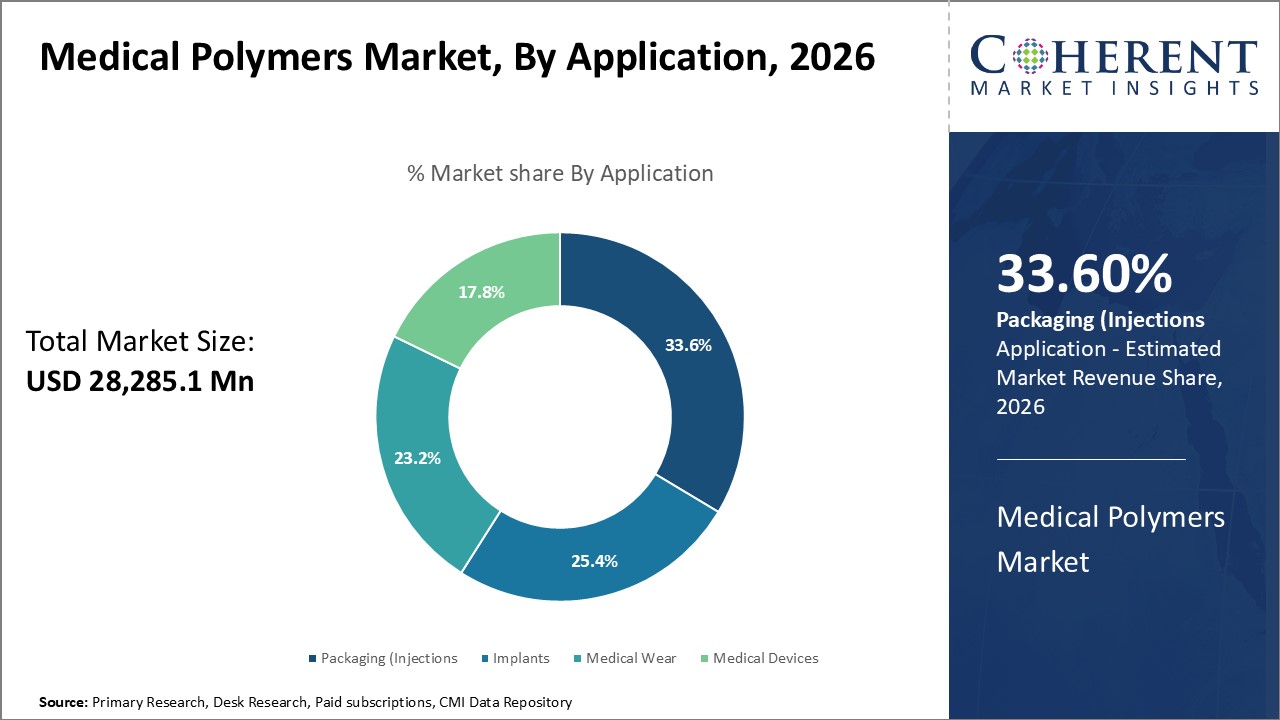
Medical Polymers Market Insights, By Application: Medical Devices Segment Dominates Driven by Rising Demand for Surgical Tools and Disposable Products
In terms of application, the medical devices segment dominated the market in 2026, reflecting its role as the largest consumer of medical polymers. Growing demand for advanced surgical instruments, diagnostic tools, prosthetics, and single-use medical products has significantly fuelled this segment’s growth.
The shift toward minimally invasive procedures, expanding home healthcare demand, and continuous innovation in medical device design are accelerating the use of polymers in this sector. As healthcare providers prioritize cost-effective yet high-performance solutions, medical polymers are increasingly integrated into a wide range of devices, reinforcing their essential role in modern healthcare delivery.
For instance, in April 2025, Peijia Medical entered into a strategic partnership with DSM-Firmenich to advance the development of innovative medical device products. The collaboration focuses on the research and development of ultra-high molecular weight polyethylene (UHMWPE) and thermoplastic polyurethane (TPU) materials for heart valves. By leveraging DSM-Firmenich's expertise in biomaterials, the two companies aim to enhance the performance and longevity of heart valve devices.
Medical Polymers Market Insights, By Processing Method: Blow Fill Seal Demand is Driven by its Sterility and Precision in Pharmaceutical Packaging
In terms of processing method, the blow fill seal segment holds the highest share of the market in 2026, driven by its ability to ensure sterility, precision, and efficiency in pharmaceutical packaging. BFS allows aseptic filling and sealing in a single automated step, which significantly reduces the risk of contamination, a critical requirement for injectables, vaccines, and other sterile liquid medications. The process also supports high-speed production, consistent quality, and minimal human intervention, making it ideal for large-scale pharmaceutical manufacturing.
Additionally, regulatory compliance and stringent safety standards in the healthcare industry further drive adoption, as BFS meets GMP (Good Manufacturing Practice) requirements more effectively than conventional filling methods.
For instance, in October 2024, Pharmstandard JSC CEO Dmitry Zaitsev discussed the company's announced its plan for large-scale production expansion in an interview with Regnum News Agency. Zaitsev highlighted the importance of Blow-Fill-Seal (BFS) technology in their operations, noting its role in improving efficiency and product quality. He emphasized that BFS technology contributes to the company's commitment to innovation and meeting the growing demand for pharmaceutical products.
Regional Insights
North America Medical Polymers Market Trends
North America held a significant position in the global medical polymers market in 2026, with fibres and resins dominating regional demand. The United States accounted for 34.10% of consumption, supported by advanced healthcare infrastructure, high R&D investments, and strong adoption of homecare medical solutions.
Ongoing polymer innovations and the rising need for cost-effective medical packaging and disposables further drive market growth. Meanwhile, Canada shows strong development potential, fuelled by its public healthcare initiatives and aging population, which is increasing demand for advanced medical materials.
In June 2026, Polymer Medical Ramps Up Production of Single-Use Plastic Ampoules, Polymer Medical expanded its output of single-use plastic ampoules at its Orchard Park, NY facility under contract with James Alexander Corp. This scaling reflects growing demand for safe, consistent drug-delivery components amid nearshoring trends.
Asia Pacific Medical Polymers Market Trends
Asia Pacific is experiencing rapid growth in the medical polymers market, supported by rising healthcare expenditure, strict safety regulations, and increasing demand for advanced medical devices and pharmaceutical packaging. The region’s vast population base, coupled with expanding access to healthcare and favourable government policies promoting domestic manufacturing, is further accelerating adoption. Applications in wound care, mobility assistance, and drug delivery are expanding quickly. With strong support from both public and private healthcare sectors, Asia Pacific is expected to remain the fastest-growing regional market over the coming years.
For instance, in June 2026, Covestro has commenced local production of its Desmopan® Rx medical-grade Thermoplastic Polyurethane (TPU) at its Changhua facility in Taiwan. This marks the company's first such site in the Asia Pacific region and its second globally, following New Martinsville in North America. The move aims to enhance regional supply and support the growing demand for high-performance medical materials. Manufactured in compliance with Good Manufacturing Practice (GMP) guidelines, Desmopan® Rx grades meet international medical standards, ensuring biocompatibility and minimizing contamination risks.
Medical Polymers Market Outlook Country-Wise
United States Medical Polymers Market Analysis and Trend
The United States holds a prominent position in the global medical polymers market in 2026. Growth is supported by the country’s advanced healthcare infrastructure, high R&D investments, and strong adoption of homecare medical solutions. The demand for fibres, resins, and biodegradable polymers in medical packaging, drug delivery, and disposable devices continues to expand. Ongoing innovations in polymer technology, coupled with a large network of manufacturers and healthcare providers, reinforce the U.S. as a global leader in medical polymers.
For instance, in April 2026, Confluent Medical Technologies introduced Ultra Polyimide, a high-modulus polymer tubing that offers nearly double the strength of traditional polyimide. This innovation enables medical device designers to reduce material usage while maintaining essential column and tensile strength, allowing for more design flexibility in interventional devices. Ultra Polyimide is manufactured without REACH- or EU MDR-restricted solvents, including NMP, ensuring regulatory compliance and enhanced safety.
India Medical Polymers Market Analysis and Trend
India is witnessing rapid growth in the medical polymers market share, driven by increasing healthcare investments, expanding access to hospitals, and rising awareness of advanced medical devices. The country’s growing pharmaceutical industry, combined with supportive government policies such as “Make in India,” is boosting domestic polymer production and utilization.
High demand for cost-effective disposables, wound care products, and mobility assistance solutions positions India as a fast-growing hub in Asia Pacific. Expanding e-commerce and distribution channels further strengthen market accessibility. In June 2026, the Kerala state government cleared a ₹215 crore investment for the CSIR-NIIST Centre at the Bio360 Life Science Park in Thonnakkal, Thiruvananthapuram. This project aims to drive regional innovation in biopolymer manufacture and is among the largest in the park’s development phase.
Market Report Scope
Medical Polymers Market Report Coverage
| Report Coverage | Details | ||
|---|---|---|---|
| Base Year: | 2025 | Market Size in 2026: | USD 28,285.1 Mn |
| Historical Data for: | 2020 To 2024 | Forecast Period: | 2026 To 2033 |
| Forecast Period 2026 to 2033 CAGR: | 10.0% | 2033 Value Projection: | USD 55,119.6 Mn |
| Geographies covered: |
| ||
| Segments covered: |
| ||
| Companies covered: | BASF SE, Celanese Corporation, Eastman Chemical Company, Evonik Industries AG, Dow | ||
| Growth Drivers: |
| ||
| Restraints & Challenges: |
| ||
Medical Polymers Market Drivers
- Increased safety and cost-effectiveness for users
Due to its diverse applications, affordable production, and extended lifespan, medical plastic is a highly sought-after investment in today's healthcare. Metal and glass are more prone to both corrosion and breakage than plastic equipment. Additionally, although other equipment may be sterilized frequently and survive much longer, certain plastics are made to be thrown away after a single usage.
Medical plastic is a wonderful option for carrying bio hazardous materials since it does not penetrate and is shatter-proof. It is possible to stop harmful bacteria from proliferating by carefully eliminating medical waste. Medical Polymer makes ensuring that a patient's medications haven't been tampered with and is utilized to make tamper-proof caps.
- An increase in technological innovation will boost product demand
Technology innovations such as device miniaturization, multipurpose medicine packaging, and point-of-care (POC) diagnostic equipment have all contributed significantly to the Global medical Polymers market's rapid expansion. This is one of the elements driving market expansion. For instance, bespoke blow forming was developed as a technical solution to make thinner pharmaceutical bottles, enhance moisture transfer performance, and fortify twist closures.
Additionally, Easy Biocompatibility Testing is included in Unique Device Identifying (UDI) and other device-identifying barcodes. Because of these technologies, a lot of Polymer is being used in medical applications, which is boosting the market's growth pace. Companies are collaborating to develop solutions that will satisfy the growing market demands for medical applications in POC diagnostics, medical device miniaturization, and other fields. In January 2025, Syensqo, spun off from Solvay, began offering medical-grade PEEK and PPSU materials optimized for 3D printing, aiming to replace metal components in load-bearing implants. These polymers offer benefits such as strength, biocompatibility, and regulatory support positioning the company at the forefront of sustainable implant manufacturing.
Key Developments
- In July 2025, The U.S. Food and Drug Administration (FDA) approved a novel nerve repair system developed by French medical technology company Tissium. This system utilizes a light-activated polymer, poly (glycerol sebacate acrylate), to create a flexible 3D-printed cuff that holds damaged nerve segments in place.
- In May 2025, Covestro unveiled advanced polycarbonate and TPU films, including skin-tone varieties and flexible substrates suitable for printed electronics in medical wearable’s. These materials enhance comfort, wear time, and integration for continuous monitoring devices like glucose patches.
- In Aprill 2025, Syensqo launched White Radel®, a high-performance polyphenylsulfone (PPSU) resin designed for medical devices, surgical instruments, and biopharma applications.
- In Feb 2024, MD&M West 2024, SK Chemicals introduced its circular recycled polymers SKYPET CR and ECOTRIA CR targeted at medical device packaging. The collaboration with U.S. extruder Pacur aims to bring high-recycled-content materials into sustainable industry use.
Analyst Opinion
- The global medical polymers market is largely driven by the growing demand for lightweight, cost-effective, and biocompatible materials in healthcare applications. Medical polymers are increasingly used in devices, implants, packaging, and drug delivery systems, offering performance advantages over traditional materials such as metals and ceramics. In 2025, a notable trend has been the adoption of biodegradable polymers for implants, driven by environmental concerns and stricter regulatory frameworks. For instance, manufacturers are investing in bio-based solutions that align with sustainability and patient safety.
- Product innovation remains a core driver of this market’s expansion. Companies are focusing on developing high-performance fibres, resins, and elastomers that enhance durability, reduce infection risks, and improve patient outcomes. Innovations in diagnostic equipment, surgical tools, and wound care materials are further fuelling demand. The integration of polymers into advanced healthcare technologies such as 3D printing, wearable devices, and smart drug delivery systems reflects a strong push toward customization and efficiency. Efforts to balance cost-effectiveness with premium quality and sustainability continue to shape R&D initiatives.
Speak to the analyst
Want personalized insights?
Take the findings above to one of our principal consultants, or have the report rebuilt around the segments, geographies and competitors you actually track.
Market Segmentation
- Global Medical polymers Market, By Product Type (Revenue, USD Mn, 2021 - 2033)
- Fibers and resin
- PVC
- PP
- PE
- PS
- Others (engineering thermoplastics such as nylon, PET, PA, PC, ABS)
- Medical Elastomers
- Styrenic Block Copolymer
- Rubber latex (NR + Butyl Rubber + Silicone rubber)
- Others (TPU, TPO, TPV)
- Biodegradable plastic
- Fibers and resin
- Global Medical polymers Market, By Applications (Revenue, USD Mn, 2021 - 2033)
- Medical devices and equipment’s
- Medical packaging
- Others (cardio, tissue culture)
- Global Medical polymers Market, By Region (Revenue, USD Mn, 2021 - 2033)
- North America
- U.S.
- Canada
- Latin America
- Brazil
- Argentina
- Mexico
- Rest of Latin America
- Europe
- Germany
- U.K.
- Spain
- France
- Italy
- Russia
- Rest of Europe
- Asia Pacific
- China
- India
- Japan
- Australia
- South Korea
- ASEAN
- Rest of Asia Pacific
- Middle East
- GCC Countries
- Israel
- Rest of Middle East
- Africa
- South Africa
- North Africa
- Central Africa
- North America
- Key Players Insights
- BASF SE
- Celanese Corporation
- Eastman Chemical Company
- Evonik Industries AG
- Dow
Sources
The Stakeholders Consulted
- Manufacturers and suppliers of medical polymers (fibres, resins, elastomers)
- Producers of medical devices, implants, and pharmaceutical packaging
- Hospital procurement managers and supply chain executives
- Research and development teams in polymer science and biomedical engineering
- Regulatory bodies and compliance advisors in healthcare materials
- Contract research organizations (CROs) and testing laboratories
- Academic and research institutions focused on biomaterials and medical technology
- Healthcare industry associations and government health agencies
Databases Opened
- U.S. Food and Drug Administration (FDA) – Medical Device and Material Approvals Database
- European Medicines Agency (EMA) – Medical Materials & Devices Database
- Eurostat – Healthcare and Medical Devices Data
- Ministry of Health and Family Welfare (India) – Medical Device Statistics
- World Bank Open Data – Healthcare & Industry Metrics
- UN Comtrade – Trade Data for Polymers and Medical Devices
- Science Direct, Springer Link – Biomedical Engineering and Polymer Science Journals
Magazines & Trade Publications
- Medical Device and Diagnostic Industry (MD+DI)
- Plastics Today – Medical Polymers Section
- Polymer News
- Healthcare Packaging Magazine
- MedTech Dive
- Manufacturing.net – Medical Manufacturing Section
Scientific and Industry Journals
- Journal of Biomedical Materials Research
- Polymer International
- Journal of Applied Polymer Science
- International Journal of Polymeric Materials and Polymeric Biomaterials
- Biomaterials Journal
- Advanced Healthcare Materials
Newspapers & Media Outlets
- The Wall Street Journal – Healthcare & Medical Technology
- Bloomberg – Global Healthcare & Medical Materials News
- Reuters – Medical Devices and Healthcare Markets
- The Economic Times – Healthcare & Pharma Sector
- Business Standard – Biotechnology and Medical Device Industry
Associations and Regulatory Bodies
- U.S. Food and Drug Administration (FDA)
- European Medicines Agency (EMA)
- International Organization for Standardization (ISO) – Medical Polymers Standards
- American Chemical Society (ACS) – Polymer Science Division
- Medical Device Manufacturers Association (MDMA)
- Indian Pharmacopoeia Commission (IPC)
- World Health Organization (WHO) – Medical Devices Division
Public Domain Sources
- U.S. National Library of Medicine (NLM) – PubMed Database
- European Commission – Medical Device Regulations (MDR) Reports
- World Health Organization (WHO) – Medical Technology Reports
- OECD – Healthcare and Biotechnology Statistics
- International Trade Centre (ITC) – Trade Statistics on Polymers and Medical Devices
Proprietary Research Elements
- Proprietary CMI Repository of Market Data (covering past 8 years), CMI Expert Interviews and Transcripts (focused on medical polymer adoption, regulatory trends, and device manufacturers’ perspectives)
Get access to 250+ pages report
Every segment, forecast, competitor profile and data table behind the analysis above — available for instant download.
- ESOMAR Member
- ISO 9001:2015 Certified
- D-U-N-S Registered
- GDPR & CCPA Compliant
Missing comfort of reading report in your local language? Find your preferred language:
Transform your Strategy with Exclusive Trending Reports
Frequently Asked Questions
The Medical Polymers Market size is estimated to be valued at USD 28,285.1 Bn in 2026, and is expected to reach USD 55,119.6 Bn by 2033.
The CAGR of the global Market is projected to be 10.0% from 2026 to 2033.
Increased safety and cost-effectiveness for users and an increase in technological innovation will boost product demand.
The applications segment is the leading component segment in the market.
Medical waste and high Polymers production will have an impact on market expansion.
Eastman Chemical Company, Evonik Industries AG, Dow.
Patent and intellectual property protection drive innovation in medical polymers by ensuring inventors and companies can recoup their investment and finance further research through market exclusivity, thus enabling the development and commercialization of new and advanced medical technologies.