

Modular Kitchen Market Size and Forecast — 2026-2033
The Global Modular Kitchen Market size is estimated to be valued at USD 27.99 billion in 2026 and is expected to reach USD 49.55 billion by 2033, exhibiting a compound annual growth rate (CAGR) of 8.5% from 2026 to 2033.
Overview
Modular kitchens consist of pre-manufactured cabinet units, countertops, storage modules, and fittings designed for standardized installation and customization. These products are typically made from engineered wood, plywood, MDF, or stainless steel and are finished with laminates, acrylics, veneers, or membranes. Modular kitchen systems include drawers, pull-outs, corner units, built-in appliances, and soft-close hardware that enhance functionality and aesthetics. The product is valued for ease of installation, space optimization, and design flexibility
Key Takeaways
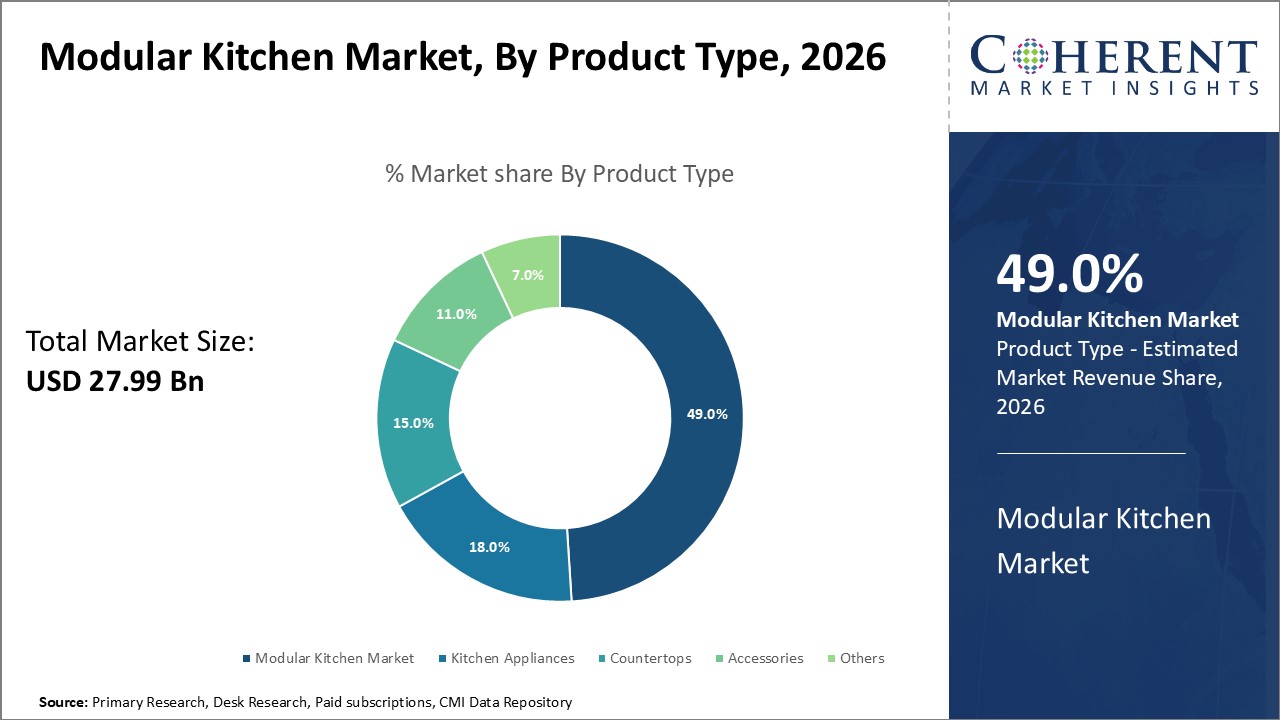
The residential segment, especially modular cabinets, dominates the market with over 49% market share, driven by increasing urban housing demands and evolving consumer lifestyles.
In terms of material, wood-based modular kitchen components lead owing to their durability and aesthetic appeal, whereas plastic-based materials show promising growth in commercial applications.
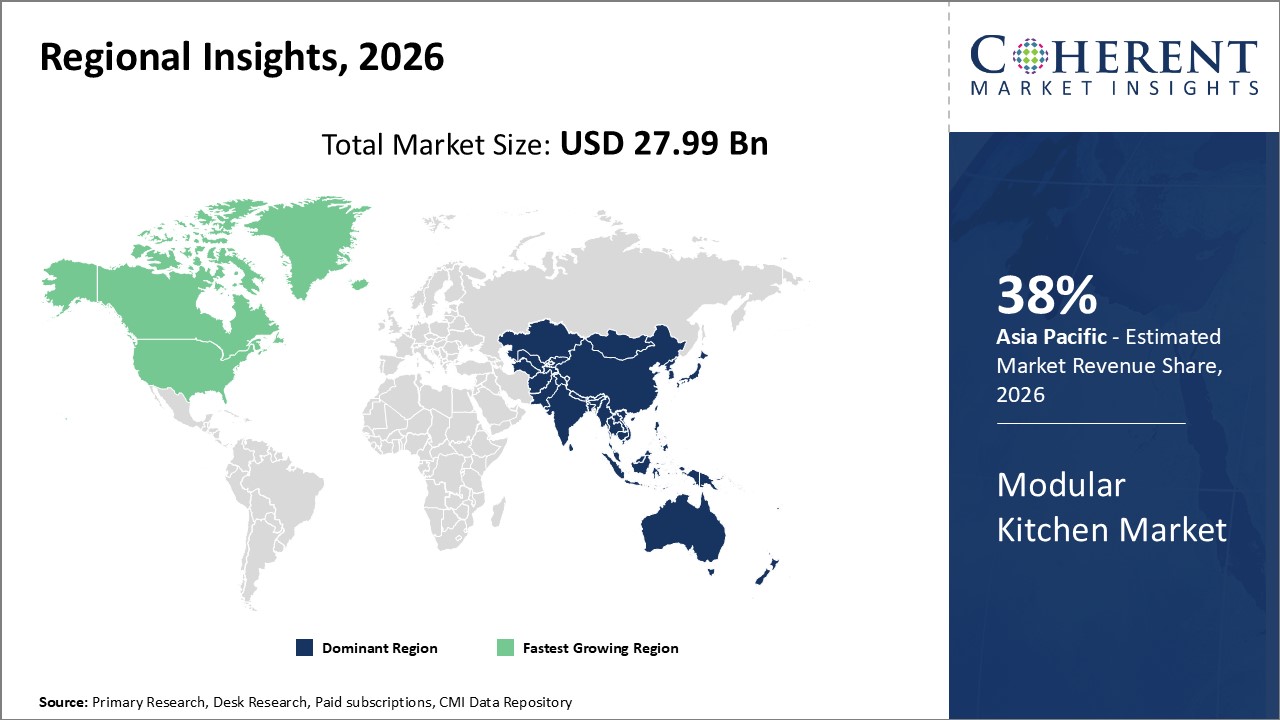
Regionally, Asia Pacific claims the largest market size, accounting for approximately 38% industry share, fueled by rapid urbanization in China and India.
Meanwhile, North America exhibits the fastest CAGR owing to high consumer adoption of smart modular kitchen technologies and significant investment by leading market players in innovation.
Modular Kitchen Market Segmentation Analysis
Modular Kitchen Market Insights, By Product Type
Modular Cabinets dominate the market share. Modular Cabinets hold the largest share due to their functional adaptability and aesthetic versatility, making them an indispensable part of any kitchen setup. Countertops represent the fastest-growing subsegment, propelled by rising demand for durable and stylish surfaces like quartz and granite that blend utility with design. Kitchen Appliances encompass a variety of modularized items, including smart ovens and refrigeration units, expanding as consumers seek integrated kitchen ecosystems. Accessories and Others fulfill niche requirements such as specialized storage and lighting solutions, though their market shares remain relatively modest.
Modular Kitchen Market Insights, By Material
Wood-based products dominate the market share. Wood-based materials lead due to their timeless appeal, structural strength, and customization potential, favored by both residential and commercial customers. Plastic-based materials exhibit the fastest growth, largely because of their cost-efficiency and flexibility, making them suitable for innovative modular designs in hospitality and retail applications. Metal-based components are widely adopted for durability and modern aesthetics, mainly in commercial kitchens. Glass-based elements add a premium touch, preferred in high-end kitchens, whereas Others cover materials such as composites, gaining slow but steady traction.
Modular Kitchen Market Insights, By Application
The residential segment leads, driven by the continuous rise of urban households adopting modular kitchens for ergonomic and space-efficient living. Hospitality represents the fastest-growing subsegment, encouraged by the hospitality sector’s need for modular kitchens that ensure hygiene, speed, and flexibility in food preparation areas. The Commercial segment includes office, institutional and cloud kitchens, where demand is increasing for functional modular setups. Others cover applications in retail and educational institutions, which are emerging but currently holds lower share.
Modular Kitchen Market Trends
Technological integration remains a critical market trend, as IoT-enabled modular kitchen systems gain traction globally.
A recent 2025 initiative in the U.S. demonstrated that IoT-based kitchens can reduce energy consumption by up to 16%.
Another trend is sustainability, with manufacturers incorporating more renewable wood and recycled plastics into their product lines, driven by stringent environmental laws in Europe.
The rise in e-commerce platforms dedicated to modular kitchens also facilitates consumer access to premium products at competitive prices, increasing market scope.
Modular Kitchen Market Insights, By Geography
Asia Pacific Modular Kitchen Market Analysis and Trends
In the Asia Pacific, the dominance in the Modular Kitchen market is propelled by rapid urbanization and infrastructural investments across countries like China and India. The region accounts for close to 38% of the total market revenue, led by high demand in metropolitan cities. The presence of numerous local market companies, combined with a growing middle-class population, drives the extensive adoption of modular kitchens in both residential and commercial properties.
North America Modular Kitchen Market Analysis and Trends
Meanwhile, North America exhibits the fastest growth with a CAGR surpassing 9%, linked to rising smart home adoption and expansive renovation activities in older housing stock. Robust R&D investments by key U.S. companies are pushing innovation in smart modular kitchen appliances, enhancing product appeal.
Modular Kitchen Market Outlook for Key Countries
USA Modular Kitchen Market Analysis and Trends
The U.S. market for modular kitchens is fueled by increasing consumer interest in home upgrades, with smart kitchen appliances capturing significant attention. In 2025, installations of modular kitchen systems in new residential constructions rose by 11%, contributing to market revenue growth. Leading companies here emphasize digital interfaces for customization and have partnered with home automation providers to deliver integrated solutions, fundamentally shaping market dynamics.
India Modular Kitchen Market Analysis and Trends
India’s market exhibits rapid expansion driven by escalating urban migration and evolving consumer aspirations. Tier I and II cities witnessed over 20% growth in modular kitchen installations during 2025, supported by rising disposable incomes and awareness. Indian manufacturers have focused on cost-effective yet stylish modular kitchen designs, leveraging wood-based materials that resonate with local preferences, thus increasing market penetration and promoting sustained business growth.
Analyst Opinion
A significant demand-side indicator shaping the market size is the increasing proliferation of premium housing projects embracing modular kitchen units. In 2025 alone, premium residential real estate developments in Asia Pacific reported over 15% YoY growth in integrating modular kitchen designs, directly influencing market revenue trends. Additionally, the escalation in urban apartment constructions across North America by 12% has stimulated demand for compact, multifunctional kitchen modules.
Pricing strategies in the modular kitchen market are becoming more competitive due to advancements in manufacturing automation. In 2026, several manufacturers adopted CNC machining to reduce wastage, contributing to an average price reduction of 6% in mid-range modular kitchens, bolstering market share expansion in emerging economies.
Import-export dynamics are crucial micro-indicators, especially for high-quality modular components. Countries such as China and Italy lead in kitchen cabinetry exports, with China’s export volume increasing by 19% in 2025. This trade growth has expanded global product accessibility and variety, facilitating better decisions for market players and consumers worldwide.
Varied use cases across industries, including hospitality and commercial real estate, have further broadened the market scope. For instance, the restaurant sector saw a 11% increase in modular kitchen installations in 2026 to enhance operational efficiency and hygiene standards, demonstrating diverse adoption beyond residential purposes.
- Current Industry Events of 2026
- Market Size Estimation
- Regional Breakdown
- Competitive Landscape
- Customer Intelligence
- Segmental Analysis
- Pricing Analysis
- Key Market Drivers, Challenges & Future Trends
- Customized Insights Section
Market Scope
| Report Coverage | Details | ||
|---|---|---|---|
| Base Year: | 2025 | Market Size in 2026: | USD 27.99 billion |
| Historical Data for: | 2020 To 2024 | Forecast Period: | 2026 To 2033 |
| Forecast Period 2026 to 2033 CAGR: | 8.5% | 2033 Value Projection: | USD 49.55 billion |
| Geographies covered: |
| ||
| Segments covered: |
| ||
| Companies covered: | Nobia AB, Nobilia-Werke J. Stickling GmbH & Co. KG, IKEA, Hettich Holding GmbH & Co. OHG, Häcker Küchen GmbH & Co. KG, Bulthaup GmbH & Co. KG, OPPEIN Home Group Inc., Godrej Interio, Sleek International Pvt. Ltd., Livspace | ||
| Growth Drivers: |
| ||
Modular Kitchen Market Growth Factors
Rising urban population density and shrinking apartment sizes globally have triggered an upsurge in demand for space-saving modular kitchen solutions. For instance, approximately 60% of new residential projects in metropolitan Asia now integrate modular kitchen concepts to maximize usability. Enhanced disposable incomes in emerging markets like India and Southeast Asia are accelerating consumer purchase power for premium modular kitchen products. Growth in smart home automation has introduced intelligent kitchen modules that offer connectivity and energy efficiency, making modular kitchens desirable investments. Lastly, government incentives promoting energy-efficient home appliances have incentivized manufacturers to innovate, contributing to overall market growth and revenue enhancement.
Modular Kitchen Market Development
In 2025, Ultrafresh, a brand under TTK Prestige, opened new “One-Stop-Shop” studios integrating modular kitchens with TTK Prestige appliances. The concept store model streamlined the kitchen-buying journey by combining cabinetry, appliances, and design consultation under one roof, strengthening its position in India’s premium kitchen solutions market.
In 2025, REHAU entered the premium modular kitchen segment, introducing high-quality surface materials, shutters, and component solutions tailored for luxury residential interiors. The debut marked a strategic diversification of REHAU’s interior solutions portfolio, targeting discerning consumers and high-end kitchen designers.
Key Players
Leading players in the market include:
Nobia AB
Nobilia-Werke J. Stickling GmbH & Co. KG
IKEA
Hettich Holding GmbH & Co. OHG
Häcker Küchen GmbH & Co. KG
Bulthaup GmbH & Co. KG
OPPEIN Home Group Inc.
Godrej Interio
Sleek International Pvt. Ltd.
Livspace
Several leading market companies have strategically invested in digital customization platforms, enabling consumers to visualize modular kitchen layouts virtually before purchase. For example, a prominent European kitchen manufacturer launched an AI-powered design tool in 2026, which increased customer engagement by 25%. Additionally, strategic alliances with eco-friendly material suppliers have helped market players reduce carbon footprints, aligning with growing environmental regulations and consumer sustainability preferences, resulting in enhanced brand loyalty.
Modular Kitchen Market Future Outlook
The future outlook for the modular kitchen market is strong, driven by smart home integration, customization, and premium design demand. Growth in residential construction, especially in urban centers, will continue to support market expansion. Technological integration—such as IoT-enabled appliances and ergonomic storage solutions—will enhance product appeal. Sustainability considerations, including eco-friendly materials and modular refurbishments, are expected to become increasingly influential.
Modular Kitchen Market Historical Analysis
The modular kitchen market developed alongside urbanization and changing residential lifestyles. Initially concentrated in high-income households, modular kitchens gained popularity as housing formats evolved toward compact and apartment-based living. Standardized manufacturing and improved design aesthetics helped reduce costs and expand adoption during the past decade. Increased exposure to global interior design trends further fueled demand, particularly in developing economies experiencing rapid urban housing growth.
Sources
Primary Research Interviews:
Interior Designers
Real Estate Developers
Modular Furniture Manufacturers
Architect
Retail Distributors
Databases:
UN Housing Data
World Bank Urbanization Data
Magazines:
Interior Design Magazine
Architectural Digest
Dezeen
Furniture Today
Kitchen & Bath Design News
Journals:
Journal of Interior Design
Building Research & Information
Construction Management Journal
Design Studies
Housing Studies
Associations:
National Kitchen & Bath Association
American Institute of Architects
International Interior Design Association
World Green Building Council
RICS
Get access to 250+ pages report
Every segment, forecast, competitor profile and data table behind the analysis above — available for instant download.
- ESOMAR Member
- ISO 9001:2015 Certified
- D-U-N-S Registered
- GDPR & CCPA Compliant
Missing comfort of reading report in your local language? Find your preferred language:
Transform your Strategy with Exclusive Trending Reports
Frequently Asked Questions
Leading market companies include Hafele Group, Nobia AB, MasterBrand Cabinets, and IKEA Group, among others, that collectively influence a significant portion of the market share.
The market size is projected to rise from USD 27.99 billion in 2026 to USD 49.55 billion by 2033, driven by expanding consumer demand and technological advancements.
The residential end-user segment, particularly premium urban housing, represents the largest growth opportunity due to increasing urbanization and lifestyle-oriented preferences.
Market trends will increasingly revolve around smart modular kitchen technologies, sustainability in material usage, and augmented customization options through AI-backed platforms.
The market features intense competition among key market companies focusing on digital transformation and eco-friendly innovations, although challenges persist from material supply constraints and fluctuating raw material costs.
Popular strategies include digital customization tools, strategic partnerships with suppliers of sustainable materials, and geographic expansion targeting emerging urban centers.