

Multiple Sclerosis Therapeutics Market Size and Trends Forecast – 2026 - 2033
The multiple sclerosis therapeutics market is estimated to be valued at USD 32.77 Bn in 2026 and is expected to reach USD 44.30 Bn by 2033, exhibiting a compound annual growth rate (CAGR) of 4.4% from 2026 to 2033.
Key Takeaways of the Multiple Sclerosis Therapeutics Market
- Based on drug class, the beta interferon segment is expected to contribute the highest share of the market with 41.5% in 2026.
- Based on route of administration, the oral segment is expected to contribute the highest share of the market with 49.7% in 2026.
- Based on distribution channel, the hospital pharmacies segment is expected to contribute the highest share of the global multiple sclerosis therapeutics market with 53.5% in 2026.
- North America is expected to top the global market with 36. 0% share in 2026.
Market Overview
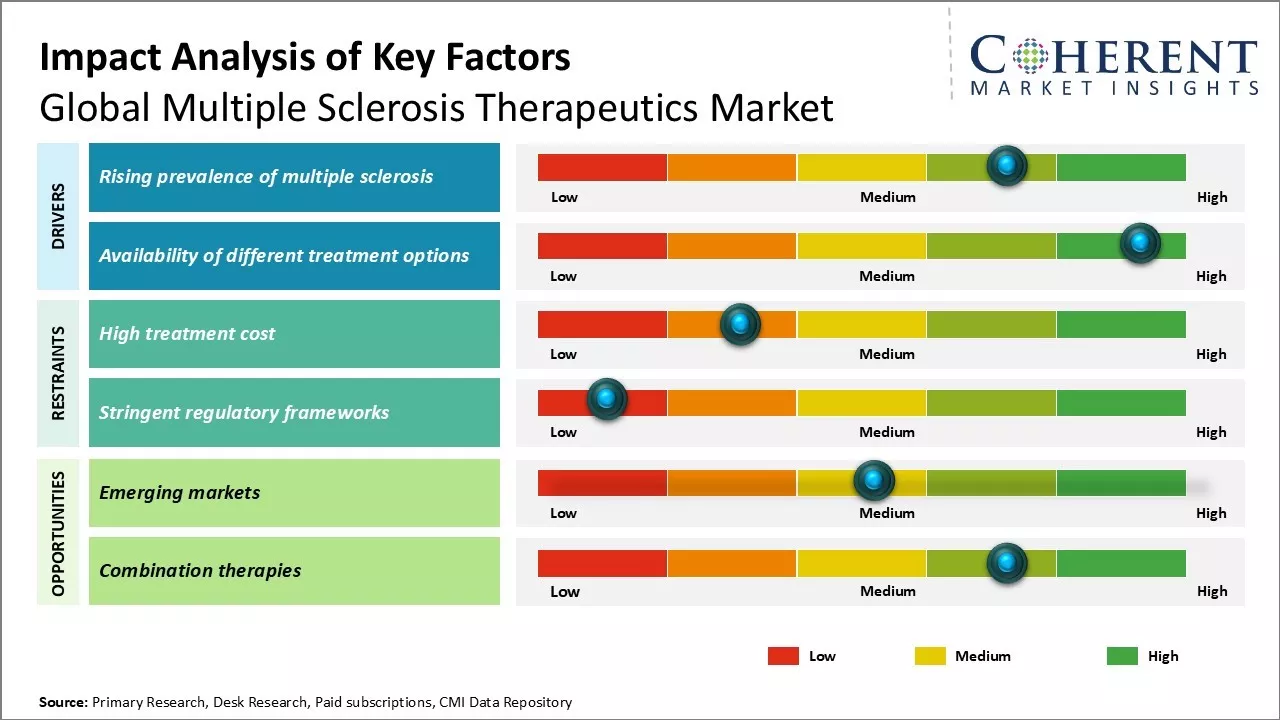
The multiple sclerosis therapeutics market encompasses a wide range of treatments aimed at managing and modifying the course of multiple sclerosis, a chronic autoimmune disease affecting the central nervous system. The market includes disease-modifying therapies (DMTs), symptomatic treatments, and emerging cell and gene therapies, all aimed at reducing relapse rates, slowing disease progression, and improving quality of life.
However, a primary restraint in the multiple sclerosis therapeutics market is the high cost of treatment, particularly for disease-modifying therapies (DMTs). These costs place a significant financial burden on patients and healthcare systems, especially in regions with limited insurance coverage or underfunded public health programs.
Market Concentration and Competitive Landscape
Current Events and their Impact on the Multiple Sclerosis Therapeutics Market
Current Events | Description and its impact |
Global Regulatory Shifts |
|
Technological & Economic Pressures |
|
- Current Industry Events of 2026
- Market Size Estimation
- Regional Breakdown
- Competitive Landscape
- Customer Intelligence
- Segmental Analysis
- Pricing Analysis
- Key Market Drivers, Challenges & Future Trends
- Customized Insights Section
Market Trends
Increasing Prevalence of Multiple Sclerosis Globally
The increasing global prevalence of multiple sclerosis (MS) is a significant driver for the multiple sclerosis therapeutics market, expanding the patient population requiring long-term treatment and accelerating therapeutic innovation.
According to the World Health Organization’s fact sheet on multiple sclerosis published on 7 August 2023, it is estimated that over 1.8 million people worldwide are living with MS.
Segmental Insights
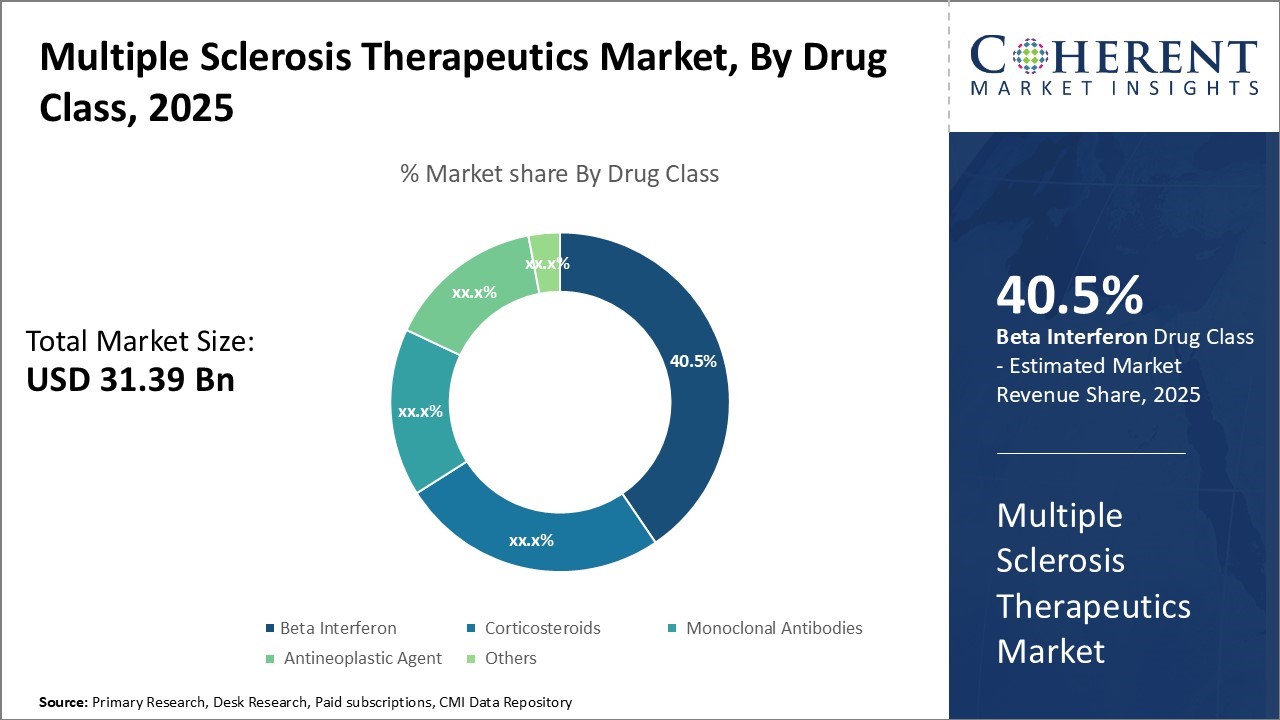
Multiple Sclerosis Therapeutics Market Insights, By Drug Class: Cost-Effectiveness and Proven Track Record Boosts Beta Interferon Dominance
In terms of drug class, the beta interferon segment is estimated to contribute the highest market share of 41.5% in 2026, owing to its history in clinical use and proven effectiveness.
Beta interferon was one of the first treatments approved for relapsing forms of multiple sclerosis in the 1990s, providing it nearly 30 years of clinical data supporting its efficacy and safety profile. Long-term follow up studies have demonstrated beta interferon's ability to reduce relapse rates, delay disability progression, and mitigate lesions and atrophy in MRI scans compared to untreated patients.
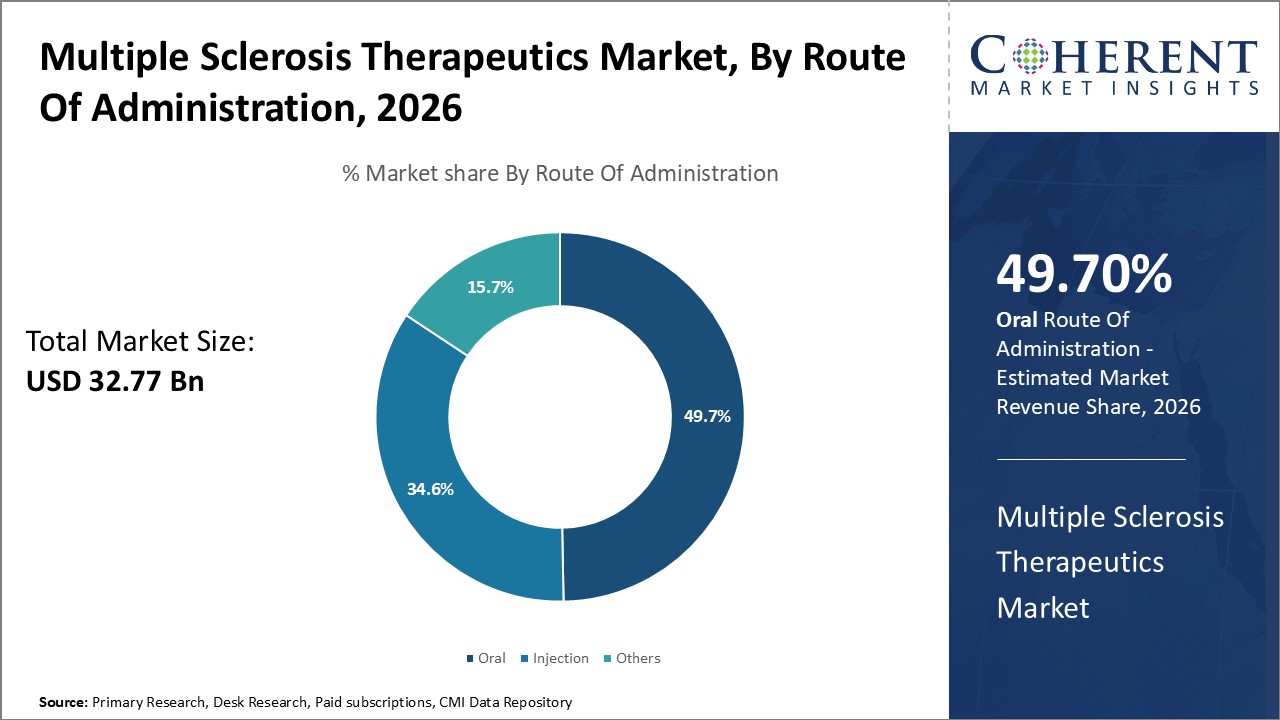
Multiple Sclerosis Therapeutics Market Insights, By Route of Administration: Convenience Drives the Preference for Oral Route
In terms of route of administration, the oral segment is estimated to contribute the highest market share of 49.7% in 2026, due to the clear convenience it offers over injections.
Multiple sclerosis is a chronic condition that requires lifelong management, making the prospect of regular injection-based therapies understandably unappealing for many people. The ability to take a simple pill provides patients a discretion and ease of use that aligns better with their daily lives and sense of normalcy outside of disease treatments.
Multiple Sclerosis Therapeutics Market Insights, By Distribution Channel: Expansive Resources Fuel Hospital Pharmacies Segment Dominance
In terms of distribution channel, hospital pharmacies segment is estimated to contribute the highest market share of 53.5% in 2026, owing to their expansive resources and specialized services.
As medical hubs with neurology departments, hospitals are uniquely positioned to support multiple sclerosis patients. Hospital pharmacies leverage connections to multiple sclerosis treatment teams to coordinate complex medication regimens, providing patients convenient one-stop-shop access to specialty drugs alongside medical guidance.
Emerging Innovations in the Multiple Sclerosis Therapeutics Market
- Advancements in Molecular Biology
- Advancements in molecular biology, immunology, and neuroimaging have catalyzed the development of novel therapeutic modalities. One example is the advent of therapies targeting B cells, a subset of immune cells implicated in MS pathology. Agents like anti-CD20 monoclonal antibodies have demonstrated superior clinical benefits by specifically depleting pathogenic B cells while sparing other immune components. This innovation marks a departure from older treatments that broadly modulated the immune system, often compromising patient immunity.
- Stem Cell Therapies
- Stem cell therapies represent another frontier with transformational potential in MS treatment. Hematopoietic stem cell transplantation (HSCT) has emerged as a promising option for aggressive or treatment-refractory cases. By “resetting” the patient’s immune system, HSCT aims to halt autoimmune attacks and promote neurological repair. Although challenges remain regarding safety and patient selection, ongoing refinement of transplantation protocols and immunoablation regimens is improving therapeutic outcomes.
Artificial Intelligence (AI) Impacts in the Multiple Sclerosis Therapeutics Market
Artificial Intelligence (AI) is rapidly transforming the landscape of healthcare, and the multiple sclerosis therapeutics market is no exception. By integrating AI-driven technologies, companies are enhancing drug development, personalized treatment, and patient monitoring.
- Biogen launched the "MS PATHS" (Multiple Sclerosis Partners Advancing Technology and Health Solutions) initiative, which leverages AI-powered digital tools to collect and analyze real-world data from MS patients. Through AI-enabled assessments and predictive analytics, clinicians can better understand disease trajectories and treatment responses.
- Qynapse employs AI tools to analyze MRI scans for MS patients, detecting subtle changes in brain lesions that may be missed by the human eye. This enhanced imaging assessment enables neurologists to monitor disease progression more accurately and adjust therapies in real time, thereby improving treatment precision.
Regional Insights
North America Multiple Sclerosis Therapeutics Market Analysis and Trends
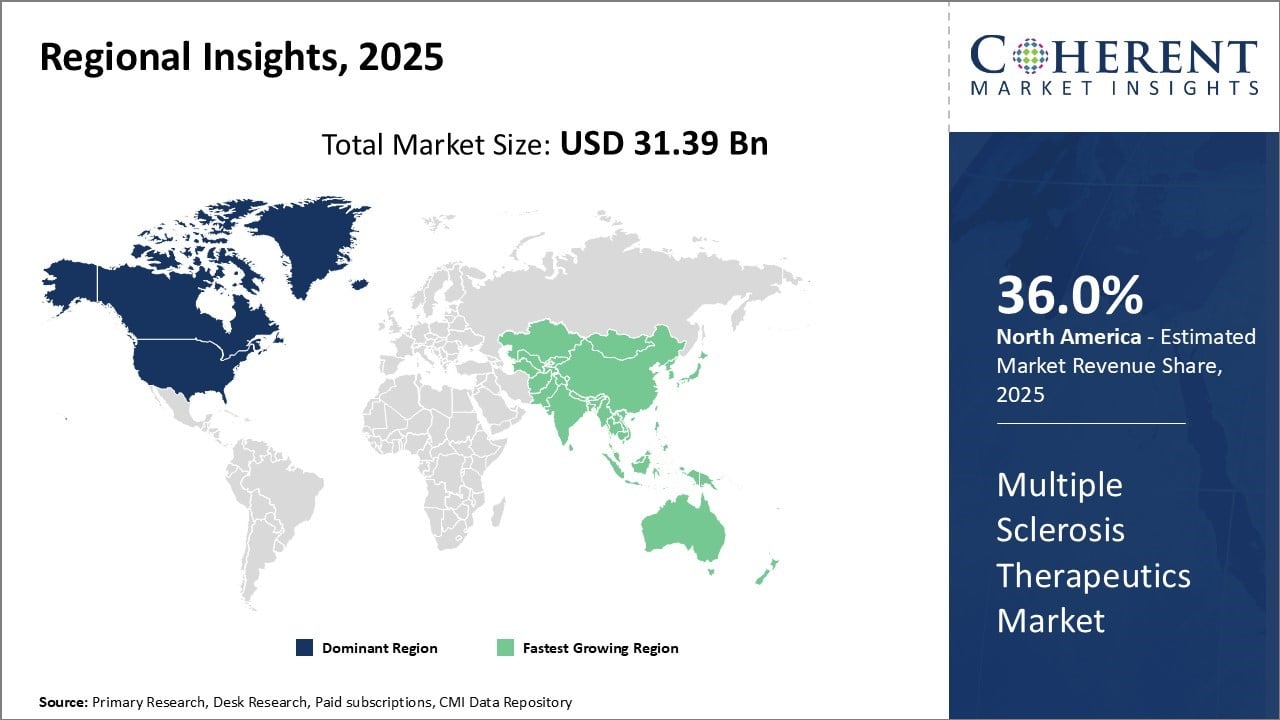
North America dominates the multiple sclerosis therapeutics market with an estimated market share of 36.0% in 2026. The U.S. accounts for the major share, due to high healthcare expenditures and early availability of new drugs in the country. Several leading biopharmaceutical companies have strategically located their research centers in the U.S. to benefit from the large patient pool and streamlined clinical trial process.
For instance, according to a report by HCAH, in June 2026, Multiple Sclerosis (MS) remains one of the most common causes of neurological disability in young adults. As of 2026, over one million people in the U.S. alone are living with MS.
Asia Pacific Multiple Sclerosis Therapeutics Market Analysis and Trends
Asia Pacific is identified as the fastest growing regional market for multiple sclerosis therapeutics in the coming years. Rising incidence of multiple sclerosis cases combined with improving access to healthcare infrastructure and services in countries like China, Japan, and India is boosting the demand for therapeutics. Local pharmaceutical companies have ramped up their capabilities to cater to the domestic requirements with affordable generic drugs.
According to WHO’s Atlas of MS (2020), multiple sclerosis remains relatively uncommon across Southeast Asia, with prevalence typically estimated at around 2–3 per 100,000 population. In China, the Global Burden of Disease study (2019) reports an age‑standardized prevalence of approximately 2.32 per 100,000. Evidence from Korea shows similar figures (~3.2–3.6 per 100,000), while Japan has exhibited a notably higher prevalence, rising to about 23 per 100,000 by 2021. Female predominance is consistently observed, especially in Southeast Asia.
Japan Multiple Sclerosis Therapeutics Market Analysis and Trends
Japan holds a unique position as the second largest pharmaceutical market in Asia, due to its high medical costs and universal healthcare coverage. Majority of new multiple sclerosis drugs in the international markets are quickly made available in Japan with the support of National Health Insurance program.
In Japan, compared to Western countries, the prevalence of MS is significantly lower, and the current estimated prevalence is 10/100,000. The advent of disease-modifying drugs (DMDs) has made it possible to prevent relapse and suppress the progression of physical disabilities.
U.S. Multiple Sclerosis Therapeutics Market Analysis and Trends
The U.S. drives a significant portion of the global multiple sclerosis therapeutics market, fueled by high disease prevalence, strong healthcare infrastructure, and substantial investment in R&D. The presence of major pharmaceutical players and a favorable reimbursement environment contribute to rapid adoption of novel therapies, including high-efficacy monoclonal antibodies and oral DMTs.
Germany Multiple Sclerosis Therapeutics Market Analysis and Trends
Germany is a key driver in the Europe multiple sclerosis therapeutics market, due to its well-established universal healthcare system and emphasis on early diagnosis and continuous disease management. Government-supported initiatives for MS research, coupled with the availability of both branded and biosimilar drugs, have increased treatment accessibility. Germany also serves as a strategic hub for clinical trials, particularly for progressive MS, making it attractive for pharmaceutical innovation and partnerships.
Brazil Multiple Sclerosis Therapeutics Market Analysis and Trends
Brazil is emerging as a key driver in the Latin America multiple sclerosis market, due to government-funded healthcare programs that provide access to high-cost therapies. The Unified Health System (SUS) includes MS treatments in its formulary, which has helped expand treatment coverage. Furthermore, the country has seen a rise in neurological centers of excellence and public-private partnerships aimed at increasing access to DMTs, especially in urban regions, supporting long-term market growth.
Pricing Analysis of the Multiple Sclerosis Therapeutics Market
- Geographic & Market Variations
- U.S.: The U.S. remains the most expensive market with annual DMT costs often exceeding USD 90,000 for oral and infusion drugs. Limited price regulation and complex insurance systems escalate patient out-of-pocket costs despite manufacturer assistance.
- Europe: Due to stronger pricing regulatory mechanisms and biosimilar penetration, prices tend to be 20-40% lower than in the U.S. National health systems negotiate prices or utilize tenders.
- Emerging Markets: Pricing varies widely; branded products may be largely unaffordable without subsidies, and access to generics/biosimilars is critical. Local market competition drives some price reductions.
- Insurance Impact: For insured patients, co-pays and deductibles define actual payments. Patient assistance programs (co-pay cards, subsidies) have substantial influence on accessibility.
Market Report Scope
Multiple Sclerosis Therapeutics Market Report Coverage
| Report Coverage | Details | ||
|---|---|---|---|
| Base Year: | 2025 | Market Size in 2026: | USD 32.77 Bn |
| Historical Data for: | 2020 To 2024 | Forecast Period: | 2026 To 2033 |
| Forecast Period 2026 to 2033 CAGR: | 4.4% | 2033 Value Projection: | USD 44.30 Bn |
| Geographies covered: |
| ||
| Segments covered: |
| ||
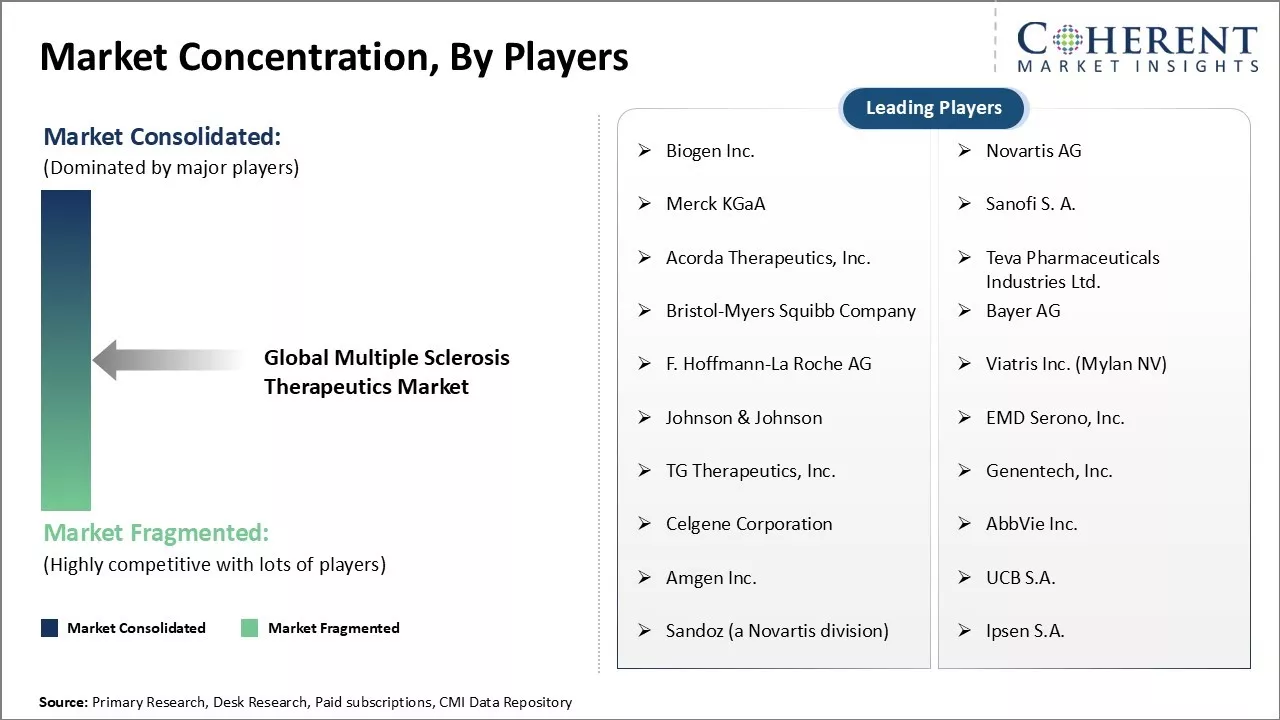
| Companies covered: | Biogen Inc., Novartis AG, Merck KGaA, Sanofi S. A., Acorda Therapeutics, Inc., Teva Pharmaceuticals Industries Ltd., Bristol-Myers Squibb Company, Bayer AG, F. Hoffmann-La Roche AG, Viatris Inc. (Mylan NV), Johnson & Johnson, EMD Serono, Inc., TG Therapeutics, Inc., Genentech, Inc., Celgene Corporation, AbbVie Inc., Amgen Inc., UCB S.A., Sandoz (a Novartis division), and Ipsen S.A. | ||
| Growth Drivers: |
| ||
| Restraints & Challenges: |
| ||
Multiple Sclerosis Therapeutics Industry News
- In March 2025, Novartis will present data from studies across its neuroscience portfolio, including seven-year disability outcomes and safety data from the ALITHIOS open-label extension trial of Kesimpta (ofatumumab) in people with relapsing multiple sclerosis (RMS), at the American Academy of Neurology (AAN) 2025 Annual Meeting. Additional data on Kesimpta and pipeline assets including remibrutinib and iptacopan will also be highlighted.
- In April 2025, the New England Journal of Medicine (NEJM) published positive results from the HERCULES phase 3 study demonstrating that tolebrutinib delayed disability progression in people with non-relapsing secondary progressive multiple sclerosis (nrSPMS), where there are currently no treatment options approved.
- In April 2025, Roche announced that the Phase III MUSETTE trial comparing a high dose of OCREVUS (ocrelizumab) intravenous (IV) infusion to the currently approved OCREVUS IV 600 mg dose in people with relapsing multiple sclerosis (RMS) did not meet its primary endpoint in showing additional benefit in slowing disability progression, as measured by a composite disability endpoint over a period of at least 120 weeks of treatment.
- In May 2025, TG Therapeutics, Inc. announced the presentations of data highlighting BRIUMVI (ublituximab-xiiy) in patients with relapsing forms of multiple sclerosis (RMS), at the 2025 Consortium of Multiple Sclerosis Centers (CMSC) annual meeting.
Analyst View
- The Multiple Sclerosis Therapeutics Market is characterized by dynamic innovation and evolving treatment paradigms, though it faces significant challenges. Key drivers include the rising global prevalence of MS, particularly among young adults and women, which is accelerating diagnosis rates and treatment demand. Advancements in therapeutic modalities—such as biologics, monoclonal antibodies, and oral therapies—are enhancing efficacy and patient convenience, while regulatory support for novel drugs (e.g., recent approvals like Briumvi) further propels market expansion.
- Restraints persist, however, including the high cost of innovative therapies and complex regulatory pathways that delay market access. Reimbursement challenges in emerging economies also limit patient accessibility to advanced treatments. Moreover, the complexity of MS subtypes necessitates continuous R&D investment, increasing developmental risks for pharmaceutical companies.
- Regionally, North America dominates due to robust regulatory frameworks, high healthcare expenditure, and early adoption of innovations. Europe shows strong growth momentum with rapid integration of new therapies. The competitive landscape is intensifying, with leading players like Novartis, Roche, and Sanofi driving innovation in disease-modifying therapies and biologics, while generics manufacturers like Teva expand accessibility.
Market Segmentation
- By Drug Class Insights (Revenue, USD Bn, 2021 - 2033)
- Beta Interferon
- Corticosteroids
- Monoclonal Antibodies
- Antineoplastic Agent
- Others
- By Route of Administration Insights (Revenue, USD Bn, 2021 - 2033)
- Oral
- Injection
- Others
- By Distribution Channel Insights (Revenue, USD Bn, 2021 - 2033)
- Hospital Pharmacies
- Retail Pharmacies
- Online Pharmacies
- By Regional Insights (Revenue, USD Bn, 2021 - 2033)
- North America
- U.S.
- Canada
- Latin America
- Brazil
- Argentina
- Mexico
- Rest of Latin America
- Europe
- Germany
- U.K.
- Spain
- France
- Italy
- Russia
- Rest of Europe
- Asia Pacific
- China
- India
- Japan
- Australia
- South Korea
- ASEAN
- Rest of Asia Pacific
- Middle East
- GCC Countries
- Israel
- Rest of Middle East
- Africa
- South Africa
- North Africa
- Central Africa
- North America
- Key Players Insights
- Biogen Inc.
- Novartis AG
- Merck KGaA
- Sanofi S. A.
- Acorda Therapeutics, Inc.
- Teva Pharmaceuticals Industries Ltd.
- Bristol-Myers Squibb Company
- Bayer AG
- Hoffmann-La Roche AG
- Viatris Inc. (Mylan NV)
- Johnson & Johnson
- EMD Serono, Inc.
- TG Therapeutics, Inc.
- Genentech, Inc.
- Celgene Corporation
- AbbVie Inc.
- Amgen Inc.
- UCB S.A.
- Sandoz (a Novartis division)
- Ipsen S.A.
Sources
Primary Research Interviews
- Pharmaceutical executives involved in MS drug development
- Neurologists and MS-specialized healthcare providers
- MS patient advocacy group representatives
- Healthcare policy analysts
- Others
Databases
- WHO Global Health Observatory
- Others
Magazines
- Pharmaceutical Executive
- The Pharma Letter
- Fierce Pharma
- BioPharma Reporter
- Others
Journals
- Multiple Sclerosis Journal
- Journal of Neuroimmunology
- The Lancet Neurology
- Others
Newspapers
- Financial Times Health Section
- STAT News
- Bloomberg Pharma & Healthcare
- Reuters Health News
- Others
Associations
- National Multiple Sclerosis Society (NMSS)
- Multiple Sclerosis International Federation (MSIF)
- World Health Organization (WHO) Neurology Division
- European Committee for Treatment and Research in Multiple Sclerosis (ECTRIMS)
- Others
Public Domain Sources
- FDA Drug Approval Reports
- European Medicines Agency (EMA) Public Assessment Documents
- WHO International Clinical Trials Registry Platform
- Others
Proprietary Elements
- CMI Data Analytics Tool – Multiple Sclerosis Therapeutics Market
- CMI Existing Repository of Information for the Last 8 Years
*Definition: Global multiple sclerosis therapeutics market focuses on treating multiple sclerosis (MS), a demyelinating disease in which the insulating covers of nerve cells in the brain and spinal cord are damaged. This market includes drugs for relapsing-remitting MS, primary progressive MS, and secondary progressive MS such as immunomodulators, immunotherapy, corticosteroids, and others. The goal of treatments is to reduce frequency of relapses and slow progression of disability.
Get access to 250+ pages report
Every segment, forecast, competitor profile and data table behind the analysis above — available for instant download.
- ESOMAR Member
- ISO 9001:2015 Certified
- D-U-N-S Registered
- GDPR & CCPA Compliant
Missing comfort of reading report in your local language? Find your preferred language:
Transform your Strategy with Exclusive Trending Reports
Frequently Asked Questions
The multiple sclerosis therapeutics market is estimated to be valued at USD 32.77 Bn in 2026, and is expected to reach USD 44.30 Bn by 2033.
The CAGR of the multiple sclerosis therapeutics market is projected to be 4.4% from 2026 to 2033.
Rising prevalence of multiple sclerosis and availability of different treatment options are the major factors driving the growth of the global multiple sclerosis therapeutics market.
High treatment cost and stringent regulatory frameworks are the major factors hampering the growth of the global multiple sclerosis therapeutics market.
In terms of drug class, the beta interferon segment is estimated to dominate the market in 2026.
Biogen Inc., Novartis AG, Merck KGaA, Sanofi S. A., Acorda Therapeutics, Inc., Teva Pharmaceuticals Industries Ltd., Bristol-Myers Squibb Company, Bayer AG, F. Hoffmann-La Roche AG, Viatris Inc. (Mylan NV), Johnson & Johnson, EMD Serono, Inc., TG Therapeutics, Inc., Genentech, Inc., Celgene Corporation, AbbVie Inc., Amgen Inc., UCB S.A., Sandoz (a Novartis division), and Ipsen S.A. are the major players in the multiple sclerosis therapeutics market.
North America is expected to lead the global multiple sclerosis therapeutics market in 2026.