

Nanocoatings Market Analysis & Forecast: 2026-2033
Nanocoatings Market is estimated to be valued at USD 16.55 Bn in 2026 and is expected to reach USD 26.06 Bn in 2033, exhibiting a compound annual growth rate (CAGR) of 6.7% from 2026 to 2033.
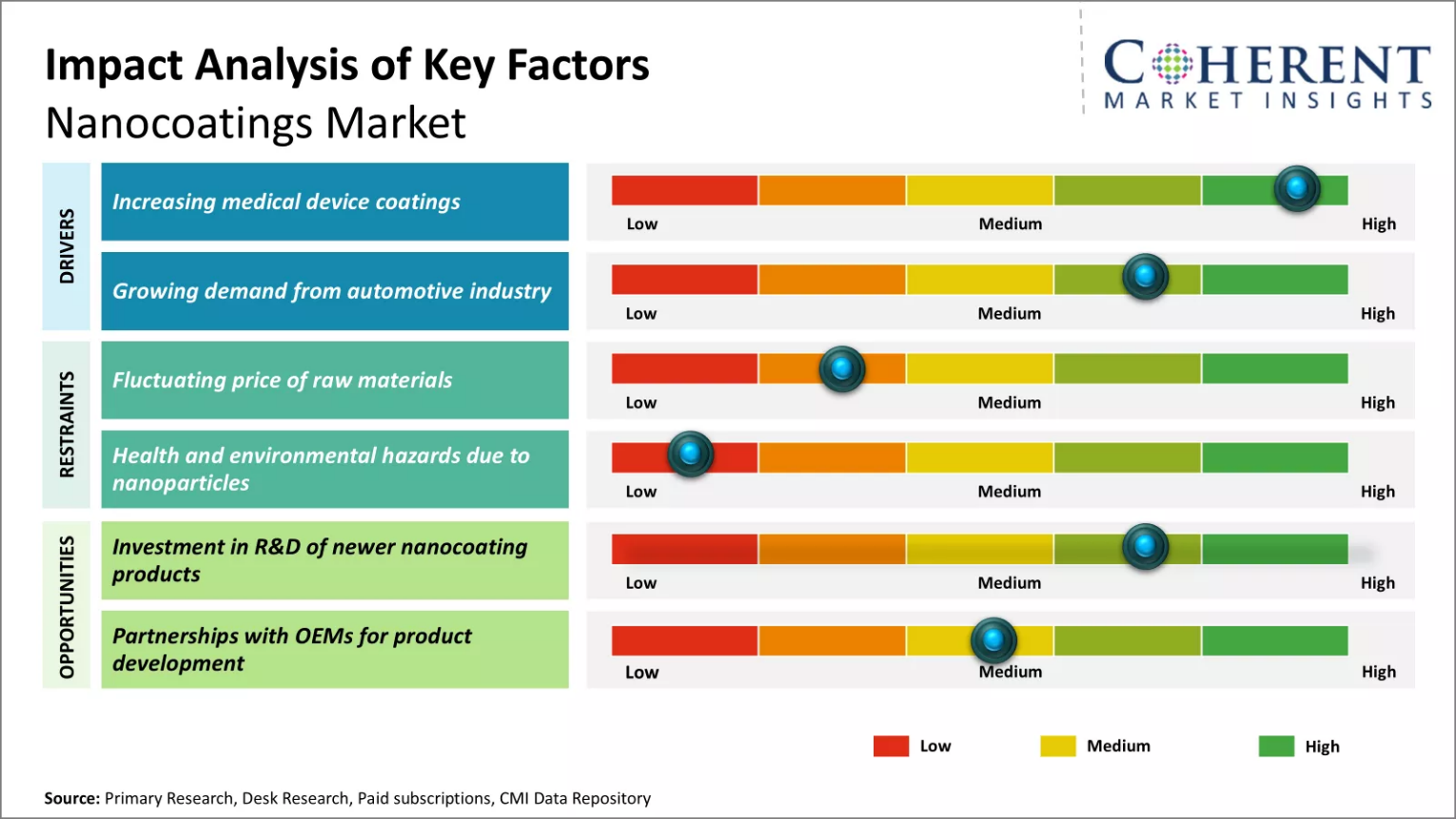
Key Takeaways
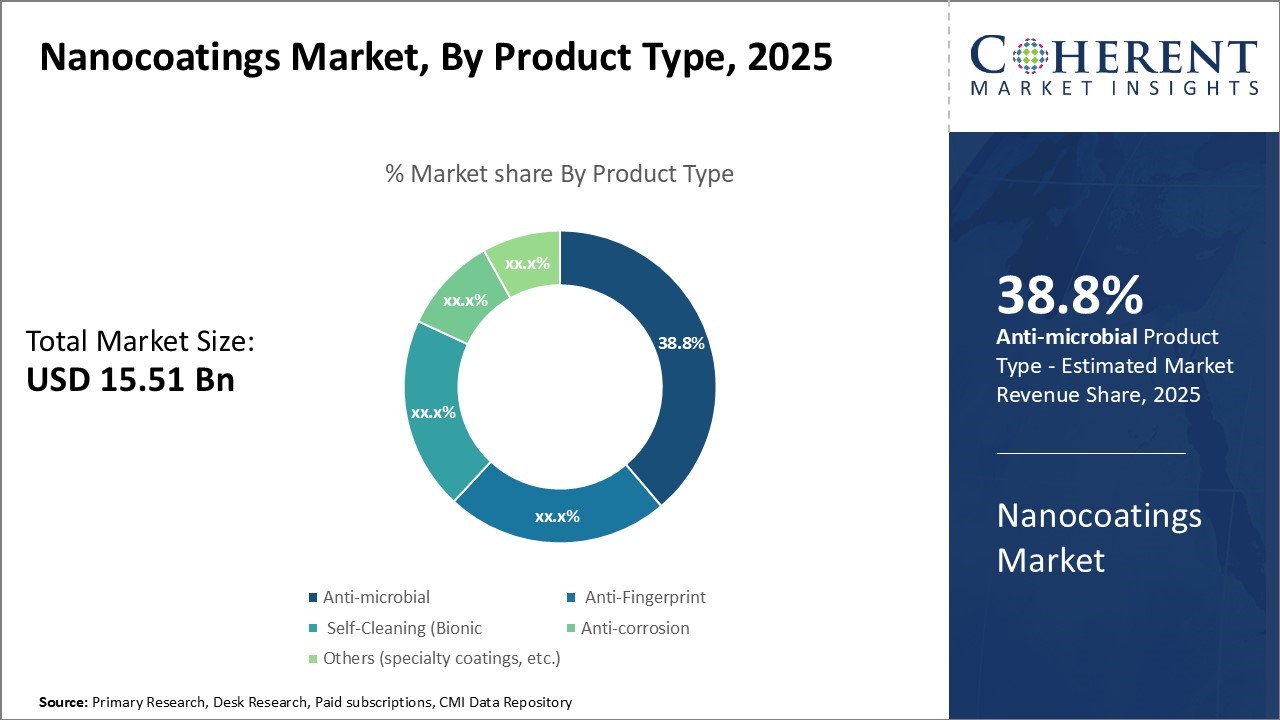
- According to Product Type, The Anti-Microbial Category is anticipated to account for the largest share of 39.8% for the Nanocoatings market in 2026, because increased surface hygiene, infection control, and the enhanced durability and efficacy of nanoscale materials are becoming more crucial.
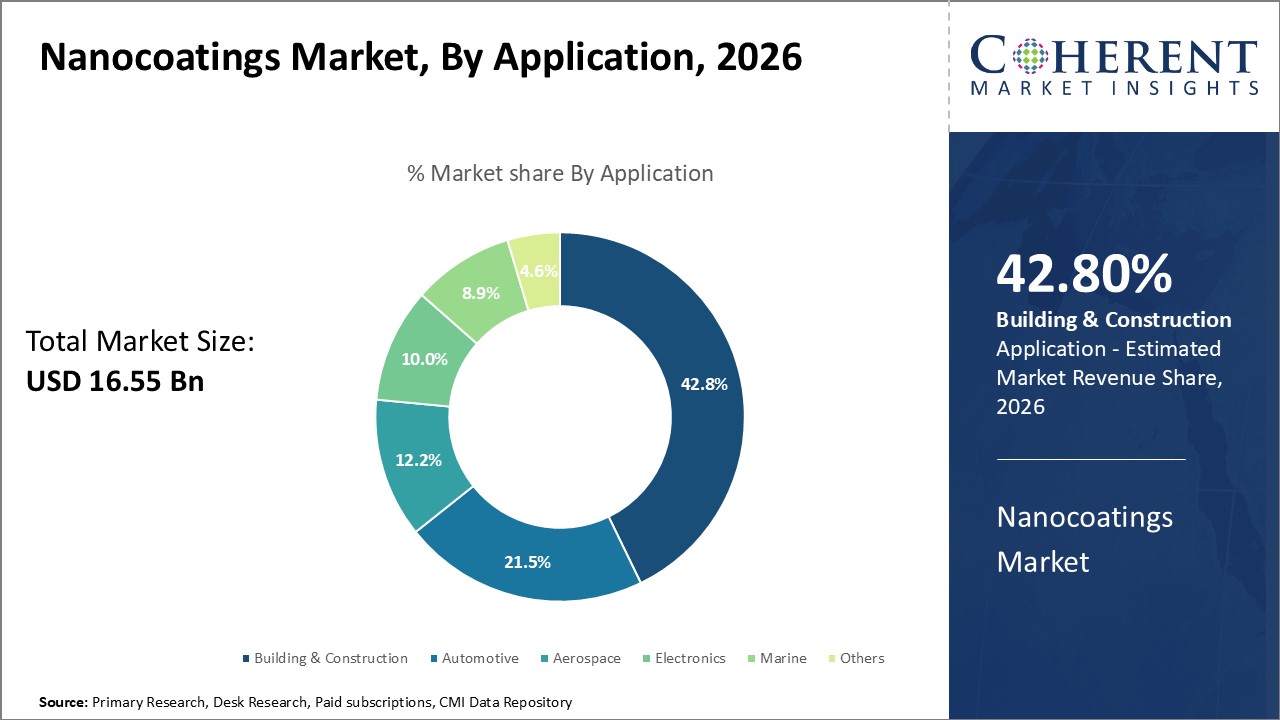
- According to application, the building & construction segment is anticipated to hold 42.8% share of the Nanocoatings market in 2026.
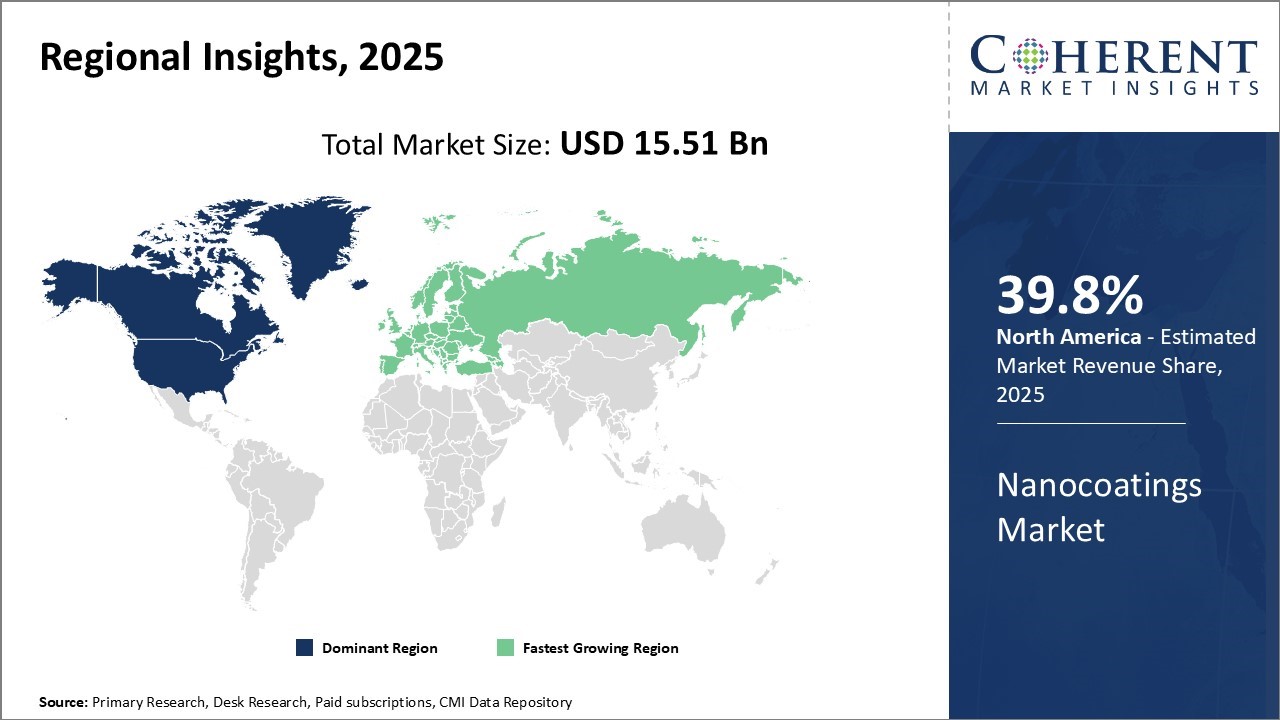
- According to region, North America also holds the largest market share of 39.8% for Nanocoatings market growth by 2026. In this region, antimicrobial and anti-fingerprint coatings are in high demand in electronic equipment, smartphones, medical devices, and hospitals.
- Asia Pacific is considered to be the most largest region by 2026 for the Nanocoatings market. Thermal barrier nanocoatings are among the advanced technologies driving this region's market growth.
Market Overview
The Nanocoatings Market Size is fueled by the growing need for coatings with cutting-edge qualities including anti-microbial, scratch, corrosion, and self-cleaning qualities from industries like energy, healthcare, electronics, automotive, and construction. Growing applications of nanocoatings across various end-use industries such as healthcare, aerospace, marine, and packaging can drive the market growth. Furthermore, nanocoatings provide superior performance and durability as compared to conventional coatings. Technological advancements in nanocoating technologies have led to development of graphene and carbon nanotube-based coatings with improved properties.
Current Events and Its Impact on the Nanocoatings Market
Event | Description and Impact |
Increasing Demand in Automotive and Electronics |
|
Raw Material and Supply Chain Dynamics |
|
Role of Artificial Intelligence (AI)
- AI plays an increasingly pivotal role in the nanocoatings market by accelerating research and development and optimizing manufacturing processes.
- AI-powered data analytics and machine learning models help predict the performance of nanocoatings, enabling faster design of materials with desired properties like self-healing, anti-corrosive, and antimicrobial functions, including applications in the nanocoatings market for solar panels.
- AI also facilitates precision in coating applications through automation and smart manufacturing, reducing waste and enhancing quality control.
- In addition, AI-driven simulations support the development of sustainable nanocoatings by predicting environmental impacts and optimizing material usage.
- The integration of AI within the nanocoatings industry aligns with broader industry 4.0 trends and supports regulatory compliance, innovation speed, and cost efficiencies, thus enhancing competitive advantage.
- Current Industry Events of 2026
- Market Size Estimation
- Regional Breakdown
- Competitive Landscape
- Customer Intelligence
- Segmental Analysis
- Pricing Analysis
- Key Market Drivers, Challenges & Future Trends
- Customized Insights Section
Pricing Analysis
- The nanocoatings market pricing is influenced by factors such as raw material costs, technological complexity, and scale of production. In 2025, the market is valued at around USD 7.98 to 10.34 billion globally, with prices reflecting advancements in sustainable and high-performance coatings that enhance durability, scratch resistance, and functionality.
- Pricing trends also mirror the ongoing innovation to produce more cost-effective and eco-friendly nanocoatings, which can drive down prices over time to broaden adoption. Market growth at a CAGR ranging from about 8% to 24% (varying by source) suggests competitive pricing coupled with value-added features to meet industry demands in automotive, electronics, and construction sectors. However, challenges like regulatory compliance and supply chain constraints may cause some price volatility or premium pricing in specific segments.
Segmental Insights
Nanocoatings Market Insights, By Product Type
In terms of product type, anti-microbial segment is expected to contribute the highest market share of 39.8% in 2026, due to increasing focus on hygienic surfaces across many industries. Coatings with antibacterial properties help inhibit the growth of microbes like bacteria, viruses, and fungi that can cause illness or degrade materials. As awareness grows regarding the role of contaminated environmental surfaces in spreading disease, there will be huge demand for anti-microbial protective coatings on high-touch surfaces.
Nanocoatings Market Insights, By Application
In terms of application, building & construction segment is expected to contribute the highest market share of 42.8% in 2026. Whether applied to building exteriors or interiors, nanotechnologies enhance architectural materials with desirable properties like self-cleaning, corrosion resistance, thermal insulation, or water repellency depending on the specific product formulation.
Some nanocoatings mimic the lotus effect by using a microscopic roughness to create a superhydrophobic surface that releases water and dirt with minimal contact. This self-cleaning attribute means infrequent washing and reduces long-term maintenance costs. Anti-graffiti varieties remove unwanted markings easily.
Glass treated with nanotechnologies shows less visibility of fingerprints and other surface deposits. Facades installed with nanoparticulate coatings demonstrate better UV resistance and color retention over time.
Global Nanocoatings Market – Regional Insights
North America Nanocoatings Market
North America dominates the nanocoatings market, with an estimated market share of 39.8% in 2026. North America nanocoatings market growth can be attributed to robust investment in research and development of nanotechnology. Governments in the region have implemented supportive policies and incentivized private players to boost innovation. The presence of leading nanocoatings producers has created a strong market ecosystem over the years.
Asia Pacific Nanocoatings Market
Rising middle-class wages, a sizable youth population, and the growing need for long-lasting, high-performance nanocoatings with antibacterial, corrosion-resistant, and scratch-resistant qualities are the main drivers of this growth.
The expansion of the electronics and automotive sectors, along with rising investments in infrastructure and production capacity, is opening up a lot of doors for regional nanocoatings companies. Furthermore, regulatory pressures for eco-friendly materials and sustainability trends support innovation and market uptake in Asia Pacific.
Nanocoatings Market In Europe
Europe region exhibits the fastest growth due to rising adoption across diverse end-use industries such as electronics, energy, and construction. Countries like U.K, & Germany are global manufacturing hubs and expanding manufacturing sector can boost demand. Rapid industrialization and growth in disposable incomes can also drive the market growth.
Nanocoatings Market Dominating Countries
U.S Nanocoatings Market
Strong R&D expenditures, widespread applications in the automotive, electronics, healthcare, aerospace, and construction sectors, as well as advantageous regulatory backing from organizations like the FDA and EPA, are the main drivers of this prominence. The adoption of nanocoatings in the U.S. market is fueled by technological innovation, a high demand for coatings that improve performance, sustainability initiatives, and the use of luxury vehicles.
India Nanocoatings Market
India is a new but fast-growing market for nanocoatings, helped by the country's growing infrastructure, industrialization, and use of innovative materials in the electronics, automotive, and construction industries. This growth trajectory is accelerated by government initiatives and investments in nanoscale developments.
For instance, businesses like HeatCure have already introduced glass coatings based on nanotechnology in India with the goals of promoting energy efficiency and providing defense against UV and infrared radiation.
Nanocoatings Market In China
One of the biggest and fastest-growing markets for nanocoatings worldwide is China. China's dominance is supported by its fast industrialization, thriving electronics and automotive manufacturing industries, and government funding for nanotechnology research.
Market Report Scope
Nanocoatings Market Report Coverage
| Report Coverage | Details | ||
|---|---|---|---|
| Base Year: | 2025 | Market Size in 2026: | USD16.55 Bn |
| Historical Data for: | 2020 To 2024 | Forecast Period: | 2026 To 2033 |
| Forecast Period 2026 to 2033 CAGR: | 6.7% | 2033 Value Projection: | USD 26.06 Bn |
| Geographies covered: |
| ||
| Segments covered: |
| ||
| Companies covered: | Bio-Gate AG, Buhler PARTEC GmbH, Cima NanoTech Inc., Eikos Inc., Inframat Corporation, Integran Technologies Inc., Nanofilm Ltd., Nanogate AG, Nanophase Technologies Corporation, Nanovere Technologies LLC | ||
| Growth Drivers: |
| ||
| Restraints & Challenges: |
| ||
Nanocoatings Market: Growth Drivers
- Increasing medical device coatings
The use of nanocoatings in medical devices is steadily increasing due to the advancement in nanotechnology and the associated benefits they provide. Nanocoatings offer a variety of advantages over conventional coatings such as improved biocompatibility, enhanced corrosion and wear resistance.
The advancements have allowed the development of 'smart' and multifunctional nanocoatings. Research is ongoing to endow coatings with abilities such as real-time drug release, sensing and imaging capabilities. Such surfaces could revolutionize diagnostics, preventive healthcare and patient monitoring.
For instance, nanocoatings that detect biofilm formation on implants through signals would indicate the need for corrective measures or antibiotics (World Health Organization, 2022). As nanocoating applications expand, their demand is projected to grow substantially.
Nanocoatings Market: Trends
- Sustainability and Eco-Friendly Solutions
Increasing regulatory pressure and consumer preference for green products propel the development of sustainable, biodegradable nanocoatings. The nanocoatings market for anti-fog surfaces is growing as part of this trend, supporting circular economy initiatives and investment in environmentally safe materials.
Nanocoatings Market: Opportunities
- Investment in R&D of newer nanocoating products
Global nanocoatings market provides significant opportunities for companies who invest in research and development to expand their portfolio of innovative coating solutions. Newer application areas across industries like automotive, aerospace, energy, infrastructure and healthcare have emerged in recent years, thus, opening up scope for specialized nanocoating formulations.
Companies leading the innovation through R&D will be best positioned to capture early mover advantages and premium pricing in the market. First mover brands investing aggressively in novel nanocoating technologies stand to gain largest market shares long-term from a widening array of product offerings.
Market Concentration and Competitive Landscape
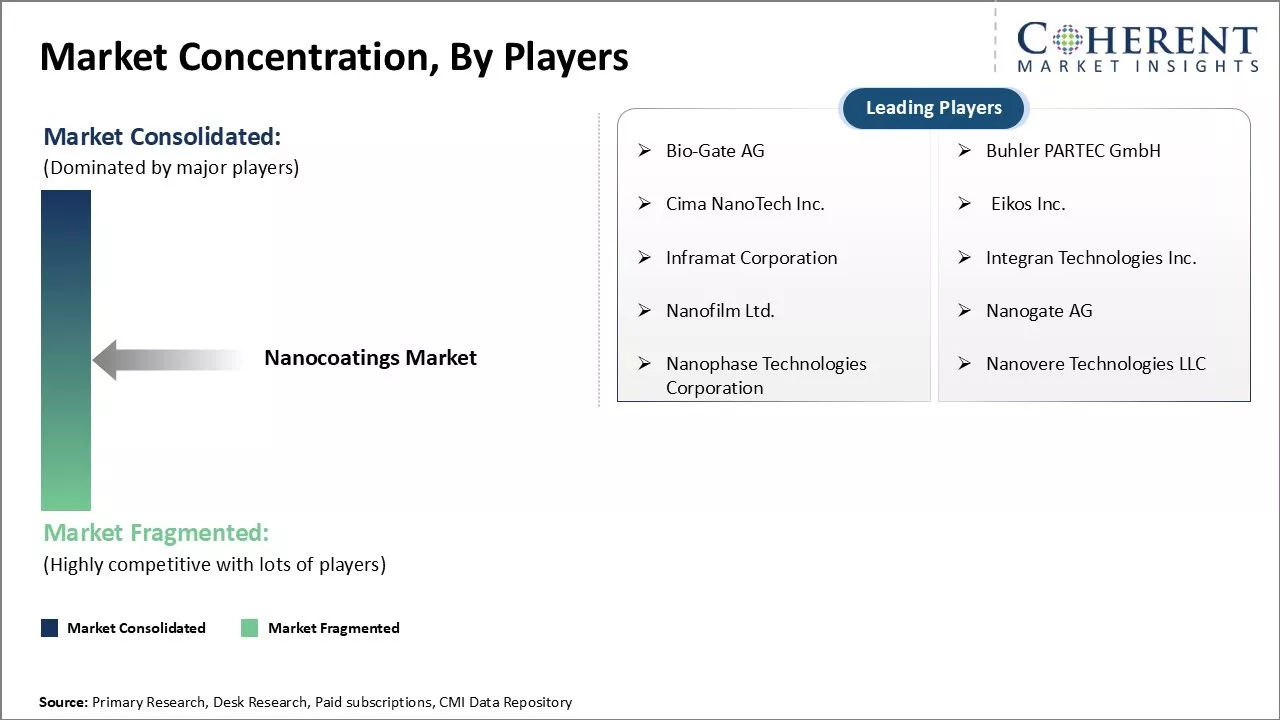
Top Strategies Followed by Nanocoatings Market Players
Established players in the nanocoatings market focuses extensively on research and development to introduce innovative products. Leading companies like Buhler Partec GmbH invest over 10% of annual revenue in R&D activities aimed at developing high-performance nanocoating solutions. These enter into strategic global partnerships with major OEMs to gain expertise in new application areas and consolidate their presence.
Mid-level players prefer to deliver quality nanocoatings at competitive rates to attract price-sensitive customer segments. These focus on optimizing production processes and reducing material costs. Companies like Nanoveer Technologies formed collaborations with material suppliers and coating service providers to boost combined technological capabilities and production scale.
Small nanocoating manufacturers focus on specific market niches that have distinct functional or environmental needs. For example, Nanopool GmbH utilizes its plasma technology expertise to provide nano-textured polymer coatings. They also collaborate with local manufacturers to cost-effectively enhance their current product offerings.
Emerging Startups in the Nanocoatings Market
Several startups are drawn to nanocoatings business due to its tremendous growth potential. Companies like Kortex Technology developed smart nanocoatings integrated with bio-sensors and connectivity capabilities. Such innovative solutions could enable applications in healthcare diagnostics, food safety monitoring and precision agriculture.
Startups like NanoFret focuses on developing sustainable nanocoatings using plant-based or recycled materials. Its graphene-based coatings promote safer production of nanocoatings products and end-of-life disposal. Such eco-friendly innovations aim to reduce industry dependence on rare-earth materials and synthetic chemicals.
Nanocoatings Market: Key Developments
- March 2025, Plasmalex, a leader in advanced coating solutions, proudly introduces PlasmaGuard X, the newest innovation in its PlasmaGuard platform of high-performance barrier coatings. It is the result of years of dedicated research and development, reinforcing Plasmalex's commitment to sustainability and meeting the increasing environmental awareness among its clients.
- In January 2023, Specialty Coating Systems announced the launch of its new coating named PlasmaGuard conformal coatings. These coating are applied through a plasma enhanced chemical vapor deposition process. These nanocoatings are eco-friendly, halogen free and offer excelelnt splash-proof and waterproof barrier proetction.
Analyst Opinion
- The nanocoatings market shows promising growth prospects driven by the increasing demand from industries such as healthcare, automotive, marine and energy over the forecast period. Hydrophobic nanocoatings for glass are gaining significant attention due to their ability to repel water and improve surface durability, further expanding applications in automotive windshields, building windows, and electronic displays.
- The strong demand from the medical sector for applications such as wound dressing, implants and drug delivery is a key growth driver.
- However, high production cost of nanocoatings compared to conventional coatings and stringent regulations regarding use of nanomaterials may hamper the market growth. Additionally, the complex manufacturing process and lack of standard process control also poses a challenge.
- Among regions, North America region dominated the nanocoatings market and is expected to maintain its leading position throughout the forecast period.
- This can be attributed to rising industrial and construction activities along with growing healthcare sector in countries such as China and India.
- Europe is also expected to grow significantly supported by increasing adoption in medical devices industry over the coming years.
Speak to the analyst
Want personalized insights?
Take the findings above to one of our principal consultants, or have the report rebuilt around the segments, geographies and competitors you actually track.
Market Segmentation
- By Product Type Insights (Revenue, USD, 2021 - 2033)
- Anti-microbial
- Anti-Fingerprint
- Self-Cleaning (Bionic & Photocatalytic)
- Anti-corrosion
- Others (specialty coatings, etc.)
- By Application Insights (Revenue, USD, 2021 - 2033)
- Building & Construction
- Automotive
- Aerospace
- Electronics
- Marine
- Others
- Regional Insights (Revenue, USD Bn, 2021 - 2033)
- North America
- U.S.
- Canada
- Latin America
- Brazil
- Argentina
- Mexico
- Rest of Latin America
- Europe
- Germany
- U.K.
- Spain
- France
- Italy
- Russia
- Rest of Europe
- Asia Pacific
- China
- India
- Japan
- Australia
- South Korea
- ASEAN
- Rest of Asia Pacific
- Middle East
- GCC Countries
- Israel
- Rest of Middle East
- Africa
- South Africa
- North Africa
- Central Africa
- North America
- Key Players Insights
- Bio-Gate AG
- Buhler PARTEC GmbH
- Cima NanoTech Inc.
- Eikos Inc.
- Inframat Corporation
- Integran Technologies Inc.
- Nanofilm Ltd.
- Nanogate AG
- Nanophase Technologies Corporation
- Nanovere Technologies LLC
Sources
Primary Research Interviews
- Product Managers at PPG Industries
- Technical Directors at BASF
- Sales Heads at Nanophase Technologies
Databases
- JSTOR
- PatBase
- OECD iLibrary
Magazines
- Advanced Materials & Processes
- Industrial Heating
- Surface Technology Magazine
- Materials Today
Journals
- Progress in Organic Coatings
- Nano Today
- Journal of Materials Chemistry
- Materials Science and Engineering C
Newspapers
- The Economic Times (Industry & Manufacturing section)
- The Hindu BusinessLine
- Financial Times
- Business Standard
Associations
- Society of Protective Coatings (SSPC)
- ISO – Technical Committee on Nanotechnologies (ISO/TC 229)
- Materials Research Society (MRS)
- National Nanotechnology Initiative (NNI)
Proprietary Elements
- CMI Data Analytics Tool, Proprietary CMI Existing Repository of information for last 8 years
*Definition: Nanocoatings are ultra-thin layers of materials with thicknesses measured in nanometers (one billionth of a meter) that are applied to surfaces to enhance their properties. These coatings can provide specific functionalities such as improved durability, corrosion resistance, scratch resistance, antimicrobial effects, waterproofing, and self-cleaning capabilities without significantly altering the appearance or texture of the underlying material.
Get access to 250+ pages report
Every segment, forecast, competitor profile and data table behind the analysis above — available for instant download.
- ESOMAR Member
- ISO 9001:2015 Certified
- D-U-N-S Registered
- GDPR & CCPA Compliant
Missing comfort of reading report in your local language? Find your preferred language:
Transform your Strategy with Exclusive Trending Reports
Frequently Asked Questions
The Nanocoatings Market size is estimated to be valued at USD 16.55 Bn in 2026, and is expected to reach USD 26.06 Bn by 2033.
The CAGR of the global Market is projected to be 6.7% from 2026 to 2033.
Increasing medical device coatings and growing demand from automotive industry are the major factors driving the growth of global nanocoatings industry.
Fluctuating price of raw materials sand health and environmental hazards due to nanoparticles are the major factors hampering the market growth.
In terms of product type, anti-microbial segment is estimated to dominate the market in 2026.
Bio-Gate AG, Buhler PARTEC GmbH, Cima NanoTech Inc., Eikos Inc., Inframat Corporation, Integran Technologies Inc., Nanofilm Ltd., Nanogate AG, Nanophase Technologies Corporation, Nanovere Technologies LLC are the major players.
North America is expected to lead the global market in 2026.