

Non-Destructive Testing Market Size and Trends
The non-destructive testing market is estimated to be valued at USD 20.97 Bn in 2026 and is expected to reach USD 41.13 Bn by 2033, growing at a compound annual growth rate (CAGR) of 10.1% from 2026 to 2033.
Key Takeaways
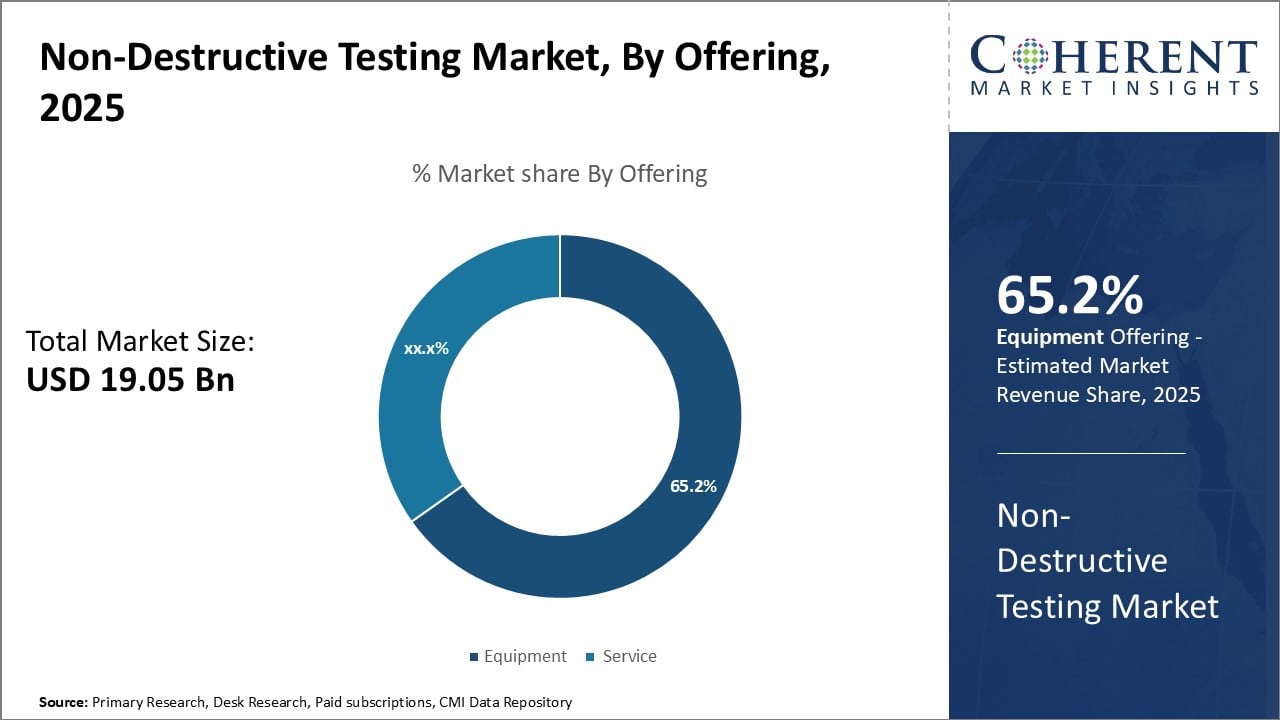
- Based on Offering, the Equipment segment leads the market holding an estimated share of 66.2% in 2026, due to its central role in enabling accurate, fast, and automated inspections across critical industries.
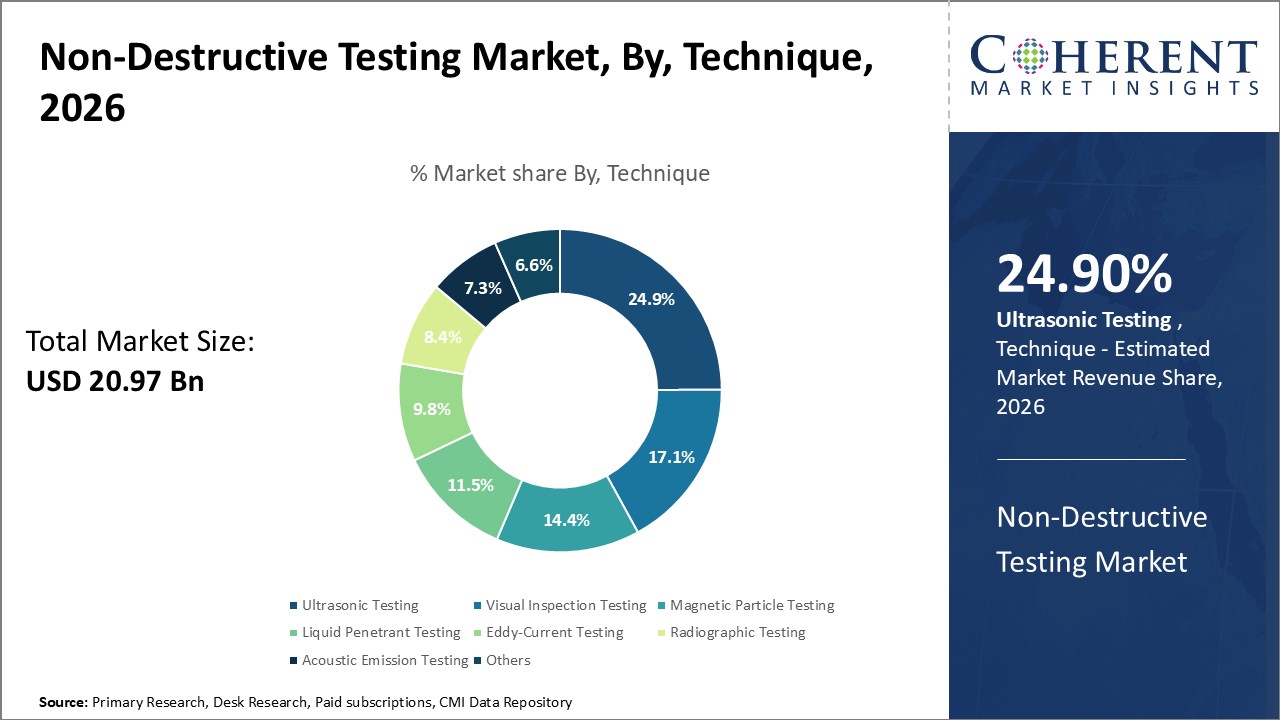
- Based on Technique, Ultrasonic Testing segment leads the market holding an estimated share of 24.9% in 2026, due to its wide industrial applications and technological maturity.
- Based on Vertical, the Manufacturing segment leads the market holding an estimates share of 30.9% in 2026, driven by strict quality regulations and increasing component complexity.
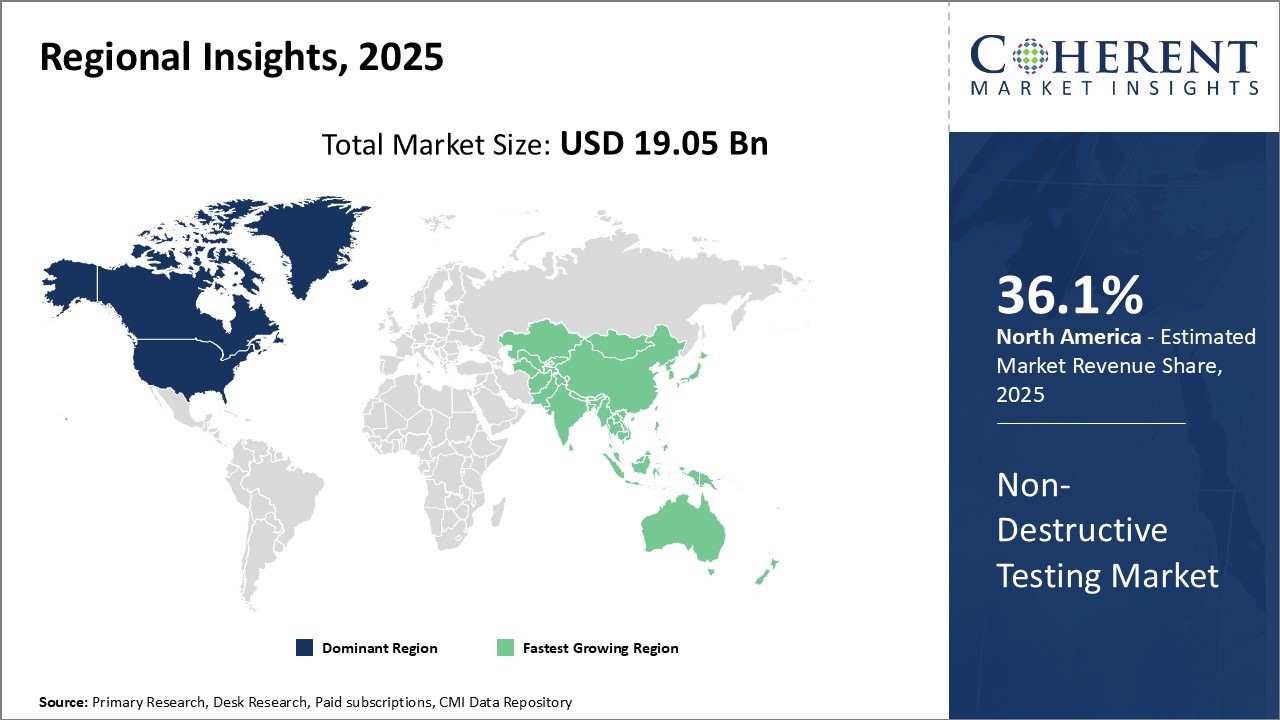
- Based on Regional, North America is expected to lead the market with a share of 36.1% in 2026 in non-destructive testing market. While, Asia Pacific is projected to be the fastest growing region during the forecast period.
Market Overview
The market is witnessing positive trends such as a rising focus on safety inspections, stringent government regulations supporting adoption, and increasing investments in monitoring aging infrastructure and heavy industries. These factors are significantly contributing to the growth in non-destructive testing market demand. The need for superior quality control, coupled with rapid technological advancements in testing equipment, is driving increased spending on non-destructive testing solutions. New and innovative methods are being developed to detect hard-to-find defects, improving inspection accuracy and reducing operational risks. Adoption is particularly strong in critical sectors such as oil and gas, power generation, aerospace, and automotive, where non-destructive testing ensures structural integrity, operational safety, and reduced maintenance costs. Moreover, the rise in global infrastructure development projects further strengthens the outlook for sustained market growth in the coming years.
Current Event and Their Impact on the Non-Destructive Testing Market
Current Event | Description and Its Impact |
US-China Trade Tensions and Export Control Escalation |
|
Asia-Pacific Infrastructure and Manufacturing Boom |
|
Role of Artificial Intelligence (AI) in Non-Destructive Testing
AI plays a transformative role in the non-destructive testing (NDT) market by enhancing the accuracy, speed, and efficiency of inspections. It enables automated analysis of complex data from various NDT techniques such as ultrasonic testing, radiography, and infrared thermography, reducing human error and subjectivity. Machine learning algorithms detect defects and anomalies with greater precision, while predictive analytics help forecast maintenance needs, minimizing downtime and costs.
In April 2025, Researchers at IIT-Madras' Centre for Non-Destructive Evaluation (CNDE) announced that they are developing advanced non-destructive testing (NDT) technologies to enhance infrastructure safety and cut operational costs in sectors like transport, energy, and public utilities. Their methods inspect critical assets—pipelines, bridges, tanks, and dams—without causing damage or dismantling. Using techniques such as X-rays, infrared thermography, lasers, ultrasonics, microwaves, and eddy currents, they integrate AI, machine learning, robotics, drones, hyperspectral imaging, and quantum computing to create more accurate and scalable inspection systems.
- Current Industry Events of 2026
- Market Size Estimation
- Regional Breakdown
- Competitive Landscape
- Customer Intelligence
- Segmental Analysis
- Pricing Analysis
- Key Market Drivers, Challenges & Future Trends
- Customized Insights Section
Segmental Insights
Non-Destructive Testing Market Insights By, Offering: Accurate and Automated Inspection Drive Growth in the Equipment Segment
In terms of offering, the equipment contributes the highest share of the non-destructive testing market owing 66.2% in 2026 due to its central role in enabling accurate, fast, and automated inspections across critical industries. As safety regulations tighten and the need for precision grows, industries such as aerospace, oil & gas, automotive, and energy increasingly rely on advanced NDT equipment to detect internal and surface defects without damaging the material. The shift toward automated and portable testing systems also fuels equipment demand, as companies seek to reduce downtime and inspection costs. Furthermore, ongoing innovation, such as phased array ultrasonic systems, digital radiography, and AI-integrated sensors is making NDT equipment more powerful, efficient, and adaptable to complex inspection needs, driving continued investment and market growth.
In July 2025, Carestream NDT introduced a groundbreaking bendable digital radiography detector that conforms to complex curved surfaces for enhanced inspection workflows. This latest addition to Carestream’s NDT equipment portfolio delivers high-resolution imaging with flexible deployment, supporting rapid radiographic capture on curved or uneven objects. The innovative detector complements existing industrial X‑ray systems such as the DRX‑Rise mobile X‑ray unit and their Focus HD fixed detectors, offering versatile solutions tailored to aerospace, energy, transportation and manufacturing inspection applications.
Non-Destructive Testing Market Insights By, Technique: Ultrasonic testing leads due to wide applications and maturity
In terms of technique, the ultrasonic testing is expected to hold the largest share of the non-destructive testing market in 2026, accounting for 24.9%, due to its wide industrial applications and technological maturity. Using high-frequency sound waves, it effectively detects both surface and internal defects in metals, composites, and other solids. In use since the mid-20th century, it is a proven technique in sectors like power generation, oil & gas, and manufacturing, especially for inspecting welds, castings, and forgings. Technological advances in transducers and data analysis have expanded its scope, while automation-ready equipment and standardized procedures make it cost-effective and reliable. Its growing adoption in manufacturing for real-time, in-line quality checks further reinforces its leadership in the market.
For instance, a pioneering non‑contact ultrasonic testing approach has been unveiled, combining robotic automation with advanced ultrasound sensors to inspect complex surfaces without physical contact. The system employs water‑jet coupling and articulated robotic arms to navigate intricate geometries, harvesting 3D defect data overlayed on CAD models with up to 0.1 mm repeatability. It promises faster, more reliable nondestructive inspection across industries from aerospace engine casings to automotive chassis, eliminating manual probe handling and boosting throughput. Such advancements are proliferating the non-destructive testing market demand.
Non-Destructive Testing Market Insights, By Vertical: Regulations and Component Complexity drive the Adoption in Manufacturing Segment
In terms of vertical, manufacturing contributes the highest share of the non-destructive testing market with 30.9% in 2026, driven by strict quality regulations and increasing component complexity. Industries like aerospace, defense, and medical devices demand 100% inspection of critical parts using techniques such as ultrasonic, radiography, and eddy current testing. The rise of 3D-printed and multi-material components with tight tolerances makes traditional inspection methods inadequate, boosting the need for automated, high-resolution NDT. As zero-defect manufacturing becomes a priority, sectors like automotive and industrial machinery are also ramping up NDT adoption. This shift positions NDT as a vital enabler of quality-driven, advanced manufacturing.
In April 2024, Marri Lakshman Reddy Institute of Technology (MLRIT) inaugurated a cutting‑edge Non‑Destructive Testing (NDT) and Welding Laboratory to boost manufacturing skills in collaboration with Synergem. The facility features ultrasonic, radiographic, magnetic particle inspection and liquid penetrant testing equipment to train students in detecting material flaws and ensuring integrity, critical for aerospace, defence and manufacturing sectors.
Regional Insights
North America Non-Destructive Testing Market Analysis & Trends
North America has been the dominant region in the non-destructive testing market with 36.1% in 2026. The U.S. in particular accounts for the largest share due to strong aerospace and defense industries in the country. Many leading Non-Destructive Testing (NDT) equipment manufacturers such as GE Inspection Technologies and Olympus NDT are headquartered in the U.S., giving them an advantage in terms of supplying cutting-edge technological solutions. Additionally, strict quality control and safety standards mandated by regulatory bodies like the Federal Aviation Administration (FAA) and National Aeronautics and Space Administration (NASA) have propelled the greater adoption of NDT methods across various industries. The pricing of NDT services and equipment is also comparatively higher in North America owing to advanced available technologies and expertise of technicians.
For instance, in June 2026, Previan launched a strategic realignment enabling Eddyfi Technologies and NDT Global to operate as fully independent industrial‑technology leaders. This move is designed to unlock each unit’s market potential through separate leadership, tailored strategies, standalone balance sheets, and streamlined operations. North American private‑equity firm Novacap has injected new capital to reinforce its role as the lead investor in NDT Global, while CDPQ and the founders maintain stakes in both companies.
Asia Pacific Non-Destructive Testing Market Analysis & Trends
Asia Pacific has emerged as the fastest growing market for non-destructive testing in recent times on the back of expanding manufacturing sectors, especially in China, India, Japan, and South Korea. There is a massive presence of automotive, electronics, and industrial machinery production in Aisa Pacific, driving the demand for real-time quality inspections to minimize defects. The region is witnessing significant infrastructure growth as well through mega projects in the transport, power, and construction industries. This has boosted the need for NDT to certify structural integrity and ensure safety. At the same time, countries like China and India also export large volumes of manufactured goods, necessitating proper inspection techniques. While the Asia Pacific market has lower pricing than North America, costs have been moving upward gradually with increasing investments in R&D by regional and global players aiming to tap into the region's lucrative opportunities.
For instance, in March 2026, RPP Infra Projects secured a new contract valued at ₹22.56 crore from India’s Department of Space Centre, Construction and Maintenance Group at Sriharikota. The order calls for construction of a Non-Destructive Testing (NDT) facility within the SSLV Launch Complex (Package 12) located in Tiruchendur and Sathankulam taluks of Tuticorin district, Tamil Nadu. Scope encompasses civil, electrical, mechanical, public health and air‑conditioning works.
Non-Destructive Testing Market Outlook Country-Wise
The U.S. Non-Destructive Testing Market Trends
The United States drives strong demand in the non-destructive testing market due to its aging infrastructure and critical sectors like aerospace, defense, and energy. Strict regulations from the FAA, OSHA, and ASME mandate frequent inspections to ensure safety and compliance. High defense spending further fuels demand for NDT in military systems. Additionally, major aerospace manufacturers like Boeing and SpaceX rely on advanced NDT for quality assurance, making the U.S. a key hub for NDT technology adoption and innovation.
For instance, in April 2026, the AIMM Center (Advanced Inspection Methods & Materials), a collaboration between Composite Inspection Consulting/NDT (CICNDT) and Omni NDE, opened its 4,000‑sq‑ft facility. The center offers advanced non‑destructive testing (NDT) services including robotic computed tomography, digital X‑ray, laser ultrasonic and laser shearography, phased‑array ultrasonic testing, thermography and bond testing. It serves aerospace, defense and advanced composites industries, leveraging automation and scan‑as‑a‑service models to streamline inspection workflow.
China Non-Destructive Testing Market Trends
China is a major growth driver in the non-destructive testing market, fueled by its vast industrial base and rapid infrastructure expansion. Major investments in high-speed rail, nuclear energy, and construction projects demand advanced NDT solutions to ensure safety and quality. Additionally, the rise of aerospace, automotive, and EV manufacturing has increased the need for precise, automated inspection tools. Government initiatives like “Made in China 2026” and stricter quality regulations further boost NDT adoption across industries.
For instance, in November 2024, Testia, the Airbus subsidiary specialising in non-destructive testing (NDT), has announced that it will begin offering EN 4179/NAS 410-certified NDT training and examination courses in China. The programme will be delivered through the Hua‑Ou training centre in Beijing, marking Testia’s first permanent training hub in the Greater China region outside its Toulouse headquarters.
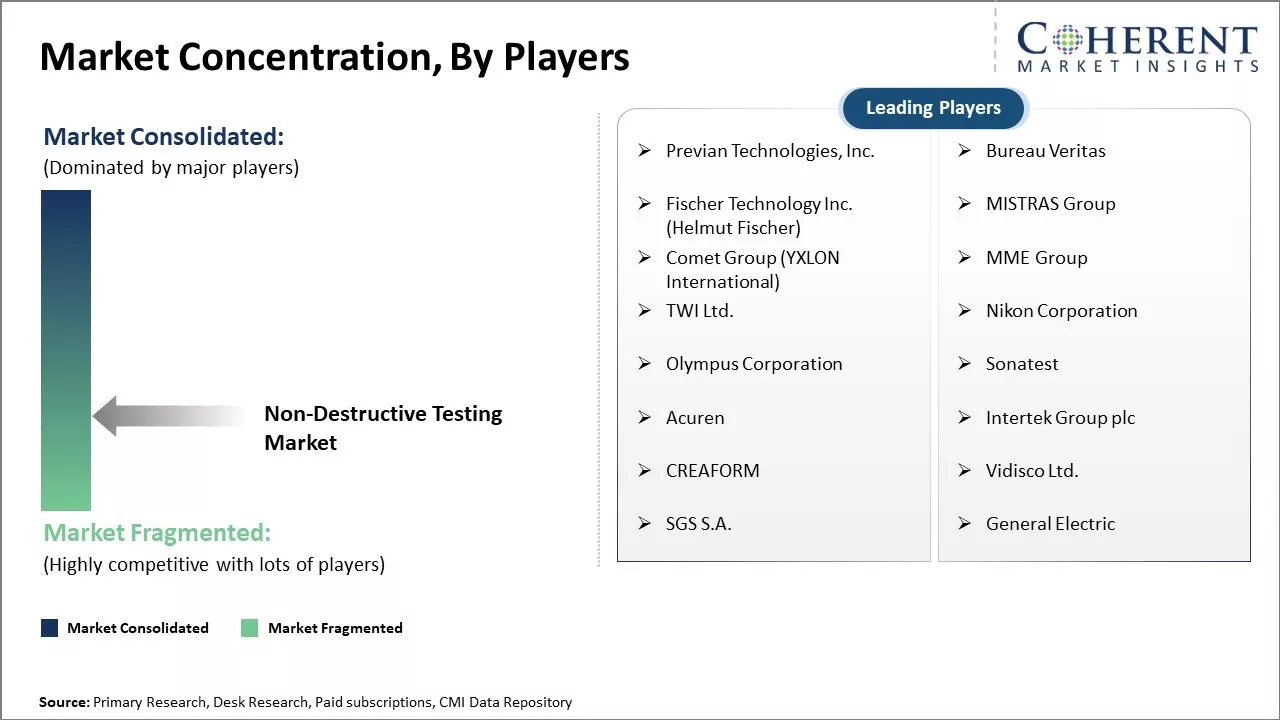
Market Concentration and Competitive Landscape
Key Developments
- In August 2025, Sonomatic launched its new i‑Claw, a robotic, ROV‑deployable system for inspecting I‑tube welds on subsea infrastructure. Designed as part of an asset life extension initiative, the tool integrates Phased Array Ultrasonic Testing (PAUT) and Time of Flight Diffraction (TOFD) to deliver highly accurate weld integrity assessments. The launch represents Sonomatic’s continued innovation in subsea NDT solutions for extending offshore asset lifespan.
- In April 2025, Eurailtest launched SUMAX, an innovative Non‑Destructive Testing (NDT) solution. Drawing on phased-array ultrasonic technology, SUMAX enables precise inspection of axle shafts while cutting maintenance costs by up to 70 percent. Designed for accuracy, versatility and eco‑friendliness, it detects hidden defects early, enhances predictive maintenance and supports compliance with stringent railway safety standards.
- In January 2025, Alpha Maintenance launched a new Non‑Destructive Testing (NDT) service, marking a pivotal expansion in the company’s inspection capabilities. This strategic move responds directly to growing demand from industrial partners. The suite of NDT methods now offered includes Visual Testing (VT), Magnetic Testing (MT), Penetrant Testing (PT), Ultrasonic Testing (UT), and Phased Array (PA).
- In January 2025, TÜV AUSTRIA Bureau of Inspection & Certification (Pvt.) Ltd. unveiled its new Non‑Destructive Testing (NDT) and Destructive Testing (DT) business unit, significantly enhancing its Industry & Energy service portfolio. Equipped with cutting-edge NDT machinery now operational at its Karachi branch, this expansion positions the firm as a unified provider under one brand.
Market Report Scope
Non-Destructive Testing Market Report Coverage
| Report Coverage | Details | ||
|---|---|---|---|
| Base Year: | 2025 | Market Size in 2026: | USD 20.97 Bn |
| Historical Data for: | 2020 To 2024 | Forecast Period: | 2026 To 2033 |
| Forecast Period 2026 to 2033 CAGR: | 10.1% | 2033 Value Projection: | USD 41.13 Bn |
| Geographies covered: |
| ||
| Segments covered: |
| ||
| Companies covered: | Previan Technologies, Inc., Bureau Veritas, Fischer Technology Inc. (Helmut Fischer), MISTRAS Group, Comet Group (YXLON International), MME Group, TWI Ltd., Nikon Corporation, Olympus Corporation, Sonatest, Acuren, Intertek Group plc, CREAFORM, Vidisco Ltd., SGS S.A., and General Electric | ||
| Growth Drivers: |
| ||
| Restraints & Challenges: |
| ||
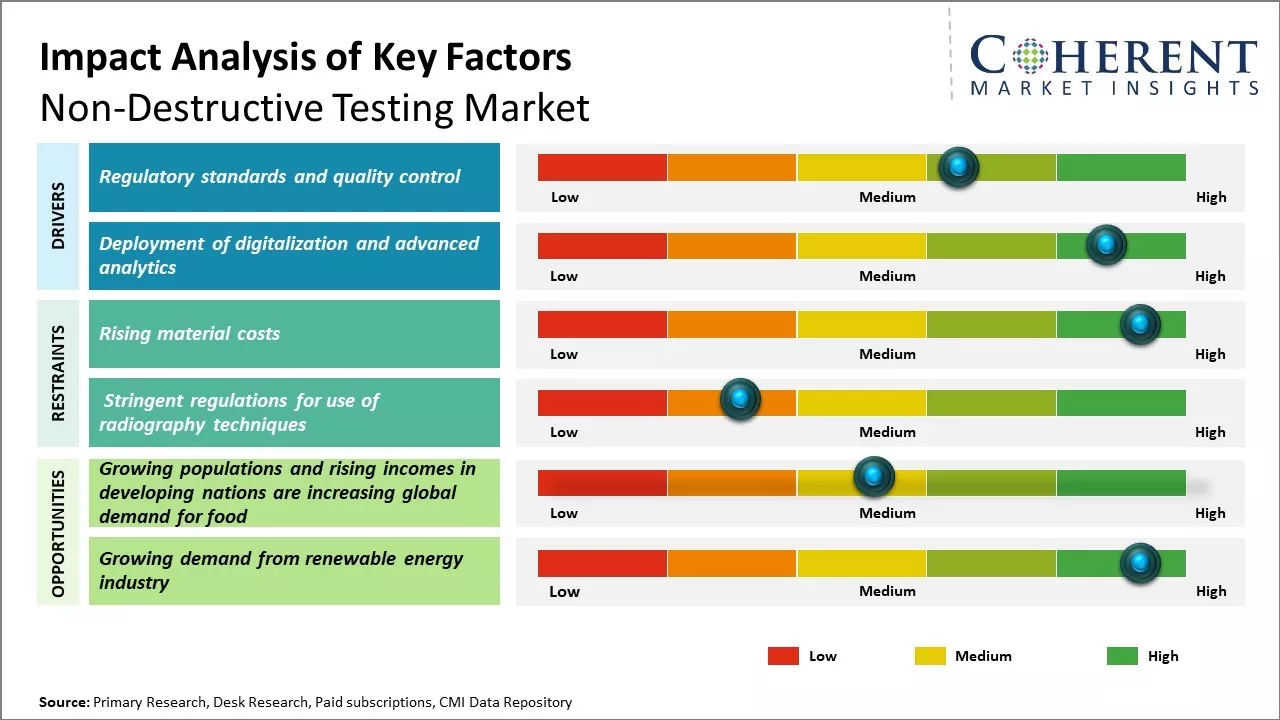
Non-Destructive Testing Market Drivers
- Regulatory standards and quality control
With the growing recognition of the importance of quality control and safety across industries, regulatory standards for non-destructive testing have become significantly more stringent. Governments and industry bodies worldwide now mandate regular inspections for critical infrastructure, equipment, and components—especially in sectors like oil & gas, aerospace, manufacturing, and power generation, where even minor flaws can have serious consequences. Modern aircraft undergo multiple non-destructive tests throughout their lifecycle, while high-pressure pipelines require continuous integrity monitoring. As workplace safety and accident prevention gain priority, the role of NDT continues to grow. Stricter compliance norms are driving operators to adopt advanced inspection techniques, thereby expanding the non-destructive testing market share. This trend is expected to intensify as regulatory oversight extends into more sectors and test standards evolve with technology.
For instance, in June 2025, TEAM, through its Inspect360 platform, now offers Conventional Non‑Destructive Testing (NDT) services with key regulatory standards, including radiography (RT), ultrasonic testing (UT), magnetic particle inspection (MPI), dye penetrant testing (PT), visual testing (VT), and positive material identification (PMI), delivered by certified technicians. All procedures strictly follow industry codes such as ASME, API, AWS, and are compliant with Process Safety Management (PSM) and quality assurance regulations.
- Deployment of digitalization and advanced analytics
The non-destructive testing market is undergoing a major transformation driven by digitalization and advanced data analytics. Traditionally, NDT relied on manual inspections that were labor-intensive and hard to standardize. Today, the integration of technologies like artificial intelligence (AI), machine learning, predictive maintenance, remote visual inspection, and portable sensors is automating these processes, improving both accuracy and reliability. Data that was previously underutilized is now being analyzed to predict defects, enable proactive maintenance, and reduce overall inspection costs. Remote monitoring allows continuous surveillance of critical assets from anywhere, enhancing operational efficiency. This shift is pushing industries to adopt smart NDT solutions at scale. Insights generated through analytics are also elevating NDT from a compliance task to a key tool for strategic asset management and risk prevention. According to non-destructive testing market research, this wave of digitization is expected to unlock significant growth opportunities in the near future.
In April 2025, Fujitsu Limited, together with Sonofai Inc., Ishida Tec Co., Ltd., and Tokai University, unveiled the SONOFAI T‑01, an AI‑powered device that non‑destructively evaluates fat content in frozen albacore tuna. Built around Fujitsu’s ultrasound AI engine from the Kozuchi platform, the system inspects tuna in just 12 seconds with one operator, boosting throughput and accuracy while slashing labor and operational costs by up to 80 percent. Targeting seafood processors and fisheries cooperatives in Japan.
Non-Destructive Testing Market Opportunities
- Growing demand for inspection and maintenance of aging critical infrastructure
The non-destructive testing market forecast highlights strong growth driven by the urgent need to inspect aging infrastructure across sectors like energy, transportation, and manufacturing. Advances in digitalization, automation, and AI are improving inspection accuracy and speed. The integration of NDT into additive manufacturing workflows enhances quality control in 3D-printed components, especially in aerospace and healthcare. Rising use of portable and remote testing solutions, including drone-assisted systems, supports safer, cost-effective inspections in hard-to-reach areas. New applications in semiconductors, renewables, and defense further expand the market’s scope and future potential.
For instance, in March 2025, the International Atomic Energy Agency (IAEA) enhanced its assistance in non‑destructive testing (NDT), strengthening global capacities to assess structural safety after disasters and preserve cultural heritage. The agency launched a new NDT training centre at its Seibersdorf laboratories in Austria, issued the first global “Guidelines on Training Syllabi in NDT for Civil Engineering,” and signed practical arrangements with the International Committee for Non‑Destructive Testing (ICNDT).
Analyst Opinion (Expert Opinion)
The Non-Destructive Testing market value is at a pivotal inflection point, transitioning from a compliance-centric support function to a critical enabler of real-time risk mitigation, asset lifecycle management, and performance assurance in industrial ecosystems. This evolution is neither incidental nor incremental, it is being driven by structural shifts across infrastructure, energy, and manufacturing sectors, demanding more predictive, integrated, and digitally-native inspection methodologies.
Notably, the decarbonization of heavy industry and the parallel electrification of global infrastructure are exerting transformative pressure on NDT frameworks. For instance, the transition to hydrogen pipelines, as being aggressively pursued in Germany and Japan, necessitates advanced ultrasonic and acoustic emission testing capable of detecting embrittlement phenomena invisible to traditional radiography. Similarly, as the wind energy sector matures, fatigue cracks in composite turbine blades require phased array ultrasonic testing (PAUT) with 3D imaging, a capability now offered by vendors such as Eddyfi and Olympus with real-time cloud integration.
From a technology adoption perspective, the growing incorporation of robotics and AI into NDT is not merely a trend, it is rapidly becoming a baseline. According to industry reports, over 38% of oil & gas operators in North America have either piloted or operationalized autonomous drone-based NDT for pipeline inspections as of mid-2025, drastically reducing downtime and human risk in remote locations. Furthermore, predictive maintenance models are gaining traction, as NDT is increasingly integrated with digital twins and IoT frameworks. Siemens and GE Digital, for example, are collaborating with third-party NDT providers to feed inspection data directly into structural health models transforming post-failure inspections into pre-failure predictions.
Yet, the industry is not without its challenges. One pressing concern is the fragmented regulatory landscape, which complicates standardization across transnational infrastructure projects. This is particularly evident in the aerospace sector, where divergent requirements between EASA and FAA-certified facilities often necessitate duplicate NDT processes, raising costs without enhancing reliability. Additionally, the shortage of certified Level II and Level III technicians continues to impede scalability, especially in emerging markets. According to ASNT, the global shortfall of certified NDT personnel is projected to exceed 15% by 2026, unless substantial training pipelines are established.
Speak to the analyst
Want personalized insights?
Take the findings above to one of our principal consultants, or have the report rebuilt around the segments, geographies and competitors you actually track.
Market Segmentation
- Offering Insights (Revenue, USD Bn, 2026 - 2033)
- Equipment
- Service
- Technique Insights (Revenue, USD Bn, 2026 - 2033)
- Ultrasonic Testing
- Visual Inspection Testing
- Magnetic Particle Testing
- Liquid Penetrant Testing
- Eddy-Current Testing
- Radiographic Testing
- Acoustic Emission Testing
- Others
- Vertical Insights (Revenue, USD Bn, 2026 - 2033)
- Manufacturing
- Oil & Gas
- Aerospace
- Public Infrastructure
- Automotive
- Power Generation
- Others
- Regional Insights (Revenue, USD Bn, 2026 - 2033)
- North America
- U.S.
- Canada
- Latin America
- Brazil
- Argentina
- Mexico
- Rest of Latin America
- Europe
- Germany
- U.K.
- France
- Italy
- Russia
- Rest of Europe
- Asia Pacific
- China
- India
- Japan
- Australia
- South Korea
- ASEAN
- Rest of Asia Pacific
- Middle East & Africa
- GCC Countries
- South Africa
- Rest of Middle East & Africa
- North America
Sources
Primary Research Interviews from the following stakeholders
Stakeholders
- Interviews with NDT equipment manufacturers, service providers, quality assurance engineers, plant maintenance heads, industrial safety consultants, and certification agencies across key regions.
Specific Stakeholders
- Inspection and maintenance managers at oil & gas companies
- Asset integrity leads at power generation and transmission utilities
- MRO heads at aerospace and aviation companies
- Quality and compliance managers at automotive and heavy machinery OEMs
- Project engineers at infrastructure and construction firms
- Testing and training center directors at NDT certification institutes
- Technical procurement officers at chemical and petrochemical facilities
Databases
- United Nations Industrial Development Organization (UNIDO) – Industry Statistics
- World Trade Organization (WTO) Trade Statistics
- UN Comtrade Database
- Directorate General of Commercial Intelligence and Statistics (DGCIS), India
- U.S. Bureau of Economic Analysis (BEA)
- Eurostat – Industrial Output Reports
- China Customs Statistics
- National Bureau of Statistics of China – Machinery & Manufacturing Data
- Japan External Trade Organization (JETRO) – Industrial Equipment Exports
- Korea Institute of Industrial Technology (KITECH)
Magazines
- Materials Evaluation Magazine
- NDT News
- Inspectioneering Journal
- Industrial Heating
- Plant Services Magazine
- Welding Journal (NDT Section)
- Process & Control Today
- Petro Industry News
- Testing & Inspection Magazine – Japan
- Energy World (NDT & Asset Monitoring features)
Journals
- Insight – Non-Destructive Testing and Condition Monitoring (British Institute of NDT)
- Journal of Nondestructive Evaluation (Springer)
- International Journal of Pressure Vessels and Piping
- IEEE Transactions on Industrial Electronics
- Journal of Materials Processing Technology
- Structural Control Health Monitoring Journal
- Engineering Failure Analysis
- Journal of Manufacturing Science and Engineering
Newspapers
- The Economic Times – Industry & Infrastructure
- The Hindu Business Line – Power & Engineering
- Financial Times – Industrial Technology Reports
- South China Morning Post – Heavy Industries and Infrastructure
- Nikkei Asia – Plant & Machinery
- The Wall Street Journal – Engineering and Manufacturing
- Business Standard – Industrial Equipment and Services
Associations
- American Society for Nondestructive Testing (ASNT)
- British Institute of Non-Destructive Testing (BINDT)
- Indian Society for Non-Destructive Testing (ISNT)
- European Federation for Non-Destructive Testing (EFNDT)
- Asia-Pacific Federation for NDT (APFNDT)
- Japanese Society for Non-Destructive Inspection (JSNDI)
- International Institute of Welding (IIW) – NDT Division
- American Welding Society (AWS) – NDT Committee
- Society of Petroleum Engineers (SPE) – Asset Integrity Section
- Confederation of Indian Industry (CII) – Industrial Equipment Forum
Public Domain Sources
- Ministry of Heavy Industries (Government of India)
- National Institute of Standards and Technology (NIST), U.S.
- Ministry of Economy, Trade and Industry (METI), Japan
- Department for Business and Trade, U.K.
- U.S. Occupational Safety and Health Administration (OSHA)
- Indian Bureau of Mines – Industrial Safety and Maintenance Data
- U.S. Department of Energy – Asset Maintenance Programs
- Reserve Bank of India (RBI) – Industrial Manufacturing Reports
- EU Commission – Industrial Safety and NDT Research Initiatives
- NITI Aayog – Infrastructure and Asset Monitoring Framework
Proprietary Elements
- CMI Data Analytics Tool, and Proprietary CMI Existing Repository of information for last 8 years
Get access to 250+ pages report
Every segment, forecast, competitor profile and data table behind the analysis above — available for instant download.
- ESOMAR Member
- ISO 9001:2015 Certified
- D-U-N-S Registered
- GDPR & CCPA Compliant
Missing comfort of reading report in your local language? Find your preferred language:
Transform your Strategy with Exclusive Trending Reports
Frequently Asked Questions
The Non-Destructive Testing Market is estimated to be valued at USD 20.97 Bn in 2026, and is expected to reach USD 41.13 Bn by 2033.
The CAGR of the Non-Destructive Testing Market is projected to be 10.1% from 2026 to 2033.
Regulatory standards and quality control and deployment of digitalization and advanced analytics are the major factors driving the growth of the non-destructive testing market.
Rising material costs and stringent regulations for the use of radiography techniques are the major factors hampering the growth of the non-destructive testing market.
In terms of offering, equipment is estimated to dominate the market revenue share in 2026.
Previan Technologies, Inc., Bureau Veritas, Fischer Technology Inc. (Helmut Fischer), MISTRAS Group, Comet Group (YXLON International), MME Group, TWI Ltd., Nikon Corporation, Olympus Corporation, Sonatest, Acuren, Intertek Group plc, CREAFORM, Vidisco Ltd., SGS S.A., and General Electric are the major players.
North America is expected to lead the non-destructive testing market in 2026.