

Nuclear Imaging Equipment Market Size and Trends Forecast: 2026 - 2033
The nuclear imaging equipment market is estimated to be valued at USD 3.76 Bn in 2026 and is expected to reach USD 5.40 Bn by 2033, exhibiting a compound annual growth rate (CAGR) of 5.3% from 2026 to 2033.
Key Takeaways of the Nuclear Imaging Equipment Market
- By product type, the Single Photon Emission Computed Tomography (SPECT) segment is expected to contribute the highest share of the nuclear imaging equipment market with 36% in 2026.
- North America is expected to be the largest market for nuclear imaging equipment during the forecast period, accounting for 40% of the market share in 2026.
- The Asia Pacific is expected to be the fastest-growing market for nuclear imaging equipment market, with a CAGR of over 6. 1% during the forecast period.
Market Overview
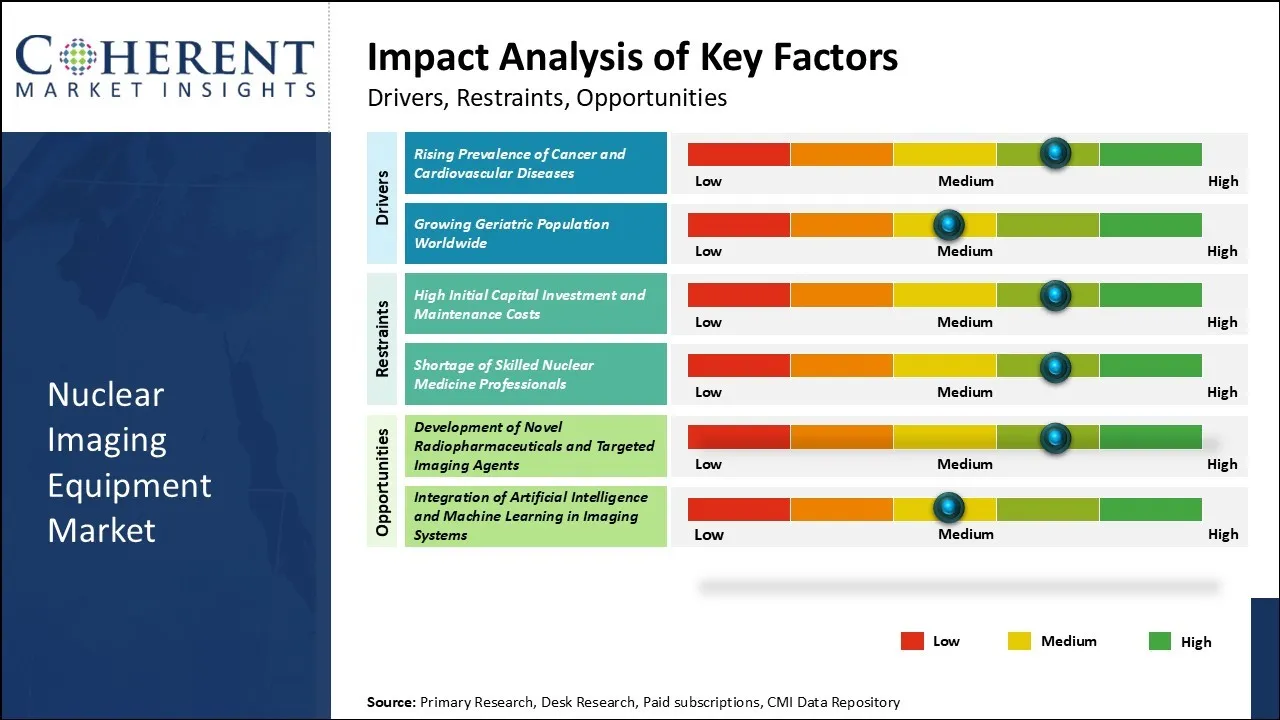
Nuclear imaging devices are the devices which are commonly employed in radioactive materials to assess the severity of illnesses including cancer, endocrine, gastrointestinal, cardiovascular, neurological, and other brain disorders. By providing operational data at the molecular and cellular levels, these non-invasive devices help clinicians to assess and diagnose medical issues. In the field of nuclear imaging, Positron Emission Tomography (PET) systems, single photon Emission Computed Tomography (SPECT) systems and planar scintigraphy are the main product categories.
However, the exorbitantly high cost of nuclear imaging modalities and equipment is a major factor hampering the growth of the nuclear imaging market globally.
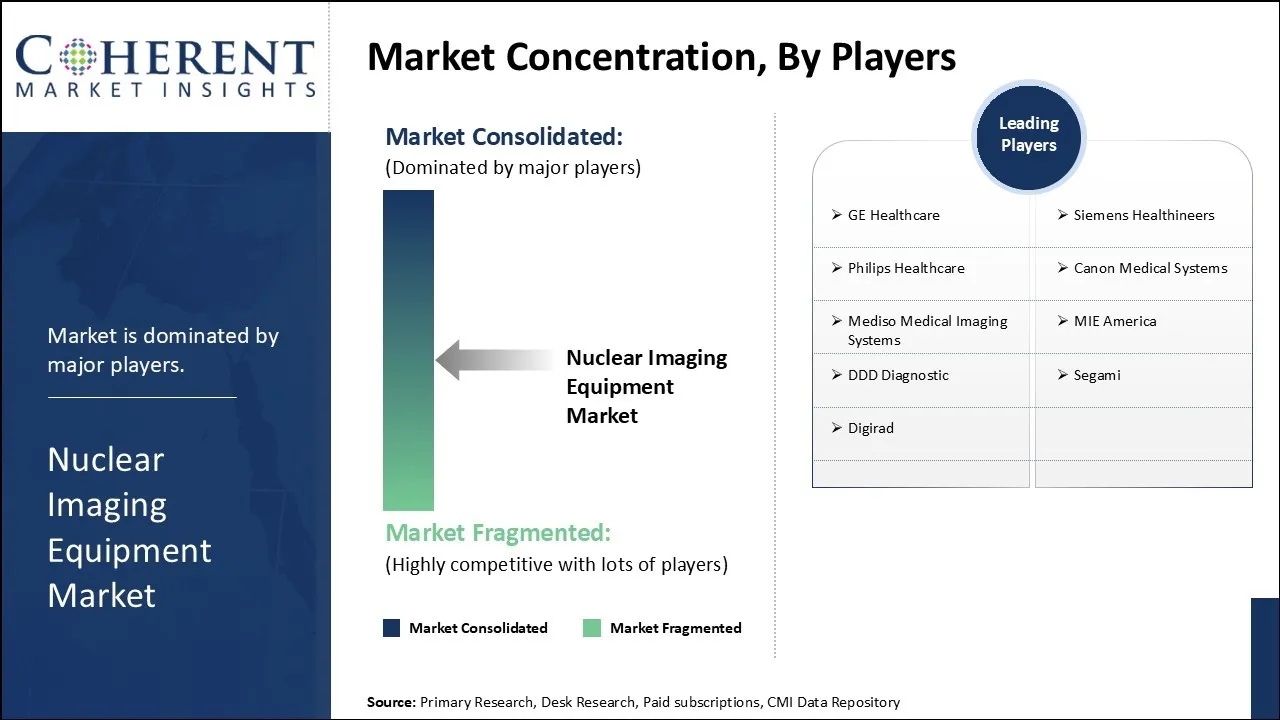
Market Concentration and Competitive Landscape
Current Events and their Impact on the Nuclear Imaging Equipment Market
Current Events | Description and its impact |
Geopolitical Developments in Key Countries |
|
Regulatory and Safety Standards Evolution |
|
- Current Industry Events of 2026
- Market Size Estimation
- Regional Breakdown
- Competitive Landscape
- Customer Intelligence
- Segmental Analysis
- Pricing Analysis
- Key Market Drivers, Challenges & Future Trends
- Customized Insights Section
Market Trends
Rising Incidence of Cancer and Cardiovascular Diseases
The escalating incidence of cancer and cardiovascular diseases worldwide is fundamentally transforming the nuclear imaging equipment landscape, creating unprecedented demand for advanced diagnostic solutions. Cardiovascular diseases, which the WHO identifies as the leading cause of death globally accounting for approximately 17.9 million deaths annually, are similarly propelling the demand for nuclear cardiology imaging equipment.
For instance, the World Health Organization projects that new cancer cases will rise from an estimated 20 million in 2022 to over 35 million by 2050, marking a 77% increase. This surge is driven by population aging and growth, as well as increased exposure to risk factors associated with socio-economic development such as tobacco use, alcohol consumption, obesity, and air pollution.
Segmental Insights
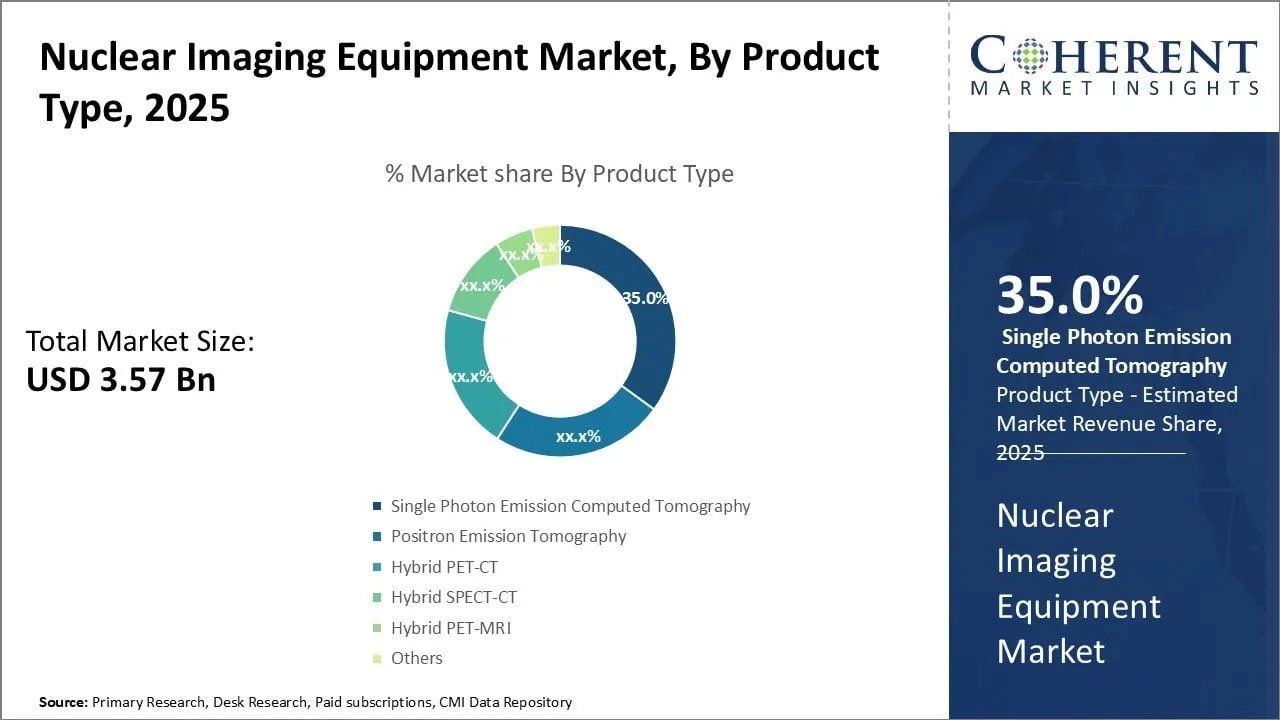
Nuclear Imaging Equipment Market Insights, By Product Type: Growth of SPECT (Single Photon Emission Computed Tomography) Segment Driven by Wide Clinical Applications
The Single Photon Emission Computed Tomography (SPECT) segment is expected to contribute the highest share of 36.0% in 2026. SPECT technology has been a cornerstone in nuclear imaging for several decades, making it a trusted and widely adopted diagnostic tool in hospitals and diagnostic centers globally.
Its ability to provide three-dimensional functional information about tissues and organs plays a critical role in cardiology, oncology, and neurology. For example, SPECT is extensively used in myocardial perfusion imaging to assess coronary artery disease, which remains a leading cause of mortality globally.
Emerging Innovations in the Nuclear Imaging Equipment Market
- Development of New Radiotracers
- Novel tracers targeting specific biological pathways, such as Prostate-Specific Membrane Antigen (PSMA) for prostate cancer or amyloid plaques for Alzheimer’s disease, have expanded nuclear imaging’s diagnostic scope. These tracers improve disease specificity, enabling earlier and more accurate detection.
- Hybrid Imaging
- Hybrid imaging is further enhanced by the integration of real-time motion correction technologies, which reduce artifacts caused by patient movement during scanning. This advancement is vital in cardiac and pediatric imaging, where motion is a common challenge. Additionally, advancements in detector materials, such as lutetium-based scintillators, have improved detection efficiency and durability.
Regional Insights
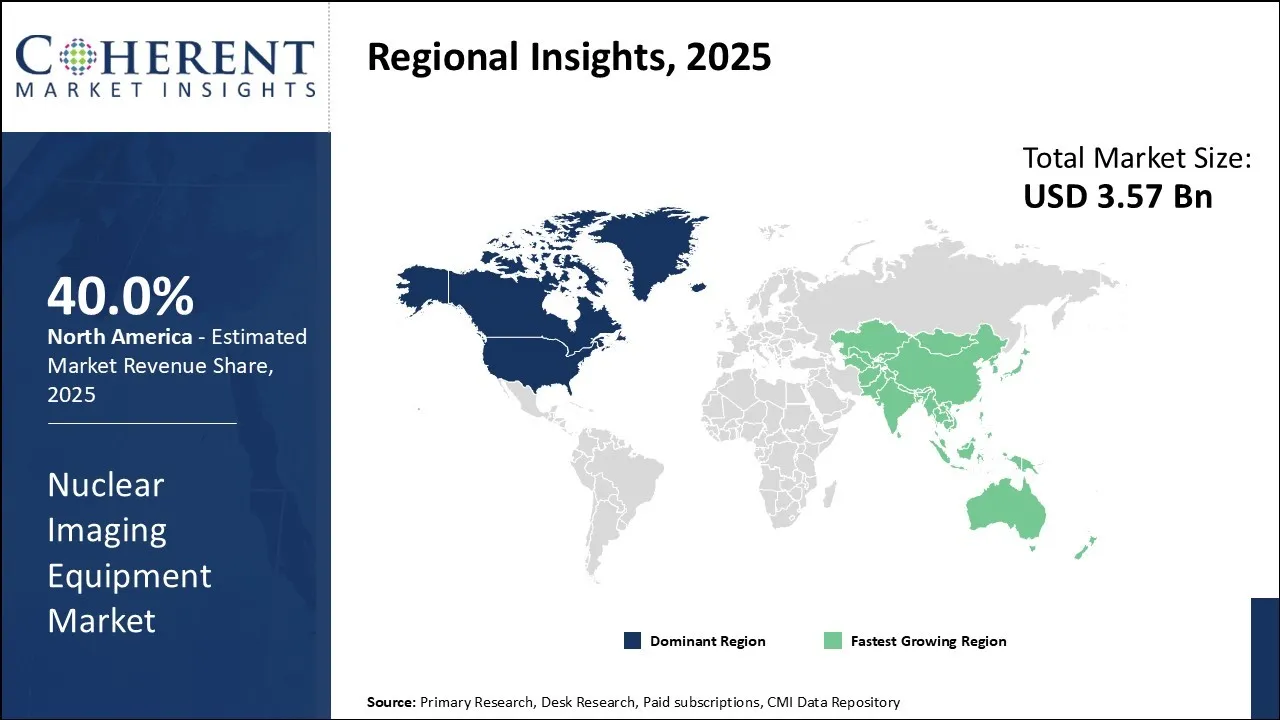
North America Nuclear Imaging Equipment Market Analysis and Trends
North America has established itself as the dominant region with an estimated market share of 40.0% in 2026 in the global nuclear imaging equipment market. The region's dominance is exemplified by the extensive network of academic medical centers and research institutions that continuously drive innovation in nuclear imaging technologies.
For instance, the Mayo Clinic has been at the forefront of implementing advanced PET-CT scanners and SPECT imaging systems, contributing to improved patient outcomes in oncology and cardiology diagnostics. The Cleveland Clinic has similarly invested in state-of-the-art hybrid imaging systems that combine nuclear medicine with other modalities, enhancing diagnostic accuracy for complex cardiovascular conditions.
Asia Pacific Nuclear Imaging Equipment Market Analysis and Trends
The Asia Pacific region is expected to be the fastest-growing market for nuclear imaging equipment market, with a CAGR of over 6.1% during the forecast period. Driven by unprecedented technological adoption rates and expanding clinical applications, particularly in emerging markets experiencing rapid healthcare sector transformation.
Furthermore, Vietnam's healthcare modernization initiative has led to remarkable expansion in nuclear medicine capabilities, with the Vietnam Atomic Energy Institute documenting the establishment of 15 new nuclear medicine departments in major hospitals between 2020 and 2023, representing a significant leap in diagnostic imaging infrastructure.
Nuclear Imaging Equipment Market Outlook for Key Countries
U.S. Nuclear Imaging Equipment Market Analysis and Trends
The U.S. leads the global nuclear imaging equipment market due to strong healthcare infrastructure, extensive adoption of PET and SPECT technologies, and significant R&D investment by companies like GE HealthCare and Siemens Healthineers. The presence of leading research institutions and favorable reimbursement policies also drive innovation and clinical integration.
Germany Nuclear Imaging Equipment Market Analysis and Trends
Germany dominates the Europe nuclear imaging equipment market with its advanced medical imaging infrastructure and strong focus on early diagnosis and precision medicine. It serves as a key hub for clinical trials, medical device manufacturing, and academic-industry collaborations, reinforcing its leadership in nuclear imaging technology development.
China Nuclear Imaging Equipment Market Analysis and Trends
China is rapidly emerging as a dominant force due to heavy investment in healthcare modernization, increased cancer screening initiatives, and domestic manufacturing of nuclear imaging systems. Strategic partnerships, infrastructure development, and expanding medical imaging facilities in tier-2 and tier-3 cities contribute to its market acceleration.
Japan Nuclear Imaging Equipment Market Analysis and Trends
Japan is a major player in the Asia Pacific nuclear imaging market, driven by its aging population and high prevalence of chronic diseases like cancer and cardiovascular disorders. The country is known for its early adoption of hybrid imaging systems and consistent government support for advanced diagnostic technologies.
Pricing Analysis of the Nuclear Imaging Equipment Market
Equipment Category | Typical Price Range (USD) | Leading Brands & Models |
SPECT Scanners | 400,000 –1.2 million | GE Healthcare (NM/CT 870 CZT), Siemens Healthineers (Symbia Intevo) |
PET Scanners | 1.2 million –3 million | Siemens Biograph mCT, GE Discovery MI, Philips Vereos |
PET/CT Hybrid Systems | 2.5 million –5 million | GE Discovery MI, Siemens Biograph Vision, Philips Ingenuity TF |
PET/MRI Systems | 6 million –10 million and above | Siemens Biograph mMR, GE SIGNA PET/MR |
Radiopharmaceutical Injectors | 80,000 - 150,000 | Cardinal Health, Comecer Model Integra |
Market Report Scope
Nuclear Imaging Equipment Market Report Coverage
| Report Coverage | Details | ||
|---|---|---|---|
| Base Year: | 2025 | Market Size in 2026: | USD 3.76 Bn |
| Historical Data for: | 2020 To 2024 | Forecast Period: | 2026 To 2033 |
| Forecast Period 2026 to 2033 CAGR: | 5.3% | 2033 Value Projection: | USD 5.40 Bn |
| Geographies covered: |
| ||
| Segments covered: |
| ||
| Companies covered: | GE Healthcare, Siemens Healthineers, Philips Healthcare, Canon Medical Systems, Mediso Medical Imaging Systems, MIE America, DDD Diagnostic, Segami, and Digirad | ||
| Growth Drivers: |
| ||
| Restraints & Challenges: |
| ||
Nuclear Imaging Equipment Industry News
- In July 2025, K.’s Science and Technology Facilities Council (STFC) partnered with U.S.-based innovator, MH3D, to enhance medical research imaging. By integrating STFC’s hyperspectral HEXITEC technology into MH3D’s compact SPECT/CT systems, the collaboration delivers highly accurate, low-dose molecular imaging tools. These next-generation platforms are tailored for pre‑clinical studies in cancer, cardiovascular, and neurodegenerative disease research.
- In June 2025, GE HealthCare topped a U.S. Food and Drug Administration (FDA) list of AI-enabled medical device authorizations for the fourth year in a row with 100 listed authorizations to date in the U.S.
- In May 2025, at the annual meeting of the Australian and New Zealand Society of Nuclear Medicine, Australia’s National Imaging Facility (NIF) announced the launch of the Human Molecular Imaging Translational Network. This groundbreaking national initiative is designed to revolutionize molecular imaging by streamlining access to advanced infrastructure, fostering collaboration, and accelerating clinical research across the country.
- In January 2025, Siemens Healthineers showcased a broad portfolio of diagnostic imaging systems—including MRI, CT, digital X-ray, and ultrasound—at AOCR 2025 in Chennai, India underscoring its innovation leadership and focus on precision medicine and workflow enhancements.
Analyst View
- The nuclear imaging equipment market is positioned for notable expansion driven by several key factors. Increasing prevalence of chronic diseases such as cancer, cardiovascular disorders, and neurological ailments is propelling demand for advanced diagnostic tools, including nuclear imaging technologies like PET and SPECT scanners. These modalities provide critical functional insights that are indispensable for early diagnosis and precise treatment planning.
- Additionally, technological advancements fostering improved image resolution, reduced radiation exposure, and enhanced software integration are appealing to healthcare providers seeking more accurate and patient-friendly solutions.
- However, the market faces certain restraints, notably the high cost of nuclear imaging equipment and the need for specialized infrastructure and trained personnel, which limit adoption in emerging economies. Regulatory challenges and concerns regarding radiation safety also pose hurdles that manufacturers and healthcare facilities must navigate.
- Opportunities are abundant in the integration of artificial intelligence and machine learning with nuclear imaging systems, enabling more accurate image interpretation and personalized treatment approaches. Moreover, the expansion of nuclear medicine in emerging regions due to increasing healthcare investments presents a significant growth avenue.
- Overall, the nuclear imaging equipment market holds strong potential, with innovation and regional expansion being the principal forces shaping its trajectory.
Market Segmentation
- Product Type Insights (Revenue, USD Bn, 2021 - 2033)
- Single Photon Emission Computed Tomography (SPECT)
- Positron Emission Tomography (PET)
- Hybrid PET-CT
- Hybrid SPECT-CT
- Hybrid PET-MRI
- Others
- Application Insights (Revenue, USD Bn, 2021 - 2033)
- Oncology
- Cardiology
- Neurology
- Others
- End User Insights (Revenue, USD Bn, 2021 - 2033)
- Hospitals and clinics
- Diagnostic imaging centers
- Research institutes
- Others
- Regional Insights (Revenue, USD Bn, 2021 - 2033)
- North America
- U.S.
- Canada
- Latin America
- Brazil
- Argentina
- Mexico
- Rest of Latin America
- Europe
- Germany
- U.K.
- Spain
- France
- Italy
- Russia
- Rest of Europe
- Asia Pacific
- China
- India
- Japan
- Australia
- South Korea
- ASEAN
- Rest of Asia Pacific
- Middle East
- GCC Countries
- Israel
- Rest of Middle East
- Africa
- South Africa
- North Africa
- Central Africa
- Key Players Insights
- GE Healthcare
- Siemens Healthineers
- Philips Healthcare
- Canon Medical Systems
- Mediso Medical Imaging Systems
- MIE America
- DDD Diagnostic
- Segami
- Digirad
Sources
Primary Research Interviews
- Radiologists
- Nuclear Medicine Technologists
- Healthcare Facility Administrators
- Medical Imaging Equipment Manufacturers
- Others
Magazines
- Medical Imaging Technology Magazine
- Nuclear Medicine Communications
- Diagnostic Imaging Magazine
- Others
Journals
- Journal of Nuclear Medicine
- European Journal of Nuclear Medicine and Molecular Imaging
- Nuclear Medicine Communications
- Others
Newspapers
- The Wall Street Journal - Health Section
- The New York Times - Health & Science
- Financial Times - Healthcare
- Others
Associations
- Society of Nuclear Medicine and Molecular Imaging (SNMMI)
- European Association of Nuclear Medicine (EANM)
- American College of Radiology (ACR)
- Others
Public Domain Sources
- World Health Organization (WHO) Reports
- Centers for Disease Control and Prevention (CDC)
- U.S. Food & Drug Administration (FDA)
- National Institutes of Health (NIH)
- Others
Proprietary Elements
- CMI Data Analytics Tool – Nuclear Imaging Equipment Market
- CMI Existing Repository of Information for the Last 8 Years
*Definition: Nuclear imaging devices are commonly employed in radioactive materials to assess the severity of illnesses including cancer, endocrine, gastrointestinal, cardiovascular, neurological, and other brain disorders is called a nuclear imaging device. By providing operational data at the molecular and cellular levels, these non-invasive devices help clinicians assess and diagnose medical issues. In the field of nuclear imaging, PET systems, SPECT systems, and planar scintigraphy are the main product categories.
Get access to 250+ pages report
Every segment, forecast, competitor profile and data table behind the analysis above — available for instant download.
- ESOMAR Member
- ISO 9001:2015 Certified
- D-U-N-S Registered
- GDPR & CCPA Compliant
Missing comfort of reading report in your local language? Find your preferred language:
Transform your Strategy with Exclusive Trending Reports
Frequently Asked Questions
The nuclear imaging equipment market is estimated to be valued at USD 3.76 Bn in 2026, and is expected to reach USD 5.40 Bn by 2033.
The CAGR of the nuclear imaging equipment market is projected to be 5.3% from 2026 to 2033.
Increasing incidence of cancer & cardiac disease and technological advancements in imaging modalities is expected to propel the global nuclear imaging equipment market growth over the forecast period.
High cost of nuclear imaging modalities is expected to hinder the global nuclear imaging equipment market growth over the forecast period.
The Single Photon Emission Computed Topography (SPECT) is the leading product type segment in the global nuclear imaging equipment market.
GE Healthcare, Siemens Healthineers, Philips Healthcare, Canon Medical Systems, Mediso Medical Imaging Systems, MIE America, DDD Diagnostic, Segami, and Digirad are the major players operating in the global nuclear imaging equipment market.
North America is expected to lead the nuclear imaging equipment market in 2026.