

Patent Foramen Ovale (PFO) Closure Devices Market Size and Share Analysis - Growth Trends and Forecasts (2026 - 2033)
The Patent Foramen Ovale (PFO) Closure Devices Market is anticipated to grow at a CAGR of 7.6% with USD 1.6 Bn share in 2026 and is expected to reach USD 2.6 Bn in 2033. The Patent Foramen Ovale (PFO) Closure Devices market is driven by the high global prevalence of PFO, present in an estimated 20‑30% of adults and strongly linked with cryptogenic stroke and embolic events, prompting preventative interventions in patients under 60 with unexplained stroke. Minimally invasive device use such as Amplatzer and Gore occluders has grown as regulatory approvals have strengthened clinical adoption, though off‑label use persists. Clinical evidence from journals like MDPI confirms high procedural success (~99%) and low complication rates, while bibliometric analysis highlights expanding research and guideline endorsements, with many data points published in 2024–2025.
(Source: MDPI; NCBI; Frontiersin.org)
Key Takeaways
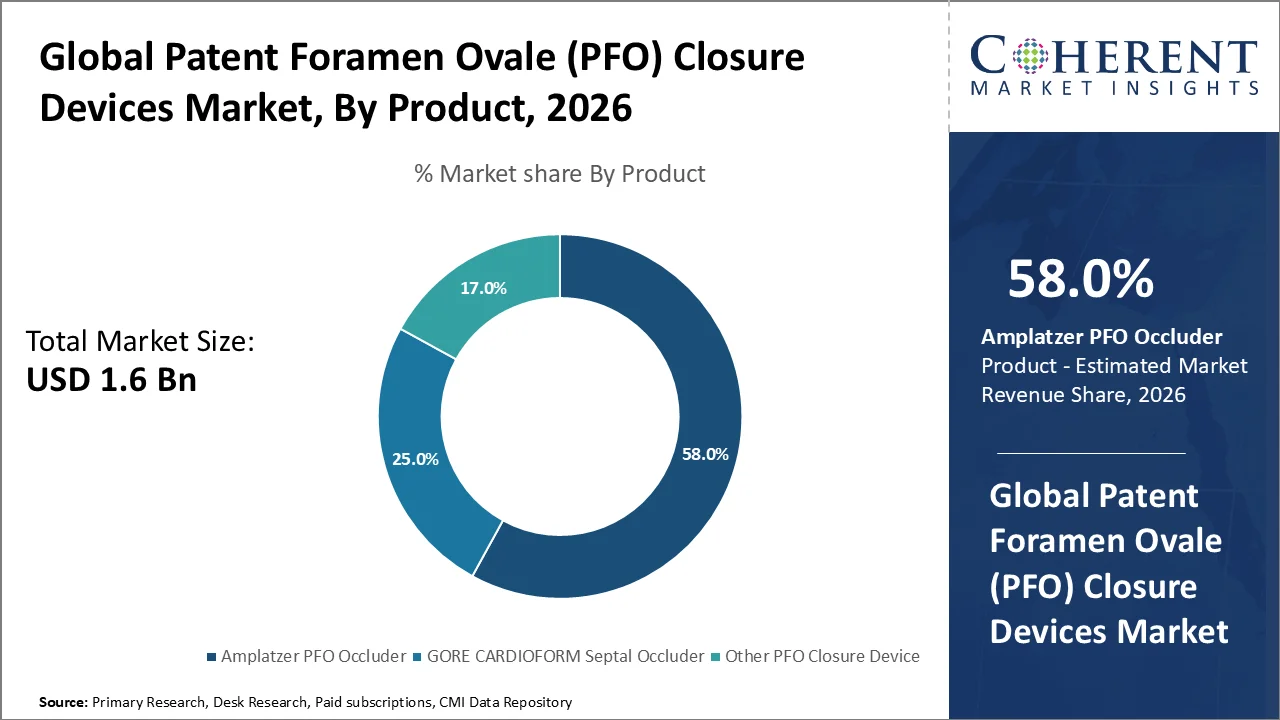
- Amplatzer PFO Occluder is expected to account the largest share of 58.0% in 2026, because it is the most clinically proven and widely adopted transcatheter closure solution, backed by unmatched long‑term evidence. The landmark RESPECT trial—the largest PFO closure study with nearly 5,810 patient‑years of follow‑up showed a significant reduction in recurrent stroke and excellent procedural success (>96% technical success). Abbott’s proven design, ease of deployment, and global adoption with hundreds of thousands of implants reinforce its leadership in the PFO closure segment.
- Hospitals will dominate with 72.0% in 2026, because they provide the required advanced infrastructure and specialized care teams essential for transcatheter procedures. In 2025–2026, over 90% of PFO closure procedures were performed in hospital cath labs with on‑site imaging and electrophysiology support, and centers with ≥200 structural heart procedures annually reported significantly better outcomes and lower complication rates. This concentration of procedural volume, clinical expertise, and patient referral pathways reinforces hospitals as the primary delivery setting.
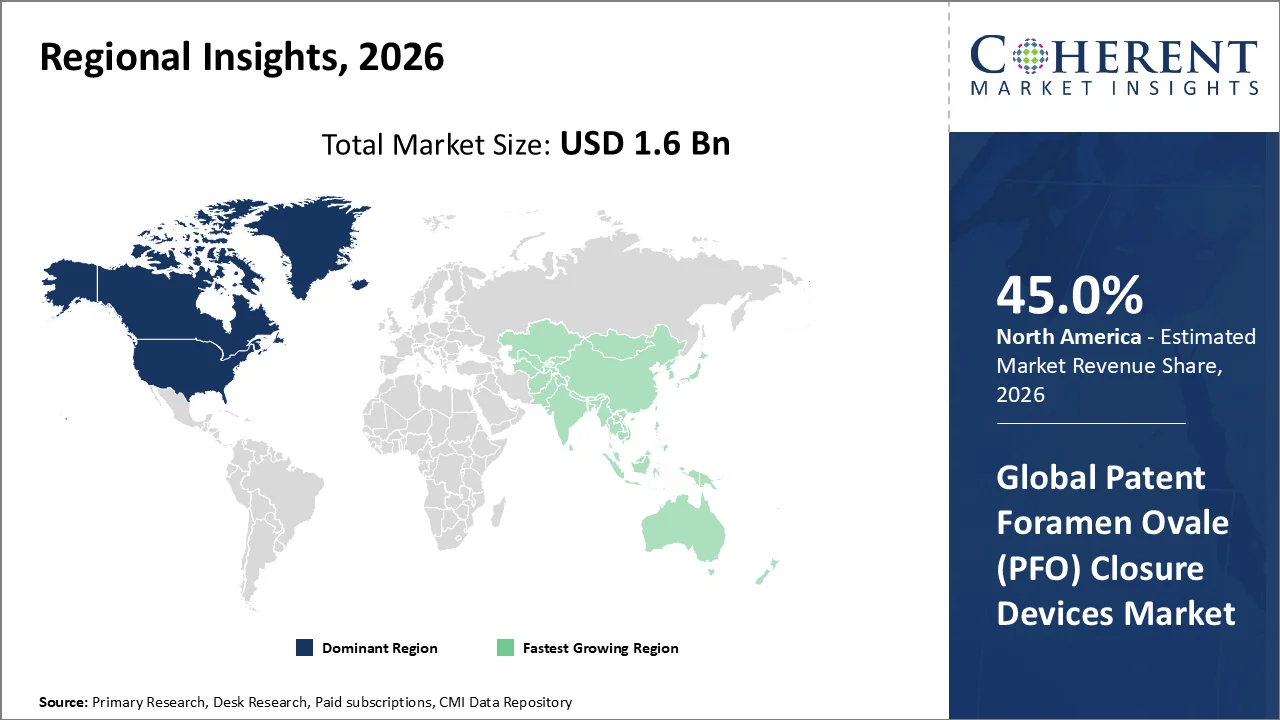
- North America is expected to acquire the dominant share of 45.0% in 2026, due to advanced cardiovascular care infrastructure, early regulatory approvals, strong procedural adoption, and well‑established reimbursement pathways. In 2025–2026, U.S. hospitals performed over 70% of all PFO closure procedures globally, with some tertiary centers reporting >1,000 implants annually. Studies also show procedure success rates above 95% in high‑volume U.S. structural heart programs, supported by tight cardiology‑neurology referral networks and optimized clinical pathways.
Segmental Insights
Why is Amplatzer PFO Occluder Acquiring the Largest Market Share?
Amplatzer PFO Occluder is projected to account for the largest share of cognitive systems spending in 2026, representing approximately 58.0% of the total volume. The Amplatzer PFO Occluder segment dominates the Patent Foramen Ovale (PFO) closure devices market due to its long-established clinical track record, high procedural success, and extensive adoption across hospitals worldwide. Key factors include over 95% technical success rates, robust long-term outcomes demonstrated in trials such as RESPECT and CLOSE, low complication rates, and FDA/CE regulatory approvals. Its repositionable, recapturable design and compatibility with various PFO anatomies make it the preferred choice among interventional cardiologists. In 2025–2026, Abbott reported that Amplatzer PFO Occluder accounted for the majority of PFO closure procedures in high-volume U.S. and European centers, reinforcing its dominance. Additionally, strong physician familiarity, widespread training programs, and extensive post-market evidence enhance confidence in device selection, supporting hospital adoption and maintaining leadership over competing occluder devices.
(Source: Abbott; JACC; Structural Heart Society)
- Current Industry Events of 2026
- Market Size Estimation
- Regional Breakdown
- Competitive Landscape
- Customer Intelligence
- Segmental Analysis
- Pricing Analysis
- Key Market Drivers, Challenges & Future Trends
- Customized Insights Section
Hospitals hold the Largest Market Share
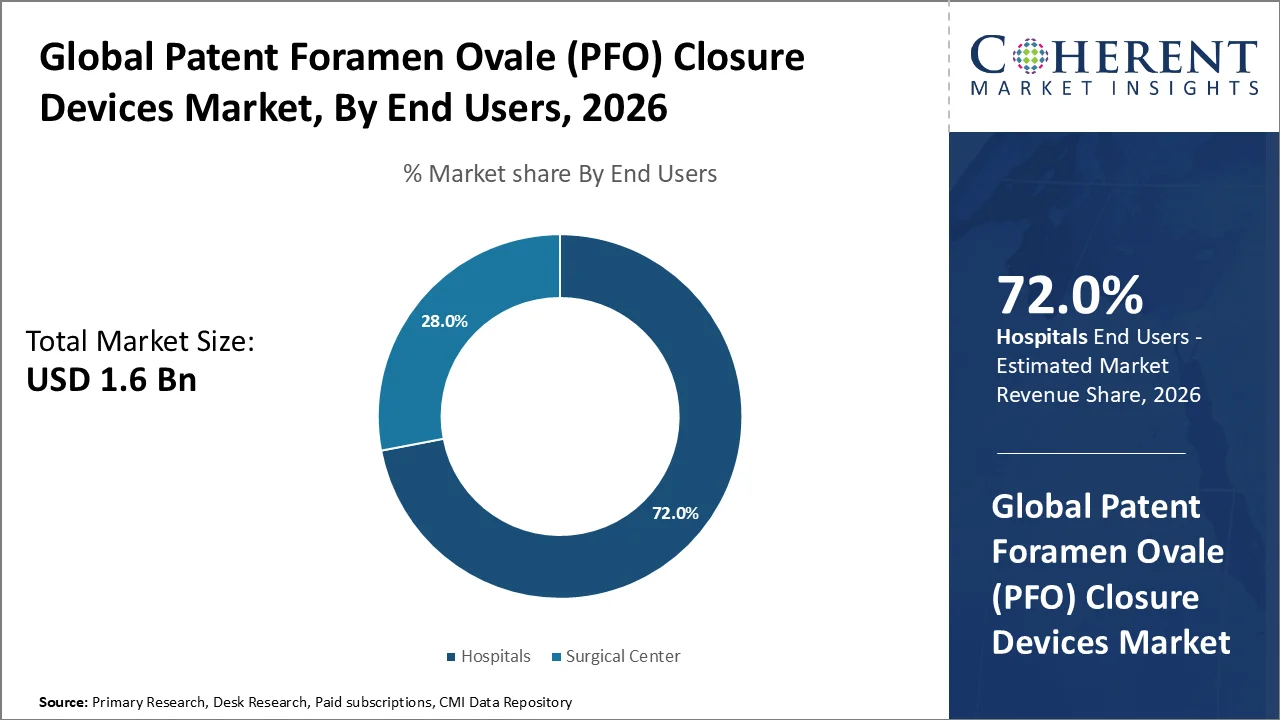
Based on end users, hospitals dominate the market, accounting for a significant 72.0% share in 2026, because they provide the comprehensive infrastructure and specialized clinical teams required for these complex procedures. PFO closure typically requires advanced cath labs, high-resolution imaging, structural heart specialists, and on-site emergency support, which are predominantly available in hospital settings. In 2025–2026, over 90% of PFO closure procedures were performed in hospital cath labs, with high-volume centers (>200 structural heart procedures annually) reporting lower complication rates and >95% procedural success. Hospitals also serve as referral centers for cryptogenic stroke patients, integrating cardiology and neurology expertise, which increases procedural volume and ensures optimal patient outcomes. This combination of specialized infrastructure, experienced teams, procedural volume, and established patient pathways makes hospitals the primary and dominant segment for PFO closure device deployment globally.
(Sources: SCAI; Journal of Interventional Cardiology; Structural Heart Society)
Market Drivers
Rising Incidence of Cryptogenic Stroke
The rising incidence of cryptogenic stroke is a major driver of the Patent Foramen Ovale (PFO) closure devices market, as these strokes—strokes with no identifiable cause—are increasingly linked to PFO presence in adults. Studies indicate that approximately 25% of adults have a PFO, and nearly one-third of ischemic strokes are cryptogenic, creating a substantial target population for intervention. In 2025–2026, hospitals in the U.S. and Europe reported that over 60% of PFO closures were performed following cryptogenic stroke events, highlighting the growing clinical focus on secondary stroke prevention. Early detection and multidisciplinary evaluation by neurologists and cardiologists enable timely identification of patients eligible for transcatheter closure, improving outcomes. Clinical trials, such as the RESPECT and DEFENSE-PFO studies, have reinforced the benefits of closure in reducing recurrent stroke risk, increasing physician confidence. This trend is further supported by guideline updates recommending closure for select patients aged 18–60 years with high-risk PFO anatomy, driving procedural adoption globally.
(Source: Mayo Clinic; SCAI; JACC 2025–2026)
Growing Clinical Evidence Supporting PFO Closure
The growing body of clinical evidence supporting PFO closure is a critical factor driving the market expansion of the Patent Foramen Ovale (PFO) closure devices market. Recent landmark trials, including RESPECT, DEFENSE-PFO, and CLOSE, have demonstrated that transcatheter PFO closure significantly reduces the risk of recurrent ischemic stroke in patients with cryptogenic stroke compared to medical therapy alone. In 2025–2026, follow-up data from these trials reported a nearly 50% reduction in recurrent stroke events among patients receiving PFO closure, with high procedural success rates exceeding 95% and low complication incidences. These robust clinical outcomes have increased physician confidence, encouraging neurologists and cardiologists to recommend closure for appropriately selected patients. Additionally, guideline updates from the Society for Cardiovascular Angiography & Interventions (SCAI) and European Society of Cardiology (ESC) now incorporate PFO closure as a standard secondary prevention option for high-risk patients aged 18–60 years. This growing clinical validation has accelerated hospital adoption, expanded patient referral pathways, and reinforced market demand globally.
Current Events and Their Impact
Current Event | Description and its Impact |
Regulatory approvals continue to support PFO closure adoption |
|
EU medical device regulation is increasing compliance and traceability requirements |
|
Government-funded stroke programs are improving diagnosis and referral pathways |
|
NIH-supported stroke research is strengthening evidence-based treatment decisions |
|
Public health reimbursement and clinical commissioning policies are defining access |
|
Patent Foramen Ovale (PFO) Closure Devices Market Trends
- Guideline-led adoption for secondary stroke prevention- PFO closure is increasingly being positioned as a selective stroke-prevention procedure rather than a broad congenital defect treatment. The trend is strongest among younger adults with prior PFO-associated or cryptogenic stroke after neurologist-cardiologist evaluation. For instance, SCAI guidance supports closure in patients aged 18–60 with previous PFO-associated stroke.
- Shift toward anatomy-matched and easier-to-deploy occluders- Device innovation is moving toward broader size ranges, repositionability, recapturability, and simplified preparation so physicians can treat simple and complex PFO anatomies more consistently. For instance, Abbott’s Amplatzer Talisman added a 30 mm size, comes pre-attached to the delivery cable, and is designed to support broader anatomical coverage.
- Regulatory traceability and post-market surveillance tightening- The market is moving toward stronger device registration, UDI tracking, certificate monitoring, and surveillance transparency, particularly in Europe. For instance, from May 2026, EUDAMED made actor registration, UDI/device registration, notified bodies and certificates, and market surveillance modules mandatory, increasing compliance, audit readiness, and lifecycle evidence needs for PFO closure device manufacturers.
Regional Insights
North America dominates owing to Strong Technological Infrastructure
North America account 45.0% market share in 2026, due to its large stroke-treatment pool, strong interventional cardiology infrastructure, favorable clinical guidelines, and rapid regulatory adoption. In the U.S., stroke remains a major clinical burden, with the CDC reporting over 795,000 strokes annually, including 610,000 first/new strokes, and 87% being ischemic strokes; this creates a sizeable referral base for PFO evaluation after cryptogenic stroke. PFO is present in about one-quarter of adults, and closure is clinically relevant when PFO is linked to unexplained embolic stroke. In January 2026, the AHA/NIH 2026 Statistics Update reinforced stroke as a major monitored cardiovascular condition, supporting continued clinical focus. In April 2026, the American Academy of Neurology reaffirmed its PFO secondary stroke prevention advisory, noting meaningful benefit for selected younger patients. FDA-cleared devices also support adoption; Abbott’s Amplatzer PFO Occluder is indicated for patients mainly aged 18–60 years with cryptogenic stroke.
(Source: CDC; escardio.org, professional.heart.org, aan.com, FDA.gov)
Asia Pacific Patent Foramen Ovale (PFO) Closure Devices Market Trends
The Asia-Pacific region is poised to be as the fastest-growing region through 2026-2033, owing to due to rising stroke burden, improving cardiac-care infrastructure, and growing adoption of minimally invasive stroke-prevention procedures. In January 2026, the Asian Development Bank Institute reported that Asia and the Pacific account for more than half of the global stroke burden, creating a large clinical need for advanced secondary stroke-prevention solutions. PFO closure demand is further supported by clinical evidence showing that PFO is present in nearly 25% of the general adult population and may reach up to 50% among cryptogenic stroke patients, as reported in a May 2025 peer-reviewed review. Asia-Pacific experts also highlighted in the Journal of Stroke, 2025 that PFO closure reduces recurrent stroke/TIA risk versus medical therapy in selected patients. Wider use of contrast echocardiography, transcranial Doppler screening, urban cardiac centers, and device-based interventions in China, Japan, India, South Korea, and Southeast Asia is strengthening regional procedure adoption.
High Clinical Burden of Ischemic Stroke and Strong Evidence-Driven Adoption of Closure Therapy is Accelerating the Patent Foramen Ovale (PFO) Closure Devices Market Demand in United States
The U.S. patent foramen ovale (PFO) closure devices market dominates North America given its lead due to its high clinical burden of ischemic stroke and strong evidence‑driven adoption of closure therapy, as documented in peer‑reviewed journals and public domain sources. In the U.S., over 750,000 individuals suffer stroke annually, with 87% being ischemic, and roughly 25–40% of cryptogenic ischemic strokes occur in patients aged ≤60, where PFO is implicated; this substantial clinical need underpins procedural demand. Major randomized trials in the U.S. demonstrating that PFO closure significantly reduces recurrent ischemic stroke compared with medical therapy have strengthened clinician confidence and informed guideline updates, as highlighted in a July 28, 2025 JAMA review. Crucially, U.S. regulatory approvals with the FDA clearing devices like the Amplatzer PFO Occluder in October 2016 and the Gore Cardioform Septal Occluder in March 2018 have provided a clear regulatory pathway that supports broader adoption in structurally equipped cardiac centers nationwide.
China Patent Foramen Ovale (PFO) Closure Devices Market Trends
China has become the biggest player in the Asia Pacific patent foramen ovale (PFO) closure devices market in 2026. China is emerging as the dominant country in the Asia Pacific Patent Foramen Ovale (PFO) Closure Devices Market due to its combination of high cardiovascular disease prevalence, rapid healthcare infrastructure expansion, increasing clinical awareness, and supportive regulatory environment. In 2026, the World Health Organization (WHO) reported that China accounts for over 40% of all strokes in the Asia Pacific, with roughly 2.5 million new ischemic strokes annually, many being cryptogenic and associated with PFO. Growing investment in tertiary hospitals and specialized cardiac centers in major urban regions such as Beijing, Shanghai, and Guangzhou has improved access to interventional cardiology and minimally invasive procedures. Clinical studies published in Frontiers in Cardiovascular Medicine, 2025 indicate that PFO closure adoption is increasing, supported by evidence showing a >90% procedural success rate with low complication risk. The China National Medical Products Administration (NMPA) has cleared multiple PFO occluder devices, aligning regulatory pathways with international standards, further driving adoption and making China the fastest-growing hub in the Asia Pacific PFO closure market.
Who are the Major Companies in Patent Foramen Ovale (PFO) Closure Devices Market
Some of the major key players in patent foramen ovale (PFO) closure devices market is AGA Medical, Abbott (previously known as St Jude Medical, Inc.), WL Gore and Associates, Swissimplant AG, and Occlutech.
Key News
- In January 2026, L. Gore & Associates acquired Conformal Medical, broadening its structural heart portfolio with next‑generation endovascular solutions. While the acquired CLAAS AcuFORM system is currently investigational and not commercially marketed, this strategic move positions Gore to expand innovation adjacent to PFO closure and stroke‑prevention technologies through clinical studies and future product development.
- In 2026, Abbott continued advancing its cardiac devices portfolio with clinical data emphasis on its PFO closure platform. The Amplatzer Talisman PFO Occluder has been supported by strong procedural success and safety outcomes in ongoing clinical evaluation, underlining its role as a leading transcatheter solution for reducing recurrent ischemic stroke in eligible patients when compared to medical therapy alone.
- In February 2026, Occlutech drew industry attention through a major strategic investment deal, with Alkem MedTech agreeing to acquire up to a 55% stake in the company. Occlutech specializes in minimally invasive structural heart implants, including occluders for PFO and other defects, and the transaction is expected to accelerate R&D and global market reach in high‑barrier cardiac device markets such as the US, Europe, and Japan.
Market Report Scope
Patent Foramen Ovale (PFO) Closure Devices Market Report Coverage
| Report Coverage | Details | ||
|---|---|---|---|
| Base Year: | 2025 | Market Size in 2026: | USD 1.6 Bn |
| Historical Data for: | 2020 To 2024 | Forecast Period: | 2026 To 2033 |
| Forecast Period 2026 to 2033 CAGR: | 7.6% | 2033 Value Projection: | USD 2.6 Bn |
| Geographies covered: |
| ||
| Segments covered: |
| ||
| Companies covered: | AGA Medical, Abbott (previously known as St Jude Medical, Inc.), WL Gore and Associates, Swissimplant AG, and Occlutech | ||
Analyst Opinion
Patent Foramen Ovale (PFO) Closure Devices Market Segmentation
- The Patent Foramen Ovale (PFO) closure devices market is moving from optional defect closure toward evidence-based secondary stroke prevention. Demand is supported by rising clinical evaluation of cryptogenic stroke patients and stronger neurologist-cardiologist referral pathways. PFO is found in nearly 25% of adults, but closure is mainly considered when stroke is linked to paradoxical embolism, making patient selection the key market driver in 2026.
- Transcatheter PFO closure devices are expected to remain the dominant product segment, as they allow minimally invasive closure through catheter-based implantation without open-heart surgery. Devices such as Abbott’s Amplatzer Talisman PFO Occluder are indicated to reduce recurrent ischemic stroke risk in selected patients, predominantly aged 18–60 years, after exclusion of other stroke causes by neurologists and cardiologists.
- Hospitals and structural heart centers are increasingly adopting PFO closure as part of multidisciplinary stroke management. The market is progressing through better imaging, bubble studies, shunt grading, risk scoring, and anatomy-based device selection. SCAI recommends PFO closure over antiplatelet therapy alone in patients aged 18–60 years with prior PFO-associated stroke, supporting procedure standardization.
- North America is expected to remain the dominant region, supported by advanced cath lab infrastructure, FDA-approved devices, strong reimbursement pathways, and high awareness of stroke prevention. Asia Pacific is expected to emerge as the fastest-growing region, driven by expanding cardiac care infrastructure, improving stroke diagnosis, rising specialist availability, and increasing adoption of minimally invasive structural heart procedures.
Speak to the analyst
Want personalized insights?
Take the findings above to one of our principal consultants, or have the report rebuilt around the segments, geographies and competitors you actually track.
Market Segmentation
- By Product (Revenue, USD Bn, 2026-2033)
- Amplatzer PFO Occluder
- GORE CARDIOFORM Septal Occluder
- Other PFO Closure Device (Solysafe Septal Occluder, Coherex FlatStent EF PFO closure system)
- By End Users (Revenue, USD Bn, 2026-2033)
- Hospitals
- Surgical Centers
- Global Patent Foramen Ovale (PFO) Closure Devices Market, By Region: (Revenue, USD Bn, 2026-2033)
- North America
- U.S.
- Canada
- Latin America
- Brazil
- Mexico
- Argentina
- Rest of Latin America
- Europe
- Germany
- U.K.
- France
- Italy
- Spain
- Russia
- Rest of Europe
- Asia Pacific
- China
- India
- Japan
- Australia
- South Korea
- ASEAN
- Rest of Asia Pacific
- Middle East
- GCC
- Israel
- Rest of Middle East
- Africa
- South Africa
- Central Africa
- North Africa
- North America
- Competitive Landscape
- AGA Medical
- Abbott (previously known as St Jude Medical, Inc.)
- WL Gore and Associates
- Swissimplant AG
- Occlutech
Sources
Primary Research Interviews
- Interviews with interventional cardiologists and structural heart specialists to understand PFO closure procedure adoption, device selection criteria, procedural challenges, and clinical outcomes.
- Insights from neurologists and stroke specialists on cryptogenic stroke diagnosis, patient eligibility, recurrence-risk assessment, and referral patterns for PFO closure procedures.
- Discussions with medical device manufacturers and R&D teams to evaluate device innovation, occluder design improvements, delivery systems, safety profile, and regulatory approval strategies.
- Conversations with hospital procurement teams, cath lab managers, and healthcare administrators to assess purchasing decisions, reimbursement issues, pricing pressure, and demand for PFO closure devices.
Databases
- U.S. Food and Drug Administration (FDA) Medical Device Database
- FDA MAUDE Database
- ClinicalTrials.gov
- WHO Global Health Observatory
- Centers for Disease Control and Prevention (CDC) Stroke Statistics
- Medicare Coverage Database
Magazines
- Cath Lab Digest
- Cardiovascular Business
- Diagnostic and Interventional Cardiology
- Medical Device Network
- MedTech Dive
Journals
- Journal of the American College of Cardiology (JACC)
- Circulation: Cardiovascular Interventions
- Stroke Journal
- EuroIntervention
- Journal of Interventional Cardiology
Newspapers
- Financial Times
- The Wall Street Journal
- The New York Times
- Reuters Health News
- Fierce Medtech
Associations
- American College of Cardiology (ACC)
- American Heart Association / American Stroke Association (AHA/ASA)
- Society for Cardiovascular Angiography & Interventions (SCAI)
- European Society of Cardiology (ESC)
- Heart Rhythm Society (HRS)
Public Domain Sources
- FDA Device Approvals and 510(k)/PMA Documents
- CDC Stroke and Cardiovascular Disease Reports
- WHO Cardiovascular Disease and Stroke Reports
- ClinicalTrials.gov Study Records
- Company Annual Reports and Investor Presentations from PFO Closure Device Manufacturers
Proprietary Elements
- CMI Data Analytics Tool, Proprietary CMI Existing Repository of information for last 10 years
Get access to 250+ pages report
Every segment, forecast, competitor profile and data table behind the analysis above — available for instant download.
- ESOMAR Member
- ISO 9001:2015 Certified
- D-U-N-S Registered
- GDPR & CCPA Compliant
Missing comfort of reading report in your local language? Find your preferred language:
Transform your Strategy with Exclusive Trending Reports
Frequently Asked Questions
The Patent Foramen Ovale (PFO) Closure Devices Market is expected to reach USD 2.6 Billion in 2033.
Major players operating in the global Patent Foramen Ovale (PFO) Closure Devices Market include AGA Medical, Abbott (previously known as St Jude Medical, Inc.), WL Gore and Associates, Swissimplant AG, and Occlutech
Strict patient eligibility criteria and availability of alternative medical therapy are the major factors hampering the growth of the patent foramen ovale (PFO) closure devices market.
Rising incidence of cryptogenic stroke and growing clinical evidence supporting PFO closure are the factors supporting the growth of the patent foramen ovale (PFO) closure devices market.
The Patent Foramen Ovale (PFO) Closure Devices Market is anticipated to grow at a CAGR of 7.6% between 2026 and 2033.
The main types include double-disc occluder devices, umbrella-type closure devices, and bioabsorbable or suture-mediated closure systems. Double-disc nitinol mesh devices are widely used because they provide stable positioning, effective sealing, and compatibility with catheter-based delivery through minimally invasive structural heart procedures.
PFO closure devices are delivered through a catheter, usually via the femoral vein. Once positioned across the PFO tunnel, the device expands on both atrial sides, forming a mechanical seal. Over time, endothelial tissue grows over the device, permanently closing the atrial communication.