

Plastic Additives Market Size and Forecast — 2026 - 2033
The Global Plastic Additives Market size is estimated to be valued at USD 12.7 billion in 2026 and is expected to reach USD 24.3 billion by 2033, exhibiting a compound annual growth rate (CAGR) of 9.2% from 2026 to 2033.
Overview
The plastic additives market encompasses a wide range of products designed to enhance the performance, durability, and functionality of polymers. Key product categories include stabilizers, plasticizers, flame retardants, colorants, fillers, and antioxidants. These additives improve properties such as flexibility, heat resistance, UV protection, flame resistance, and mechanical strength, making plastics suitable for diverse applications across automotive, packaging, construction, electronics, and consumer goods. Increasing demand for lightweight, high-performance, and sustainable materials is driving the adoption of specialty additives. Innovations in bio-based and environmentally friendly additives are further expanding product offerings, supporting the industry’s growth in line with regulatory and consumer sustainability trends.
Key Takeaways
The packaging application segment leads the plastic additives market with a 40% share, driven by demand for flexible packaging that improves product shelf life and safety.
Polyethylene is the dominant polymer type due to its widespread use and compatibility with various additives.
North America holds the largest regional market share, supported by advanced infrastructure and strong regulatory frameworks.
Asia Pacific is the fastest-growing region, driven by expanding manufacturing hubs and rising disposable incomes in China and India.
Europe offers opportunities through stringent regulations that encourage innovation in sustainable additives.
Plastic Additives Market Segmentation Analysis
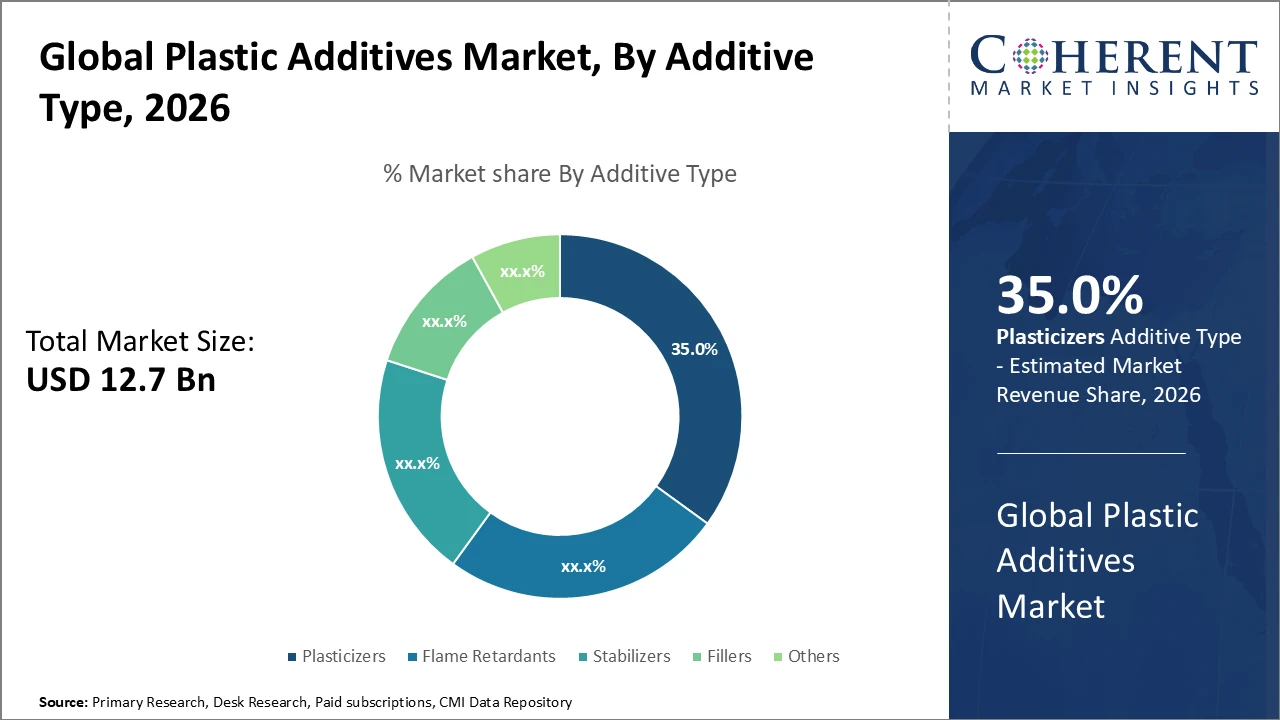
Plastic Additives Market Insights, By Additive Type
Plasticizers hold the largest market share at 35%, driven by their widespread use in flexible PVC applications and packaging films, providing improved flexibility, durability, and processability. The fastest-growing subsegment is flame retardants, supported by stricter global fire safety regulations, particularly in the automotive and electronics industries, which saw a 16% regulatory spike in 2025. Stabilizers, essential for UV and thermal resistance, continue steady growth in construction, automotive, and outdoor applications. Fillers enhance mechanical performance and reduce material costs, gaining popularity in high-volume manufacturing. Other specialty additives, including colorants, anti-fog agents, and performance enhancers, cater to niche application needs.
Plastic Additives Market Insights, By Application
The packaging segment dominates the plastic additives market with a 40% share, driven by rising demand for flexible and sustainable packaging that extends shelf life and minimizes waste. The fastest-growing segment is automotive, fueled by the shift toward lightweight materials, electrification, and stricter safety regulations, with adoption of advanced flame retardants and plasticizers increasing by 20% in 2025. Construction applications focus on durability and weather resistance, primarily using stabilizers and fillers. The electrical and electronics sector continues to require high-performance flame retardants, while consumer goods rely on a combination of plasticizers and stabilizers to enhance product quality and performance.
Plastic Additives Market Insights, By Polymer Type
Polyethylene dominates the plastic additives market due to its extensive use in packaging films and containers and its compatibility with a wide range of additives that enhance flexibility and durability. Polypropylene is the fastest-growing subsegment, driven by increasing applications in automotive components and consumer goods, supported by advanced additive formulations that improve mechanical strength and heat resistance. PVC remains important for its affordability and widespread use in construction, medical devices, and piping. Polystyrene and other polymers serve niche markets, including rigid packaging and specialty products, where specific performance or aesthetic properties are required.
Plastic Additives Market Trends
The plastic additives market is increasingly influenced by sustainability and circular economy initiatives, driving demand for eco-friendly solutions.
Companies are investing in bio-based plasticizers and flame retardants to meet global carbon reduction targets, including those outlined in the EU Green Deal.
In 2025, several manufacturers launched bio-based plastic additives, with adoption rates increasing by 18% in Europe and North America.
Technological advancements in nano-additives are enabling the production of lightweight automotive components, improving fuel efficiency.
Nanoclay additive usage in vehicle manufacturing rose by 22% in 2024, reflecting growing integration of advanced materials in automotive applications.
Plastic Additives Market Insights, By Geography
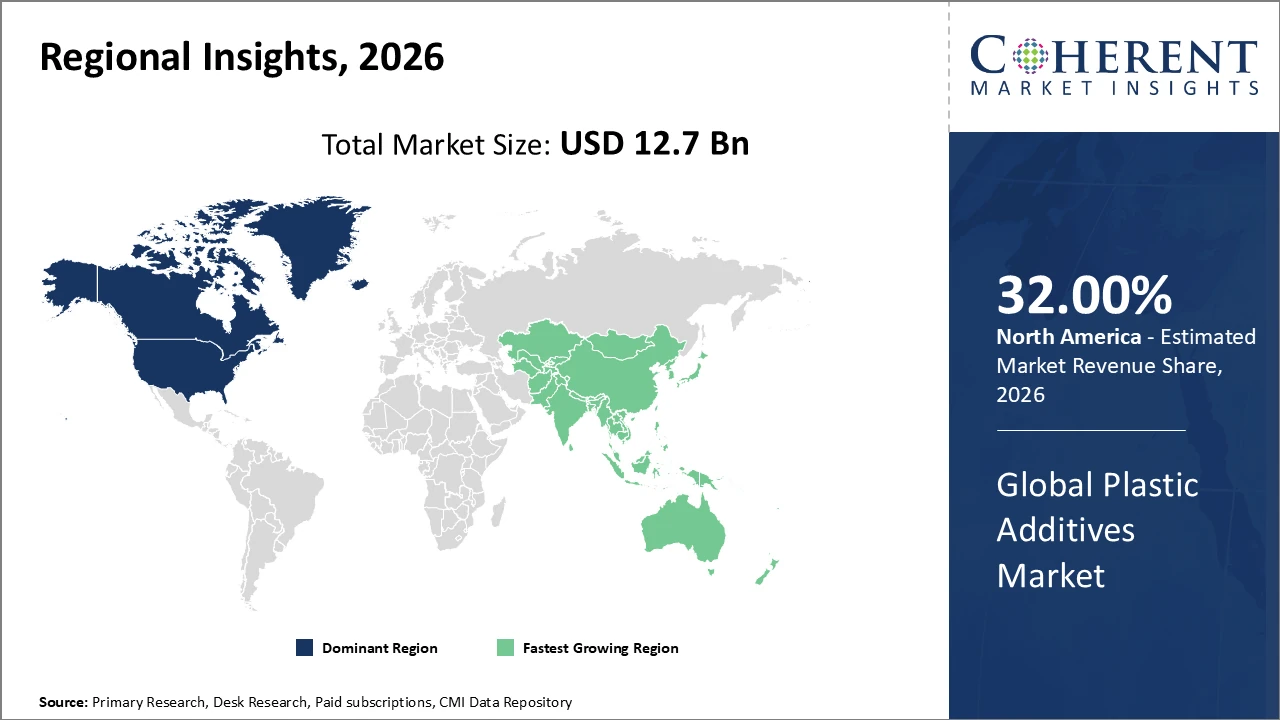
North America Plastic Additives Market Analysis and Trends
North America leads the plastic additives market, with the U.S. at the forefront due to high industrial activity, a mature automotive sector, and stringent environmental regulations promoting sustainable additive development. As of 2026, the region accounts for roughly 32% of the global market share. Strong R&D capabilities among key industry players enable continuous innovation in bio-based plasticizers, flame retardants, and high-performance additives. Government incentives supporting eco-friendly technologies further accelerate adoption. Additionally, the region benefits from advanced manufacturing infrastructure and well-established supply chains, reinforcing North America’s dominant position in the plastic additives market and supporting growth across packaging, automotive, construction, and electronics sectors.
Asia Pacific Plastic Additives Market Analysis and Trends
Asia Pacific is the fastest-growing region in the plastic additives market, with a CAGR exceeding 11%. Growth is driven by the expansion of manufacturing hubs in China, India, and Southeast Asia, supported by favorable trade policies, infrastructure modernization, and industrial investments. Rapid urbanization, rising disposable incomes, and increasing consumption patterns are fueling demand for packaging and automotive applications, which rely heavily on high-performance plastic additives. Additionally, the adoption of sustainable and bio-based additives is gaining momentum as governments and industries focus on environmental compliance. These factors collectively position Asia Pacific as a key growth engine for the global market.
Plastic Additives Market Outlook for Key Countries
USA Plastic Additives Market Analysis and Trends
The USA remains a key player in the plastic additives market due to its advanced industrial base and leadership in chemical innovation. In 2025, the country generated over USD 4 billion in market revenue, driven primarily by strong demand in packaging and automotive sectors. Leading companies such as BASF SE and Eastman Chemical have expanded production capacities while investing significantly in bio-based additive technologies to comply with U.S. environmental regulations. Government initiatives, including the EPA’s focus on sustainable materials, have further accelerated the adoption of additives that improve recyclability. These factors collectively reinforce the USA’s market dominance and innovation leadership.
Germany Plastic Additives Market Analysis and Trends
Germany’s plastic additives market is shaped by its strong industrial and automotive sectors, emphasizing high-performance and sustainable materials. The country’s strict environmental and chemical regulations, including EU REACH compliance, drive demand for bio-based and recyclable additives in packaging, automotive, and construction applications. Flame retardants, stabilizers, and plasticizers are increasingly used to meet safety, durability, and efficiency requirements. Germany’s focus on electric vehicles and lightweight materials is boosting adoption of advanced additives in automotive components. Additionally, ongoing R&D in specialty and nano-additives supports innovation, enabling enhanced product performance while adhering to stringent sustainability standards, positioning Germany as a key European market leader.
Analyst Opinion
The rising adoption of bio-based plastic additives is a key supply-side indicator influencing market size. In 2024, bio-based additives accounted for approximately 18% of total production, growing 15% year-on-year due to stricter environmental regulations, particularly in Europe under EU REACH guidelines.
Demand-side indicators highlight increased consumption in the packaging industry, especially for flame retardants and plasticizers, driven by the growth of e-commerce in 2025. Packaging consumption rose by 12% compared to the previous year, with North America and Asia Pacific as the leading markets.
Micro-indicators such as raw material price fluctuations, including phthalates and brominated compounds, affected revenue. In 2026, phthalate price volatility led to a 5% cost increase, impacting profit margins for intermediates and downstream manufacturers.
Nano-scale indicators show rising use of nano-additives to enhance plastic performance. In 2025, nanoclay additive integration in automotive manufacturing increased by 22%, enabling weight reduction while maintaining safety standards.
- Current Industry Events of 2026
- Market Size Estimation
- Regional Breakdown
- Competitive Landscape
- Customer Intelligence
- Segmental Analysis
- Pricing Analysis
- Key Market Drivers, Challenges & Future Trends
- Customized Insights Section
Market Scope
| Report Coverage | Details | ||
|---|---|---|---|
| Base Year: | 2025 | Market Size in 2026: | USD 12.7 billion |
| Historical Data for: | 2020 To 2024 | Forecast Period: | 2026 To 2033 |
| Forecast Period 2026 to 2033 CAGR: | 9.2% | 2033 Value Projection: | USD 24.3 billion |
| Geographies covered: |
| ||
| Segments covered: |
| ||
| Companies covered: | BASF SE, Clariant AG, Evonik Industries AG, Lanxess AG, Eastman Chemical Company, Adeka Corporation, Albemarle Corporation, SI Group, Inc., Ferro Corporation, Solvay S.A. | ||
| Growth Drivers: |
| ||
Plastic Additives Market Growth Factors
The plastic additives market is experiencing strong growth driven by increasing regulatory pressure to reduce plastic waste and enhance recyclability. Government mandates in the U.S. and EU have accelerated the development of eco-friendly additives that support plastic recycling processes. Rising electric vehicle production further boosts demand for lightweight, high-performance plastic additives, with automotive-grade consumption increasing by 20% annually between 2024 and 2026. Rapid urbanization and infrastructure expansion in countries like India and China have also increased construction sector demand for stabilizers and fillers. Additionally, growing consumer preference for flexible, high-quality packaging has led to a 14% rise in packaging additive value in 2025.
Plastic Additives Market Development
In 2025, BASF SE launched a new line of bio-based plasticizers targeting the packaging and automotive sectors, achieving a 15% improvement in sustainability metrics and faster adoption in Europe and North America. This development strengthened BASF’s position in eco-friendly additives while meeting stricter environmental regulations such as EU REACH and U.S. EPA guidelines.
Key Players
Leading Companies of the Market
BASF SE
Clariant AG
Evonik Industries AG
Lnaxess AG
Eastman Chemical Company
Adeka Corporation
Albemarle Corporation
SI Group, Inc.
Ferro Corporation
Solvay S.A.
Competitive strategies in the plastic additives market include BASF SE expanding its presence in Asia through local production facilities, which increased its APAC market share by 4% in 2025. Evonik Industries strengthened its product portfolio by acquiring specialty additive manufacturers, diversifying offerings and boosting global turnover by 10% in 2024. Eastman Chemical Company prioritized innovation in sustainable solutions, launching bio-based plasticizers that drove a 15% growth in green product revenue in 2026. These strategies—regional expansion, portfolio diversification, and sustainability-focused innovation—have enabled leading companies to enhance market penetration, revenue growth, and long-term competitiveness.
Plastic Additives Market Future Outlook
The plastic additives market is poised for strong growth driven by sustainability, regulatory compliance, and rising demand for high-performance materials. Increasing focus on bio-based and recyclable additives will support environmentally friendly solutions across packaging, automotive, construction, and electronics sectors. The surge in electric vehicle production and lightweight materials adoption will further boost demand for specialty automotive-grade additives. Rapid urbanization and growing consumer preference for flexible, durable packaging will continue to expand market opportunities. Additionally, advancements in nano-additives and flame retardants are expected to enhance product performance, safety, and energy efficiency, positioning the market for robust expansion over the coming decade.
Plastic Additives Market Historical Analysis
The plastic additives market has witnessed steady growth over the past decade, driven by the rising need for lightweight, durable, and high-performance plastics across packaging, automotive, construction, and electronics sectors. Early adoption focused on plasticizers, stabilizers, and flame retardants to enhance flexibility, thermal resistance, and safety. Regulatory pressures on environmental compliance and recyclability, particularly in Europe and North America, gradually shifted demand toward sustainable and bio-based additives. The growth of electric vehicles and e-commerce further accelerated adoption, prompting innovations in specialty and nano-additives. Historical trends highlight a continuous focus on improving material performance while addressing environmental and safety standards globally.
Sources
Primary Research Interviews:
Automotive and packaging manufacturers
Plastic additive producers and suppliers
R&D and materials engineers
Specialty chemical companies
Databases:
International Aluminium Institute (for comparative materials)
Statista – Plastics and Additives Data
IHS Markit Chemical & Materials Database
Magazines:
Plastic News
Plastic Today
Chemical Week
Polymer Update
Journals:
Journal of Applied Polymer Science
Polymer Degradation and Stability
Journal of Plastic Additives & Compounds
Materials & Design
Newspapers:
The Wall Street Journal (Business & Chemicals)
Financial Times (Chemicals & Industry)
The New York Times (Technology & Industry)
The Guardian (Environment & Industry)
Reuters (Chemical & Automotive News)
Associations:
American Chemistry Council (ACC)
Plastics Europe
Society of Plastics Engineers (SPE)
European Chemical Industry Council (CEFIC)
Get access to 250+ pages report
Every segment, forecast, competitor profile and data table behind the analysis above — available for instant download.
- ESOMAR Member
- ISO 9001:2015 Certified
- D-U-N-S Registered
- GDPR & CCPA Compliant
Missing comfort of reading report in your local language? Find your preferred language:
Transform your Strategy with Exclusive Trending Reports
Frequently Asked Questions
Leading market players include BASF SE, Clariant AG, Evonik Industries AG, Lanxess AG, and Eastman Chemical Company, with these companies executing expansion and innovation strategies that significantly impact market revenue and share.
The market is projected to reach USD 24.3 billion by 2033 from USD 12.7 billion in 2026, growing at a CAGR of 9.2%, driven by increasing adoption in automotive and packaging sectors.
The packaging industry holds the largest growth opportunity, accounting for 40% of the market share, as rising demand for sustainable packaging solutions fuels additive consumption.
Trends indicate a shift toward bio-based and nano-enhanced additives that improve sustainability and performance, supported by stricter environmental policies and growing consumer demand.
The market is moderately competitive, focusing on innovation, sustainability, and regional expansion, with key challenges including raw material price volatility and regulatory compliance.
Leading companies adopt strategies such as regional production localization, joint ventures, acquisitions of specialty additive manufacturers, and investments in R&D for eco-friendly and high-performance solutions to enhance market penetration and revenue growth.