

Protective Packaging Market Size and Trends - 2026 to 2033
Global protective packaging market is estimated to be valued at USD 41.06 Bn in 2026 and is expected to reach USD 60.12 Bn by 2033, exhibiting a compound annual growth rate (CAGR) of 5.6% from 2026 to 2033.
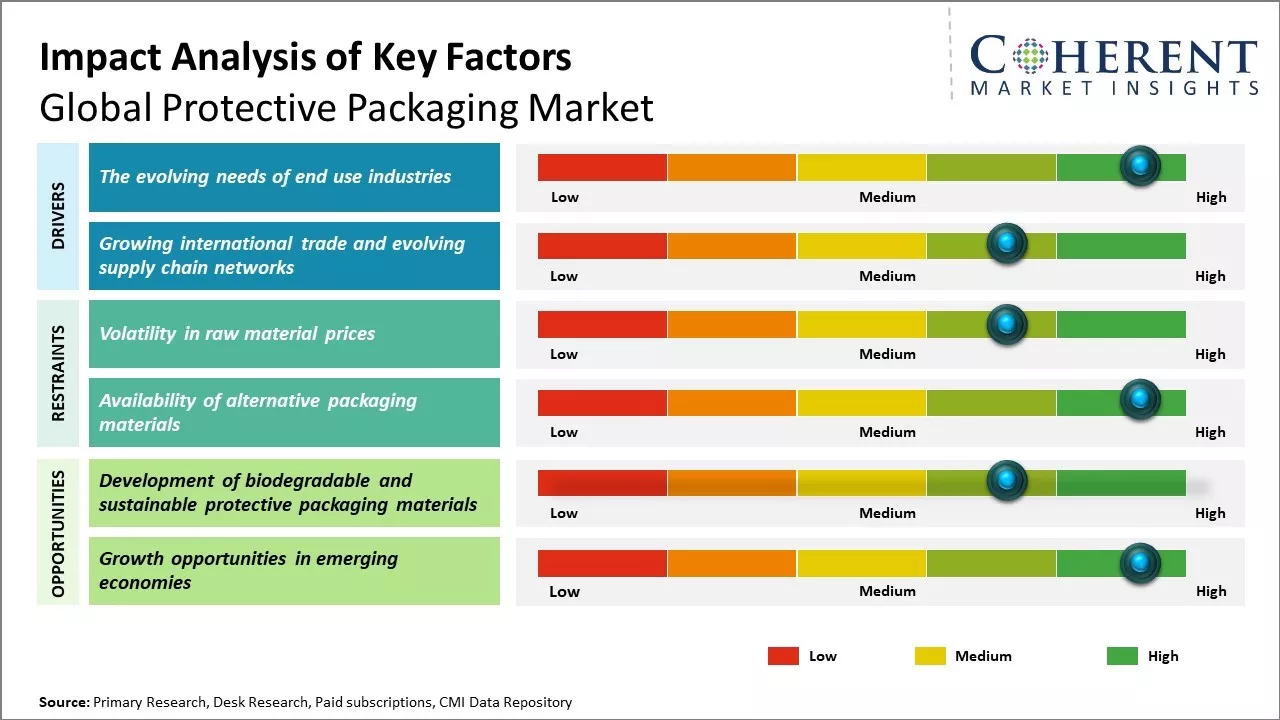
Key Takeaways
- Based on Type, the Foam Protective Packaging segment is expected to lead the market with the largest share in 2026, with its superior cushioning for fragile and high-value goods.
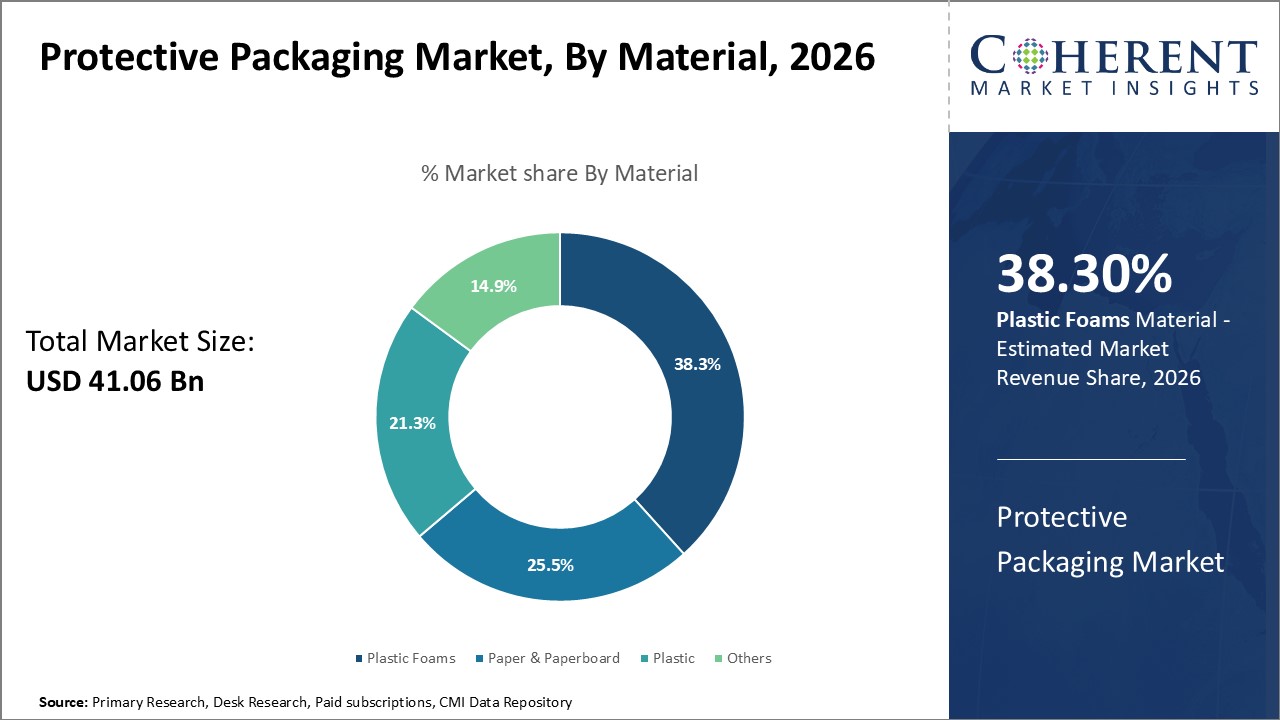
- Based on Material, the Plastic Foam segment is projected to account for the highest share of the market in 2026, due to their lightweight, durable, and impact-resistant properties.
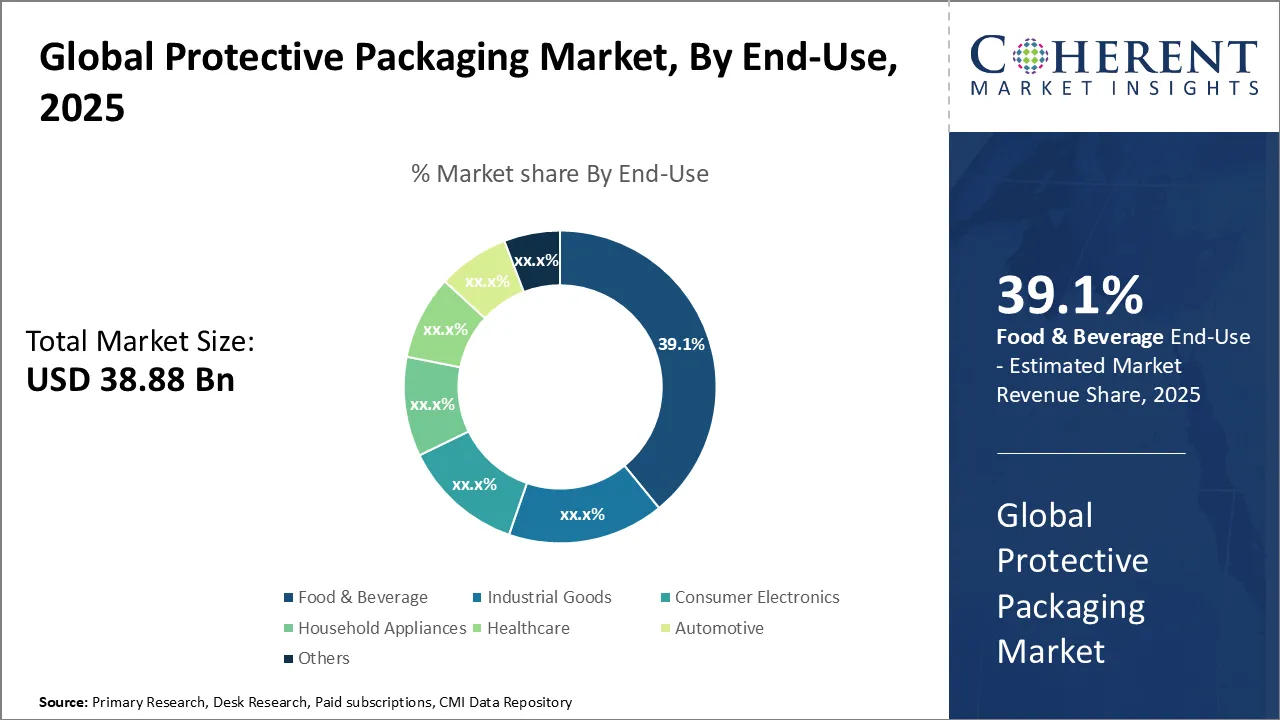
- Based on End-Use, the Food & Beverages segment is expected to hold 40.1% share in 2026, driven by e-commerce and hygiene-focused packaging needs.
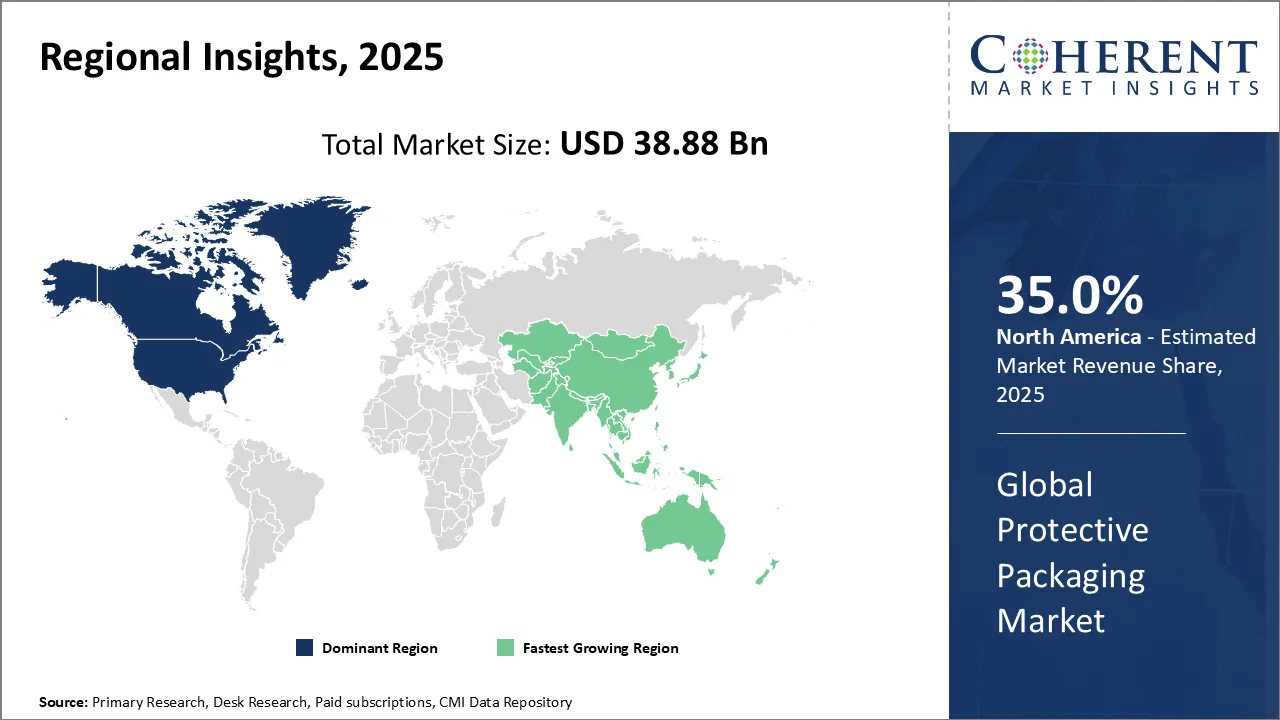
- Based on Region, North America is set to lead the market with 35% share in 2026. While, Asia Pacific is anticipated to be the fastest growing region.
Market Overview
Growing e-commerce industry can boost demand for protective packaging materials to facilitate safe delivery of goods. Manufacturing and transportation industries also rely heavily on protective packaging to avoid damages to products during storage and shipping. Rising international trade and improving economic conditions globally can contribute to the increased usage of protective packaging. Various materials are being used in protective packaging such as plastic wraps, air cushions, molded pulp and others. Innovation and development of bio-degradable and recyclable materials for protective packaging can offer growth opportunities in the near future.
Current Events and its Impacts on the Protective Packaging Market
Current Event | Description and its Impact |
Extended Producer Responsibility (EPR) and Environmental Regulation (Macro-Level Regulatory Event) |
|
Global Supply Chain Disruption and Climate Events (Macro-Level Environmental/Logistics Event) |
|
Common Types of Protective Packaging
Type | Application Areas | Use & Benefits |
Foam Inserts & Pads | Electronics, Automotive, Medical Devices | Absorb shock and vibration; ideal for fragile or precision items |
Bubble Wrap | E-commerce, Retail, Glassware | Lightweight cushioning; protects against impact and surface scratches |
Air Pillows | Online Retail, Consumer Goods | Fill voids in boxes; prevent movement during transit |
Corrugated Boxes | All industries | Structural protection; customizable sizes; recyclable |
Molded Pulp | Electronics, Food, Cosmetics | Eco-friendly cushioning; biodegradable; replaces plastic foam |
Barrier Films | Food, Pharma, Chemicals | Protect against oxygen, moisture, and light; extend shelf life |
Poly Mailers | Apparel, Books, Soft Goods | Lightweight, water-resistant; tamper-evident options available |
Paper Fillers | Gifts, Fragile Items, Eco Packaging | Recyclable void fill; adds aesthetic and protective value |
Rigid Plastic Cases | Tools, Instruments, High-Value Items | Durable, reusable; protects against crushing and environmental damage |
Shrink Wrap | Palletized Goods, Retail Bundles | Secures items together; protects from dust and moisture |
Anti-Static Bags | Electronics, Semiconductors | Prevents electrostatic discharge; essential for sensitive components |
Thermal Insulated Packs | Food Delivery, Biotech, Pharma | Maintains temperature; used in cold chain logistics |
- Current Industry Events of 2026
- Market Size Estimation
- Regional Breakdown
- Competitive Landscape
- Customer Intelligence
- Segmental Analysis
- Pricing Analysis
- Key Market Drivers, Challenges & Future Trends
- Customized Insights Section
Segmental Insights
Protective Packaging Market Insights, By Type: Foam Protective Packaging Leads with Its Superior Cushioning for Fragile and High-Value Goods
In terms of type, Foam protective packaging segment is expected to contribute the highest market share in 2026, due to its superior cushioning and shock-absorption capabilities. This type of packaging is especially favored for safeguarding delicate and high-value items such as electronics, medical devices, and industrial components during transit. Its versatility in formats, ranging from molded foam to loose-fill and foam-in-place which makes it adaptable across various industries. The rise in e-commerce and global shipping has further amplified the need for reliable protective solutions, positioning foam packaging as the preferred choice for manufacturers and logistics providers.
For instance, in July 2025, Stora Enso and Novapor Nordic launched a pilot project using Papira, a cellulose-based foam, to replace plastic protective packaging. The recyclable material was tested by Danish furniture maker Københavns Møbelsnedkeri for shipping mirrors. This sustainable alternative aligns with upcoming EU waste regulations and supports the shift toward eco-friendly, monomaterial packaging solutions.
Protective Packaging Market Insights, By Material: Plastic Foams Dominate Due To Their Lightweight, Durable, And Impact-Resistant Properties
In terms of material, the plastic foam segment is expected to contribute the largest market share in 2026, owing to their lightweight structure, durability, and excellent insulation properties. Materials like expanded polystyrene (EPS), polyethylene (PE), and polyurethane (PU) are widely used in protective packaging due to their cost-effectiveness and ability to absorb impact. These foams are particularly prevalent in packaging for electronics, appliances, and automotive parts. Despite growing environmental concerns, innovations in recyclable and biodegradable plastic foams are helping maintain their strong market presence, especially in regions with advanced recycling infrastructure.
For instance, in February 2025, Pregis unveiled a new protective packaging foam made from certified-circular polyethylene resins, developed with ExxonMobil’s advanced recycling technology. Produced at facilities in Kentucky and California, the foam supports sustainability goals while maintaining performance. It helps companies meet circularity targets by reusing plastic waste in high-quality packaging applications, aligning with eco-conscious industry trends.
Protective Packaging Market Insights, By End: the Food and Beverage Sector Tops Demand, Driven by E-Commerce and Hygiene-Focused Packaging Needs
In terms of end-use, food & beverage segment is expected to contribute the highest market share of 40.1% in 2026, driven by the surge in online grocery shopping, meal delivery services, and demand for sustainable packaging. Protective packaging in this sector ensures product integrity, freshness, and hygiene during transportation and storage. Solutions like insulated containers, moisture-resistant wraps, and tamper-evident seals are increasingly used to meet consumer expectations and regulatory standards. As convenience and safety remain top priorities for consumers, the food and beverage sector continues to invest heavily in advanced protective packaging technologies.
For instance, in September 2025, Borouge, Siegwerk, and TPN launched a fully recyclable mono-material packaging solution for food products. Made from polypropylene and printed with de-inkable inks, the packaging meets food safety standards while supporting circular economy goals. This innovation simplifies recycling and enhances sustainability in the food and beverage sector through collaborative industry expertise.
Regional Insights
North America Protective Packaging Market Analysis & Trends
North America dominates the global protective packaging market, with an estimated market share of 35.0% in 2026. This can be attributed to strong presence of manufacturing and industrial sectors in the region, particularly in the U.S. Many multinational companies have set up production and distribution facilities across the country to cater to the large domestic demand.
With the U.S. being one of the largest exporters of goods worldwide, the need for protective packaging is immense to safely transport manufactured products. Aggressive research and development investment by packaging firms can also drive the market growth. Technologies around cushioning materials, barrier properties, and active protection systems are regularly improved. As a result, packaging solutions suitable for a wide variety of shipping and storage conditions are available to businesses. The region also witnesses huge adoption of sustainable packaging owing to stringent regulations and environmentally-conscious consumers.
For instance, in September 2026, CelluForce launched CelluShield™, a breakthrough barrier coating for flexible packaging developed in Montreal, Canada. Made from cellulose nanocrystals, the innovation offers enhanced protection against oxygen and moisture while supporting recyclability. This sustainable solution targets food, healthcare, and consumer goods sectors, advancing eco-friendly packaging technologies for global manufacturers.
Asia Pacific Protective Packaging Market Analysis & Trends
Asia Pacific has emerged as the fastest growing regional market for protective packaging. Expansion of e-commerce in the region, especially in China and India, boosts demand. Online retailers require robust packaging designs to maintain product quality during delivery. Asia serves as an export hub, with many countries manufacturing for global supply chains. This has boosted the consumption of corrugated boxes, molded pulp, and inflatable packaging in Asia.
In terms of pricing, protective packaging tends to be most affordable in Asia due to availability of raw materials and low-cost manufacturing. This provides region a competitive edge over other global suppliers. Many Asian nations have also positioned themselves as preferred investment locations for multinational packaging firms. Their focus on innovation centers and production capabilities strengthens Asia's foothold. With favorable demographics and continued industrialization, the protective packaging sector has witness growth in Asia Pacific countries.
For instance, in August 2026, GC, TPN FlexPak, and W&H jointly introduced a 7-layer mono-material MDOPE film with an EVOH barrier, offering advanced oxygen protection and full recyclability. This innovation supports sustainable packaging goals, especially in food applications, and marks a significant step toward eco-friendly, high-performance protective packaging solutions.
Protective Packaging Market Outlook Country-Wise
The U.S. Protective Packaging Market Trends
The U.S. protective packaging market is thriving in 2026 due to rising e-commerce, strict sustainability regulations, and growing demand for safe transport of electronics, pharmaceuticals, and food products. Innovations in recyclable materials and next generation packaging technologies are driving adoption across industries, ensuring product integrity while meeting consumer and environmental expectations.
For instance, in October 2024, Tredegar Surface Protection launched Optennia, a new packaging film engineered for advanced surface protection. Manufactured in the USA and distributed globally, Optennia aims to reduce plastic use while maintaining high performance. The film supports sustainability goals and is tailored for sensitive applications in electronics, automotive, and industrial sectors.
China Protective Packaging Market Trends
China’s protective packaging market is thriving in 2026 due to its vast manufacturing output, booming e-commerce, and rising demand for food safety and electronics protection. The country’s push for sustainable materials and advanced barrier technologies is driving innovation across industries, making protective packaging essential for domestic consumption and global exports.
For instance, in October 2026, Henkel opened its Recyclability Evaluation Center (REC) in China to assess adhesive technologies for packaging recyclability. The facility will test how adhesives impact sorting and recycling processes, supporting sustainable packaging innovation. This initiative aligns with Henkel’s commitment to circular economy goals and advancing eco-friendly solutions in the packaging industry.
Market Report Scope
Protective Packaging Market Report Coverage
| Report Coverage | Details | ||
|---|---|---|---|
| Base Year: | 2025 | Market Size in 2026: | USD 41.06 Bn |
| Historical Data for: | 2020 To 2024 | Forecast Period: | 2026 To 2033 |
| Forecast Period 2026 to 2033 CAGR: | 5.6% | 2033 Value Projection: | USD 60.12 Bn |
| Geographies covered: |
| ||
| Segments covered: |
| ||
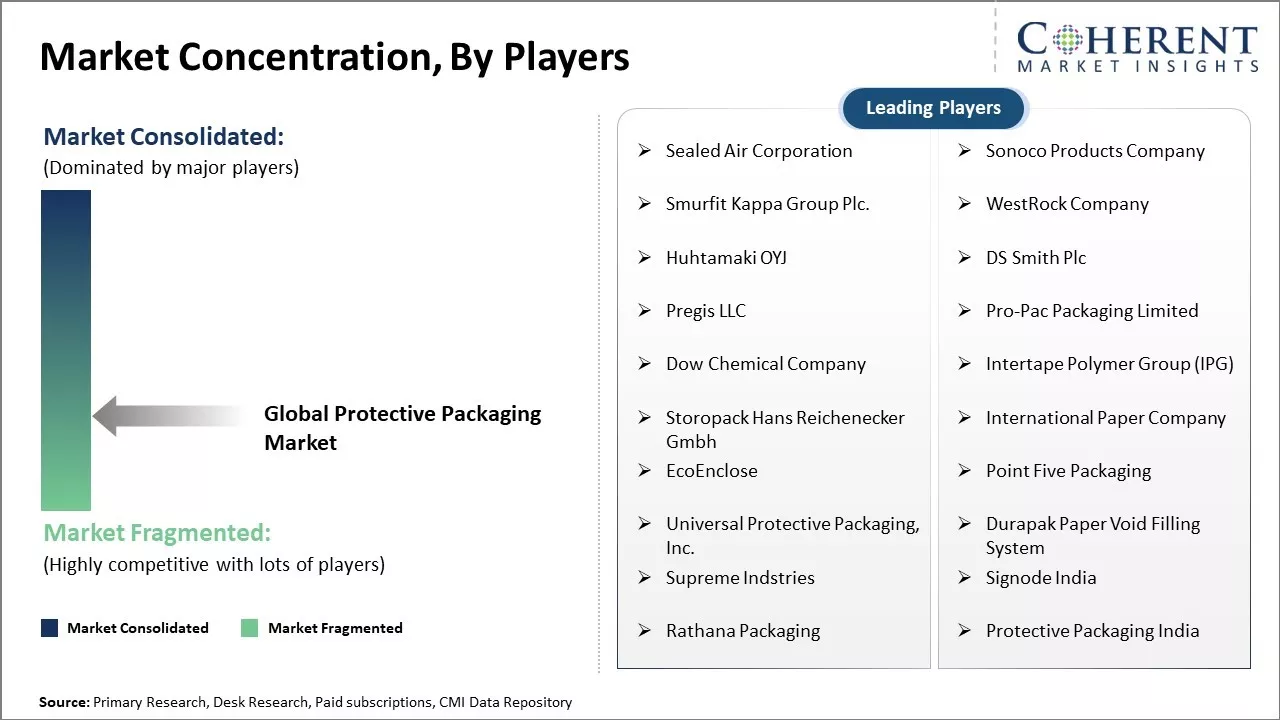
| Companies covered: | Sealed Air Corporation, Sonoco Products Company, Smurfit Kappa Group Plc., WestRock Company, Huhtamaki OYJ, DS Smith Plc, Pregis LLC, Pro-Pac Packaging Limited, Dow Chemical Company, Intertape Polymer Group (IPG), Storopack Hans Reichenecker Gmbh, International Paper Company, EcoEnclose, Point Five Packaging, Universal Protective Packaging, Inc., Durapak Paper Void Filling System, Supreme Indstries, Signode India, Rathana Packaging, and Protective Packaging India | ||
| Growth Drivers: |
| ||
| Restraints & Challenges: |
| ||
Protective Packaging Market Driver
Evolving needs of end -use industries
As industries across various sectors have modernized their operations and supply chains, the needs from protective packaging have also evolved. Manufacturers in automotive, electronics, healthcare and other core industries are continuously striving to enhance quality, minimize damage and losses during transit and ensure safety of personnel involved in the logistics process. The intricate designs and components used in manufacturing necessitate protective packaging solutions that can offer high levels of protection from mechanical, physical and other impacts. Complex products needing protective foam, inflatable cushions or die-cut designs have gained popularity. Add to this the demands of housing different components together as part of sub-assemblies and the complexity increases multi-fold. Manufacturers also seek to minimize waste generation and optimize the use of materials in protective designs. Sustainable and reusable options allow them to reduce costs in the long run while meeting compliance and social responsibility goals. Thus, protective packaging providers are focusing on extensive research and development efforts to provide innovative yet sustainable solutions. Customized designs, simulation testing and optimization of packing configurations as per specific product and transport needs have become common practice.
Market Concentration and Competitive Landscape
Growing international trade and evolving supply chain networks
International trade has grown exponentially with both developed and developing countries actively participating in global export and import of a wide variety of goods. This has led to extensive evolution of international supply chain networks as companies seek to leverage lower costs and access to new markets. However, complexities of moving products across long distances through multiple modes of transport have also increased risks of damage. Land, sea as well as air cargo all require specialized protective solutions to withstand rough handling, varying temperatures and pressures during transit. Emerging markets with improving infrastructure and growing domestic consumption are important focal points. However, their distances from manufacturing bases and vulnerability to certain climatic conditions necessitate stringent protective solutions. Regulations around safety and security are continuously being upgraded across different jurisdictions. This has boosted usage of tamper-proof seals, anti-counterfeiting devices, RFID tags and track-and-trace technologies integrated with packaging. Expanding scope of international logistics and the pressures of just-in-time deliveries have amplified the importance of robust protective functions from packaging.
Protective Packaging Market Opportunities
Development of biodegradable and sustainable protective packaging materials
The development of biodegradable and sustainable protective packaging materials can offer opportunity for protective packaging market growth. There has been growing demand for eco-friendly packaging solutions as consumers and organizations are increasingly conscious about reducing plastic waste and carbon footprint. Biodegradable materials that break down without harming the environment can provide a sustainable alternative to the traditionally used plastics and foams for protective packaging needs. Many companies are investing in research and development to expand the portfolio of plant-based biopolymers and recyclable packaging materials that can fulfil the role of protecting products during transportation as effectively as conventional plastics. Novel techniques are enabling the creation of moulded pulp, paper and bioplastic packaging products with performance properties comparable to PET, polystyrene and polyethylene. Technologies such as additive manufacturing and coatings infused with natural waxes or binders can improve the durability, strength and water resistance of biodegradable packaging solutions without compromising on sustainability.
Analyst Opinion (Expert Opinion)
The protective packaging market is undergoing a structural shift as cost efficiency, sustainability compliance, and performance reliability converge into a single strategic priority. Buyers now evaluate packaging as a total-cost variable, balancing material expense against product damage, returns, and disposal compliance. Studies indicate that over 40% of consumers have received damaged parcels, underscoring the need for SKU-level packaging optimization rather than generic solutions.
Major retailers are phasing out single-use plastics and expanded polystyrene, accelerating the shift toward recyclable fiber-based and molded pulp alternatives. This transformation is being reinforced by stricter regulations such as the EU Packaging and Packaging Waste Regulation, which increases compliance costs for non-recyclable formats. Suppliers offering validated lifecycle credentials, recycled content and compostability certifications are gaining preference among global buyers.
Automation in packaging operations is another decisive differentiator. Companies deploying on-demand paper void-fill or air-cushion systems report measurable reductions in damage claims and labor expenses. Concurrently, volatility in polymer and pulp prices continues to pressure margins, pushing suppliers toward innovation-driven differentiation.
Ultimately, competitive advantage will favor firms integrating engineering precision, sustainability, and automation, treating packaging not as a cost center but as a measurable contributor to operational efficiency and brand integrity.
Speak to the analyst
Want personalized insights?
Take the findings above to one of our principal consultants, or have the report rebuilt around the segments, geographies and competitors you actually track.
Protective Packaging Industry News
- In September 2025, Sealed Air launched the Autobag® 850HB Hybrid Bagging Machine, designed for efficient packing of paper and poly mailers. The system enhances fulfillment operations with automated loading and sealing, supporting both recyclable and traditional materials. This innovation meets growing demand for sustainable, high-performance protective packaging in e-commerce and logistics.
- In February 2025, Systech introduced UniSecure and ArtAI technologies to improve pharmaceutical packaging quality and patient safety. UniSecure uses digital fingerprinting to verify product authenticity, while ArtAI applies AI-driven inspection to detect defects. These innovations aim to prevent counterfeiting and ensure reliable, secure packaging across the pharmaceutical supply chain.
- In December 2024, VTT launched a lightweight, origami-inspired alternative to conventional protective packaging materials. Made from renewable fibers, the design offers strength, flexibility, and sustainability, replacing plastic-based foams. This innovation supports eco-friendly packaging goals while providing effective cushioning for fragile goods, marking a step forward in sustainable logistics and product protection.
Market Segmentation
- Type Insights (Revenue, USD Bn, 2026 - 2033)
- Flexible Protective Packaging
- Foam Protective Packaging
- Rigid Protective Packaging
- Material Insights (Revenue, USD Bn, 2026 - 2033)
- Paper & Paperboard
- Plastic Foams
- Plastic
- Others
- End-use Insights (Revenue, USD Bn, 2026 - 2033)
- Food & Beverage
- Industrial Goods
- Consumer Electronics
- Household Appliances
- Healthcare
- Automotive
- Others
- Regional Insights (Revenue, USD Bn, 2026 - 2033)
- North America
- U.S.
- Canada
- Latin America
- Brazil
- Argentina
- Mexico
- Rest of Latin America
- Europe
- Germany
- U.K.
- Spain
- France
- Italy
- Russia
- Rest of Europe
- Asia Pacific
- China
- India
- Japan
- Australia
- South Korea
- ASEAN
- Rest of Asia Pacific
- Middle East & Africa
- GCC Countries
- Israel
- Rest of Middle East & Africa
- Key Players Insights (Revenue, USD Bn, 2021 - 2033)
- Sealed Air Corporation
- Sonoco Products Company
- Smurfit Kappa Group Plc.
- WestRock Company
- Huhtamaki OYJ
- DS Smith Plc
- Pregis LLC
- Pro-Pac Packaging Limited
- Dow Chemical Company
- Intertape Polymer Group (IPG)
- Storopack Hans Reichenecker Gmbh
- International Paper Company
- EcoEnclose
- Point Five Packaging
- Universal Protective Packaging, Inc.
- Durapak Paper Void Filling System
- Supreme Indstries
- Signode India
- Rathana Packaging
- Protective Packaging India
Sources
Primary Research Interviews from the following stakeholders
Stakeholders
- Interviews with packaging material suppliers, logistics companies, e-commerce fulfillment centers, manufacturing plant operations managers, procurement heads, packaging engineers, and sustainability officers across global and regional markets.
Specific Stakeholders
- Procurement and packaging heads at FMCG and food processing companies (e.g., Nestlé, Unilever, Mondelez International)
- Logistics and operations managers at e-commerce and retail chains (e.g., Amazon, Walmart, Flipkart)
- Quality assurance and packaging design engineers at electronics and industrial goods manufacturers (e.g., Samsung, Siemens, Bosch)
- Supply chain and warehouse managers at pharmaceutical and healthcare logistics firms
- Sustainability and environmental compliance officers at packaging material producers
- Production managers and R&D leads at paper, plastic, and foam packaging manufacturers
- Distribution and transport safety experts in automotive and aerospace component packaging
Databases
- UN Comtrade Database
- World Trade Organization (WTO) Trade Statistics
- United Nations Industrial Development Organization (UNIDO)
- OECD Trade and Environmental Statistics
- Eurostat
- China Customs Statistics
- Directorate General of Commercial Intelligence and Statistics (DGCIS), India
- U.S. Census Bureau – International Trade Data
- Japan External Trade Organization (JETRO)
- World Bank Logistics Performance Index (LPI)
- Ministry of Commerce and Industry (India)
Magazines
- Packaging WorlD
- Food & Beverage Packaging
- Modern Materials Handling
- Plastics News
- Packaging Strategies
- Sustainable Packaging News
- Logistics Insight Asia
- Industrial Packaging Magazine
- FlexPack Voice
- PrintWeek (Packaging Section)
Journals
- Journal of Packaging Technology and Research (Springer)
- Packaging Technology and Science (Wiley)
- International Journal of Physical Distribution & Logistics Management
- Journal of Cleaner Production (Elsevier)
- Materials Today Sustainability
- Journal of Applied Polymer Science
- Resources, Conservation & Recycling (Elsevier)
- Journal of Food Engineering (Packaging Systems)
Newspapers
- The Wall Street Journal – Supply Chain & Manufacturing Section
- The Economic Times – Packaging & Logistics Industry
- Financial Times – Global Trade and Industrial Materials
- The Hindu Business Line – Manufacturing & Industrial Packaging
- Nikkei Asia – Manufacturing and Materials
- South China Morning Post – Industry & Logistics
- The Guardian – Environment and Packaging Waste Reports
Associations
- Institute of Packaging Professionals (IoPP)
- American Institute for Packaging and the Environment (AMERIPEN)
- Sustainable Packaging Coalition (SPC)
- European Federation of Corrugated Board Manufacturers (FEFCO)
- World Packaging Organisation (WPO)
- Indian Institute of Packaging (IIP)
- Plastics Industry Association (PLASTICS)
- Federation of Indian Chambers of Commerce and Industry (FICCI) – Packaging Subcommittee
- Confederation of Indian Industry (CII) – Packaging Cluster
Public Domain Sources
- U.S. Environmental Protection Agency (EPA) – Sustainable Materials Management Reports
- Ministry of Environment, Forest and Climate Change (Government of India)
- Ministry of Economy, Trade and Industry (METI), Japan
- European Commission – Circular Economy and Packaging Waste Reports
- National Institute of Standards and Technology (NIST), U.S.
- Indian Ministry of Commerce and Industry – Export Promotion Reports
- Central Pollution Control Board (CPCB) – Plastic Waste Management Updates
- U.S. International Trade Commission (USITC) – Packaging and Materials Reports
- Reserve Bank of India (RBI) – Industrial Production and Logistics Data
- UN Environment Programme (UNEP) – Sustainable Packaging and Waste Management
Proprietary Elements
- CMI Data Analytics Tool
- Proprietary CMI Existing Repository of information for last 8 year
Definition: Protective packaging market consists of materials, containers and other protective solutions used to safeguard products and goods from damage caused during transport, handling and storage. Companies in this market offer a wide range of specialized protective packaging products made from materials like plastic, foam, cardboard and wood that provide cushioning, blocking, bracing and wrapping to protect goods from shock, vibration, compression and other hazards encountered during shipping and warehousing. The goal is to prevent products from being damaged pre- and post-purchase using custom designs and formats.
Get access to 250+ pages report
Every segment, forecast, competitor profile and data table behind the analysis above — available for instant download.
- ESOMAR Member
- ISO 9001:2015 Certified
- D-U-N-S Registered
- GDPR & CCPA Compliant
Missing comfort of reading report in your local language? Find your preferred language:
Transform your Strategy with Exclusive Trending Reports
Frequently Asked Questions
The Protective Packaging Market is estimated to be valued at USD 41.06 Bn in 2026, and is expected to reach USD 60.12 Bn by 2033.
The CAGR of the Protective Packaging Market is projected to be 5.6% from 2026 to 2033.
Evolving needs of end -use industries and growing international trade and evolving supply chain networks are the major factors driving the growth of global protective packaging market.
Volatility in raw material prices and availability of alternative packaging materials are the major factors hampering the growth of global protective packaging market.
In terms of type, flexible protective packaging segment is estimated to dominate the market in 2026.
Sealed Air Corporation, Sonoco Products Company, Smurfit Kappa Group Plc., WestRock Company, Huhtamaki OYJ, DS Smith Plc, Pregis LLC, Pro-Pac Packaging Limited, Dow Chemical Company, Intertape Polymer Group (IPG), Storopack Hans Reichenecker Gmbh, International Paper Company, EcoEnclose, Point Five Packaging, Universal Protective Packaging, Inc., Durapak Paper Void Filling System, Supreme Indstries, Signode India, Rathana Packaging, and Protective Packaging India are the major players.
North America is expected to lead the global protective packaging market.