Sickle Cell Anemia Therapeutics Market Analysis & Forecast: 2026-2033
Sickle Cell Anemia Therapeutics Market Size and Forecast – 2026 – 2033
The Sickle Cell Anemia Therapeutics Market is projected to grow from USD 4.14 billion in 2026 to USD 10.11 billion by 2033, reflecting a compound annual growth rate (CAGR) of approximately 16.02 % over 2026-2033.
Global Sickle Cell Anemia Therapeutics Market Overview
Sickle Cell Anemia therapeutics focus on preventing complications, reducing pain crises, and improving survival and quality of life. Traditional treatments include hydroxyurea, blood transfusions, and iron chelation therapy to manage symptoms and prevent organ damage. Recently, disease-modifying therapies such as voxelotor, crizanlizumab, and L-glutamine have expanded treatment options. Curative approaches, including hematopoietic stem cell transplantation and emerging gene therapies, represent major advances. Growing awareness, improved diagnosis, and strong R&D investments are driving innovation in this space, shifting the market from symptomatic management toward targeted and potentially curative solutions.
Key Takeaways
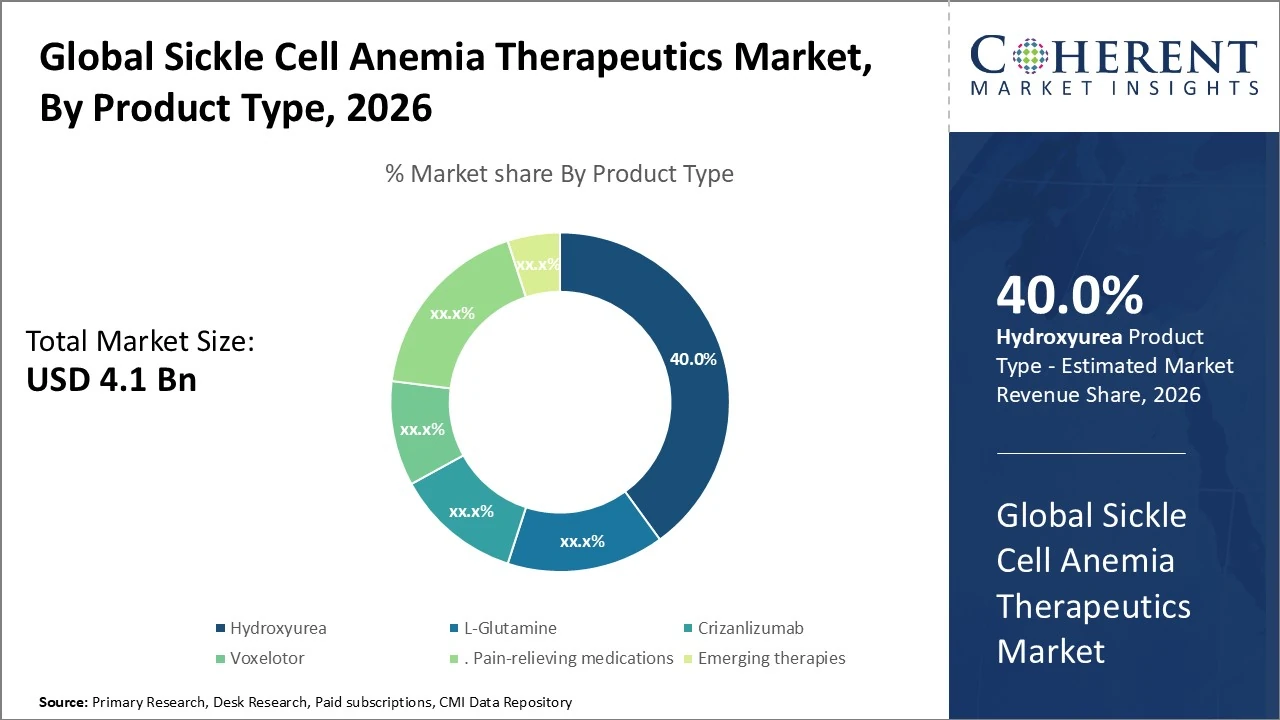
Product Type- hydroxyurea 40% is the dominant foundational therapy.
Hospitals dominate end-user share at approximately 60%.
North America dominates the sickle cell anemia therapeutics market with ~40% of global share.
The Asia Pacific sickle cell anemia therapeutics market holds approximately 22% of the global market.
The United States dominates the sickle cell anemia therapeutics landscape, holding roughly ~90% of the North American market share.
The Germany sickle cell anemia therapeutics market is a key European segment, contributing roughly ~27% of the regional market.
Sickle Cell Anemia Therapeutics Market Segmentation Analysis
To learn more about this report, Download Free Sample
Sickle Cell Anemia Therapeutics Market Insights, By Product Type
Hydroxyurea is the dominant foundational therapy due to its long-standing use; L-Glutamine (~15%); Crizanlizumab (~12%); and Voxelotor (~10%) among targeted drugs. Pain-relieving medications comprise about 18% of market revenue for acute crisis management, while Emerging therapies account for roughly 5%, reflecting rapid growth in advanced curative strategies. Hydroxyurea leads due to cost and efficacy, while gene therapies are fastest growing.
Sickle Cell Anemia Therapeutics Market Insights, By End-User
In the Sickle Cell Anemia Therapeutics Market, Hospitals dominate end-user share at approximately 60%, as they provide comprehensive care, emergency management, transfusions, and advanced therapies requiring specialized infrastructure. Specialty/clinic settings hold roughly 25%, driven by growing dedicated treatment centers offering outpatient disease management and targeted therapies. Homecare and other settings account for about 15% of the market, supported by telemedicine, remote monitoring, and patient-centric management initiatives. This distribution underscores the primary reliance on institutional care while outpatient and home-based models expand.
Sickle Cell Anemia Therapeutics Market Trends
Rising adoption of gene therapies, CRISPR-based treatments, and biologics is shifting the market from symptom management toward disease-modifying and potentially curative solutions.
Heavy investment by biopharma in novel modalities—including gene editing, cell therapy, and next-generation small molecules—is accelerating new approvals and expanding treatment options.
Enhanced screening, healthcare infrastructure, and government initiatives in high-prevalence regions are driving market growth and therapy accessibility.
Sickle Cell Anemia Therapeutics Market Insights, By Geography
To learn more about this report, Download Free Sample
North America Sickle Cell Anemia Therapeutics Market Analysis and Trends
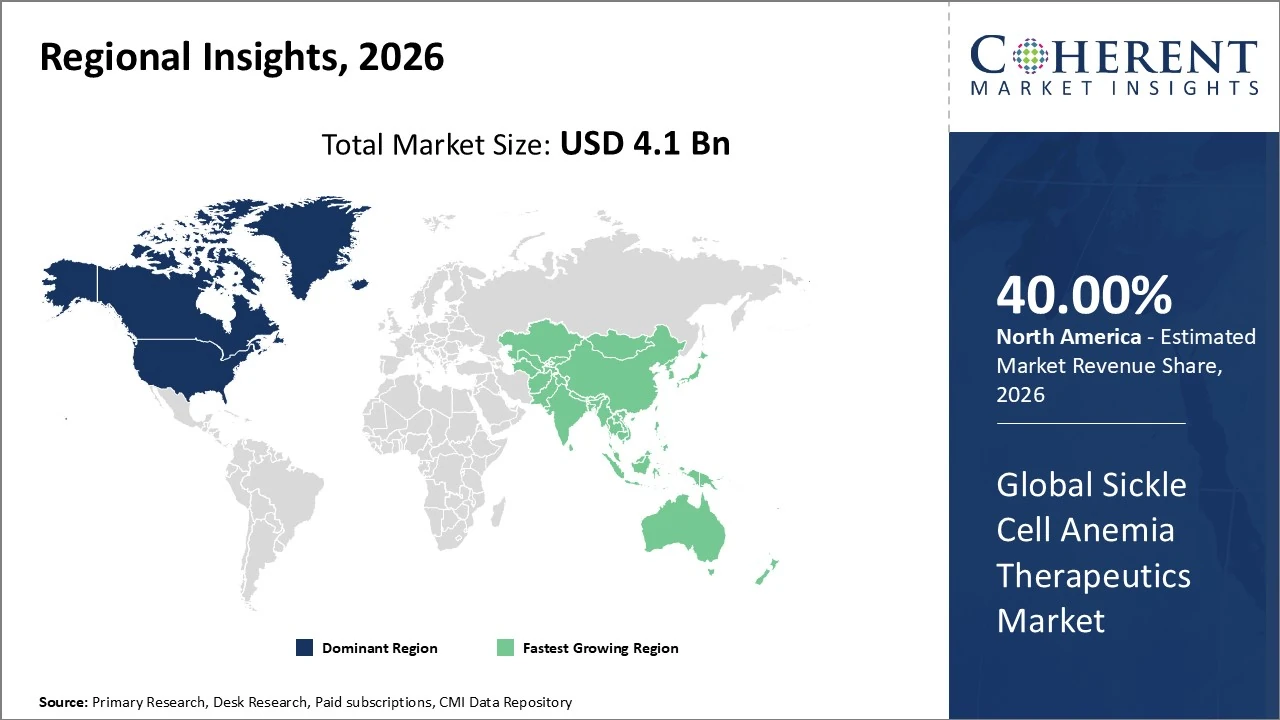
North America dominates the sickle cell anemia therapeutics market with ~40% of global share, driven by advanced healthcare infrastructure, high R&D investment, and strong adoption of innovative therapies like gene editing and targeted drugs. The region’s market is forecast to grow at a CAGR of ~15%, propelled by expanding newborn screening, gene therapies, and pharmacotherapy use. North America continues to lead global therapeutic innovation and deployment.
Asia Pacific Sickle Cell Anemia Therapeutics Market Analysis and Trends
The Asia Pacific sickle cell anemia therapeutics market holds approximately 22% of the global market, driven by rising disease awareness, expanding healthcare infrastructure, and government programs in countries such as India and China. Pharmacotherapy and blood transfusion treatments dominate, while advanced therapies are gradually increasing adoption. The region is forecast to grow at a ~17.6% CAGR through 2033, reflecting strong demand for accessible treatments and improved screening initiatives. Urban hospitals are increasing prescription rates, and partnerships with global organizations enhance drug access. India and China lead regional growth, supported by targeted public health efforts.
Sickle Cell Anemia Therapeutics Market Outlook for Key Countries
USA Sickle Cell Anemia Therapeutics Market Analysis and Trends
The United States dominates the sickle cell anemia therapeutics landscape, holding roughly ~90% of the North American market share due to high disease prevalence, strong healthcare infrastructure, and extensive drug adoption. Hydroxyurea remains the most widely used therapy among U.S. patients, supported by mandatory newborn screening and research investment. Trends include growing uptake of advanced gene and cell therapies, proactive screening programs, and policies increasing access to expensive curative treatments in Medicaid populations.
Germany Sickle Cell Anemia Therapeutics Market Analysis and Trends
The Germany sickle cell anemia therapeutics market is a key European segment, contributing roughly ~27% of the regional market with a projected revenue of about USD 180 million in recent assessments. Growth is supported by a ~14.3% CAGR to 2033, with pharmacotherapy emerging as the fastest‑growing segment while blood transfusions remain significant. Germany benefits from advanced healthcare infrastructure, newborn screening programs, and clinical trials of innovative therapies. Adoption of newer drugs and care protocols is increasing, though the overall market remains smaller than in the U.S. due to lower disease prevalence. Specialized treatment centers and research efforts further drive market momentum.
Analyst Opinion
Analysts emphasize that gene therapy and CRISPR-based interventions will increasingly dominate, gradually reducing reliance on traditional pharmacotherapies.
Despite innovation, hydroxyurea continues to hold a large market share due to affordability, efficacy, and long-standing clinical use.
APAC and Africa are seen as high-growth regions due to rising awareness, government initiatives, and improving healthcare infrastructure.
Strong pipeline activity in biologics, small molecules, and gene therapies is expected to accelerate approvals and expand treatment options.
Market expansion will rely on favorable reimbursement policies, insurance coverage, and patient access programs, especially for expensive curative therapies.
Market Scope
| Report Coverage | Details | ||
|---|---|---|---|
| Base Year: | 2025 | Market Size in 2026: | USD 4.14 Billion |
| Historical Data for: | 2020 To 2024 | Forecast Period: | 2026 To 2033 |
| Forecast Period 2026 to 2033 CAGR: | 16.02% | 2033 Value Projection: | USD 10.11 Billion |
| Geographies covered: |
|
||
| Segments covered: |
|
||
| Companies covered: | Pfizer, Novartis, Bluebird Bio, Emmaus Life Sciences, Addmedica | ||
| Growth Drivers: |
|
||
Uncover macros and micros vetted on 75+ parameters: Get instant access to report
Sickle Cell Anemia Therapeutics Market Growth Factors
The market is expanding due to rising prevalence of sickle cell disease globally and increased awareness of its complications. Advancements in drug development, including gene therapies, biologics, and disease-modifying agents, drive adoption. Government initiatives and newborn screening programs improve early diagnosis and treatment access. Growing R&D investments by biopharma companies accelerate pipeline innovations. Improved healthcare infrastructure in emerging markets and favorable reimbursement policies in developed regions further support market growth. Additionally, increasing patient advocacy, education, and telemedicine solutions enhance adherence and outreach, collectively contributing to sustained growth in both traditional and advanced therapeutic segments.
Sickle Cell Anemia Therapeutics Market Development
In December 2023, the U.S. Food and Drug Administration approved Casgevy and Lyfgenia, the first cell-based gene therapies for treating sickle cell disease in patients aged 12 and older. Notably, Casgevy is the first FDA-approved therapy to use genome-editing technology, marking a major advancement in gene therapy.
Key Players
Leading Companies of the Market
Pfizer Inc.
Novartis, Bluebird Bio, Emmaus Life Sciences, Addmedica
Bluebird Bio
Emmaus Life Sciences
Addmedica
The leading companies in the Sickle Cell Anemia Therapeutics Market include Pfizer, Novartis, Bluebird Bio, Emmaus Life Sciences and Addmedica.
Sickle Cell Anemia Therapeutics Market Future Outlook
The market is expected to experience robust growth over the next decade, driven by advancements in gene and cell therapies, expanding the shift from symptomatic treatment to curative solutions. Increasing global prevalence and improved diagnosis, particularly through newborn screening, will boost patient numbers. Emerging markets in Asia-Pacific and Africa are anticipated to grow rapidly due to improved healthcare infrastructure and awareness programs. Continued R&D investment, strategic partnerships, and regulatory support will accelerate the approval of novel therapies. Overall, the market is moving toward personalized, targeted, and accessible treatments, enhancing outcomes and quality of life for patients worldwide.
Sickle Cell Anemia Therapeutics Market Historical Analysis
Historically, the sickle cell anemia therapeutics market was dominated by symptomatic and supportive treatments such as hydroxyurea, blood transfusions, and pain management therapies. Growth was steady but limited due to low awareness, insufficient diagnosis, and lack of advanced treatment options. Early 2000s innovations, including L‑glutamine, improved patient outcomes and slightly expanded market size. The introduction of targeted therapies like crizanlizumab and voxelotor in the 2010s, alongside increasing clinical research in gene and cell therapies, marked a significant shift toward disease-modifying approaches. Historically, North America led the market, with Europe and emerging regions gradually increasing adoption.
Sources
Primary Research Interviews:
Pharmaceutical & Biotech Companies
Healthcare Professionals
Regulatory Authorities
Distributors & Wholesalers
Databases:
PubMed / Medline
ClinicalTrials.gov
WHO Global Health Observatory
Journals:
Blood
The Lancet Haematology
Haematologica
American Journal of Hematology
Newspapers:
The Wall Street Journal
Financial Times
Washington Post
The New York Times
Associations:
American Society of Hematology (ASH)
Sickle Cell Disease Association of America (SCDAA)
European Hematology Association (EHA)
Global Sickle Cell Disease Network (GSCDN)
Share
Share
About Author
Vipul Patil is a dynamic management consultant with 6 years of dedicated experience in the pharmaceutical industry. Known for his analytical acumen and strategic insight, Vipul has successfully partnered with pharmaceutical companies to enhance operational efficiency, cross broader expansion, and navigate the complexities of distribution in markets with high revenue potential.
Missing comfort of reading report in your local language? Find your preferred language :
Transform your Strategy with Exclusive Trending Reports :
Frequently Asked Questions

Credibility and Certifications

860519526
9001:2015
27001:2022


Need a Custom Report?
We can customize every report - free of charge - including purchasing stand-alone sections or country-level reports
Customize NowSelect a License Type
Joining thousands of companies around the world committed to making the Excellent Business Solutions.
View All Our Clients
 Schedule a meeting with report Author