

Cosmeceuticals Market Size and Forecast
Cosmeceuticals Market is estimated to be valued at USD 1,08,699.3 Mn in 2026 and is expected to reach USD 2,01,531.1 Mn in 2033, exhibiting a compound annual growth rate (CAGR) of 9.22% from 2026 to 2033.
Key Takeaways
- By Product Type, Skin-Care acquired the prominent share of 51% in 2026 as rising demand for anti-aging and skin repair products.
- By Active Ingredient Type, Antioxidant hold the largest market share in 2026 owing to its growing consumer awareness of oxidative stress and skin aging.
- By Region, Asia Pacific dominates the overall market with an estimated share of 45.2% in 2026 owing to the e-commerce, digital & influencer influence.
Market Overview
The global cosmeceutical market is experiencing strong growth due to the rise in prevalence of skin and hair disorders and rise in aging (geriatric) population around the world. Moreover, increasing demand for cosmeceuticals and rise in demand for skin care, hair care, and oral care products is expected to boost growth of the market.
Current Events and their Impact on the Cosmeceuticals Market
Current Events | Description and its impact |
Regulatory Shifts in Key Markets |
|
Geopolitical and Economic Pressures |
|
Consumer and Environmental Trends |
|
End-user Feedback and Unmet Needs in the Cosmeceuticals Market
End-user Feedback and Unmet Needs
- Demand for Transparent Ingredient Labeling: End-users frequently express concerns over vague or misleading labels. Many seek full disclosure of active ingredients, their concentrations, and scientific backing. The lack of transparency makes it hard for users to compare products or assess safety, particularly for sensitive skin and long-term use.
- Personalized Solutions Still Limited: Consumers increasingly expect personalized skincare based on their skin type, concerns, and environment. However, most products follow a one-size-fits-all approach. There’s a growing unmet need for AI-driven diagnostics, custom formulations, and adaptive regimens that address individual variations across age groups, climates, and lifestyles.
- Inconsistent Product Claims vs. Results: End-users often report disappointment with product efficacy. Many cosmeceuticals make bold claims—anti-aging, acne control, skin brightening—without delivering noticeable or lasting results. This gap between expectations and outcomes undermines trust and highlights the need for more clinically validated, performance-based formulations.
- Current Industry Events of 2026
- Market Size Estimation
- Regional Breakdown
- Competitive Landscape
- Customer Intelligence
- Segmental Analysis
- Pricing Analysis
- Key Market Drivers, Challenges & Future Trends
- Customized Insights Section
Segmental Insights
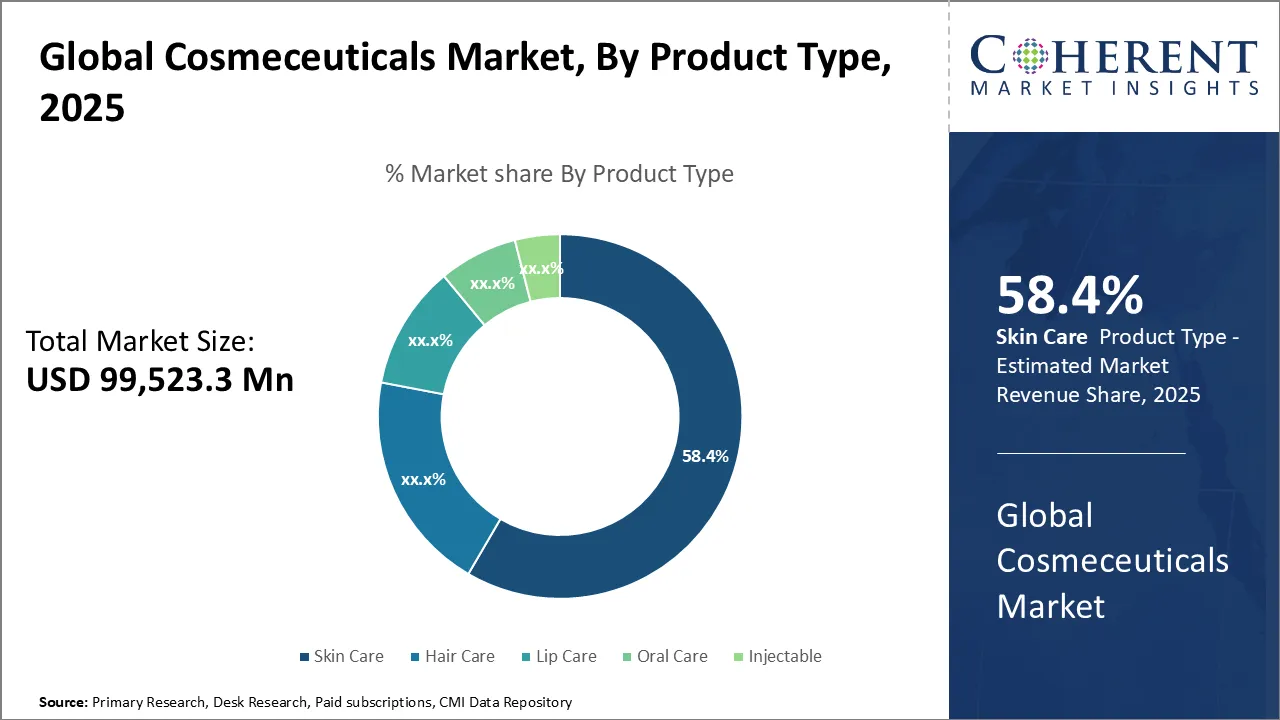
Cosmeceuticals Market Insights, By Product Type - Skin Care contribute the highest share of the market owing to its personalized and functional skin care
Consumers are increasingly driving the growth of the skincare segment in the cosmeceuticals market by seeking effective, scientifically backed solutions for aging, pigmentation, acne, and environmental damage. With a deeper understanding of active ingredients like retinoids, peptides, and antioxidants, they are actively choosing products that offer both therapeutic benefits and aesthetic improvements. Rising pollution, stress, and sun exposure continue to accelerate the demand for advanced skincare formulations designed to protect and enhance skin health. For instance, in December 2024, Bio-Xin Cosmeceuticals, Bangladesh's leading skincare brand, launched its highly anticipated "Year End Sale," offering 50% off all treatments and skin tests, including Slimming Solutions and EPN Treatment, and up to 80% off on skincare products. This is further propelling the cosmeceuticals market demand.
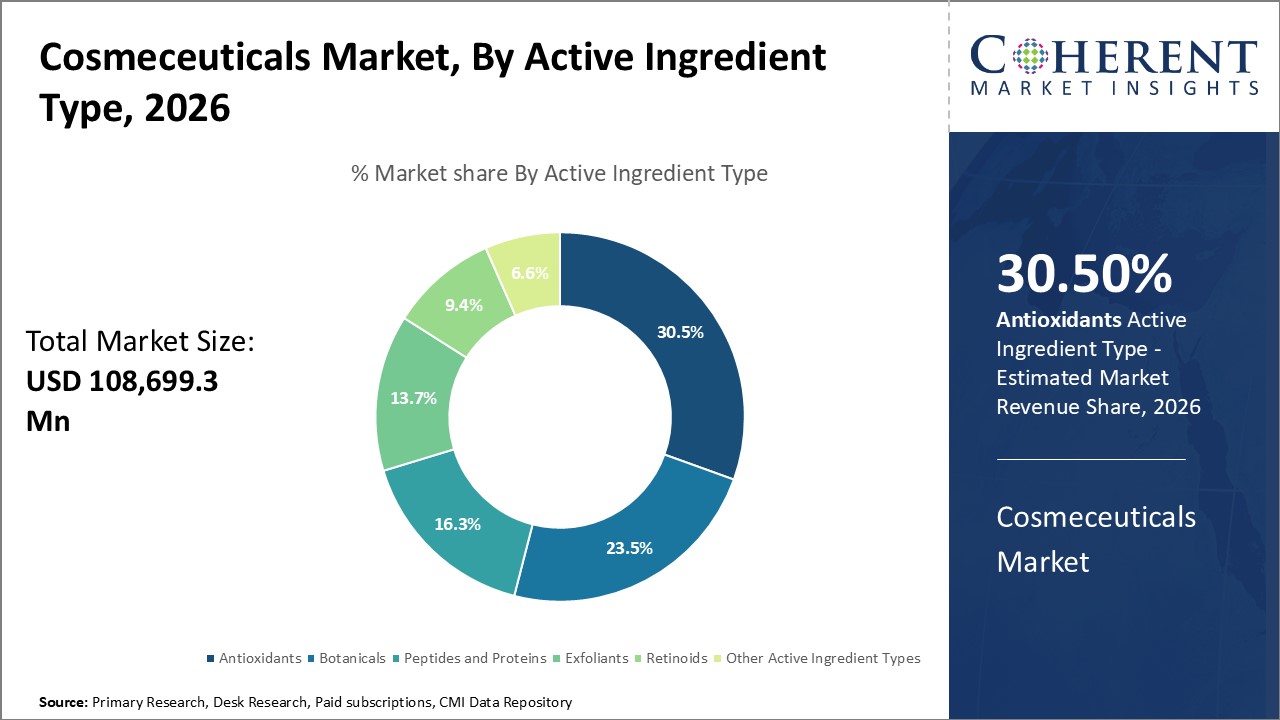
Cosmeceuticals Market Insights, by Active Ingredient Type
Antioxidant contribute the highest share of the market owing to its surge in pollution and urban lifestyle stressors
Consumers are driving the demand for antioxidants in the cosmeceuticals market as they become more aware of their role in protecting the skin against oxidative stress, premature aging, and environmental damage. They actively seek products formulated with ingredients like resveratrol, green tea extract, vitamin C, and vitamin E for their proven ability to neutralize free radicals. The rising preference for multifunctional skincare and natural, plant-based formulations is also boosting antioxidant use, while advancements in delivery technology enhance both their effectiveness and appeal. For instance, in April 2025, At In-Cosmetics Global, Sabinsa unveiled two new patented ingredient brands. One of them, LactoSporin, is a postbiotic used in cosmeceutical skin and hair care products, offering antibacterial, antioxidant, anti-inflammatory, anti-collagenase, and anti-glycation properties. This is further accelerating the cosmeceuticals market share.
Regional Insights
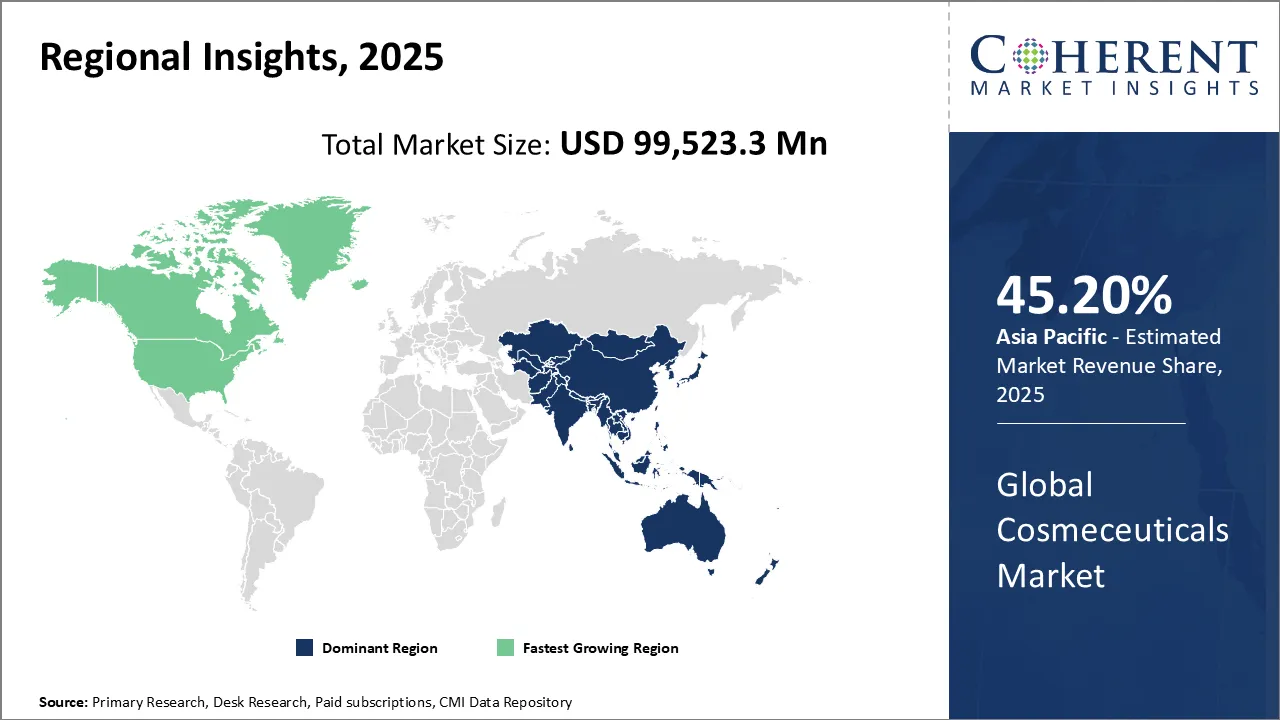
Asia Pacific Cosmeceuticals Market Trends
Asia Pacific region dominates the overall market with a share of 45.20%. Consumers are increasingly embracing clean beauty inspired by Ayurveda, Traditional Chinese Medicine, and regional botanicals like rice water, snail mucin, ginseng, green tea, and turmeric. Brands are responding by prioritizing ingredient transparency, sustainable sourcing, and biodegradable packaging to align with local wellness values. At the same time, e-commerce platforms, live-streaming channels, and social media influencers—especially on Shopee, TikTok, Douyin, and Xiaohongshu—are reshaping how consumers discover and purchase products, supported by mobile-first engagement and rapid 30-minute delivery services.
For instance, in May 2026, Sephora expanded its exclusive brand lineup by launching Haus Labs by Lady Gaga in Asia Pacific markets, introducing the complete collection of 125 cosmetic products.
North America Cosmeceuticals Market Trends
Consumers in North America are driving the cosmeceuticals market toward clinically validated skincare, actively seeking dermatologist-tested solutions for aging, acne, pigmentation, and sun protection. Their growing preference for clean, sustainable formulations—often made with organic or plant-based ingredients—is reshaping brand strategies and packaging designs. Online retail, direct-to-consumer models, and influencer-led campaigns are expanding access to advanced products. At the same time, companies are enhancing their research and development pipelines through innovative approaches such as AI-driven personalization and nano-encapsulation technologies. For instance, in November 2024, Albéa Cosmetics & Fragrance introduced a new collection in North America to address the evolving demands of brands and consumers by offering sustainable packaging solutions for lipsticks, mascaras, jars, and other products.
United States Cosmeceuticals Market Trends
American consumers are increasingly choosing dermatologist-tested formulations enriched with peptides, retinoids, antioxidants, and hyaluronic acid. In response, brands are conducting clinical studies, leveraging scientific research, and securing expert endorsements to deliver effective solutions for sun protection, pigmentation, acne, and anti-aging. To meet evolving preferences, companies are also incorporating natural, plant-based ingredients, adopting eco-friendly packaging, obtaining clean beauty certifications, and prioritizing ethical and transparent sourcing throughout their supply chains. For instance, in February 2026, CJ Olive Young established a U.S. subsidiary, CJ Olive Young USA, based in California, which will scout for a suitable location to open its first brick-and-mortar store in the market.
India Cosmeceuticals Market Trends
Indian companies are merging modern cosmeceutical formulations with traditional Ayurvedic ingredients like saffron, sandalwood, neem, and turmeric. This approach attracts Gen Z and health-conscious millennials who prefer effective, culturally rooted beauty solutions focused on anti-aging, pigmentation, and hydration. Younger consumers are actively choosing clean-label, dermatologist-tested, paraben-free, and cruelty-free products for targeted skincare, UV defense, and protection against pollution. For instance, in April 2026, the Office of Ananya Birla, part of the Aditya Birla Group, introduced LOVETC, a premium cosmetic brand created to fill the market gap for high-end colour cosmetics in India.
Market Report Scope
Cosmeceuticals Market Report Coverage
| Report Coverage | Details | ||
|---|---|---|---|
| Base Year: | 2025 | Market Size in 2026: | USD 1,08,699.3 Mn |
| Historical Data for: | 2020 To 2024 | Forecast Period: | 2026 To 2033 |
| Forecast Period 2026 to 2033 CAGR: | 9.2% | 2033 Value Projection: | USD 2,01,531.1 Mn |
| Geographies covered: |
| ||
| Segments covered: |
| ||
| Companies covered: | Bayer AG, Henkel AG & Co. KgaA, Avon Products Inc., Johnson & Johnson Inc., Kao Corporation, Beiersdorf AG, Groupe Clarins SA, Revlon Inc., Shiseido Co. Ltd., Unilever PLC, Procter & Gamble, L'Oréal SA, Lotus Herbals Pvt. Ltd., and The Estée Lauder Companies Inc., among others. | ||
| Growth Drivers: |
| ||
| Restraints & Challenges: |
| ||
Cosmeceuticals Market Trend
Convergence of Pharmaceuticals and Cosmetics
The cosmeceuticals market is witnessing a strong convergence between pharmaceutical efficacy and cosmetic appeal. Consumers now prefer products that not only enhance appearance but also offer therapeutic benefits, such as anti-inflammatory, anti-aging, or skin-repairing effects. This has led to increased collaboration between dermatologists and beauty brands, with many formulations now backed by clinical studies and scientific validation. The demand for high-performance, treatment-oriented skincare and haircare is shaping product development across all major global markets.
Clean, Natural, and Ethical Beauty Demand
Consumers are increasingly choosing clean-label cosmeceuticals made from natural, organic, and plant-based ingredients. This trend is driven by concerns over synthetic chemicals, animal testing, and environmental sustainability. Brands are responding by offering vegan, cruelty-free products in recyclable or biodegradable packaging. Ingredient transparency and ethical sourcing are now essential for building consumer trust. As awareness grows, clean beauty is no longer niche—it’s becoming a mainstream expectation, especially among millennials and Gen Z users who prioritize health, wellness, and ethical values.
Cosmeceuticals Market Opportunity
Expansion into Emerging Markets
The cosmeceuticals market holds immense potential in emerging regions such as Southeast Asia, Latin America, the Middle East, and Africa. Rising disposable incomes, improving access to digital platforms, and increasing awareness of advanced skincare are opening new consumer bases. Urbanization and changing beauty standards are also driving demand for clinically effective, affordable products. Brands that localize their offerings and expand distribution in Tier-II and Tier-III cities can tap into vast, underserved populations with growing interest in high-performance beauty solutions.
Cosmeceuticals Market News
- In October 2024, Under the leadership of Noel Tata, Trent launched a new retail concept called 'Zudio Beauty,' entering the mass-market beauty segment. With this move, Zudio Beauty aims to compete with established players like Hindustan Unilever's Elle18, Sugar Cosmetics, Health & Glow, and Colorbar.
- In November 2024, Akums Drugs & Pharmaceuticals Ltd. entered into an in-licensing agreement with biotechnology company Caregen Co., Ltd. Through this strategic alliance, Akums aims to introduce specialty nutraceuticals, pharmaceuticals, and differentiated topical and injectable cosmeceuticals, including advanced Skinceuticals and Hairceuticals.
- In September 2024, RENEE Cosmetics, a leading beauty and skincare brand in India, launched its new makeup line, RENEE Everyday. This innovative collection aims to seamlessly blend skincare with beauty, providing a fresh and effortless look that enhances daily self-care routines.
Analyst Opinion (Expert Opinion)
- The cosmeceuticals market, long characterized by its hybrid positioning between pharmaceuticals and cosmetics, is undergoing a structural shift that goes far beyond mere consumer preference. This evolution is being driven by two critical forces: the medicalization of beauty and the erosion of consumer trust in conventional skincare narratives. As regulatory scrutiny intensifies and consumer sophistication deepens, the market is polarizing — favoring brands that can either clinically validate efficacy or anchor themselves in authentic dermatological heritage.
- A McKinsey Beauty Survey (2023) reports that 67% of skincare consumers in the U.S. and EU now verify ingredient efficacy before purchase, with over 40% using third-party databases such as INCI Decoder or CosDNA. This shift decisively undermines legacy cosmetic brands that have relied on brand equity over pharmacological credibility. In contrast, brands like SkinCeuticals (L’Oréal) and Obagi continue to consolidate their position by embedding clinical research and dermatologist endorsement into their go-to-market strategy.
- Furthermore, the rise of preventive aesthetics has created an unusual adjacency between dermatology clinics and retail cosmeceuticals. In markets like South Korea and Germany, over 30% of derma clinics now retail in-house or co-branded cosmeceuticals, blurring the line between clinical intervention and at-home care. This coalescence is not opportunistic but rather structural; it reflects the consumer’s demand for a continuum of care, where maintenance and prevention are seen as medically adjacent, not merely cosmetic.
- However, the market's credibility is at risk due to regulatory ambiguity. In regions like Southeast Asia and LATAM, cosmeceutical products frequently make pharmacological claims without undergoing clinical testing, leading to inconsistent product quality and occasional backlash. For instance, in 2022, Thailand’s FDA issued recalls for over 15 ‘whitening’ cosmeceutical products for violating ingredient safety norms. Such developments cast a shadow over the broader category and highlight the need for harmonized global regulatory frameworks akin to those enforced by the EMA or the U.S. FDA.
Speak to the analyst
Want personalized insights?
Take the findings above to one of our principal consultants, or have the report rebuilt around the segments, geographies and competitors you actually track.
Market Segmentation
- Global Cosmeceutical Market, By Product Type (Revenue, USD Mn, 2021 - 2033)
- Skin Care
- Anti-ageing
- Anti-acne
- Sun Protection
- Moisturizers
- Other Skin Care Product Types
- Hair Care
- Shampoos and Conditioners
- Hair Colorants and Dyes
- Other Hair Care Product Types
- Lip Care
- Oral Care
- Injectable
- Skin Care
- Global Cosmeceutical Market, By Active Ingredient Type (Revenue, USD Mn, 2021 - 2033)
- Antioxidants
- Botanicals
- Peptides and Proteins
- Exfoliants
- Retinoids
- Other Active Ingredient Types
- Global Cosmeceutical Market, By Geography (Revenue, USD Mn, 2021 - 2033)
- North America
- U.S.
- Canada
- Latin America
- Brazil
- Argentina
- Mexico
- Rest of Latin America
- Europe
- Germany
- U.K.
- Spain
- France
- Italy
- Russia
- Rest of Europe
- Asia Pacific
- China
- India
- Japan
- Australia
- South Korea
- ASEAN
- Rest of Asia Pacific
- Middle East
- GCC Countries
- Israel
- Rest of Middle East
- Africa
- South Africa
- North Africa
- Central Africa
- North America
- Key Players Insights
- Bayer AG
- Henkel AG & Co. KgaA
- Avon Products Inc.
- Johnson & Johnson Inc.
- Kao Corporation
- Beiersdorf AG
- Groupe Clarins SA
- Revlon Inc.
- Shiseido Co. Ltd.
- Unilever PLC
- Procter & Gamble
- L'Oréal SA
- Lotus Herbals Pvt. Ltd.
- The Estée Lauder Companies Inc.
Sources
Primary Research Interviews
- Product managers and R&D leads at dermatology-focused skincare brands
- Dermatologists and cosmetic chemists across India, the U.S., and South Korea
- E-commerce category managers from beauty platforms such as Nykaa, Ulta, and Sephora
- Consumer feedback from online skincare communities and forums
Databases
- PubMed (U.S. National Library of Medicine)
- Mintel GNPD (for cosmeceutical product launches)
- FDA’s Voluntary Cosmetic Registration Program (VCRP)
- EU Cosing Database (Cosmetic Ingredients and Regulatory)
- India’s CDSCO Drug & Cosmetic Database
Magazines
- Allure
- Vogue Beauty
- Cosmetics & Toiletries
- Dermascope
- Global Cosmetic Industry (GCI)
Journals
- Journal of Cosmetic Dermatology
- International Journal of Cosmetic Science
- Clinical, Cosmetic and Investigational Dermatology
- Journal of Drugs in Dermatology (JDD)
- Phytotherapy Research
Newspapers
- The New York Times – Style and Wellness
- The Guardian – Lifestyle/Beauty
- The Economic Times – Brand Equity
- The Times of India – Fashion & Beauty
- South China Morning Post – Lifestyle
Associations
- Personal Care Products Council (PCPC – U.S.)
- Indian Beauty & Hygiene Association (IBHA)
- Society of Cosmetic Scientists (UK)
- International Federation of Societies of Cosmetic Chemists (IFSCC)
- American Academy of Dermatology (AAD)
Public Domain Sources
- U.S. Food and Drug Administration (FDA) – Cosmetics Section
- Ministry of AYUSH, Government of India
- European Commission – Cosmetic Products Regulation Portal
- World Health Organization (WHO) – Skin Health Guidelines
- World Bank – Consumer health and wellness trends data
Proprietary Elements
- CMI Data Analytics Tool, and Proprietary CMI Existing Repository of information for last 8 years
Get access to 250+ pages report
Every segment, forecast, competitor profile and data table behind the analysis above — available for instant download.
- ESOMAR Member
- ISO 9001:2015 Certified
- D-U-N-S Registered
- GDPR & CCPA Compliant
Missing comfort of reading report in your local language? Find your preferred language:
Transform your Strategy with Exclusive Trending Reports
Frequently Asked Questions
The Cosmeceuticals Market is estimated to be valued at USD 1,08,699.3 Mn in 2026, and is expected to reach USD 2,01,531.1 Mn by 2033.
The CAGR of the Cosmeceuticals Market is projected to be 9.2% from 2026 to 2033.
Rise in prevalence of skin and hair disorders and rise in aging (geriatric) population around the world is fueling the market.
The Skin Care segment is the leading product type segment in the market.
Presence of counterfeit products and lack of awareness among people about cosmeceuticals and related benefits are major factors restraining market.
Major players operating in the market are Bayer AG, Henkel AG & Co. KgaA, Avon Products Inc., Johnson & Johnson Inc., Kao Corporation, Beiersdorf AG, Groupe Clarins SA, Revlon Inc., Shiseido Co. Ltd., Unilever PLC, Procter & Gamble, L'Oréal SA, Lotus Herbals Pvt. Ltd., and The Estée Lauder Companies Inc., among others.