

Smart Electronic License Plate Market Size and Trends - 2026 to 2033
Smart electronic license plate market is estimated to be valued at USD 1.52 Bn in 2026 and is expected to reach USD 3.50 Bn by 2033, exhibiting a compound annual growth rate (CAGR) of 12.6% from 2026 to 2033.
Key Takeaways
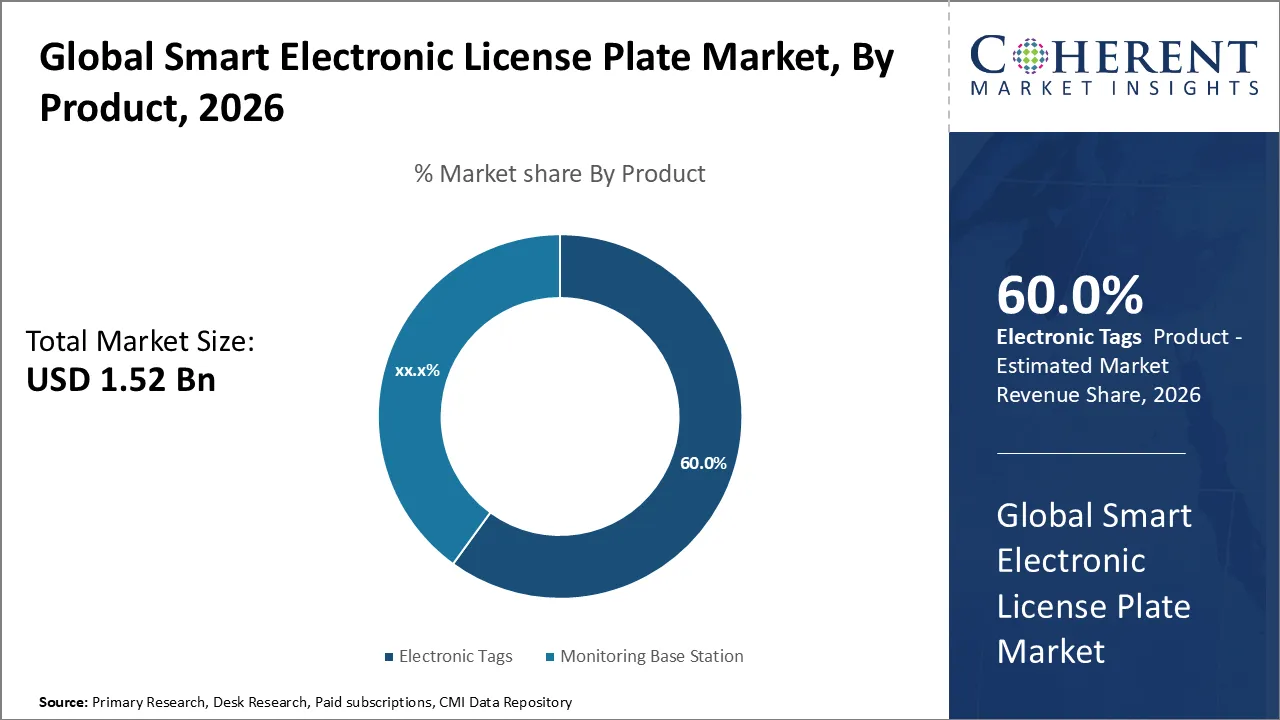
- Based on Product Type, the Electronic Tags segment is expected to lead the market with 60% share in 2026, due to wide adoption in smart vehicles for real-time tracking and vehicle identification.
- Based on Application, the Intelligent Traffic Management System segment is expected to lead the market with 50% share in 2026, due to increasing adoption of smart city solutions and traffic monitoring technologies.
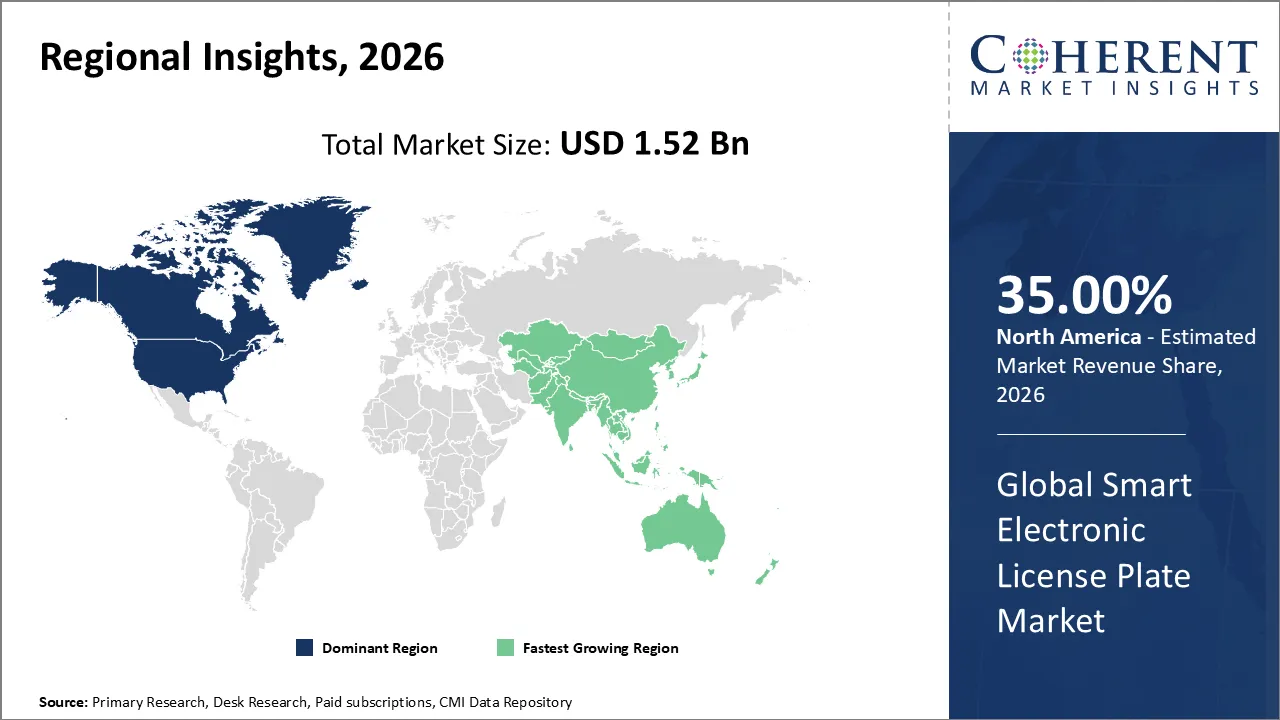
- Based on Region, North America is set to lead the smart electronic license plate market with 35% share in 2026. While, Asia Pacific is anticipated to be the fastest growing region.
Market Overview
The increasing use of connected cars and smart city projects is fueling the smart electronic license plate market. Smart electronic license plates with the capability of GPS tracking, RFID communication, toll management, and real-time monitoring of vehicles are gaining traction in the market. Companies are putting efforts into R&D and the development of new and advanced solutions to improve traffic management, security of vehicles, and management of regulations. The development of intelligent transport systems and e-vehicle registrations, which is a government initiative, is also contributing to the growth of the smart electronic license plate market.
Current Events and Its Impacts on the Smart Electronic License Plate Market
Current Events | Description and its impact |
Regulatory and Policy Developments |
|
Technological Advancement and Innovation |
|
Segmental Insights
- Current Industry Events of 2026
- Market Size Estimation
- Regional Breakdown
- Competitive Landscape
- Customer Intelligence
- Segmental Analysis
- Pricing Analysis
- Key Market Drivers, Challenges & Future Trends
- Customized Insights Section
Smart Electronic License Plate Market Insights, By Product Type – Electronic Tags dominate due to real-time tracking and vehicle identification
Based on the product type, the electronic tags market is projected to have the highest market share of 60% in 2026 due to the widespread use of electronic tags in smart cars for tracking, toll collection, and identification. The electronic tag offers efficient communication with the monitoring station, thus allowing traffic management organizations as well as companies to manage traffic, decrease congestion, and guarantee the safety of the vehicles. The increased use of GPS, RFID/NFC, and automation technology makes the electronic tag a vital component of Internet of Things-based transportation infrastructure.
For instance, in October 2024, Reviver Auto reduced the price of its RPLATE digital license plates, which include electronic tag functionalities, to expand adoption and accessibility for consumers and fleet operators.
Smart Electronic License Plate Market Insights, By Application – Intelligent Traffic Management Systems lead due to smart city adoption
In terms of application, the intelligent traffic management system segment is estimated to contribute the highest market share of 50% in 2026, due to increasing adoption of smart city solutions, traffic monitoring technologies, and connected vehicle infrastructure. Smart traffic management systems rely on smart license plates to regulate the movement of vehicles and optimize traffic flow. Smart traffic management systems are increasingly being employed by governments and municipalities to enhance road safety and reduce the costs of administration associated with traffic control.
For instance, in October 2025, the Dubai Roads and Transport Authority (RTA) launched a pilot program deploying 300 smart electronic license plates for intelligent traffic monitoring and enforcement, reflecting the growing municipal adoption of ELPs.
Regional Insights
North America Smart Electronic License Plate Market Analysis & Trends
North America will showcase the highest growth in smart electronic license plates in 2026, holding a market share of around 35%. This can be attributed to early adoption and advancements in smart automotive technology, increased adoption and emphasis on smart city projects, and increased adoption and implementation of smart traffic control and management solutions. Additionally, advancements in infrastructure related to automatic toll payment and tracking are also fueling the adoption of electronic license plates.
In January 2025, Reviver published an official statement outlining its security and privacy measures for its digital license plates, emphasizing anti‑tamper alerts, encryption, and customer data protection, an important factor in North American adoption of smart ELPs.
Asia Pacific Smart Electronic License Plate Market Analysis & Trends
The Asia Pacific region is expected to register the fastest growth in the smart electronic license plate market, owing to the rise in urbanization, the use of smart city and intelligent transport systems, and the growing number of government initiatives to optimize traffic control and car security. Countries in this region, including China, Japan, and India, are implementing advanced automobile infrastructure networks.
For instance, in September 2024, the Malaysian Ministry of Transport (MOT) and Road Transport Department officially launched the JPJePlate, a new RFID‑enabled electronic license plate system.
Smart Electronic License Plate Market Outlook Country-Wise
U.S. Smart Electronic License Plate Market Outlook
U.S. adoption of digital and smart license plate technologies is gaining traction as automotive OEMs and technology providers push connected vehicle innovations. The main factor driving this is the partnership between vehicle manufacturers and digital plate providers to embed smart systems that enable vehicle connectivity, personalization, and integrated services. Regulatory support and expanded state-by-state legalization will further facilitate broader deployment across commercial and personal vehicles.
For instance, in December 2025, Sony Honda Mobility of America announced a partnership with Reviver Inc. to offer Reviver’s smart digital license plates (RPlate®) as an official accessory for its Afeela 1 electric vehicle, allowing customization, connected features, and efficient registration management through a smartphone app.
China Smart Electronic License Plate Market Outlook
China’s smart electronic license plate ecosystem is advancing within the broader intelligent transportation and vehicle identification landscape. The adoption of RFID and intelligent vehicle identifiers is being promoted in smart city infrastructure, which improves vehicle information acquisition, dynamic monitoring, and traffic management system integration.
For instance, in February 2025, Shanghai extended free EV license plate quota rollout, underscoring policy support for EV adoption, a precursor to future smart electronic plate integration.
Market Report Scope
Smart Electronic License Plate Market Report Coverage
| Report Coverage | Details | ||
|---|---|---|---|
| Base Year: | 2025 | Market Size in 2026: | USD 1.52 Bn |
| Historical Data for: | 2020 To 2024 | Forecast Period: | 2026 To 2033 |
| Forecast Period 2026 to 2033 CAGR: | 12.6% | 2033 Value Projection: | USD 3.50 Bn |
| Geographies covered: |
| ||
| Segments covered: |
| ||
| Companies covered: | Beijing E-Hualu Information Technology Co., Ltd., Gosuncn Technology Group, Invengo Technology Pte. Ltd, Kedacom, China TransInfo Technology Co., Ltd, and Erp, E-plate, and Others | ||
| Growth Drivers: |
| ||
| Restraints & Challenges: |
| ||
Market Dynamics
Smart Electronic License Plate Market Driver
Rising adoption of connected vehicles and smart city initiatives
The rising use of connected cars and the establishment of intelligent infrastructure in smart cities is fueling the development of the smart electronic license plate market. Governments and municipalities are adopting intelligent transportation systems (ITS) to enhance control over traffic and improve parking regulations and safety on the roads. The use of intelligent electronic license plates equipped with capabilities in GPS location tracking, communication technology using RFID/NFC, and automatic tolling systems allows for real-time car surveillance, especially in the context of fleets.
Smart Electronic License Plate Market Opportunity
Integration of AI, IoT, and renewable energy technologies
The market offers substantial opportunities in the integration of advanced technologies like Artificial Intelligence, Internet of Things (IoT), and solar-powered electronic plates. Companies can design smart plates with predictive analytics features in traffic management, auto-notification systems in compliance, or energy-efficient solar-powered electronic designs. Growing smart city projects in emerging geographies, including the Asia-Pacific region, also offer potential in the use of smart plates. There could be additional collaborative opportunities in partnerships with car manufacturers to integrate smart plates as optional accessories in their vehicles.
Analyst Opinion (Expert Opinion)
The smart electronic license plate market is moving rapidly, hand in glove, with connected vehicles and smart city initiatives. Strong adoption by fleet operators, municipalities, and logistics providers-whereby functions such as real-time tracking, automated compliance alerts, and seamless integration with traffic management systems earnestly transform vehicle monitoring and administrative processes-is seen.
Most smart plates deployed today include GPS, RFID/NFC technologies, and IoT connectivity that will further enable functionalities such as automated toll collection, instant vehicle verification, and remote notifications for regulatory compliance. Electric and autonomous vehicles are the growing segments where smart plates can be directly integrated into vehicle management systems, thereby supporting fleet efficiency and urban mobility.
North America and China are leading adoption, driven by government pilot programs, regulatory support, and partnerships with automotive OEMs that offer smart plates as official accessories. Cloud-based management solutions are pushing adoption to higher levels, helping to manage vehicles efficiently from a central location by municipalities as well as fleet owners. Sustainability is a growing factor in shaping product development, ensuring less power consumption in electronics, which are designed to meet environmental standards.
Speak to the analyst
Want personalized insights?
Take the findings above to one of our principal consultants, or have the report rebuilt around the segments, geographies and competitors you actually track.
Top Strategies Followed by Smart Electronic License Plate Market Players
- The players concentrate on technology & integration. Top players like Reviver Auto, Xiamen Intelliplate, Chongqing Deepal, among others, concentrate on the development of connected/solar-powered smart plates, ensuring a smooth integration process with fleet, autonomous, or traffic infrastructure. Integration of the developed technology, including cloud, GPS, RFID/NFC, among others, provides continuous reliability, monitoring, & automation of compliance.
- The mid-level players pit their wits on cost as well as regional partnerships. The mid-level firms use cost-effective production and local procurement of electronic components to make economically feasible smart plates for developing cities or fleet owners. The firms may partner with car showrooms or city administrations to maintain low implementation costs.
- Scale start-up brands focus on niche or pilot initiatives. These brands take up targeted industries like electric mobility solutions, final mile transport services, or government segment-specific transport solutions. This helps them attain recognition as well as expertise. Most of them use cutting-edge technology like AI-based traffic analysis solutions or solar-charged electronics.
Emerging Startups in the Smart Electronic License Plate Market
- Technology innovators are leading the pace: startups like Reviver Auto, Hiyun Electronics, and Beijing SmartTag develop innovative features like automated toll payments, predictive analytics for optimizing traffic, and integrating them with connected vehicle platforms. This might revolutionize urban mobility and vehicle monitoring.
- Sustainability is a growing focus. Firms are at the forefront in the designing of low-power electronic systems, recyclable plate materials, and even solar-powered solutions to minimize environmental degradation. This, in turn, addresses regulatory goals and the increasing demand by the municipal authority for greener transportation solutions.
- Niche startups address market gaps. Some address specialized fleets, electric vehicle segments, or integration with autonomous vehicles. Strategic partnerships with automakers, city governments, and IoT platform providers allow such firms to expand their deployment and demonstrate a proof-of-concept solution toward wider adoption.
Market Segmentation
- Product Insights (Revenue, USD Bn, 2026 - 2033)
- Electronic Tags
- Monitoring Base Station
- Application Insights (Revenue, USD Bn, 2026 - 2033)
- Intelligent Parking System
- Intelligent Traffic Management System
- Others
- Regional Insights (Revenue, USD Bn, 2026 - 2033)
- North America
- U.S.
- Canada
- Latin America
- Brazil
- Argentina
- Mexico
- Rest of Latin America
- Europe
- Germany
- U.K.
- Spain
- France
- Italy
- Russia
- Rest of Europe
- Asia Pacific
- China
- India
- Japan
- Australia
- South Korea
- ASEAN
- Rest of Asia Pacific
- Middle East
- GCC Countries
- Israel
- Rest of Middle East
- Africa
- South Africa
- North Africa
- Central Africa
- North America
- Key Players Insights
- Beijing E-Hualu Information Technology Co., Ltd.
- Gosuncn Technology Group
- Invengo Technology Pte. Ltd
- Kedacom
- China TransInfo Technology Co., Ltd
- Erp
- E-plate
Sources
Primary Research Interviews
- Smart Electronic License Plate Manufacturers & Technology Providers
- Automotive OEMs & Fleet Managers
- Municipal & Government Transportation Departments
- Traffic Management & Smart City Project Managers
- IoT & Connected Vehicle Technology Experts
- Automotive Dealers & Distributors
- Others
Databases
- Bloomberg Terminal
- Thomson Reuters Eikon
- S&P Global Market Intelligence
- Statista
- PitchBook
- Others
Magazines
- Automotive News
- IoT World Today
- Smart Cities Dive
- Traffic Technology International
- Electronic Design
- Others
Journals
- IEEE Transactions on Intelligent Transportation Systems
- Journal of Transportation Engineering
- International Journal of Automotive Technology
- Journal of Traffic and Transportation Engineering
- Others
Newspapers
- Financial Times
- The Wall Street Journal
- Reuters
- Bloomberg News
- China Daily (Automotive & Transportation Section)
- Others
Associations
- International Road Federation (IRF)
- Institute of Transportation Engineers (ITE)
- Automotive Industry Associations (China & U.S.)
- World Intelligent Transport Systems Association (ITS World)
- Others
Public Domain Sources
- U.S. Department of Transportation – Smart Vehicle & Traffic Reports
- National Highway Traffic Safety Administration (NHTSA) Publications
- Ministry of Public Security of China – Digital Vehicle Registration Reports
- World Bank – Transportation & Urban Mobility Indicators
- Government Smart City & Connected Vehicle Portals
- Others
Proprietary Elements
- CMI Data Analytics Tool
- Proprietary CMI Existing Repository of Information for the Last 8 Years
Get access to 250+ pages report
Every segment, forecast, competitor profile and data table behind the analysis above — available for instant download.
- ESOMAR Member
- ISO 9001:2015 Certified
- D-U-N-S Registered
- GDPR & CCPA Compliant
Missing comfort of reading report in your local language? Find your preferred language:
Transform your Strategy with Exclusive Trending Reports
Frequently Asked Questions
The smart electronic license plate market is estimated to be valued at USD 1.52 Bn in 2026, and is expected to reach USD 3.50 Bn by 2033.
The CAGR of the smart electronic license plate market is projected to be 12.5% from 2026 to 2033.
Rising adoption of connected vehicles, implementation of intelligent transportation systems (ITS), and government initiatives promoting digital vehicle identification and traffic monitoring are the major growth drivers.
High initial installation costs, lack of uniform regulations across regions, and technological integration challenges with legacy traffic systems are key factors restraining market growth.
The Electronic Tags segment is expected to lead the market in 2026 due to wide adoption in smart vehicles for real-time tracking and automated compliance.
Reviver Auto, Xiamen Intelliplate, Chongqing Deepal, Hiyun Electronics, and Beijing SmartTag are some of the major players in the market.
North America is expected to lead the smart electronic license plate market in 2026, driven by government pilot programs, OEM partnerships, and advanced smart city infrastructure.