

Sports And Fitness Apps Market Size and Trends
The global sports and fitness apps market is estimated to be valued at USD 15,629.6 Mn in 2026 and is expected to reach USD 94,948.3 Mn by 2033, exhibiting a compound annual growth rate (CAGR) of 29.4% from 2026 to 2033.
Key Takeaways
- Based on Platform Type, the Android segment is expected to dominate the market, capturing 79.2% of the share, as it the most accessible platform for app developers targeting a wide audience.
- Based on Device, the Smartphone segment is expected to hold the largest market share in 2026, as they act as the primary interface for app usage, data tracking, and integration with wearable devices.
- Based on Application, the Exercise and Weight Loss segment is projected to lead the market with highest share in 2026, driven by their direct alignment with the growing global focus on health, lifestyle improvement, and preventive healthcare.
- Based on Region, North America is expected to lead the market, holding a share of 26.10% in 2026. While, Asia Pacific is anticipated to be the fastest-growing region, with a market share of 23.2% in 2026.
Market Overview
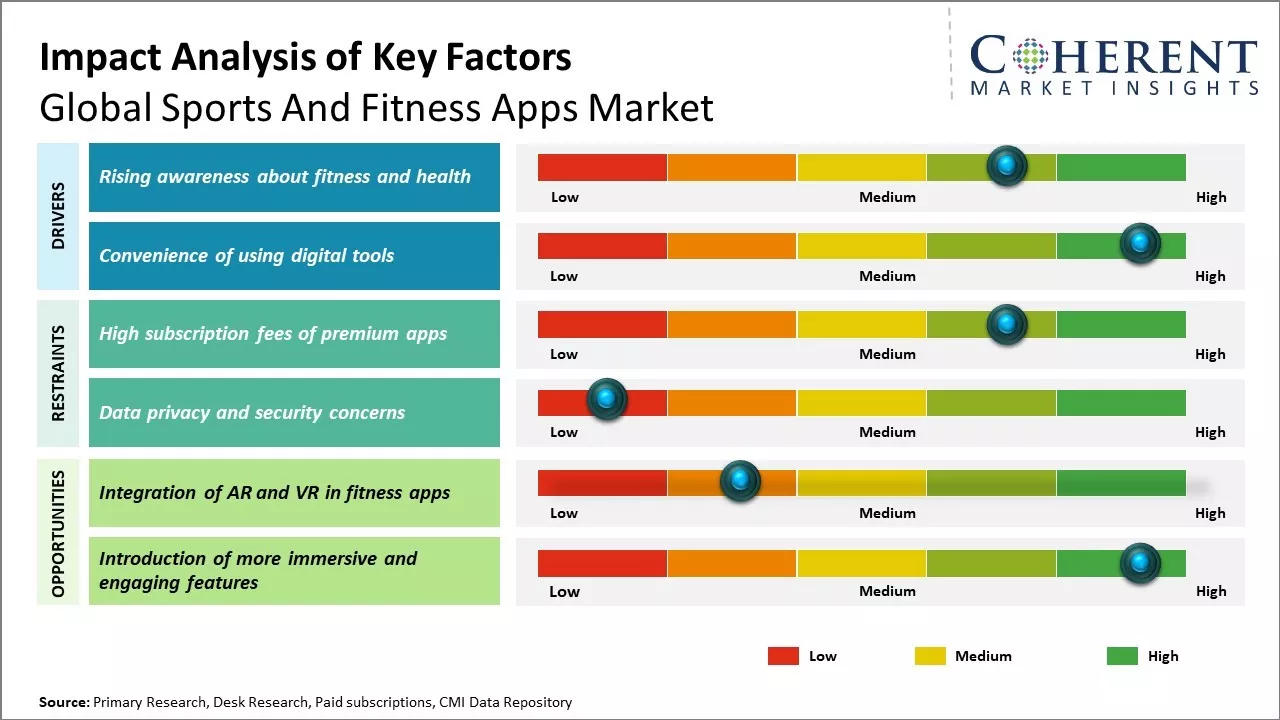
The market is expected to witness significant growth over the forecast period, driven by the wide variety of sports and fitness apps available across both iOS and Android platforms. The integration of advanced technologies such as augmented reality, virtual reality, and artificial intelligence, along with the availability of affordable smart wearable devices, is further boosting sports and fitness apps market demand. Rising health awareness, coupled with the growing popularity of connected devices for tracking fitness activities, is also contributing to the market’s expansion between 2025 and 2032. However, data privacy and security concerns may pose challenges that could hamper growth to some extent in the coming years.
Current Events and their Impact on the Sports and Fitness Apps Market
Current Event | Description and its Impact |
Asia Pacific Economic Boom and Digital Health Adoption |
|
Climate Change Impact on Physical Activity Behaviors |
|
Role of Artificial Intelligence (AI) in Sports and Fitness Apps Market
Artificial intelligence (AI) is emerging as a key driver in the Sports and Fitness Apps Market, enhancing personalization, engagement, and performance outcomes for users. AI-powered algorithms analyze individual health data, workout patterns, and lifestyle habits to create tailored fitness plans, track progress in real time, and provide adaptive feedback through virtual coaching systems. In addition, AI-enabled predictive analytics help prevent injuries, while integration with wearable devices improves monitoring of heart rate, sleep quality, and calorie expenditure. In sports applications, AI is being used for player performance analysis, tactical insights, and fan engagement, further expanding its relevance. As a result, the integration of AI is not only improving user experiences but also reshaping competition among app developers, influencing Sports and Fitness Apps Market Share distribution globally. Growing consumer demand for smart, data-driven fitness solutions indicates that AI will remain a major factor driving market evolution over the forecast period.
For instance, in October 2024, Huawei has introduced its new GT5 smartwatch in India, offering advanced AI-powered sports and fitness tracking. The wearable integrates the TruSense system for accurate health metrics, dual-frequency GNSS for precise navigation, and an AI-based emotional well-being assistant that adapts its dynamic watch faces to the user’s mood.
- Current Industry Events of 2026
- Market Size Estimation
- Regional Breakdown
- Competitive Landscape
- Customer Intelligence
- Segmental Analysis
- Pricing Analysis
- Key Market Drivers, Challenges & Future Trends
- Customized Insights Section
Segmental Insights
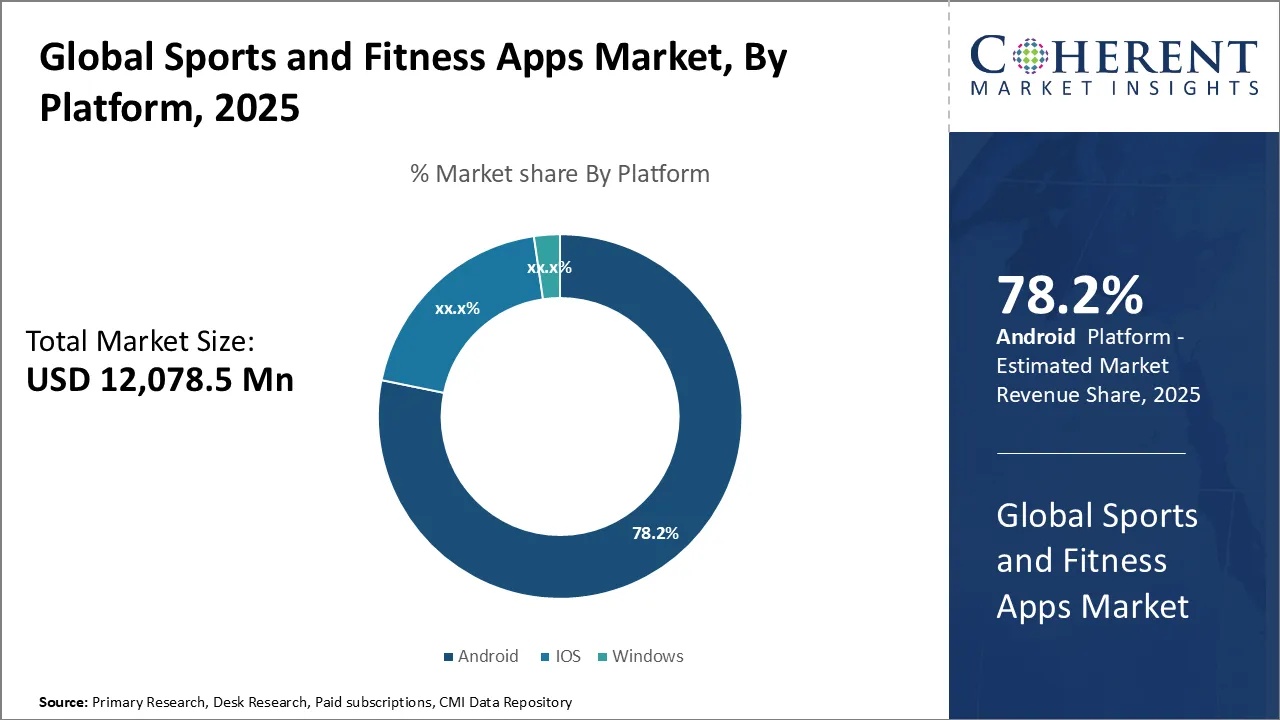
Sports and Fitness Apps Market Insights, By Platform: Android Dominance is Due to Its Accessible for App Developers
In terms of platform type, Android segment is expected to contribute 79.2% share of the global sports and fitness apps market in 2026, as it the most accessible platform for app developers targeting a wide audience. Android devices are available across all price ranges, from budget-friendly smartphones to premium models, which drives mass adoption and directly boosts downloads of sports and fitness apps. Additionally, the open-source ecosystem of Android allows developers to integrate a wide range of features, including AI-driven fitness tracking, GPS-based activity monitoring, and compatibility with diverse wearables, at relatively lower costs. The availability of affordable smartwatches, fitness bands, and Bluetooth-enabled accessories that sync seamlessly with Android phones further enhances usability. Moreover, Android’s strong penetration in markets with growing health awareness and fitness-conscious populations ensures sustained growth in adoption, making it the leading contributor to sports and fitness apps market growth.
For instance, in August 2025, Reebok has unveiled its new Reebok Fitness app, a subscription-based platform offering on-demand workouts, nutritional guidance, wellness content, workout tracking and GPS, alongside social features such as user connections and in-app challenges. Available on both Android and iOS, the app offers a seven-day free trial, followed by a $99.99 annual subscription.
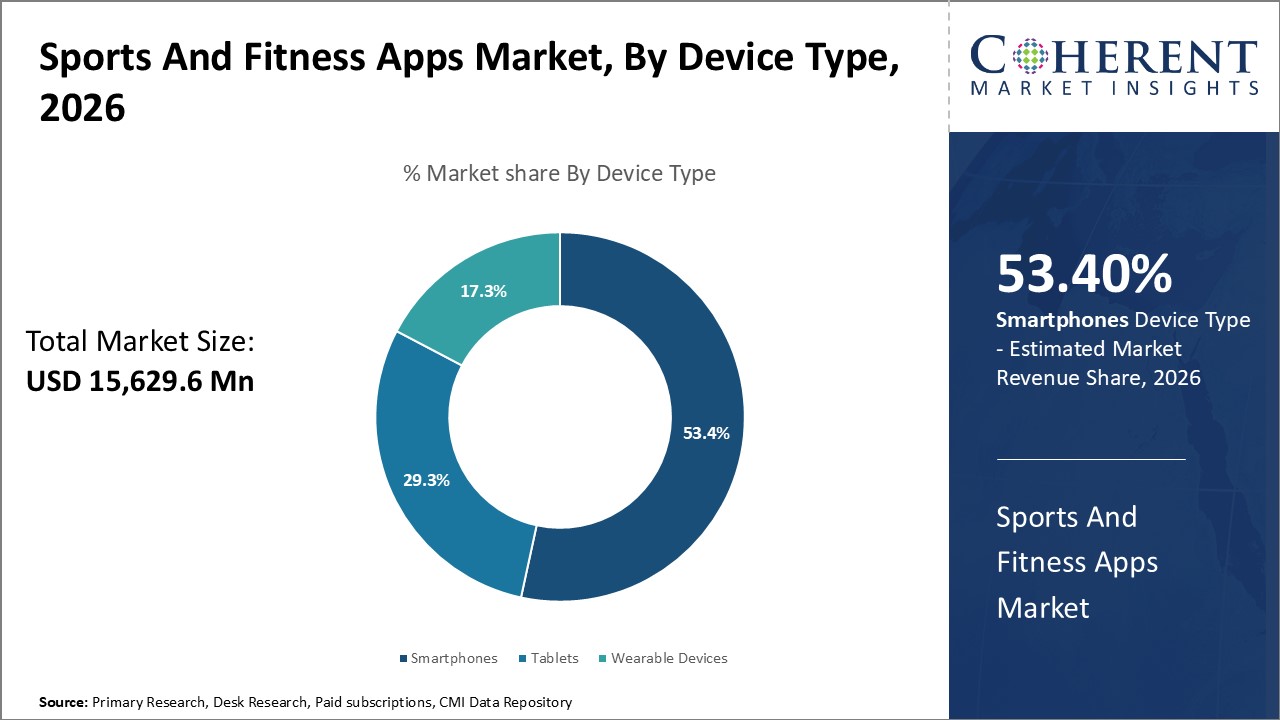
Sports and Fitness Apps Market Insights, By Device Type: Smartphone Dominance is Driven by Its Simple Interface for Usage, Tracking and Integrating other Devices
In terms of device type, smartphones segment is expected to contribute the largest share of the global sports and fitness apps market in 2026, as they act as the primary interface for app usage, data tracking, and integration with wearable devices. Most sports and fitness apps are designed to run seamlessly on iOS and Android platforms, making smartphones essential for accessing these services. High smartphone penetration in emerging as well as developed markets provides a large user base for app developers. Moreover, modern smartphones are equipped with advanced sensors such as accelerometers, gyroscopes, GPS, and heart-rate monitors, which enhance the accuracy of fitness tracking without requiring additional devices. Smartphones also serve as a hub for connecting with smartwatches, fitness bands, and other IoT-enabled health devices, thereby expanding their utility in personal health management. In addition, the growing affordability of smartphones, coupled with rising health awareness and interest in self-monitoring, continues to fuel their demand in driving the growth of the sports and fitness apps market.
For instance, in July 2025, Samsung India kicked off the third edition of its “Walk-a-thon India” fitness challenge on August 1, 2025, aiming to motivate users to stay active. Participants who walk 200,000 steps using the Samsung Health app by August 30 stand a chance to win one of three newly launched Galaxy Watch8 units. All other finishers will receive guaranteed discount coupons worth up to ₹15,000 redeemable on the smartwatch.
Sports and Fitness Apps Market Insights, By Application Type: Exercise And Weight Loss Segment Dominance is driven by Growing Focus on Health and Lifestyle Improvement
In terms of application type, exercise and weight loss segment is expected to contribute the highest share of the global sports and fitness apps market in 2026 driven by their direct alignment with the growing global focus on health, lifestyle improvement, and preventive healthcare. Rising obesity levels, sedentary lifestyles, and increasing awareness about the long-term risks of being overweight, such as diabetes, cardiovascular diseases, and hypertension are pushing consumers to adopt fitness solutions that help them track, monitor, and achieve their weight management goals. Sports and fitness apps provide personalized workout plans, calorie trackers, diet monitoring, and AI-driven recommendations, making them highly attractive to users seeking structured support for exercise and weight loss. Furthermore, the integration of wearables and connected devices allows users to measure real-time progress, which adds to engagement and retention. The social and gamified features of these apps, such as progress sharing, challenges, and community support, also motivate users to stay consistent. Collectively, these factors make exercise and weight loss the most sought-after functionalities driving growth and adoption in the Sports and Fitness Apps Market.
For instance, in June 2024, Cleveland Clinic, in partnership with FitNow, Inc., launched the Cleveland Clinic Diet app. The app combines evidence-based nutrition science and clinical guidance with advanced food and fitness tracking to help users adopt sustainable lifestyle and dietary habits. It offers guided support from Cleveland Clinic experts, a curated library of courses spanning nutrition, metabolism, heart and mental health, and two personalized plans: BodyGuard (balanced nutrients and energy) and HeartSmart (cardiovascular wellness).
Regional Insights
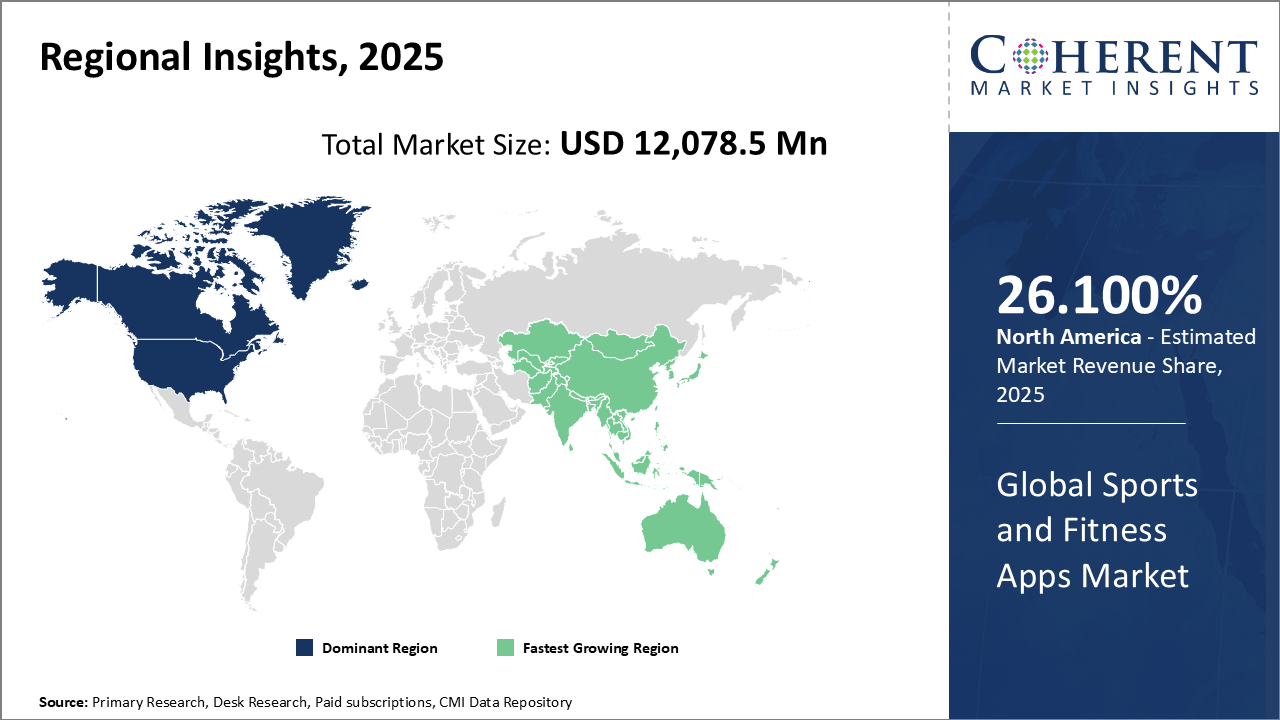
North America Sports and Fitness Apps Market Analysis & Trends
North America has firmly established itself as the dominant region in the global sports and fitness apps market. The region is expected to account for 26.10% of the market share in 2026. Home to innovative app developers and tech companies, the U.S. in particular has pioneered many of the most popular sports and fitness-focused apps available today. The large and active consumer base in the region has allowed various niche workout and tracking apps to gain widespread adoption. The presence of industry leaders like Nike and Fitbit has made North America a leader in smart sportswear and wearable technologies that integrate with companion apps.
The region's emphasis on health and wellness makes consumers open to new digital services that let them manage and monitor their workouts anytime, anywhere. Sports networks and event organizers in North America have also launched well-attended apps and online communities for enthusiasts to stay connected to their favorite sports teams and leagues throughout the year. Collaborations between fitness device makers, sports franchises, and streaming platforms are strengthening the regional ecosystem around activity and workout-focused apps.
In August 2024, Group Fit, a fitness company based in Canada, introduced its groundbreaking fitness app designed to make personal training more accessible and affordable nationwide. The app connects users with trainers for customized workout sessions, featuring flexible scheduling, secure payment options, and generous trainer commissions of up to 60%.
Asia Pacific Sports and Fitness Apps Market Analysis & Trends
Asia Pacific has emerged as the fastest growing regional market for sports and fitness apps with 23.2% share. Asian countries are rapidly catching up, investing in both local development and foreign partnerships. Countries like India and China in particular have massive and rapidly expanding populations of tech-savvy young consumers eager to adopt health and workout apps. With smartphone adoption continuously rising across socioeconomic classes, app-based fitness solutions are uniquely poised to meet the growing wellness demands of Asia Pacific's burgeoning middle class.
Many international app developers and wearables brands have prioritized expansion into major Asian markets like Japan, South Korea and Southeast Asia in order to tap into the region's growth potential. Localized content, pricing strategies and advertising partnerships have helped popular Western apps achieve faster adoption rates here than in other emerging markets. The active involvement of governments, gyms, sports bodies, and insurance providers in promoting preventive healthcare benefits this regional market for digital fitness tools as well.
For instance, in December 2024, the Sports Authority of Andhra Pradesh (SAAP) launched Kreeda App, billed as India’s first mobile application to digitise sports management. The platform streamlines processes such as player registration, performance tracking, tournament applications, and equipment distribution. It also promotes transparency by reducing malpractice, particularly in issuing sports-quota certificates. Users including athletes, coaches, and associations can access DigiLocker-verified achievement certificates, manage tournaments via a centralised sports calendar, and apply for incentives, job reservations, and professional course seats reserved for Andhra Pradesh residents.
Sports And Fitness Apps Market Outlook Country-Wise
The U.S. Sports And Fitness Apps Market Trends
In the U.S., which accounts for 25% of the sports and fitness apps market demand, adoption is driven by widespread smartphone penetration, a strong ecosystem of smart wearables such as Apple Watch and Fitbit, and the popularity of premium subscription-based fitness apps like Peloton Digital and MyFitnessPal. The U.S. also leads in adopting cutting-edge technologies such as AI-driven coaching and VR-based workout experiences, making it the largest regional market.
For instance, in June 2026, Truckee Meadows Community College launched a cutting-edge mobile app for its Sports & Fitness Center. Available to students, faculty, and community members, the app grants instant access to current gym hours, class schedules, and facility updates. Users can submit feedback, follow TMCC’s social media channels, and even more conveniently check in and out directly through the app, which will soon become a required part of the facility’s check-in process.
The U.K. Sports And Fitness Apps Market Trends
The U.K., with a 6% share, shows steady demand supported by government health initiatives and NHS-led digital fitness campaigns. The growing preference for hybrid fitness models that combine gym memberships with app-based tracking, along with busy lifestyles pushing younger users toward flexible, app-based fitness routines, is fueling the market’s momentum.
For instance, in August 2026, Cornwall has welcomed Sostena, a novel health, fitness, and social hub launched by engineering entrepreneur Matt Harford, combining a gym equipped with Technogym Biocircuit and Check-Up alongside racket sports and an activity café. Designed as a welcoming and non-intimidating space, Sostena fosters community through flexible amenities such as a versatile interactive squash court, group classes, and social gaming areas.
China Sports and Fitness Apps Market Trends
China, holding a 12% share, benefits from its vast smartphone user base, increasing disposable incomes, and the rise of home-based fitness culture. Local developers like Keep and Codoon offer affordable, feature-rich apps that appeal to the country’s tech-savvy youth. The integration of AI, gamification, and connected devices further strengthens demand, positioning China as a key growth hub.
For instance, in May 2026, The China International Sporting Goods Fair opened at Nanchang Greenland International Expo Center, spanning 163,700 m² and hosting 1,811 global exhibitors, record participation that underscores the booming sports consumer market. Zhejiang Lijiujia Sports Equipment Co., Ltd. unveiled its “Smart Fitness Tech” lineup at Booth A6003, featuring sleek, AI-driven treadmills, spin and rowing machines arranged in a futuristic exhibit.
Brazil Sports and Fitness Apps Market Trends
In Brazil, which represents just 2% of the market share, adoption is comparatively lower due to economic disparities and limited willingness to pay for premium apps. However, rising urbanization, growing health awareness, and collaborations between gyms and digital platforms are gradually building consumer interest, particularly among younger demographics.
For instance, in August 2026, Inspired Entertainment, Inc., a leading B2B provider of gaming content and services, has debuted V-Play Football Brazil in partnership with Brazilian gamingtech leader EstrelaBet. The product, integrated via Altenar’s sportsbook platform, delivers high-frequency, ultra-realistic virtual football simulations that capture the flair and energy of Brazilian football.
GCC Countries Sports and Fitness Apps Market Trends
The GCC region, with a 7% share, demonstrates rising demand due to high obesity and diabetes prevalence, coupled with government-driven fitness and wellness campaigns. The affluent population in countries such as the UAE and Saudi Arabia is quick to adopt premium fitness apps and wearables, while the diverse expat community also contributes to strong app usage trends.
For instance, in June 2026, Spanish sports-leisure brand Oysho launched its free Training App in the UAE, with plans for a full GCC rollout, marking its regional entry into the digital fitness space Grazia. The app offers a variety of workouts including yoga, fitness, running, gym sessions, and goal-oriented programs with inclusive, multi-level classes led by specialized trainers.
Market Report Scope
Sports And Fitness Apps Market Report Coverage
| Report Coverage | Details | ||
|---|---|---|---|
| Base Year: | 2025 | Market Size in 2026: | USD 15,629.6 Mn |
| Historical Data for: | 2020 To 2024 | Forecast Period: | 2026 To 2033 |
| Forecast Period 2026 to 2033 CAGR: | 29.4% | 2033 Value Projection: | USD 94,948.3 Mn |
| Geographies covered: |
| ||
| Segments covered: |
| ||
| Companies covered: | ASICS Digital, Inc. (The ASICS Runkeeper), Azumio Inc., Fitbit, Inc., Freeletics GmbH, and Garmin Ltd. | ||
| Growth Drivers: |
| ||
| Restraints & Challenges: |
| ||
Sports And Fitness Apps Market Driver
- Rising awareness about fitness and health
With growing health issues like obesity, diabetes, and heart diseases, people are becoming more conscious about their fitness and health. They want to stay active and maintain a healthy lifestyle. This has increased the importance of exercising and being physically fit. At the same time, busy schedules and hectic work life leaves little time for people to spend on workouts at gym. This is driving the demand for convenient fitness solutions that can fit into their daily routine without much effort. Sports and fitness apps are proving to be a handy option in this regard. These apps offer a variety of workout plans, exercise regimes and training tips right on the smartphones. Users can choose exercises as per their skill level, physical condition and time availability. They can work out at home, in office or while traveling without any equipment. The growing awareness about health issues and benefits of regular exercise is compelling people to adopt such digital fitness tools for their daily health and workout needs. This rising focus on fitness is a key driver for the increasing popularity of sports and fitness apps. For instance, in March 2025, The Karnataka State Police organised a spirited 5 km and 10 km “Namma Police, Namma Hemme” run across district headquarters in the Old Mysuru region to promote fitness, a drug-free society, and cybercrime awareness.
Sports And Fitness Apps Market Opportunities
- Integration of AR and VR in fitness apps
The integration of augmented reality (AR) and virtual reality (VR) in fitness apps provides a great opportunity to engage users and drive growth in the global sports and fitness apps market. AR and VR technologies allow users to try different workout routines, classes and fitness programs in an immersive virtual environment before committing to them. This enhances the user experience and makes fitness more enjoyable and accessible. Moreover, it helps users stay motivated through gamification features where they can compete against friends or other users globally in virtual challenges and leaderboards.
With AR, apps can also provide users with real-time feedback on their form and posture during exercises through the camera. Overlayed instructions and measurements keep users accountable and ensure they are doing the activities correctly to prevent injuries and achieve optimal results. In the future, as AR/VR hardware becomes more advanced, affordable and portable, users will be able to participate in live and on-demand group exercise classes and personal training sessions virtually from anywhere. This will appeal widely to time-constrained users and further fuel demand.
In March 2025, Race Yourselves!, an AI- and VR-powered indoor cycling game developed by the REVEAL centre at the University of Bath, launched on the Meta Quest Store. It's free to play, with a £4.99 premium upgrade available.
Analys Opinion (Expert Opinion)
The sports and fitness apps market is undergoing a rapid transformation, driven not merely by consumer adoption but by a decisive shift toward ecosystem-based engagement. The rise of AI-driven personalization, gamified workouts, and integration with connected wearables is no longer a differentiator, it is becoming the baseline expectation of users. Evidence suggests that more than 60% of fitness app users in the U.S. and Europe demand real-time analytics from wearables such as Apple Watch, Fitbit, and Garmin, indicating that standalone applications without hardware connectivity are at risk of losing relevance.
A clear trend is the monetization layer, where sports and fitness apps market value are increasingly tied to tiered subscription models, premium coaching features, and AI-enabled training plans. For example, Strava generates over 40% of its revenues from premium subscriptions, while Nike Training Club has strategically shifted to offering paid personalized training modules, signaling that consumer willingness to pay extends well beyond basic tracking. This shift has a direct implication on sports and fitness apps market price positioning, where premium services bundled with wellness, nutrition, and recovery insights are commanding higher acceptance compared to generic app offerings.
Equally notable is the role of community-driven features. Evidence from platforms like Peloton Digital demonstrates that users who engage in live or group sessions exhibit 30–40% higher retention rates compared to solo users. This underlines a structural reality: future growth will not be determined solely by app downloads but by sustained engagement fostered through social connectivity and gamified competition.
Moreover, with professional sports leagues and franchises investing heavily in fan-engagement applications, there is a cross-pollination of sports entertainment and fitness tracking. For instance, NBA’s tie-ups with fitness platforms for virtual challenges highlight the convergence of fan interaction and personal performance monitoring. This integration is likely to reshape competitive dynamics, where fitness apps evolve into broader lifestyle ecosystems.
Sports And Fitness Apps Industry News
- In June 2025, Alyve Health, one of India’s fastest-growing health-tech platforms, unveiled its new Gym Pass and Sports Pass, now available across 75 cities nationwide. The Gym Pass grants users access to over 8,100 premium gyms, while the Sports Pass includes credits for booking facilities at more than 1,000 venues in over 50 cities, covering activities like Zumba, yoga, Pilates, badminton, cricket, and football.
- In April 2025, Polar Electro, a pioneer in wearable sports technology, launched Fitness Program, a subscription-based service delivering adaptive, science-backed cardio training plans tailored to each user’s heart rate, recovery, goals, and lifestyle. Integrated seamlessly into the Polar ecosystem, the program offers 20 progressive fitness levels across four-week cycles with options for strength, mobility, and personalized rest days.
- In April 2025, Global sports retailer Decathlon forged a five-year partnership with AI-powered fitness app Freeletics to unveil a co-branded “Decathlon × Freeletics” line, combining equipment with digital coaching for a tailored workout experience.
- In June 2023, ASICS Corporation announced that its investment subsidiary, ASICS Ventures Corporation, invested in Valkyrie Industries Limited, a fast-growing tech startup. Valkyrie Industries Limited has developed innovative technology, including a hardware and software platform, focused on delivering immersive, muscle-based haptic experiences in sports and fitness applications.
Market Segmentation
- Platform Type Insights (Revenue, USD Mn, 2026 - 2033)
- iOS
- Android
- Others
- Device Insights (Revenue, USD Mn, 2026 - 2033)
- Smartphones
- Tablets
- Wearable Devices
- Application Insights (Revenue, USD Mn, 2026 - 2033)
- Health Monitoring
- Activity Tracking & Monitoring
- Diet & Nutrition
- Exercise & Weight Loss
- Regional Insights (Revenue, USD Mn, 2026 - 2033)
- North America
- U.S.
- Canada
- Latin America
- Brazil
- Argentina
- Mexico
- Rest of Latin America
- Europe
- Germany
- U.K.
- Spain
- France
- Italy
- Russia
- Rest of Europe
- Asia Pacific
- China
- India
- Japan
- Australia
- South Korea
- ASEAN
- Rest of Asia Pacific
- Middle East & Africa
- GCC Countries
- Israel
- South Africa
- Rest of Middle East & Africa
- North America
- Key Players Insights (Revenue, USD Mn, 2021 - 2033)
- ASICS Digital, Inc. (The ASICS Runkeeper)
- Azumio Inc.
- Fitbit, Inc.
- Freeletics GmbH
- Garmin Ltd.
Sources
Primary Research Interviews from the following stakeholders
Stakeholders
- Interviews with app developers, fitness trainers, sports organizations, gym chain managers, digital health coaches, wearable device manufacturers, and wellness program heads across leading global markets.
Specific Stakeholders
- Digital transformation heads at fitness chains and gyms (e.g., Gold’s Gym, Cure.fit, Planet Fitness)
- Sports federation managers and athletic training directors (e.g., FIFA-affiliated clubs, Indian Olympic Association, U.S. Track & Field)
- Product managers at wearable and connected device OEMs (e.g., Apple, Garmin, Fitbit, Samsung)
- Wellness and corporate HR program managers in Fortune 500 companies
- IT and mobile platform lead at telehealth and digital health firms
- Strength & conditioning coaches at professional leagues (e.g., NBA, IPL, Premier League)
- Operations and marketing managers at health-tech startups and community fitness apps
- Data analytics and AI heads at cloud service providers enabling sports & fitness platforms
Databases
- World Health Organization (WHO) Global Health Observatory
- World Bank – Health and Digital Economy Indicators
- UN Comtrade Database (digital goods & services trade flows)
- International Telecommunication Union (ITU) – Mobile Connectivity Data
- Bureau of Economic Analysis (U.S.) – Health & Fitness Software Expenditure
- Eurostat – Digital Health and Fitness Services Data
- China Internet Network Information Center (CNNIC)
- Korea Internet & Security Agency (KISA) Statistics
- Japan Sports Agency Statistics
- Ministry of Youth Affairs and Sports (India)
Magazines
- Men’s Health & Women’s Health (Digital Fitness Section)
- Runner’s World (Technology & Apps section)
- HealthTech Magazine
- SportTechie
- Fitness Business Insider
- MobileApp Daily (Fitness & Health category)
- TechCrunch – Mobile & HealthTech
- Wired – Digital Fitness Innovation
Journals
- Journal of Medical Internet Research (JMIR) – mHealth and Fitness
- IEEE Journal of Biomedical and Health Informatics
- International Journal of Sports Physiology and Performance
- Journal of Sports Sciences
- Computers in Human Behavior (Elsevier) – Digital Fitness & Engagement
- Telemedicine and e-Health Journal
- International Journal of Human–Computer Interaction
Newspapers
- The Wall Street Journal – Health & Technology
- The New York Times – Well & Fitness Tech
- The Economic Times – Health & Sports Business
- The Hindu Business Line – Fitness & Consumer Tech
- Financial Times – Digital Health & Sports Coverage
- Nikkei Asia – HealthTech & Mobile Apps
- South China Morning Post – Fitness & Lifestyle Tech
Associations
- International Health, Racquet & Sportsclub Association (IHRSA)
- World Federation of the Sporting Goods Industry (WFSGI)
- International Society for Sports Sciences in the Arab World (ISSSW)
- American College of Sports Medicine (ACSM)
- European Health and Fitness Association (EHFA)
- International Telecommunication Union (ITU) – mHealth initiatives
- Confederation of Indian Industry (CII) – Digital Health & Fitness Forum
Public Domain Sources
- Ministry of Youth Affairs and Sports (Government of India)
- NITI Aayog – Digital Health & Fitness Reports
- U.S. Centers for Disease Control and Prevention (CDC) – Physical Activity Statistics
- U.S. Food and Drug Administration (FDA) – Digital Health Device Approvals
- European Commission – Digital Health & Fitness Market Observatory
- Japan Sports Agency – Digital Fitness Promotion Programs
- Reserve Bank of India (RBI) – Digital Payments in Fitness Ecosystem
- Ministry of Industry and Information Technology (MIIT), China – Mobile App Data
- World Economic Forum (WEF) – Digital Fitness Economy Reports
Proprietary Elements
- CMI Data Analytics Tool, and Proprietary CMI Existing Repository of information for last 8 years
Get access to 250+ pages report
Every segment, forecast, competitor profile and data table behind the analysis above — available for instant download.
- ESOMAR Member
- ISO 9001:2015 Certified
- D-U-N-S Registered
- GDPR & CCPA Compliant
Missing comfort of reading report in your local language? Find your preferred language:
Transform your Strategy with Exclusive Trending Reports
Frequently Asked Questions
The Sports and Fitness Apps Market is estimated to be valued at USD 15,629.6 Mn in 2026, and is expected to reach USD 94,948.3 Mn by 2033.
The CAGR of the Sports and Fitness Apps Market is projected to be 29.4% from 2026 to 2033.
Rising awareness about fitness and health and convenience of using digital tools are the major factors driving the growth of the global sports and fitness apps market.
In terms of platform type, Android is estimated to dominate the market revenue share in 2026.
ASICS Digital, Inc. (The ASICS Runkeeper), Azumio Inc., Fitbit, Inc., Freeletics GmbH, and Garmin Ltd. are the major players.
North America is expected to lead the global sports and fitness apps market in 2026.
Fitness apps proliferate globally, with Android “Sports” category including 46,625 apps listed in Google Play.