

Telemonitoring System Market Size and Share Analysis - 2026 To 2033
The global telemonitoring system market size is expected to reach approximately USD 3,814 Mn in 2026 and is projected to grow at a compound annual growth rate (CAGR) of 10.3% during the forecast period (2026-2033), totaling USD 7,575.5 Mn by 2033. This is attributable to rising prevalence of chronic diseases, increasing adoption of remote patient monitoring, and continuous advancements in connected medical devices and digital healthcare technologies. Approximately 21% of India's elderly population has at least one chronic disease.
Key Takeaways from the Telemonitoring System Market Report
- Hardware segment is expected to dominate the market with a share of 61.8% in 2026 because telemonitoring systems rely heavily on connected medical devices such as wearable sensors, blood pressure monitors, ECG devices, pulse oximeters, and glucose monitors. Supporting this trend, a 2025 study published in the Journal of the American College of Surgeons found that 107 Mn U.S. adults used wearable health devices in 2024, up 58% since 2019.
- Cardiovascular disease monitoring is slated to account for the largest market revenue share of 33.6% in 2026, owing to high global burden of cardiovascular diseases as well as rising need for continuous remote ECG and cardiac monitoring. According to the CDC, an estimated 12.1 Mn people in the U.S. are projected to have atrial fibrillation by 2030, increasing the demand for continuous ECG and remote cardiac monitoring.
- North America is projected to retain its dominance over the global telemonitoring industry with a share of 40% in 2026 because of strong reimbursement policies, mature digital health infrastructure as well as widespread adoption of remote patient monitoring technologies. According to the American Medical Association (AMA), 71.4% of physicians reported using telehealth in their practices weekly in 2024, up from 25.1% in 2018.
- Asia Pacific, recording a CAGR of 12.8% , is poised to emerge as the fastest-growing market for telemonitoring systems during the forecast period due to expanding healthcare infrastructure, rising adoption of remote patient monitoring, increasing chronic disease burden, and government initiatives supporting digital health.
Telemonitoring System Market Overview
The global telemonitoring system market is poised for substantial growth during the forecast period. This is primarily due to increasing shift toward remote healthcare delivery models, rising adoption of digital health technologies across healthcare systems, and growing prevalence of chronic diseases such as cardiovascular disorders, diabetes, and respiratory diseases.
Telemonitoring systems provide patients and healthcare professionals with regular measurements of various symptoms and physiological parameters. These systems improve access to specialized care, especially in areas with limited healthcare professionals or where access to healthcare services is difficult. They can improve the quality of life of patients with chronic diseases by enabling continuous monitoring, early detection of health issues, and reducing avoidable hospital visits and healthcare costs. Services such as teleconsultation and teleradiology also help reduce waiting times, improve resource utilization, and increase healthcare efficiency.
Increasing adoption of telehealth is reducing dependence on frequent hospital visits and enabling patients to receive proper healthcare services from home. For example, in July 2025, OMRON Healthcare and Tricog Health launched KeeboHealth, an AI-powered connected health platform for remote cardiac care. The platform combines home-based monitoring, real-time data analytics, and AI technology to help healthcare providers continuously monitor heart conditions, identify early warning signs, and support timely interventions.
Rising geriatric population, increasing demand for continuous patient monitoring, and advancements in wearable medical devices, IoT, and AI are also supporting market expansion. Similarly, growing adoption of telehealth services and increasing focus on reducing healthcare costs and hospital readmissions are expected to boost growth of telemonitoring market during the forecast period.
According to the This demographic shift is expected to increase demand for telemonitoring solutions, as older adults are more likely to experience chronic conditions requiring continuous monitoring and long-term care. These systems support independent living by enabling timely medical intervention and reducing the need for frequent hospital visits.
Segmental Insights
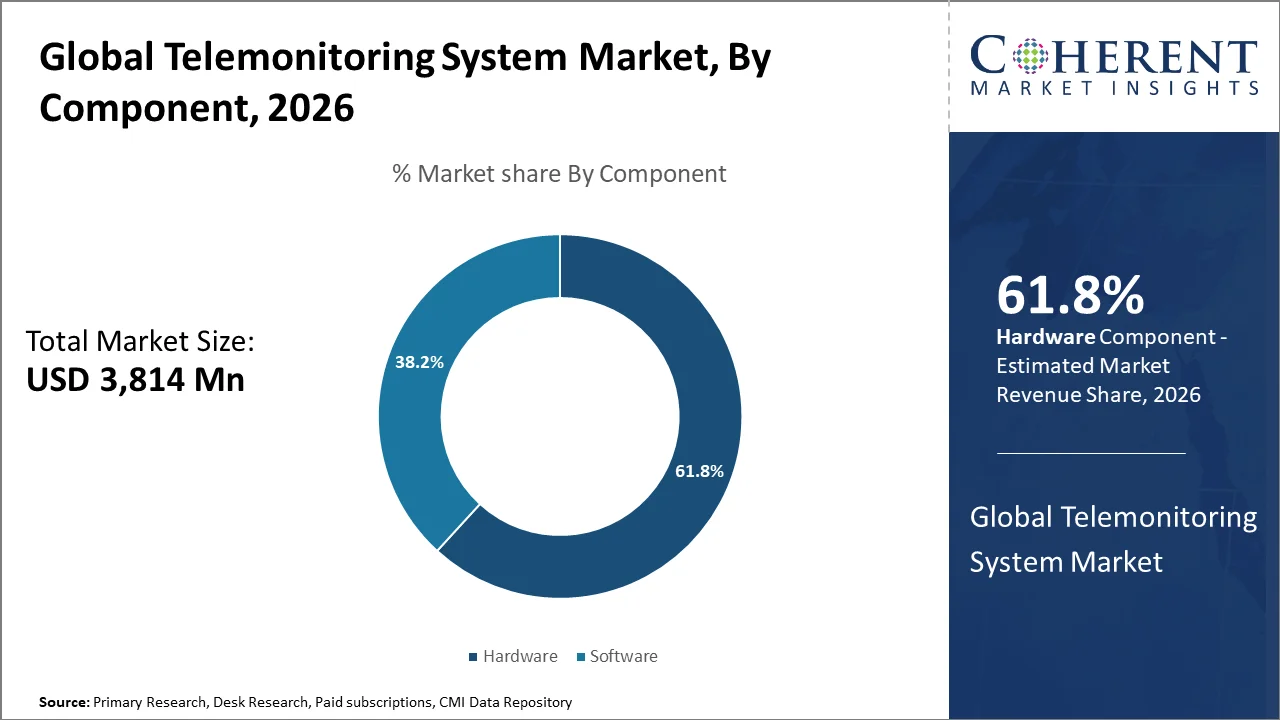
Which Component Holds the Largest Telemonitoring System Market Share?
Hardware Segment to Hold More Than Three-Fifths of the Market Share in 2026
According to Coherent Market Insights’ latest telemonitoring system market analysis, hardware segment is set to account for the largest revenue share of 61.8% in 2026. This dominance is attributable to increasing adoption of wearable monitoring devices, remote patient monitoring equipment, connected medical sensors, and home-based diagnostic devices for continuous health tracking.
For instance, in February 2026, the U.S. FDA granted 510(k) clearance to the Wearable Ambulatory Blood Pressure Monitor (WBP-02A), highlighting ongoing advancements in wearable devices for continuous blood pressure monitoring. Such innovations are improving remote patient care and supporting the growing adoption of telemonitoring hardware.
Apart from this, continuous advancements in wireless connectivity, IoT-enabled medical devices, and AI-powered monitoring solutions are also improving the accuracy and reliability of telemonitoring hardware, further supporting segment growth.
- Current Industry Events of 2026
- Market Size Estimation
- Regional Breakdown
- Competitive Landscape
- Customer Intelligence
- Segmental Analysis
- Pricing Analysis
- Key Market Drivers, Challenges & Future Trends
- Customized Insights Section
Which Application Dominates the Global Telemonitoring System Market?
Cardiovascular Disease Monitoring Leads the Market with Over One-Third Share
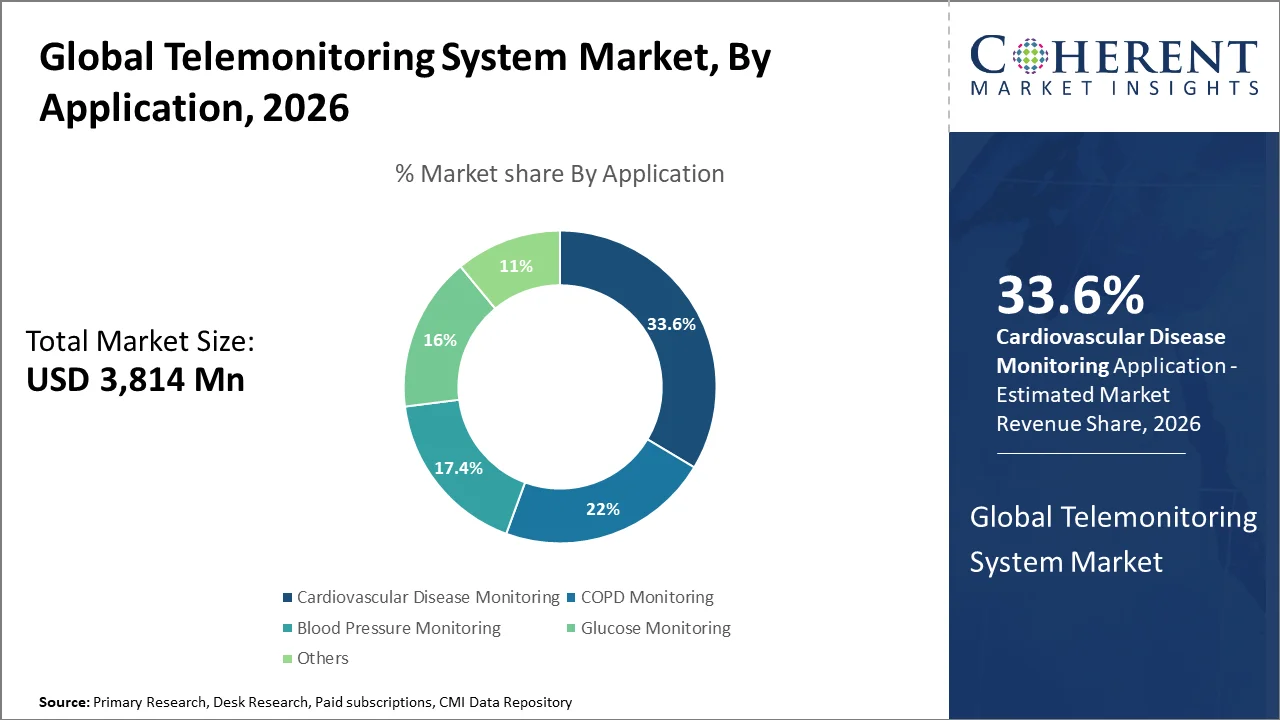
Based on application, cardiovascular disease monitoring is projected to dominate the market, accounting for a share of 33.6% in 2026. This can be attributed to rising global prevalence of cardiovascular diseases, increasing adoption of remote patient monitoring solutions for chronic disease management as well as growing need to reduce hospital admissions and healthcare costs.
According to the The continued high burden of cardiovascular disease is driving demand for telemonitoring systems that enable continuous remote monitoring and early intervention.
Telemonitoring systems enable continuous tracking of vital signs such as blood pressure, heart rate, and electrocardiogram (ECG), allowing healthcare providers to detect abnormalities early and provide timely intervention. Furthermore, increasing elderly population and advancements in connected wearable cardiac monitoring devices are also expected to boost segment growth during the forecast period.
Telemonitoring System Market Growth Drivers
Rising Prevalence of Chronic Diseases
Increasing prevalence of chronic diseases is providing a strong impetus for the growth of telemonitoring system market. Conditions such as cardiovascular diseases, diabetes, hypertension, and chronic respiratory disorders are becoming increasingly common worldwide. For instance, according to the the number of adults living with diabetes globally is projected to reach 853 million by 2050.
The growing burden of chronic diseases is expected to increase demand for advanced telemonitoring systems that enable continuous health tracking, remote patient management, and timely clinical intervention during the forthcoming period. These systems help healthcare providers monitor patients in real time, improve disease management, and reduce hospital readmissions.
Telemonitoring System Market Opportunities
Expansion of Telehealth and Home Healthcare Services
Increasing adoption of home healthcare services is expected to create lucrative growth opportunities for the telemonitoring system market during the forecast period. Healthcare providers in the contemporary world are increasingly integrating telemonitoring systems with telemedicine platforms to deliver virtual care and support home-based treatment. This trend is improving access to healthcare, reducing treatment costs, and enhancing patient convenience.
Telemonitoring System Market Trends
Increasing Adoption of AI and Predictive Analytics in Telemonitoring
Artificial intelligence and machine learning are improving telemonitoring systems by analyzing patient data, identifying early signs of disease progression as well as supporting predictive healthcare. These technologies make it possible to provide personalized treatments, and that is why many businesses and organizations have started creating such systems.
For instance, in June 2025, Prevounce Health launched its new feature called AI Insights which is an AI-based technology that comes integrated with the company’s remote care management system. The technology uses remote patient monitoring data such as readings from medical devices and clinical notes to provide health insights for healthcare professionals.
Current Events and Their Impact on the Telemonitoring System Market
Current Event | Description and its Impact |
CMS Expands Medicare Telehealth and Remote Monitoring Flexibilities (Effective 2025) |
|
FDA Issues AI-Enabled Medical Device Lifecycle Guidance (2025) |
|
Regional Insights
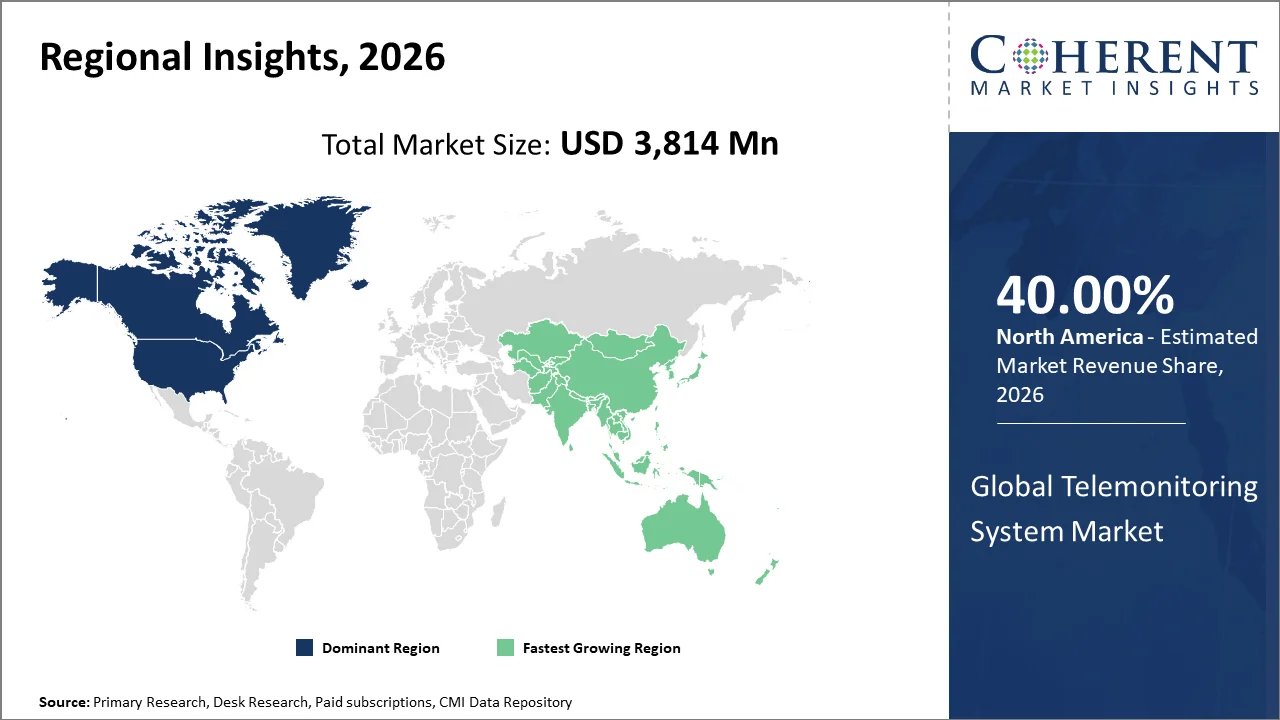
North America to Retain its Dominance in The Global Telemonitoring System Industry
North America is expected to dominate the global telemonitoring system market, accounting for a share of 40% in 2026. This dominance is attributable to rising prevalence of chronic diseases, increasing adoption of remote patient monitoring solutions, advanced healthcare infrastructure, favorable reimbursement policies, and growing use of digital health technologies. As of 2025, approximately 71 million Americans, representing about 26% of the U.S. population, use remote patient monitoring (RPM) services.
Growing demand for chronic disease management is playing a key role in driving growth of the North America telemonitoring system market. According to the highlighting the increasing need for effective chronic disease management solutions.
Asia Pacific Becoming a Central Hub for Industry Players
Asia Pacific telemonitoring system market is expected to grow at a CAGR of 12.8% during the forecast period. This growth is attributed to the increasing burden of chronic diseases, improving healthcare infrastructure, rising adoption of smartphones and connected devices, and government initiatives promoting digital healthcare services. Growing demand for affordable and accessible healthcare solutions is also encouraging the adoption of telemonitoring systems across the region.
Rising prevalence of chronic diseases is increasing the need for continuous patient monitoring solutions in Asia Pacific. Rising incidence of diseases is prompting healthcare practitioners to embrace telemonitoring systems for early detection, remote follow-up, and improved management of chronic conditions.
Telemonitoring System Market Outlook – Country-wise
U.S. Telemonitoring System Market Trends
The U.S. is expected to remain a leading market for telemonitoring solutions during the forecast period. This is due to high prevalence of chronic diseases, rising adoption of adoption of remote patient monitoring technologies, and supportive reimbursement policies. Increasing demand for continuous monitoring of conditions such as cardiovascular diseases, diabetes, and respiratory disorders is encouraging healthcare providers to integrate telemonitoring systems into routine care. According to the American Lung Association, more than 35 million people in the U.S. are living with chronic lung diseases, including asthma and chronic obstructive pulmonary disease (COPD). In addition, growing use of digital health platforms and connected medical devices is also supporting market expansion across the country.
China Telemonitoring System Market Forecast
China is anticipated to emerge as a highly lucrative market for manufacturers of telemonitoring systems during the forecast period. This can be attributed to rising burden of chronic diseases, expanding elderly population, increasing healthcare digitalization, and government initiatives promoting smart healthcare solutions. The growing adoption of remote healthcare services, especially in rural and underserved areas, is also creating significant opportunities for telemonitoring providers. Furthermore, advancements in wearable devices, artificial intelligence, and connected healthcare technologies are fueling adoption of telemonitoring systems across hospitals and home care settings.
Who are the Major Companies in the Telemonitoring System Market?
Some of the major players in telemonitoring system market are Abbott Laboratories, Allscripts Healthcare Solutions Inc., AMD Global Telemedicine, Inc., Cisco Systems, Inc., Care Innovations LLC, General Electric Company, Honeywell Life Care Solutions, InTouch Health, Koninklijke Philips N.V., McKesson Corporation, Medvivo Group Ltd., Medtronic Plc, Nihon Kohden, Siemens Healthineers AG, Comarch SA, Tunstall Healthcare Group Ltd, and Vidyo, Inc.
Key Strategies Adopted by Industry Players
Top telemonitoring system companies are adopting various organic and inorganic strategies to boost their revenue as well as gain a competitive edge over the industry. These include new product launches and approvals, increasing investments in research and development (R&D), partnerships, mergers, acquisitions, and distribution agreements.
- In June 2026, Medtronic expanded its Acute Care & Monitoring wearables portfolio in the U.S. through a new distribution agreement for the Corsano multi-parameter wearable. The wearable supports continuous monitoring of vital signs, including heart rate, oxygen levels, respiratory rate, and temperature.
- In September 2025, Philips launched a smart telemetry platform for cardiac monitoring. The platform enables continuous cardiac monitoring and provides connectivity across healthcare facilities beyond traditional bedside monitoring.
- In April 2025, NASA highlighted Advanced TeleSensors Inc.’s Cardi/o Monitor, developed with technology licensed from NASA’s Jet Propulsion Laboratory. The device enables contactless monitoring of vital signs such as heart rate and breathing rate.
- In June 2025, Cardinal Health launched the Kendall DL Multi System in the United States. The system allows healthcare providers to continuously monitor three vital signs: cardiac activity, blood oxygen levels, and temperature.
- In January 2024, Blue Spark Technologies introduced VitalTraq, a remote patient monitoring platform designed to support continuous health monitoring. The solution enables wearable devices to track vital signs such as heart rate and temperature and share data for remote patient care.
Market Report Scope
Telemonitoring System Market Report Coverage
| Report Coverage | Details | ||
|---|---|---|---|
| Base Year: | 2025 | Market Size in 2026: | USD 3,814 Mn |
| Historical Data for: | 2020 To 2024 | Forecast Period: | 2026 To 2033 |
| Forecast Period 2026 to 2033 CAGR: | 10.3% | 2033 Value Projection: | USD 7,575.5 Mn |
| Geographies covered: |
| ||
| Segments covered: |
| ||
| Companies covered: | Abbott Laboratories, Allscripts Healthcare Solutions Inc., AMD Global Telemedicine, Inc., Cisco Systems, Inc., Care Innovations LLC, General Electric Company, Honeywell Life Care Solutions, InTouch Health, Koninklijke Philips N.V., McKesson Corporation, Medvivo Group Ltd., Medtronic Plc, Nihon Kohden, Siemens Healthineers AG, Comarch SA, Tunstall Healthcare Group Ltd, and Vidyo, Inc. | ||
| Growth Drivers: |
| ||
| Restraints & Challenges: |
| ||
Analyst Opinion (Expert Opinion)
- Chronic diseases are increasing the need for telemonitoring. According to the World Health Organization (WHO), noncommunicable diseases (NCDs) cause 43 million deaths every year, accounting for about 75% of all deaths worldwide. This is increasing the demand for remote monitoring solutions that help manage long-term conditions outside hospitals.
- Healthcare providers are shifting more care to patients' homes. Telemonitoring helps doctors track patients remotely, reducing unnecessary hospital visits and supporting earlier medical intervention. This is increasing adoption among hospitals and home healthcare providers.
- Remote patient monitoring is becoming easier thanks to wearables. Smartwatches, wearable blood pressure monitors, glucose monitors, and other similar devices are collecting the health information and sending it to the healthcare providers.
- Governments are expanding digital healthcare services. Many nations are investing in telehealth infrastructure and digital health programs to improve healthcare access, especially in rural as well as underserved areas. These initiatives are creating new opportunities for telemonitoring system providers.
Speak to the analyst
Want personalized insights?
Take the findings above to one of our principal consultants, or have the report rebuilt around the segments, geographies and competitors you actually track.
Market Segmentation
- By Component Insights ( Revenue, USD Mn, 2021 - 2033)
- Hardware
- Software
- By Mode of Delivery Insights ( Revenue, USD Mn, 2021 - 2033)
- Web-based
- Cloud-based
- By Application Insights ( Revenue, USD Mn, 2021 - 2033)
- COPD Monitoring
- Blood Pressure Monitoring
- Glucose Monitoring
- Cardiovascular Disease Monitoring
- Other Applications
- By Region Insights ( Revenue, USD Mn, 2021 - 2033)
- North America
- U.S.
- Canada
- Latin America
- Brazil
- Argentina
- Mexico
- Rest of Latin America
- Europe
- Germany
- U.K.
- Spain
- France
- Italy
- Russia
- Rest of Europe
- Asia Pacific
- China
- India
- Japan
- Australia
- South Korea
- ASEAN
- Rest of Asia Pacific
- Middle East
- GCC
- Israel
- Rest of Middle East
- Africa
- North Africa
- Central Africa
- South Africa
- North America
Sources
Primary Research interviews
- Telemonitoring system manufacturers
- Healthcare providers and hospital administrators
- Telehealth platform providers
- Medical device distributors
- Digital health technology experts
- Cardiologists, pulmonologists, and endocrinologists
- Healthcare IT professionals
- Regulatory and reimbursement specialists
Databases
- World Health Organization (WHO)
- Centers for Disease Control and Prevention (CDC)
- National Institutes of Health (NIH)
- U.S. Food and Drug Administration (FDA)
- European Commission Health and Food Safety
- Eurostat
- OECD Health Statistics
- World Bank Open Data
- United Nations Data
- PubMed
- ClinicalTrials.gov
Magazines
- Healthcare IT News
- Medical Device Network
- MedTech Dive
- Digital Health
- HealthTech Magazine
- Modern Healthcare
Journals
- Journal of Medical Internet Research (JMIR)
- The Lancet Digital Health
- npj Digital Medicine
- Telemedicine and e-Health
- Journal of Telemedicine and Telecare
- Nature Digital Medicine
- BMC Medical Informatics and Decision Making
Newspapers
- The Wall Street Journal
- Financial Times
- The New York Times
- The Guardian
- USA Today
Associations
- American Telemedicine Association (ATA)
- Healthcare Information and Management Systems Society (HIMSS)
- American Heart Association (AHA)
- European Society of Cardiology (ESC)
- American Diabetes Association (ADA)
- European Respiratory Society (ERS)
- International Society for Telemedicine & eHealth (ISfTeH)
Public Domain sources
- World Health Organization (WHO)
- Centers for Disease Control and Prevention (CDC)
- National Institutes of Health (NIH)
- U.S. Food and Drug Administration (FDA)
- Centers for Medicare & Medicaid Services (CMS)
- European Medicines Agency (EMA)
- European Commission
- OECD
- World Bank
- United Nations
- PubMed
- ClinicalTrials.gov
Proprietary Elements
- CMI Data Analytics Tool
- Proprietary CMI Existing Repository of information for last 10 years
Get access to 250+ pages report
Every segment, forecast, competitor profile and data table behind the analysis above — available for instant download.
- ESOMAR Member
- ISO 9001:2015 Certified
- D-U-N-S Registered
- GDPR & CCPA Compliant
Missing comfort of reading report in your local language? Find your preferred language:
Transform your Strategy with Exclusive Trending Reports
Frequently Asked Questions
The global market is estimated to be valued at USD 3,814 Mn in 2026.
The global Telemonitoring System Market value is expected to reach USD 7,575.5 Mn by 2033.
The global market is poised to exhibit a CAGR of 10.3% from 2026 to 2033.
Major growth factors include increasing prevalence of chronic diseases, growing adoption of remote patient monitoring, and advancements in wearable and connected healthcare devices.
Data privacy and cybersecurity concerns remain major challenges for telemonitoring system adoption.
Cardiovascular disease monitoring is projected to hold the largest application share, accounting for 33.6% of the market in 2026.
Some major companies in the Telemonitoring System Market include Abbott Laboratories, Allscripts Healthcare Solutions Inc., AMD Global Telemedicine, Inc., Cisco Systems, Inc., Care Innovations LLC, General Electric Company, Honeywell Life Care Solutions, InTouch Health, Koninklijke Philips N.V., McKesson Corporation, Medvivo Group Ltd., Medtronic Plc, Nihon Kohden, Siemens Healthineers AG, Comarch SA, Tunstall Healthcare Group Ltd, and Vidyo, Inc.