

Temperature Controlled Packaging Solutions Market Size and Trends
The temperature controlled packaging solutions market is estimated to be valued at USD 51.08 Bn in 2026 and is expected to reach USD 92.79 Bn by 2033, exhibiting a compound annual growth rate (CAGR) of 8.9% from 2026 to 2033.
Key Takeaways
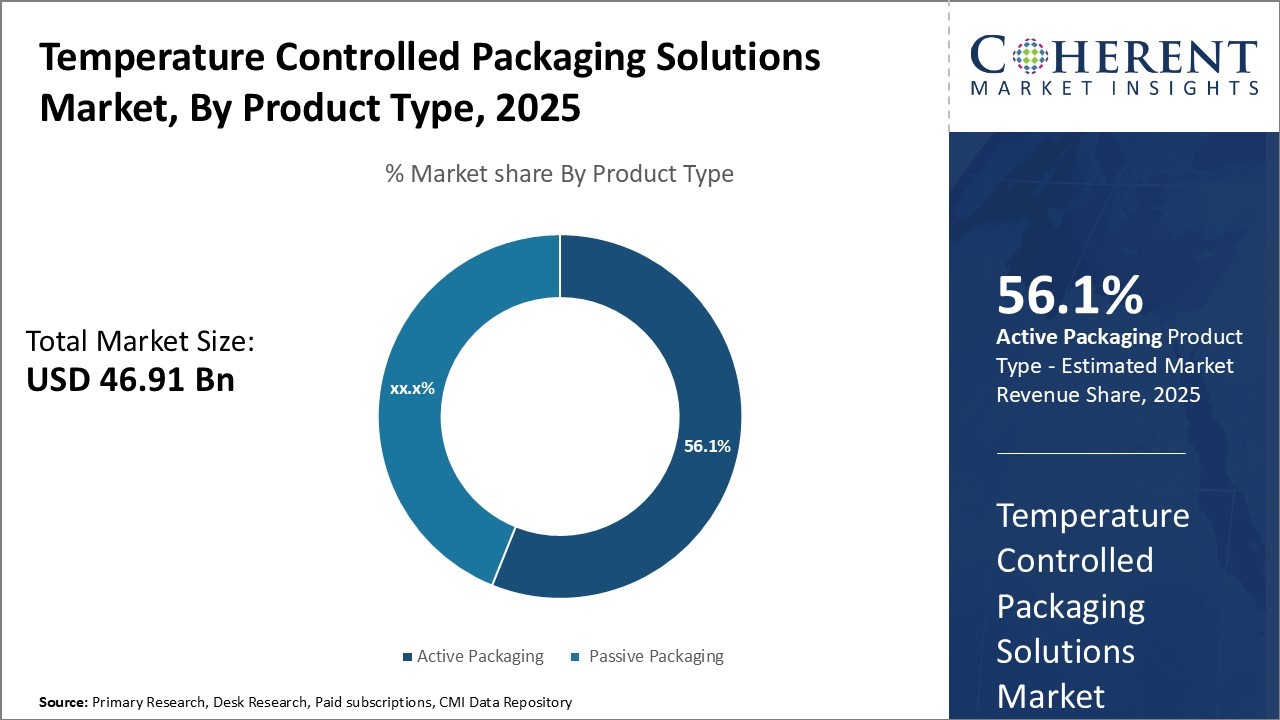
- Based on Product Type, the Active Packaging segment leads the market holding an estimated share of 57.1% in 2026, owing to its ability to drive innovation through advanced technological features.
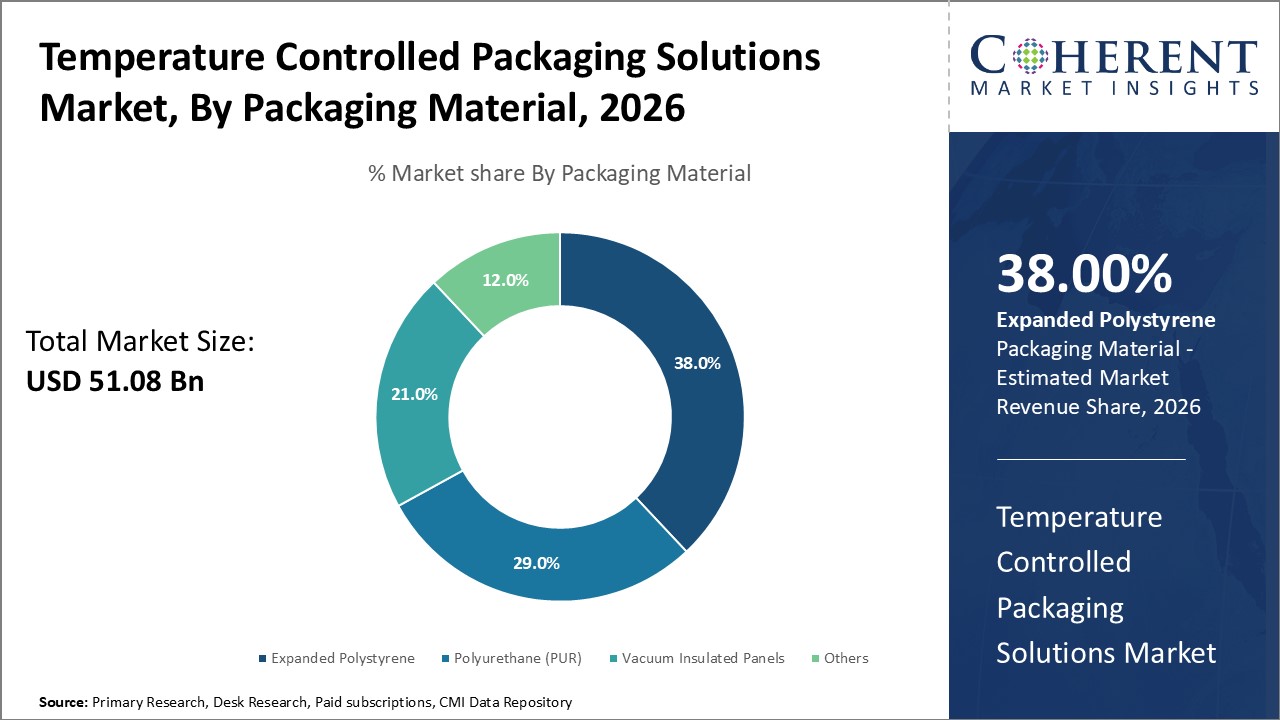
- Based on Packaging Material, the Expanded Polystyrene segment leads the market holding an estimated share of 38% in 2026, owing to its maximized cost efficiency through lightweight properties.
- Based on Application, the Pharmaceutical segment is expected to account for the largest share of the market in 2026, owing to strict domestic and international regulations driving higher adoption.
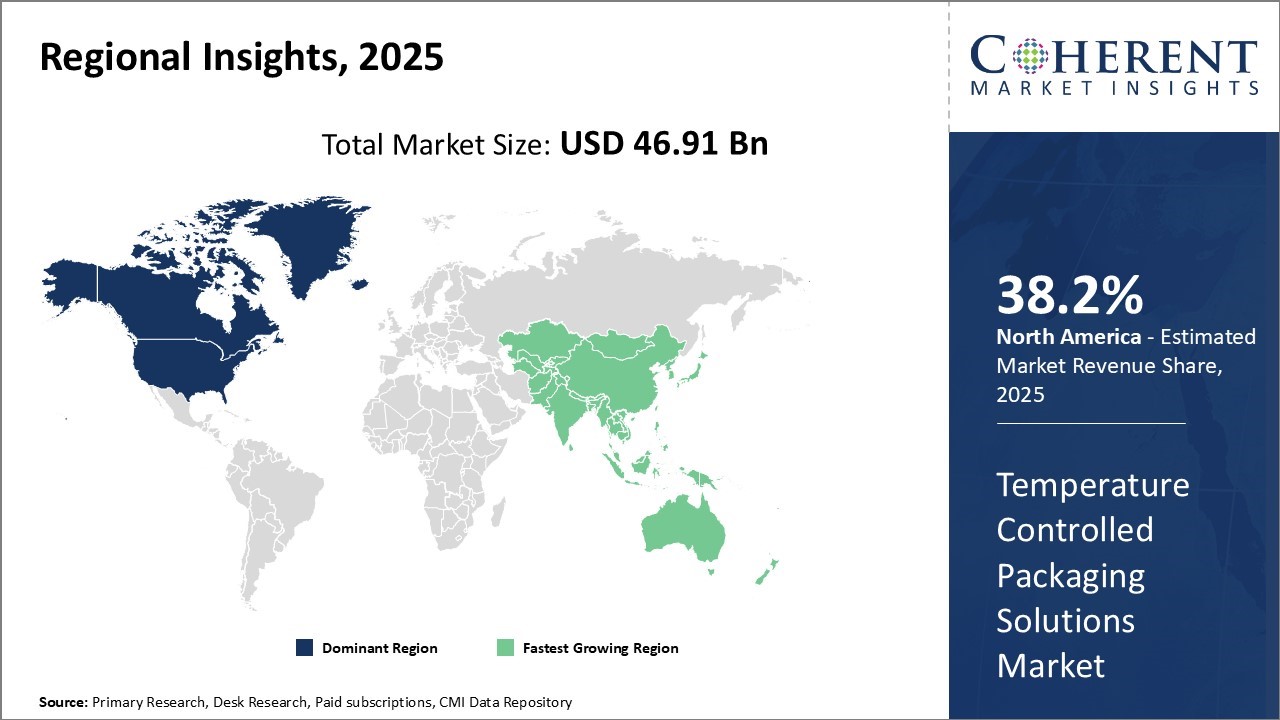
- Based on Region, North America is estimated to lead the market with share of 32.2% in 2026. While, Asia Pacific is projected to be the fastest growing region during the forecast period.
Market Overview
The market has been witnessing significant growth over the past few years due to the increasing demand for temperature-sensitive pharmaceutical products and growing focus on food safety compliance across countries. The temperature controlled packaging solutions market demand is anticipated to showcase considerable growth over the forecast period. This is attributed to factors such as rising demand for generic and biosimilar drugs, increasing focus on cold chain logistics by various governments globally, and growth in the pharmaceuticals and food end-use industries.
Current Events and their Impact on The Temperature Controlled Packaging Solutions Market
Current Event | Description and Its Impact |
Technological Advancements & Adoption |
|
Regulatory Shifts & Compliance Pressures |
|
End User Feedback and Unmet Needs in Temperature-Controlled Packaging Solutions
Key End User Concerns and Pain Points
Despite ongoing innovations in the field, several recurring issues are highlighted by end users:
- Performance Reliability: Concerns persist regarding temperature excursions, especially during extended transit times or in regions with extreme climate variability. Users seek greater confidence in packaging systems' ability to consistently maintain required temperature ranges.
- Complexity in Handling and Configuration: Many end users report that certain packaging systems are overly complex to assemble or activate. This increases the risk of operational errors and training requirements, particularly in high-volume logistics environments.
- Limited Reusability and Sustainability: With increasing emphasis on environmental responsibility, end users are increasingly critical of single-use or non-recyclable packaging. There is a growing demand for reusable, recyclable, or biodegradable options that align with corporate sustainability goals.
- Inadequate Real-Time Monitoring: A common unmet need is the integration of advanced temperature and location tracking. While data loggers are commonly used, real-time, cloud-based monitoring solutions with proactive alert capabilities are not yet ubiquitous or economically accessible to all users.
- Regulatory Complexity: For pharmaceutical and life sciences stakeholders, navigating the regulatory landscape across different regions remains a challenge. Users express a need for packaging solutions that come pre-validated or with comprehensive documentation to simplify regulatory compliance.
- Current Industry Events of 2026
- Market Size Estimation
- Regional Breakdown
- Competitive Landscape
- Customer Intelligence
- Segmental Analysis
- Pricing Analysis
- Key Market Drivers, Challenges & Future Trends
- Customized Insights Section
Segmental Insights
Temperature Controlled Packaging Solutions Market Insights, By Product Type - Active Packaging Drives Innovation Through Advanced Technological Features
In terms of product type, active packaging contributes the 57.1% share of the market in 2026, owing to its ability to drive innovation through advanced technological features. Active packaging systems integrate components like phase change materials, oxygen scavengers, moisture absorbers, and temperature control agents directly into packaging formats like pouches, bags, and containers to help maintain freshness and quality of shipments. Their active properties allow them to effectively respond to various stimuli such as moisture, oxygen, and temperature fluctuations to precisely control product environments during transit.
Compared to traditional passive systems, active packaging offers improved protection through dedicated control mechanisms. For temperature-sensitive pharmaceuticals and high value biologics, active containers with integrated monitoring and alert systems provide real-time shipment data and precise temperature compliance. Their advanced IoT and sensor technology enables proactive corrective measures if temperatures exceed set limits, minimizing waste and losses. For perishable food shipments requiring cold or hot holding, active solutions precisely regulate temperatures for longer durations through more targeted use of phase change materials.
In March 2025, ProAmpac expanded its ProActive Intelligence® platform with cutting-edge, sustainable moisture‑adsorbing films under its Moisture Protect series, designed to eliminate traditional desiccant packets. These new films and foil‑based (MP‑1000) and foil‑free (MP‑2000, MP‑3000 mono‑polyolefin variant) integrate Aptar CSP Technologies’ 3‑Phase Activ‑Polymer™ to boost product stability, extend shelf life, and simplify packaging workflows. The MP‑2000 matches the moisture adsorption capacity of foil options, while the MP‑3000 is fully recycle‑ready.
Temperature Controlled Packaging Solutions Market Insights, By Packaging Material - Expanded Polystyrene Maximizes Cost Efficiency Through Lightweight Properties
In terms of packaging material, expanded polystyrene is expected to contribute 38% share of the market in 2026, owing to its maximized cost efficiency through lightweight properties. As a molded expanded plastic, expanded polystyrene is 30 times lighter than conventional packaging materials like foam or cardboard. Its high insulation capabilities combined with ultra-light weight allow providers to include higher product payload volumes in each shipment at minimal additional cost.
This is extremely beneficial for transportation and logistics providers managing diverse global shipments on tight budgets and schedules. Expanded polystyrene packaging reduces overall shipment weights, allowing providers to transport more goods per trip in their containers, trucks and planes. It also lowers inbound material costs by using 10-25% less material per unit compared to alternatives. Further cost savings are achieved through easy storage since expanded polystyrene packaging compacts to 1/50th of its original size, occupying minimal warehouse space.
In addition, expanded polystyrene is durable without being heavy, maintaining product protection even after multiple uses, trips, and transfers between vehicles. Its unique properties overcome limitations of other materials that break or lose insulation capacity with repeated handling. This extends usable life-cycles, lowering overall material usage rates and disposal volumes. As a result, expanded polystyrene substantively reduces total packaging expenditure for temperature control in spite of its higher per-unit costs.
In April 2023, Epsilyte, a U.S. advanced materials producer, launched 124LR, a new expanded polystyrene (EPS) product featuring a minimum of 50 % post‑consumer recycled (PCR) content. The introduction of 124LR marks a significant step toward sustainable packaging, combining performance with environmental responsibility.
Temperature Controlled Packaging Solutions Market Insights, By Application - Strict Regulations Drive Pharmaceutical Adoption
In terms of application, the pharmaceutical segment is expected to contribute the highest share of the market owing to strict domestic and international regulations driving higher adoption. The pharmaceutical industry handles highly potent and temperature-sensitive drugs, biologics, and vaccines requiring dedicated handling from manufacturing to point of administration. Even minor deviations from narrow temperature profiles during transportation can impact drug stability and compromise patient safety.
Stringent international and domestic regulatory standards have been adopted to monitor and control pharmaceutical cold chains. For example, the World Health Organization’s Good Distribution Practices and Good Storage Practices mandate the use of temperature data loggers and time/temperature indicators for pharmaceutical shipments. Non-compliance can lead to regulatory warnings, product recalls, or import restrictions depending on deviations. Similarly, compliance with regulatory cold chain requirements is necessary for receiving reimbursements from pharmacare programs and healthcare providers in regulated markets.
To address these compliance needs, pharmaceutical manufacturers and logistics providers heavily rely on specialized temperature controlled packaging solutions that integrate advanced monitoring systems. More so than other industries, pharmaceutical supply chains have seamlessly adopted innovative smart labeling, real-time tracking, and two-way data transmission enabled by IoT technologies. This allows end-to-end temperature visibility to comply with complex regulated temperature storage and transit conditions from factory to consumer.
In September 2023, Pluss Advanced Technologies (PLUSS) launched two cutting-edge temperature‑controlled packaging ranges tailored for pharmaceutical logistics: the Celsure® XL Pallet Shipper and the Celsure® VIP Multi‑Use Parcel Shipper. Both solutions harness patented phase‑change material (PCM) technology to maintain stable temperatures across varied geographies and seasons, addressing the limitations of gel‑pack shippers and costly leased containers. Such innovations are proliferating the temperature controlled packaging solutions market revenue.
Regional Insights
North America Temperature Controlled Packaging Solutions Market Analysis & Trends
The North America region currently dominates the global temperature controlled packaging solutions market share, accounting for approximately 32.2% of the global market in 2026. The large pharmaceutical and biotechnology industry presence in the U.S. is the major driving factor for market dominance. With the U.S. being the largest pharmaceutical market in the world both in terms of revenue and volume, there is a rising demand for temperature controlled packaging from pharmaceutical companies to safely transport temperature-sensitive drugs and clinical trial materials domestically as well as to international markets.
Major players such as Pfizer, Moderna, Johnson & Johnson, and others produce enormous volumes of temperature-sensitive biologics, vaccines, and clinical trial materials, necessitating advanced cold chain packaging capable of maintaining strict temperature control during domestic and international shipping.
A recent strategic move that underscores North America’s expanding capability in this domain is the acquisition by UPS of Canada’s Andlauer Healthcare Group in April 2026 for CAD USD 1.6 billion. AHG operates a network of distribution centers and specializes in temperature-sensitive healthcare logistics. This deal aims to enhance UPS’s global cold chain services, strengthening its position in delivering pharmaceuticals with precise temperature control across North America and beyond.
Asia Pacific Temperature Controlled Packaging Solutions Market Analysis & Trends
The Asia Pacific region is emerging as the fastest growing market for temperature controlled packaging solutions forecast, propelled by rapid economic growth, expanding healthcare spending, and government-led initiatives supporting domestic pharmaceutical manufacturing. Countries like China, India, and ASEAN members are scaling up cold chain logistics to meet the rising needs of vaccine and biologics distribution, medical exports, and growing healthcare demand.
For instance, in May 2026, in India, the Centre for Perishable Cargo (CPC) at Ahmedabad Airport resumed operations. With a capacity of 40,000 metric tonnes annually and graded temperature-controlled storage zones ranging from –20 °C to 18 °C, it uniquely serves not just agricultural exports but also pharmaceutical shipments, helping reduce rerouting costs by up to 30% and compliance burdens for pharma firms. Such developments are positively influencing the temperature controlled packaging solutions market forecast.
Temperature Controlled Packaging Solutions Market Outlook Country-Wise
The U.S. Temperature Controlled Packaging Solutions Market Trends
The United States is a key driver in the temperature controlled packaging solutions market, fueled by its advanced pharmaceutical R&D, widespread use of biologics, and well-developed cold chain infrastructure. High demand for mRNA therapies, clinical trial logistics, and organ and blood transport underpin the temperature controlled packaging solutions market growth.
In June 2026, Tjoapack announced the expansion of its contract packaging and cold chain storage services in the U.S. and The Netherlands. The launch includes enhanced logistics infrastructure to meet growing demand for injectables and biologics, improve supply chain resilience, and accelerate turnaround times.
China Temperature Controlled Packaging Solutions Market Trends
China is a major driver of the temperature controlled packaging solutions market due to its expanding pharmaceutical manufacturing, booming e-commerce in perishable foods, and growing healthcare access. Rising vaccine exports and demand for temperature-sensitive generics are increasing the need for cold chain logistics. Apart from this, various key players across the country are introducing temperature control packaging, further accelerating the market demand. In October 2024, DoKaSch Temperature Solutions, a provider of temperature-controlled packaging, opened a new Opticooler® station at Shanghai Pudong International Airport.
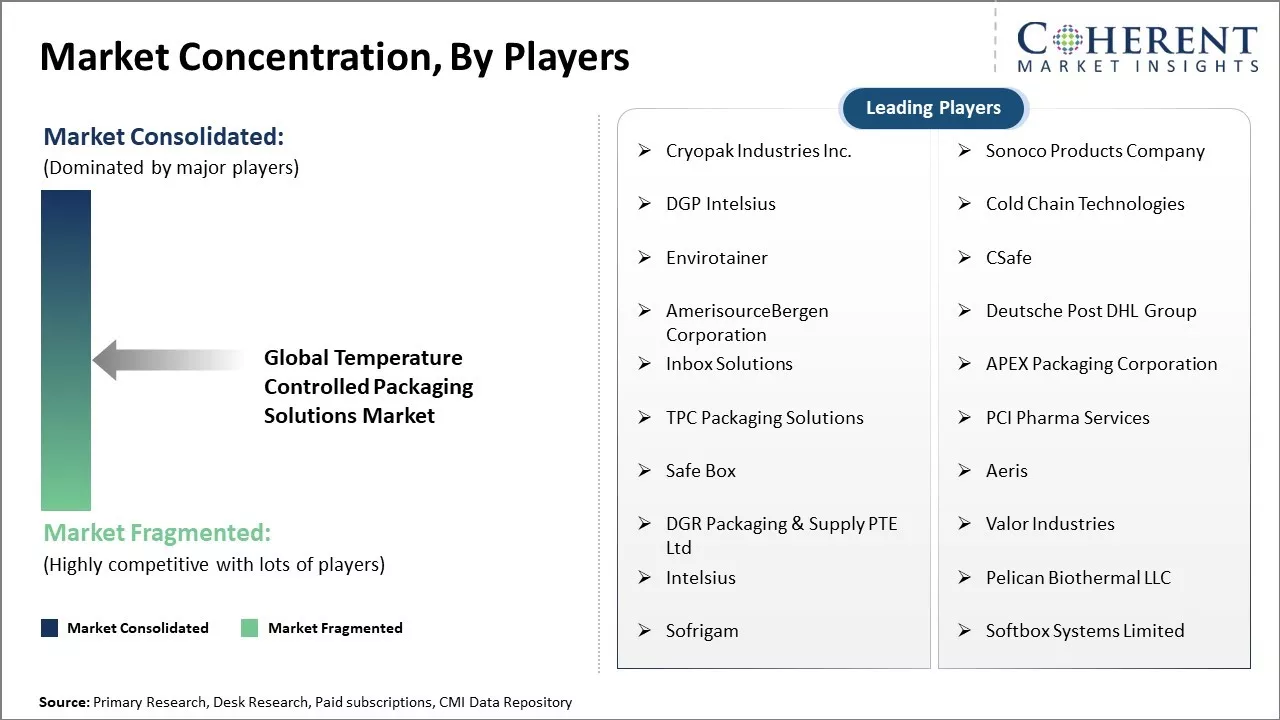
Market Concentration and Competitive Landscape
Temperature Controlled Packaging Solutions Industry News
- In April 2025, Cold Chain Technologies (CCT) launched its CCT Tower Elite, a reusable, universal temperature-controlled pallet shipper, marking its first life sciences product. With a 1,600 L capacity and compatibility with both Euro and US pallets, the Tower Elite is the lightest in its class, enabling cost-effective, ergonomic handling without sacrificing performance. It is integrated with IoT logging supports real-time monitoring and global visibility.
- In January 2025, DS Smith launched TailorTemp®, a fibre‑based, recyclable cold‑chain packaging solution launched at Pharmapack Europe 2025. Featuring corrugated cardboard insulating layers and outer casing, TailorTemp® maintains required pharmaceutical temperatures for up to 36 hours, according to predictive modelling and lab testing.
- In October 2024, Peli BioThermal launched its new Crēdo Vault, a reusable bulk shipper designed for temperature‑sensitive pharmaceutical and life‑sciences cargo. It is engineered for cold‑chain resilience, it maintains temperatures from below –20 °C to +25 °C for up to 168 hours, conforming to ISTA 7D standards.
- In 2023, Pluss Advanced Technologies (PLUSS), a leading phase-change material (PCM) technology company, introduced two new temperature-controlled packaging solutions for the pharmaceutical industry. The first is the Celsure XL Pallet Shipper series, designed for large-volume shipments, while the second is the Celsure VIP Multi-Use Parcel Shipper series, suitable for smaller parcel deliveries.
- In 2023, Ranpak Holdings Corp. unveiled the RecyCold climaliner solution, a highly efficient and sustainable thermal liner designed to meet the demands of cold chain shipping across various sectors. This innovative product addresses the growing need for reliable temperature control during the transportation of temperature-sensitive goods.
Market Report Scope
Temperature Controlled Packaging Solutions Market Report Coverage
| Report Coverage | Details | ||
|---|---|---|---|
| Base Year: | 2025 | Market Size in 2026: | USD 51.08 Bn |
| Historical Data for: | 2020 To 2024 | Forecast Period: | 2026 To 2033 |
| Forecast Period 2026 to 2033 CAGR: | 8.9% | 2033 Value Projection: | USD 92.79 Bn |
| Geographies covered: |
| ||
| Segments covered: |
| ||
| Companies covered: | Cryopak Industries Inc., Sonoco Products Company, DGP Intelsius, Cold Chain Technologies, Envirotainer, CSafe, AmerisourceBergen Corporation, Deutsche Post DHL Group, Inbox Solutions, APEX Packaging Corporation, TPC Packaging Solutions, PCI Pharma Services, Safe Box, Aeris, DGR Packaging & Supply PTE Ltd, Valor Industries, Intelsius, Pelican Biothermal LLC, Sofrigam, and Softbox Systems Limited | ||
| Growth Drivers: |
| ||
| Restraints & Challenges: |
| ||
Temperature Controlled Packaging Solutions Market Driver
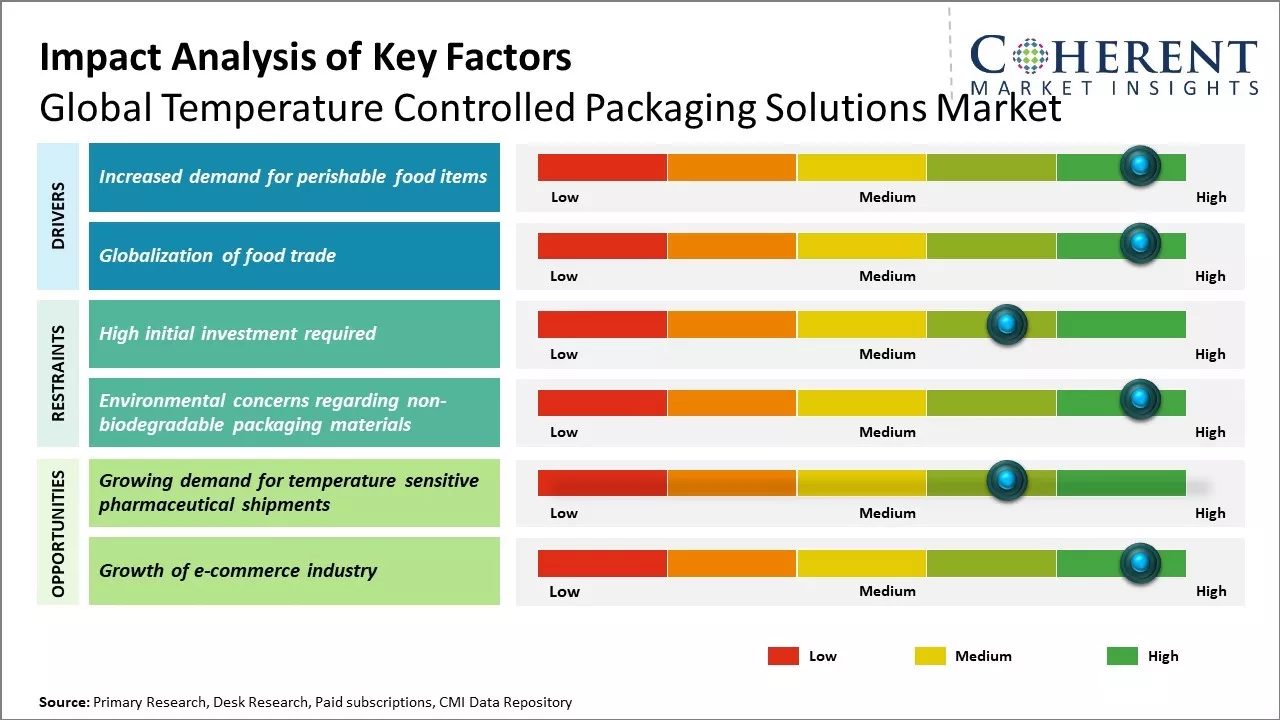
- Increased demand for perishable food items
The growing demand for fresh and perishable food items such as fruits, vegetables, meat, seafood, etc. has been one of the key drivers for the temperature controlled packaging solutions market growth. As consumer preference for fresh produce and protein has increased tremendously over the years, the need for innovative packaging solutions to maintain temperature conditions throughout the supply chain has become essential. Food manufacturers, distributors, and retailers are increasingly focusing on offering perishables with longer shelf life by adopting temperature controlled transportation and storage methods. In 2025, Reelables introduced its 5G Cellular Label for temperature monitoring, offering logistics providers, cargo forwarders, manufacturers, and retailers scalable, per-piece tracking of perishable shipments with reliable temperature visibility throughout the supply chain. Such innovations are proliferating the temperature controlled packaging solutions market demand.
- Globalization of food trade
Globalization trends and evolution of international food markets have significantly contributed to the growth of the temperature controlled packaging solutions market. The international trade of perishable commodities has grown rapidly over the past few decades driven by consumer demand, trade agreements, and supply chain developments. Developing nations are increasingly trading fresh produce, meat and dairy products across borders. At the same time, the emergence of global food brands supplying commodities worldwide has created huge opportunities. However, long distance shipments over varied climate zones pose challenges to maintain optimal temperatures during transit.
Temperature Controlled Packaging Solutions Market Trends Opportunities
- Growing demand for temperature sensitive pharmaceutical shipments
The temperature controlled packaging solutions market is poised to benefit tremendously from the growing demand for temperature sensitive pharmaceutical shipments. A vast number of vaccine, biologic, and other drugs require careful thermal regulation within a specific temperature range during transport to ensure product efficacy and safety. As drug development activities accelerate in industries such as cell and gene therapy, more drugs with limited thermal tolerance will enter the market. At the same time, expanding healthcare access in developing nations will increase inoculation and immunization programs. This will drive the need for maintaining uninterrupted cold chains for last-mile deliveries of pharmaceuticals even in remote locations lacking stable infrastructure.
As highlighted in recent temperature controlled packaging solutions market research, this presents a major opportunity for packaging providers to develop cost-effective, easy-to-use solutions tailored for pharma logistics. Advanced technologies such as phase change materials, eco-friendly refrigerants, and intelligent sensors for real-time temperature monitoring are rapidly gaining traction. These innovations not only improve delivery reliability but also align with global sustainability and safety standards, positioning the industry for strong growth in the coming years.
Analyst Opinion (Expert Opinion)
- The Temperature Controlled Packaging Solutions market value stands at the confluence of structural demand shifts, regulatory scrutiny, and technology-led differentiation. From an analyst’s lens, the market is evolving from a logistics-centric utility into a strategic enabler of pharmaceutical integrity, biologics viability, and fresh food assurance, particularly in globalized, multi-node supply chains. The ongoing recalibration in cold chain management underscores a fundamental truth: packaging is no longer passive, it is dynamic, intelligent, and mission-critical.
- A key trend reshaping the landscape is the increased biologics penetration in pharma pipelines. With over 40% of late-stage pharmaceutical candidates requiring 2°C to 8°C temperature control, and some advanced cell & gene therapies needing ultra-cold conditions (-60°C and below), the demand for qualified, reusable TCP solutions is rising sharply. For example, therapies like mRNA-based oncology drugs have precise stability windows; any excursion compromises both safety and efficacy, rendering traditional packaging inadequate. Here, Phase Change Material (PCM)-based containers and vacuum insulated panels (VIP) are gaining clear preference, as they offer better temperature uniformity over extended hold times.
- Furthermore, the food and beverage sector, especially premium meat, seafood, and functional beverage exports—is witnessing a functional shift from single-use EPS containers to sustainable multi-use TCP systems. This is not merely regulatory-driven but also brand-led, as stakeholders increasingly view temperature compliance as part of ESG and product quality narratives. For instance, premium seafood exporters in Norway and Japan are investing in modular reusable packaging equipped with thermal indicators and RFID sensors to track cold chain breaks in real time.
Speak to the analyst
Want personalized insights?
Take the findings above to one of our principal consultants, or have the report rebuilt around the segments, geographies and competitors you actually track.
Market Segmentation
- Product Type Insights (Revenue, USD Bn, 2026 - 2033)
- Active Packaging
- Electric/Battery Powered
- Fuel Powered
- Passive Packaging
- Insulated Boxes and Containers
- Coolers and Containers
- Active Packaging
- Packaging Material Insights (Revenue, USD Bn, 2026 - 2033)
- Expanded Polystyrene
- Polyurethane (PUR)
- Vacuum Insulated Panels
- Others
- Application Insights (Revenue, USD Bn, 2026 - 2033)
- Pharmaceutical
- Food & Beverages
- Cosmetics & Personal Care
- Others
- Regional Insights (Revenue, USD Bn, 2026 - 2033)
- North America
- U.S.
- Canada
- Latin America
- Brazil
- Argentina
- Mexico
- Rest of Latin America
- Europe
- Germany
- U.K.
- Spain
- France
- Italy
- Russia
- Rest of Europe
- Asia Pacific
- China
- India
- Japan
- Australia
- South Korea
- ASEAN
- Rest of Asia Pacific
- Middle East & Africa
- GCC Countries
- Israel
- Rest of Middle East & Africa
- North America
- Key Players Insights (Revenue, USD Bn, 2021 - 2033)
- Cryopak Industries Inc.
- Sonoco Products Company
- DGP Intelsius
- Cold Chain Technologies
- Envirotainer
- CSafe
- AmerisourceBergen Corporation
- Deutsche Post DHL Group
- Inbox Solutions
- APEX Packaging Corporation
- TPC Packaging Solutions
- PCI Pharma Services
- Safe Box
- Aeris
- DGR Packaging & Supply PTE Ltd.
- Valor Industries
- Intelsius
- Pelican Biothermal LLC
- Sofrigam
- Softbox Systems Limited
Sources
Primary Research Interviews from the following stakeholders
Stakeholders
- Interviews with packaging solution providers, cold chain logistics managers, pharmaceutical QA/QC officers, food safety officers, packaging technologists, regulatory compliance heads, and procurement managers across high-demand sectors.
Specific Stakeholders
- Cold chain logistics managers at pharma distribution companies
- Packaging R&D leads at biopharma and vaccine manufacturers
- Supply chain managers at frozen food and seafood exporters
- Operations heads at e-grocery and meal kit platforms
- QA/QC personnel at clinical trial packaging firms and hospital pharmacy divisions
- Procurement leads at temperature-sensitive cosmetics and specialty chemical companies
- Sustainability officers at multinational food conglomerates
Databases
- UN Comtrade Database – Temperature-sensitive goods trade data
- World Trade Organization (WTO) – Global packaging trade trends
- Eurostat – Cold chain packaging material production and usage in the EU
- U.S. Census Bureau – Packaging and logistics import/export stats
- Directorate General of Commercial Intelligence and Statistics (DGCIS), India
- Japan Customs and Trade Statistics
- Korea Trade Statistics Promotion Institute (KTSPI)
- National Board of Trade Sweden – Pharma logistics reports
- China General Administration of Customs – Packaging materials trade
Magazines
- Cold Chain Management
- Pharmaceutical Packaging Insight
- Packaging Europe
- Frozen Food Digest
- Healthcare Packaging
- Packaging Strategies
- Food Logistics
- Temperature-Controlled Logistics
- Pharma Manufacturing
- The Packager
Journals
- Journal of Applied Packaging Research
- International Journal of Pharmaceutics – Packaging Science Section
- Packaging Technology and Science (Wiley)
- Journal of Food Protection
- International Journal of Refrigeration
- Cryobiology
- American Journal of Transportation – Cold Chain Section
Newspapers
- The Economic Times – Cold chain and retail logistics
- Financial Times – Pharma supply chain
- The Hindu Business Line – Food packaging industry updates
- Nikkei Asia – Tech in logistics and packaging
- South China Morning Post – Trade and transport news
- The Wall Street Journal – Pharma and logistics supply news
Associations
- Cold Chain and Refrigeration Association (CCRA)
- International Association of Refrigerated Warehouses (IARW)
- Institute of Packaging Professionals (IoPP)
- Global Cold Chain Alliance (GCCA)
- International Safe Transit Association (ISTA)
- Indian Institute of Packaging (IIP)
- World Packaging Organization (WPO)
- European Biopharmaceutical Enterprises – Logistics Working Group
- Sustainable Packaging Coalition
Public Domain Sources
- U.S. Food and Drug Administration (FDA) – Guidelines on temperature-sensitive pharma packaging
- European Medicines Agency (EMA) – Good Distribution Practice (GDP) standards
- Central Drugs Standard Control Organization (CDSCO), India
- U.S. Department of Agriculture (USDA) – Cold storage and food packaging stats
- Ministry of Food Processing Industries (MoFPI), India
- Ministry of Health, Labour and Welfare, Japan
- U.S. Department of Transportation – Packaging safety standards
- Reserve Bank of India (RBI) – Cold chain and pharma sector reports
- EU Commission Reports – Sustainable packaging and cold logistics
Proprietary Elements
- CMI Data Analytics Tool, and Proprietary CMI Existing Repository of information for last 8 years
*Definition: The temperature controlled packaging solutions market consists of packaging containers and materials that are specially designed and engineered to maintain a constant temperature for temperature-sensitive products such as pharmaceuticals, food, and other perishables during storage, handling, and transportation. These packaging solutions keep products within a specific temperature range to prevent degradation and ensure safety and quality is preserved throughout the supply chain.
Get access to 250+ pages report
Every segment, forecast, competitor profile and data table behind the analysis above — available for instant download.
- ESOMAR Member
- ISO 9001:2015 Certified
- D-U-N-S Registered
- GDPR & CCPA Compliant
Missing comfort of reading report in your local language? Find your preferred language:
Transform your Strategy with Exclusive Trending Reports
Frequently Asked Questions
The Temperature Controlled Packaging Solutions Market is estimated to be valued at USD 51.08 Bn in 2026, and is expected to reach USD 92.79 Bn by 2033.
The CAGR of the Temperature Controlled Packaging Solutions Market is projected to be 8.9% from 2026 to 2033.
Increased demand for perishable food items and globalization of food trade are the major factors driving the growth of the global temperature controlled packaging solutions market.
High initial investment required and environmental concerns regarding non-biodegradable packaging materials are the major factors hampering the growth of the global temperature controlled packaging solutions market.
In terms of product type, active packaging is estimated to dominate the market revenue share in 2026.
Cryopak Industries Inc., Sonoco Products Company, DGP Intelsius, Cold Chain Technologies, Envirotainer, CSafe, AmerisourceBergen Corporation, Deutsche Post DHL Group, Inbox Solutions, APEX Packaging Corporation, TPC Packaging Solutions, PCI Pharma Services, Safe Box, Aeris, DGR Packaging & Supply PTE Ltd, Valor Industries, Intelsius, Pelican Biothermal LLC, Sofrigam, and Softbox Systems Limited are the major players.
North America is expected to lead the global temperature controlled packaging solutions market.