

Theranostics Market Size and Forecast – 2026 to 2033
The Theranostics Market is anticipated to grow at a CAGR of 10.9% with USD 11.4 Bn in 2026 and is expected to reach USD 28.8 Bn in 2033. The theranostics market is driven by rising demand for personalized medicine, targeted therapies, and increasing investment in precision medicine and companion diagnostics. Healthcare providers nationwide are increasingly adopting personalized care strategies, particularly in oncology and chronic disease management.
Key Takeaways
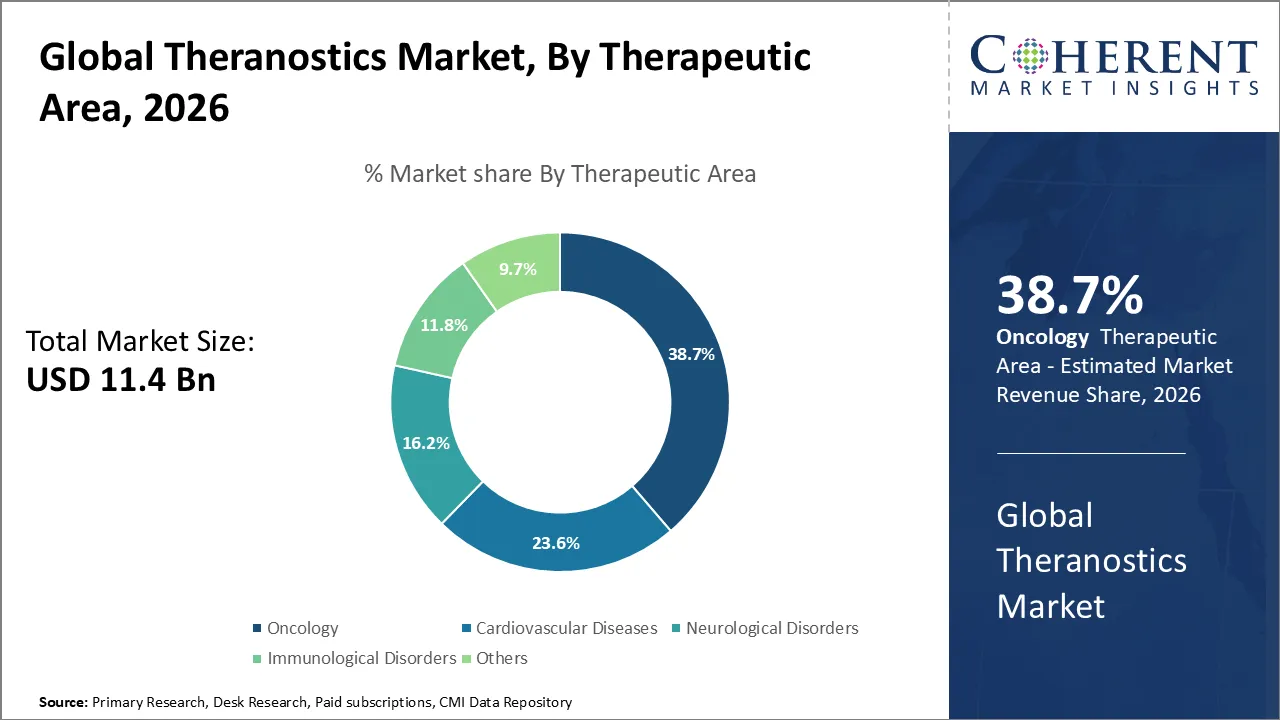
- Oncology holds the largest market share of 38.7% in 2026 owing to its growing cancer burden. According to the World Health Organization, an estimated 20.6 million new cancer cases and 9.8 million cancer-related deaths occur worldwide.
- Polymerase Chain Reaction (PCR) expected to hold largest market share of 42.3% in 2026 owing to its increasing demand for biomarker testing. According to the American Cancer Society, biomarker testing is becoming increasingly important in cancer care, with 37 of the 62 oncology drugs introduced over the past five years requiring or recommending biomarker testing before treatment.
- Hospitals acquired the prominent market share of 43.3% in 2026 owing to its expansion of oncology infrastructure. In South-Central Asia, 20 specialized cancer hospitals and 50 other hospitals provide cancer care services.
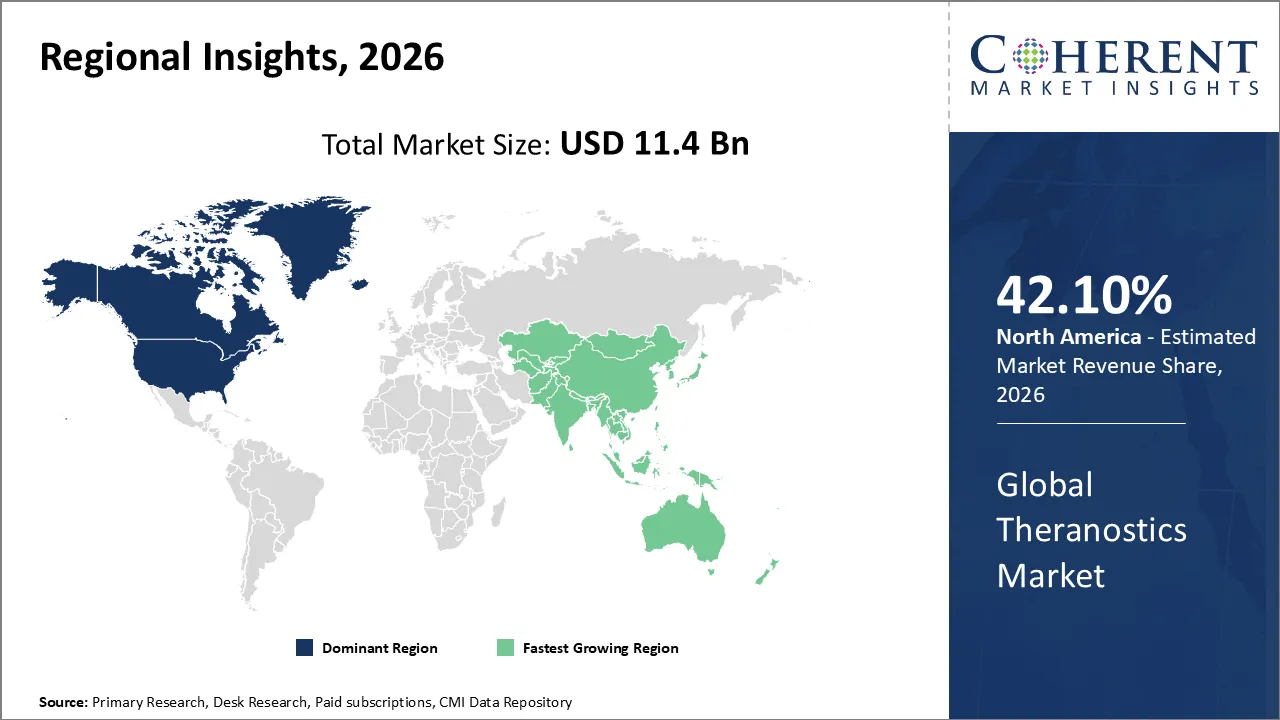
- North America is expected to acquire the dominant share of 42.1% in 2026 owing to the rapid growth of radiotheranostics.
Current Events and Their Impact on the Theranostics Market
Current Event | Description and its Impact |
FDA Expansion of Pluvicto to Earlier-Line Prostate Cancer |
|
CMS Separate Reimbursement for High-Cost Diagnostic Radiopharmaceuticals |
|
Segmental Insights
- Current Industry Events of 2026
- Market Size Estimation
- Regional Breakdown
- Competitive Landscape
- Customer Intelligence
- Segmental Analysis
- Pricing Analysis
- Key Market Drivers, Challenges & Future Trends
- Customized Insights Section
Why is Oncology Acquiring the Largest Market Share?
Oncology holds the largest market share of 38.7% in 2026. The oncology segment of the Theranostics Market is expanding as cancer prevalence rises globally and healthcare providers increasingly adopt personalized medicine. Healthcare professionals use theranostic approaches to improve diagnosis, identify biomarkers, and select targeted treatments. Advances in molecular diagnostics, companion diagnostics, genomic profiling, and radiotheranostics further strengthen market demand. In addition, improved imaging technologies, growing investments in oncology research, and the development of targeted therapies help clinicians select appropriate patients, monitor treatment responses, and deliver more individualized cancer care. Indiana University Health launched the IU Health Theranostics Center of Excellence to combine advanced imaging, precision diagnostics, and image-targeted therapies for personalized cancer care. The program will expand statewide access and strengthen Indiana’s position in theranostics and precision oncology.
Polymerase Chain Reaction (PCR) expected to hold largest market share
Polymerase Chain Reaction (PCR) expected to hold largest market share of 42.3% in 2026 owing to its faster turnaround and relatively low testing complexity. The Polymerase Chain Reaction (PCR) segment in the Theranostics Market is expanding as healthcare providers demand faster molecular testing and more precise cancer care. Clinicians use PCR to identify cancer-related mutations, biomarkers, and genetic alterations, enabling them to select personalized treatments. Growing use of companion diagnostics, liquid biopsy, and treatment monitoring further drives adoption. Advances in real-time PCR, digital PCR, and multiplex testing enhance detection accuracy and sensitivity. Meanwhile, cancer research, targeted therapies, and molecular diagnostics continue to expand PCR applications across theranostic workflows. Countable Labs launched its Certified Service Provider program to give researchers access to single-molecule PCR technology and technical expertise through a global laboratory network.
Which End User segment dominates the market?
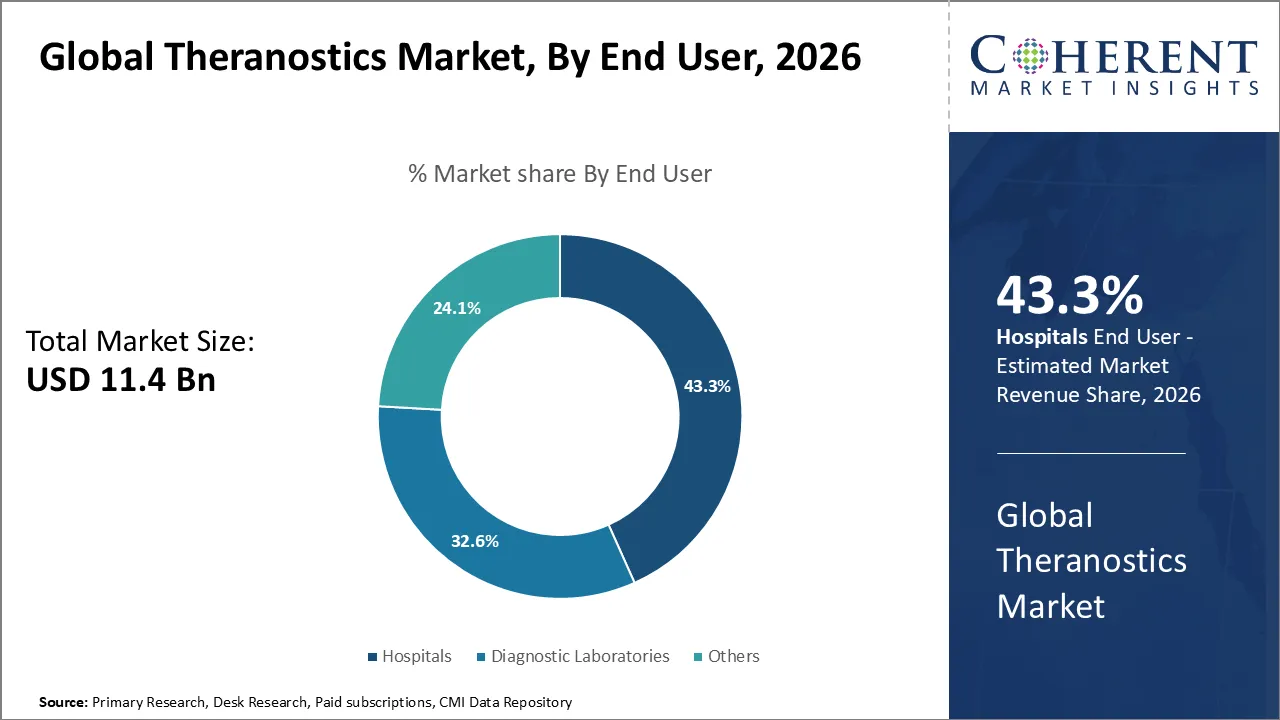
Hospitals acquired the prominent market share of 43.3% in 2026. The Hospitals segment in the Theranostics Market is expanding as cancer cases increase and patients demand more personalized treatments. Hospitals are strengthening oncology infrastructure and adopting advanced molecular diagnostics, imaging technologies, and targeted therapies to improve patient care. Healthcare providers are also increasing their use of radiotheranostics, companion diagnostics, and precision medicine. In May 2026, a ring gantry-based linear accelerator was commissioned at the Department of Radiation Oncology, Army Hospital (Research & Referral), Delhi, in the presence of Defence Secretary Shri Rajesh Kumar Singh. The advanced technology will strengthen cancer care by expanding access to advanced radiotherapy for serving personnel, veterans, and their dependents, while enhancing the hospital’s in-house treatment capacity to meet its substantial patient load. Investments in nuclear medicine facilities, specialized cancer centers, and multidisciplinary teams enhance hospital capabilities. Furthermore, clinicians use improved treatment-monitoring tools and increasingly integrate theranostic approaches into routine oncology care.
Theranostics Market Trends
- Growing adoption of personalized medicine is accelerating the use of biomarker-based diagnostics and targeted therapies, enabling clinicians to select treatments based on individual patient profiles. The FDA’s authorized companion-diagnostic portfolio demonstrates the increasing integration of molecular testing with targeted oncology therapies.
- Increasing use of radiotheranostics is expanding opportunities for targeted cancer diagnosis and treatment, particularly in prostate cancer and neuroendocrine tumors, by combining molecular imaging with therapeutic radiopharmaceuticals. For example, in July 2026, the FDA expanded approval of lutetium Lu-177 vipivotide tetraxetan (Pluvicto) to certain patients with PSMA-positive metastatic prostate cancer, with patient selection based on PSMA PET imaging.
- Advances in molecular diagnostics and genomic profiling are improving the identification of actionable biomarkers. In 2024, the FDA approved the TruSight Oncology Comprehensive test, which can assess alterations across 517 DNA genes and 25 RNA genes, supporting biomarker-informed treatment decisions in solid tumors.
- Rising cancer prevalence is strengthening demand for advanced diagnostic and targeted treatment solutions. According to WHO/IARC, an estimated 20 million new cancer cases and 9.7 million cancer deaths occurred globally in 2022. IARC projects that annual new cancer cases could reach approximately 35 million by 2050, representing a 77% increase from 2022 levels.
Regional Insights
North America dominates owing to regulatory support and clinical commercialization
North America is expected to acquire the dominant share of 42.10% in 2026. North America’s Theranostics Market is expanding as healthcare providers leverage advanced infrastructure to address the growing cancer burden and deliver precision medicine. Clinicians increasingly use molecular diagnostics, genomic profiling, companion diagnostics, and targeted therapies to personalize cancer treatment. They are also adopting radiotheranostics and advanced imaging technologies to improve diagnosis and treatment monitoring. Strong investments in oncology research, pharmaceutical innovation, and biotechnology accelerate the development of new theranostic solutions. Favorable reimbursement policies and growing clinical adoption further encourage healthcare systems to integrate theranostics into cancer care. CMS’s CY2025 final rule introduces separate payment for high-cost diagnostic radiopharmaceuticals after transitional pass-through status expires. The policy applies to products costing more than USD 630 per day, supporting more stable reimbursement and improving patient access to nuclear medicine diagnostics. Sentara Health collaborated with BAMF Health to establish Virginia’s first vertically integrated theranostics program through a joint venture.
Asia Pacific Theranostics Market Trends
The Asia Pacific theranostics market continues to grow as rising cancer and chronic disease cases increase demand for advanced treatments. Countries including China, Japan, India, South Korea, and Australia are expanding healthcare infrastructure and adopting personalized and precision medicine. Healthcare providers and governments are investing in nuclear medicine facilities, PET and SPECT imaging, radiopharmaceutical production, and molecular diagnostics. Government support, improved healthcare access, technological innovation, growing awareness of targeted therapies, and wider clinical use of radioligand therapies further drive regional demand for theranostics solutions. NUH and the Yong Loo Lin School of Medicine launched the Molecular Imaging and Theranostics Centre, featuring Singapore’s first total-body PET/CT system in partnership with Siemens Healthineers.
United States Theranostics Market Trends
The United States theranostics market benefits from growing adoption of precision medicine, rising cancer cases, and increasing demand for personalized diagnosis and treatment. Healthcare providers leverage advanced infrastructure, research capabilities, molecular imaging, and targeted therapies to improve patient care. Supportive regulatory pathways and reimbursement policies also encourage healthcare organizations to adopt theranostic procedures. Meanwhile, researchers advance biomarker identification, radiopharmaceuticals, companion diagnostics, and targeted drug delivery, expanding theranostics applications in oncology as well as cardiovascular and neurological disorders. UCLA Health launched the first U.S. Department of Nuclear Medicine and Theranostics, integrating advanced imaging and targeted radiopharmaceutical therapy to accelerate research and deliver precision patient care.
China Theranostics Market Trends
China’s theranostics market is expanding as rising cancer prevalence increases the need for personalized and precision medicine. Government initiatives actively support advanced healthcare technologies, while investments in radiopharmaceutical infrastructure, medical isotope production, and nuclear medicine strengthen domestic capabilities. Healthcare providers increasingly adopt molecular imaging and targeted therapies, further driving market growth. China’s large patient population, improving healthcare access, expanding research and development, and stronger collaboration among pharmaceutical companies, hospitals, and research institutions also accelerate the adoption of theranostic solutions. In 2023, China recorded 301 million hospital admissions, equivalent to 21.4% of its population, highlighting the country’s exceptionally high healthcare utilization and raising concerns about the sustainability of its healthcare system.
Who are the Major Companies in Theranostics Industry
Some of the major key players in Theranostics are Thermo Fisher Scientific, Inc., Beckman Coulter, Inc., Focus Diagnostics, AmeriPath, Inc., Qiagen NV, Myriad Genetics, Inc., Agilent Technologies, Abbott Laboratories, Foundation Medicine, Inc., and Oxford Cancer Biomarkers, Ltd.
Key News
- In July 2026, GE HealthCare and Mayo Clinic launched a research collaboration to determine how imaging and biomarker data can personalize radioligand therapy for patients with advanced prostate cancer.
Market Report Scope
Theranostics Market Report Coverage
Report Coverage | Details | ||
Base Year: | 2025 | Market Size in 2026: | USD 11.4 Bn |
Historical Data for: | 2020 to 2024 | Forecast Period: | 2026 to 2033 |
Forecast Period 2026 to 2033 CAGR: | 10.9% | 2033 Value Projection: | USD 28.8 Bn |
Geographies covered: |
| ||
Segments covered: |
| ||
Companies covered: | Thermo Fisher Scientific, Inc., Beckman Coulter, Inc., Focus Diagnostics, AmeriPath, Inc., Qiagen NV, Myriad Genetics, Inc., Agilent Technologies, Abbott Laboratories, Foundation Medicine, Inc., and Oxford Cancer Biomarkers, Ltd. | ||
Analyst Opinion
- Theranostics is moving from a promising precision-medicine concept to a clinically validated treatment model. The strongest evidence comes from radioligand therapy, where diagnosis and treatment are directly connected through the same molecular target. For example, the FDA-approved PSMA-targeted therapy lutetium Lu 177 vipivotide tetraxetan demonstrated a 38% reduction in the risk of disease progression or death in the Phase III VISION trial among patients with advanced prostate cancer.
- Prostate cancer has emerged as the clearest commercial and clinical proving ground for theranostics. PSMA expression provides a highly actionable biomarker, while PSMA-PET imaging can identify patients whose tumors are suitable for targeted radioligand treatment. The VISION trial reported a median overall survival of 15.3 months versus 11.3 months with standard care alone. This is important because it demonstrates that theranostics can do more than improve diagnostic accuracy—it can translate molecular imaging into a measurable therapeutic survival benefit.
- The expansion of radioligand therapy is increasingly constrained by infrastructure rather than clinical interest. Producing, transporting, administering, and safely handling therapeutic radioisotopes requires specialized facilities and trained nuclear-medicine personnel. The U.S. FDA approval of Pluvicto in 2022, followed by expanding clinical use and additional indications under evaluation, illustrates how quickly demand can expose capacity limitations.
- The next major opportunity lies beyond prostate cancer, but tumor selection will remain critical. Researchers are extending the theranostic model to targets such as somatostatin receptors in neuroendocrine tumors, where lutetium-177-based therapy has already established clinical utility. The NETTER-1 Phase III trial showed that lutetium Lu 177 dotatate reduced the risk of disease progression or death by 79% compared with high-dose octreotide.
- The real competitive advantage of theranostics is its ability to select patients before treatment rather than treating an undifferentiated population. This creates a fundamentally different treatment workflow: molecular imaging identifies the target, clinicians assess whether the tumor expresses it sufficiently, and the corresponding radioligand delivers therapy to those selected patients.
- However, theranostics will not become mainstream simply through better drugs; healthcare systems must solve the isotope supply challenge. Lutetium-177 and other therapeutic radionuclides require reliable production and distribution, while some emerging therapies depend on radionuclides with even more demanding supply chains. The rapid clinical adoption of PSMA-targeted therapies has already demonstrated the importance of manufacturing scale and logistics.
Speak to the analyst
Want personalized insights?
Take the findings above to one of our principal consultants, or have the report rebuilt around the segments, geographies and competitors you actually track.
Theranostics Market Segmentation
- By Therapeutic Area (Revenue, USD Bn, 2021-2033)
- Oncology
- Breast Cancer
- Lung Cancer
- Colorectal Cancer
- Cervical Cancer
- Others
- Cardiovascular Diseases
- Neurological Disorders
- Immunological Disorders
- Others
- Oncology
- By Technology (Revenue, USD Bn, 2021-2033)
- Polymerase Chain Reaction (PCR)
- Immunohistochemistry
- In Situ Hybridization
- Sequencing
- Others
- By End User (Revenue, USD Bn, 2021-2033)
- Hospitals
- Diagnostic Laboratories
- Others
- By Region (Revenue, USD Bn, 2021-2033)
- North America
- U.S.
- Canada
- Latin America
- Brazil
- Mexico
- Argentina
- Rest of Latin America
- Europe
- Germany
- U.K.
- France
- Italy
- Spain
- Russia
- Rest of Europe
- Asia Pacific
- China
- India
- Japan
- Australia
- South Korea
- ASEAN
- Rest of Asia Pacific
- Middle East
- GCC
- Israel
- Rest of Middle East
- Africa
- South Africa
- Central Africa
- North Africa
- North America
Sources
Primary Research interviews
- Nuclear medicine physicians
- Medical oncologists
- Radiologists and molecular imaging specialists
- Radiopharmaceutical scientists
- Nuclear medicine department heads
- Clinical researchers and principal investigators
- Hospital administrators and oncology-center specialists
- Diagnostic laboratory professionals
- Radiopharmaceutical manufacturing and supply-chain experts
Databases
- PubMed / MEDLINE
- ClinicalTrials.gov
- U.S. National Library of Medicine
- FDA Drugs@FDA Database
- National Cancer Institute databases
- IAEA databases and nuclear medicine resources
- WHO Global Health Observatory
- OECD Health Statistics
- National Institutes of Health databases
Magazines
- The Journal of Nuclear Medicine
- Journal of Nuclear Medicine Technology
- Nuclear Medicine Communications
- SNMMI News
- Diagnostic Imaging
- Applied Radiology
Journals
- The Lancet Oncology
- Journal of Nuclear Medicine
- European Journal of Nuclear Medicine and Molecular Imaging
- Clinical Nuclear Medicine
- Journal of Medical Radiation Sciences
- Molecular Imaging and Biology
- Cancer
- Nature Reviews Clinical Oncology
- EJNMMI Radiopharmacy and Chemistry
- Theranostics
- Frontiers in Oncology
Newspapers
- The New York Times
- The Wall Street Journal
- Financial Times
- Reuters
- The Guardian
- The Washington Post
- The Economic Times
- The Times of India
- Nikkei Asia
Associations
- Society of Nuclear Medicine and Molecular Imaging (SNMMI)
- European Association of Nuclear Medicine (EANM)
- American Society of Clinical Oncology (ASCO)
- American College of Radiology (ACR)
- European Society for Medical Oncology (ESMO)
- International Atomic Energy Agency (IAEA)
- World Health Organization (WHO)
- National Comprehensive Cancer Network (NCCN)
- Society for Molecular Imaging (SMI)
Public Domain sources
- U.S. Food and Drug Administration (FDA)
- National Cancer Institute (NCI)
- National Institutes of Health (NIH)
- U.S. National Library of Medicine (NLM)
- Centers for Disease Control and Prevention (CDC)
- International Atomic Energy Agency (IAEA)
- World Health Organization (WHO)
- European Medicines Agency (EMA)
- European Commission
- ClinicalTrials.gov
- PubMed
- OECD
- National Academies of Sciences, Engineering, and Medicine
- Government health ministries and national regulatory authorities
- National cancer registries
- National statistics offices
- Open-access peer-reviewed publications
Proprietary Elements
- CMI Data Analytics Tool
- Proprietary CMI Existing Repository of information for last 10 years
Get access to 250+ pages report
Every segment, forecast, competitor profile and data table behind the analysis above — available for instant download.
- ESOMAR Member
- ISO 9001:2015 Certified
- D-U-N-S Registered
- GDPR & CCPA Compliant
Missing comfort of reading report in your local language? Find your preferred language:
Transform your Strategy with Exclusive Trending Reports
Frequently Asked Questions
The Theranostics Market is anticipated to grow at a CAGR of 10.9% with USD 11.4 Bn in 2026 and is expected to reach USD 28.8 Bn in 2033.
The Theranostics Market combines diagnostic technologies with targeted therapies to support personalized treatment.
The market is driven by increasing demand for personalized medicine, targeted therapies, companion diagnostics, molecular imaging, genomic profiling, and radiotheranostics.
Oncology dominates the market, accounting for 38.7% of the market share in 2026.
Oncology benefits from the ability of theranostics to identify specific biomarkers, select appropriate patients, guide targeted treatment, and monitor therapeutic response.
Polymerase Chain Reaction (PCR) is expected to hold the largest share, accounting for 42.3% in 2026.