Artificial Joints Market Analysis & Forecast: 2026-2033

Artificial Joints Market Size and Forecast – 2026 – 2033
The artificial joints market is projected to grow from approximately USD 9.5 billion in 2026 to USD 14.2 billion by 2033, exhibiting a CAGR of around 5.8%, driven by aging populations and technological advancements in joint replacement.
Global Artificial Joints Market Overview
The artificial joints market focuses on implants used to replace damaged or diseased joints, most commonly the knee and hip, to restore mobility and reduce pain caused by osteoarthritis, trauma, or aging. These implants are made from advanced materials such as metal alloys, ceramics, and polyethylene to ensure durability and biocompatibility. Market growth is driven by the rising elderly population, increasing prevalence of joint disorders, and improvements in surgical techniques, including minimally invasive and robotic-assisted procedures.
Key Takeaways
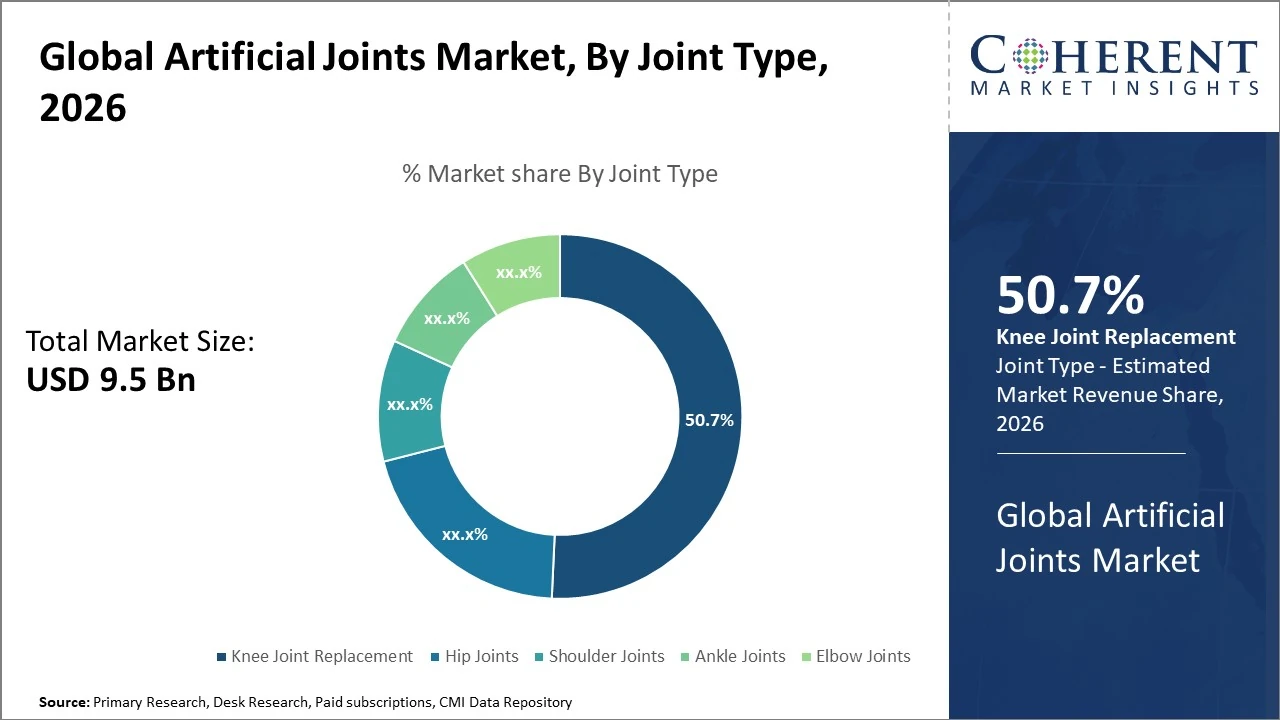
Based on Joint Type, Knee joint replacements dominate with a share of 50.76% due to the high prevalence of osteoarthritis and related mobility issues worldwide.
On the basis of technology, Traditional joint replacement remains widely used due to its proven efficacy.
Hospitals dominate acquiring the largest share of 51.97%.
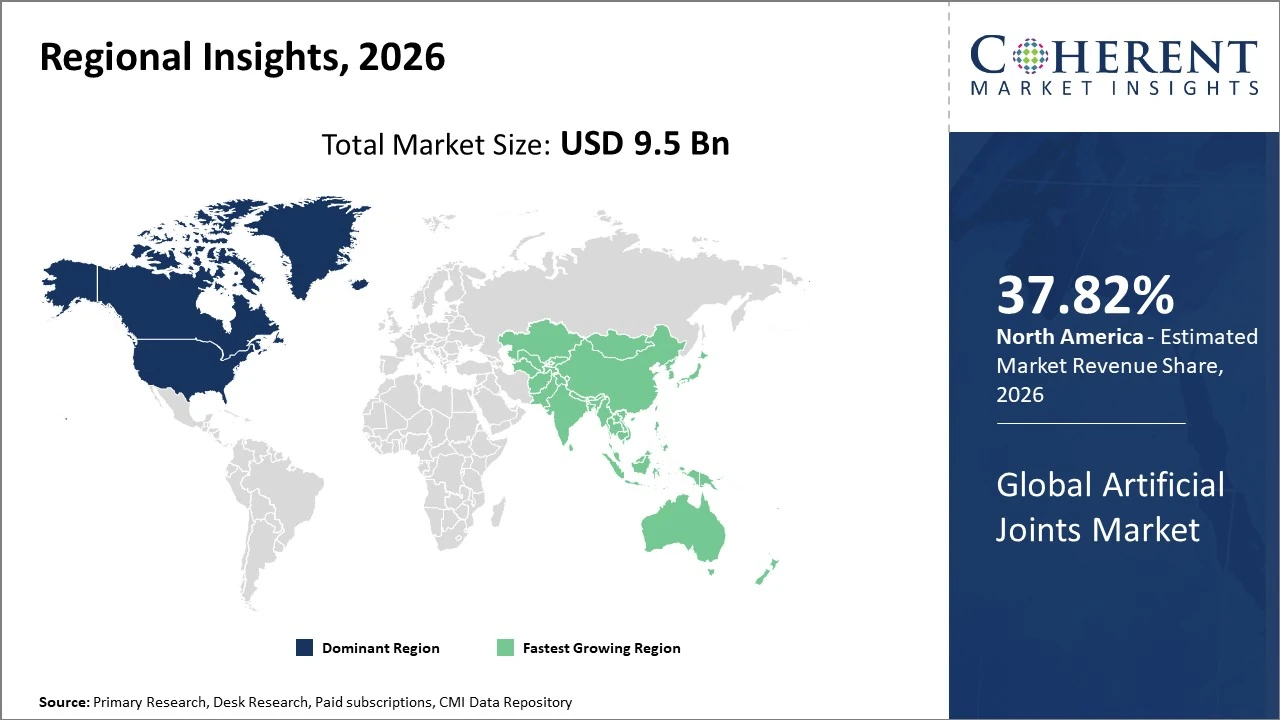
North America leads the artificial joints market with a share of 37.82% due to high prevalence of osteoarthritis.
Artificial Joints Market Segmentation Analysis
To learn more about this report, Request Free Sample
Artificial Joints Market Insights, By Joint TypeKnee joint replacements dominate with a share of 50.76% due to the high prevalence of osteoarthritis and related mobility issues worldwide. Hip implants follow closely as aging populations and sports injuries drive demand. Shoulder joint replacements are witnessing steady growth, aided by technological advancements and increased awareness. Other joint types, such as elbow, ankle, and finger replacements, represent smaller but emerging segments. Continuous innovations in biomaterials and implant design across all product types improve durability and patient outcomes, fueling overall market expansion through 2033.
Artificial Joints Market Insights, By Technology
The artificial joints market by technology encompasses traditional joint replacement, minimally invasive surgery (MIS), and computer-assisted surgery (CAS). Traditional joint replacement remains widely used due to its proven efficacy. However, minimally invasive techniques are gaining traction for reduced recovery time, less pain, and smaller incisions. Computer-assisted surgery is expanding rapidly, offering enhanced precision, improved implant positioning, and better patient outcomes. Advancements in navigation systems, robotics, and imaging technologies further drive CAS adoption. The technological evolution in joint replacement procedures boosts market growth by improving surgical accuracy, reducing complications, and enhancing long-term implant performance through 2033.
Artificial Joints Market Insights, By End-User
The artificial joints market by end user primarily includes hospitals, orthopedic clinics, and ambulatory surgical centers (ASCs). Hospitals dominate acquiring the largest share of 51.97% due to advanced infrastructure, availability of specialized surgeons, and the capacity to handle complex joint replacement surgeries. Orthopedic clinics are gaining prominence as they offer dedicated joint care with personalized treatment plans. Ambulatory surgical centers are witnessing increased adoption for minimally invasive procedures, offering cost-effective and quicker recovery options. Growing patient preference for outpatient services and rising healthcare expenditure bolster ASC growth. Expansion of healthcare facilities in emerging regions further fuels demand across all end-user segments through 2033.
Artificial Joint Market Trends
Rising Adoption of Minimally Invasive Surgery: Increased preference for procedures that reduce recovery time and surgical risks.
Integration of Robotics and Computer-Assisted Surgery: Enhances precision, implant alignment, and overall outcomes.
Development of Advanced Biomaterials: Use of durable, biocompatible materials like ceramics and highly cross-linked polyethylene to extend implant lifespan.
Growing Demand in Emerging Markets: Expansion of healthcare infrastructure and rising awareness in Asia-Pacific and Latin America.
Focus on Personalized Implants: Customized joint replacements tailored to patient anatomy improving fit and functionality.
Artificial Joints Market Insights, By Geography
To learn more about this report, Request Free Sample
North America Artificial Joints Market Analysis and Trends
North America leads the artificial joints market with a share of 37.82% due to advanced healthcare infrastructure, high prevalence of osteoarthritis, and strong adoption of innovative technologies like robotic-assisted surgery. Rising geriatric population and increasing awareness about joint replacement procedures drive growth. Additionally, favorable reimbursement policies and significant investments in R&D fuel market expansion. The U.S. dominates within the region, supported by presence of key manufacturers and robust clinical research activities.
Asia Pacific Artificial Joints Market Analysis and Trends
The Asia Pacific artificial joints market is rapidly growing, driven by rising elderly populations, increasing prevalence of arthritis, and expanding healthcare infrastructure. Growing awareness about joint replacement surgeries and improving reimbursement policies contribute to market growth. Countries like China and India lead due to large patient pools and improving medical facilities. Additionally, increasing investments in advanced technologies and collaborations between global and local players fuel market expansion through 2033.
Artificial Joints Market Outlook for Key Countries
USA Artificial Joints Market Analysis and Trends
The USA artificial joints market is robust, driven by a high prevalence of osteoarthritis and an aging population. Largest single country contributor in the global artificial joints market which accounts for 19.43% of the global market share. Advanced healthcare infrastructure, widespread adoption of minimally invasive and robotic-assisted surgeries, and strong reimbursement support fuel growth. Additionally, continuous innovation in implant materials and designs enhances patient outcomes. The presence of major market players and ongoing clinical research further strengthen the market, making the USA a key leader in artificial joint technologies through 2033.
Germany Artificial Joints Market Analysis and Trends
Germany’s artificial joints market is one of the largest in Europe, driven by a rapidly aging population and high prevalence of osteoarthritis and rheumatoid arthritis. Advanced healthcare infrastructure and skilled orthopedic surgeons support widespread adoption of joint replacement procedures. The country shows increasing use of minimally invasive and computer-assisted surgeries, improving patient outcomes and recovery times. Strong government healthcare funding and well-established reimbursement policies facilitate market growth. Additionally, ongoing research and development by domestic and international manufacturers fuel innovation in implant materials and designs. Germany remains a key hub for artificial joint advancements and market expansion through 2033.
Analyst Opinion
Strong Growth Potential: The artificial joints market is poised for steady growth, driven by an aging global population and rising incidence of joint-related disorders.
Technological Innovation: Advances in biomaterials, robotics, and computer-assisted surgeries are enhancing implant durability and surgical precision, improving patient outcomes.
Minimally Invasive Procedures: Growing adoption of minimally invasive techniques is reducing recovery time and complications, boosting market acceptance.
Emerging Markets Opportunity: Increasing healthcare access and awareness in Asia-Pacific and Latin America present significant expansion opportunities.
High Cost Concerns: Despite benefits, high costs of implants and surgeries could limit accessibility in price-sensitive regions.
Regulatory Landscape: Stringent regulatory approvals and focus on implant safety drive quality improvements but may delay product launches.
Rising Reimbursement Support: Favorable insurance and government reimbursement policies are critical to market growth, especially in developed countries.
Competitive Dynamics: Intense competition among established players and new entrants is fostering innovation and strategic partnerships to capture market share.
Market Scope
| Report Coverage | Details | ||
|---|---|---|---|
| Base Year: | 2025 | Market Size in 2026: | USD 9.5 billion |
| Historical Data for: | 2020 To 2024 | Forecast Period: | 2026 To 2033 |
| Forecast Period 2026 to 2033 CAGR: | 5.8% | 2033 Value Projection: | USD 14.2 billion |
| Geographies covered: |
|
||
| Segments covered: |
|
||
| Companies covered: | Stryker, Zimmer Biomet, Johnson and Johnson, Smith and Nephew, Medacta International, Exatech, MicroPort Orthopedics, Enovis Corporation | ||
| Growth Drivers: |
|
||
Uncover macros and micros vetted on 75+ parameters: Get instant access to report
Artificial Joints Market Growth Factors
The artificial joints market is experiencing robust growth driven by several key factors. The increasing prevalence of osteoarthritis and rheumatoid arthritis worldwide is a primary driver, as these conditions often necessitate joint replacement surgeries. An aging global population further amplifies demand, since elderly individuals are more prone to joint degeneration. Technological advancements, including minimally invasive surgeries, robotic-assisted procedures, and improved biomaterials such as highly cross-linked polyethylene and ceramics, enhance implant durability and patient recovery, encouraging higher adoption rates.
Rising awareness about joint disorders and the benefits of replacement surgeries propels market expansion. Additionally, growing incidences of obesity and sports-related injuries increase the need for artificial joint interventions. Favorable reimbursement policies in developed regions and expanding healthcare infrastructure in emerging markets like Asia-Pacific improve accessibility to joint replacement procedures. Collectively, these factors contribute to steady market growth and innovation through 2033.
Artificial Joints Market Development
In April 2025, leading arthroplasty specialists came together to form the Chhattisgarh Arthroplasty Association, with the objective of addressing the growing burden of joint pain, advancing treatments such as artificial joint replacement, and mentoring the next generation of arthroplasty surgeons.
In May 2025, STAR Hospitals, Nanakramguda, introduced a next-generation robotic surgery system for joint replacement, aimed at delivering greater surgical precision, faster recovery, and reduced pain for patients with chronic knee joint conditions.
Key Players
Leading Companies of the Market
Stryker
Zimmer Biomet
Johnson and Johnson
Smith and Nephew
Medacta International
Exatech
MicroPort Orthopedics
Enovis Corporation
The global artificial joints market is dominated by several key players focusing on innovation, robotics, and advanced materials for hip and knee replacements. Stryker Cooperation leads with its Mako robotic-assisted technology, while Zimmer Biomet offers a vast, comprehensive portfolio. Johnson & Johnson (DePuy Synthes) maintains a dominant market share through its extensive range of implants and the VELYS robotic solution. Smith and Nephew is renowned for its CORI handheld robotics and advanced material solutions, and Exactech specializes in AI-driven tools. Other significant players include MicroPort, Enovis, and B. Braun (Aesculap). Together, top manufacturers focus on reducing recovery time and improving implant longevity.
Artificial Joints Market Future Outlook
The artificial joints market is poised for robust growth, projected to rise from driven by an aging population, rising obesity rates, and increased osteoarthritis prevalence, demand is surging, particularly in the Asia-Pacific region. Key trends shaping the future include the adoption of robotic-assisted surgery for higher precision, 3D-printed personalized implants, and smart implants with sensors for real-time monitoring. Despite challenges like high costs and strict regulatory hurdles, advancements in biocompatible materials and a shift towards outpatient, minimally invasive procedures are enhancing patient outcomes, ensuring a strong market outlook.
Artificial Joints Market Historical Analysis
The The artificial joints market has evolved from rudimentary implants in the 1960s—pioneered by Sir John Charnley’s low-friction arthroplasty—to a multi-billion dollar industry driven by advancements in biomaterials (ceramics, cross-linked polyethylene) and surgical techniques. Historically, the market has seen consistent growth, with a significant shift towards cemented, non-cemented, and increasingly, personalized 3D-printed, robotic-assisted implants. Driven by an aging, obese population and rising osteoarthritis prevalence, the market has matured, with North America leading in adoption, while Asia-Pacific is now the fastest-growing region. Key players like Zimmer Biomet and Stryker have shaped the landscape through innovation and consolidation.
Sources
Primary Research Interviews:
Orthopedic Surgeons
Healthcare Executives and Hospital Management
Medical Device Distributors
Industry Experts and Engineers
Databases:
American Joint Replacement Registry (AJRR)
New Zealand Joint Registry
Ikaiser Permanente National Implant Registry
Journals:
The Journal of Arthroplasty (Elsevier)
Arthroplasty Today (Elsevier)
Bone & Joint Journal (BJJ)
Chinese Medical Journal
Newspapers:
Yahoo Finance
Globe Newswire
The Guardian
Taiwan News
Associations:
Strykar Cooperation
Zimmer Biomet
DePuy Synthes
Smith and Nephew
Medacta International
Share
Share
Komal Dighe is a Management Consultant with over 8 years of experience in market research and consulting. She excels in managing and delivering high-quality insights and solutions in Health-tech Consulting reports. Her expertise encompasses conducting both primary and secondary research, effectively addressing client requirements, and excelling in market estimation and forecast. Her comprehensive approach ensures that clients receive thorough and accurate analyses, enabling them to make informed decisions and capitalize on market opportunities.

Credibility and Certifications

860519526


9001:2015

27001:2022


Need a Custom Report?
We can customize every report - free of charge - including purchasing stand-alone sections or country-level reports
Customize NowJoining thousands of companies around the world committed to making the Excellent Business Solutions.
View All Our Clients