Bio-Identical Hormones Market Analysis & Forecast: 2026-2033
Bio-Identical Hormones Market Size and Forecast – 2026 – 2033
The Global Bio-Identical Hormones Market size is estimated to be valued at USD 4.49 billion in 2026 and is expected to reach USD 8.41 billion by 2033, exhibiting a compound annual growth rate (CAGR) of 9.4% from 2026 to 2033.
Global Bio-Identical Hormones Market Overview
Bio-identical hormones are hormone replacement formulations whose molecular structures are chemically identical to the endogenous hormones produced by humans (commonly estradiol, progesterone, testosterone, and sometimes DHEA). They are supplied in multiple delivery formats — oral capsules, sublingual troches, transdermal gels and patches, topical creams, vaginal rings/tablets, and compounded custom formulations — allowing clinicians to tailor dose and route to patient needs. These products are used to alleviate symptoms of menopause, andropause, and certain endocrine imbalances by restoring physiological hormone levels; many are promoted for having fewer side effects than synthetic analogs due to structural similarity to natural hormones.
Key Takeaways
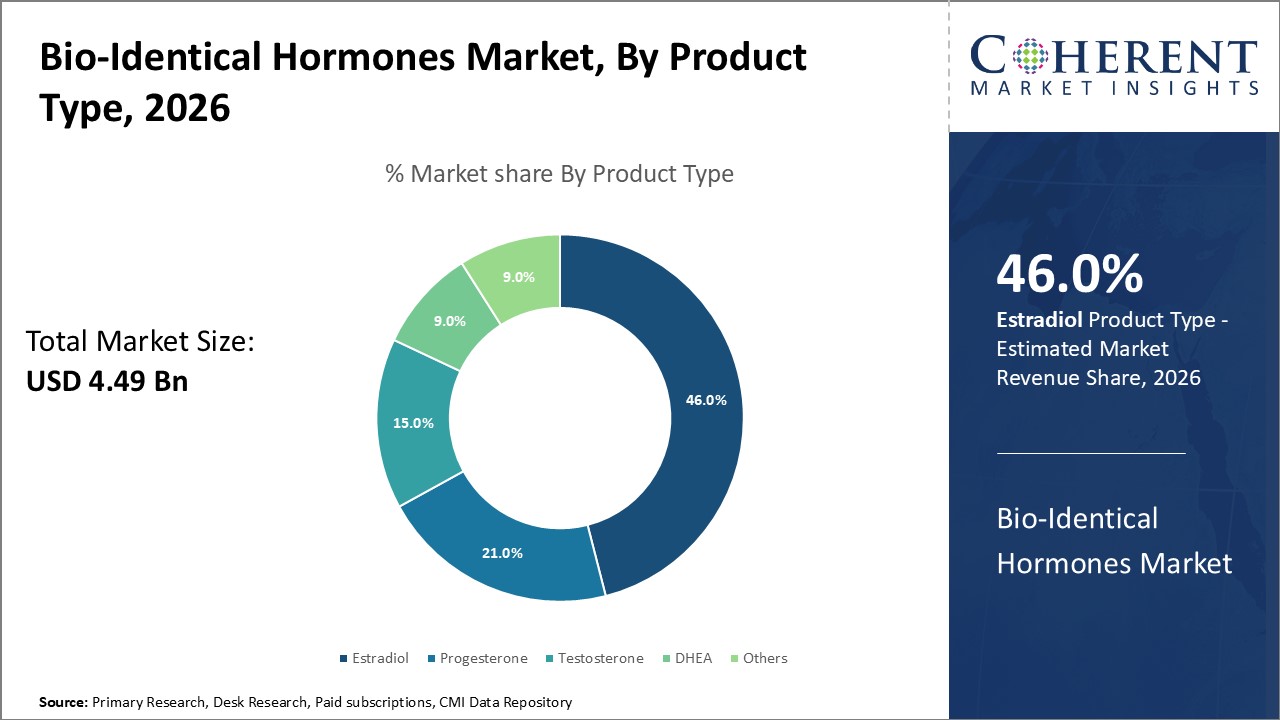
The Estradiol product type segment holds dominance with approximately 46% industry share, driven by its high efficacy in managing menopause symptoms.
Menopause management continues to account for the largest application segment, reflecting demographic and clinical need dynamics fueling market revenue.
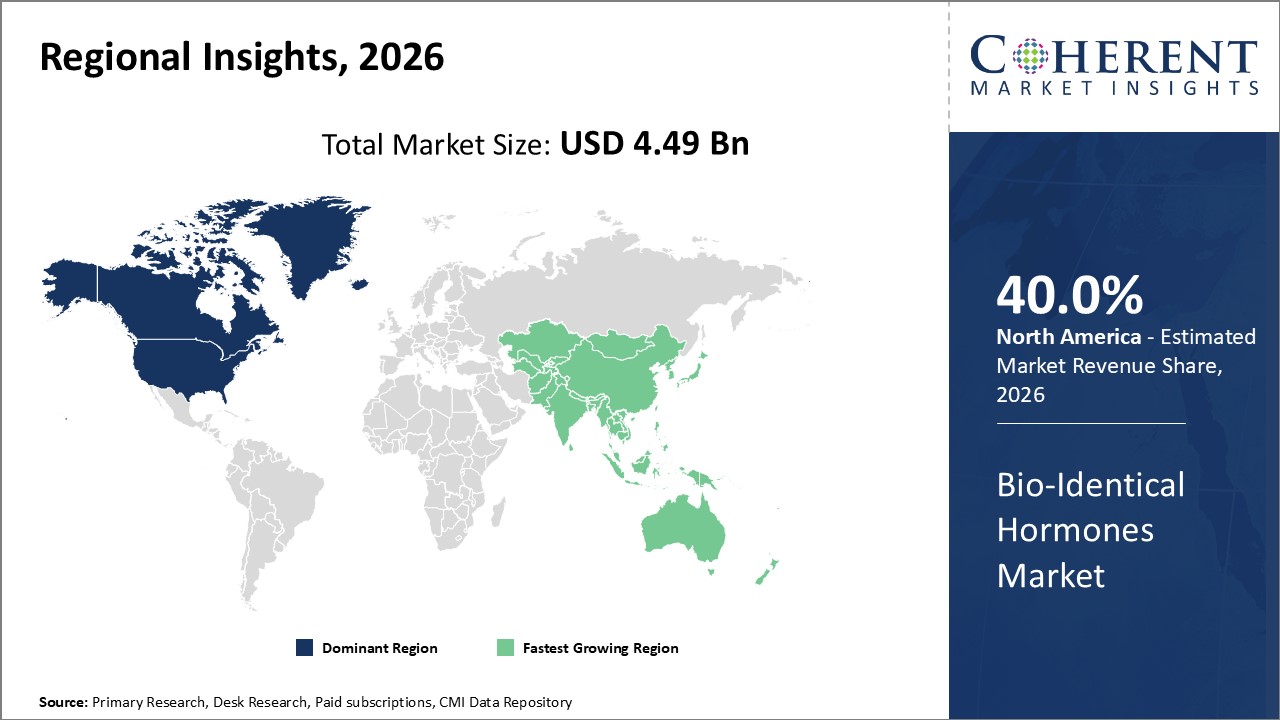
North America commands the largest market share, supported by robust healthcare infrastructure and early adoption of advanced hormone therapies.
Asia Pacific exhibits the fastest regional growth fueled by increasing hormone deficiency diagnosis, expanding healthcare access, and supportive government policies.
Bio-Identical Hormones Market Segmentation Analysis
To learn more about this report, Request Free Sample
Bio-Identical Hormones Market Insights, By Product Type
Estradiol dominates the market share with 46%. Estradiol’s dominance arises from its extensive use in managing menopausal symptoms, backed by robust clinical efficacy and multiple delivery modality options such as patches and gels. The fastest-growing subsegment here is Testosterone, primarily due to rising awareness and diagnosis of andropause and related testosterone deficiencies in men aged 40 and above. Progesterone maintains steady growth owing to its critical role in fertility and menopausal therapies. DHEA and Others serve niche therapeutic applications, including adrenal insufficiency and certain mood disorders, but contribute relatively less to overall market revenue.
Bio-Identical Hormones Market Insights, By Application
Menopause Management commands the largest market share, driven by increasing global female aging population and the focus on mitigating menopausal symptoms through safer bio-identical options. Andropause Therapies represent the fastest-growing segment as male hormone replacement therapy gains wider acceptance, supported by growing diagnostics and consumer health awareness campaigns. Thyroid Disorders and Osteoporosis applications hold significant revenue potential, with compound growth expected due to chronic disease burden and improved hormone-based treatment options.
Bio-Identical Hormones Market Insights, By End-User
Hospitals dominate the market share due to institutionally driven prescriptions and access to advanced hormone therapies under supervised care. Clinics are rapidly gaining ground as specialized endocrine and gynecologic centers offer tailored bio-identical hormone treatments, providing personalized services that improve patient satisfaction. Online Pharmacies represent the fastest-growing subsegment, driven by digital health trends and telemedicine uptake that allow direct consumer access, especially among younger demographic groups comfortable with remote consultations.
Bio-Identical Hormones Market Trends
The bio-identical hormones market is actively shaped by technological integration and evolving healthcare models.
Key market trends include the adoption of precision medicine, with companies increasingly leveraging genetic profiling to improve hormone therapy efficacy.
For instance, a 2025 clinical trial showed a 31% improvement in symptom relief among patients receiving genomically tailored bio-identical hormone treatments compared to standard formulations.
Furthermore, telehealth growth provides seamless hormone therapy management, evidenced by a 40% rise in remote prescriptions for bio-identical hormones in North America during 2025.
Regulatory frameworks are also shifting towards harmonization, simplifying market entry and fostering competitive development.
Bio-Identical Hormones Market Insights, By Geography
To learn more about this report, Request Free Sample
North America Bio-Identical Hormones Market Analysis and Trends
In North America, the dominance in the bio-identical hormones market is attributed to advanced healthcare infrastructure, strong insurance coverage policies, and high patient awareness about hormone replacement therapies. The U.S., as the largest market contributor, accounts for the prominent regional market share, driven by ongoing research investments and large-scale healthcare provider networks actively endorsing bio-identical hormone therapies.
Asia Pacific Bio-Identical Hormones Market Analysis and Trends
Meanwhile, Asia Pacific exhibits the fastest growth with a CAGR of approximately 11.5%, spurred by increasing hormone deficiency awareness, rising geriatric population, and government initiatives to improve healthcare access. The expanding middle class and improving reimbursement frameworks in countries such as China and India contribute significantly to this surge. Moreover, local pharmaceutical companies are strengthening their portfolio in bio-identical hormones, enhancing market penetration.
Bio-Identical Hormones Market Outlook for Key Countries
USA Bio-Identical Hormones Market Analysis and Trends
The USA’s market leadership stems from its sophisticated healthcare ecosystem and patient-centric care models emphasizing personalized therapies. Leading U.S. companies have invested heavily in R&D; for example, a substantial clinical trial conducted in 2025 validated the safety and efficacy of a novel bio-identical progesterone formulation, which resulted in a 15% increase in adoption rates in major hospital systems. Moreover, government subsidies and favorable insurance policies continue to encourage broader hormone replacement therapy accessibility, making the U.S. a cornerstone market for bio-identical hormones.
India Bio-Identical Hormones Market Analysis and Trends
India's bio-identical hormones market is rapidly emerging, supported by expanding healthcare infrastructure and rising middle-class demand for personalized treatments. The country benefits from increasing private healthcare expenditure and government incentives to boost pharmaceutical manufacturing. In 2025, local pharma companies launched multiple cost-effective bio-identical hormone formulations, improving affordability and fueling increased adoption rates among urban populations. The growing endocrine disorder incidence and improved diagnostic capabilities further underpin India’s expanding market scope.
Analyst Opinion
The rising demand for patient-specific hormone therapies remains a critical demand-side indicator shaping the bio-identical hormones market. In 2025, over 56% of hormone replacement therapy prescriptions cited personalized formulations as a key determinant, demonstrating a marked shift towards individualized treatment protocols supported by advancements in diagnostic accuracy.
Production capacity expansions, especially in North America and Europe, are supply-side drivers bolstering market growth. A report from 2025 highlights that manufacturing plants in these regions increased capacity by approximately 18% to meet the rising volume, reducing lead times and improving market reach for bio-identical hormone products globally.
Pricing dynamics have shown increased stability due to improved synthesis techniques and economies of scale. In 2023, average costs for bio-identical hormone products decreased by nearly 13%, encouraging wider adoption across both hospital and outpatient settings.
The integration of bio-identical hormones in managing menopause symptoms alongside other health indications like osteoporosis and thyroid disorders broadens the market scope. Clinical data from 2026 indicate a 26% growth in prescriptions for managing multi-morbidity cases requiring hormone modulation, reinforcing the diverse applicability of these compounds.
Market Scope
| Report Coverage | Details | ||
|---|---|---|---|
| Base Year: | 2025 | Market Size in 2026: | USD 4.49 billion |
| Historical Data for: | 2020 To 2024 | Forecast Period: | 2026 To 2033 |
| Forecast Period 2026 to 2033 CAGR: | 9.4% | 2033 Value Projection: | USD 8.41 billion |
| Geographies covered: |
|
||
| Segments covered: |
|
||
| Companies covered: | Abbott Laboratories, Pfizer Inc., Mylan N.V., Upsher-Smith Laboratories, Inc., Allergan plc, Novo Nordisk A/S, Endo International plc, Ferring Pharmaceuticals, Amneal Pharmaceuticals, Estrigen Ltd., BioTE Medical, Inc. | ||
| Growth Drivers: |
|
||
Uncover macros and micros vetted on 75+ parameters: Get instant access to report
Bio-Identical Hormones Market Growth Factors
The rising incidence of age-related hormonal imbalances, such as menopause and andropause, remains the foremost driver propelling the bio-identical hormones market. Governments and healthcare organizations in developed countries are increasingly funding programs for early detection and treatment, facilitating expanded market growth. Improved patient awareness, coupled with greater clinician endorsement for bio-identical compounds versus conventional synthetic therapies, has enhanced market acceptance, driving up prescriptions considerably. Moreover, advancements in drug delivery systems—such as subcutaneous troches and transdermal patches—have optimized therapeutic efficacy and patient compliance, further accelerating business growth in this domain. Growing adoption in emerging markets, triggered by enhanced distribution channels and relaxed regulatory environments, also amplifies the overall market revenue potential.
Bio-Identical Hormones Market Development
In May 2025, Jagsonpal Pharmaceuticals launched MemUp in India, the country’s first single-capsule hormone replacement therapy (HRT) containing USFDA-approved bio-identical estradiol and progesterone. The product was developed to simplify menopause management by improving dosing convenience while addressing common menopausal symptoms through a clinically aligned bio-identical formulation.
In July 2026, Texas Star Pharmacy in the United States, led by Jay Bhaumik, introduced bio-identical hormone pellets, designed to provide consistent and long-lasting hormone delivery. The launch emphasized patient convenience and stable hormone levels, supporting growing demand for personalized and sustained hormone replacement solutions.
Key Players
Leading Companies of the Market
Abbott Laboratories
Pfizer Inc.
Mylan N.V.
Upsher-Smith Laboratories, Inc.
Allergan plc
Novo Nordisk A/S, Endo International plc
Ferring Pharmaceuticals
Amneal Pharmaceuticals
Estrigen Ltd.
BioTE Medical, Inc.
Several market players have implemented strategies focused on geographic expansion and product innovation. For instance, Pfizer Inc. invested USD 120 million in a new manufacturing facility in 2025 aimed at increasing estradiol bio-identical hormone output by 21%, directly impacting market revenue and share. Similarly, Abbott Laboratories expanded its digital platforms to provide telemedicine-based hormone therapy consultations, significantly boosting its patient acquisition rates in North America and Europe.
Bio-Identical Hormones Market Future Outlook
The future of the bio-identical hormones market looks promising, driven by rising global aging demographics, growing focus on women’s health, and improved clinical validation. The next decade is expected to see stronger integration of personalized medicine approaches, including hormone monitoring using wearable devices, AI-driven dosage optimization, and more robust clinical trials supporting long-term safety. Pharmaceutical companies are expected to introduce more regulated bio-identical formulations, increasing standardization and reducing dependence on compounding pharmacies. Furthermore, consumer interest in holistic and preventive healthcare will support continued demand, especially in regions where menopause support services are expanding. Digital telehealth platforms specializing in hormonal health will also emerge as a major distribution and consultation channel.
Bio-Identical Hormones Market Historical Analysis
The bio-identical hormones market has grown steadily over the past decade as consumer attitudes shifted toward more natural and personalized hormonal therapies. From the early 2010s onward, increasing awareness of menopause and hormonal imbalance treatments—supported by wellness trends and growing dissatisfaction with side effects of synthetic hormones—helped fuel adoption. Compounding pharmacies historically played a central role, offering custom formulations based on individualized testing, which attracted a loyal consumer base seeking alternatives to conventional HRT. Regulatory scrutiny, however, created friction in the early phase, as questions regarding safety, standardization, and efficacy influenced physician prescribing behaviors. Nevertheless, an expanding aging population, broader acceptance of long-term hormone optimization, and the entrance of standardized pharmaceutical-grade bio-identicals strengthened market credibility and visibility.
Sources
Primary Research Interviews:
Endocrinologists
Hormone Therapy Specialists
Compounding Pharmacists
Gynecologists
Anti-aging Clinics
Databases:
PubMed Clinical Trials
NIH Hormone Therapy Data
IQVIA Pharma Data
FDA Orange Book
Magazines:
Endocrine Today
Pharmacy Times
Drug Store News
Journals:
Journal of Clinical Endocrinology & Metabolism
Menopause Journal
Hormone Molecular Biology
Clinical Investigation
Newspapers:
WSJ Health
NYT Health
Reuters Pharma
Financial Times Healthcare
Associations:
Endocrine Society
American Association of Clinical Endocrinology
International Menopause Society
Share
Share
Nikhilesh Ravindra Patel is a Senior Consultant with over 8 years of consulting experience. He excels in market estimations, market insights, and identifying trends and opportunities. His deep understanding of the market dynamics and ability to pinpoint growth areas make him an invaluable asset in guiding clients toward informed business decisions. He plays a instrumental role in providing market intelligence, business intelligence, and competitive intelligence services through the reports.

Credibility and Certifications

860519526

9001:2015
27001:2022


Need a Custom Report?
We can customize every report - free of charge - including purchasing stand-alone sections or country-level reports
Customize NowJoining thousands of companies around the world committed to making the Excellent Business Solutions.
View All Our Clients