Cancer Metabolism Based Therapeutics Market Analysis & Forecast: 2026-2033
Cancer Metabolism Based Therapeutics Market Size and Forecast – 2026 – 2033
The Global Cancer Metabolism Based Therapeutics Market size is estimated to be valued at USD 4.9 billion in 2026 and is expected to reach USD 12.4 billion by 2033, exhibiting a compound annual growth rate (CAGR) of 13.5% from 2026 to 2033.
Global Cancer Metabolism Based Therapeutics Market Overview
Cancer metabolism–based therapeutics products focus on targeting altered metabolic pathways that cancer cells rely on for growth and survival. These include small molecule inhibitors, monoclonal antibodies, and combination therapies designed to disrupt glycolysis, glutaminolysis, and lipid metabolism. Key products target enzymes such as IDH, mTOR, and PI3K, helping to slow tumor progression and improve treatment outcomes. Many therapies are used alongside chemotherapy or immunotherapy to enhance efficacy. The market also includes pipeline drugs in clinical trials, reflecting strong innovation. Increasing research into tumor metabolism and precision medicine is driving the development of more targeted, effective, and less toxic therapeutic options.
Key Takeaways
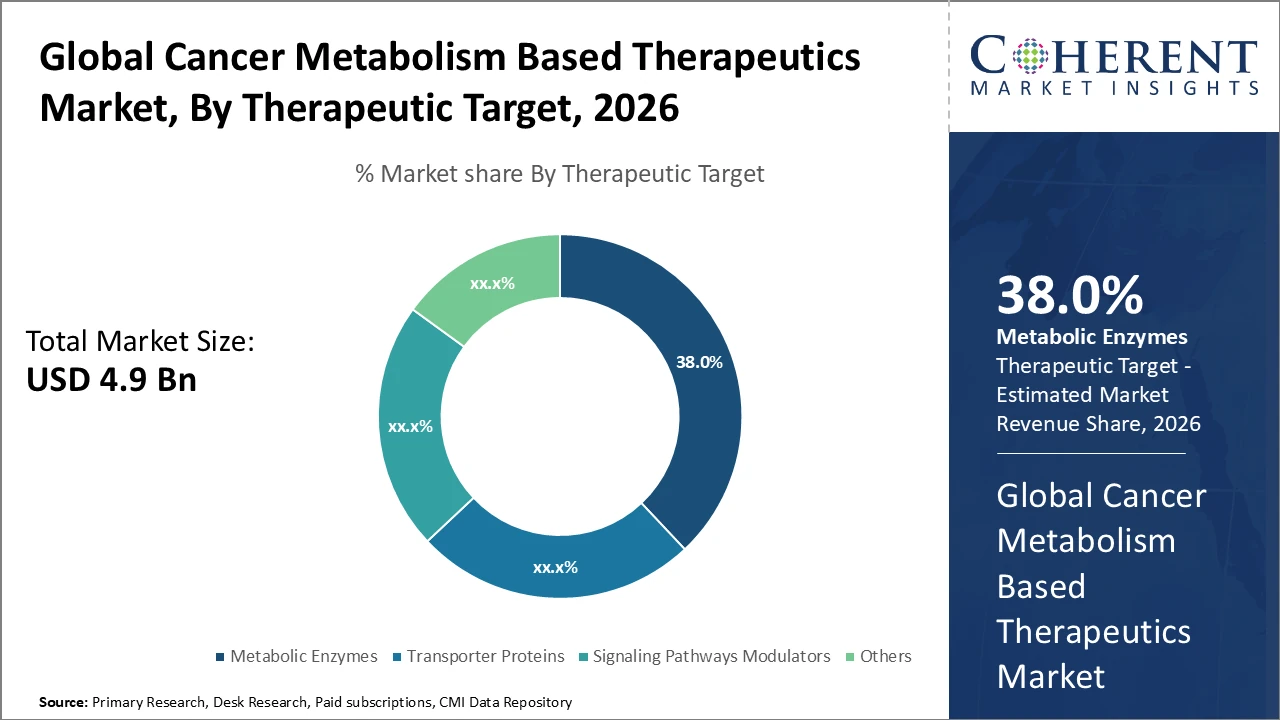
The metabolic enzymes segment remains dominant with a significant market share of 38%, driven by ongoing approvals of IDH and LDH inhibitors.
Oral administration remains predominant, underpinning patient compliance and market preference.
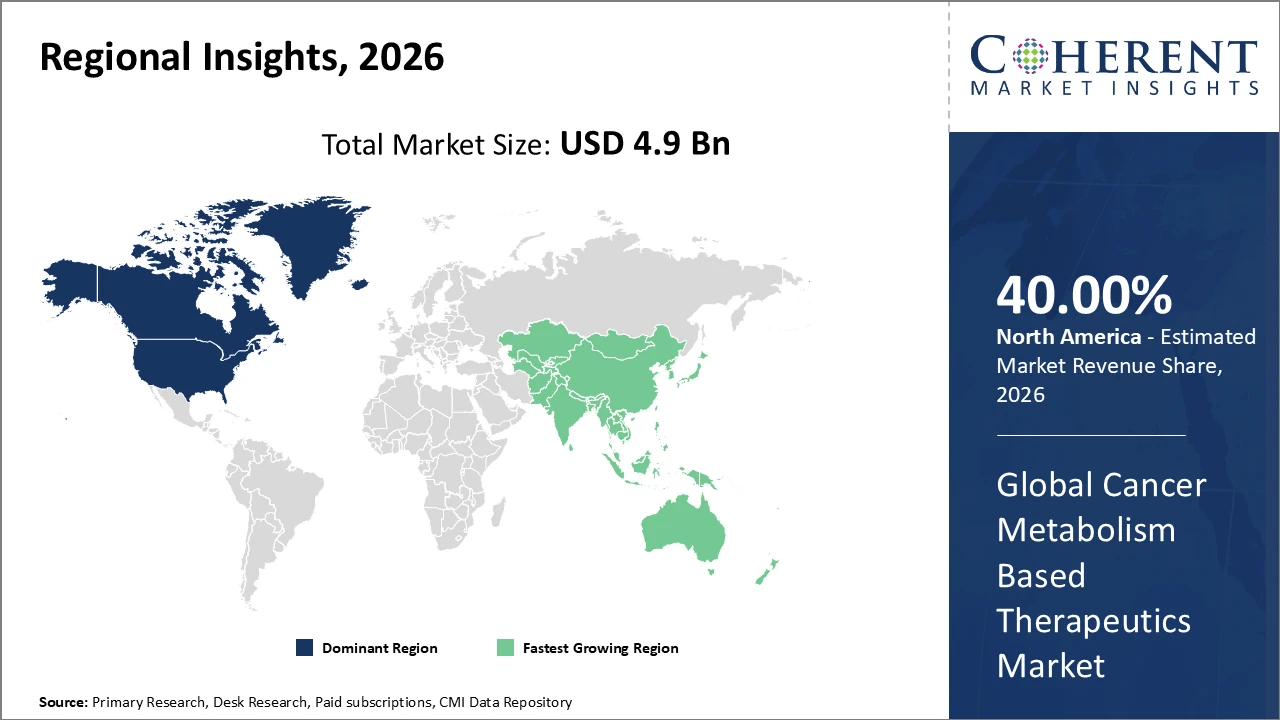
North America continues to maintain a dominating industry share due to advanced healthcare infrastructure and extensive R&D activities.
Asia Pacific exhibits the fastest CAGR, supported by increasing oncology prevalence and evolving market dynamics including policy reforms.
Europe’s market growth benefits from comprehensive reimbursement frameworks facilitating early access to metabolic therapeutics.
Cancer Metabolism Based Therapeutics Market Segmentation Analysis
To learn more about this report, Request Free Sample
Cancer Metabolism Based Therapeutics Market Insights, By Therapeutic Target
Metabolic enzymes dominate the market with a 38% share, driven by strong research and clinical validation of inhibitors such as IDH1/2 and LDH-A, which show high efficacy in both hematologic malignancies and solid tumors. This segment is supported by a robust pipeline of novel small molecules and allosteric modulators that enhance therapeutic outcomes. Transporter proteins are a rapidly growing subsegment, focusing on nutrient transport mechanisms to overcome drug resistance. Signaling pathway modulators, including mTOR and AMPK targets, offer complementary treatment approaches. The others segment includes emerging targets like mitochondrial respiration modulators, still in early stages of development.
Cancer Metabolism Based Therapeutics Market Insights, By Cancer Type
Solid tumors dominate the market, driven by their high incidence and mortality rates across cancers such as lung, breast, and colorectal, where metabolic reprogramming is a validated therapeutic target. This segment is also the fastest growing, supported by a rising number of clinical trials combining metabolic inhibitors with other oncology treatments. Hematologic malignancies form a mature segment with established metabolically targeted therapies for leukemias and lymphomas, maintaining steady demand. Brain tumors, especially glioblastoma, present significant challenges but are gaining research focus due to unmet needs and distinct metabolic traits. The others segment includes rare cancers in early development stages.
Cancer Metabolism Based Therapeutics Market Insights, By Route of Administration
Oral administration dominates the market due to its convenience, higher patient compliance, and suitability for long-term cancer treatment. The growing number of approved oral small-molecule inhibitors has further strengthened this segment’s position. Intravenous administration remains essential despite being less convenient, as it enables the delivery of biologics and complex therapies requiring precise pharmacokinetic control. Subcutaneous administration is an emerging segment, supported by innovations that improve ease of use and enable outpatient care. The others category includes novel delivery approaches such as nanoparticle-based systems, which are currently under investigation and hold potential for enhancing targeted drug delivery in future therapies.
Cancer Metabolism Based Therapeutics Market Trends
Combination regimens integrating cancer metabolism inhibitors with immuno-oncology agents are emerging as a key trend, improving treatment outcomes.
Clinical trials reported in 2026 showed a 20–30% improvement in survival rates by targeting both metabolic and immune pathways simultaneously.
Increasing use of AI-driven metabolomics is enhancing target validation and accelerating drug discovery, reducing development time and costs.
North America holds the largest market share due to strong healthcare infrastructure, high R&D investments, and favorable regulatory and reimbursement frameworks.
Asia Pacific is the fastest-growing region, with a CAGR exceeding 15%, driven by rising cancer incidence, better healthcare access, and supportive government initiatives.
Major companies like Novartis and Agios Pharmaceuticals are expanding in China and India, leveraging growing clinical trial activity and large patient populations.
Cancer Metabolism Based Therapeutics Market Insights, By Geography
To learn more about this report, Request Free Sample
North America Cancer Metabolism Based Therapeutics Market Analysis and Trends
In North America, dominance in the cancer metabolism–based therapeutics market is driven by advanced clinical research ecosystems, well-funded biotechnology companies, and a strong pharmaceutical industry that accelerates regulatory approvals. The United States plays a central role. Robust intellectual property protection encourages innovation and investment, while strong collaboration between academic institutions and industry players fosters continuous advancements. Additionally, the presence of leading research organizations and access to cutting-edge technologies further support market growth, enabling rapid development and commercialization of novel therapies targeting cancer metabolism pathways.
Asia Pacific Cancer Metabolism Based Therapeutics Market Analysis and Trends
Asia Pacific is the fastest-growing region in the cancer metabolism–based therapeutics market, driven by rising cancer incidence, increasing healthcare expenditure, and supportive reimbursement reforms. Countries such as China and India are witnessing rapid progress due to expanding clinical infrastructure and strong government-backed funding initiatives. The growing presence of large hospitals, improving diagnostic capabilities, and increasing patient awareness are further accelerating the adoption of advanced therapies. Additionally, multinational pharmaceutical companies are investing heavily in the region to tap into large patient pools. As a result, the market in Asia Pacific is projected to grow at a CAGR exceeding 15% over the forecast period.
Cancer Metabolism Based Therapeutics Market Outlook for Key Countries
USA Cancer Metabolism Based Therapeutics Market Analysis and Trends
The United States accounts for a significant share of the cancer metabolism–based therapeutics market, supported by its leadership in biotechnology innovation and extensive clinical trial activity. In 2025, more than 60 oncology metabolism-based therapeutic candidates were actively under clinical evaluation across U.S. institutions, highlighting a strong development pipeline. Regulatory bodies provide expedited review pathways to accelerate approval of promising therapies, enabling faster patient access. The presence of major companies such as Agios Pharmaceuticals and Merck, along with advanced R&D infrastructure, strengthens the country’s position as a leading contributor to global market revenue and overall industry growth.
Germany Cancer Metabolism Based Therapeutics Market Analysis and Trends
Germany’s cancer metabolism–based therapeutics market is driven by advanced healthcare infrastructure, strong pharmaceutical research, and supportive regulatory frameworks. The country benefits from comprehensive reimbursement policies, enabling early access to novel metabolic therapies. Clinical research is robust, with numerous trials exploring enzyme inhibitors, transporter modulators, and signaling pathway–targeted drugs. Germany also emphasizes collaboration between academic institutions and biotechnology firms, fostering innovation in cancer metabolism treatment strategies. Growing awareness of personalized medicine and precision oncology further boosts adoption. The market trends include combination therapies with immuno-oncology agents, oral administration preference, and increasing investment in AI-driven metabolomics, positioning Germany as a key European hub for therapeutic development.
Analyst Opinion
The persistent rise in cancer incidence, coupled with better understanding of metabolic pathways, is driving revenue growth in cancer metabolism–based therapeutics. In 2025, FDA approval of novel IDH1/2 inhibitors increased market share by 6% in targeted onco-metabolic therapies, exemplifying precision oncology.
In 2024, the oncology pipeline for metabolism-based therapies expanded significantly, with over 120 candidates in global clinical evaluation. Emerging biopharmaceutical companies accounted for nearly 45% of these assets, highlighting strong innovation-driven market dynamics.
Pricing strategies are critical, with tiered models in 2026 supporting uptake, particularly in Asia Pacific, leading to a 7.5% revenue increase.
Supply-side advancements, including improved manufacturing for enzyme inhibitors and transporter modulators, enhanced scalability and purity, with production capacities increased by 15% in North America and Europe in early 2026.
Market Scope
| Report Coverage | Details | ||
|---|---|---|---|
| Base Year: | 2025 | Market Size in 2026: | USD 4.9 billion |
| Historical Data for: | 2020 To 2024 | Forecast Period: | 2026 To 2033 |
| Forecast Period 2026 to 2033 CAGR: | 13.5% | 2033 Value Projection: | USD 12.4 billion |
| Geographies covered: |
|
||
| Segments covered: |
|
||
| Companies covered: | Agios Pharmaceuticals, Novartis AG, Pfizer Inc., Sanofi SA, BioNTech SE, Incyte Corporation, Eli Lilly and Company, AstraZeneca PLC, Merck & Co. Inc., Roche Holding AG | ||
| Growth Drivers: |
|
||
Uncover macros and micros vetted on 75+ parameters: Get instant access to report
Cancer Metabolism Based Therapeutics Market Growth Factors
Rapid advancements in precision oncology and biomarker identification are fueling growth in the cancer metabolism–based therapeutics market. Increased use of metabolic profiling in clinical oncology enables personalized treatment strategies, reflected by a 30% rise in patient enrollment in metabolism-targeted trials in 2026. The growing prevalence of drug-resistant cancers expands demand for therapies addressing metabolic vulnerabilities. High global incidence of cancers with metabolic dependencies, such as glioblastoma and acute myeloid leukemia, supports sustained market growth. Strong R&D investment, favorable regulatory pathways for expedited approvals, and rising healthcare expenditure in emerging economies further enhance product availability and geographic market expansion.
Cancer Metabolism Based Therapeutics Market Development
In January 2026, AdAlta Limited and its cellular immunotherapy subsidiary AdCella signed a major development agreement with Shanghai Cell Therapy Group (SHcell) to commercialize the cancer therapy BZDS1901 outside China. This deal launched AdCella’s “East to West” strategy, combining Chinese innovation with Australian expertise to speed global access to advanced cell therapies.
Key Players
Leading Companies of the Market
Agios Pharmaceuticals
Novartis AG
Pfizer Inc.
Merck & Co Inc.
Roche Holding AG
AstraZeneca PLC
Sanofi SA
Eli Lilly and Company
Incyte Corporation
BioNTech SE
Several leading companies have pursued strategic collaborations to strengthen their oncology portfolios through metabolic enzyme–targeted therapies. In 2025, Agios Pharmaceuticals entered a landmark licensing collaboration with a major biopharma firm to accelerate the development of novel IDH inhibitors, resulting in a 20% revenue growth in their metabolic therapeutics pipeline. Similarly, Novartis enhanced its focus on cancer metabolism by acquiring a metabolomics platform company, boosting its drug discovery capabilities and reinforcing its competitive position in this segment. These initiatives highlight the increasing emphasis on partnerships and technology integration to drive innovation and market expansion in cancer metabolism therapeutics.
Cancer Metabolism Based Therapeutics evice Market Future Outlook
The future outlook for the cancer metabolism–based therapeutics market is highly promising, driven by ongoing innovations in precision oncology and metabolic pathway targeting. Increasing integration of AI-driven metabolomics and biomarker identification is expected to accelerate drug discovery and optimize patient-specific therapies. Combination regimens with immuno-oncology and targeted therapies are likely to expand, enhancing efficacy and overcoming drug resistance. Emerging markets, particularly in Asia Pacific, will contribute significantly to growth due to rising cancer prevalence, improved healthcare infrastructure, and favorable reimbursement reforms. Continued R&D investment, regulatory support for expedited approvals, and advanced manufacturing technologies will further bolster global market expansion and product accessibility.
Cancer Metabolism Based Therapeutics Market Historical Analysis
The historical analysis of the cancer metabolism–based therapeutics market highlights steady growth driven by increasing understanding of tumor metabolic reprogramming and targeted therapy development. Between 2018 and 2025, significant progress was made in enzyme inhibitors, transporter modulators, and signaling pathway–targeted drugs, with multiple approvals such as IDH and LDH inhibitors shaping early market dynamics. The period saw rising clinical trial activity, particularly in hematologic malignancies and solid tumors, supported by robust R&D investments from pharmaceutical and biotechnology firms. Adoption of oral administration and integration with conventional therapies also contributed to market expansion. Overall, the market established a strong foundation for subsequent growth and innovation.
Sources
Primary Research Interviews:
Oncologists, hematologists, and molecular medicine specialists at leading cancer centers and hospitals
Chief medical officers, clinical directors, and R&D heads at pharmaceutical and biotechnology companies developing metabolism-targeted therapies
Hospital procurement managers, clinical research coordinators, and healthcare consultants advising on therapy adoption, treatment optimization, and patient outcomes
Magazines:
Pharmaceutical Executive – Drug Development, Oncology Innovations, and Biopharma Strategy
BioPharma Dive – Pipeline Advancements, Cancer Therapy Trends, and Clinical Updates
Cancer Therapy Advisor – Targeted Therapy Adoption and Metabolic Oncology Approaches
OncLive – Clinical Integration and Emerging Cancer Treatments
Journals:
Journal of Clinical Oncology – Advances in Cancer Metabolism-Based Therapeutics
Nature Reviews Cancer – Metabolic Pathways and Targeted Oncology Therapies
Cancer Research – Clinical Trials, Drug Mechanisms, and Novel Therapeutics
Molecular Cancer Therapeutics – Drug Development and Efficacy Studies
Newspapers:
The Wall Street Journal – Biopharma Market Developments and Oncology Investment Trends
Financial Times – Healthcare Investments, Oncology Pipeline, and Market Growth
Fierce Biotech – Innovations, Partnerships, and Competitive Movements in Cancer Therapeutics
Business Insider – Pharmaceutical Industry Updates and Oncology Market Dynamics
Associations:
American Association for Cancer Research (AACR) – Guidelines, Research Updates, and Clinical Insights
American Society of Clinical Oncology (ASCO) – Standards for Oncology Therapeutics and Adoption Trends
European Society for Medical Oncology (ESMO) – Cancer Therapy Guidelines and Clinical Practice Updates
International Society for Pharmacoeconomics and Outcomes Research (ISPOR) – Market Access, Pricing, and Health Economics
Share
Share
Abhijeet Kale is a results-driven management consultant with five years of specialized experience in the biotech and clinical diagnostics sectors. With a strong background in scientific research and business strategy, Abhijeet helps organizations identify potential revenue pockets, and in turn helping clients with market entry strategies. He assists clients in developing robust strategies for navigating FDA and EMA requirements.

Credibility and Certifications

860519526

9001:2015
27001:2022


Need a Custom Report?
We can customize every report - free of charge - including purchasing stand-alone sections or country-level reports
Customize NowJoining thousands of companies around the world committed to making the Excellent Business Solutions.
View All Our Clients