Flavor Enhancer Market Analysis & Forecast: 2026-2033

Flavor Enhancer Market Size and Forecast – 2026 – 2033
The Global Flavor Enhancer Market size is estimated to be valued at USD 6.8 billion in 2026 and is expected to reach USD 11.6 billion by 2033, exhibiting a compound annual growth rate (CAGR) of 8.5% from 2026 to 2033.
Global Flavor Enhancer Market Overview
The flavor enhancer market includes a variety of products designed to improve taste, aroma, and overall sensory experience in food and beverages. Key categories comprise monosodium glutamate (MSG), yeast extracts, hydrolyzed vegetable proteins, nucleotides, and natural flavor enhancers derived from herbs and spices. MSG and yeast extracts dominate due to their strong umami properties and widespread use in processed foods, snacks, and savory dishes. Nucleotides complement MSG in reducing sodium content while enhancing taste. Natural enhancers are gaining popularity in clean-label and organic products. These offerings serve multiple applications, including soups, sauces, snacks, meat products, and ready-to-eat meals, catering to diverse consumer preferences globally.
Key Takeaways
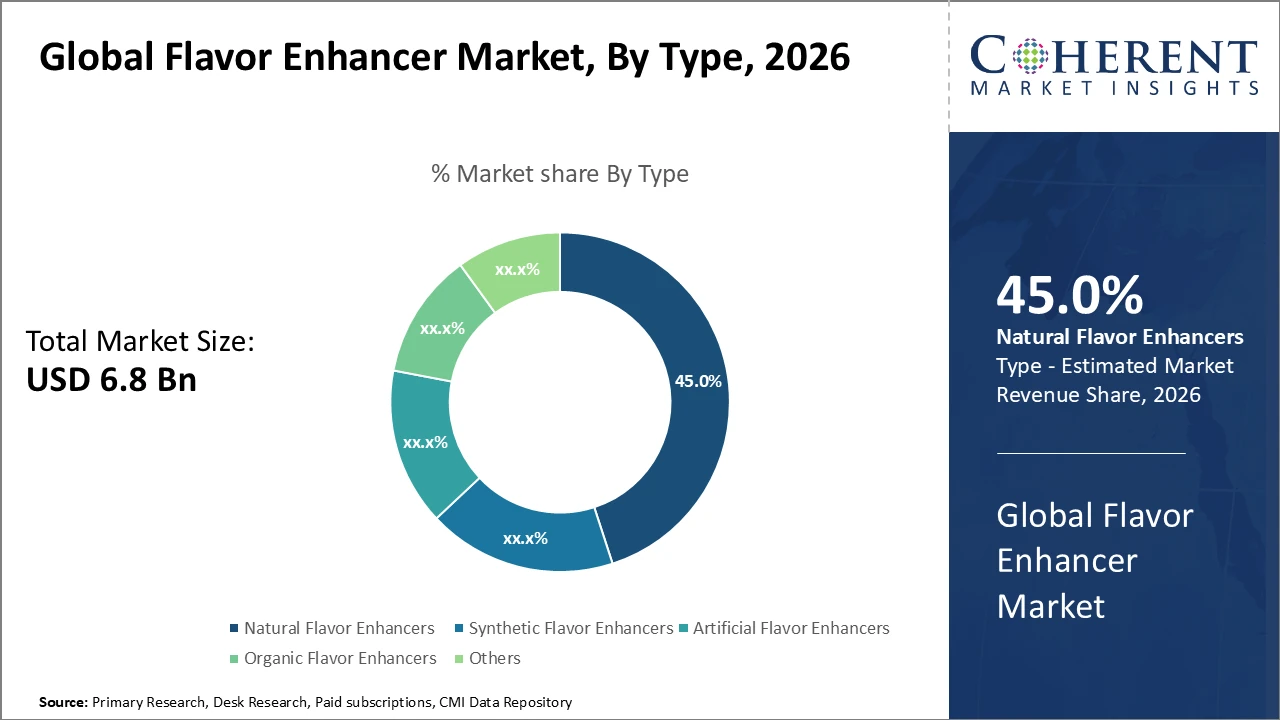
Natural Flavor Enhancers dominate the Type segment with a 45% market share, driven by rising consumer demand for clean-label products and strong regulatory support in key regions. Synthetic and artificial enhancers remain limited to cost-sensitive applications.
The Meat and Poultry application segment leads market revenue, fueled by innovations in savory flavor enhancement and growing use in processed foods. Snacks and convenience foods are experiencing accelerating growth rates.
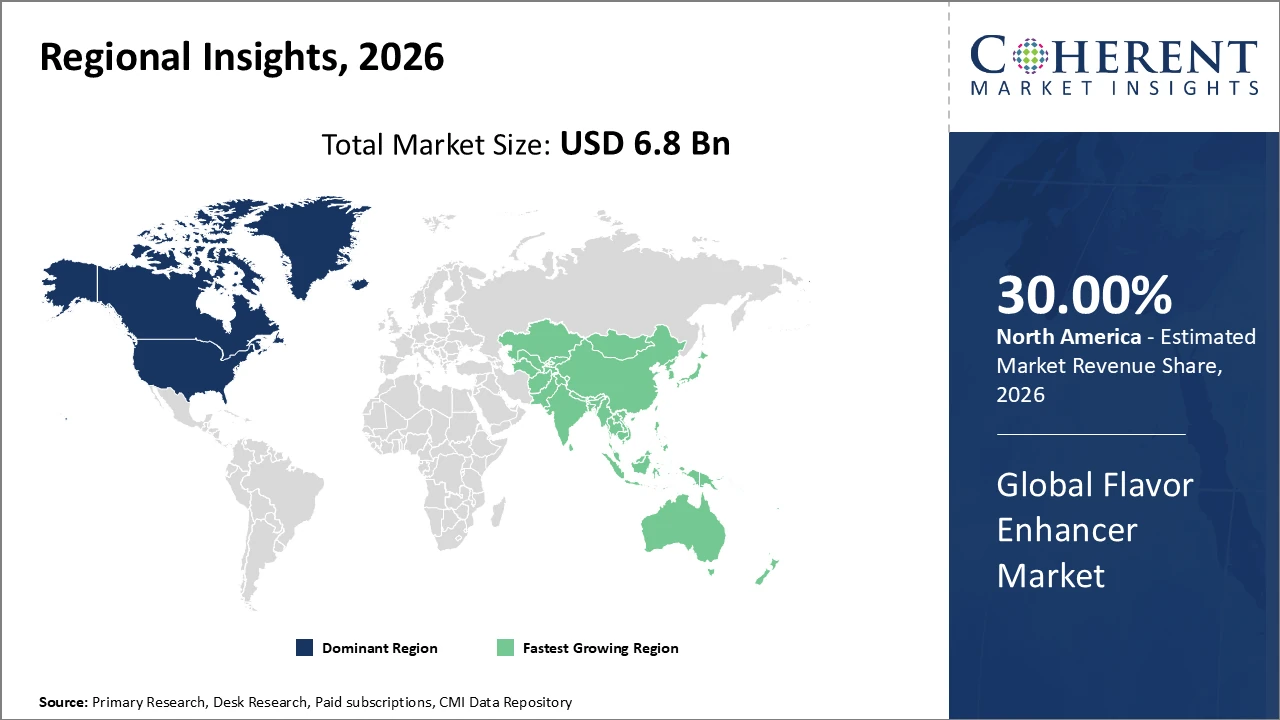
North America holds the largest industry share, supported by advanced food processing infrastructure and consumer preference for flavor innovation.
Asia Pacific is the fastest-growing region, driven by expanding foodservice sectors and rising disposable income, offering significant market opportunities.
Flavor Enhancer Market Segmentation Analysis
To learn more about this report, Request Free Sample
Flavor Enhancer Market Insights, By Type
Natural Flavor Enhancers dominate the market with a 45% share, driven by increasing consumer demand for transparency and clean-label products. Their use spans processed meat, dairy, and beverages, where authenticity and natural taste are critical. The fastest-growing subsegment is Organic Flavor Enhancers, which leverage organic certification and sustainable sourcing to appeal to health-conscious and niche markets. Synthetic Flavor Enhancers maintain a significant share in cost-sensitive applications, offering consistent and potent taste profiles, while Artificial Flavor Enhancers continue to serve legacy products. The Others category includes specialized blends and novel chemical derivatives, reflecting evolving market dynamics focused on health, sustainability, and cost efficiency.
Flavor Enhancer Market Insights, By Application
Meat and Poultry dominates the flavor enhancer market, driven by innovations that enhance umami and savory profiles, which are critical for processed and cooked meat products and directly influence consumer preference and repeat purchases. The fastest-growing application is Snacks and Convenience Foods, fueled by rising demand for ready-to-eat meals and on-the-go snacking globally. Beverages are also gaining momentum, with flavor enhancers improving taste without added sugars to align with health trends. Dairy and Frozen Products continue steady growth due to flavor enhancement in low-fat and reduced-sugar options, while Others, including sauces, soups, and condiments, benefit from specialized flavoring ingredients that differentiate products and expand overall market potential.
Flavor Enhancer Market Insights, By Form
Powder form dominates the flavor enhancer market due to its versatility, long shelf life, and ease of handling, making it ideal for large-scale food manufacturing. Liquid flavor enhancers represent the fastest-growing subsegment, offering convenient application in beverages and ready-to-eat meals while enabling precise flavor control. Paste forms, though niche, are critical for artisanal and specialty culinary uses, providing concentrated taste impact. The Others category includes encapsulated and spray-dried formats designed for specific functions, such as sustained flavor release or masking undesirable notes. This form-based segmentation highlights functional preferences that enhance formulation flexibility and manufacturing efficiency across the flavor enhancer industry.
Flavor Enhancer Market Trends
The flavor enhancer market is increasingly driven by sustainability and health-focused products, with natural and organic enhancers seeing a 15% rise in new product launches globally in 2025.
Integration of AI technologies in flavor development is enabling personalized and innovative food experiences, allowing companies to optimize formulations and reduce product development timelines.
Regional diversification is gaining importance, as multinational food companies adapt products to local tastes, particularly in emerging markets where urban consumers demand novel and unique flavor profiles.
These trends collectively highlight the market’s shift toward clean-label, technologically advanced, and consumer-tailored flavor solutions.
Flavor Enhancer Market Insights, By Geography
To learn more about this report, Request Free Sample
North America Flavor Enhancer Market Analysis and Trends
In North America, the flavor enhancer market is dominated by a well-established food processing sector, advanced technological infrastructure, and strong consumer demand for innovative and diverse flavor solutions, accounting for over 30% of the market share in 2026. The U.S. leads the region, supported by substantial investments in research and development and regulatory frameworks that encourage clean-label and natural products. Key players, including Kerry Group and Ajinomoto, actively drive market trends through product innovation, strategic collaborations, and expansion initiatives. These factors collectively reinforce North America’s position as a major hub for flavor enhancer production, adoption, and technological advancement.
Asia Pacific Flavor Enhancer Market Analysis and Trends
Asia Pacific is the fastest-growing flavor enhancer market, projected to achieve a CAGR of approximately 10.3% during the forecast period. Growth is driven by rapid urbanization, rising disposable incomes, and the expansion of foodservice industries across China, India, and Southeast Asia. Consumer willingness to experiment with diverse flavors, combined with local manufacturers aligning with global food trends, further stimulates demand. Leading companies such as Fufeng Group and Döhler Group have expanded regional operations to leverage this dynamic market. These factors collectively position Asia Pacific as a key growth hub, offering significant opportunities for both domestic and multinational flavor enhancer producers.
Flavor Enhancer Market Outlook for Key Countries
USA Flavor Enhancer Market Analysis and Trends
The U.S. flavor enhancer market is defined by dynamic innovation and strong consumer demand for sophisticated and authentic taste experiences. Regulatory support for natural and clean-label ingredients has encouraged investment in organic and plant-based enhancers. Leading companies drive growth through strategic initiatives, including product launches and partnerships; for example, Kerry Group’s 2025 introduction of a proprietary natural flavor system captured a key market segment, contributing to a 7% revenue increase. Consumer preference for transparency and high-quality ingredients continues to shape formulations, reinforcing the U.S. as a central hub for global flavor enhancer innovation, adoption, and market expansion.
Germany Flavor Enhancer Market Analysis and Trends
The German flavor enhancer market is driven by a strong focus on quality, clean-label products, and innovation in food and beverage formulations. Consumers increasingly demand natural, organic, and plant-based enhancers, prompting manufacturers to adopt sustainable sourcing and advanced extraction techniques. The Meat and Poultry segment remains dominant, while Snacks and Convenience Foods show rapid growth. Regulatory frameworks supporting food safety and labeling transparency further shape market dynamics. Leading companies, including Döhler Group and Symrise, are investing in R&D and product diversification to meet evolving preferences. Germany’s mature food industry and export-oriented market position it as a key European hub for flavor enhancer development.
Analyst Opinion
Increasing industrial-scale production capacity has significantly influenced the flavor enhancer market, with global production growing 7.1% year-on-year in 2024, driven by expansions in Asia Pacific and North America to meet rising consumer demand.
On the demand side, price sensitivity shapes market strategies; in 2025, cost-performance optimized seasoning blends saw a 12% increase in imports by major food manufacturing countries, highlighting strong demand for value-driven products and the need for region-specific pricing approaches.
Product diversification is key, with meat and poultry flavor enhancers accounting for over 28% of total demand by volume in 2026, supporting higher penetration in snacks and ready-to-eat meals.
Adoption of natural and organic flavor enhancers demonstrated a 15% compound growth in revenue during 2024–2026, particularly in health-conscious markets like Western Europe, aligning with regulatory support for clean-label products and driving sustained industry growth.
Market Scope
| Report Coverage | Details | ||
|---|---|---|---|
| Base Year: | 2025 | Market Size in 2026: | USD 6.8 billion |
| Historical Data for: | 2020 To 2024 | Forecast Period: | 2026 To 2033 |
| Forecast Period 2026 to 2033 CAGR: | 8.5% | 2033 Value Projection: | USD 11.6 billion |
| Geographies covered: |
|
||
| Segments covered: |
|
||
| Companies covered: | Kerry Group Plc, Dohler Group, Symrise AG, Mane SA, Firmenich SA, Tate & Lyle PLC, Givaudan S.A., Ajinomoto Co., Inc., DuPont Nutrition & Biosciences, Cytec Industries Incorporated | ||
| Growth Drivers: |
|
||
Uncover macros and micros vetted on 75+ parameters: Get instant access to report
Flavor Enhancer Market Growth Factors
The flavor enhancer market is experiencing robust growth driven by several key factors. Rising consumer preference for flavorful convenience foods, particularly ready-to-eat meals, fueled a 10.2% CAGR in demand in 2025. Stringent food safety regulations have accelerated the adoption of natural and organic flavor enhancers, with market revenue increasing over 15% in 2024. Advances in extraction and synthesis technologies have enhanced product efficacy and cost efficiency, promoting wider use across beverages, dairy, and processed foods. Additionally, the globalization of culinary tastes is expanding applications in emerging markets like India and Brazil, supporting market diversification and sustained growth.
Flavor Enhancer Market Development
In 2025, Kerry Group introduced a new line of natural umami flavor systems designed for processed meats and ready-to-eat meals. This product launch targeted growing consumer demand for clean-label and authentic-tasting foods, capturing a significant market segment and contributing to a 6% revenue increase in key regions. The initiative underscored the company’s focus on innovation and meeting evolving taste preferences in the food industry.
Key Players
Leading Companies of the Market
Kerry Group Plc
Mane SA
Firmenich SA
Tate & Lyle PLC
Symrise AG
Givaudan S.A.
Ajinomoto Co., Inc.
DuPont Nutrition & Biosciences
Cytec Industries Incorporated
Dohler Group
Several leading companies have strengthened their market positions through strategic acquisitions and product innovation. For example, Kerry Group’s 2025 acquisition of a natural flavor startup accelerated its penetration into clean-label segments, leading to a 9% increase in annual revenue from natural enhancers. Similarly, Ajinomoto expanded operations in Asia Pacific by introducing localized flavor solutions, boosting regional market share by 6% in 2024. This growth was driven by tailored product innovation, particularly in savory snacks, demonstrating how strategic investments and market-specific approaches are key drivers for competitive advantage and sustained expansion in the flavor enhancer industry.
Flavor Enhancer Market Future Outlook
The flavor enhancer market is poised for sustained growth, driven by increasing consumer preference for natural, clean-label, and health-focused products. Rising demand in processed foods, snacks, beverages, and ready-to-eat meals will continue to expand market opportunities globally. Technological advancements in extraction, synthesis, and formulation are enabling more efficient, versatile, and cost-effective products. Additionally, regional diversification, especially in emerging markets across Asia Pacific and Latin America, is creating new growth avenues. Companies are expected to focus on product innovation, sustainable sourcing, and AI-driven flavor development to meet evolving consumer tastes. Regulatory support for natural ingredients further strengthens long-term market prospects.
Flavor Enhancer Market Historical Analysis
The flavor enhancer market has experienced steady growth over the past decade, driven by evolving consumer preferences for taste, convenience, and authenticity. Early growth was fueled by demand in processed meats, snacks, and beverages, with synthetic and artificial enhancers dominating due to cost-effectiveness. From 2018 onwards, natural and organic flavor enhancers gained traction, supported by regulatory encouragement and rising clean-label awareness. Technological advancements in extraction and formulation improved product consistency and efficacy, enabling broader adoption across diverse food and beverage applications. Additionally, expansion in emerging markets such as Asia Pacific and Latin America contributed to global market penetration and revenue growth historically.
Sources
Primary Research Interviews:
Flavor solution providers and ingredient suppliers
Research and development laboratories in food technology
Culinary institutes and product formulation experts
Food scientists and sensory evaluation specialists
Magazines:
FoodNavigator – Flavor Innovation & Industry Updates
Food Processing Magazine – Ingredients & Flavor Solutions
BeverageDaily – Flavor Technology & Market Trends
Food Business News – Ingredient Developments
Journals:
Journal of Food Science – Flavor Chemistry & Technology
International Journal of Gastronomy and Food Science
Journal of Food Engineering – Flavor Applications & Formulations
Critical Reviews in Food Science and Nutrition – Additives & Enhancers
Newspapers:
The Wall Street Journal – Food & Beverage Industry
Financial Times – Food Technology & Ingredients
Reuters – Global Food Ingredients Market
Bloomberg – Flavor & Additives Business Insights
Nikkei Asia – Food Manufacturing & Ingredient Trends
Associations:
International Food & Beverage Alliance (IFBA)
Institute of Food Technologists (IFT)
European Flavour Association (EFFA)
Share
Share
Shivam Bhutani has 6 years of experience in market research and strategy consulting. He is a Market Research Consultant with strong analytical background. He is currently an MBA candidate specializing in Business Analytics from BITS Pilani.
He is adept at navigating diverse roles from sales and marketing to research and strategy consulting. He excels in market estimation, competitive intelligence, pricing strategy, and primary research. He is skilled at analysing large datasets to provide precise insights, helping clients in achieving strategic transformation across various industries. He is skilled in leveraging data visualization techniques to drive innovation and enhance business processes.

Credibility and Certifications

860519526


9001:2015

27001:2022


Need a Custom Report?
We can customize every report - free of charge - including purchasing stand-alone sections or country-level reports
Customize NowJoining thousands of companies around the world committed to making the Excellent Business Solutions.
View All Our Clients