Fog Computing Market Analysis & Forecast: 2026-2033

Fog Computing Market Size and Forecast – 2026 – 2033
The Global Fog Computing Market size is estimated to be valued at USD 4.2 billion in 2026 and is expected to reach USD 12.5 billion by 2033, exhibiting a compound annual growth rate (CAGR) of 16.2% from 2026 to 2033.
Global Fog Computing Market Overview
The fog computing market is driven by the rapid growth of Internet of Things (IoT) devices and the need for low-latency data processing closer to the source. By extending cloud capabilities to the network edge, fog computing enhances real-time analytics, reduces bandwidth usage, and improves system efficiency. Increasing adoption in smart cities, autonomous vehicles, industrial automation, and healthcare is accelerating demand. The rise of 5G networks further supports market expansion by enabling faster and more reliable connectivity. Additionally, growing concerns over data security and the need for decentralized computing architectures are fueling the adoption of fog computing solutions globally.
Key Takeaways
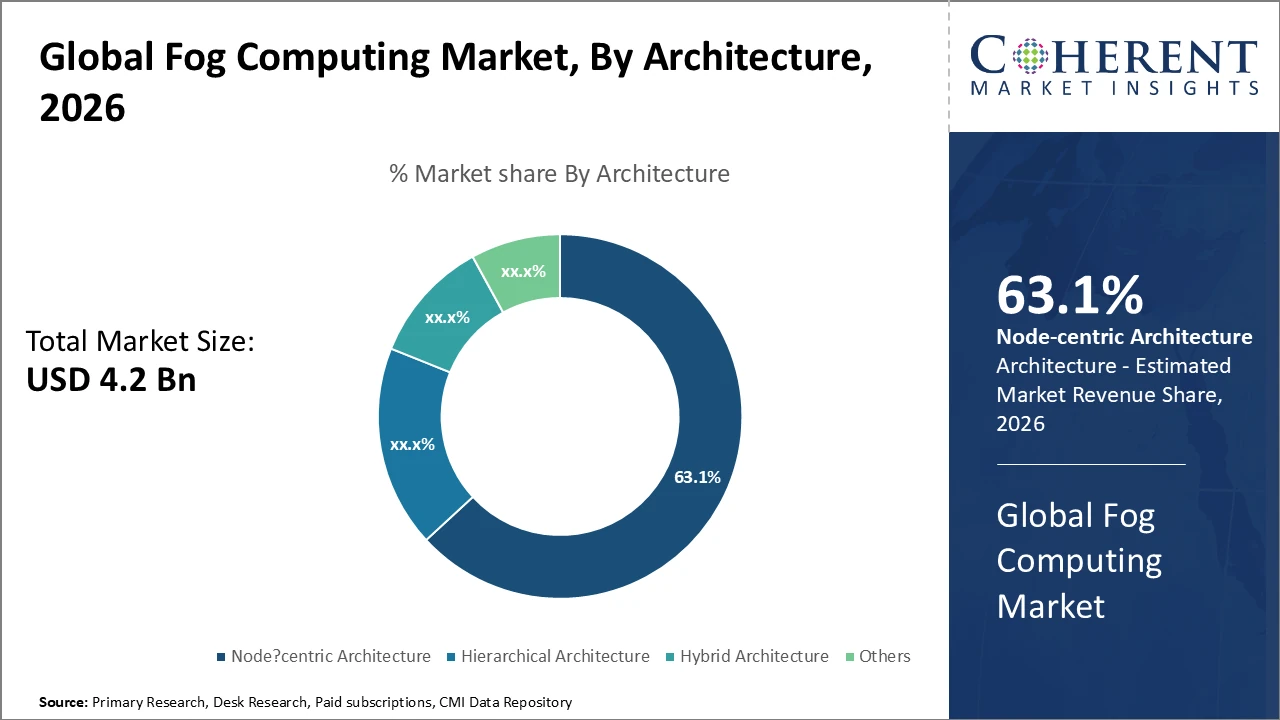
The node-centric architecture segment holds the largest market share, driven by its scalability and low-latency benefits, which are crucial in smart manufacturing environments requiring high-speed processing.
In component segmentation, hardware remains dominant due to continuous innovations in fog nodes and gateway devices, while software solutions are rapidly growing with the adoption of edge orchestration platforms.
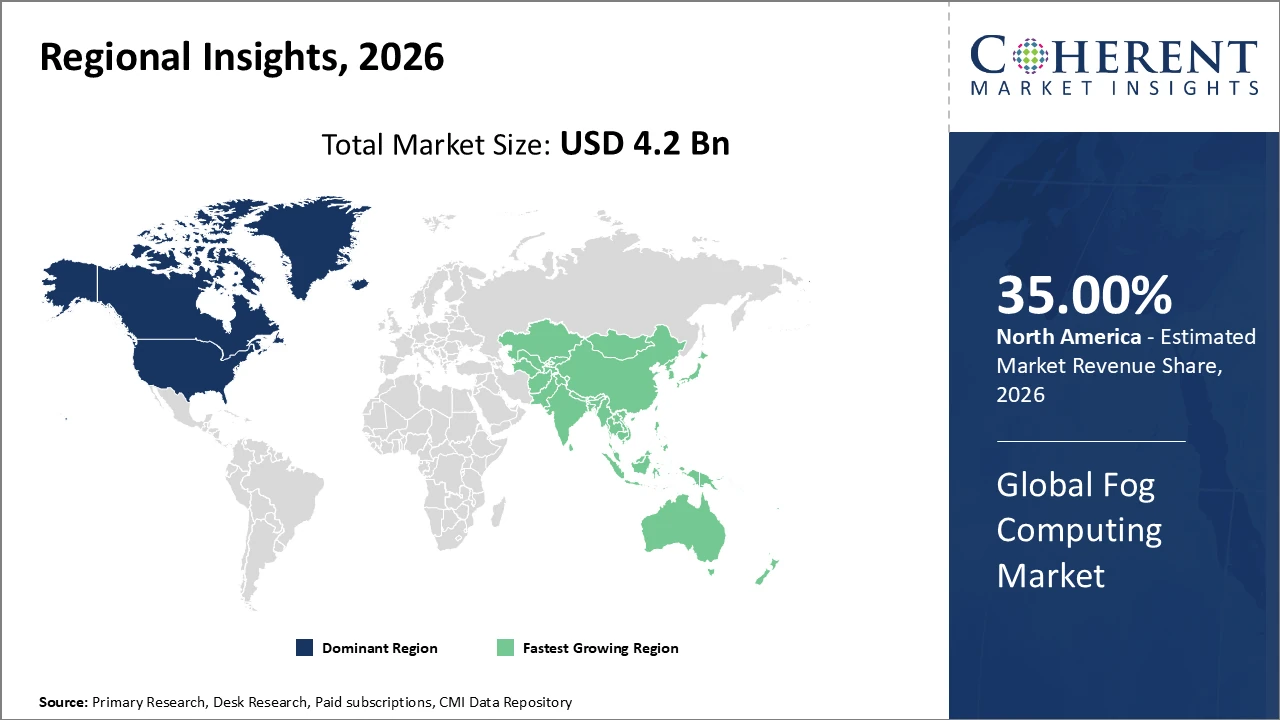
North America leads the fog computing market, holding over 35% of the share, supported by strong government initiatives and the presence of global technology companies.
The Asia Pacific region is the fastest-growing market, with a CAGR exceeding 18%, driven by significant digital infrastructure investments and smart city projects, especially in China and India.
Fog Computing Market Segmentation Analysis
To learn more about this report, Request Free Sample
Fog Computing Market Insights, By Architecture
Node-centric Architecture dominates the Fog Computing Market due to its ability to minimize latency and maximize scalability, making it ideal for applications requiring rapid data processing, such as smart manufacturing and autonomous systems. This model enables each fog node to operate independently, allowing flexible deployment across geographically dispersed networks. The Hybrid Architecture segment is the fastest-growing, driven by the increasing complexity of distributed IoT environments that require combined hierarchical and node-based communication for multi-layer data orchestration. Hierarchical Architecture, while suitable for large enterprise networks, faces slower adoption due to higher complexity and costs. Other architectures serve niche use cases requiring custom fog-node configurations.
Fog Computing Market Insights, By Components
Hardware dominates the Fog Computing Market due to ongoing innovations in fog nodes, gateways, and edge devices, offering enhanced processing power and communication capabilities compatible with 5G networks. In 2025, key hardware advancements led to a 25% improvement in processing speeds and greater energy efficiency, boosting adoption across industries. Software components are the fastest-growing segment, driven by increasing demand for orchestration, analytics, and security platforms that optimize fog deployments. Services, including consulting and managed solutions, support market expansion by facilitating integration into complex IT environments. Other components, such as maintenance and support products, serve niche but essential roles in the ecosystem.
Fog Computing Market Insights, By Application
Smart Manufacturing leads the Fog Computing Market, driven by increasing automation and AI integration at the edge, which reduces downtime and enhances operational efficiency. In 2025, manufacturers using fog computing frameworks reported a 30% decrease in equipment failures, highlighting its impact. Smart Healthcare is the fastest-growing segment, fueled by the rising need for remote monitoring and intelligent diagnostics that rely on low-latency data processing for timely patient care. Smart Transportation follows closely, supported by vehicle development and traffic management systems utilizing fog nodes for real-time decision-making. Smart Cities are steadily adopting fog computing for connected infrastructure, including surveillance and energy management.
Fog Computing Market Trends
The fog computing market is increasingly shifting toward edge AI integration, with smart factory deployments running real-time machine learning algorithms on fog nodes, improving process efficiencies by up to 35% in 2025.
Energy-efficient fog computing units are gaining adoption in response to environmental concerns, with Europe leading the development of low-power devices that reduced total energy consumption by 18% in 2026.
The growing deployment of fog computing for autonomous vehicles underscores the market’s alignment with smart transportation, where minimizing latency is critical for real-time decision-making and safety.
Fog Computing Market Insights, By Geography
To learn more about this report, Request Free Sample
North America Fog Computing Market Analysis and Trends
In North America, the Fog Computing Market is dominated by a mature digital infrastructure and substantial government investments, including initiatives such as the National Artificial Intelligence Initiative Act passed in 2024. The region accounts for approximately 35% of the market share, driven by technology leaders like Microsoft Corporation and Amazon Web Services, which are spearheading edge and fog computing projects. Strong adoption across healthcare, smart manufacturing, and transportation sectors further strengthens market leadership. Supportive regulatory frameworks, advanced research and development capabilities, and widespread enterprise integration of real-time data processing solutions continue to reinforce North America’s position as a key player in the global fog computing ecosystem.
Asia Pacific Fog Computing Market Analysis and Trends
The Asia Pacific region is experiencing the fastest growth in the Fog Computing Market, with a CAGR exceeding 18%, driven by rapid urbanization, widespread IoT adoption, and supportive government policies promoting smart cities and Industry 4.0 initiatives. In 2025, China invested USD 1.1 billion in fog computing infrastructure, with companies like Huawei and Alibaba leading advancements in cloud-edge collaborations. India’s growth is supported by government-backed smart infrastructure projects and a thriving startup ecosystem focused on edge intelligence solutions. Together, these developments are fostering a dynamic market environment, accelerating fog computing adoption, and positioning Asia Pacific as a key growth hub globally.
Fog Computing Market Outlook for Key Countries
USA Fog Computing Market Analysis and Trends
The USA’s Fog Computing Market demonstrates high adoption across smart manufacturing, defense, and healthcare sectors, supported by advanced R&D facilities and substantial investments from key players like IBM and Intel. In 2025, contracts exceeding USD 500 million were awarded for fog-based infrastructure in smart grids and autonomous transportation pilot projects, highlighting strong government and private sector engagement. The country’s focus on cybersecurity, data privacy, and sovereignty further drives the integration of edge computing with AI, enabling real-time analytics and secure operations. These factors collectively reinforce the USA’s position as a global leader in fog computing deployment and innovation.
Germany Fog Computing Market Analysis and Trends
Germany’s Fog Computing Market is witnessing steady growth, driven by strong industrial automation, Industry 4.0 adoption, and smart manufacturing initiatives. Leading technology firms, including Siemens and Bosch, are deploying fog-based solutions to optimize production efficiency, reduce latency, and enable real-time data processing across factories. Government-backed programs supporting digital transformation and IoT integration further accelerate market adoption. In 2025, pilot projects in smart logistics and energy management demonstrated significant operational improvements and energy savings. The market also trends toward hybrid fog-cloud architectures, integrating AI and analytics at the edge, positioning Germany as a key hub for innovation in Europe’s fog computing ecosystem.
Analyst Opinion
The surge in IoT device deployments is a key demand-side driver, with approximately 35 billion connected devices operational worldwide in 2025, increasing the need for edge analytics and boosting fog computing market revenue.
On the supply side, advancements in network infrastructure, including 5G rollout, have expanded fog node production capacity, reducing data transfer times by around 30% in pilot deployments in 2024, supporting overall market growth.
Pricing competitiveness among hardware vendors led to an average 12% reduction in fog computing gateway costs between 2024 and 2026, enabling wider adoption by small and medium enterprises and expanding market share.
Geographically, 2025 import data shows a significant rise in fog computing hardware imports in Asia Pacific, with China accounting for over 28% of regional imports, reflecting growing use in smart manufacturing and smart city projects.
Market Scope
| Report Coverage | Details | ||
|---|---|---|---|
| Base Year: | 2025 | Market Size in 2026: | USD 4.2 billion |
| Historical Data for: | 2020 To 2024 | Forecast Period: | 2026 To 2033 |
| Forecast Period 2026 to 2033 CAGR: | 16.2% | 2033 Value Projection: | USD 12.5 billion |
| Geographies covered: |
|
||
| Segments covered: |
|
||
| Companies covered: | HPE, Cisco Systems, Dell Technologies, Intel Corporation, IBM Corporation, Microsoft Corporation, VMware Inc., Google LLC, Ericsson, NEC Corporation | ||
| Growth Drivers: |
|
||
Uncover macros and micros vetted on 75+ parameters: Get instant access to report
Fog Computing Market Growth Factors
The rapid growth of IoT devices producing massive data volumes is a key driver of the Fog Computing Market, with smart manufacturing deployments alone increasing fog node installations by 25% in 2025. Accelerated 5G adoption enhances performance by reducing latency and enabling real-time analytics for critical applications in healthcare and autonomous vehicles. Government initiatives promoting Industry 4.0, especially in Asia Pacific, have stimulated investments in fog and edge computing frameworks, further boosting market growth. Rising concerns over data security and privacy are driving decentralized edge processing, improving data control, reducing network congestion, and supporting enterprise adoption in 2026.
Fog Computing Market Development
In April 2026, BTC Digital completed a 10MW computing facility in Georgia and is completing power interconnection, with operations targeted for H1 2026. The company also plans a phased AI computing center at the site, starting with 5MW, expanding to 10MW, and potentially reaching 25MW capacity based on demand and financing.
Key Players
Leading Companies of the Market
HPE
Cisco Systems
Dell Technologies
Intel Corporation
IBM Corporation
VMware Inc.
Microsoft Corporation
Ericsson
Google LLC
NEC Corporation
Competitive strategies in the Fog Computing Market often revolve around technology partnerships and acquisitions. In 2025, Cisco Systems formed strategic collaborations with 5G operators to enhance fog networking capabilities, leading to a 15% increase in market share. Similarly, Intel launched specialized fog computing chipsets in 2024, improving processing efficiencies by over 20% and strengthening its position in industrial IoT sectors. These approaches highlight how leading companies leverage technological innovation, strategic alliances, and product development to drive growth, expand market reach, and maintain a competitive edge in the rapidly evolving fog computing landscape.
Fog Computing Market Future Outlook
The Fog Computing Market is expected to experience significant growth in the coming years, driven by the increasing adoption of IoT devices, demand for low-latency processing, and the need for real-time analytics across industries. Emerging technologies, such as AI and machine learning integration at the edge, will enhance decision-making capabilities and operational efficiency. Expansion in smart cities, connected transportation, and industrial automation will further fuel market adoption. Additionally, investments in secure and scalable fog infrastructure, coupled with supportive regulatory frameworks, are anticipated to accelerate deployment globally. Overall, the market outlook is highly promising, with opportunities for innovation and widespread enterprise adoption.
Fog Computing Market Historical Analysis
The Fog Computing Market has experienced steady growth over the past decade, driven by the rise of IoT devices and the need for low-latency data processing. Initially, cloud-centric architectures struggled to handle real-time applications, prompting the adoption of fog computing to process data closer to the source. Early deployments in manufacturing, smart grids, and transportation demonstrated improved efficiency, reduced latency, and enhanced security. North America and Europe led market development due to advanced IT infrastructure and early adoption of edge technologies. Strategic collaborations between technology providers and enterprises, along with continuous R&D, laid the foundation for the market’s current expansion and innovation trajectory.
Sources
Primary Research Interviews:
R&D managers, engineers, and project leaders from companies developing fog computing solutions, including edge gateways, fog nodes, and integrated software platforms.
Technical specialists from IT infrastructure and networking firms, focusing on hardware performance, cloud integration, and cybersecurity for distributed computing systems.
Industry experts from organizations involved in IoT deployment, real-time analytics, and smart city or industrial automation projects.
Magazines:
IoT World Today – Market trends, industry updates, and innovations in fog and edge computing.
Network World – Developments in networking infrastructure, data processing, and edge integration.
Enterprise IoT Insights – Updates on industrial IoT applications, fog computing adoption, and deployment strategies.
Journals:
IEEE Internet of Things Journal – Research on fog computing architectures, IoT integration, and real-time data processing.
Journal of Cloud Computing – Studies on hybrid cloud-fog architectures, latency reduction, and distributed computing performance.
Future Generation Computer Systems – Insights on fog computing algorithms, AI integration, and application case studies.
Newspapers:
The Wall Street Journal – Corporate developments, mergers, and investments in fog and edge computing companies.
Financial Times – Market trends, regulatory policies, and global technology adoption analysis.
Reuters – News on product launches, technological partnerships, and industry innovations.
Bloomberg – Company strategies, revenue trends, and market forecasts for fog computing solutions.
Associations:
OpenFog Consortium – Standards, reference architectures, and adoption guidelines for fog computing.
Industrial Internet Consortium (IIC) – Data on industrial IoT applications, fog deployments, and best practices.
IEEE Computer Society – Research, policy updates, and initiatives promoting distributed computing and edge intelligence.
Share
Share
Suraj Bhanudas Jagtap is a seasoned Senior Management Consultant with over 7 years of experience. He has served Fortune 500 companies and startups, helping clients with cross broader expansion and market entry access strategies. He has played significant role in offering strategic viewpoints and actionable insights for various client’s projects including demand analysis, and competitive analysis, identifying right channel partner among others.

Credibility and Certifications

860519526


9001:2015

27001:2022


Need a Custom Report?
We can customize every report - free of charge - including purchasing stand-alone sections or country-level reports
Customize NowJoining thousands of companies around the world committed to making the Excellent Business Solutions.
View All Our Clients