Infant Nutrition Market Analysis & Forecast: 2026-2033

Infant Nutrition Market Size and Forecast – 2026 – 2033
The Global Infant Nutrition Market size is estimated to be valued at USD 85.4 billion in 2026 and is expected to reach USD 129.7 billion by 2033, exhibiting a compound annual growth rate (CAGR) of 6.5% from 2026 to 2033.
Global Infant Nutrition Market Overview
The Infant Nutrition Market includes a diverse range of products designed to meet the dietary needs of infants and young children. Key segments comprise infant formula, including powdered, liquid, and follow-on formulas, which provide essential nutrients when breastfeeding is not possible or supplemented. Baby cereals and fortified foods support weaning and early childhood growth, offering vitamins, minerals, and proteins. Specialized nutrition products, such as hypoallergenic formulas and prebiotic- or probiotic-enriched options, address specific health concerns like allergies, digestive issues, and immune support. Additionally, growing demand for organic and plant-based alternatives is shaping product innovation and expanding market offerings globally.
Key Takeaways
The standard infant formula segment holds 42% of the market share, driven by affordability and wide accessibility, while organic infant formula is the fastest-growing subsegment due to rising health consciousness.
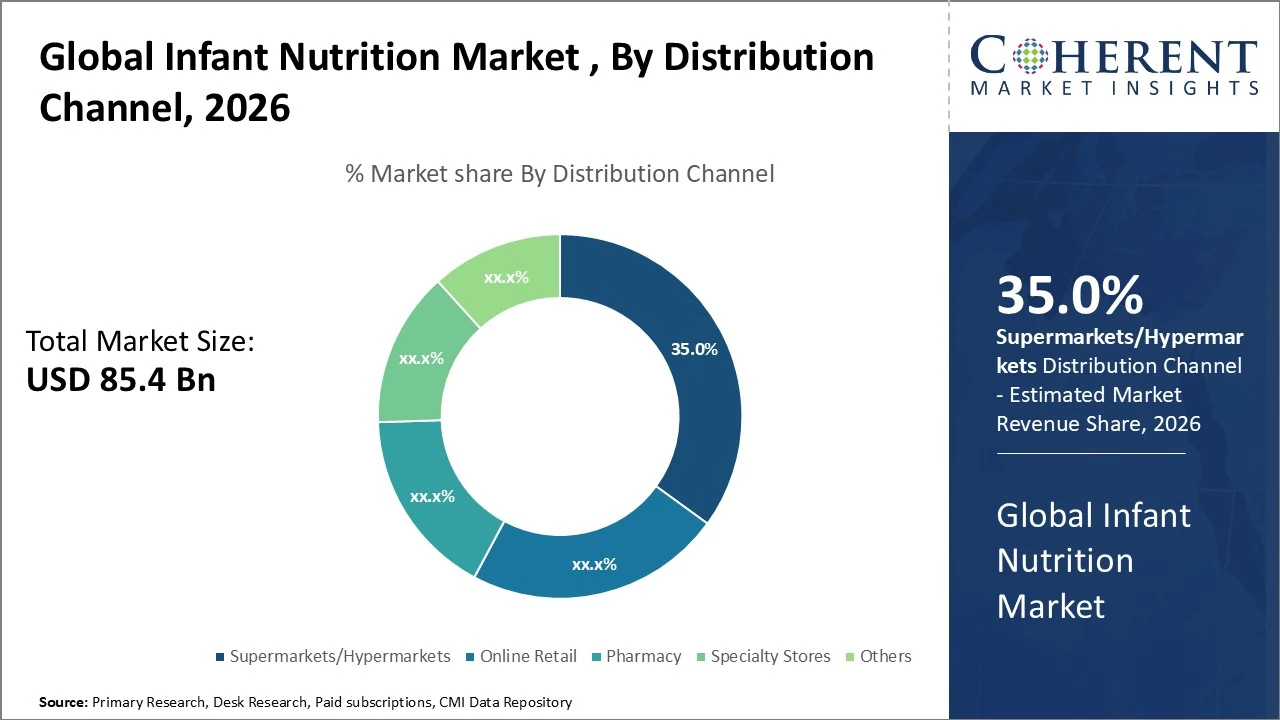
Supermarkets and hypermarkets dominate distribution channels with a 35% market share, though online retail is rapidly expanding, supported by convenience and subscription-based purchasing models.
The 0–6 months age group generates 48% of market revenue, highlighting the critical importance of early-stage nutrition and corresponding purchasing patterns.
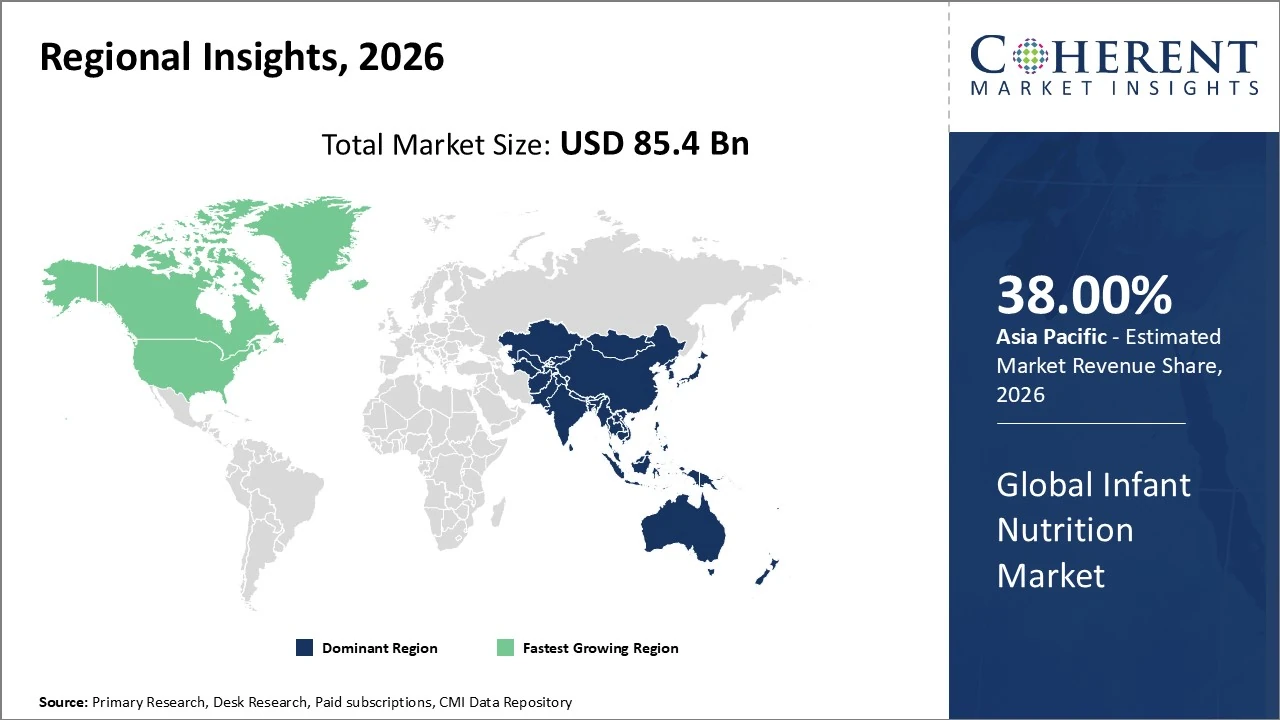
Asia Pacific dominates the infant nutrition market, supported by increasing birth rates and evolving regulatory frameworks, while North America is the fastest-growing region due to premium product adoption and technological advancements.
Infant Nutrition Market Segmentation Analysis
To learn more about this report, Request Free Sample
Infant Nutrition Market Insights, By Distribution Channel
Supermarkets and hypermarkets hold the largest share of the infant nutrition market at 35%, benefiting from convenience, bulk availability, and widespread urban presence. Online retail is the fastest-growing distribution channel, driven by personalized delivery services, subscription models, and increasing digital adoption in developed and emerging markets. Pharmacies remain important in regions where healthcare integration influences purchasing decisions, offering trust and expert guidance. Specialty stores serve niche consumers seeking premium or organic products. Other channels, including direct sales and institutional purchases, contribute to market reach, ensuring accessibility across diverse consumer segments and supporting overall revenue growth in the industry.
Infant Nutrition Market Insights, By Product Type
Standard Infant Formula dominates the infant nutrition market with a 42% share, driven by its affordability and long-standing consumer trust worldwide. Organic Infant Formula is the fastest-growing segment, reflecting increasing demand for natural, chemical-free nutrition, especially in North America and Europe. Specialized Infant Formula targets infants with specific dietary requirements, such as lactose intolerance or sensitivity, providing niche but high-margin opportunities. Follow-On Formula, designed for infants over six months, supports continued growth through extended nutrition needs. Other emerging subsegments include goat milk and plant-based formulas, catering to alternative dietary preferences and health-conscious parents seeking diverse nutritional options for their children.
Infant Nutrition Market Insights, By Age Group
The 0–6 months age group dominates the infant nutrition market with a 48% share, highlighting the critical importance of early-stage nutrition and parents’ willingness to invest in high-quality products. The 6–12 months segment is the fastest-growing, driven by demand for diverse foods and formulas that support key developmental milestones such as weaning and motor skill growth. The 12–24 months and toddler nutrition segments are expanding offerings to address transitional feeding needs and extended supplementation. Other subsegments include specialized nutrition for preterm infants and allergy-specific formulas, catering to infants with unique dietary requirements and ensuring comprehensive market coverage.
Infant Nutrition Market Trends
The infant nutrition market is witnessing a strong shift toward organic and non-GMO products, driven by growing health-conscious consumer preferences.
In 2025, global sales of organic infant formulations increased by 35%, fueled by perceived cognitive and digestive health benefits.
Direct-to-consumer online subscription models surged over 40% from 2024, providing personalized nutrition plans and enhanced convenience for parents.
Sustainability practices, including biodegradable packaging and ethically sourced ingredients, are gaining prominence across the industry.
Regulatory frameworks in Europe have tightened environmental standards since early 2025, encouraging eco-friendly production and packaging practices in infant nutrition.
Infant Nutrition Market Insights, By Geography
To learn more about this report, Request Free Sample
Asia Pacific Infant Nutrition Market Analysis and Trends
Asia Pacific dominates the infant nutrition market, capturing approximately 38% of the global share in 2026, driven by a large infant population, rapid urbanization, and government initiatives supporting child health and nutrition programs. Key markets, including China and India, have experienced strong revenue growth due to rising middle-class incomes, increasing awareness of infant health, and expanding retail and e-commerce infrastructure. Major corporations such as Yili Industrial Group and Ausnutria Dairy have invested heavily in local manufacturing and R&D centers, enabling product localization, improved affordability, and tailored formulations to meet regional dietary preferences, further strengthening their market presence and consumer reach.
North America Infant Nutrition Market Analysis and Trends
North America demonstrates the fastest growth in the infant nutrition market with a CAGR of 7.2%, driven by strong penetration of premium products and heightened consumer health awareness. Regulatory support for nutritional supplements and stringent safety certifications enhances consumer confidence, fostering market expansion. Leading companies, such as Abbott Laboratories, have pioneered hypoallergenic and organic infant formulas, promoting product innovation and stimulating industry growth. Additionally, the region’s well-developed healthcare infrastructure ensures widespread access to infant nutrition products, while a robust e-commerce ecosystem facilitates convenient purchasing and subscription services. These factors collectively position North America as a high-growth market for infant nutrition.
Infant Nutrition Market Outlook for Key Countries
USA Infant Nutrition Market Analysis and Trends
The U.S. infant nutrition market is characterized by strong innovation and premiumization trends, driven by increasing awareness of early childhood nutrition. In 2025, spending on specialized formulas, including lactose-free, hypoallergenic, and organic products, surged by 27%, reflecting heightened consumer demand for high-quality, health-focused options. Leading companies such as Abbott Laboratories and Mead Johnson capitalize on advanced R&D, product innovation, and strategic partnerships with healthcare providers to enhance market penetration and revenue growth. Robust government regulations mandating safety, fortification, and quality standards further strengthen consumer confidence, supporting sustained adoption of premium infant nutrition products and long-term market expansion.
Germany Infant Nutrition Market Analysis and Trends
The Germany infant nutrition market exhibits steady growth, supported by high consumer awareness, stringent food safety regulations, and a well-established healthcare system. Standard infant formulas dominate, while organic and specialized formulas, including hypoallergenic and fortified products, are gaining popularity due to increasing health consciousness among parents. Supermarkets, hypermarkets, and online retail serve as key distribution channels, with e-commerce adoption accelerating convenience-based purchasing. Companies such as HiPP and Milupa focus on product innovation, sustainable packaging, and localized formulations to meet evolving consumer preferences. Additionally, government initiatives promoting child health and nutrition, along with rising urbanization, further drive market demand and revenue growth.
Analyst Opinion
Manufacturing capacities have expanded in Asia Pacific and North America to meet rising infant formula demand; for example, a U.S. manufacturer increased production by 15% in 2025, supported by health regulations promoting fortified ingredients, directly contributing to market growth.
Premium infant nutrition products command a 20–25% price premium over standard formulas, driven by consumer willingness to invest in organic and hypoallergenic options; revenues for premium products grew over 30% in 2024, highlighting their significance as a key market driver.
Import values in Europe and the Middle East rose 12% in 2025, reflecting consumer preference for specialty products from trusted foreign suppliers, broadening market scope.
Hospitals and pediatric care institutes increasingly integrate specialized infant nutrition into care protocols, validating demand from institutional channels and supporting ongoing revenue and innovation investments.
Market Scope
| Report Coverage | Details | ||
|---|---|---|---|
| Base Year: | 2025 | Market Size in 2026: | USD 85.4 billion |
| Historical Data for: | 2020 To 2024 | Forecast Period: | 2026 To 2033 |
| Forecast Period 2026 to 2033 CAGR: | 6.5% | 2033 Value Projection: | USD 129.7 billion |
| Geographies covered: |
|
||
| Segments covered: |
|
||
| Companies covered: | Abbott Laboratories, Nestle S.A., Baby Gourmet, ByHeart, Hero Group, Danone S.A., Bubs Australia Limited, Holle Baby Food GmbH, Synutra International, Inc. | ||
| Growth Drivers: |
|
||
Uncover macros and micros vetted on 75+ parameters: Get instant access to report
Infant Nutrition Market Growth Factors
Rising parental disposable income and growing awareness of infant health are key drivers of global product adoption. In 2025, consumer spending on organic infant nutrition products in Asia Pacific increased by 28%, reflecting heightened demand for premium, health-focused options. Regulatory improvements, including mandatory nutritional labeling and safety certifications, have strengthened consumer trust and broadened market acceptance. Rapid urbanization has further fueled demand for packaged and fortified infant nutrition products suitable for busy lifestyles. Technological innovations, such as probiotic-enriched, lactose-free, and hypoallergenic formulas, have diversified product offerings, accelerated market growth, and expanded revenue opportunities across regions worldwide.
Infant Nutrition Market Development
In March 2026, Good Start Canada launched its new Organic infant formula, made with organic milk and free from antibiotics and artificial growth hormones. The formula delivers expert-recommended levels of DHA and complete nutrition for infants from birth to 12 months.
Key Players
Leading Companies of the Market
Abbott Laboratories
Nestle S.A.
Danone S.A.
ByHeart
Hero Group
Baby Gourmet
Bubs Australia Limited
Holle Baby Food GmbH
Synutra International, Inc.
Competitive strategies in the infant nutrition market heavily focus on mergers and acquisitions to strengthen supply chain efficiency and expand geographic presence. In 2025, a leading market player enhanced its Asia Pacific footprint by acquiring a regional infant formula manufacturer, achieving a 10% revenue increase in that segment within the same year. Additionally, companies have invested significantly in research and development to create non-GMO, organic, and allergen-free formulations, catering to evolving consumer preferences. These innovations have allowed firms to capture a broader customer base across North American and European markets, reinforcing brand loyalty and sustaining long-term market growth.
Infant Nutrition Market Future Outlook
The infant nutrition market is expected to maintain robust growth in the coming years, driven by rising global awareness of early childhood nutrition, increasing parental disposable income, and growing demand for premium, organic, and specialized formulas. Technological advancements, including probiotic-enriched, lactose-free, and hypoallergenic formulations, will continue to diversify product offerings and enhance health benefits. Expansion of healthcare infrastructure and e-commerce channels in emerging markets will improve accessibility, while regulatory support and stringent safety standards will bolster consumer confidence. Sustainability initiatives, such as eco-friendly packaging and ethically sourced ingredients, are likely to shape future market strategies and long-term growth prospects.
Infant Nutrition Market Historical Analysis
The infant nutrition market has experienced steady growth over the past decade, driven by increasing awareness of early childhood nutrition and rising global birth rates. Initially, standard infant formulas dominated, providing affordable nutrition where breastfeeding was insufficient or supplemented. Over time, demand for organic, hypoallergenic, and fortified formulas grew, reflecting changing consumer preferences toward healthier and specialized options. Expansion of retail channels, including supermarkets, hypermarkets, and online platforms, facilitated wider accessibility. Key players invested in R&D and local manufacturing to meet regional demands, while regulatory frameworks ensured product safety and quality. These historical developments laid the foundation for the market’s current expansion and innovation trends.
Sources
Primary Research Interviews:
Pediatricians, dietitians, and nutritionists
R&D specialists and food technologists
Hospitals, clinics, and pediatric care centers
Retail and e-commerce distributors of infant nutrition products
Magazines:
Nutrition Insight
Dairy Industries International
Nutritional Outlook
Food Navigator – Dairy & Infant Nutrition
Journals:
Journal of Pediatric Gastroenterology and Nutrition
Maternal & Child Nutrition
Food & Function
International Journal of Food Sciences and Nutrition
Nutrition Reviews
Newspapers:
The Wall Street Journal – Consumer Health & Nutrition
Financial Times – Food & Beverage Industry
Reuters – Global Infant Nutrition Markets
Bloomberg – Food & Healthcare Products
Nikkei Asia – Baby Food & Nutrition
Associations:
International Baby Food Association (IBFA)
American Academy of Pediatrics (AAP) – Nutrition Guidelines
Global Alliance for Improved Nutrition (GAIN)
World Health Organization (WHO) – Infant Feeding Programs
Share
Share
Pankaj Poddar is a seasoned market research consultant with over 12 years of extensive experience in the fast-moving consumer goods (FMCG) and plastics material industries. He holds a Master’s degree in Business Administration with specialization in Marketing from Nirma University, one of India’s reputed institutions, which has equipped him with a solid foundation in strategic marketing and consumer behavior.
As a Senior Consultant at CMI for the past three years, he has been instrumental in harnessing his comprehensive understanding of market dynamics to provide our clients with actionable insights and strategic guidance. Throughout his career, He has developed a robust expertise in several key areas, including market estimation, competitive analysis, and the identification of emerging industry trends. His approach is grounded in a commitment to understanding client needs thoroughly and fostering collaborative relationships. His dedication to excellence and innovation solidifies his role as a trusted advisor in the ever-evolving landscape of not only FMCG but also chemicals and materials markets.

Credibility and Certifications

860519526


9001:2015
27001:2022


Need a Custom Report?
We can customize every report - free of charge - including purchasing stand-alone sections or country-level reports
Customize NowJoining thousands of companies around the world committed to making the Excellent Business Solutions.
View All Our Clients