

Global Organic Foods Market Size and Forecast – 2026 - 2033
The Global Organic Foods Market is estimated to be valued at USD 208.81 Bn in 2026 and is expected to reach USD 455.87 Bn by 2033, exhibiting a compound annual growth rate (CAGR) of 11.8% from 2026 to 2033.
Key Takeaways of the Organic Foods Market
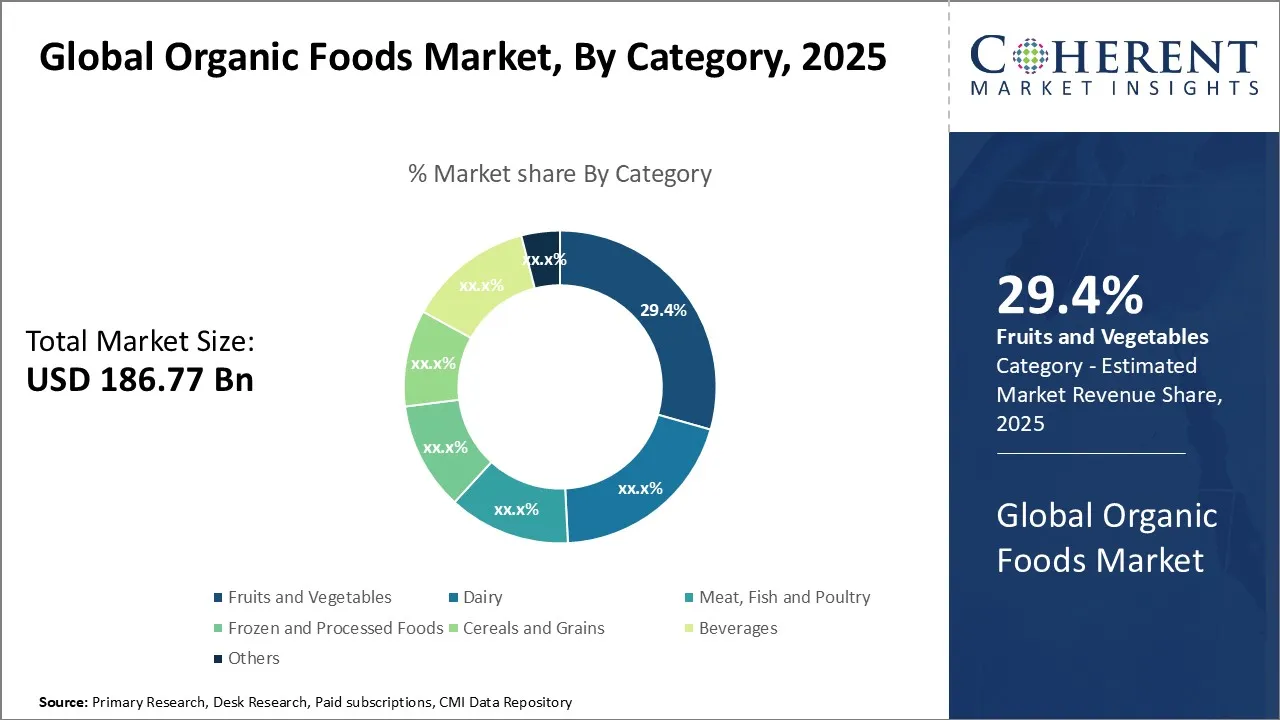
- The fruits and vegetables segment is projected to hold a 30.4% share of the global organic foods market in 2026, fueled by a combination of consumer preferences and environmental considerations
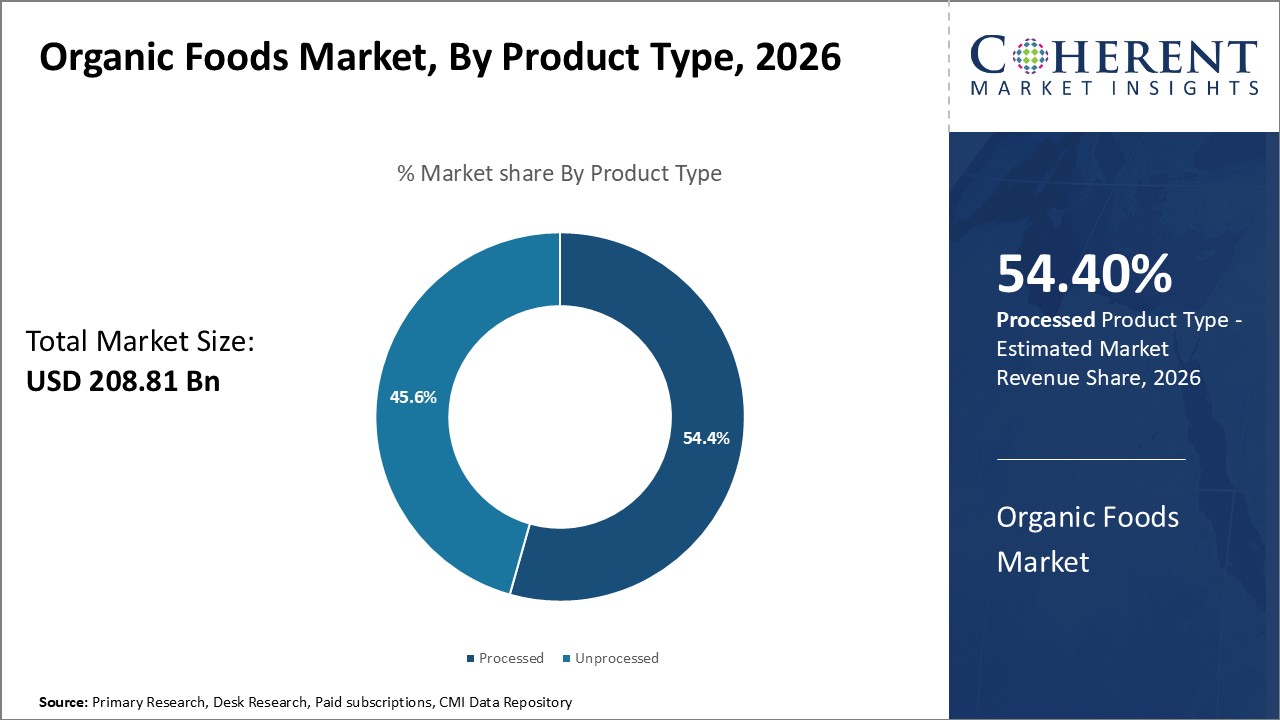
- The processed segment is expected to account for 54.4 % of the market share in 2026, covering various organic foods that are prepared, preserved, or packaged.
- The supermarkets/hypermarkets segment is projected to hold 37.5 % of the market share in 2026, driven by their key role in offering accessibility, variety, and consumer trust.
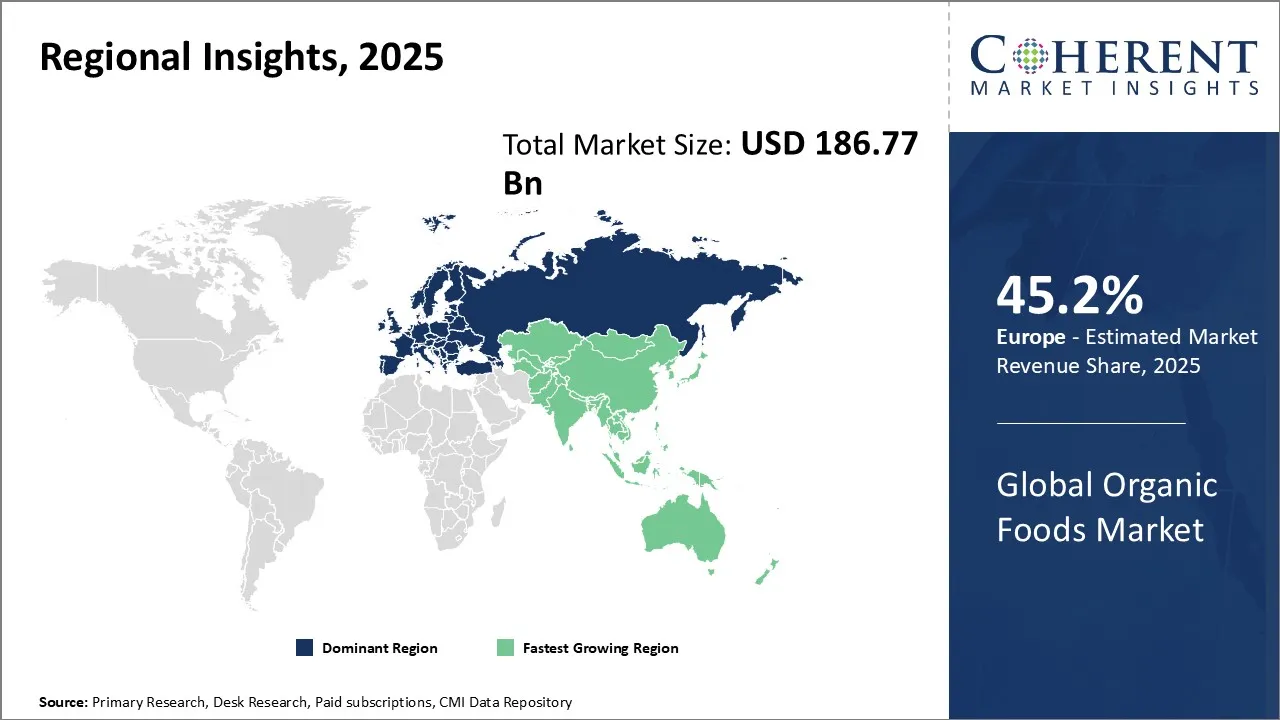
- Europe is expected to lead the global organic foods market in 2026 with a 45.2 % share, driven by stringent regulations, strong consumer preference for sustainable products, and well-established organic farming practices.
- Asia Pacific, with a 13. 5% share in 2026, will be the fastest-growing region, fueled by rising health awareness, rapid urbanization, increasing disposable incomes, and expanding retail infrastructure.
Market Overview
A significant market trend is the rising preference for clean-label and non- genetically modified organism (GMO) organic foods, supported by advances in organic farming technology and certification processes. Additionally, increasing investments by key players in product innovation and online retail channels have amplified accessibility and convenience, further accelerating market growth. The shift towards plant-based diets and sustainable supply chains is also contributing to the expansion of the organic foods sector globally.
Current Events and Its Impact
Current Events | Description and its impact |
Surge in Plant-Based and Functional Organic Foods |
|
Sustainability and Clean-Label Movement |
|
Segmental Insights
- Current Industry Events of 2026
- Market Size Estimation
- Regional Breakdown
- Competitive Landscape
- Customer Intelligence
- Segmental Analysis
- Pricing Analysis
- Key Market Drivers, Challenges & Future Trends
- Customized Insights Section
Organic Foods Market Insights, By Category - The Fruits and Vegetables Segment Leads, Driven by Several Converging Consumer and Environmental Factors
Fruits and vegetables segment is expected to contribute 30.4% share within the global organic foods market in 2026, a position driven by multiple converging consumer and environmental factors. First and foremost, consumer preference for fresh, wholesome produce that is perceived to be safer and healthier plays a pivotal role.
Fruits and vegetables represent a fundamental part of daily dietary intake, and the awareness around the potential harmful effects of pesticides and synthetic fertilizers commonly used in conventional farming has pushed many consumers toward organic alternatives. Organic fruits and vegetables, cultivated without chemical additives and with environmentally sustainable practices, appeal especially to health-conscious individuals seeking to reduce exposure to toxins.
Organic Foods Market Insights, By Product Type – Processed Segment Dominates, Driven by the Growing Consumer Demand for Convenient and Healthy Options
The processed segment is projected to contribute 54.4% share of the market in 2026, encompassing a wide range of organic foods that have undergone preparation, preservation, or packaging, under the product type classification. This prominence is primarily driven by evolving consumer lifestyles marked by increasing urbanization, busy schedules, and a growing preference for convenience without compromising on health.
Processed organic foods cater to consumers who seek quick, ready-to-eat options but remain mindful of ingredient quality and food sources. Unlike traditional processed foods that are often laden with artificial additives, organic processed products assure customers of natural composition, absence of synthetic preservatives, and ethical sourcing. This blend of convenience with health-consciousness has expanded the appeal beyond typical organic buyers to include working professionals, young families, and even older demographics looking for nutritious meal options.
Organic Foods Market Insights, By Distribution Channel - Supermarkets and Hypermarkets Segment Dominates, due to Pivotal Role in Providing Accessibility, Variety, and Consumer Trust
Supermarkets/hypermarkets segment is expected to contribute 37.5% share of the market in 2026, driven by their pivotal role in providing accessibility, variety, and consumer trust. These large-format retailers have become one-stop destinations for organic products, making it easier for consumers to find a broad assortment of organic foods under one roof.
The expansive reach of supermarkets and hypermarkets across urban and semi-urban regions, combined with competitive pricing and promotional strategies, significantly contributes to the segment's dominance. These retail formats benefit from established supply chains and purchasing power, which help lower the cost barriers associated with organic foods, making them more affordable and appealing to a wider audience.
Regional Insights
Europe Organic Foods Market Analysis and Trends
The Europe region is projected to lead the market with a 45.2% share in 2026, driven by a well-established market ecosystem characterized by advanced agricultural practices, stringent regulations, and strong consumer awareness about sustainability and health benefits. The European Union has implemented comprehensive organic certification standards and favorable subsidy programs that encourage organic farming, enhancing product quality and supply chain transparency.
For instance, Triodos Investment Management operates an evergreen private equity fund that invests USD 3.24–10.8 million per company in organic and sustainable food businesses across Europe. The fund supports long-term growth and ecosystem-resilient operations.
Asia Pacific Organic Foods Market Analysis and Trends
The Asia Pacific region is expected to exhibit the fastest growth in the market contributing 13.5% share in 2026, owing to rising health consciousness, increasing disposable incomes, and expanding urban populations with a preference for healthier lifestyle choices. Key markets such as China, India, and Japan are witnessing government initiatives geared towards organic farming promotion, including subsidies and organic certification systems.
Additionally, the growing presence of multinational organic food companies and domestic startups fosters innovation and market penetration, making organic products more accessible to diverse consumer segments. The evolving retail landscape, with the rise of e-commerce platforms and specialty organic stores, further accelerates market growth. Companies like Tata Group in India, China's Beidahuang Group, and Japan’s Aeon Group are instrumental in expanding the organic product availability and consumer reach.
Global Organic Foods Market Outlook for Key Countries
U.S. Organic Foods Market Trends
The U.S. organic foods market benefits from a mature and highly regulated environment spearheaded by the U.S. Department of Agriculture (USDA) Organic certification system. American consumers show strong demand for organic produce, dairy, and packaged foods, driven by health and environmental concerns. Major organic food companies including Whole Foods Market (owned by Amazon), Hain Celestial Group, and Organic Valley play significant roles through extensive retail networks and product diversification. The country’s innovation in organic processing and packaging technologies sustains market competitiveness and facilitates increased consumer engagement.
Germany Organic Foods Market Trends
Germany continues to lead as the largest organic market in Europe with a well-established governmental and private sector commitment to sustainable agriculture. The country’s organic foods market thrives on a combination of consumer readiness and strong retail presence of chains like Alnatura and Bio Company. German policies strongly favor organic farming via incentives and progressive legislation, encouraging farmers to transition to organic methods. Prominent companies such as Südzucker and Andechser Natur are pivotal in the production and distribution of organic dairy and cereals, reinforcing Germany’s position as a central hub in the European organic supply chain.
China Organic Foods Market Trends
China’s organic foods market is rapidly evolving due to increasing concerns about food safety and pollution, motivating consumers to shift towards organic options. The government supports organic agriculture through pilot programs, certifications, and subsidies to boost domestic production and export potential. Retail expansion in urban centers and e-commerce giants like Alibaba and JD.com facilitate consumer access to organic products. Local companies such as Beidahuang Group focus on scaling organic crop production, while international players increasingly participate in partnerships and distribution alliances, contributing to a diverse and dynamic market landscape.
India Organic Foods Market Trends
India’s organic foods market is gaining momentum, fueled by a traditionally strong agricultural base and growing awareness around organic health benefits. Government initiatives like the Paramparagat Krishi Vikas Yojana (PKVY) promote organic farming clusters and certification. The presence of homegrown companies such as Tata Consumer Products and 24 Mantra Organic helps drive product innovation and market development. India’s rural supply chain infrastructure is gradually improving, and the increased penetration of online retail platforms enables wider consumer reach, catering to both domestic and export demands.
France Organic Foods Market Trends
France plays a crucial role in Europe’s organic sector with consumers exhibiting a strong preference for organic wine, produce, and dairy products. The French government implements policies encouraging organic farming adoption through subsidies and educational programs supporting farmers. French companies like Danone and Bel Group are heavily invested in organic product lines, leveraging their brand presence to influence market trends. France’s sophisticated retail environment, comprising organic specialty stores and major supermarket chains, enhances product availability and consumer choice, reinforcing organic consumption growth.
Critical Factors Impacting Consumer Buying Behavior for Organic Foods Market
Health and Wellness Consciousness
- Increasing health and wellness consciousness is a significant factor driving the adoption of organic foods. Consumers are becoming more aware of the health benefits associated with organic products, often linking their consumption to reduced exposure to pesticides, antibiotics, and artificial additives. This growing awareness is particularly evident in the organic baby food.
- Health-conscious parents are prioritizing organic options for their children, seeking safer and more natural food choices. Brands like Earth's Best and Plum Organics have successfully capitalized on this trend by highlighting their products’ lack of artificial preservatives and pesticide-free qualities, appealing directly to consumers’ desire for healthier food options.
Price Sensitivity and Economic Factors
- Price sensitivity and economic factors play a crucial role in shaping consumer behavior toward organic foods. Organic products typically carry a premium price, often 20-40% higher than conventional alternatives, which creates a significant barrier for many buyers. This price difference makes demand for organic foods highly elastic, fluctuating with changes in economic conditions and disposable income levels.
- For example, during the economic uncertainty of 2020-2021, sales of organic produce at discount retailers like Walmart increased by 23%, while premium organic specialty stores experienced slower growth or declines. This trend highlights how economic pressures push consumers to seek more affordable organic options rather than completely abandoning organic products.
Market Players, Key Development, and Competitive Intelligence
Key Developments
- In July 2024, Danone reported robust results for the first half of the year, reaffirming its 2024 outlook with like-for-like sales growth expected between +3% and +5%. Additionally, the company declared a 5% increase in its dividend, raising it to USD 2.27 per share.
- In April 2024, Organic Valley expanded its product line by launching a new range of organic, plant-based beverages to meet the rising demand for plant-based nutrition.
- In January 2024, Organic India introduced a new selection of herbal teas focused on stress relief and immune support, aligning with growing consumer interest in wellness and natural remedies.
Top Strategies Followed by Global Organic Foods Market Players
- Established players in the market leverage their substantial resources to maintain dominance through continuous innovation and global expansion. Heavy investment in research and development (R&D) enables these companies to create high-performance organic products that meet evolving consumer demands for quality, sustainability, and health benefits. By forming strategic partnerships and alliances with other major industry players or Original Equipment Manufacturers (OEMs), they strengthen their supply chains and consolidate their market presence.
- For example, Nestlé, Danone, and General Mills, leverage their substantial resources to maintain dominance through continuous innovation and global expansion. These companies heavily invest in research and development (R&D) to create high-performance organic products that meet the evolving demands of health-conscious and environmentally aware consumers.
- Mid-level players in the organic foods market adopt a more cost-conscious approach that aims to balance quality with affordability, appealing primarily to price-sensitive consumers. Their strategy is centered on offering value-driven products that ensure organic standards without the premium pricing often associated with established brands. This focus allows them to carve out a substantial market share among middle-income consumers and emerging urban populations seeking healthier dietary options within budget constraints.
- For instance, major European retailers like Carrefour have expanded their private label organic ranges with the slogan “Bio pour tous” (“Organic for all”), emphasizing affordability and accessibility. Similarly, discounters such as Lidl and Aldi have broadened their organic offerings and run aggressive promotions (e.g., 25% discounts on organic milk and bread), making organic products more attainable for middle-income and urban consumers.
- Small-scale players in the global organic foods market typically adopt highly specialized strategies to differentiate themselves and remain competitive. Often operating in niche segments, these companies focus on unique product attributes such as rare organic ingredients, regional specialties, or innovative formulations that appeal to specific consumer groups.
- For example, Many small brands leverage direct-to-consumer channels like farmers’ markets and Community-Supported Agriculture (CSA) programs, which allow them to tell their brand story, highlight sustainability, and foster community loyalty.
Market Report Scope
Organic Foods Market Report Coverage
| Report Coverage | Details | ||
|---|---|---|---|
| Base Year: | 2025 | Market Size in 2026: | USD 208.81 Bn |
| Historical Data for: | 2020 To 2024 | Forecast Period: | 2026 To 2033 |
| Forecast Period 2026 to 2033 CAGR: | 11.8% | 2033 Value Projection: | USD 455.87 Bn |
| Geographies covered: |
| ||
| Segments covered: |
| ||
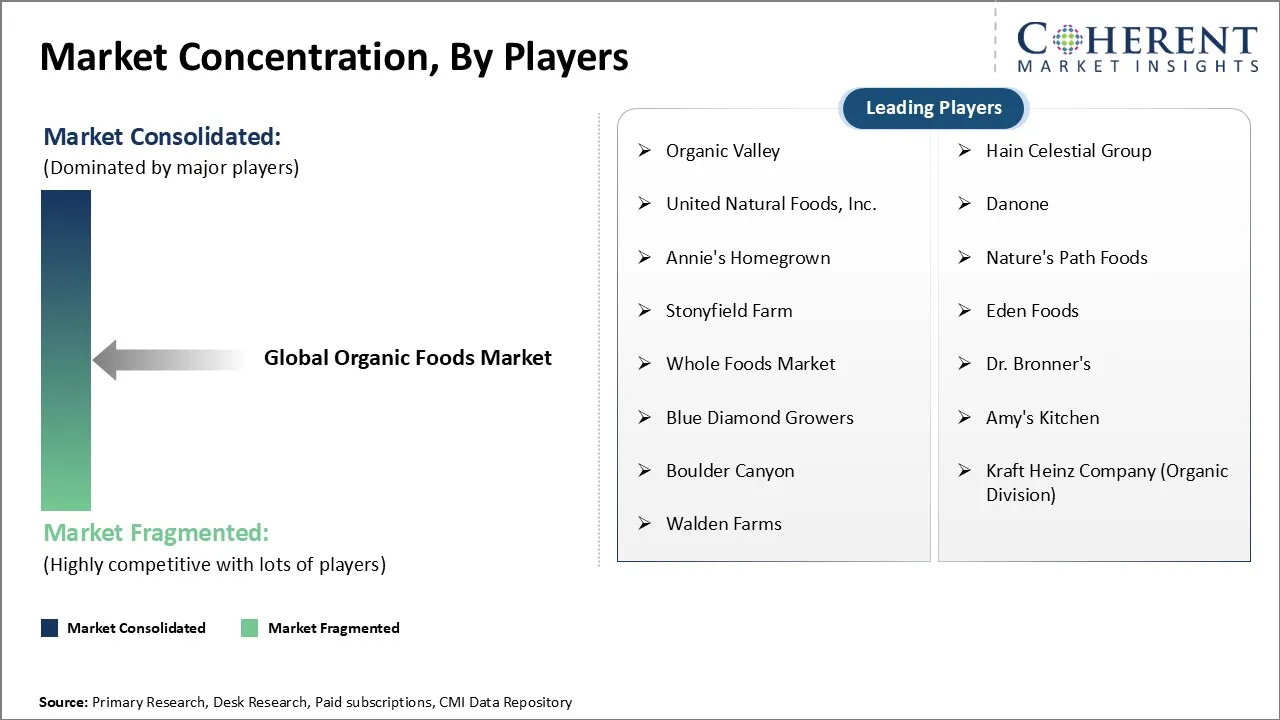
| Companies covered: | Organic Valley, Hain Celestial Group, United Natural Foods, Inc., Danone, Annie's Homegrown, Nature's Path Foods, Stonyfield Farm, Eden Foods, Whole Foods Market, Dr. Bronner's, Blue Diamond Growers, Amy's Kitchen, Boulder Canyon, Kraft Heinz Company (Organic Division), and Walden Farms | ||
| Growth Drivers: |
| ||
| Restraints & Challenges: |
| ||
Organic Foods Market Dynamics
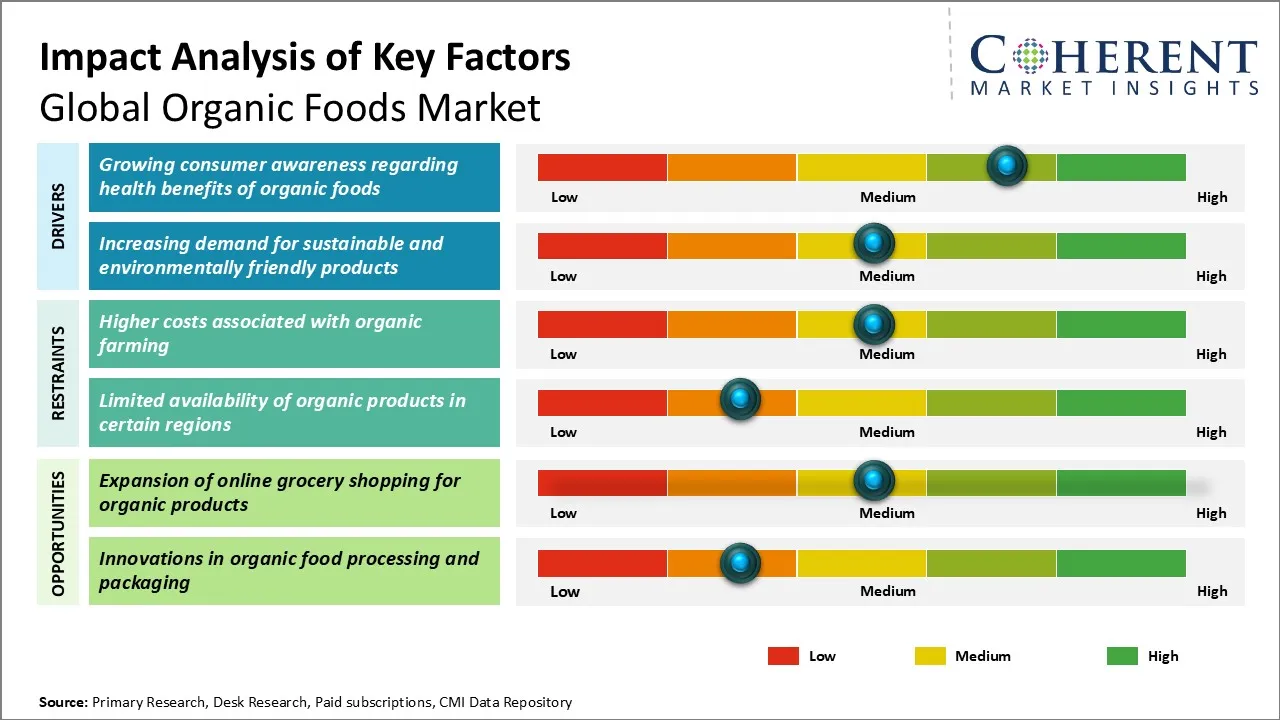
Organic Foods Market Driver - Growing Consumer Awareness Regarding Health Benefits of Organic Foods
Increasing consumer awareness about the health advantages associated with organic foods is significantly driving the growth of the global organic foods market. As more individuals adopt health-conscious lifestyles, there is a growing inclination towards dietary choices that minimize exposure to synthetic pesticides, specialty pesticides, antibiotics, organic fertilizer, and genetically modified organisms. Organic foods are perceived as safer and more natural alternatives that promote better nutrition and reduce potential health risks, such as allergies, hormonal disruptions, and long-term chronic diseases.
Organic foods are widely perceived as safer, more nutritious, and environmentally friendly alternatives. A 2024 survey conducted by the Organic Trade Association (OTA) revealed that over 73% of U.S. households purchased organic products at least once a month, with 57% citing health benefits as their primary reason. Consumers often link organic food consumption to reduced risks of allergies, antibiotic resistance, hormonal disruptions, and chronic diseases like obesity, cancer, and diabetes.
Organic Foods Market Opportunity - Expansion of Online Grocery Shopping for Organic Products
The rapid expansion of online grocery shopping presents a significant opportunity for growth in the global organic foods market. Increasing internet penetration, smartphone usage, and evolving consumer preferences towards convenience have accelerated the adoption of e-commerce platforms for grocery purchases. Organic food brands and retailers can leverage this digital transformation to reach a broader, tech-savvy audience beyond traditional retail outlets. Online channels enable consumers to easily access a wide variety of organic products, often with detailed information about sourcing, certifications, and nutritional benefits, which enhances customer trust and engagement.
As of 2024, over 30% of global consumers reported purchasing groceries online at least once a week, according to McKinsey & Company. Among these, organic food is one of the fastest-growing categories, especially in urban centers where demand for health-conscious and ethically sourced products is high.
Analyst Opinion (Expert Opinion)
- The global organic foods market is experiencing remarkable growth, driven by an increasing consumer shift towards health-conscious and environmentally sustainable choices. Companies like Whole Foods Market and Organic Valley are leading the way with innovative product lines that cater to this demand.
- Recent events, such as the Natural Products Expo West (2023) and the BioFach World (2022), have highlighted the burgeoning interest in organic foods, showcasing trends like regenerative agriculture and plant-based diets. At these conferences, case studies illustrated successful brand strategies that emphasize transparency in sourcing and production, enhancing consumer trust.
- Moreover, the rise of e-commerce has opened new avenues for organic food distribution, allowing brands to reach a broader audience. The increasing awareness of health benefits associated with organic products, alongside growing concerns about pesticide use and environmental impact, position the global organic foods market for sustained expansion. As the industry adapts to evolving consumer preferences and regulatory landscapes, it is poised to benefit from innovations that align with the holistic wellness movement, making organic foods an integral part of modern diets.
Speak to the analyst
Want personalized insights?
Take the findings above to one of our principal consultants, or have the report rebuilt around the segments, geographies and competitors you actually track.
Market Segmentation
- Category Insights (Revenue, USD Bn, 2021 - 2033)
- Fruits and Vegetables
- Dairy
- Meat, Fish and Poultry
- Frozen and Processed Foods
- Cereals and Grains
- Beverages
- Others
- Product Type Insights (Revenue, USD Bn, 2021 - 2033)
- Processed
- Unprocessed
- Distribution Channel Insights (Revenue, USD Bn, 2021 - 2033)
- Supermarkets/Hypermarkets
- Specialty Store
- Convenient Stores
- Online Retail Stores
- Others
- Regional Insights (Revenue, USD Bn, 2021 - 2033)
- North America
- U.S.
- Canada
- Latin America
- Brazil
- Argentina
- Mexico
- Rest of Latin America
- Europe
- Germany
- U.K.
- Spain
- France
- Italy
- Russia
- Rest of Europe
- Asia Pacific
- China
- India
- Japan
- Australia
- South Korea
- ASEAN
- Rest of Asia Pacific
- Middle East
- GCC Countries
- Israel
- Rest of Middle East
- Africa
- South Africa
- North Africa
- Central Africa
- North America
- Key Players Insights
- Organic Valley
- Hain Celestial Group
- United Natural Foods, Inc.
- Danone
- Annie's Homegrown
- Nature's Path Foods
- Stonyfield Farm
- Eden Foods
- Whole Foods Market
- Bronner's
- Blue Diamond Growers
- Amy's Kitchen
- Boulder Canyon
- Kraft Heinz Company (Organic Division)
- Walden Farms
Sources
Primary Research Interviews
- R&D Director – Leading Organic Food Manufacturer
- Procurement Manager – Major Organic Food Retailer
- Product Development Head – Well-Known Organic Food Brand
- Sustainability Manager – Organic Certification Body
Stakeholders
- Manufacturers & Farmers
- End-use Sectors:
- o Organic Packaged Foods (Fruits, Vegetables, Dairy, Meat)
- o Organic Beverages (Juices, Dairy Alternatives, Teas)
- Regulatory & Certification Bodies
- E-commerce Platforms and Retailers
- Technology Integration Players: Blockchain traceability providers for organic supply chains
Databases
- UN Comtrade Database
- USDA Organic Integrity Database
- India Organic Export Import (EXIM) Database
Magazines
- Organic & Natural Food Magazine – Trends in organic food consumption and retail
- Natural Products Insider – Innovations in organic food products and packaging
- Global Organic Market Insights – Consumer behavior and growth opportunities in organic foods
- Organic Business Journal – Market developments and regulatory updates
Journals
- Journal of Organic Systems – Organic food production and certification research
- Food Policy Journal – Regulation and market trends in organic foods
- Journal of Agricultural and Food Chemistry – Nutritional and safety studies of organic foods
- International Journal of Food Science – Processing and quality of organic foods
- Food Research International – Organic food safety and bioactive compounds
Newspapers
- The Financial Times – Market dynamics of organic food industry
- The Guardian – Consumer trends and sustainability in organic food
- Asia Health Journal – Growth of organic food consumption in Asia-Pacific
- European Nutrition News – Organic food policies and regulatory framework
Associations
- Organic Trade Association (OTA)
- International Federation of Organic Agriculture Movements (IFOAM)
- Soil Association
- Natural Products Association
- European Organic Certifiers Council
Public Domain Sources
- USDA – Organic Food Standards and Certification Guidelines
- European Commission – Organic Farming Regulations and Market Reports
- Food and Agriculture Organization (FAO) – Global organic agriculture data and guidelines
- World Health Organization – Health impact studies related to organic foods
Proprietary Elements
- CMI Data Analytics Tool, Proprietary CMI Existing Repository of information for last 8 years.
Get access to 250+ pages report
Every segment, forecast, competitor profile and data table behind the analysis above — available for instant download.
- ESOMAR Member
- ISO 9001:2015 Certified
- D-U-N-S Registered
- GDPR & CCPA Compliant
Missing comfort of reading report in your local language? Find your preferred language:
Transform your Strategy with Exclusive Trending Reports
Frequently Asked Questions
The global organic foods market is estimated to be valued at USD 208.81 Bn in 2026 and is expected to reach USD 455.87 Bn by 2033.
The CAGR of the global organic foods market is projected to be 11.8% from 2026 to 2033.
Growing consumer awareness regarding health benefits of organic foods and increasing demand for sustainable and environmentally friendly products are the major factors driving the growth of global organic foods market.
Higher costs associated with organic farming and limited availability of organic products in certain regions are the major factors hampering the growth of global organic foods market.
In terms of category, fruits and vegetables are estimated to dominate the market revenue share in 2026.
Organic Valley, Hain Celestial Group, United Natural Foods, Inc., Danone, Annie's Homegrown, Nature's Path Foods, Stonyfield Farm, Eden Foods, Whole Foods Market, Dr. Bronner's, Blue Diamond Growers, Amy's Kitchen, Boulder Canyon, Kraft Heinz Company (Organic Division), and Walden Farms are the major players in the global organic foods market.
Europe is expected to lead the global organic foods market in 2026.