Kombucha Market Analysis & Forecast: 2026-2033

Kombucha Market Size and Forecast – 2026 – 2033
The Global Kombucha Market size is estimated to be valued at USD 3.8 billion in 2026 and is expected to reach USD 11.6 billion by 2033, exhibiting a compound annual growth rate (CAGR) of 17.5% from 2026 to 2033.
Global Kombucha Market Overview
The kombucha market is primarily driven by rising health consciousness and demand for functional beverages rich in probiotics, antioxidants, and digestive benefits. Consumers are shifting away from sugary carbonated drinks toward natural, low-sugar alternatives, boosting adoption. Growing preference for clean-label, organic, and plant-based products further supports demand. Product innovation—especially new flavors, premium positioning, and functional ingredients—expands consumer appeal. Increased retail penetration and e-commerce availability improve accessibility.
Key Takeaways
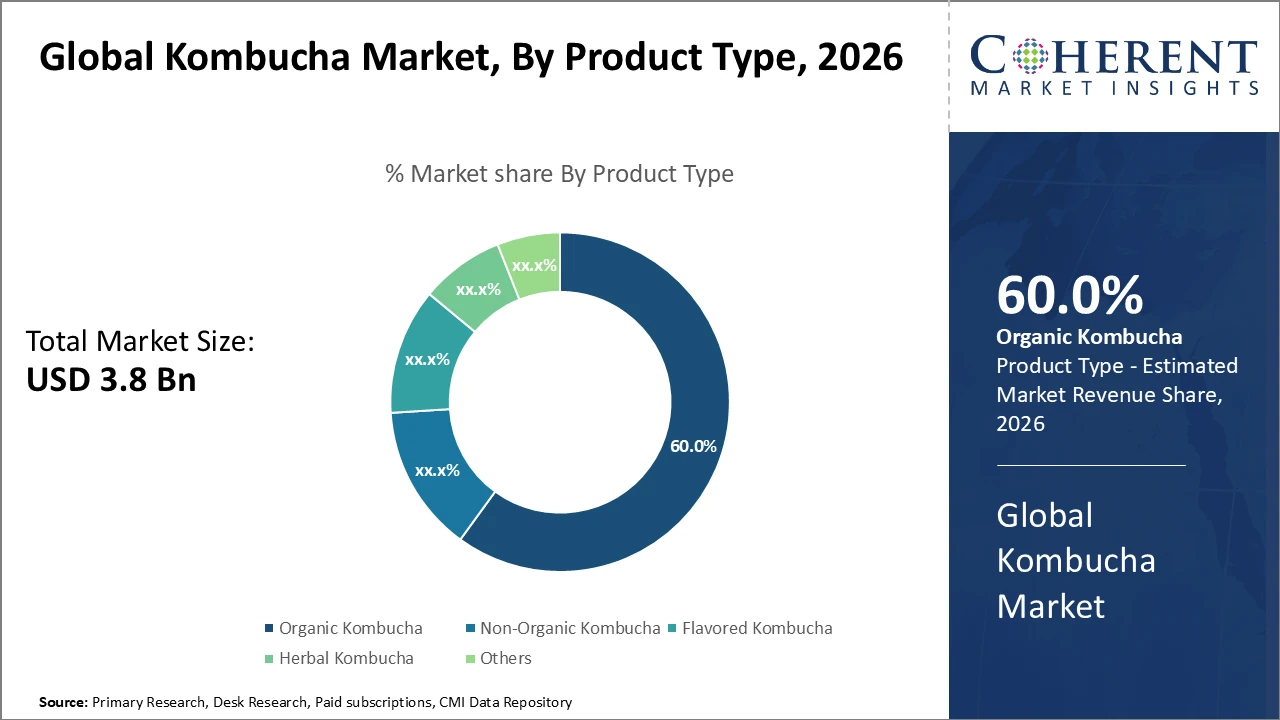
The Organic Kombucha segment continues to dominate market size, benefiting from preference towards natural health products and commanding 60% of the total industry share.
Glass Bottles remain the leading packaging type, preferred for preserving product integrity, which significantly supports market revenue growth.
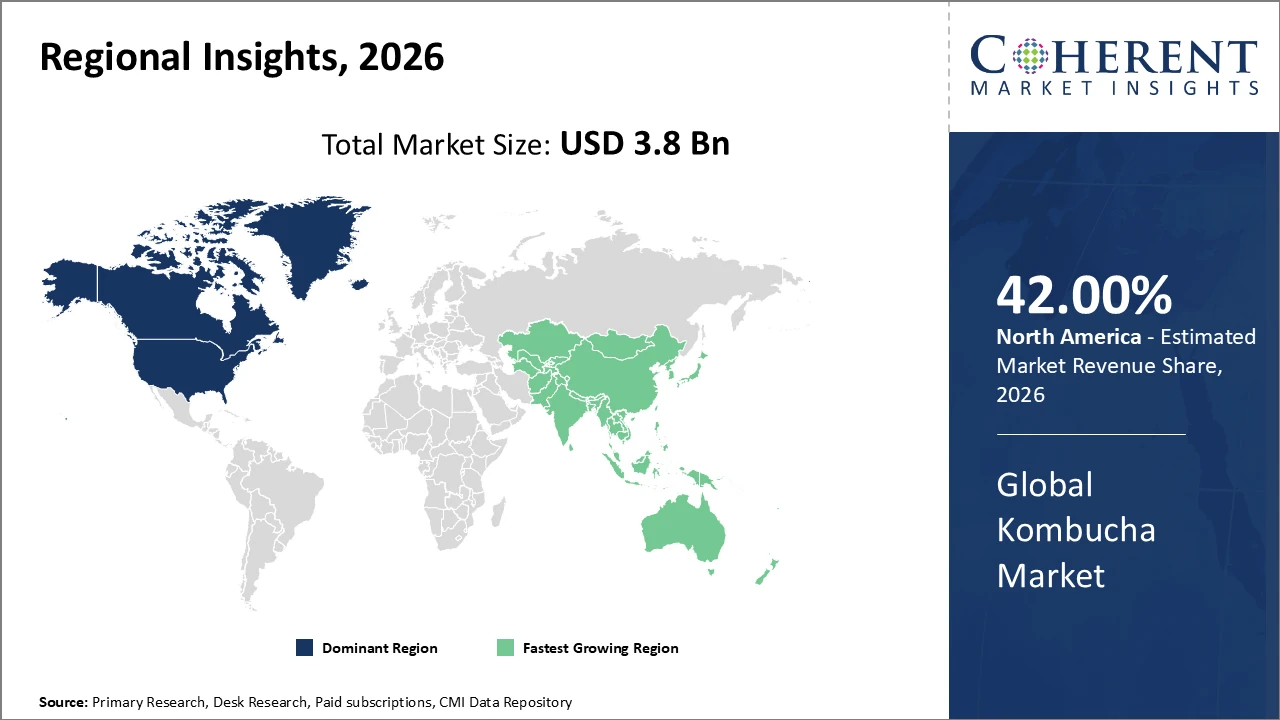
North America maintains market revenue leadership, accounting for 42% of industry size in 2026, fueled mainly by the U.S. market’s expansive distribution networks and consumer health trends.
Asia Pacific is the fastest-growing region, registering a CAGR of 19.8%, driven by rising urbanization, digital retail expansion, and increasing consumer awareness around fermented beverages.
Kombucha Market Segmentation Analysis
To learn more about this report, Request Free Sample
Kombucha Market Insights, By Product Type
Organic Kombucha dominates the market share due to strong consumer preference for clean-label, preservative-free products, supported by certified organic farming and health-focused marketing. Flavored Kombucha is the fastest-growing subsegment, driven by innovative taste profiles and functional ingredients such as ginger, turmeric, and fruit infusions, appealing to health-conscious consumers seeking variety. Non-Organic Kombucha maintains a steady presence among price-sensitive buyers, while Herbal Kombucha holds niche appeal in regions with traditional herbal medicine practices.
Kombucha Market Insights, By Packaging Type
Glass Bottles dominate the kombucha market due to their ability to preserve taste and carbonation, meeting consumer expectations for premium and organic beverage packaging. Plastic Bottles are the fastest-growing subsegment, offering lightweight, cost-effective solutions that appeal to convenience-focused consumers, especially in emerging markets. Cans are gaining popularity for on-the-go consumption, supported by innovations in portability and recyclability, while other packaging formats like tetra packs and eco-friendly options address sustainability concerns. Combined with growth in flavored and herbal products and online retail channels, these evolving subsegments diversify market dynamics, enhance consumer choice, and drive competitive innovation across the global kombucha industry.
Kombucha Market Insights, By Distribution Channel
Supermarkets and Hypermarkets lead the kombucha market by providing wide retail reach, high product visibility, and competitive pricing, driving substantial revenue. Online retail is the fastest-growing segment, fueled by the rise of e-commerce and direct-to-consumer sales models, which have expanded product discovery and consumer engagement, especially post-pandemic. Specialty stores cater to health-conscious niche consumers, offering curated selections, while convenience stores support impulse and on-the-go purchases.
Kombucha Market Trends
The Kombucha market trend is driven by increasing consumer focus on gut health and natural beverages, supported by growing research on probiotics’ health benefits.
In 2025, the incorporation of superfoods into kombucha formulations gained momentum, with turmeric and adaptogen-infused variants making up 15% of global new product launches.
Online retail penetration is rising, with e-commerce projected to account for nearly 38% of total kombucha sales in 2026.
E-commerce channels enable target-specific marketing, greater convenience, and wider product accessibility.
These trends are fostering notable market growth, particularly in emerging economies.
Kombucha Market Insights, By Geography
To learn more about this report, Request Free Sample
North America Kombucha Market Analysis and Trends
In North America, the Kombucha market is dominated by a mature, health-conscious consumer base and well-established distribution infrastructure. The U.S. alone accounts for over 35% of the regional market share, driven by extensive retail availability and strong preference for organic and clean-label products. Government initiatives promoting functional beverages and healthy lifestyles have further reinforced market growth. Consumers increasingly favor probiotics and natural ingredients, boosting demand for premium and innovative kombucha variants. Combined with strong brand presence, retail penetration, and awareness campaigns, these factors position North America as a leading region in the global kombucha market, maintaining steady growth and industry dominance.
Asia Pacific Kombucha Market Analysis and Trends
The Asia Pacific region is experiencing the fastest growth in the Kombucha market, with a CAGR of approximately 19.8%. This surge is driven by rapid urbanization, rising digital penetration, increasing disposable incomes, and growing health and fitness awareness. Countries such as India and China have seen substantial market expansion due to localized production, evolving consumer preferences, and greater access to premium health beverages. Leading global players, including GT’s Living Foods and Health-Ade Kombucha, are expanding operations in the region through strategic partnerships and distribution networks. Overall, Asia Pacific is emerging as a key growth hub in the global kombucha market.
Kombucha Market Outlook for Key Countries
USA Kombucha Market Analysis and Trends
The U.S. Kombucha market serves as a global benchmark, contributing a significant portion of industry revenue. In 2026, consumers showed strong adoption of organic and flavored kombucha variants, with retail sales rising by 18%. Leading brands like GT’s Living Foods and Health-Ade leveraged extensive distribution networks across supermarkets, health stores, and specialty outlets to enhance market reach. The growing e-commerce ecosystem further enabled direct-to-consumer access, expanding overall market scope. Additionally, strict regulatory standards on safety, labeling, and quality have driven product premiumization and innovation, encouraging companies to introduce functional, clean-label, and differentiated kombucha offerings to meet evolving consumer demand.
Germany Kombucha Market Analysis and Trends
Germany’s Kombucha market is experiencing steady growth, driven by increasing health consciousness and a strong preference for organic and functional beverages. The country benefits from well-established retail infrastructure, including supermarkets, specialty health stores, and growing online sales channels, facilitating broad product availability. Consumers are increasingly seeking flavored and probiotic-enriched kombucha variants, supporting innovation in taste and functionality. Leading international and local brands are investing in marketing and distribution partnerships to capture market share. Regulatory standards ensuring product safety and quality further reinforce consumer confidence. Overall, Germany represents a key European market with stable growth prospects and opportunities for product diversification in the kombucha industry.
Analyst Opinion
Growing production capacity is driving market expansion, with several U.S. beverage manufacturers increasing Kombucha bottling operations by over 25% in 2025, contributing to an estimated 15% rise in market revenue from production volume alone.
Diverse use cases across the food and beverage industry are widening demand, with specialty cafes and restaurants in Europe reporting a 20% increase in Kombucha-based menu items in 2024, highlighting its versatility.
Pricing strategies in emerging markets, such as India and Brazil, are improving accessibility; for example, Kombucha’s average retail price in India fell by 10% in 2026, boosting consumer adoption.
Micro-market indicators show niche expansion, with over 65% of health stores and specialty grocers in Canadian metropolitan areas reporting steady monthly Kombucha sales growth in 2025.
Market Scope
| Report Coverage | Details | ||
|---|---|---|---|
| Base Year: | 2025 | Market Size in 2026: | USD 3.8 billion |
| Historical Data for: | 2020 To 2024 | Forecast Period: | 2026 To 2033 |
| Forecast Period 2026 to 2033 CAGR: | 17.5% | 2033 Value Projection: | USD 11.6 billion |
| Geographies covered: |
|
||
| Segments covered: |
|
||
| Companies covered: | GT’s Living Foods, Better Booch LLC, Suja Life LLC, Kevita, Revive Kombucha, Remedy Kombucha, Aqua ViTea, KeVita Inc., Bio-Kult Kombucha, Living Juices Co. | ||
| Growth Drivers: |
|
||
Uncover macros and micros vetted on 75+ parameters: Get instant access to report
Kombucha Market Growth Factors
Multiple factors are fueling growth in the Kombucha market. Increasing consumer awareness of gut health and probiotics drove a 22% rise in global probiotic beverage consumption in 2025, boosting demand. Technological advancements in fermentation processes and packaging have improved shelf life and distribution efficiency, enabling access to previously untapped regional markets. The expansion of e-commerce platforms and digital marketing strategies has further enhanced product availability and consumer reach, particularly in Asia Pacific, where online sales contributed 40% of total market revenue in 2026. Additionally, supportive regulatory frameworks in Europe and North America for clean-label products have encouraged new launches, driving overall market expansion.
Kombucha Market Development
In February 2026, Momo Kombucha, based at New Covent Garden Market, launched a limited-edition, hyper-seasonal Tomlinson’s Forced Rhubarb Kombucha in collaboration with Natoora. Priced from £4.50 per 330ml glass bottle, it is available via Momo, Ocado, Gail’s Bakery, Natoora, and Whole Foods.
Key Players
Leading Companies of the Market
GT’s Living Foods
Kevita
Suja Life LLC
Aqua ViTea
Kevita Inc.
Better Booch LLC
Remedy Kombucha
Revive Kombucha
Living Juices Co.
Bio-Kult Kombucha
Several leading companies have pursued aggressive growth strategies in the kombucha market. In 2025, GT’s Living Foods invested $20 million in new fermentation facilities, expanding its production capacity and enabling a 30% revenue increase the following year. Health-Ade Kombucha strengthened its market presence through co-branding partnerships with major North American supermarket chains, increasing shelf visibility by 45% in 2026 and driving market share gains. Meanwhile, Brew Dr. Kombucha focused on developing innovative flavored kombucha lines with organic certification, enhancing consumer engagement and brand recognition across European markets, contributing to overall market growth and competitive positioning.
Kombucha Market Future Outlook
The Kombucha market is expected to experience robust growth in the coming years, driven by increasing consumer focus on health, wellness, and functional beverages. Rising awareness of probiotics, gut health, and natural ingredients will continue to boost demand for organic and flavored kombucha variants. Innovation in fermentation processes, packaging, and flavor diversification will enhance product quality, shelf life, and consumer appeal. Expansion of e-commerce and digital marketing will further improve accessibility, particularly in emerging markets. Additionally, supportive regulatory frameworks for clean-label and natural beverages in regions like North America and Europe will encourage new product launches, sustaining long-term market growth globally.
Kombucha Market Historical Analysis
The Kombucha market has evolved significantly over the past decade, transitioning from a niche health beverage to a mainstream functional drink. Early growth was driven by consumer interest in probiotics, gut health, and natural ingredients, primarily in North America and Europe. Between 2015 and 2022, product innovation expanded to include flavored, herbal, and organic variants, alongside improvements in packaging and shelf life. Key players like GT’s Living Foods, Health-Ade, and Brew Dr. Kombucha contributed to market consolidation through brand recognition and distribution expansion. This historical growth established a strong foundation for the current market, emphasizing health-focused innovation, wider consumer adoption, and global distribution networks.
Sources
Primary Research Interviews:
Executives and R&D managers at kombucha and functional beverage companies
Product development teams at leading beverage manufacturers
Nutritionists, dietitians, and consumer health experts
Magazines:
BeverageDaily – Kombucha Industry News and Market Trends
FoodNavigator – Functional Beverages and Fermented Products
NutritionInsight – Probiotic and Wellness Drink Updates
Food Business News – Innovations and Market Developments in Beverages
Journals:
Journal of Functional Foods – Research on Kombucha and Probiotic Drinks
Food Chemistry – Fermentation Processes and Beverage Analysis
Journal of Food Science – Health Benefits and Product Innovation
LWT – Food Science and Technology – Beverage Formulation Studies
Newspapers:
The Wall Street Journal – Food & Beverage Market Coverage
Financial Times – Beverage Industry, Retail, and Consumer Trends
Reuters – Functional Beverage Market and Health Drink News
Bloomberg – Beverage Market Analytics and Industry Insights
Associations:
International Food & Beverage Alliance (IFBA)
Specialty Food Association
Probiotic Association
International Federation of Organic Agriculture Movements (IFOAM)
Share
Share
Kalpesh Gharte is a senior consultant with approximately 5 years of experience in the consulting industry. Kalpesh holds an MBA in Operations and Marketing Management, providing him with a strong foundation in market strategy and analysis. He has contributed to various consulting and syndicated reports, delivering valuable insights that support informed business decisions

Credibility and Certifications

860519526


9001:2015

27001:2022


Need a Custom Report?
We can customize every report - free of charge - including purchasing stand-alone sections or country-level reports
Customize NowJoining thousands of companies around the world committed to making the Excellent Business Solutions.
View All Our Clients