Nephrology And Urology Devices Market Analysis & Forecast: 2026-2033

The Nephrology and Urology Devices Market is estimated to be valued at USD 49.72 Bn in 2026 and expected to reach USD 78.94 Bn by 2033, witnessing a CAGR of 6.8% over the forecast period (2026-2033), driven by rising prevalence of chronic kidney diseases, urinary disorders, and increasing adoption of minimally invasive procedures.
Nephrology and urology device markets consists of medical equipment which assists with healthcare professional diagnosing, monitoring, and treating disorders affecting kidneys and the urinary tract. Kidney and Urinary tract disorders can include the following types: Dialysis machines, Catheters, Endoscopes, Lithotripsy devices and urodynamic systems. This market is important to management of chronic diseases such as, kidney failure, urinary incontinence, kidney stones and prostate disorders.
The Nephrology and urology devices market operates as a part of the broader medical devices market. Due to the increasing incidence of chronic kidney disease (CKD), diabetes and hypertension, there are increasing numbers of nephrology device, a similar trend is seen with urology devices due to growing number of urinary tract infections and prostate cancer cases.
Major trends in terms of growth for nephrology and urology devices industries, include a continued migration to home dialysis, a growing focus on the integration of digital health technologies and a shift of both types of medical devices from the use of traditional diagnostic and treatment methods to the utilization of minimally invasive procedures. This industry will play a significant role in improving the quality of life for patients affected by nephrology and urology disorders, globally.
|
Current Event |
Description and its Impact |
|
Growth of home dialysis programs |
|
|
FDA Approval of Robotic Surgery Devices |
|
|
Increase of Awareness of CKD in the community. |
|
Uncover macros and micros vetted on 75+ parameters: Get instant access to report
Nephrology and Urology are undergoing a shift due to AI’s ability to create predictive diagnostics and monitor patients remotely, as well as tailor treatments to each patient. Predictive imaging systems that utilize AI can identify abnormalities in the kidneys at an earlier stage than ever before, and smart dialysis machines can increase the efficiency of treatment.
In October 2025, Roche and KlinRisk received CE mark approval for an AI-based risk stratification tool to assess kidney function decline. Part of Roche’s chronic kidney disease (CKD) algorithm panel, the tool supports disease management across stages and includes the Kidney Klinrisk Algorithm and the Kidney KFRE Algorithm.
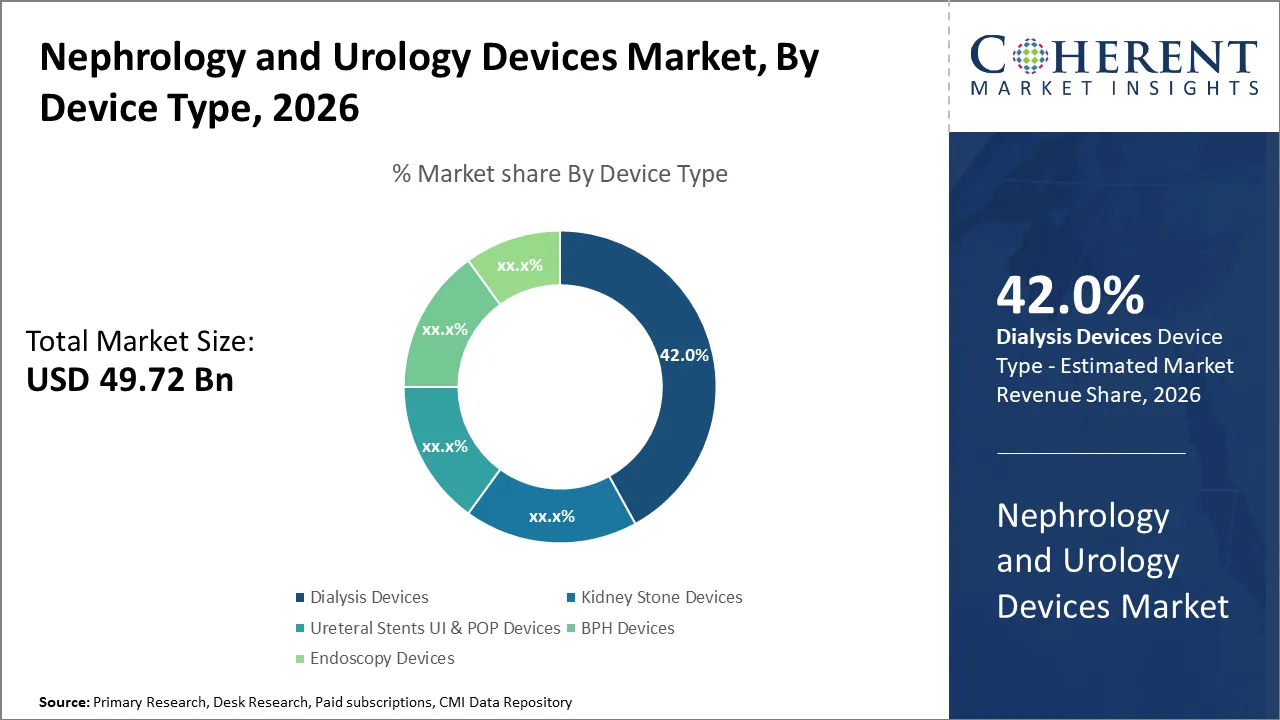
In 2026, dialysis devices represent the largest portion of the total nephrology and urology devices market, accounting for nearly 42% of the market, due to an increase in diagnosis of chronic kidney disease population and hence a rising need for ongoing life-sustaining treatment via hemodialysis and peritoneal dialysis.
The Hospital segment dominates the market in 2026, accounting for an estimated share of 55% because of the advanced diagnostic equipment available, skilled staff and comprehensive range of services. Hospitals will continue to be the main location for complex urological surgeries and dialysis procedures.
To learn more about this report, Request Free Sample
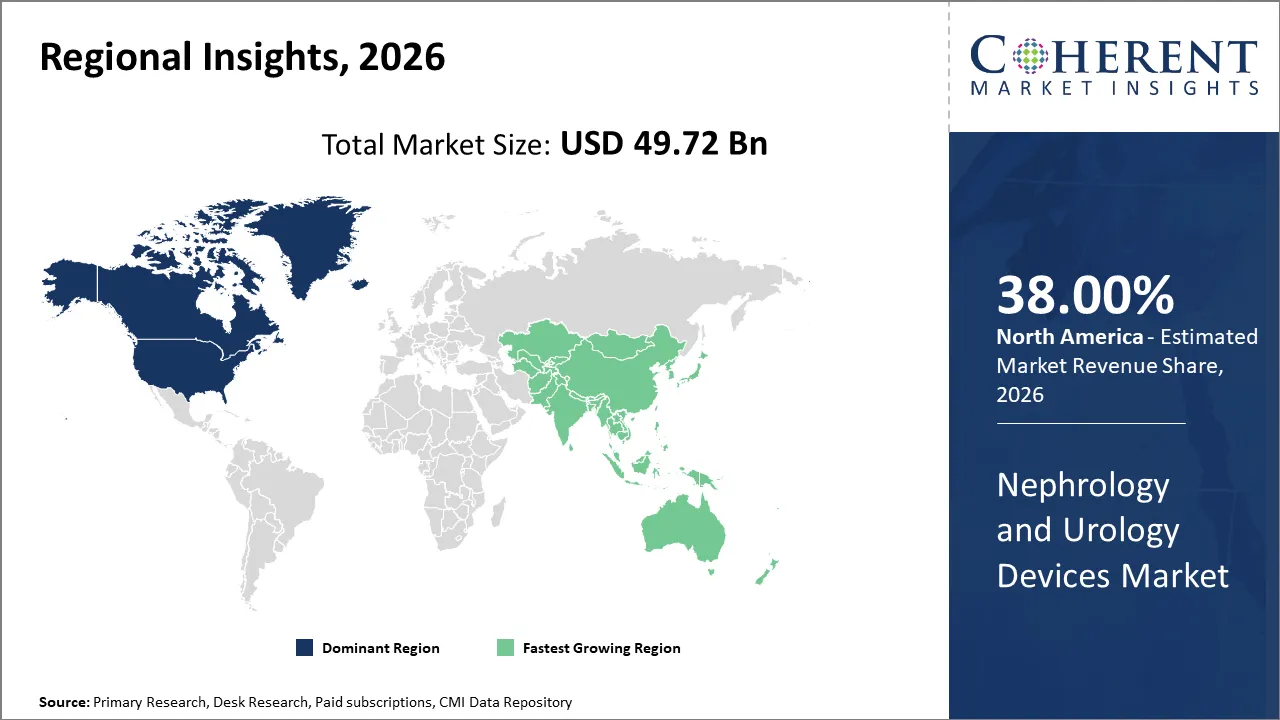
The North American market for nephrology and urology devices remains the largest due to their sophisticated healthcare systems, significant reimbursements for procedures performed, and early acceptance of new technologies, including robotic-assisted surgery for urology and artificial Intelligence integrated dialysis machines.
The Asia Pacific region is expected to be the largest growth area for nephrology and urology devices, and this growth will be driven primarily by new healthcare investments, larger patient populations, and improved access to medical facilities.
| Report Coverage | Details | ||
|---|---|---|---|
| Base Year: | 2025 | Market Size in 2026: | USD 49.72 Bn |
| Historical Data for: | 2020 To 2024 | Forecast Period: | 2026 To 2033 |
| Forecast Period 2026 to 2033 CAGR: | 6.8% | 2033 Value Projection: | USD 78.94 Bn |
| Geographies covered: |
|
||
| Segments covered: |
|
||
| Companies covered: |
Fresenius Medical Care, Baxter International Inc., Asahi Kasei Corp., BD, Cook Group Incorporated, Dornier MedTech, Nikkiso Co. Ltd., NxStage Medical Inc., Nipro Corporation, Terumo Corporation, B Braun Group, Medtronic Plc, Awak Technologies, and Rockwell Medical Technologies, Inc. |
||
| Growth Drivers: |
|
||
Uncover macros and micros vetted on 75+ parameters: Get instant access to report
Chronic Kidney disease (CKD) is becoming increasingly common, primarily as a result of diabetes, high blood pressure and an ageing population. Chronic Kidney disease (CKD) is one of the main reasons for nephrology and urology device markets to grow. The demand for kidney dialysis equipment, diagnostics equipment and long-term care is increasing around the world because of CKD.
Advancements in technology, such as portable dialysis systems, robotic surgery systems, and AI-enabled diagnostic equipment, have also led to market growth and development. Advancements in technology have also led to more consistent success rates in medical treatments, reduced recovery time for patients who are treated, and thereby increased the number of medical services that will be used in healthcare facilities.
The trend toward the at-home treatment of patients, especially those receiving treatment for dialysis patients, is creating an exciting opportunity. Increasingly, patients want to receive their incoming treatments in the home setting, so manufacturers are designing smaller, easier-to-use devices for at home use.
Demand for nephrology and urology devices is increasing steadily as a result of the increasing burden of disease and the development of new technologies. In addition to changing how treatment is delivered, a growing trend toward at-home care and minimally invasive procedures will change how patients receive treatment. Emerging markets will be instrumental in this growth, followed closely by artificial intelligence which will contribute to increased diagnostic accuracy and operational efficiencies in healthcare systems.
In January 2025, Vantive introduced an advanced home dialysis system designed to enhance patient mobility and enable more efficient at-home renal care, supporting the growing shift toward decentralized treatment.
Share
Share
Komal Dighe is a Management Consultant with over 8 years of experience in market research and consulting. She excels in managing and delivering high-quality insights and solutions in Health-tech Consulting reports. Her expertise encompasses conducting both primary and secondary research, effectively addressing client requirements, and excelling in market estimation and forecast. Her comprehensive approach ensures that clients receive thorough and accurate analyses, enabling them to make informed decisions and capitalize on market opportunities.
Joining thousands of companies around the world committed to making the Excellent Business Solutions.
View All Our Clients