Orthotic Devices Market Analysis & Forecast: 2026-2033

Orthotic Devices Market Size and Forecast – 2026 – 2033
The Global Orthotic Devices Market size is estimated to be valued at USD 6.23 billion in 2026 and is expected to reach USD 10.27 billion by 2033, exhibiting a compound annual growth rate (CAGR) of 7.4% from 2026 to 2033.
Global Orthotic Devices Market Overview
Orthotic devices are externally applied medical products designed to support, align, or correct musculoskeletal deformities and improve functional mobility. These products include foot orthotics, ankle-foot orthoses (AFOs), knee braces, spinal braces, and upper-limb supports made from plastics, composites, metals, and soft materials. Orthotic devices may be prefabricated or custom-moulded to the patient's anatomy and are used in rehabilitation, injury recovery, chronic conditions, and post-surgical care. Key product features include comfort, biomechanical correction, adjustability, and durability.
Key Takeaways
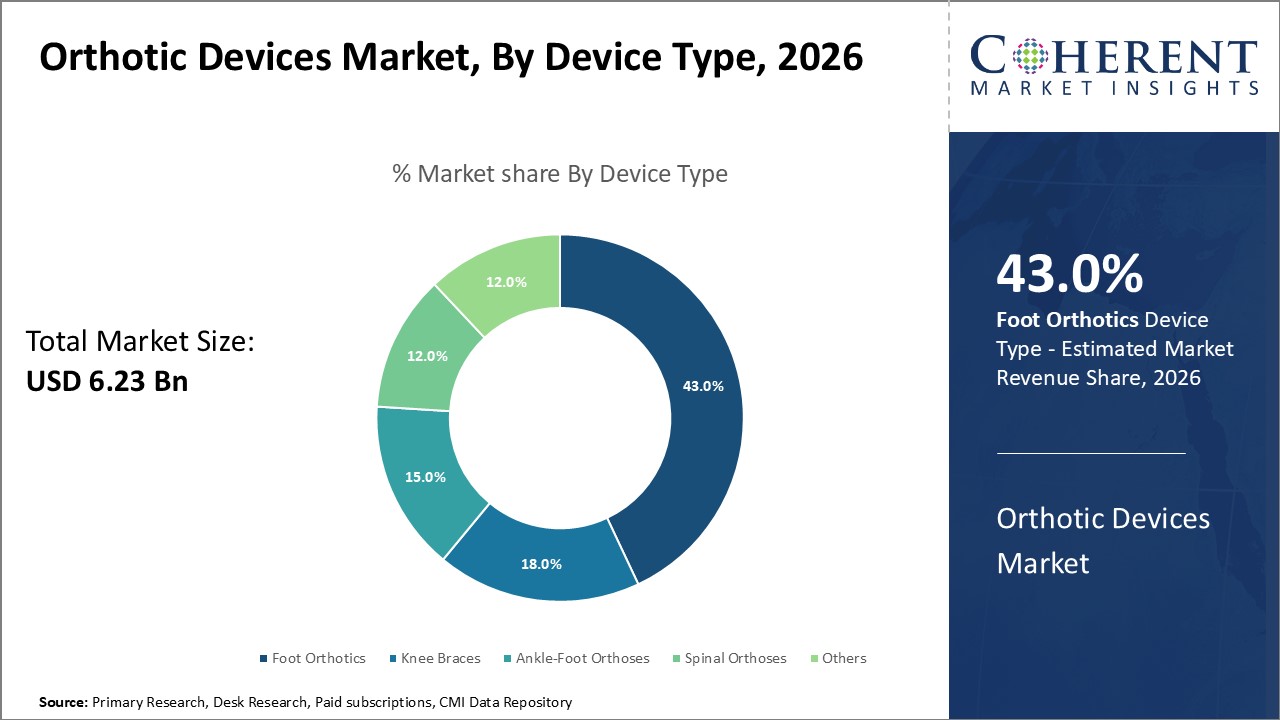
Foot Orthotics dominate the device type segment, capturing 43% market share due to their versatility in treating a broad spectrum of lower limb conditions.
Thermoplastics lead material segments, favored for their lightweight and customizable properties that improve user compliance and device longevity.
Hospitals and clinics remain the largest end-user segment, reflecting complex care requirements and reimbursement accessibility.
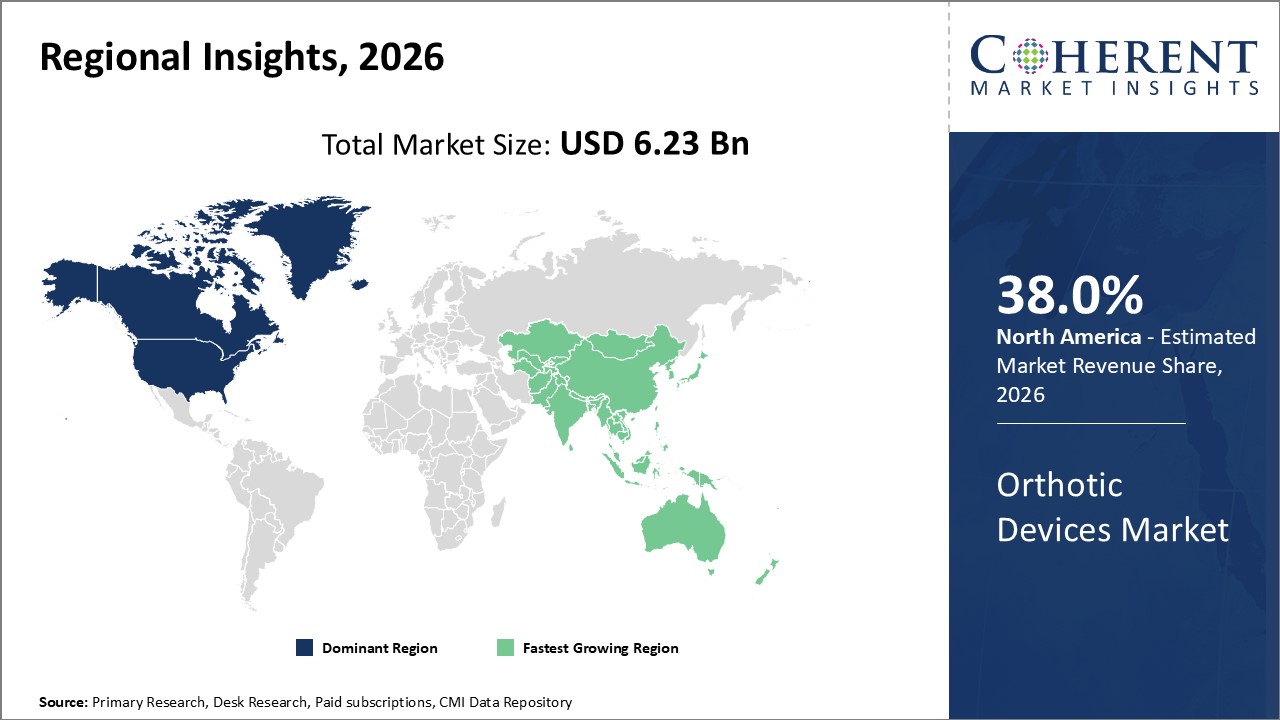
North America holds the commanding market share, thanks to high healthcare expenditure, technological advancements, and established healthcare infrastructure.
Asia Pacific exhibits the highest CAGR, fueled by increasing healthcare investments, rising incidence of chronic diseases, and growing awareness about orthotic solutions.
Orthotic Devices Market Segmentation Analysis
To learn more about this report, Request Free Sample
Orthotic Devices Market Insights, By Device Type
Foot Orthotics hold dominance due to their extensive application in diverse conditions such as plantar fasciitis, diabetic foot ulcers, and sports-related injuries. The rising diabetic population globally heavily contributes to demand in this subsegment, supported by devices that offer pressure redistribution and ulcer prevention. Meanwhile, Knee Braces represent the fastest-growing subsegment fueled by rising sports injuries and arthritis prevalence, with increased adoption of hinged and functional braces that aid mobility and reduce pain. Ankle-Foot Orthoses are designed to assist mobility in patients with cerebral palsy and stroke and maintain steady demand. Spinal Orthoses, although smaller in market share, are witnessing steady growth through customized scoliosis correction and postoperative applications.
Orthotic Devices Market Insights, By Material Type
Thermoplastics lead due to their versatility, ease of molding, lightweight characteristics, and biocompatibility, making them ideal for custom orthoses with improved comfort and durability. Composite Materials are the fastest-growing subsegment as innovations in fiberglass and carbon fiber composites offer enhanced strength-to-weight ratios, especially critical in durable sports and spinal orthoses. Metals remain essential for structural support in complex orthotic devices but face challenges due to weight and discomfort. Foams are primarily used as padding and lining materials, ensuring patient comfort.
Orthotic Devices Market Insights, By End-User
Hospitals and Clinics are the primary buyers given their role in acute care, postoperative rehabilitation, and the capability to prescribe custom orthotic devices. The strong integration of orthotic care within orthopedic and diabetic treatment protocols supports their leadership. Rehabilitation Centers are emerging as the fastest-growing subsegment due to increasing demand for long-term care for neurological and musculoskeletal disorders that necessitate orthotic support. Home Care Settings are witnessing gradual growth powered by telemedicine and IoT-enabled orthotic devices, allowing remote monitoring and personalized adjustments. Sports Clinics specialize in injury prevention and rehabilitation, contributing to niche orthotic device demand.
Orthotic Devices Market Trends
The orthotic devices market trend is characterized by the rapid adoption of digital technologies, enhancing customization and patient-specific device fabrication.
For example, in 2026, over 31% of orthotic device manufacturers implemented 3D scanning and printing technologies to streamline product development and optimize biomechanical performance.
Another important trend is the convergence of wearable health technologies with orthotics, enabling continuous patient monitoring and rehabilitation feedback leading to improved clinical outcomes.
The growing emphasis on sustainability has motivated innovation in biodegradable and recyclable materials, aligning with global healthcare sustainability goals.
Orthotic Devices Market Insights, By Geography
To learn more about this report, Request Free Sample
North America Orthotic Devices Market Analysis and Trends
In North America, the dominance in the Orthotic Devices market is driven by advanced healthcare infrastructure, high healthcare expenditure, and the presence of key market players like Össur and DJO Global. The region accounts for over 38% of the global market share due to strong reimbursement policies and high adoption of custom orthotic devices. The U.S. alone contributed approximately 75% of the regional revenue, driven by increasing musculoskeletal disorder prevalence and sports injury management.
Asia Pacific Orthotic Devices Market Analysis and Trends
Meanwhile, the Asia Pacific exhibits the fastest growth, with a CAGR surpassing 9%, propelled by expanding healthcare access, rising diabetic population, and growing sports medicine awareness. Countries like China and India are investing heavily in healthcare infrastructure and innovative product awareness campaigns, fueling market expansion. Increased imports and domestic production capacity enhancement have supported the market dynamics, positioning Asia Pacific as a challenging competitor.
Orthotic Devices Market Outlook for Key Countries
USA Orthotic Devices Market Analysis and Trends
The U.S. market is a key contributor to the market size due to an aging population and a high incidence of orthopedic disorders. Healthcare facilities are rapidly adopting advanced orthotic technologies such as 3D printed foot orthoses and smart knee braces integrated with sensors. Companies like Otto Bock and Hanger, Inc. have reinforced their presence through strategic partnerships with healthcare providers, thereby accelerating market penetration. Comprehensive insurance reimbursements further support increased device adoption. Sports injury management programs also heavily rely on orthotic interventions, which contributed to a 12% year-over-year market revenue increase in 2025.
Germany Orthotic Devices Market Analysis and Trends
Germany’s market is driven by a well-established healthcare system and high patient awareness about rehabilitative care. Leading market players actively collaborate with hospitals and clinics to develop customized orthotic products tailored to the elderly and diabetic patients. In 2026, government initiatives focusing on digital healthcare integration and reimbursement policies have enabled approximately 20% growth in orthotic device adoption. German companies like MEDI GmbH & Co. and Ottobock Healthcare have expanded their product portfolios, emphasizing lightweight materials and smart devices, addressing growing market challenges related to patient compliance.
Analyst Opinion
Increasing adoption of custom orthotic devices is a key demand-side driver reflecting the need for personalized healthcare solutions. In 2025, patient-specific orthotic prescriptions rose by approximately 16%, improving treatment outcomes for conditions such as diabetic foot ulcers and scoliosis. This trend significantly impacts the market size by promoting high-value device sales.
Advancement in additive manufacturing for orthotic production is a vital supply-side factor accelerating market growth. Reports from 2026 indicate that 3D printed orthoses reduced production lead times by 31% and cut costs by 21%, enabling manufacturers to scale operations and cater to growing market demand efficiently.
The expanding use of wearable sensors integrated within orthotic devices is emerging as a micro-indicator influencing market revenue streams. For instance, wearable-enabled orthotics facilitate real-time gait analysis and pressure distribution monitoring, with adoption increasing 25% in rehabilitation centers across North America in early 2026, thereby improving patient adherence and outcomes.
Regional export dynamics are shaping the market forecast as emerging economies in the Asia-Pacific increase imports by over 18% year-on-year due to rising awareness and healthcare infrastructure investments. This shift enhances market growth opportunities for leading market players by expanding their geographic reach and diversifying revenue models.
Market Scope
| Report Coverage | Details | ||
|---|---|---|---|
| Base Year: | 2025 | Market Size in 2026: | USD 6.23 billion |
| Historical Data for: | 2020 To 2024 | Forecast Period: | 2026 To 2033 |
| Forecast Period 2026 to 2033 CAGR: | 7.4% | 2033 Value Projection: | USD 10.27 billion |
| Geographies covered: |
|
||
| Segments covered: |
|
||
| Companies covered: | Össur, DJO Global, BREG, Inc., Hanger, Inc., Otto Bock Healthcare GmbH, Allard Europe, MEDI GmbH & Co. KG, DJ Orthopedics, Allard USA, Qmed, Inc. | ||
| Growth Drivers: |
|
||
Uncover macros and micros vetted on 75+ parameters: Get instant access to report
Orthotic Devices Market Growth Factors
Market growth is primarily propelled by increasing incidences of diabetes and associated foot complications necessitating orthotic interventions. For example, diabetic patient populations having foot ulcers demonstrate a 20% higher demand for custom orthotics as preventive care in clinical settings. Technological advancements, such as lightweight thermoplastic composites, enhance patient comfort and device durability, encouraging sustained adoption across demographics. The expanding application of orthotic devices in sports medicine to reduce injury recovery times has gained traction, with reports illustrating a 17% increase in use among professional athletes in 2025. Furthermore, government initiatives promoting accessibility to rehabilitative care in emerging countries bolster demand and market expansion in these regions.
Orthotic Devices Market Development
In 2025, Stryker advanced orthopedic robotics with the launch of Mako SmartRobotics™ 2.0, enhancing precision in knee replacement surgeries through improved imaging, data-driven planning, and real-time intraoperative feedback. The upgrade strengthened clinical accuracy, reduced variability, and reinforced Stryker’s leadership in robotic-assisted joint reconstruction.
In 2025, DePuy Synthes received FDA approval for its EXPEDITE™ PLATE system, designed for the fixation of fractures with improved anatomical fit and surgical efficiency. The innovation expanded DePuy Synthes’ trauma portfolio by offering surgeons enhanced stability and streamlined implantation for complex fracture management.
Key Players
Leading Companies of the Market
Össur
DJO Global
BREG, Inc.
Hanger, Inc.
Otto Bock Healthcare GmbH
Allard Europe
MEDI GmbH & Co. KG
DJ Orthopedics
Allard USA
Qmed, Inc.
Several leading companies have strategically invested in R&D to integrate smart technology into orthotic devices—Össur’s partnership with a digital health firm in 2025 launched sensor-embedded foot orthotics, improving patient feedback loops and adherence rates. Another example includes DJO Global's acquisition of a 3D printing startup in 2026, enabling scalable production capabilities and reinforcing its competitive positioning globally.
Orthotic Devices Market Future Outlook
The future outlook for the orthotic devices market is driven by technological innovation and expanding rehabilitation needs. 3D printing, smart sensors, and data-driven gait analysis are expected to revolutionise product design and customization. Aging populations and increased focus on preventive care will further fuel demand. Integration with digital health platforms will enhance patient monitoring and treatment outcomes, supporting sustained market growth.
Orthotic Devices Market Historical Analysis
The orthotic devices market has evolved steadily due to the rising prevalence of musculoskeletal disorders, sports injuries, and age-related mobility issues. Historically, orthotics were custom-made and expensive, limiting access. Advances in materials science, digital scanning, and manufacturing technologies enabled the production of prefabricated and semi-custom devices, broadening market reach.
Sources
Primary Research Interviews:
Orthopedic Surgeons
Prosthetists & Orthotists
Physiotherapists
Rehabilitation Specialists
Medical Device Buyers
Databases:
WHO Assistive Devices Data
OECD Health Data
FDA Device Database
Magazines:
Orthopedic Design & Technology
Medical Device Network
Rehab Management
O&P Edge
Healthcare Packaging
Journals:
Journal of Ortopaedic Research
Prosthetics and Orthotics International
Gait & Posturh
Clinical Biomechanics
Journal of Rehabilitation Research
Associations:
American Orthotic & Prosthetic Association
International Society for Prosthetics and Orthotics
WHO
American Academy of Orthopaedic Surgeons
MedTech Europe
Share
Share
Manisha Vibhute is a consultant with over 5 years of experience in market research and consulting. With a strong understanding of market dynamics, Manisha assists clients in developing effective market access strategies. She helps medical device companies navigate pricing, reimbursement, and regulatory pathways to ensure successful product launches.

Credibility and Certifications

860519526


9001:2015
27001:2022


Need a Custom Report?
We can customize every report - free of charge - including purchasing stand-alone sections or country-level reports
Customize NowJoining thousands of companies around the world committed to making the Excellent Business Solutions.
View All Our Clients