Phlebotomy Tubes Market Analysis & Forecast: 2026-2033

Phlebotomy Tubes Market Size and Forecast – 2026 – 2033
The Global Phlebotomy Tubes Market size is estimated to be valued at USD 1.4 billion in 2026 and is expected to reach USD 2.3 billion by 2033, exhibiting a compound annual growth rate (CAGR) of 7.3% from 2026 to 2033.
Global Phlebotomy Tubes Market Overview
The phlebotomy tubes market is driven by the rising demand for diagnostic testing due to increasing prevalence of chronic and infectious diseases. Growth in routine health checkups, expanding hospital and laboratory infrastructure, and advancements in blood collection technologies further support market expansion. The shift toward preventive healthcare and early disease detection is boosting the use of phlebotomy tubes. Additionally, increasing geriatric population, higher surgical volumes, and demand for accurate and efficient sample collection contribute significantly. Government initiatives to improve healthcare access and the growing adoption of automated laboratory systems are also key factors driving market growth.
Key Takeaways
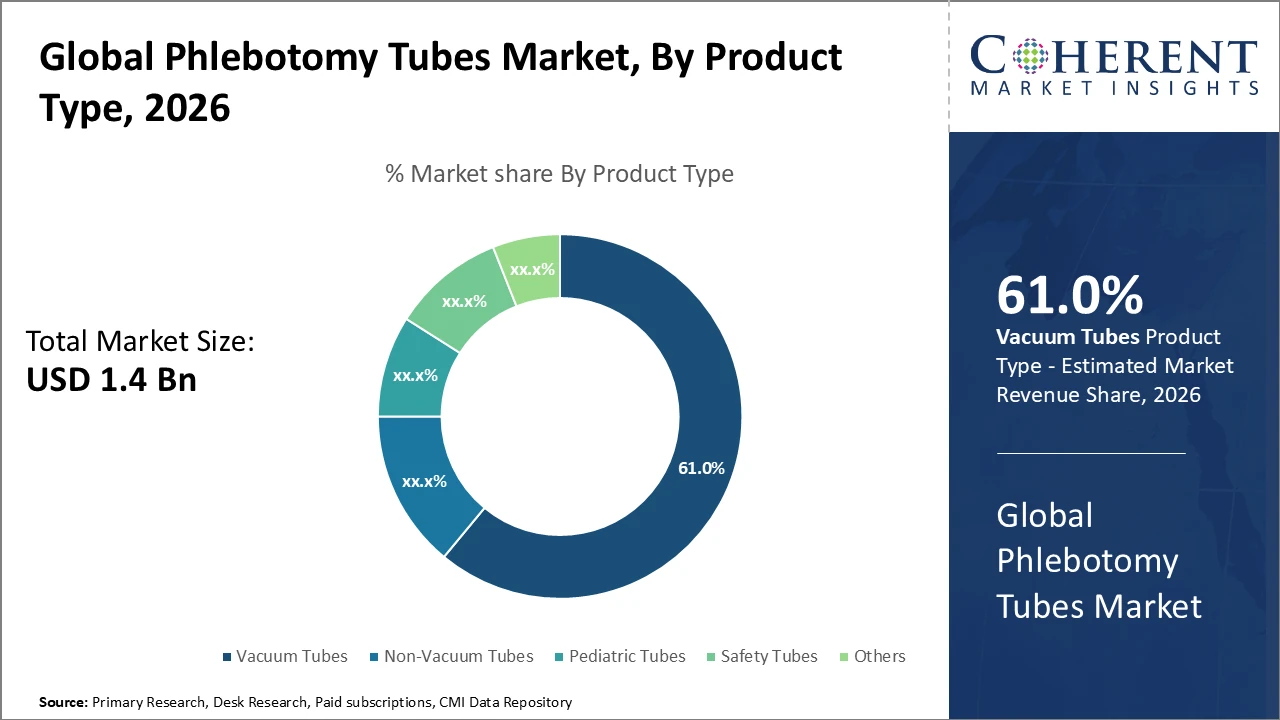
The vacuum tube segment dominated the market share with 61% due to its widespread clinical usage and efficiency in sample collection.
The EDTA additive type remains the most utilized across all end-user industries, primarily due to its anticoagulant properties essential for hematology applications.
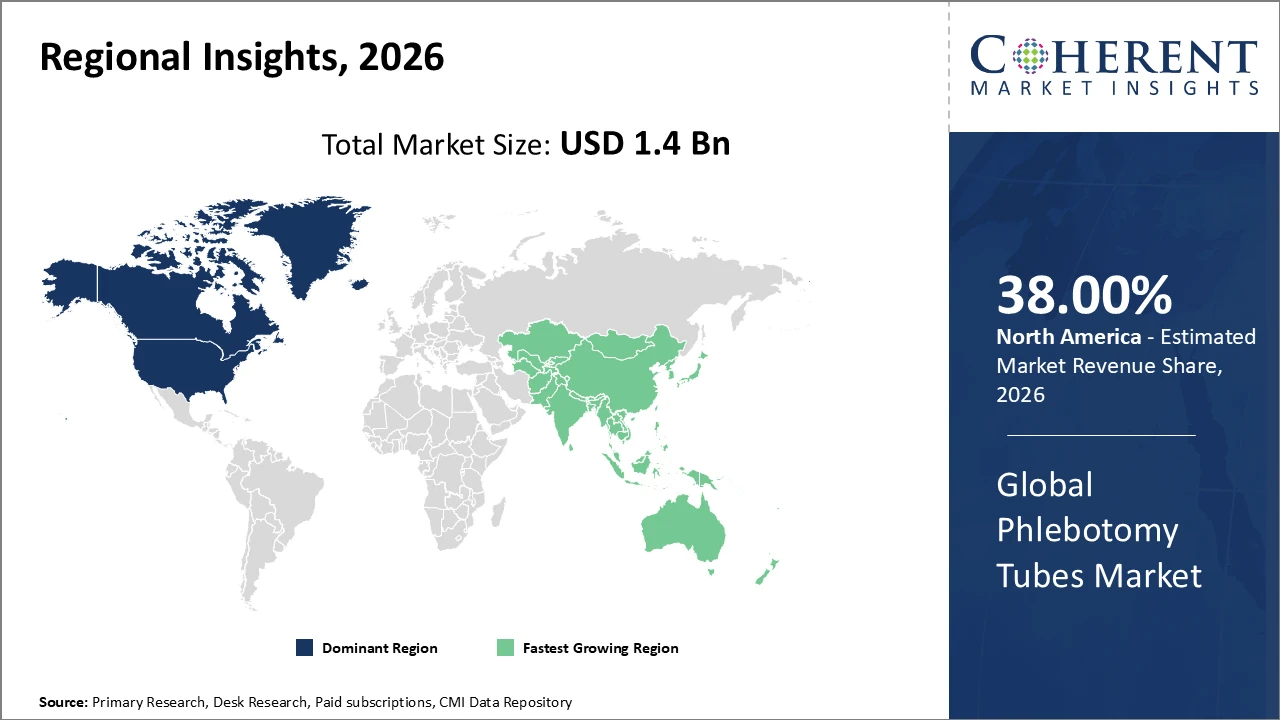
North America maintained leadership in market revenue, driven by high healthcare expenditure and stringent regulatory standards encouraging innovation.
Asia Pacific is the fastest-growing region, with a CAGR surpassing 9%, attributed to expanding healthcare infrastructure and rising disease prevalence.
Phlebotomy Tubes Market Segmentation Analysis
To learn more about this report, Request Free Sample
Phlebotomy Tubes Market Insights, By Product Type
Vacuum tubes dominate the phlebotomy tubes market with a 61% share, favored for their convenience, reliability, and minimal contamination risk during blood collection and storage. Safety tubes are the fastest-growing subsegment, driven by rising healthcare worker safety protocols and regulatory requirements. Non-vacuum tubes continue to see steady demand as cost-effective alternatives in specific clinical settings. Pediatric tubes, designed for low-volume blood collection, experience moderate growth due to specialized pediatric healthcare needs.
Phlebotomy Tubes Market Insights, By Additive Type
EDTA holds the largest market share in phlebotomy tubes, valued for its anticoagulant properties essential in hematology testing, contributing significantly to market revenue. Citrate tubes are primarily used in coagulation studies and maintain consistent demand. Heparin tubes are preferred in clinical chemistry for rapid anticoagulation, while fluoride tubes are used in glucose testing to prevent glycolysis. Clot activator tubes are important for serum collection in biochemistry and serology assays. Gel separator tubes have grown steadily due to their ability to separate clots and enhance sample stability.
Phlebotomy Tubes Market Insights, By End User
Hospitals hold the dominant share in the phlebotomy tubes market, conducting the highest volume of blood testing for extensive inpatient and outpatient diagnostics. Diagnostic laboratories are the fastest-growing subsegment, driven by rising demand for outsourced testing and advanced diagnostic services. Blood banks maintain steady growth, fueled by the need for reliable blood collection and storage. Ambulatory surgical centers are expanding their share as minimally invasive surgeries and outpatient procedures gain popularity.
Phlebotomy Tubes Market Trends
The market is shifting toward eco-friendly phlebotomy tubes, with manufacturers investing in biodegradable options to comply with EU medical device regulations in 2025–2026.
Automation in laboratories is rising, with robotics handling phlebotomy tubes, improving sample throughput by up to 20% in leading U.S. hospitals.
Increased demand for standardized tube sizes and additives is driven by the integration of automated systems.
Expansion of decentralized testing frameworks, particularly in Southeast Asia, is encouraging innovations in compact tube systems.
Sample collection outside traditional clinical settings is becoming more feasible due to these compact and portable tube solutions.
Phlebotomy Tubes Market Insights, By Geography
To learn more about this report, Request Free Sample
North America Phlebotomy Tubes Market Analysis and Trends
In North America, the phlebotomy tubes market is dominated by advanced healthcare infrastructure, high adoption of cutting-edge technologies, and strong regulatory frameworks that encourage innovation. The region accounted for over 38% of the total market share in 2026, driven largely by key players headquartered in the U.S. Robust regulatory oversight, including FDA approvals, ensures product safety and quality, enhancing market stability. These factors foster investor confidence and support the launch of new products. Additionally, the presence of well-established hospitals, diagnostic laboratories, and research centers contributes to sustained demand, making North America a leading region in the global phlebotomy tubes market.
Asia Pacific Phlebotomy Tubes Market Analysis and Trends
The Asia Pacific region is the fastest-growing market for phlebotomy tubes, with a CAGR exceeding 9% during the forecast period. Growth is fueled by rapid urbanization, rising healthcare expenditure, and increasing prevalence of chronic diseases. Government initiatives aimed at expanding healthcare access further support market development. Key countries such as China and India are central to this growth, driven by the expansion of diagnostic laboratory networks and greater affordability of advanced medical technologies. Additionally, rising awareness of preventive healthcare and increasing adoption of modern diagnostic tools are accelerating demand, positioning the Asia Pacific as a major growth hub in the global market.
Phlebotomy Tubes Market Outlook for Key Countries
USA Phlebotomy Tubes Market Analysis and Trends
The U.S. phlebotomy tubes market remains a leader in innovation and high-volume demand, with growing adoption of specialized additive tubes for precision medicine, particularly in cancer diagnostics. The presence of major market players and significant R&D investment continues to drive growth. Between 2024 and 2026, the use of tubes integrated with electronic sample tracking systems rose by 22%, supporting hospitals’ initiatives to reduce errors and enhance patient safety. Advanced healthcare infrastructure, regulatory compliance, and the push for accurate, efficient diagnostic workflows further strengthen the market, positioning the U.S. as a key hub for phlebotomy tube innovation globally.
Germany Phlebotomy Tubes Market Analysis and Trends
The Germany phlebotomy tubes market is characterized by strong demand driven by advanced healthcare infrastructure, high adoption of diagnostic technologies, and stringent regulatory standards ensuring product safety and quality. Hospitals and diagnostic laboratories dominate end-user segments, while the rising trend of outpatient services supports market expansion. There is a growing focus on specialized tubes, including additive and gel separator tubes, to improve testing accuracy and efficiency. Sustainability initiatives are encouraging biodegradable and eco-friendly tube development. Additionally, ongoing R&D by local manufacturers and collaborations with international players foster innovation, positioning Germany as a key contributor to the European phlebotomy tubes market.
Analyst Opinion
Production Capacity Expansion: The rise in hospitals and diagnostic labs globally boosted phlebotomy tube production, with output increasing over 12% year-on-year in 2025, meeting growing demand for mass blood sampling, especially in emerging markets.
Pricing Dynamics: Despite raw material cost fluctuations in 2024, manufacturers maintained competitive pricing through supply chain optimization and long-term supplier contracts, keeping price inflation below 4% and supporting demand in price-sensitive regions.
Demand Across Specialties: Oncology and infectious disease segments saw a 15% increase in specialized phlebotomy tube usage in 2025, driven by frequent biomarker and pathogen monitoring tests.
Import-Export Trends: North America’s imports of advanced additive-coated tubes rose 9% in 2026, while Asia Pacific exports of cost-effective standard tubes increased 17% due to competitive manufacturing.
Market Scope
| Report Coverage | Details | ||
|---|---|---|---|
| Base Year: | 2025 | Market Size in 2026: | USD 1.4 billion |
| Historical Data for: | 2020 To 2024 | Forecast Period: | 2026 To 2033 |
| Forecast Period 2026 to 2033 CAGR: | 7.3% | 2033 Value Projection: | USD 2.3 billion |
| Geographies covered: |
|
||
| Segments covered: |
|
||
| Companies covered: | Terumo Corporation, Nipro Corporation, Munktell, Bio-Rad Laboratories, Becton, Dickinson and Company, Greiner Bio-One, S-Monovette, Huhtamaki, Kangjan Medical, Sarstedt AG & Co. | ||
| Growth Drivers: |
|
||
Uncover macros and micros vetted on 75+ parameters: Get instant access to report
Phlebotomy Tubes Market Growth Factors
Several key factors are driving growth in the phlebotomy tubes market. The rising prevalence of chronic diseases, including diabetes and cardiovascular disorders, has increased the need for regular blood testing, boosting demand. Greater adoption of automated blood collection systems in diagnostic laboratories enhances accuracy and throughput, supporting higher tube consumption. Technological advancements, such as additive coatings that reduce hemolysis and contamination, are influencing product preference. Additionally, increasing healthcare investments in emerging economies, along with regulatory support for modern medical devices, are fueling market expansion. Collectively, these drivers are strengthening market revenue, widening industry scope, and shaping global market dynamics.
Phlebotomy Tubes Market Development
In February 2026, Mammotome, a Danaher company, announced the Mammotome Prima MR Dual Vacuum-Assisted Breast Biopsy System, the first system designed for in-room MRI use at the patient’s side during breast biopsy procedures.
Key Players
Leading Companies of the Market
Becton, Dickinson and Company
Bio-Rad Laboratories
Terumo Corporation
Nipro Corporation
S-Monovette
Munktell
Huhtamaki
Kangjan Medical
Greiner Bio-One
Sarstedt AG & Co.
Competitive strategies among leading companies in the phlebotomy tubes market are primarily centered on product innovation and regional expansion. In 2025, Becton, Dickinson and Company introduced specialized polymer-based tubes with enhanced sealing capabilities, which strengthened sample integrity and led to a 6% increase in their market share in North America. Meanwhile, Sarstedt AG & Co. pursued strategic acquisitions of local manufacturers in the Asia Pacific region, expanding their presence in key markets such as China and India. These moves contributed to a 14% revenue growth in 2025, highlighting the effectiveness of combining innovation with targeted regional growth strategies.
Phlebotomy Tubes Market Future Outlook
The future of the phlebotomy tubes market is poised for steady growth, driven by rising global healthcare demand and expanding diagnostic services. Innovations in additive technology, safety-enhanced tubes, and eco-friendly biodegradable options are expected to shape product development. Automation and integration with laboratory robotics will continue to improve sample handling efficiency and accuracy, boosting adoption. Emerging markets in Asia Pacific, Latin America, and the Middle East offer significant growth opportunities due to increasing healthcare infrastructure and rising chronic disease prevalence. Continued regulatory support, technological advancements, and investment in research and development will further strengthen market expansion and global penetration.
Phlebotomy Tubes Market Historical Analysis
Historically, the phlebotomy tubes market has experienced steady growth, driven by increasing demand for accurate and efficient blood collection in clinical diagnostics. From 2015 to 2025, the market expanded significantly due to the rising prevalence of chronic diseases, technological advancements in tube additives, and broader adoption of automated laboratory systems. North America and Europe dominated early market share owing to advanced healthcare infrastructure and stringent regulatory standards, while emerging markets in Asia Pacific began gaining traction with expanding healthcare access. Product innovations, such as gel separator and safety-enhanced tubes, alongside growing hospital and diagnostic lab networks, have been key contributors to historical market growth.
Sources
Primary Research Interviews:
Executives, product managers, and operations heads at phlebotomy tube manufacturing and distribution companies
Laboratory managers, hospital procurement officers, and phlebotomists overseeing blood collection and diagnostics
Technology providers for automated blood collection systems, tube additive technologies, and sample tracking solutions
Magazines:
Medical Device News Magazine – Advances in Blood Collection and Laboratory Consumables
Healthcare Technology Today – Updates on Diagnostic Sample Collection Equipment
Laboratory Management Asia/Europe – Trends in Phlebotomy and Blood Testing Solutions
Clinical Innovation & Technology – Adoption of Automated Blood Collection Systems
Journals:
Journal of Clinical Laboratory Science – Phlebotomy Tubes in Hospital and Diagnostic Settings
Biomedical Instrumentation & Technology – Innovations in Blood Collection Devices
International Journal of Laboratory Hematology – Clinical Applications of Phlebotomy Tubes
Journal of Healthcare Engineering – Workflow Optimization with Monitoring Devices
Newspapers:
The Wall Street Journal – Blood Collection Device Markets and Hospital Procurement
Financial Times – Trends in Laboratory Consumables and Diagnostic Equipment
Medical Device News – Phlebotomy Tube Developments and Market Updates
Healthcare Innovation – Patient Safety and Advanced Blood Collection Practices
Associations:
American Society for Clinical Pathology (ASCP) – Guidelines for Blood Collection and Laboratory Safety
Clinical and Laboratory Standards Institute (CLSI) – Standards for Phlebotomy Tubes and Sample Handling
International Society of Laboratory Hematology (ISLH) – Best Practices in Blood Collection and Diagnostics
Share
Share
Komal Dighe is a Management Consultant with over 8 years of experience in market research and consulting. She excels in managing and delivering high-quality insights and solutions in Health-tech Consulting reports. Her expertise encompasses conducting both primary and secondary research, effectively addressing client requirements, and excelling in market estimation and forecast. Her comprehensive approach ensures that clients receive thorough and accurate analyses, enabling them to make informed decisions and capitalize on market opportunities.

Credibility and Certifications

860519526

9001:2015
27001:2022


Need a Custom Report?
We can customize every report - free of charge - including purchasing stand-alone sections or country-level reports
Customize NowJoining thousands of companies around the world committed to making the Excellent Business Solutions.
View All Our Clients