

India Orthopedic Braces and Support Casting and Splints Market Size Analysis - 2026 To 2033
The India Orthopedic Braces and Support Casting and Splints Market is anticipated to grow at a CAGR of 7.1% with USD 109.1 Mn in 2026 and is expected to reach USD 180.7 Mn in 2033. In India, musculoskeletal disorders (MSDs) the underlying conditions driving demand for orthopedic braces, supports and splints represent a significant public health burden. According to the World Health Organization (WHO) fact sheet published in July 2022, approximately 1.71 billion people globally live with musculoskeletal conditions, which are a leading contributor to disability worldwide and include fractures, osteoarthritis and back pain that often require orthopedic support devices. Additionally, community research in India shows MSD prevalence among adults ranging widely but often high, with joint pain reported in over 40 % of some study populations and elevated prevalence among older age groups. This high and growing burden of orthopedic‐related conditions by 2026 underpins market demand for braces, castings and splints across healthcare settings in India.
Key Takeaways
- Orthopedic Braces & Supports is expected to account the largest share of 65.0% in 2026, because they address the burgeoning musculoskeletal burden, offering non‑invasive support, pain relief and rehabilitation for injuries and chronic conditions. According to the WHO’s 2022 fact sheet on musculoskeletal conditions, hundreds of Mns globally suffer musculoskeletal disorders, including osteoarthritis and fractures, which rise with age and activity levels, increasing demand for braces and supports. Furthermore, according to a 19 June 2023 WHO fact sheet, low back pain affected about 619 Mn people globally in 2020 and remains the #1 cause of disability worldwide. Additionally, market analysts note increasing incidence of ligament injuries and joint disorders alongside rising geriatric and active populations, which drives widespread adoption of braces for mobility and injury prevention.
- Orthopedic clinics will dominate with 40.0% in 2026, because they provide specialized clinical assessment, personalized device prescription, professional fitting, rehabilitation guidance, and follow‑up care services essential for managing musculoskeletal conditions effectively. For instance, according to a survey, 53.5% of Indian adults had musculoskeletal disorders, with joint pain present in 41.9 % and back pain in 32.6 % of participants. This study was published on 23 October 2024 and reflects current national disease burden patterns in India’s adult population, underscoring the high clinical demand for orthopedic care and supports. Regional data from Maharashtra show MSD prevalence at approximately 19.5 % in adults, indicating substantial state‑level disease burden within India. These clinical pathways drive higher utilization of clinic channels over OTC, e‑commerce, or general retail, especially for braces, casting, and splints prescribed for functional support, rehabilitation, and long‑term condition management.
- South India is expected to acquire the dominant share of 45.0% in 2026, due to its strong healthcare infrastructure, advanced orthopedic facilities, and expanding surgical capacity. Urban centers like Chennai, Bengaluru and Hyderabad serve as major hubs for specialized orthopedic care, including trauma and joint procedures, attracting patients regionally. South India’s orthopedic ecosystem benefits from robust tertiary care facilities and increasing adoption of digital health records, with 96 % of Andhra Pradesh’s population enrolled under Ayushman Bharat Health Accounts by December 2025, improving access to orthopedic services.
Market Drivers
Increasing Prevalence of Orthopedic Diseases
Rising prevalence of orthopedic diseases has driven the India orthopedic braces and support casting and splints market growth over the forecast period. The rising prevalence of musculoskeletal disorders (MSDs) in India, which encompasses orthopedic conditions such as joint pain, fractures, osteoarthritis, and spinal disorders, has significantly propelled market growth for braces, casts and splints. A nationally representative survey published in October 2024 reports that 53.5% of Indian adults suffer from musculoskeletal conditions, with higher rates among women and individuals over 60 years, and joint pain affecting 41.9% of participants and back pain 32.6%. These high prevalence levels increase demand for support and stabilization devices to manage pain and improve mobility. Additionally, global health data indicates musculoskeletal conditions remain among the leading contributors to disability and rehabilitation needs worldwide, as emphasized by the World Health Organization fact sheet (published July 2022), which notes a rapidly increasing global burden due to ageing and population growth. Such substantial and growing disease burden metrics underscore why orthopedic supports are increasingly adopted in clinical and outpatient settings across India, directly driving the market expansion.
Source: WHO
Rising Cases of Accidents
Rising road accidents in India directly drive growth in the orthopedic braces, supports, casting and splints market because they significantly increase demand for trauma care, rehabilitation devices and post‑injury orthopedic support. A 2026 report notes that India recorded over 1.77 lakh road accident fatalities in 2024, with about 485 people dying daily, reinforcing the severity of accident outcomes requiring orthopedic intervention. Traffic crashes commonly result in fractures, joint trauma and soft tissue injuries, which necessitate braces, casts and splints for stabilisation and rehabilitation, driving sustained market demand. Furthermore, local enforcement data shows high rates of risky behaviours such as helmet violations and over‑speeding in 2026, contributing to accident injuries.
Revolutionizing Recovery: How Innovations in Orthopedic Braces and Supports Are Transforming India’s Market
Innovations in the orthopedic braces and supports market are driving a significant transformation in India, with key players at the forefront of technological advancements. Companies like 3M, DJO LLC (Enovis), and Bauerfeind are incorporating smart technology and advanced materials into their product lines. For instance, in February 2025, Tynor India, innovative ortho care solution providing company launched its Thigh Support Air Pro, offering compression and blood-flow support for muscles during recovery. The product’s lightweight, breathable design makes it ideal for sports recovery and muscle rehabilitation. It helps reduce swelling and enhances muscle density, ensuring quicker rehabilitation and better comfort for patients’ post-injury. Furthermore, in 2025, Tynor India expanded its Air Pro series, introducing the Knee Cap Air Pro and Shin & Calf Support Air Pro. These products offer compression, support, and flexibility for post-surgery and injury recovery. Designed for knee pain, shin splints, and calf muscle strains, they ensure better comfort and enhanced mobility during recovery, crucial for active individuals.
Additionally, in March 2026, Leeford Ortho, a company focused on manufacturing orthopedic products for pain relief, joint support, and mobility published a comprehensive buying guide for knee caps in India, helping customers understand how to choose the best knee support for rehabilitation and joint pain management. The guide covers important features such as sizing, compression strength, and materials, with product recommendations tailored to different needs, including arthritis, ACL injuries, and patellar tendonitis.
Source: Leeford Ortho
Current Events and Their Impact on the India Orthopedic Braces and Support Casting and Splints Market
Current Event | Description and its Impact |
Rising Government Initiatives |
|
Strengthening Digital Healthcare (Ayushman Bharat Digital Mission) |
|
State-Level Healthcare Scheme Expansion (Mahatma Phule Jan Arogya Yojana + AB‑PMJAY) |
|
Health Infrastructure Funding under PM‑ABHIM |
|
- Current Industry Events of 2026
- Market Size Estimation
- Regional Breakdown
- Competitive Landscape
- Customer Intelligence
- Segmental Analysis
- Pricing Analysis
- Key Market Drivers, Challenges & Future Trends
- Customized Insights Section
Segmental Insights
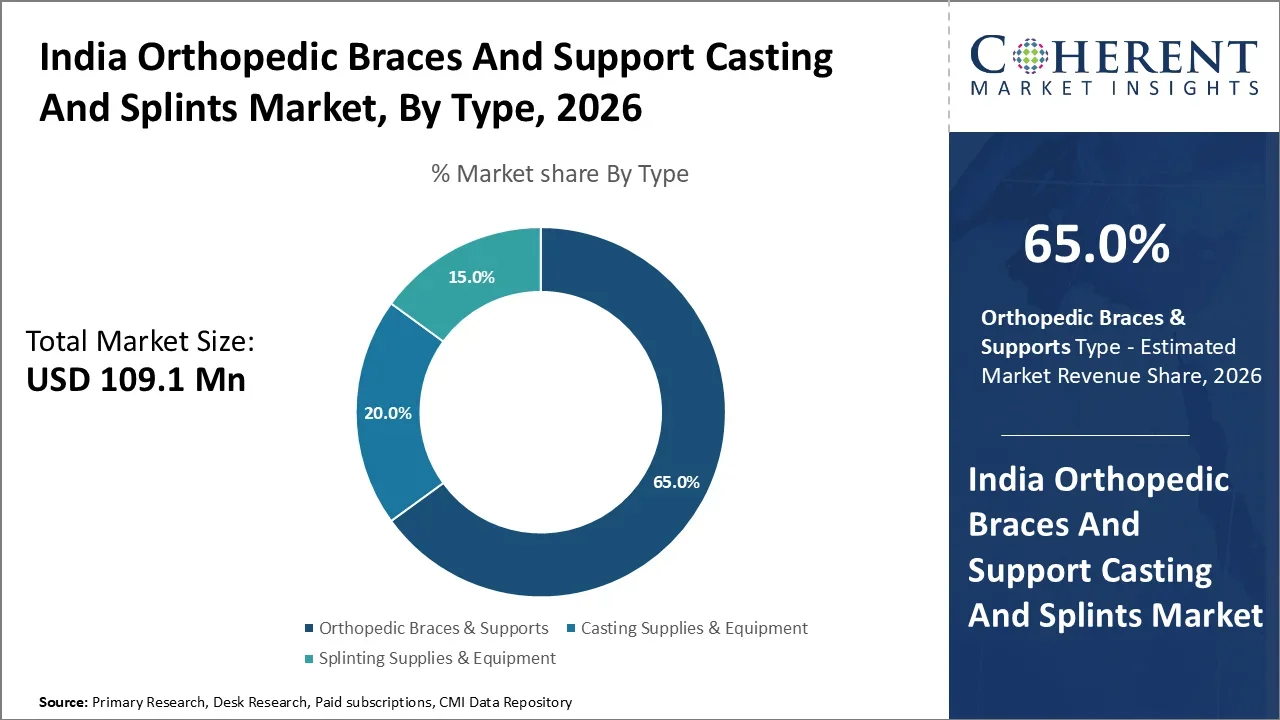
Why is Orthopedic Braces & Supports Acquiring the Largest Market Share?
Orthopedic Braces & Supports is projected to account for the largest share of cognitive systems spending in 2026, representing approximately 65.0% of the total volume. The Orthopedic Braces & Supports segment dominates the India orthopedic braces market because injuries to joints such as the knee, ankle, shoulder and elbow are among the most common manifestations of musculoskeletal conditions, driving high utilization of braces for stabilization, pain management and post‑injury recovery. India continues to experience a high burden of musculoskeletal disorders (MSDs) a 2024 nationally representative survey reported an overall prevalence of 53.5 % in adults, with joint pain at 41.9 % and back pain at 32.6 % highlighting extensive demand for extremity supports. Further reinforcing this trend, market research showed that by 2025 the lower extremity braces and supports segment alone held about 40 % share of the India orthopedic braces & supports product market, driven by widespread knee and ankle injury incidence. The global WHO musculoskeletal conditions fact sheet (published July 14 2022) also underscores that MSDs significantly limit mobility and dexterity worldwide, reinforcing the clinical need for upper and lower limb support devices.
Source: WHO
Orthopedic Clinics holds the Largest Market Share
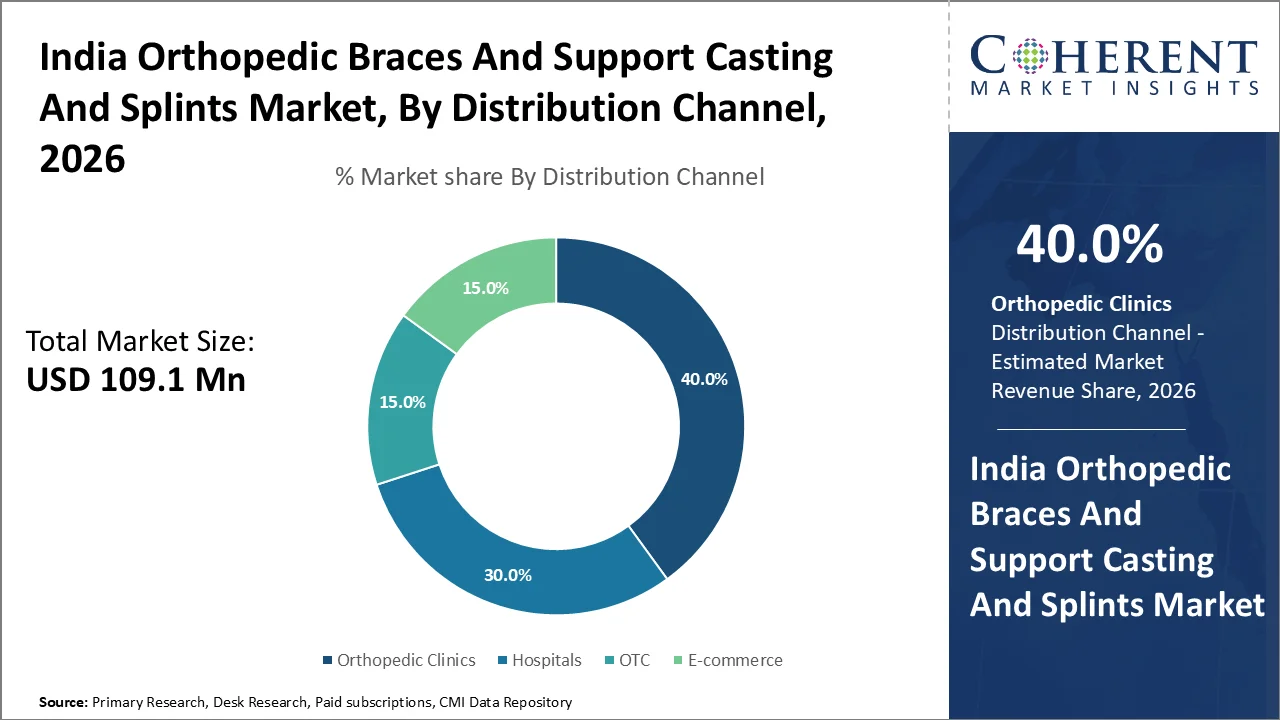
Based on distribution channel, orthopedic clinics dominate the market, accounting for a significant 40.0% share in 2026, because they are the primary point of care for musculoskeletal diagnosis, treatment, and rehabilitation, where devices are professionally prescribed, fitted, and monitored. For instance, in October 2023, according to the data published by the World Health Organization (WHO) notes that musculoskeletal conditions encompass over 150 disorders affecting bones, joints and connective tissues, leading to significant functional limitations that often require clinically prescribed braces and supports rather than OTC products. Additionally, India’s high burden of musculoskeletal issues such as joint and back pain has been documented in population studies showing widespread prevalence across adults, necessitating clinic–led treatment pathways. Orthopedic clinics also coordinate post‑injury casting and splinting after trauma or surgery and integrate follow‑up physiotherapy services (which are standard in tertiary orthopedic care), making them trusted and indispensable channels for device distribution compared with retail or e‑commerce options in 2026.
Source: WHO; ResearchGate; Pfizer Inc.
India Orthopedic Braces and Support Casting and Splints Market Trends
Occupational Risk and Regional Demand Patterns Stimulate Market Growth
High MSD incidence among workers contributes to orthopedic device usage in India. A 2025 occupational study revealed that ~73 % of healthcare workers in parts of Western Rajasthan reported MSD symptoms in the previous year, with lower back and neck issues dominating, demonstrating a workplace‑linked burden that necessitates braces and supports for ergonomic relief. Additionally, a 2025 study in Gujarat’s Kutch showed ~60 % of handloom weavers suffer musculoskeletal issues due to repetitive motions, highlighting regional occupational health drivers that expand demand for orthotic solutions beyond clinical traumas to include work‑related chronic support needs. These data reflect localized but widespread drivers for bracing interventions in India’s workforce.
Increased Sports, Physical Activity, and Preventive Care Awareness
Rising engagement in physical activities and sports among Indian youth, coupled with greater preventive care awareness, is elevating demand for orthopedic support aids. According to a March 2025 article, about 23% of India’s population participates in at least one sport, with rising health awareness fueling demand for fitness activities and sports apparel. Musculoskeletal injuries especially ligament, knee, and ankle injuries are among the most common conditions requiring conservative bracing treatment in India. Industry reports show ligament injury consistently accounts for the largest application segment due to increasing competitive and recreational sports participation, where braces are prescribed alongside physical therapy. This reflects a broader trend toward preventive bracing and rehabilitation support as part of proactive health practices in Indian clinical and outpatient settings.
Escalating Prevalence of Musculoskeletal Disorders Driving Orthopedic Demand
India is experiencing a significant burden of musculoskeletal disorders (MSDs), which directly fuels demand for orthopedic braces, supports, casting and splints. A nationally representative survey published on 23 October 2024 found that over 53.5 % of Indian adults suffer from MSDs, with joint pain (41.9 %) and back pain (32.6 %) being especially common. This prevalent need for pain relief and functional support encourages clinic‑prescribed braces and splints for long‑term use and rehabilitation across age groups, particularly among females and older adults, supporting widespread adoption across urban and rural care settings in India.
Public Health Coverage Expansion Improves Access to Orthopedic Care
Expansion of government health schemes enhances access to device‑based care. In 2026, the Government of India expanded Ayushman Bharat – Pradhan Mantri Jan Arogya Yojana (PM‑JAY) coverage to include more procedures and wider empaneled hospital access, as per official PM‑JAY scheme updates. Expanded PM‑JAY coverage has made secondary and tertiary orthopedic care, including surgical procedures such as complex spinal surgeries, more financially accessible, especially for economically disadvantaged patients. Studies show utilisation of PM‑JAY for spine surgeries rose significantly (from about 58.7% in 2023 to 73.5% in 2024 at one tertiary centre), while self‑financed procedures declined sharply indicating a shift from out‑of‑pocket pay to insurance‑supported care.
Expanded Empanelment Broadens Geographic & Facility Reach
With 36,229+ empanelled hospitals across India including both public and private facilities, a larger cross‑section of the population gains access to orthopaedic care under PM‑JAY. Impact on the orthopaedic device market: Higher patient throughput for orthopaedic procedures and follow‑up care expands the pool of individuals likely to receive braces and splints. Broader hospital participation including in tier‑2 and tier‑3 cities supports wider device adoption across regions that previously had limited access to structured orthopaedic rehabilitation.
Regional Insights
South India dominates owing to High Orthopedic Patient Base
South India account 45.0% market share in 2026, because the region combines a high orthopedic patient base, strong hospital density, and advanced post-surgical rehabilitation infrastructure. Tamil Nadu, Kerala, Karnataka, Telangana, and Andhra Pradesh together recorded 204,965 road accidents in 2024; the Ministry of Road Transport and Highways published this state-wise accident data in a Rajya Sabha answer on December 10, 2025, showing a large trauma-linked need for immobilization products such as casts, splints, knee braces, ankle supports, and cervical collars. Hyderabad also acts as a major orthopedic hub: Apollo Spectra, in a March 9, 2026 update, stated that Hyderabad has become a leading orthopedic-care and medical-tourism centre and highlighted robotic knee replacement, 3D planning, physiotherapy, and faster recovery pathways. Apollo Hospitals also reports 40+ orthopedic facilities, 360+ consultants, and over 10,000 joint replacement surgeries annually, supporting higher brace and rehabilitation-product consumption.
West India Orthopedic Braces and Support Casting and Splints Market Trends
The West India region is poised to be as the fastest-growing region through 2026-2033, due to its robust healthcare infrastructure, high trauma incidence, and increasing clinical adoption of advanced orthopedic care. Western states such as Maharashtra and Gujarat house some of India’s largest private and public tertiary care hospitals equipped with specialized orthopedic and trauma centres, making them primary destinations for accident and musculoskeletal treatment. According to the Government of India’s Ministry of Road Transport & Highways data published in August 2024, Maharashtra recorded one of the highest road accident fatalities and injuries nationwide, a leading driver of demand for orthopedic braces, casting and splints in 2026 as well (PIB, 2024). Additionally, national health surveys show that musculoskeletal disorders accounted for significant disability rates among Indian adults, with back and joint pain prevalence among adults exceeding 30%, per WHO’s Musculoskeletal Conditions fact sheet (July 2022), continuing to influence care needs in 2026. Western India’s higher concentration of specialty clinics, trauma centres, and supportive public health schemes ensures greater access to prescribed orthopedic devices compared to other regions, reinforcing its market leadership.
Source: WHO; Transportation Research & Injury Prevention Centre
Who are the Major Companies in India Orthopedic Braces and Support Casting and Splints Market
Some of the major key players in India Orthopedic Braces and Support Casting and Splints Market are 3M, BSN medical, Zimmer Biomet Holdings, Inc., DJO, LLC, Össur Corporate, Stryker Corporation, Ottobock Holding GmbH & Co. KG, medi GmbH & Co. KG, Remington Products Company, Becker Orthopedic, Prime Medical Inc.,Tynor Orthotics Pvt Ltd., United Medicare, and Orthosys.
Key News
- In April 2026, ALIMCO, a government-linked company, launched a new Knee Brace with bi-axial heavy-duty hinges. The product is designed for joint injuries, arthritis, and ligament sprains, offering knee stability and mobility. With features like four-way stretch straps and open patella design, it ensures comfort and reduced swelling, supporting patients during post-surgery recovery.
- In February 2026, Zimmer Biomet, global orthopedic leader launched 3D‑printed custom splints designed for personalized injury treatment, enhancing comfort and anatomical fit for fracture and post‑operative care patients. This launch reflects advanced manufacturing technologies entering orthopedic casting and splinting products, enabling clinicians to tailor devices to individual patient needs with greater precision and reduced fitting time.
Market Report Scope
India Orthopedic Braces and Support Casting and Splints Report Coverage
| Report Coverage | Details | ||
|---|---|---|---|
| Base Year: | 2025 | Market Size in 2026: | USD 109.1 Mn |
| Historical Data for: | 2020 To 2024 | Forecast Period: | 2026 To 2033 |
| Forecast Period 2026 to 2033 CAGR: | 7.1% | 2033 Value Projection: | USD 180.7 Mn |
| Geographies covered: |
| ||
| Segments covered: |
| ||
| Companies covered: | 3M, BSN medical, Zimmer Biomet Holdings, Inc., DJO, LLC, Össur Corporate, Stryker Corporation, Ottobock Holding GmbH & Co. KG, medi GmbH & Co. KG, Remington Products Company, Becker Orthopedic, Prime Medical Inc.,Tynor Orthotics Pvt Ltd., United Medicare, and Orthosys | ||
Analyst Opinion
- The India orthopedic braces and support casting and splints market is experiencing significant growth, driven by various factors such as increased health awareness, an aging population, and rising musculoskeletal disorders (MSDs). With the government's focus on expanding healthcare accessibility through Ayushman Bharat Yojana, which has now included more procedures and wider hospital access in 2026, more patients are able to receive post‑operative and rehabilitation care. This expansion has led to higher demand for orthopedic devices such as braces and splints.
- The rising prevalence of orthopedic conditions, especially in the elderly population, is accelerating the demand for orthopedic products. As of 2026, approximately 80 million Indians aged 60+ are living with conditions such as arthritis and osteoporosis, which significantly contribute to the adoption of knee, ankle, and back braces. This demographic is increasingly seeking support for post‑operative recovery and chronic care. Despite prosthetic and orthotic devices not yet fully included under AB‑PMJAY benefits as of late 2025, industry advocacy from bodies like the Orthotics and Prosthetics Association of India (OPAI) underscores the potential for future policy inclusion to further drive adoption. OPAI’s 2025 petition calls for prosthetic limbs, orthotic braces, spinal and foot supports to be included under the scheme, indicating an ongoing policy trend toward broader coverage of mobility‑enhancing devices, which could further boost the market if realized. Additionally, the popularity of smart orthopedic devices that integrate sensor technology for better monitoring and recovery is growing, particularly in the rehabilitation space. These devices are becoming popular among patients who prefer to manage their recovery at home, reducing dependency on in‑clinic visits. This trend is expected to further fuel market growth, making smart devices an attractive option.
- E‑commerce and digital platforms are playing an increasingly pivotal role in the distribution of orthopedic products in India. The digitization of healthcare and the growth of online pharmacies have significantly shifted orthopedic device sales to online channels, with major platforms like Amazon, Flipkart, and health-specific e‑commerce sites expanding their offerings. This trend is especially prominent in Tier 2 and Tier 3 cities, where traditional retail infrastructure is less developed. With consumers becoming more comfortable with online shopping, manufacturers and distributors are ramping up their online presence to meet the rising demand. This shift is expected to drive faster market penetration, particularly for products that can be customized according to specific rehabilitation needs.
- India continues to be a key growth region for the global orthopedic devices market. The rapid urbanization and increasing healthcare spending in India have boosted the adoption of orthopedic products like braces and splints. Government initiatives such as Ayushman Bharat ensure that even economically disadvantaged populations can access post‑surgical care, driving demand for rehabilitation products. Additionally, India's growing healthcare infrastructure is helping strengthen distribution channels and improve access to advanced orthopedic solutions. As a result, the market for orthopedic braces and splints is expected to continue expanding, with India positioned as a key contributor to the global orthopedic market.
Speak to the analyst
Want personalized insights?
Take the findings above to one of our principal consultants, or have the report rebuilt around the segments, geographies and competitors you actually track.
Market Segmentation
- By Type (Revenue, USD Mn, 2021-2033)
- Orthopedic Braces & Supports
- Upper Extremity Braces and Support
- Low Extremity Braces and Support
- Casting Supplies & Equipment
- Splinting Supplies & Equipment
- Orthopedic Braces & Supports
- By Distribution Channel (Revenue, USD Mn, 2021-2033)
- Orthopedic Clinics
- Hospitals
- OTC
- E-commerce
- By Region (Revenue, USD Mn, 2021-2033)
- North India
- South India
- Central India
- West India
- West India
Sources
Primary Research Interviews
- Interviews with orthopedic surgeons and clinicians to understand the challenges in patient care, the adoption of orthopedic devices, and their role in improving recovery outcomes.
- Insights from manufacturers and suppliers on innovations in materials, such as lightweight composites, and the impact of customization (e.g., 3D printing) on patient comfort.
- Discussions with distributors and retailers to explore the growth of digital sales channels and their influence on market access across India.
- Conversations with decision-makers in hospitals and clinics to assess investment priorities, scaling challenges, and the integration of devices in patient care workflows.
Databases
- GlobalData Healthcare Database
- U.S. National Library of Medicine PubMed Database
- India National Health Portal Database
- Indian Council of Medical Research (ICMR) Database
- National Health Systems Resource Centre (NHSRC)
Magazines
- Orthopedic Design & Technology Magazine
- Orthopedic Journal of India
- Indian Journal of Orthopaedics
- Healthcare & Pharma Magazine (published by GlobalData)
- Medical Device & Diagnostic Industry (MDDI) Magazine
Journals
- Journal of Orthopaedic Research (Wiley)
- Journal of Bone and Joint Surgery (Elsevier)
- Indian Journal of Orthopaedics (Springer)
- Orthopaedic Journal of Sports Medicine (SAGE)
- Journal of Clinical Orthopaedics and Trauma (Elsevier)
Newspapers
- The Times of India (Health Section)
- The Hindu (Health and Medical Section)
- The Economic Times (Healthcare and Pharma Section)
- Mint (Healthcare Section)
- Deccan Herald (Medical & Health News)
Associations
- Indian Orthopedic Association (IOA)
- All India Orthopedic Association (AIOA)
- Indian Society of Orthopaedic Surgeons (ISOS)
- Global Orthopaedic Device Manufacturers Association (GODMA)
- Medical Technology Association of India (MTAI)
Public Domain Sources
- WHO India - Musculoskeletal Disease Reports
- Indian Ministry of Health and Family Welfare Reports
- National Health Mission (NHM) India Publications
- Government of India Ministry of Road Transport & Highways (for road accident data)
- Press Information Bureau (PIB) – India Health Updates
Proprietary Elements
- CMI Data Analytics Tool
- Proprietary CMI Existing Repository of information for last 10 years
Get access to 250+ pages report
Every segment, forecast, competitor profile and data table behind the analysis above — available for instant download.
- ESOMAR Member
- ISO 9001:2015 Certified
- D-U-N-S Registered
- GDPR & CCPA Compliant
Missing comfort of reading report in your local language? Find your preferred language:
Transform your Strategy with Exclusive Trending Reports
Frequently Asked Questions
The India Orthopedic Braces and Support Casting and Splints Market is expected to reach USD 180.7 Mn in 2033.
Major players operating in the global India Orthopedic Braces and Support Casting and Splints Market include 3M, BSN medical, Zimmer Biomet Holdings, Inc., DJO, LLC, Össur Corporate, Stryker Corporation, Ottobock Holding GmbH & Co. KG, medi GmbH & Co. KG, Remington Products Company, Becker Orthopedic, Prime Medical Inc.,Tynor Orthotics Pvt Ltd., United Medicare, and Orthosys.
Lack of skilled workforce and Scalability Challenges has been estimated to hamper the growth of the market.
Increasing Prevalence of Orthopedic Diseases and rising cases of accidents is driving the growth of the market.
The India Orthopedic Braces and Support Casting and Splints Market is anticipated to grow at a CAGR of 7.1% between 2026 and 2033.
Fiberglass and synthetic casts are gaining preference because they are lighter, faster-setting, more durable, and more water-resistant than traditional plaster casts. Products such as 3M Scotchcast casting tapes are positioned under casts and splints in 3M India’s medical portfolio, supporting their use in modern fracture immobilization.
Material choice directly affects immobilization strength, patient comfort, breathability, weight, skin tolerance, and rehabilitation compliance. Rigid fiberglass is preferred for stable fracture support, while soft braces, elastic supports, and removable splints are used for ligament injuries, post-operative care, sprains, and controlled mobility.