Radial Head Resection Implants Market Analysis & Forecast: 2026-2033

Radial Head Resection Implants Market Size and Forecast – 2026 – 2033
The Global Radial Head Resection Implants Market size is estimated to be valued at USD 525 million in 2026 and is expected to reach USD 835 million by 2033, exhibiting a compound annual growth rate (CAGR) of 6.1% from 2026 to 2033.
Global Radial Head Resection Implants Market Overview
The Radial Head Resection Implants market offers a range of orthopedic devices designed to replace or support the radial head of the elbow, commonly affected by fractures or degenerative conditions. Products include modular radial head prostheses, monoblock implants, and anatomical designs tailored for different patient anatomies. These implants are typically made from biocompatible metals such as titanium or cobalt-chromium alloys, ensuring durability and corrosion resistance. Some advanced models feature press-fit or cemented fixation options to enhance stability and facilitate early mobilization. The market emphasizes precision engineering, surgical compatibility, and improved post-operative outcomes, driving adoption among orthopedic surgeons globally.
Key Takeaways
Radial Head Resection Implants segment accounts for over half of the overall market size, reflecting strong clinical preference and therapeutic efficacy.
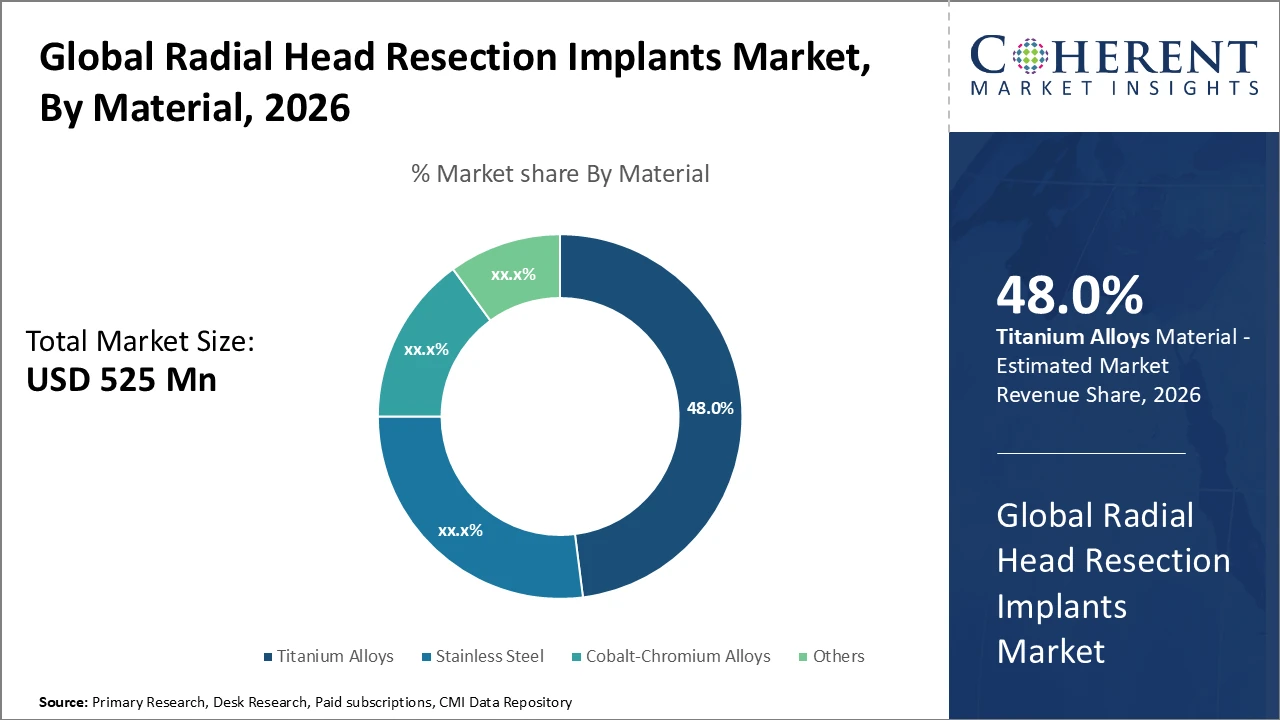
Titanium Alloys dominate material selection due to their favorable biomechanical properties, holding more than 48% of the material market share.
Hospital end users represent a significant revenue percentage, driven by growing inpatient surgical procedures and trauma care expansion.
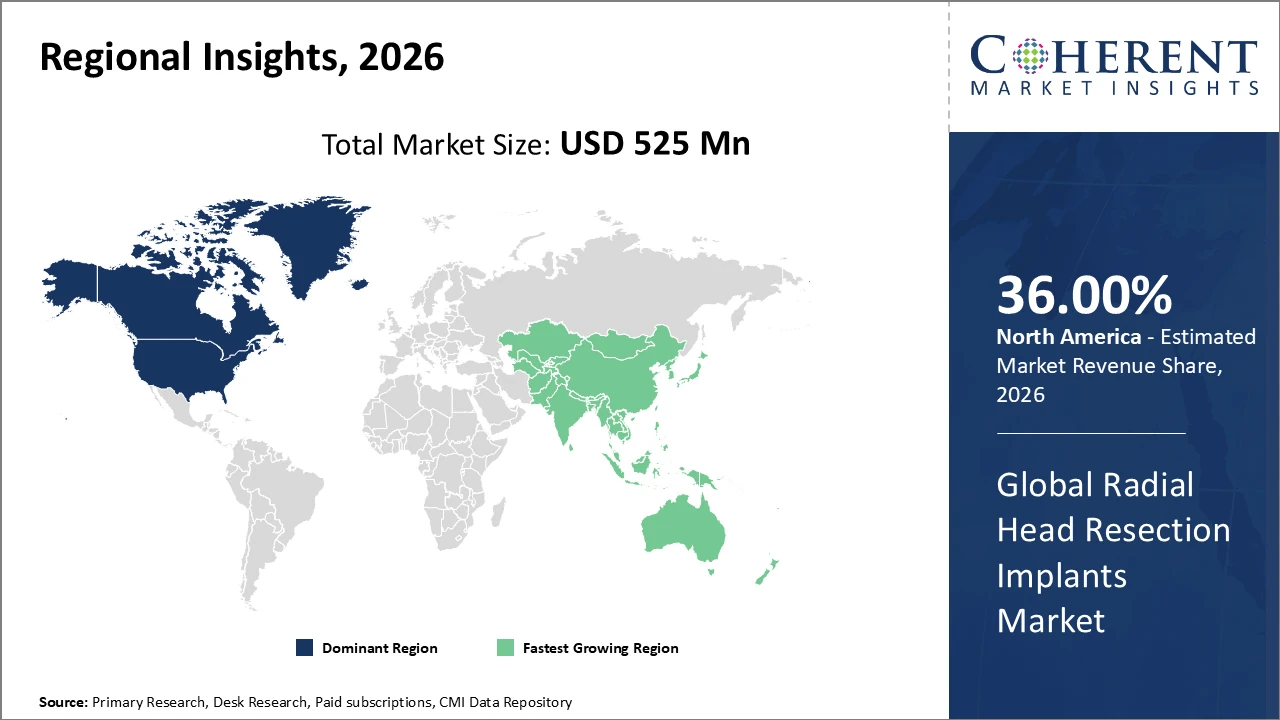
North America leads in market revenue, driven by advanced healthcare infrastructure and high adoption rates, contributing over 36% market share.
Asia Pacific exhibits the fastest CAGR due to rising investments in healthcare infrastructure and increasing surgical volume, particularly in China and India.
Radial Head Resection Implants Market Segmentation Analysis
To learn more about this report, Request Free Sample
Radial Head Resection Implants Market Insights, By Material
Titanium Alloys dominate the Radial Head Resection Implants market due to their excellent biocompatibility and optimal strength-to-weight ratio, with clinical preference rising 15% from 2024 to 2026 because of corrosion resistance and superior osseointegration. Cobalt-Chromium Alloys represent the fastest-growing subsegment, favored for their high wear resistance and durability in complex reconstructions. Stainless Steel continues to be used widely for cost-effectiveness but is gradually being supplanted by advanced alloys. The Others category encompasses emerging biomaterials, including bioresorbable composites, which are gaining attention from R&D and innovation initiatives. Overall, material selection reflects a balance between performance, durability, and evolving clinical demands.
Radial Head Resection Implants Market Insights, By Product Type
Radial Head Resection Implants dominate the market due to their minimally invasive approach and strong long-term functional outcomes. The Radial Head Replacement subsegment is the fastest-growing, fueled by advancements in implant mechanics and wider adoption for severe fractures. Radial Head Fixation Devices continue to play a key role, especially in cases suitable for conservative fracture management. The Others category comprises emerging, novel devices used selectively. Overall, growth in the resection and replacement segments is driven by rising trauma incidences, increasing orthopedic surgical interventions, and favorable reimbursement policies, supporting wider clinical adoption and reinforcing market expansion globally.
Radial Head Resection Implants Market Insights, By End-User
Hospitals dominate the Radial Head Resection Implants market, benefiting from advanced infrastructure and skilled surgical teams capable of managing complex elbow trauma, leading to high implant utilization. Specialty Clinics are the fastest-growing end-user segment, driven by the increasing focus on outpatient orthopedic procedures and growing patient preference for minimally invasive treatments. Ambulatory Surgical Centers are witnessing steady adoption due to their cost efficiency and convenience for elective implant surgeries. The Others segment includes research and teaching institutes involved in clinical trials and innovation projects, contributing to market development. Overall, end-user growth reflects a shift toward specialized, efficient, and patient-centric orthopedic care.
Radial Head Resection Implants Market Trends
The market is shifting towards bioresorbable materials and patient-specific implant designs, driven by advances in 3D printing technology.
In 2025, 18% of implant usage in select European hospitals involved customized devices tailored to patient anatomy, reducing complications and improving recovery.
Smart implant systems with integrated sensors for monitoring post-surgical outcomes are emerging, with pilot programs launched in select U.S. trauma centers by late 2026.
Growing awareness of functional outcomes post-radial head resection is influencing clinical approaches, promoting the use of implants in cases previously managed with conservative treatments.
Radial Head Resection Implants Market Insights, By Geography
To learn more about this report, Request Free Sample
North America Radial Head Resection Implants Market Analysis and Trends
North America dominates the Radial Head Resection Implants market, driven by advanced trauma care facilities and a high volume of orthopedic surgeries. The region benefits from the presence of major medical device manufacturers, which enhances competition and fosters continuous innovation. Government initiatives supporting orthopedic healthcare, coupled with high patient awareness, further boost implant adoption. The U.S. alone accounts for nearly 30% of global market revenue, supported by ongoing technological advancements, modern surgical practices, and favorable insurance coverage policies that facilitate access to advanced implant solutions. Overall, the region remains a key growth and innovation hub for the market.
Asia Pacific Radial Head Resection Implants Market Analysis and Trends
The Asia Pacific region exhibits the fastest growth in the Radial Head Resection Implants market, driven by increasing healthcare investments, expanding hospital capacities, and a rising prevalence of musculoskeletal disorders among aging populations. Countries such as China and India have developed surgical centers capable of performing complex reconstructive elbow surgeries, enhancing treatment accessibility. Government healthcare reforms and rising per capita income have further facilitated implant adoption, supporting a CAGR of approximately 7.4%. Additionally, China’s rapid industrialization and the growing incidence of road accident-related trauma significantly boost demand for radial head implants, positioning the region as a key emerging market.
Radial Head Resection Implants Market Outlook for Key Countries
USA Radial Head Resection Implants Market Analysis and Trends
The U.S. market is a major contributor to the Radial Head Resection Implants industry, supported by a robust healthcare system that enables early adoption of advanced implants. In 2025, hospitals increased surgical volume for elbow trauma procedures by approximately 8%, reflecting a focus on research-backed implantation methods. High per capita healthcare expenditure supports innovations such as sensor-equipped implants and minimally invasive surgical tools, establishing a global benchmark for market revenue performance. Leading U.S.-based companies have made significant investments in R&D centers dedicated to orthopedic implants, ensuring continued innovation and sustained growth in the market.
Germany Radial Head Resection Implants Market Analysis and Trends
Germany’s Radial Head Resection Implants market is characterized by advanced healthcare infrastructure, high surgical precision, and early adoption of innovative orthopedic solutions. Hospitals and specialty clinics drive demand, supported by skilled surgeons and strong trauma care systems. The market sees increasing use of patient-specific implants and minimally invasive procedures, improving functional outcomes and recovery times. Titanium and Cobalt-Chromium alloys dominate material preferences due to durability and biocompatibility. Government healthcare policies and reimbursement schemes facilitate implant accessibility, while research initiatives and clinical trials in leading medical centers promote continuous innovation. Overall, Germany remains a mature and technologically progressive market in Europe.
Analyst Opinion
The steady rise in orthopedic surgical centers handling complex trauma cases is driving market revenue; in 2025, over 40% of North American hospitals reported a 7% increase in elbow fracture surgeries, boosting radial head resection implant demand.
Supply-side dynamics show expanding production capacity for innovative implant materials; Titanium and Cobalt-Chromium alloy implants accounted for over 60% of production capacity in 2026, with leading manufacturers increasing output by ~15% in 2024 to meet global demand.
Pricing strategies experienced moderate fluctuations, with a 3% price deflation between 2024–2025 due to competition and raw material optimization, improving affordability in emerging markets, especially Asia Pacific.
Imports of radial head resection implants rose 12% in 2026 across Europe, driven by demand for advanced implants and diverse applications, including trauma and degenerative joint diseases, supporting robust market growth.
Market Scope
| Report Coverage | Details | ||
|---|---|---|---|
| Base Year: | 2025 | Market Size in 2026: | USD 525 million |
| Historical Data for: | 2020 To 2024 | Forecast Period: | 2026 To 2033 |
| Forecast Period 2026 to 2033 CAGR: | 6.1% | 2033 Value Projection: | USD 835 million |
| Geographies covered: |
|
||
| Segments covered: |
|
||
| Companies covered: | Wright Medical Group N.V., Stryker Corporation, Zimmer Biomet Holdings, Inc., DePuy Synthes, Acumed LLC, Arthrex, Inc., Tornier SAS, Smith & Nephew plc, Medtronic plc, DJO Global, Inc. | ||
| Growth Drivers: |
|
||
Uncover macros and micros vetted on 75+ parameters: Get instant access to report
Radial Head Resection Implants Market Growth Factors
Rising incidences of traumatic elbow injuries, particularly among active and aging populations, remain a primary driver of the Radial Head Resection Implants market, with sports-related accidents accounting for over 35% of surgically treated radial head fractures in 2025. The growing preference for radial head resection implants over arthroplasty, due to superior long-term outcomes, further supports market expansion. Advanced implant designs that closely mimic natural biomechanics have contributed to a 7% rise in global adoption in 2026. Expanding healthcare infrastructure in emerging economies such as India and Brazil increased accessibility, reflected by a 9% rise in equipped surgical centers in 2024, while government initiatives and reimbursement policies in Europe and North America further bolster growth.
Radial Head Resection Implants Market Development
In 2025, Sunrise Medical launched a next-generation radial head resection implant designed with a modular titanium alloy system, allowing surgeons to better match implant size and alignment to patient anatomy. The device also incorporated enhanced surface coatings to improve osseointegration and reduce post-operative complications. This development strengthened Sunrise Medical’s presence in North America and Europe, addressing rising demand for patient-specific solutions and minimally invasive procedures in complex elbow trauma cases.
In February 2025, BioPoly LLC reached a key milestone with the first elbow surgery using its BioPoly® Radial Head Implant, marking the result of close collaboration among the company’s engineering, operations, surgical design, and distribution teams.
Key Players
Leading Companies of the Market
Wright Medical Group N.V.
Zimmer Biomet Holdings, Inc.
DePuy Synthes
Acumed LLC
Arthrex, Inc.
Tornier SAS
Smith & Nephew plc
Medtronic plc
DJO Global, Inc.
Several leading companies have focused on growth strategies emphasizing product innovation and strategic partnerships. In 2025, Wright Medical Group expanded its implant portfolio by launching a next-generation titanium radial head resection implant with enhanced osseointegration properties, which contributed to a 10% increase in its North American market share. Similarly, Stryker Corporation’s acquisition of a niche implant developer in 2026 allowed the company to strengthen its presence in the Asia Pacific region, boosting market revenue by 14%. These initiatives highlight the emphasis on technological advancement and regional expansion as key drivers of competitive advantage in the market.
Radial Head Resection Implants Market Future Outlook
The Radial Head Resection Implants market is poised for robust growth, driven by rising incidences of traumatic elbow injuries, expanding orthopedic surgical infrastructure, and increasing adoption of minimally invasive procedures. Innovations such as patient-specific implants, bioresorbable materials, and sensor-integrated smart devices are expected to enhance surgical precision and post-operative outcomes. Emerging economies, particularly in Asia Pacific, will witness accelerated demand due to improving healthcare access and rising trauma cases. Continued government support, favorable reimbursement policies, and R&D investments by leading manufacturers will further stimulate market expansion, positioning radial head resection implants as a preferred solution for complex elbow trauma worldwide.
Radial Head Resection Implants Market Historical Analysis
The Radial Head Resection Implants market has witnessed steady growth over the past decade, driven by advancements in orthopedic surgery and rising awareness of elbow trauma management. Early adoption focused on standard titanium and stainless steel implants, primarily in developed regions such as North America and Europe. Increasing incidences of sports-related and accident-induced fractures, coupled with improvements in surgical techniques, boosted implant utilization. Manufacturers gradually introduced modular and anatomically contoured designs to enhance outcomes. Rising healthcare expenditure, supportive reimbursement policies, and expanding trauma care infrastructure historically contributed to market expansion, laying the foundation for technological innovation and broader global adoption in subsequent years.
Sources
Primary Research Interviews:
Orthopedic Surgeons
Trauma and Rehabilitation Physicians
Physiotherapists specializing in elbow and upper limb rehabilitation
Medical Device Manufacturers and Distributors
Databases:
WHO Global Health Observatory
OECD Health Data
UN Disability Reports
Magazines:
Medical Design & Outsourcing
Orthopedic Design & Technology
MedTech Insight
HealthTech Magazine
Orthopedic Product News
Journals:
Journal of Shoulder and Elbow Surgery
Journal of Orthopaedic Trauma
Clinical Orthopaedics and Related Research
Prosthetics and Orthotics International
Newspapers:
The New York Times (Health)
The Guardian (Health)
Financial Times (Healthcare)
The Hindu (Health)
Reuters Health
Associations:
American Academy of Orthopaedic Surgeons (AAOS)
Orthopaedic Research Society (ORS)
National Institute of Arthritis and Musculoskeletal and Skin Diseases (NIAMS)
International Society for Prosthetics and Orthotics (ISPO)
Share
Share
Nikhilesh Ravindra Patel is a Senior Consultant with over 8 years of consulting experience. He excels in market estimations, market insights, and identifying trends and opportunities. His deep understanding of the market dynamics and ability to pinpoint growth areas make him an invaluable asset in guiding clients toward informed business decisions. He plays a instrumental role in providing market intelligence, business intelligence, and competitive intelligence services through the reports.

Credibility and Certifications

860519526


9001:2015
27001:2022


Need a Custom Report?
We can customize every report - free of charge - including purchasing stand-alone sections or country-level reports
Customize NowJoining thousands of companies around the world committed to making the Excellent Business Solutions.
View All Our Clients